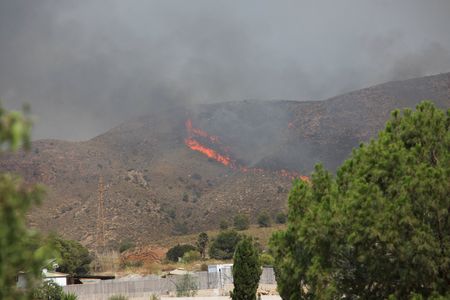

The Strait of Hormuz had slipped out of the headlines in recent weeks, overshadowed by turbulence in chip stocks, World Cup excitement, and sweltering heat waves across the globe. But a fresh series of back-and-forth military strikes between the United States and Iran this week thrust the narrow but critical waterway back into the center of global attention.
Despite the severity of the escalation, financial markets have responded with relative calm. That measured reaction suggests many investors have watched this kind of standoff play out before and believe it will ultimately lead back to the negotiating table rather than a full-blown war.
The United States launched its first wave of strikes against Iranian targets on Tuesday, simultaneously revoking sanctions waivers on Iranian oil exports. The move came after repeated Iranian attacks on shipping vessels in the strait. Iran fired back with strikes on U.S. bases in the region, and both sides continued trading blows on Wednesday and Thursday. At the NATO summit held in Ankara, Turkey on Wednesday, President Donald Trump initially declared that the memorandum of understanding aimed at ending the conflict was “over,” though he later said he did not anticipate a return to full-scale fighting.
This latest flare-up signals how emboldened Iran has grown during the 60-day negotiating window that began with last month’s interim ceasefire agreement — and how fiercely Tehran wants to maintain influence over the strait. For investors, the key question is not just how this particular confrontation gets resolved, but whether periodic outbursts of violence in the Gulf region might become the new normal. If so, that could spell serious trouble for energy producers throughout the region.
Oil prices climbed to a multi-week high on Wednesday before retreating the following day. Brent crude is still trading well below $80 a barrel, a threshold it last crossed on June 19.
Traders are now wrestling with a tangled web of geopolitical and logistical variables as they try to forecast how oil supply and demand will balance out in the months ahead.
On one side of the equation, tanker traffic through the Strait of Hormuz came to a near standstill again on Thursday. That is yet another setback for OPEC+, which recently announced plans to raise its production quotas by 188,000 barrels per day. Two major questions now loom: how much of that oil can actually leave the Gulf, and who will purchase it?
On the other hand, if shipping through Hormuz resumes, the market could actually face an oversupply problem as Gulf producers compete aggressively for market share. Global demand does not appear as strong as many had anticipated, at least in the near term. That has already pushed producers, including Saudi Arabia, to offer steep price discounts. In the end, OPEC+ itself could emerge as the biggest loser in this scramble.
The NATO summit in Ankara also produced significant developments beyond the Iran situation. While Trump’s sharp rhetoric about Iran and his threat to cut off trade with Spain initially dominated the gathering, his Wednesday meeting with Ukrainian President Volodymyr Zelenskiy yielded a major announcement: a commitment to grant Ukraine a license to manufacture Patriot missile interceptors. This represents a significant victory for Kyiv, which has long pushed for permission to produce these defensive weapons domestically.
Ukraine’s ongoing drone campaign targeting Russia’s energy infrastructure — widely seen as Moscow’s most vulnerable pressure point — appears to be taking a toll. Russia announced Wednesday that it was suspending diesel exports in order to shore up its domestic supply. That move could deal a serious blow to the global diesel market, which has little cushion left following the ongoing conflict in the Middle East.
The recent swings in crude oil prices are adding another layer of complexity for central banks and economic policymakers around the world trying to get a handle on inflation.
Minutes from the Federal Reserve’s June meeting, released Wednesday, revealed that a “few participants” saw a possible case for raising interest rates immediately, while several others noted that price pressures were becoming “more broad-based” — suggesting that energy costs are just one of several inflation concerns on policymakers’ radar.
Worries about rising prices are clearly widespread. That sentiment was reflected in a global spike in government bond yields this week, with Japan’s benchmark 10-year bond yield reaching its highest point in 30 years on Thursday.
However, Japanese government bond yields pulled back and the yen strengthened on Friday after the country’s finance minister announced that the government intends to steer its massive state pension funds toward “substantially” increasing investments in domestic assets.
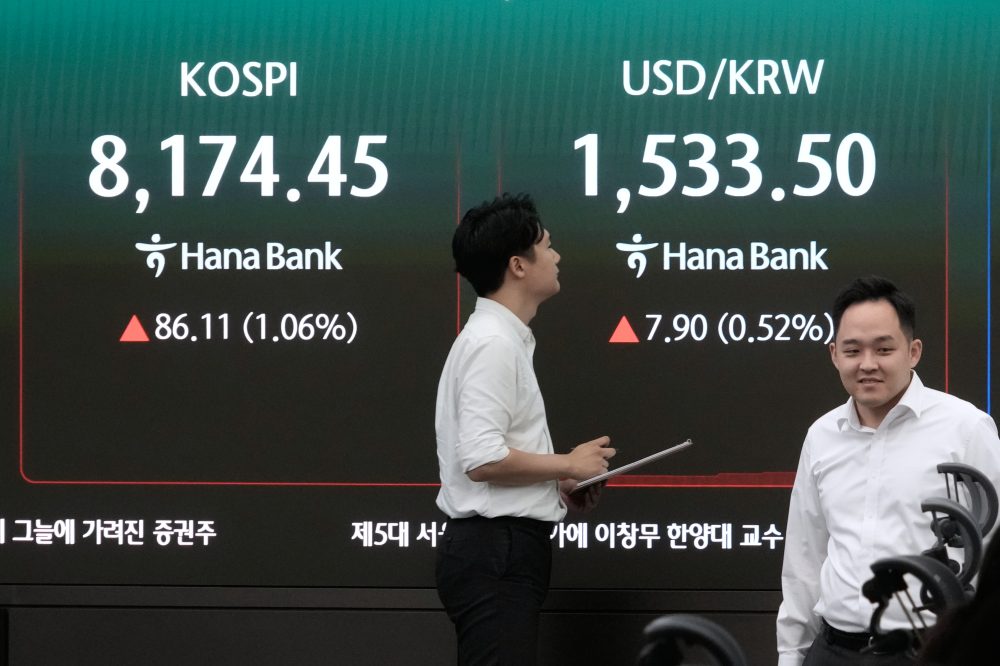
In equity markets, semiconductor stocks continued to be a major story this week, swinging sharply after a massive run-up during the first half of the year. Shares of Samsung Electronics fell even after the company reported a 19-fold increase in second-quarter operating profit on Tuesday. South Korea’s chip-heavy KOSPI index briefly entered bear market territory on Wednesday before recovering on Friday as chip stocks bounced back. The index still sits more than 70% higher on the year.
Whether the market is genuinely reconsidering the artificial intelligence investment narrative, simply rotating out of recent winners, or some blend of both remains an open question.
One signal that enthusiasm for AI remains strong: Samsung rival SK Hynix saw its $26.5 billion U.S. share offering heavily oversubscribed. The South Korean chipmaker is set to make its Nasdaq debut today.
The economic calendar was relatively quiet this week, but that changes next week when U.S. consumer price inflation data for June arrives on Tuesday. Earnings season will also get underway in full force, with major financial institutions including JPMorgan, Bank of America, Goldman Sachs, Wells Fargo, and Citigroup all scheduled to report results.
Whether geopolitical developments will once again overshadow the economic data remains to be seen.