
Oil prices ticked down slightly during early trading on Friday, July 10, but both major benchmarks were still positioned to close out the week with significant gains, driven by continued military exchanges between the United States and Iran.
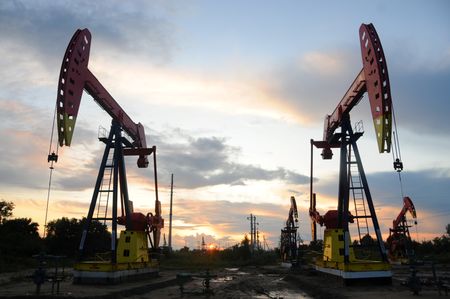
Brent crude futures dropped 6 cents, or 0.08%, to $76.24 per barrel as of 0125 GMT. U.S. West Texas Intermediate crude slipped 4 cents, or 0.06%, settling at $72.04 per barrel. Despite those modest daily declines, Brent was on pace for a 6% weekly gain, while WTI was heading toward a 5% weekly increase.
The price gains were largely tied to escalating tensions in the Middle East. Iranian armed forces launched strikes against U.S. military infrastructure located in Gulf states on Thursday, responding to earlier U.S. attacks on Iran’s southern coastal and eastern provinces. The exchange of strikes put further strain on a ceasefire that had only been in place for about three weeks. Separately, Iranian media outlets reported a series of explosions across southern Iran, including in Bushehr, the site of one of the country’s nuclear facilities.
The renewed hostilities occurred on the same day Iran held burial services for its Supreme Leader, Ayatollah Ali Khamenei, who was killed on February 28 — the first day of the war. His death had been followed by a week of large funeral processions and public rallies across the country.
The ongoing conflict has prevented the full reopening of the Strait of Hormuz, a critical shipping lane that, before the war began, carried roughly 20% of the world’s daily oil and natural gas supplies.
Daniel Hynes, senior commodity strategist for ANZ bank, offered some perspective on why markets weren’t more rattled. “Despite the U.S. ramping up attacks on military sites in Iran, the market drew some reassurance from the Trump administration’s decision to avoid targeting Iranian energy infrastructure,” he said. “This was aided by comments from President Trump, who said he doesn’t expect a return to a full-scale conflict.”
President Donald Trump had stated on Wednesday that he did not believe the war would reignite, adding that “anything that happens is going to be over very quickly.”
On the economic front, the number of Americans filing new unemployment claims fell last week, a sign that the U.S. labor market continues to operate in what analysts are calling a “slow-hire, slow-fire” environment.
Meanwhile, in China — the world’s second-largest economy — producer price inflation jumped to a four-year high in June, squeezing manufacturers’ profit margins as sluggish domestic demand limited their ability to raise prices. That inflationary pressure raised concerns about weaker energy demand from one of the globe’s top oil consumers.