Lawmakers in at least four states have passed new legislation this year that makes disrupting religious worship services a criminal offense, according to reports. The measures come as a direct response to a widely publicized anti-Trump demonstration that took place inside a Minnesota church, sparking nationwide controversy.
Republican legislators who championed much of this legislation argue that people attending sacred places of worship need stronger protections than what current trespassing statutes offer. These lawmakers also contend the new laws will help reduce tensions and confrontations between worshippers and demonstrators. Religious institutions including churches, synagogues and mosques continue to express concerns about security following recent mass shootings and violent incidents targeting faith communities.
Meanwhile, an effort to restrict boys from participating in girls sports in Maine has been struck from the November ballot due to signature problems. The proposal from Protect Girls Sports in Maine would have asked voters whether public schools should limit bathroom and athletic team access based on students’ biological sex at birth. Maine Secretary of State Shenna Bellows, who is running for governor as a Democrat, determined that invalid signatures left the measure several hundred short of the required 68,000 needed for ballot placement.
Religious congregations nationwide are also wrestling with changing demographics as marriage and family structures evolve. Traditional marriage and raising children have historically served as primary pathways for adult involvement in church life. Married couples who share religious beliefs typically demonstrate higher levels of observance and often bring up their children within those faith traditions. However, current data shows 42 percent of American adults are neither married nor cohabiting – representing the highest rate in the nation’s history. This demographic trend appears likely to continue, with a quarter of 40-year-olds remaining unmarried and projections suggesting one-third of Generation Z may never marry. Birth rates across the country have also been falling for multiple decades.
In commemoration of America’s 250th birthday, New Jersey’s Nassau Presbyterian Church will present the five-part Samuel Adams Herr Series of lectures. Event organizers indicate the series will examine the distinctive contribution Presbyterians made in shifting New Jersey from neutrality toward supporting independence. Throughout the American Revolution, King George referred to the independence movement as “the Presbyterian Rebellion,” while colonial loyalists held Presbyterians responsible for initiating the revolt. Nassau Presbyterian, situated in Princeton, was the home congregation for two signers of the Declaration of Independence and five Continental Congress members.
Motorists traveling eastbound on Kirkwood Highway should expect delays due to construction-related lane restrictions currently in place.
The right lane is closed between Ogletown Road and Poplar Avenue as crews continue work in the area. Officials say the lane closures will remain active until 5 AM.
Drivers are advised to use caution when traveling through the construction zone and allow extra time for their commute.
Iran’s President Masoud Pezeshkian has allegedly delivered a resignation letter to the Office of the Supreme Leader, Mojtaba Khamenei, complaining that the Islamic Revolutionary Guards Corps (IRGC) has seized control of government operations while pushing him out of important decision-making, Iran International reports.
According to the outlet, Pezeshkian asked to leave office right away, claiming he can no longer properly run the government or meet his constitutional duties since crucial decisions are happening without his input.
Iranian officials and major global news agencies have not verified these allegations, and there’s no clear sign the resignation has been approved.
Iran International stated that Pezeshkian indicated the IRGC had taken charge of essential government functions while pushing aside civilian leadership. The news source said this power shift has prevented the president’s team from pursuing diplomatic talks or making planned cabinet adjustments.
The same outlet had earlier documented how the IRGC has slowly reduced presidential authority and seized oversight of important government sectors. Sources familiar with the situation described a governmental standstill that has hampered the administration’s ability to execute policy goals.
The reporting also indicated that control over major decisions has moved from civilian officials to top IRGC commanders and the Supreme Leader, creating obstacles for executive actions and sidelining diplomatic initiatives.
The Jerusalem Post states that the IRGC manages between 20% and 40% of Iran’s economic activity. The publication noted that the group evades international penalties using concealed oil tanker operations and illegal trade routes while overseeing most of the nation’s petroleum sales, funneling profits into its defense manufacturing operations.
The Council on Foreign Relations has documented that the IRGC runs a domestic surveillance and intelligence system that incorporates the Basij militia. The organization reports that this force tracks opposition activities and helps guarantee that only IRGC-friendly candidates can obtain major political positions.
OKLAHOMA CITY (AP) — Following their playoff elimination in the Western Conference finals, the Oklahoma City Thunder used their first day of the offseason to rally around Chet Holmgren, who faced criticism after managing just two shot attempts in the decisive seventh game.
The much-anticipated Western Conference finals showdown between Holmgren and San Antonio’s Victor Wembanyama proved lopsided, with Wembanyama posting better statistics throughout the series as the Spurs advanced. Holmgren struggled to make an offensive impact when his team needed him most in Saturday night’s season-ending loss.
During Sunday’s end-of-season team meetings, Thunder coach Mark Daigneault defended his player’s contributions. “Every minute Chet Holmgren’s been on the team, we’ve been the 1 seed in the Western Conference,” Daigneault stated. “And it wasn’t the case before Chet was healthy.”
Holmgren enjoyed a standout campaign, posting personal bests with 17.1 points and 8.9 rebounds per game. His achievements included his first All-NBA selection, first All-Defensive team honor, and inaugural All-Star appearance, while also earning runner-up recognition for Defensive Player of the Year.
In that defensive award voting, he placed second to Wembanyama — mirroring his 2024 Rookie of the Year finish and his team’s result in these conference finals.
Thunder guard and consecutive NBA Most Valuable Player Shai Gilgeous-Alexander emphasized Holmgren’s importance to the organization. “We need Chet. We need Chet Holmgren,” Gilgeous-Alexander declared. “Before Chet was here, we weren’t who we are today. We didn’t have the success we had today. When he’s the best version of himself, we’re the best version of ourselves and it’s no secret.”
The Thunder-Spurs matchup appears positioned to develop into a lasting rivalry, with both franchises featuring young, talented rosters and now having the playoff history that fuels competitive relationships.
“I definitely think that they’re different in terms of I don’t think there’s another team that has their play style, their personnel,” Holmgren observed about San Antonio. “They’re unique in that way. You can’t just kind of play like a base normal, ‘this is what we kind of do on an average Tuesday night’ type of thing.”
While external observers may have blamed Holmgren for Oklahoma City’s Game 7 defeat, his teammates took a different perspective.
Gilgeous-Alexander directed criticism toward himself despite delivering 35 points in the final game against San Antonio, even characterizing his second consecutive MVP season as “a failure.”
“I failed at my goal,” Gilgeous-Alexander explained. “I didn’t achieve what I wanted to achieve, but through my experiences, I learned the most about myself and I make the greatest amount of increases I have in my career when I fail at my goal and don’t get what I want. And I look at this no different. I didn’t get where I wanted to go this season. There’s a reason for that. Now I have to look at that reason and try to make sure it never happens again.”
Israeli officials report that a Palestinian assailant drove his vehicle into two teenage girls at the Gush Etzion Junction Sunday evening, sparking a widespread security response throughout the region.
The incident took place in the southern section of the Gush Etzion Junction. Medical personnel treated a 17-year-old who received severe limb injuries and a 15-year-old who sustained facial trauma and was reported in stable condition. A 25-year-old received treatment for anxiety symptoms. Medical teams transported all three individuals to Shaare Tzedek Hospital in Jerusalem.
Military personnel from the 90th Battalion of the Kfir Brigade fatally shot the assailant, a 30-year-old man from Hebron.
Law enforcement officials stated that officers from nearby stations responded to the location, securing the perimeter and conducting searches to verify no additional suspects were present. Extensive military and police units initiated area-wide searches, while operations took place in Hebron, the attacker’s home city.
Initial investigations revealed the assailant executed a U-turn at the junction prior to launching the assault. Security personnel maintained their presence in the vicinity after the incident occurred.
Speaking from the location, Gush Etzion Regional Council head Yaron Rosenthal stated, “This was a severe attack at the Gush Etzion Junction. A terrorist attempted to run over a group of boys and girls, and we have several injured victims. The terrorist was eliminated very quickly by army forces.”
The assault resulted in two teenagers requiring hospitalization and prompted a comprehensive security operation by Israeli forces throughout the Gush Etzion region. Officials maintained search and investigation efforts following the attacker’s death.
Tesla’s chief executive appeared virtually at Israel’s major transportation technology conference after security concerns prevented his planned in-person visit. Speaking from Austin, Texas at approximately 2:30 a.m. local time, he participated in the Samson International Smart Mobility Summit 2026 in Tel Aviv, addressing questions about self-driving vehicles, artificial intelligence, and Tesla’s transportation vision.
While his participation provided international recognition for the event, the conference’s primary emphasis centered on the challenging transition from experimental projects to real-world implementation of advanced mobility solutions including autonomous systems, unmanned aircraft, flying vehicles, and innovative transit concepts.
During his virtual appearance, he offered high praise for Israel’s technological achievements. “I have to say, you know, I’m a huge admirer of the innovation coming out of Israel,” he stated.
“Honestly, I think objectively true that Israel punches far above its weight for population. I think probably number one, honestly, in the world,” adding, “My hat is off to Israel for just how much incredible innovation. I say innovation per capita. Israel must be number one by far in the world.”
When discussing Tesla’s self-driving vehicle development, he indicated the company was achieving “steady progress” in making autonomous driving broadly accessible, utilizing “AI and cameras” instead of radar or light detection and ranging (LiDAR), a technology that uses laser pulses to measure distances and create precise 3D maps of objects, terrain, or spaces. “It’s really trying to drive the car in the same way that a human drives the car,” he explained.
The conference’s central theme focused on transforming advanced mobility concepts from experimental demonstrations into functioning infrastructure. Exhibition areas showcased various future transportation technologies: self-driving sensors, unmanned aircraft companies, flying taxi prototypes, road safety systems, and urban transportation proposals. While some technologies were actively seeking commercial customers, others remained dependent on regulatory approval, infrastructure development, or public acceptance before advancing beyond testing phases.
This represented the conference’s fundamental challenge. Advanced mobility technologies were abundant, but practical implementation remained difficult. Transportation Minister Miri Regev connected this obstacle to Israel’s national transportation priorities, including infrastructure development, security considerations, and efforts to encourage public transit usage over private vehicle ownership.
Delivering remarks in Hebrew, she emphasized Israel’s continued investment in future transportation despite current challenges. “The State of Israel, despite the complex period we are in, continues to think ahead, invest in infrastructure, and develop the next generation of startups and technologies,” Regev stated. She highlighted Israeli companies that have transformed global mobility, noting that “millions of drivers around the world use Waze every day,” that “millions of public transport users use Moovit,” and that Mobileye’s technologies, “born in Jerusalem, save lives on roads around the world and advance the autonomous driving revolution.”
In a conversation with The Media Line following her presentation, Regev identified two primary challenges facing Israel’s transportation and technology sectors: security threats, particularly from low-altitude aerial systems, and traffic congestion in a densely populated country with limited space and increasing private vehicle ownership. “The biggest at the moment is the security challenge of low-altitude aerial systems,” she explained. “We saw them in the Russia-Ukraine war, and we also see them today in Lebanon.”
Regarding traffic issues, Regev stated, “Our goal is to move people from private cars to public transportation,” emphasizing that successful transition requires public transportation that is fast, efficient, and accessible.
The shift from private vehicles to integrated public systems emerged as a recurring conference theme. Regev described transportation as affecting living costs, access to outlying areas, employment, education, and essential services, characterizing the ministry’s approach as centered on “Connecting Israel.” She conveyed that transportation policy must now integrate with technology, encompassing not only traditional roads and railways but also data systems, connected vehicles, autonomous platforms, and necessary regulations for operation beyond controlled testing.
Throughout the exhibition area, these challenges manifested differently depending on the specific technology. Some companies faced sensor reliability issues, while others confronted airspace regulations, urban planning requirements, or immediate vehicle safety concerns.
These issues were particularly evident at the Innoviz display. Anna Michlin, VP of product management at the Israeli LiDAR company, explained that autonomous mobility requires perception systems capable of functioning in suboptimal road conditions. Innoviz collaborates with Volkswagen Group and Mobileye on the ID. Buzz autonomous shared mobility project, and with Daimler Truck on autonomous trucking initiatives.
Volkswagen’s ID. Buzz AD autonomous shared mobility project employs fully electric vans engineered to operate without human control in most urban environments, supporting planned ride-pooling and ride-hailing services in cities including Hamburg, Berlin, Oslo, and Los Angeles.
Michlin explained to The Media Line that safer autonomous systems require combining multiple sensors rather than depending on a single technology. “In order to enable safe autonomous mobility, you need to have an ecosystem of sensors that can have reliable sensing in all conditions,” she stated. “This is why cameras, radars, and LiDAR together, when combined, can elevate the safety of the transportation.”
She emphasized that no single sensor provides complete solutions. Cameras, radar, and LiDAR each perceive road conditions differently. Cameras require adequate lighting; LiDAR generates its own illumination; radar, utilizing radio waves, offers significant benefits but provides lower resolution. “They can see larger objects, but not the very small ones,” she noted. For Michlin, Israel’s contribution extends beyond individual technologies to accelerating the broader automotive ecosystem through engineering expertise, academic knowledge, and the startup approach that has characterized much of the country’s technology sector.
The conference also examined aerial technologies, including drones, aerial logistics, and air taxis. Ghil Harly, VP business development at Cando Group, acknowledged the drone industry’s advancement while cautioning against exaggerated expectations about current commercial drone usage. “I always tell my friends, it’s a big hype, right? Because everybody’s talking about drones and what’s happening with drones,” Harly told The Media Line. “But to be fair, let’s be honest, if you look outside of your window, and I dare every one of the viewers to do so, you won’t see a lot of drones in the air.”
Nevertheless, he maintained confidence in the technology’s future. “Will our kids see? Of course,” he said. “It’s here, and it’s here to stay. And it’s advancing. However, it’s still something that is in the works, and it will take time.” Harly noted that current large-scale drone applications remain primarily military, focusing on intelligence, surveillance, and reconnaissance, but Cando aims to demonstrate civilian applications for the same technology.
Harly reported that municipal governments have expanded drone usage beyond homeland security and public safety to include event monitoring, crowd counting, construction site supervision, safety oversight, traffic analysis, and agricultural data collection. “Your customer teaches you the use that you didn’t even think of,” he observed. “It started by counting people, identifying changes, supervising construction sites, safety. It’s a world that never ends.”
Maxim Levy, COO of Dronery, extended this concept into logistics applications. Standing near an electric vertical takeoff and landing aircraft, Levy described Dronery as providing aerial logistics and transportation services focused on autonomous operations. “We give services here in Israel for logistic operations, like delivering medical equipment and medicines between hospitals and between clinics and other complex missions that drones can give the extra advantage that maybe a vehicle will not give it,” he told The Media Line.
The aircraft displayed at the conference, he explained, had completed multiple flights in Israel, including in Tel Aviv, Jerusalem, and Caesarea, though not yet carrying passengers. “We didn’t fly it with people yet, but we are in the process of that,” he said. Levy described the aircraft as capable of vertical takeoff and landing, requiring less space than conventional aircraft, and incorporating safety redundancy through 16 motors and three flight computers.
He projected that commercial operations in Israel could begin within several years, but linked this timeline to security conditions and airspace limitations. “I think that in three or four years we will see them already operating commercially here in Israel,” he predicted. “In other countries in the world, this specific aircraft already operates as a commercial service, but I think when we still have this war here, and we have a lot of restrictions that are concerning the navigation and the communication in the air, it’s still a little bit dangerous.”
While drones and air taxis prompted discussions about airspace usage, other speakers redirected attention to urban infrastructure itself.
Saul Singer, co-founder and chief strategy officer of Line Mobility and co-author of best-sellers Start-Up Nation and The Genius of Israel, argued that mobility discussions should not focus solely on making cars smarter or more autonomous. Singer told The Media Line that the fundamental issue is cities designed around automobiles, and that current approaches have failed to resolve congestion. “Our cities are car-centric,” he said. “They’re full of traffic, and it’s just getting worse.”
His company develops elevated, autonomous mass transit systems designed to operate on dedicated tracks above street level, aiming to provide transportation faster than cars while freeing ground space for community use. “You need to be fast, non-stop,” Singer explained. “You need your own right-of-way, which is elevated. And you need to be autonomous, and it has to be a mass transit system.”
For Singer, elevating transportation above streets serves efficiency and represents a different urban design philosophy. “When transportation’s in the air, so people can have the ground,” he said. “More bike paths, more trees, more space for people. That’s the dream, to have people-centric cities, not car-centric cities.” Singer expressed hope that Israel would pilot the system early, though he added, “We’ll see.”
Other companies concentrated on immediate vehicle safety issues rather than long-term urban transformation.
Adam Tannenbaum, co-founder of TAKY Tech, presented a system designed to prevent children from dying or suffering severe injuries after being left or trapped in overheated vehicles. He told The Media Line that the company’s Athena product utilizes sensor integration from existing vehicle systems, combined with what he termed “escalation decision resolution.” When vehicles reach dangerous temperatures, the system can activate air conditioning, slightly open windows, and turn on lights.
If drivers fail to respond, the system escalates by contacting the driver and additional predetermined contacts. “Ten seconds or so later, we call the driver, and maybe the driver cannot respond,” he explained. “He can’t pick up the call. We call five more people that they’ve selected.”
Tannenbaum noted the problem extends beyond children forgotten in cars during morning routines. He reported that approximately 20% of children who die from vehicle heatstroke enter cars independently later in the day, often during games like hide-and-seek, and that his company addresses this scenario as well. He said the company has engaged with major automotive suppliers and sees deployment possibilities through software updates, including for vehicles currently on roads if necessary hardware exists.
The conference presented multiple visions rather than a single future scenario. For Innoviz, advancement begins with improved perception systems. For Cando and Dronery, progress moves skyward. For Line Mobility, solutions require elevating transit above streets to create ground-level space for people. For TAKY Tech, improvement starts with preventing child deaths in vehicles.
This diversity represented the conference’s central narrative. Advanced mobility no longer constitutes a single field with unified timelines. Some technologies approach deployment readiness, while others await regulation, infrastructure, public acceptance, or stable security conditions. In Israel, these issues are intensified by ongoing conflict, which has made airspace, security, and infrastructure interconnected concerns.
While he provided the conference’s most prominent international presence, and his recognition of Israeli innovation carried significant impact, the future of advanced mobility will be determined beyond conference presentations: in licensing offices, city governments, road testing, emergency services, investment discussions, and daily passenger decisions about whether these systems are sufficiently useful and trustworthy to adopt.
A tragic vehicle accident in Afghanistan has claimed the lives of 22 people and left 36 others wounded after a truck transporting Afghan refugees crashed into a ravine on Saturday in the eastern Laghman province.
Abdul Malik Niazi, a Taliban official, spoke with The Media Line about the incident, explaining that “the accident occurred on the main highway linking Kabul with Nangarhar province.”
Officials confirmed that among those who died were 10 children and five women. The 36 people who sustained injuries have been taken to multiple medical facilities for care.
According to the Taliban official, all those involved in the crash were Afghan migrants who had recently come back from Pakistan. The group had been staying temporarily in Kunar province and were traveling to Kabul when their vehicle crashed.
Amanullah Sharif, who leads the provincial health department, verified the casualty numbers and reported that early investigations suggest the crash happened because the driver had fallen asleep.
The victims were part of a larger group of thousands of Afghan refugees who have made their way back to Afghanistan from Pakistan over recent months.
In 2023, Pakistan began a major enforcement operation targeting undocumented migrants, resulting in many Afghan nationals being compelled to leave or facing deportation.
During this same timeframe, Iran also increased its efforts to remove Afghan refugees from its territory.
This tragedy occurs as Afghanistan continues to handle significant numbers of people returning from surrounding nations, especially Pakistan, which has ramped up its deportation activities for undocumented Afghan migrants.
Data from the Taliban commission for refugees shows that during the past week, approximately 4,000 migrants have been sent back from Pakistan each day.
International humanitarian organizations have consistently cautioned that the massive influx of returning migrants is creating additional pressure on transportation systems and government services, particularly in eastern provinces that function as major border crossing areas.
With thousands of returnees entering Afghanistan daily under challenging circumstances and disorganized schedules, local infrastructure and services in already vulnerable areas are facing increasing stress. Transportation pathways are becoming more dangerous, and communities are having difficulty managing the sudden arrival of large numbers of people.
Without improved regional cooperation and better support systems for those returning, the situation threatens to develop into a broader humanitarian crisis characterized by avoidable fatalities, recurring accidents, and serious humanitarian dangers throughout the affected provinces.
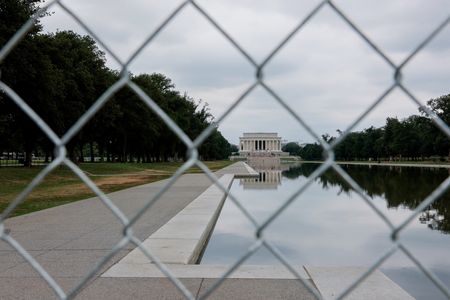
The former president has suggested hosting a political rally after several musicians withdrew from performances at the Great American State Fair in Washington, D.C., which is part of the Freedom 250 celebration.
Among the artists who have canceled their appearances is country music performer Martina McBride, leaving organizers scrambling to fill the entertainment lineup for the event.
The withdrawals have prompted discussions about alternative programming, with the former president proposing a political gathering instead of the originally planned musical performances.
The Great American State Fair was designed as part of the broader Freedom 250 festivities taking place in the nation’s capital.
The Israel Defense Forces has taken control of Beaufort Castle in southern Lebanon, hoisting Israeli and Golani Brigade flags over the historic fortress following military operations designed to dismantle Hezbollah’s infrastructure in the region, military officials announced.
The mission brought Israeli soldiers to one of southern Lebanon’s most strategically important locations. Military officials reported that forces moved past the Litani River near Metula to reach the castle, which offers commanding views of northern Israel and the Nabatieh region.
The Israel Defense Forces stated that the territory around Beaufort and Wadi Saluki had functioned as a key Hezbollah command center. Military officials reported that the militant organization had built extensive infrastructure in the location with Iranian support and utilized the site to plan attacks and fire hundreds of rockets toward Israel and Israeli troops operating in southern Lebanon.
Military officials indicated that forces continue operations near Nabatieh and stand ready to expand their mission.
“The IDF is operating near Nabatieh, a significant Hezbollah stronghold in southern Lebanon, and is prepared to expand the offensive as required,” the military said, “to destroy [Hezbollah] infrastructure and eliminate terrorists, as part of strengthening operational control in southern Lebanon and removing the direct threat to the Galilee Panhandle and Metula,” as well as to “expand the forward defense line.”
Defense Minister Israel Katz stated that regaining control of Beaufort held special meaning due to the location’s role in Israel’s previous military operations in Lebanon.
“Forty-four years after the heroic Battle of the Beaufort, and on the memorial day for the Peace for the Galilee War, including the Golani soldiers who fell in the Battle of the Beaufort, IDF soldiers, led by the Golani Brigade, returned to the summit of Beaufort and once again raised the Israeli flag and the Golani flag there,” Katz said.
The medieval fortress, originally constructed during the Crusades, was initially taken by Israeli forces during the early phases of the First Lebanon War in 1982. In that conflict, Golani Brigade troops battled Palestinian Liberation Organization (PLO) forces at the location. Dozens of PLO fighters were killed, while six Israeli soldiers lost their lives. Israeli forces maintained control of the position until withdrawing from Lebanon in 2000.
Several Israeli government agencies are working together to prevent a massive shipping company acquisition, citing national security threats and concerns about the country’s ability to maintain essential supply routes during crises, according to reports from Calcalist.
The ministries of Economy, Agriculture and Transport, along with the Shipping and Ports Authority, are opposing the planned acquisition of ZIM by German shipping company Hapag-Lloyd and the FIMI fund for $4.2 billion.
The contested acquisition received approval from ZIM shareholders in late April. The deal values the company at approximately $1 billion more than its current trading price on Wall Street and would result in ZIM being removed from public trading.
According to the acquisition terms, Hapag-Lloyd would assume control over ZIM’s global operations, while FIMI fund, led by Ishay Davidi, would oversee the company’s domestic Israeli activities.
Government authorities have expressed strong disapproval of the plan to split the company’s operations. The Ministry of Economy released a statement expressing concern that the structure “raises concerns that the framework would create a crippled company incapable of surviving independently from a business and operational standpoint.”
The ministry also cautioned that what remains of the Israeli operations would become “a tiny operational shell disconnected from the global logistics network.”
Those opposing the deal maintain that handing over the majority of ZIM’s operations to an international entity would diminish Israel’s maritime transport capabilities and compromise the nation’s ability to respond effectively during future emergencies. Government representatives argue the arrangement would establish a smaller domestic shipping operation designed to meet state ownership requirements while significantly diminishing operational effectiveness.
Government agencies have also raised red flags about Hapag-Lloyd’s investor base, pointing out that Qatar and Saudi Arabia maintain ownership stakes in the German company.
“The assumption that the State of Israel could rely during a national emergency on a shipping company whose significant shareholders include countries with interests that are opposed or hostile to Israel is completely detached from strategic reality,” the Ministry of the Economy wrote.
Government representatives have emphasized ZIM’s critical importance in serving Israeli markets, noting that the company handles approximately one-third of all food products shipped by sea into the country.
The ministry issued an additional warning that “during a security crisis, when foreign companies may reduce their activity in Israeli ports, the state could find itself struggling to import essential raw materials for industry, basic consumer goods, and other products transported by sea.”
Warren Buffett’s investment giant announced Sunday it will purchase Taylor Morrison Home Corporation through an all-cash transaction worth approximately $8.5 billion, according to a joint statement from both companies.
The deal structure calls for Berkshire Hathaway to pay $72.50 in cash for each share of common stock, putting Taylor Morrison’s total equity value at roughly $6.8 billion. This purchase price gives shareholders a 24% boost compared to Friday’s final trading price of $58.50.
Once the transaction is finalized, Taylor Morrison will transition to private ownership while maintaining its current leadership structure, with Chief Executive Sheryl Palmer remaining at the helm. The company’s stock will be removed from New York Stock Exchange trading when the deal concludes.
Both organizations anticipate completing the purchase during the latter portion of 2026. Goldman Sachs and Moelis provided financial guidance to Taylor Morrison throughout the transaction process.
Federal regulators moved Sunday to shut down a regulatory gap that potentially allowed Chinese companies to obtain America’s most advanced artificial intelligence processors through their international subsidiaries.
The Commerce Department published new guidance on its website targeting a loophole that may have permitted Chinese entities to acquire cutting-edge semiconductors, including Nvidia’s latest Rubin and Blackwell processors and AMD’s MI350x chips, by operating through locations such as Malaysia.
This regulatory oversight suggests that America’s top-tier AI semiconductors could have been reaching Chinese artificial intelligence companies for nearly twelve months, despite ongoing federal efforts to restrict Chinese access to critical semiconductor technology.
The scope of chip exports during this period remains unknown, though one industry insider with extensive supply chain expertise estimated the number could reach hundreds of thousands of units.
In the weekend announcement, federal regulators declared they would apply licensing requirements to advanced semiconductors destined for China-based entities, regardless of where those companies maintain physical operations.
Neither the Commerce Department, Nvidia, nor AMD provided immediate responses to requests for comment.
The regulatory opening emerged when the Commerce Department announced in May 2025 that it would suspend enforcement of the AI Diffusion rule, which had been implemented during the final period of the Biden administration to control worldwide AI chip access.
Technology expert and former State Department official Chris McGuire described the situation in a social media post Sunday, stating: “This is a HUGE problem.” He explained that the gap enabled overseas branches of Chinese corporations to purchase Nvidia Blackwell processors without proper licensing.
“Chinese companies have been buying these chips, very likely at scale,” McGuire stated.
The updated guidance includes an unusual provision that does not mandate data centers to discontinue using the processors or halt maintenance services for advanced computing equipment like servers.
A United Airlines aircraft heading to Palma de Mallorca was forced to reverse course and return to Newark airport late Saturday evening due to what appears to be security concerns involving a Bluetooth device aboard the plane.
According to air traffic control recordings and posts on social media, the onboard Bluetooth device prompted safety worries that led to the flight’s unexpected return to Newark Liberty International Airport.
The incident occurred as the aircraft was en route to the Spanish destination, forcing passengers to endure an unplanned return journey instead of continuing their transatlantic flight.
May 31 – An official appointed by Russia reported that a Ukrainian drone attack targeted a residential building in territory controlled by Russian forces in the southern Kherson region, resulting in the death of one child and wounding eleven others.
Vladimir Saldo, the Russia-appointed governor overseeing Russian-controlled areas of the Kherson region, posted on Telegram that the attack took place in Henichesk, a city located along the Sea of Azov coastline.
PRAGUE, May 31 – Beijing has sharply denounced a visit to Taiwan by Czech Senate President Milos Vystrcil this week, declaring on Sunday that the journey ignored his country’s official government stance and meddled in China’s domestic matters.
Vystrcil, who represents the opposition centre-right ODS party, is heading a business delegation during the Taiwan visit. His itinerary includes meetings with President Lai Ching-te and other government officials and business leaders – a move that has angered China.
“The Chinese side urges the Czech side to strictly abide by the one-China principle, immediately take effective measures to eliminate the adverse consequences of this wrongdoing, and safeguard the overall framework for the development of China-Czech relations through its concrete actions,” the Chinese embassy in Prague said on its website.
Beijing has consistently opposed connections between Prague and Taipei. China maintains that the island lacks authority for diplomatic relationships between nations, a position that Taiwan’s government firmly disputes.
While the Czech Republic officially recognizes Beijing rather than Taipei like most nations worldwide, Prague has strengthened ties with Taiwan in recent years. The island nation serves as a major player in semiconductor manufacturing and has increased its investments in the Czech Republic. Taiwan’s Foreign Minister Lin Chia-lung traveled to Prague in early May and participated in a city forum.
Czech Prime Minister Andrej Babis, whose ANO party heads a coalition with right-wing and far-right parties, has opposed the trip and declined to provide Vystrcil with government aircraft for the journey.
GREENBURGH, N.Y. — The New York Knicks chose not to display a championship banner after defeating the San Antonio Spurs for the NBA Cup title because they’re holding out for a more significant celebration.
Their championship drought has now reached 53 years, and it can only conclude by once again defeating the Spurs.
Following their first NBA Finals appearance since 1999, which they secured nearly a week ago, the Knicks finally held practice Sunday with knowledge of their opponent. The Spurs advanced after Victor Wembanyama led his team past Oklahoma City in Saturday night’s Game 7 of the Western Conference finals.
“I mean, they’re a special team,” Knicks guard Deuce McBride said. “Obviously they have the Defensive Player of the Year, obviously a great organization and they’ve got a lot of great young guys, so we’re just excited for this matchup.”
This matchup mirrors the Knicks’ previous Finals appearance, when San Antonio defeated them 27 years ago, extending New York’s championship absence that began in 1973.
New York entered this season confident about their championship prospects and received an early preview of title contention in December, when they defeated San Antonio in Las Vegas for the NBA Cup championship.
Unlike the Lakers and Milwaukee, who previously won the in-season tournament and raised banners at their home arenas, the Knicks chose not to commemorate their NBA Cup victory at Madison Square Garden. Six months later, they’re not placing much emphasis on that win, recognizing how much both franchises have evolved.
“Obviously there was good energy around that, but I don’t think that’s really going to be any equivalent to what the atmosphere or the energy is going to be like at their place, or obviously at the Garden,” Knicks forward Josh Hart said.
“So technically that game didn’t happen, so I don’t think there’s anything that we can learn from,” Hart added, poking fun at the fact that the Cup final, an 83rd game for the two teams, doesn’t count in the standings or statistics.
During the regular season, the clubs divided their two official meetings. San Antonio’s New Year’s Eve victory triggered a midseason decline for New York, who entered that contest with a 23-9 record. Later, after the Spurs completed an unbeaten February, New York ended their 11-game winning streak with a 114-89 home triumph on March 1.
Wednesday marks Game 1 in San Antonio. Beyond Wembanyama and the Spurs, the Knicks’ greatest challenge may be their limited game action recently.
Due to their dominant postseason run featuring an 11-game winning streak, Wednesday will mark only their 10th contest in a 35-day period, beginning with their April 30 series-clinching victory over Atlanta in Game 6 of the opening round.
Following a sweep of Philadelphia and more than a week of rest before the Eastern Conference finals against Cleveland, their extended break clearly affected their performance. They managed just 4 of 23 three-point attempts through three quarters and trailed by 22 points early in the fourth quarter before mounting an overtime victory.
“We understand what happened last time we had a layoff like this, so we’re just trying to be better than we were last time,” center Karl-Anthony Towns said.
That represented the Knicks’ only difficulty against the Cavaliers, as they dominated the following three games and concluded the series last Monday. During their winning streak, they have outscored opponents by 262 points, representing the largest margin for any 11-game stretch in NBA history.
The Knicks anticipate no such ease against the Spurs, whose 1999 Finals victory marked their first of five NBA championships. New York coach Mike Brown served on the bench for one of those titles as an assistant to Gregg Popovich, and was the losing coach in another when San Antonio swept Cleveland in 2007.
“I got ties to San Antonio and you appreciate the people, you appreciate the journey and all that other stuff,” said Brown, who has family still living in San Antonio. “But at the end of the day, just like they want to beat you, you definitely want to beat them.”
Cincinnati Reds All-Star shortstop Elly De La Cruz was forced to exit Sunday’s matchup with the Atlanta Braves after sustaining a right hamstring injury while attempting to stretch a hit into extra bases.
De La Cruz has been in the starting lineup for every one of the Reds’ 58 games this season, though that consecutive games streak now appears uncertain following the team’s confirmation that he was pulled due to right hamstring tightness.
During the fifth inning, De La Cruz connected on a ball that bounced twice before reaching the wall in right-center field. However, as he approached the turn at first base, De La Cruz visibly slowed his pace and took several cautious steps toward second base before returning to first.
Following an examination by the team’s trainer, De La Cruz was substituted with pinch runner Matt McLain.
The 24-year-old player has put together an impressive campaign that earned him his third straight All-Star Game selection. With his 2-for-2 performance on Sunday that included a walk and stolen base, De La Cruz is batting .280/.346/.509 with 12 home runs, 37 RBIs and 10 stolen bases this season.
De La Cruz appeared in all 162 games during the 2025 season and 160 games in 2024.
Soccer fans will see major rule modifications when the 2026 World Cup begins on June 11, as the International Football Association Board has approved sweeping changes to how the game is played and officiated.
The tournament, set to take place across the United States, Mexico and Canada, will be the first major competition to implement these new regulations, which will also apply to the 2026-27 season.
“The IFAB approved a set of landmark changes to the Laws of the Game and the FIFA World Cup 2026 will be the first major tournament to use them,” FIFA’s Chief Refereeing Officer Pierluigi Collina told reporters.
“These amendments aim to tackle discrimination, cut time-wasting, enhance match tempo and improve both the player and fan experience,” Collina explained.
MOUTH COVERING PENALTIES
Players who use their hands, arms, or jerseys to cover their mouths during confrontational moments will face immediate ejection with a red card. This regulation was introduced following an incident where Benfica’s Gianluca Prestianni allegedly made discriminatory comments toward Vinicius Jr while concealing his mouth. UEFA suspended Prestianni for six games, with the penalty extended globally.
The rule will not apply to players having casual conversations with teammates from opposing clubs, officials clarified.
FIELD DEPARTURE PROTESTS
Any player who exits the playing surface to dispute a referee’s call will receive a red card. The same penalty applies to coaching staff who encourage players to leave in protest. Teams that cause match abandonment will automatically lose the contest.
This change follows an incident during the Africa Cup of Nations final when Senegal walked off to protest a penalty decision against them before returning to defeat Morocco 1-0 in extra time.
TIMING RESTRICTIONS
Referees will implement visible five-second countdowns using raised hands for throw-ins and goal kicks. If players fail to put the ball back in play within this timeframe, possession switches to the opposing team through either a throw-in or corner kick.
SUBSTITUTION UPDATES
Players being replaced have just 10 seconds to exit the field once the substitution board appears, and must leave at the closest boundary point. Those who exceed this limit will delay their replacement’s entry until the next stoppage after one minute has passed. Exceptions include injuries and safety concerns.
MEDICAL TREATMENT RULES
Field players who receive on-field medical attention must remain off the pitch for one minute after play resumes. Goalkeepers, collision victims, players with severe injuries, and penalty takers are exempt from this requirement.
VIDEO REVIEW EXPANSION
“We started (using) VAR in FIFA competitions in 2017, at the Confederations Cup before the World Cup in Russia in 2018,” Collina noted. “So, we (think it is) the time to reconsider the protocol which was written when there was very limited experience.”
Video Assistant Referee technology will now cover additional situations including incorrect yellow cards that should be red, mistaken player identity for cards, wrongly awarded corner kicks, and fouls committed before set pieces.
“VAR will recommend an on-field review, following which, if the referee determines that an offence occurred before the ball was in play, the appropriate disciplinary action will be taken and the corner kick or free kick will be retaken,” IFAB stated.
HYDRATION PERIODS
Every match will feature mandatory three-minute water breaks in each half, typically occurring around the 22nd minute. Referees can adjust timing based on game circumstances, such as injury treatments.
GOALKEEPER TREATMENT PROTOCOL
When goalkeepers receive medical care on the field, players from both teams must remain on the pitch and cannot consult with their coaches during this timeout period.
Family visits have resumed at an immigration detention facility in Newark, New Jersey, following two consecutive nights of activist arrests and escalating tensions with law enforcement officials.
Governor Mikie Sherrill announced Sunday that relatives will be permitted to visit detainees at Delaney Hall under police escort. This development came hours after Newark Mayor Ras Baraka established a nighttime curfew covering a half-mile radius around the facility.
The Democratic governor had directed state police to assume control of the area surrounding the detention center on Friday, responding to days of heated confrontations between demonstrators and federal Immigration and Customs Enforcement agents. State Attorney General Jennifer Davenport confirmed during a Sunday press conference that law enforcement has now secured a “broader area than just outside Delaney Hall” citing safety concerns.
The ongoing unrest presents a significant challenge for Sherrill’s administration, which seeks to avoid providing justification for expanded federal agent deployment throughout New Jersey. President Donald Trump, who returned to office in January 2025, has pointed to immigration enforcement protests as justification for dispatching federal law enforcement personnel to American cities.
“ICE is not a law enforcement agency we want on our streets in any way,” Sherrill stated to reporters Sunday.
The governor also reiterated her earlier appeal for demonstrators to “bring the temperature down” through peaceful conduct. According to state police, three individuals were taken into custody Saturday evening during protests, adding to the six protesters detained Friday.
A Department of Homeland Security representative, the federal agency responsible for overseeing immigration enforcement and Delaney Hall operations, stated Sunday that activities will “continue as normal.”
The facility houses 1,000 beds and operates under private company Geo Group management on behalf of ICE. Immigration advocates, Sherrill, and other Democratic officials have demanded the facility’s closure, characterizing it as a mismanaged location with inhumane treatment conditions.
House Minority Leader Hakeem Jeffries, a New York Democrat, issued a statement Sunday morning following his facility visit alongside three New Jersey congressional delegation members. “The situation is unacceptable,” Jeffries declared. “Delaney Hall must be shut down immediately.”
On Saturday, Sherrill attributed heightened protest tensions to outside agitators from other states, noting that most demonstrators “want to be there peacefully.”
New Jersey Democratic Senator Andy Kim characterized the current tension level surrounding the ICE protests as extraordinary.
“I’ve not seen my state with this level of precariousness through my entire time in elected office,” Kim stated during his Sunday appearance on CNN’s “State of the Union” program.
Homeland Security Secretary Markwayne Mullin, responsible for national airport security oversight, issued a Thursday warning threatening to reduce international traveler processing at Newark Liberty International Airport due to insufficient local law enforcement cooperation with federal immigration officials. The airport serves as a primary entry point to New York City.
Kim dismissed the airport closure concept as illogical. “That would be just shooting ourselves in the foot,” he commented regarding international travel restrictions.
An 18-year-old football player at Ball State University has passed away following a shooting incident in Florida, according to multiple media reports released Sunday.
Gavin Yates-Lyons, originally from Valdosta, Georgia, was one of three people injured in a shooting that occurred in a Tallahassee parking structure on May 24. Reports from The Tallahassee Democrat indicate that Yates-Lyons became trapped in gunfire within the garage, which sits next to housing complexes used by Florida State University students.
Medical personnel transported him to a nearby hospital, where he succumbed to his injuries on Saturday.
The young athlete had excelled as a defensive back while attending Lowndes County High School in Georgia. After completing his studies early in December 2025, he joined Ball State University for the spring 2026 term as an early enrollment student.
Ball State football chief of staff Pete Roley released a statement on the social media platform X Sunday morning, saying: “Gavin was an extraordinary person and it is difficult to express the grief we all feel.”
Roley’s statement continued: “Our hearts are with his family, friends and loved ones during this difficult time. Thank you to the Ball State admin, staff and community for the support of our players and staff as we mourn.”
Just one day prior to the shooting incident, Yates-Lyons had traveled back to his former high school to participate in graduation festivities.
Two other individuals were wounded in the same shooting event. Both adult men sustained injuries that were not considered life-threatening.
Law enforcement officials with the Tallahassee Police Department report that those responsible for the shooting remain unapprehended, and their investigation continues.
The Pittsburgh Pirates have sidelined rookie shortstop Konnor Griffin for a minimum of 10 days on Sunday, giving his injured right elbow adequate time to recover from a strain.
The 20-year-old had been filling the designated hitter role for the past two games as the team attempted to keep his offensive production in the lineup while reducing stress on his throwing arm, but management ultimately determined this approach was insufficient to avoid placing him on the injured list.
Griffin delivered solid offensive numbers during Pittsburgh’s weekend sweep of Minnesota, going 4-for-9 with one double and scoring a run in Friday and Saturday’s wins.
Following a challenging beginning to his rookie campaign, Griffin has improved his performance to a .270/.327/.402 slash line, contributing four home runs and 14 stolen bases across 51 games this season.
The Pirates filled Griffin’s roster spot by reinstating first baseman and outfielder Ryan O’Hearn from the injured list. O’Hearn had posted impressive numbers with a .289/.368/.459 slash line, seven home runs, and 29 RBI in 44 games before being sidelined with a strained right quadriceps.
Pittsburgh also adjusted its pitching staff, moving Carmen Mlodzinski to the restricted list after he was removed from the starting rotation this week to accommodate Jared Jones. Right-handed reliever Cam Sanders was promoted from Triple-A Indianapolis to take his place.
The 27-year-old Mlodzinski compiled a 4-3 record with a 3.76 ERA across 11 appearances this season, including nine starts. He recorded 46 strikeouts against 20 walks in 55 innings of work.
Sanders appeared in five relief outings for Pittsburgh earlier this season, allowing six runs, six hits, and five walks across five innings for a 10.80 ERA. The 29-year-old has shown improvement at the Triple-A level, posting a 3.77 ERA with 25 strikeouts in 14 1/3 innings.
SAN ANTONIO (AP) — Victor Wembanyama struggled to find his words.
Following the San Antonio Spurs’ victory in the Western Conference championship that secured their spot in this year’s NBA Finals against the New York Knicks, the young star was asked about his connection with former head coach Gregg Popovich and the significance of this postseason journey for the legendary coach.
Wembanyama hesitated, visibly moved by emotion, before responding.
“I don’t know what it means for him,” Wembanyama said. “That’s a guy who’s got more experience as a coach than almost anybody and has been through so many things in his career and so many things right now as ‘El Jefe.’ He goes through some things we can’t even imagine. So, I need to call him. I need to see him. I need to talk to him because there’s no way I can understand right now how he feels.”
Popovich, age 77, currently holds the position of President of Spurs Basketball. In an unofficial capacity, the Basketball Hall of Famer functions as coach emeritus — frequently attending team practices in San Antonio and appearing at games, occasionally using a cane for mobility. He continues to influence both players and coaching staff, even making an appearance in the locker room following the Spurs’ Game 3 defeat to Oklahoma City in the West finals to deliver both encouragement and criticism, depending on one’s viewpoint.
However, his true role is El Jefe. The leader. This is how he identified himself upon stepping down from coaching last year, making his first public appearance since suffering a stroke in November 2024 that effectively concluded his coaching tenure and resulted in Mitch Johnson taking over the position with minimal advance notice. He appeared at that event wearing a jacket, which he then opened to reveal a shirt displaying “El Jefe” across the front.
“You talk about the greatest coach pretty much of all time to be able to sit here and tell you the experiences that they went through or that he’s been through or that he sees,” Spurs guard Devin Vassell said. “I mean, it’s second to none, honestly. He helps out. He helps out a lot. … He just has so much wisdom and stuff that you can’t take for granted.”
The opening game of the Knicks-Spurs championship series begins Wednesday in San Antonio.
Knicks coach Mike Brown experienced Popovich’s leadership style directly during his three-year tenure as an assistant coach in San Antonio.
Brown maintains family connections in San Antonio — leading him to mention recently that a Knicks-Spurs NBA Finals matchup would reduce his expenses since he wouldn’t need to arrange flights for as many relatives to attend the games.
“He still has a huge presence. He will always have a presence,” Brown said of Popovich. “The job that he’s done, not only on the court with that team or that organization but off the court too, is going to be imprinted for as long as the game of basketball exists. His presence is very, very much felt all the time and I’ve got a lot of respect for the organization for a lot of different reasons.”
Popovich continues to earn that reverence, even in his current role.
The veteran coach greeted the Spurs upon their return from Games 3 and 4 of their West semifinal matchup against Minnesota several weeks ago — with deliberate intent. Wembanyama had been thrown out of Game 4 following a flagrant elbow he delivered to Timberwolves forward Naz Reid. Upon Wembanyama’s arrival from the aircraft, Popovich was there waiting. Video footage captured their interaction, making it evident that Popovich was speaking while Wembanyama listened attentively.
“He gives feedback and talks to us regularly,” Wembanyama said, without revealing the content of Popovich’s message that day.
During his coaching tenure with San Antonio, Popovich captured five NBA titles, with the initial championship occurring in 1999 when the Spurs defeated the New York Knicks. The current chapter of Spurs basketball has begun, with Johnson at the helm, and it presents an intriguing parallel that his inaugural finals as Spurs coach features the same opponent as Popovich’s first championship.
“I’m fortunate my old boss is still around, and has been through this a few times,” Johnson said. “Coach Pop has been a resource.”
Following his most significant victory to date — the triumph that earned him entry to his first NBA Finals with hopes for many more — Wembanyama expressed urgency about speaking with El Jefe.
“When I talk to him, it’s going to be only stored in my head — except if I record it in secret,” Wembanyama said. “But I need to talk to him, so quick.”
Additional knowledge awaits. Four more victories are required. Wembanyama understands that if anyone possesses the blueprint for achieving those wins, it’s Popovich.
A prominent Indigenous rights advocate from Nicaragua has died while in government custody, sparking international condemnation from human rights organizations.
Brooklyn Rivera, who had been detained by Nicaraguan authorities since September 2023, passed away under circumstances that have drawn sharp criticism from activists worldwide. Government officials released a statement on Sunday claiming Rivera’s death resulted from bacterial complications connected to COVID-19 that caused both physical and neurological decline.
International human rights advocates have strongly criticized both Rivera’s death and a government statement issued Saturday that referred to the detained leader as “Brother” while claiming officials were offering prayers for him.
“They took him alive, and after refusing to tell his family, his lawyer, the world anything about his fate, then they call him brother,” said Reed Brody, an American human rights lawyer and member of a group of U.N. experts on Nicaragua. “Unconscionable cynicism on the part of the government to make it seem like they were trying to help him.”
Rivera served as a leader for the Miskito people, an Indigenous community residing along Nicaragua’s northeastern coastline that has maintained a long struggle to preserve their ancestral territories.
Throughout his decades of activism, Rivera opposed the ruling Sandinista government while working to secure autonomous status for the northeastern coastal region. This territory contains valuable deposits of gold, silver and other natural resources, making it a priority area for the administration of co-Presidents Daniel Ortega and his wife Rosario Murillo as they seek to draw foreign investment.
The Los Angeles Dodgers brought back left-handed pitcher Jack Dreyer from the 15-day injury list on Sunday while sending right-hander Paul Gervase down to Triple-A Oklahoma City.
The 27-year-old Dreyer had been sidelined for 13 games due to inflammation in his left shoulder. He last took the mound on May 15, throwing in the eighth inning during a 6-0 win against the Los Angeles Angels.
This season, Dreyer holds a 2-1 record with a 2.08 ERA across 20 relief appearances, recording 24 strikeouts against six walks over 21 2/3 innings. Since joining the major leagues with the Dodgers last year, he has compiled a 5-3 record with four saves and a 2.76 ERA in 87 total games, including five starts.
Meanwhile, the 26-year-old Gervase posted a 1.80 ERA in two bullpen outings this season for Los Angeles without recording a decision. At the Triple-A level, he carries a 2-0 record with one save and a 5.14 ERA across 10 relief appearances.
Detroit Tigers veteran pitcher Justin Verlander is scheduled to take the mound for Triple-A Toledo on Tuesday, marking his return to competitive play following a left hip injury sustained in late March.
The 43-year-old right-handed pitcher finished two simulated games prior to starting his rehabilitation assignment with the Mud Hens.
Verlander was sidelined on the 15-day injured list due to left hip inflammation on April 4, following his designation as a three-time Cy Young Award recipient.
Tuesday’s matchup against Iowa in Des Moines will mark Verlander’s first game action since giving up five runs on six hits over 3 2/3 innings during Detroit’s 9-6 defeat to Arizona on March 30, his only outing this season in what is his 21st campaign.
“Getting him into competition is something that we’ve been pushing for and he’s been pushing for,” manager A.J. Hinch said before Sunday’s series finale against the host Chicago White Sox. “We feel like we can take a normal start and deal with odds and ends of a start, whether it’s various pitch counts, ups and downs. He can pitch significant innings.”
While Verlander has worked up to around 70 pitches during his recovery, the length of his rehab assignment remains uncertain. According to the Detroit Free Press, he will rejoin Detroit on Wednesday to reconnect with the team following their road trip to Tampa.
“I’m happy that he’s getting to that next step,” Hinch said. “I don’t know what it means or how many innings he’s even going to go.”
The nine-time All-Star, two-time World Series champion and 2011 American League MVP holds a career record of 266-159 with a 3.33 ERA and 3,554 strikeouts across 556 career starts with four different teams.
In other roster news Sunday, the Tigers brought back outfielder/DH Kerry Carpenter from the 10-day injured list while sending infielder Gage Workman down to Toledo.
Carpenter was placed on the IL with a left shoulder sprain on May 10, just one day after colliding with the wall in right field during an inside-the-park home run by Kansas City Royals star Bobby Witt Jr.
The 28-year-old Carpenter remained in the contest following Witt’s first-inning homer but departed two innings later due to the sprained AC joint. This season, he’s hitting .216 with six homers and 17 RBIs across 37 games.
Workman, 26, posted a .158 average with two home runs and five RBIs in 16 games after being promoted to fill Carpenter’s roster spot.
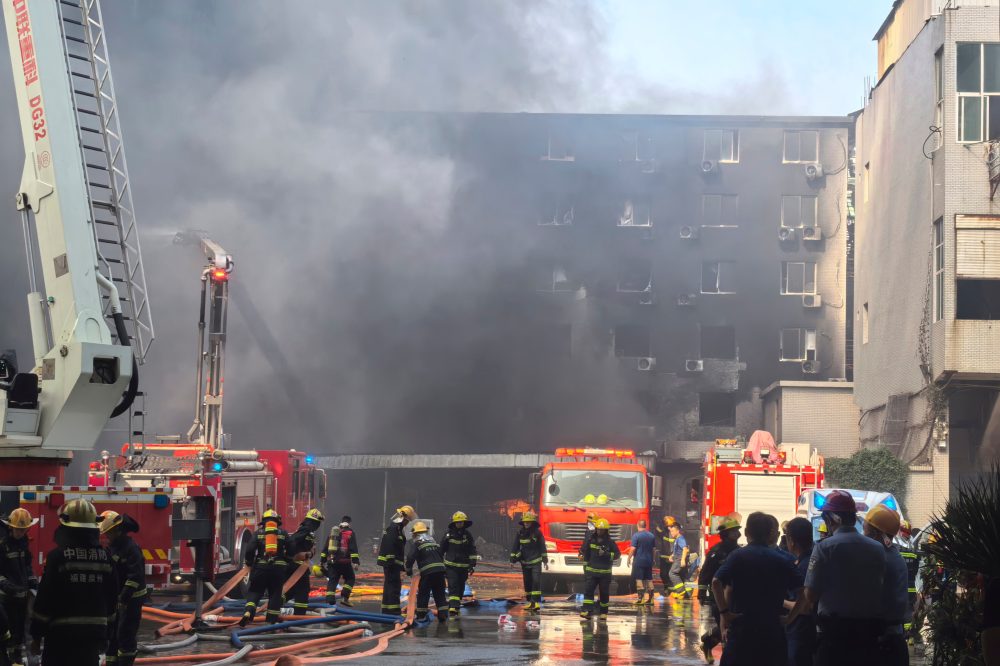
Emergency responders report that a devastating explosion at a Myanmar facility housing mining explosives has resulted in the deaths of more than 45 individuals, with dozens more suffering injuries.
The deadly blast occurred around midday Sunday in Kaungtup village, located in Namhkam township, leaving approximately 70 people wounded.
The village sits roughly 3 kilometers (2 miles) from Myanmar’s border with China, in territory controlled by the Ta’ang National Liberation Army, an ethnic military organization that has periodically clashed with Myanmar’s national government.
An emergency responder who arrived at the explosion site informed The Associated Press that 46 fatalities, including six children, had been retrieved by Sunday night and prepared for cremation.
Speaking anonymously due to safety concerns, the responder reported that 74 wounded individuals had been transported to the township medical facility, with rescue efforts still ongoing.
A second rescue worker in Namhkam, also requesting anonymity, confirmed approximately 40 deaths and reported that more than 100 residences surrounding the blast location sustained damage.
News organizations in Myanmar, including Shan State’s online Shwe Phee Myay news agency, documented fatality counts between 50 and 55. They released photographs and video footage displaying smoke from the blast and the resulting structural damage and wreckage.
China’s state-run CCTV network confirmed the explosion resulted in multiple casualties and injuries, with numerous homes suffering significant damage, though specific numbers were not provided.
According to initial findings reported by the broadcaster, the explosion happened at a location where substantial amounts of mining explosives were kept in storage.
The report stated that local officials are currently delivering emergency aid, medical treatment, and relocation support to impacted community members.
In a statement posted to its Telegram channel, the Ta’ang National Liberation Army, or TNLA, confirmed that gelignite had been kept by the organization’s economic division for mining and quarrying operations, adding that they are investigating what caused the explosion.
While gelignite serves common purposes in mining and rock demolition, it can develop dangerous instability as it ages or when stored improperly.
The Ta’ang National Liberation Army, or TNLA, belongs to the insurgent Three Brotherhood Alliance and has maintained control over the Namhkam region since the alliance and its partners initiated a significant military campaign against Myanmar’s armed forces in northeastern areas during late 2023. Alliance participants and other ethnic military organizations have historically fought for greater self-governance.
Following China-facilitated negotiations in October of last year, the TNLA agreed to a ceasefire with Myanmar’s military, though tensions continue.
Myanmar has experienced chaos since military forces overthrew the democratically elected administration of Aung San Suu Kyi on Feb. 1, 2021, sparking extensive public resistance. When peaceful protests were violently suppressed, many military opponents armed themselves, and substantial portions of the nation are now experiencing armed conflict.
Ukrainian President Volodymyr Zelenskiy announced during a television interview aired Sunday that he aims to advance peace negotiations with Russia before winter arrives, capitalizing on what he describes as Ukraine’s enhanced strategic standing.
Peace discussions facilitated by the United States have reached an impasse as Washington has shifted attention to the conflict in Iran.
According to Zelenskiy and other Ukrainian leadership, Russian military advancement has decelerated while Ukraine has escalated medium and long-range attacks within Russian territory, primarily focusing on Russia’s petroleum sector.
“It began in December 2025, Russia began to lose the initiative on the battlefield,” Zelenskiy stated during his appearance on CBS Television’s ‘Face the Nation’.
“So now we have this period of time before the winter… before the winter we need to find a way, diplomatic way, to sit and to speak,” Zelenskiy explained, noting that success depends on mounting pressure against Russian President Vladimir Putin, “the pressure in his society, and I think that is increasing, the pressure by sanctions — not to lift them, to put more.”
The Ukrainian leader mentioned potential negotiations facilitated by European nations or direct discussions with Russia, while reiterating his demand for stricter sanctions against Russia.
A high-ranking Ukrainian military official informed Reuters during an interview the previous week that Ukraine possesses a six-month opportunity to capture battlefield momentum and improve its position for future peace negotiations.
Brigadier General Andriy Biletsky, leading Ukraine’s Third Army Corps, expressed his assessment that Russia’s military forces are depleted and unable to achieve significant advances.
During his CBS interview, Zelenskiy also emphasized Ukraine’s need for American assistance with air defense missiles while European anti-missile defense systems remain unavailable.
“Until the moment we will produce our European anti-ballistic system, until this moment, we need support from the United States,” he stated.
Ukraine anticipates securing an agreement with the United States regarding collaborative drone technology, with Kyiv offering knowledge gained from five years of intercepting Russian drones and missiles.
“We have already drone deals with some Middle East countries and we have already drone deals with some European countries,” he said. “Now we’re preparing the big drone deal with the European Union and I hope that we will have such decisions with American partners. I count on it.”
Health officials report that two Palestinians were killed and 12 others injured Sunday when an Israeli airstrike hit a Gaza cafe filled with people celebrating public holidays.
Israeli officials have not yet responded to requests for comment about the incident.
A ceasefire agreement negotiated by U.S. President Donald Trump in October has not stopped Israeli military operations in Gaza.
Israel and Hamas remain at an impasse in indirect negotiations regarding the implementation of the second phase of the agreement, which would involve the group’s disarmament and the withdrawal of Israeli forces.
Under the current ceasefire terms, Israel maintains control over more than half of Gaza’s territory, while Hamas governs a narrow strip along the coast. Sunday’s targeted cafe was located at Gaza’s emergency seaport, which consists of a temporary floating dock positioned offshore.
Gaza health officials report that approximately 900 Palestinians have died in Israeli military operations since the truce took effect, though these figures do not separate military combatants from civilians.
During this same timeframe, the country’s military reports that four Israeli soldiers have been killed by militants.
Minnesota placed right-handed pitcher Bailey Ober on the 15-day injured list Sunday due to inflammation in his right elbow.
The 30-year-old hurler holds a 6-3 record with a 4.59 ERA across 12 starts this season. His Saturday performance against Pittsburgh was particularly rough, surrendering eight runs (seven earned) on 12 hits over 4 2/3 innings during a 10-9 defeat.
Since joining the Twins in 2021, Ober has compiled a 37-33 record with a 4.13 ERA over 127 career starts. During his tenure, he has recorded 650 strikeouts against 151 walks across 684 1/3 innings pitched.
The organization also promoted right-hander Mike Paredes by selecting his contract, sent right-hander John Klein down to Triple-A St. Paul, and brought back right-hander Travis Adams from St. Paul.
The 25-year-old Paredes has not yet appeared in the major leagues. This season, he has posted a 3-2 record with a 4.44 ERA across 13 appearances (10 starts) split between St. Paul and Double-A Wichita.
Klein, 24, was brought up Saturday and worked the final two innings against Pittsburgh, giving up one hit while issuing three walks and recording one strikeout. He carries a 0-1 record with a 4.15 ERA through three relief outings this season.
Adams, 26, has appeared in seven bullpen games this season, posting a 1-0 record with one save and a 7.20 ERA.
Tampa Bay has sidelined veteran reliever Craig Kimbrel with a right wrist injury, moving him to the 15-day injured list as of Sunday.
The team made the injury designation effective from Thursday, which marked Kimbrel’s 38th birthday.
Since joining Tampa Bay, Kimbrel has pitched just once – taking the mound against Baltimore on Tuesday where he recorded two strikeouts during a clean inning of relief work.
The veteran right-hander joined the Rays as a free agent this past Monday after declining a minor league assignment offer from New York.
During his time with the Mets this season, Kimbrel struggled to a 0-2 record and 6.00 ERA across 14 relief appearances. He managed 15 strikeouts over 15 innings pitched but failed to register any saves.
The accomplished closer sits fifth on baseball’s all-time saves list with 440 career saves. He topped the National League in saves for four consecutive years while with Atlanta, beginning with his Rookie of the Year season in 2011. Throughout his career, he has compiled a 56-50 record with a 2.64 ERA over 866 relief outings.
Tampa Bay also made additional roster moves Sunday, bringing up left-handed pitcher Cam Booser and right-handed pitcher Trevor Martin from their Triple-A Durham affiliate while placing right-hander Andrew Wantz on waivers.
The 34-year-old Booser will make his first appearance in a Rays uniform this year. He brings a 4-7 record and 4.28 ERA from 82 career relief appearances split between Boston and Chicago.
Martin, age 25, has posted a 3.68 ERA without a decision through four relief appearances during his first major league season with Tampa Bay.
Wantz, 30, struggled in his only outing this season for the Rays, surrendering five runs on two hits across 1 2/3 innings during Saturday’s 14-3 loss to Los Angeles.
Norway achieved a remarkable 3-2 overtime victory against Canada on Sunday to claim the bronze medal at the IIHF Ice Hockey World Championship in Zurich, marking their greatest achievement in tournament history while delivering another shocking loss to the Canadian squad.
Canada entered the bronze medal contest as heavy favorites to earn their first medal since 2023, especially after suffering an unexpected quarter-final elimination by Denmark the previous year. However, the Canadians found themselves trailing 2-0 and required two clutch goals from Robert Thomas, including one with just eight seconds remaining in regulation, to send the game into overtime.
Despite appearing completely exhausted after absorbing a devastating 6-0 defeat against host Switzerland in Saturday’s semifinal, Norway found the strength for one final push. Noah Steen delivered the decisive goal 3 minutes and 32 seconds into the extra period, clinching Norway’s maiden tournament medal.
The historic achievement drew praise from Norway’s prime minister Jonas Gahr Store, who posted on social media: “An incredible and historic day – with a winning goal in sudden death… We celebrate, (this is) a new era for Norwegian ice hockey.”
Switzerland and Finland will compete in Sunday’s championship final.
A devastating blast in Myanmar has claimed the lives of at least 55 individuals and left dozens injured in a rural village, according to a BBC report released Sunday.
The deadly incident took place in Kaung Tat village, situated in Namkham Township within Shan State, where the explosion resulted in the deaths of 25 women and 30 men.
Reuters has not been able to independently confirm the details of this report at this time.
This year’s NBA Finals brings together a franchise riding an impressive 11-game winning streak against a squad anchored by a towering 7-foot-4 phenom.
New York has been resting since completing a sweep of Cleveland in the Eastern Conference championship on May 25, marking their first Finals berth since 1999. During that previous appearance, they faced San Antonio, with the Spurs claiming victory in five contests for their inaugural championship under coach Gregg Popovich, who would go on to guide the team to five total titles.
Once again finding themselves in the underdog role, New York faces a challenging path to capture their first championship since 1973. Sportsbooks have installed the Jalen Brunson-led squad at +170 odds according to both BetMGM and DraftKings, while San Antonio — featuring 22-year-old Victor Wembanyama — stands as the favorite at -210 and -205 respectively.
In Saturday’s decisive seventh game against the defending champion Oklahoma City Thunder, Wembanyama contributed 22 points and seven rebounds as San Antonio prevailed 111-103 over reigning MVP Shai Gilgeous-Alexander and his teammates in the Western Conference championship.
San Antonio, seeking their first championship in 12 years, will welcome New York for Game 1 of the Finals on Wednesday evening.
The teams split their regular season series, though New York emerged victorious 124-113 when they met in the NBA Cup Final on Dec. 16.
Brazilian health officials announced Sunday they are investigating two potential Ebola cases after patients who recently returned from Africa developed concerning symptoms.
According to local health authorities, one patient in Sao Paulo state has tested positive for meningitis, while a second suspected case has emerged in Rio de Janeiro state where the patient tested positive for malaria. Officials emphasized that finding these other diseases doesn’t eliminate the possibility that either patient could also have Ebola, and both cases remain under active investigation.
The Sao Paulo patient is a man from the Democratic Republic of Congo who developed a fever following a recent trip to that African nation. The Rio de Janeiro patient had recently returned from Uganda. Health officials noted that both the Democratic Republic of Congo and Uganda are currently dealing with Ebola outbreaks.
Brazil’s Health Ministry released additional information about the Sao Paulo case, revealing that the patient has been placed on a ventilator and is in serious condition.
Israeli forces fatally shot a Palestinian worker at a checkpoint barrier near Jerusalem on Sunday, according to the Palestinian Health Ministry.
Officials identified the victim as 26-year-old Imad Haroun Ishtayeh, a resident of Salim town located east of Nablus. The ministry reported that Israeli forces wounded him with gunfire to his thigh in al-Ram town, and medical personnel later declared him dead at the Palestinian Medical Complex in Ramallah.
Video footage shared on social media depicted people carrying his body and descending a ladder positioned against the wire-topped checkpoint while vehicles passed nearby and horns sounded.
Israeli police have not yet provided a statement regarding the fatal shooting.
Ishtayeh was reportedly trying to cross illegally from the West Bank into Israel. Multiple individuals have been shot while attempting to breach the checkpoint, including a 44-year-old father who died in a similar incident earlier this month.
Growing numbers of Palestinians from the West Bank have attempted unauthorized entry into Israel for employment opportunities in recent years. While tens of thousands of Palestinians previously held valid Israeli work permits, access became severely limited following the Hamas-led assault on southern Israel on Oct. 7, 2023, which triggered the Gaza conflict.
Following that date, joblessness in the West Bank has climbed dramatically during an economic downturn. Approximately 50 workers have died from Israeli gunfire, with more than 38,000 detained although many were subsequently freed, the Palestinian official WAFA news agency reported Sunday, referencing data from the General Federation of Palestinian Trade Unions.
Police in Hawaii have filed murder charges against a 36-year-old man following the deaths of three individuals in an isolated area known for its alternative, community-oriented way of life.
Jacob Daniel Baker faces charges including first- and second-degree murder as of Saturday, according to a statement from the Hawaii Police Department.
Baker was being held without bail as of Sunday, with authorities scheduling his initial court hearing for Monday. No information was available regarding legal representation for Baker.
The murder charges were filed two days following Baker’s capture after law enforcement conducted a search across Hawaii’s Big Island, where three victims were discovered in the remote Puna area, recognized for its lush environment and unconventional residents.
Authorities discovered Robert Shine, 69, on Monday, partially immersed in a concrete pond. A second victim, identified by acquaintances as Chitta Morse, 79, was located Tuesday several hundred feet from the first discovery.
The third victim, John Carse, 69, was found by police late Tuesday at a location 19 miles (31 kilometers) away from where the other two bodies were discovered.
Authorities have not revealed a potential reason for the deaths. Hawaii Police Chief Reed Mahuna stated that investigators discovered no links between the victims except that two resided close to one another.
Beyond the murder charges, Baker is also facing accusations of burglary, vehicle theft and property destruction.
The deaths created anxiety among Puna residents, an area situated within dense jungle and barren volcanic rock where individuals seeking independent living frequently exchange labor for housing.
Local resident Stephen Shaffer explained that Baker had performed work for his former spouse, scaling coconut palms on property where she cultivates fruit, receiving accommodation in return. Following several months, Shaffer noted, his ex-wife pursued a protective order against Baker, stating she felt intimidated by his behavior.
Donald Hyatt, an acquaintance of Shaffer’s former spouse and two of the deceased men, reported that Baker departed the cabin where he had been staying months earlier. Hyatt mentioned that Baker had recently returned asserting “squatter’s rights” and made threats against Shaffer’s ex.
Days prior to the deaths, two women had sought emergency restraining orders against Baker, claiming he had made threats and engaged in harassment, court documents show. A judge rejected both requests, determining insufficient evidence of harassment existed.
Court files revealed Baker’s involvement in 20 additional cases over the past two decades, primarily traffic violations. In the majority of these instances, Baker lacked legal counsel and defended himself.
A United Airlines aircraft en route to Spain from Newark Liberty International Airport was forced to return Saturday evening following a potential security incident during the flight.
The Boeing 767 had taken off around 6 p.m. Saturday bound for Palma de Mallorca, Spain, but made an emergency return to Newark, touching down at 9:37 p.m., the Port Authority of New York and New Jersey reported. The aircraft was carrying 190 passengers along with 12 crew members.
Air traffic control recordings revealed that security personnel were called to examine the plane after a traveler had given their Bluetooth device an inappropriate four-letter name. A passenger’s social media post described how flight attendants made multiple announcements requesting all passengers disable their Bluetooth devices, yet two remained active. The decision to return was made following consultation with the airline’s Chicago headquarters.
All passengers were required to exit the aircraft while Port Authority police conducted a thorough security sweep. Following the inspection, travelers underwent additional screening by TSA and Customs and Border Patrol agents before being cleared to continue their journey. The airline chose not to elaborate on the specific details surrounding the incident.
A substitute aircraft with fresh crew members was provided for passengers, departing early Sunday morning and successfully reaching Palma that afternoon.
This marks another in a series of recent United Airlines incidents this month. Just Friday, another United flight was rerouted due to security issues involving a disruptive passenger. Earlier in the month, a United aircraft arriving at Newark airport collided with a semitrailer truck and a light pole, though the incident resulted in no injuries.
NEWARK, N.J. — Newark’s mayor has established an overnight curfew surrounding an immigration detention facility following violent confrontations between demonstrators and law enforcement officers.
Mayor Ras Baraka announced the curfew around Delaney Hall will remain active from 9 p.m. to 6 a.m. indefinitely, according to his statement.
The decision follows another evening of violent encounters between officers and protesters at the detention center, with images and footage showing demonstrators battling over barriers while police deployed riot shields to force them back. Social media footage captured mounted officers advancing into crowds in an effort to disperse groups of protesters.
Protests at Delaney Hall started earlier this month when advocacy groups reported that inmates had begun a hunger strike due to inadequate living conditions at the 1,000-bed detention center, which has become another focal point of resistance against federal immigration enforcement policies.
On Friday, New Jersey state police took over from federal immigration enforcement officers who had been confronting protesters at the location for several days.
In Sunday morning remarks, New Jersey Gov. Mikie Sherrill stated that masked protesters attacked barriers in a designated demonstration zone established by state police and were “throwing projectiles, utilizing the barriers as weapons, and lighting tires on fire in the street.”
“These actions put both peaceful protestors and law enforcement in danger,” Sherrill stated, calling for restraint to concentrate on pushing for “better conditions for the detainees, for their families, and ultimately, for the closure of Delaney Hall.”
Delaware State Police have taken a 59-year-old Dover resident into custody on felony impaired driving charges after investigating a single-vehicle accident Friday afternoon in Dover.
Authorities say Carolyn Reed was arrested following the incident that occurred on May 29, 2026, around 4:45 p.m. Officers were called to the 3500 block of West Denneys Road after receiving reports of a car that had left the roadway. Upon arrival, police discovered a Ford Fusion sitting in a ditch with its back wheels elevated off the ground.
During their interaction with Reed, who was behind the wheel, officers observed multiple indicators suggesting impairment. When asked to complete Standardized Field Sobriety Tests, Reed declined to participate and was subsequently arrested without any complications. A background check revealed Reed’s driving privileges had been suspended and she had previously been convicted of driving under the influence on four separate occasions.
Following her arrest, Reed was transported to Troop 9, where authorities secured and carried out a search warrant to obtain a blood sample. She now faces multiple charges and was processed through Justice of the Peace Court 11 before being sent to the Delores J. Baylor Women’s Correctional Institution. Her bond was set at $6,250 cash.
The charges against Reed include:
5th Offense Driving Under the Influence of Alcohol (Felony)
PARIS, May 31 – Spanish teenager Rafael Jodar mounted an extraordinary comeback Sunday, overcoming a two-set deficit to defeat veteran Pablo Carreno Busta 4-6 4-6 6-1 6-2 6-2 in an all-Spanish generational clash at the French Open, securing his first quarterfinal appearance at the tournament.
The 19-year-old clay court specialist, who only turned professional late last year, has emerged as a potential dark horse contender following unexpected departures of several top-seeded players, including world number one Jannick Sinner. This marks his second consecutive five-set victory after defeating Alex Michelsen in the prior round.
Jodar initially seized momentum with an early break for a 4-2 advantage, but his veteran opponent remained composed and captured four consecutive match points to claim the opening set as the young player’s performance suddenly faltered.
The teenager, who enjoyed a breakthrough clay court season with his first professional title in Marrakesh, semifinal appearances in Barcelona, and quarterfinal runs in Madrid and Rome, found himself in deeper trouble as the 34-year-old Carreno Busta secured two additional breaks for a commanding 4-0 lead in the second set.
Despite being ranked 707th just one year ago, Jodar showed signs of life by capturing three consecutive games, though he couldn’t prevent Carreno Busta from closing out the second set with a flawless serve-and-volley combination on his second set point opportunity.
The momentum shifted dramatically when Jodar secured an early break in the third set, utilizing more aggressive tactics and a powerful attacking forehand to claim the frame.
Carreno Busta required a medical timeout for right shoulder treatment, but the break didn’t halt his mounting unforced errors as Jodar captured two service breaks to force a decisive fifth set.
Though displaying some late-match jitters, the teenager sealed his remarkable victory on his fifth match point opportunity after three hours and 41 minutes of play.
His quarterfinal opponent will be determined by the outcome of the match between second seed Alexander Zverev and Dutchman Jesper De Jong.
DUBROVNIK, Croatia – A Bank of England official predicts the current enthusiasm for stablecoins may be short-lived, with digital bank deposits eventually taking their place in the financial landscape.
Speaking at a financial conference in Dubrovnik, Croatia on Sunday, Bank of England policymaker Megan Greene suggested that tokenized deposits – electronic versions of conventional bank accounts – will likely overtake stablecoins in the coming years.
“I think tokenised deposits are probably going to take over from stablecoins and five years from now, I suspect we might wonder why we were talking about stablecoins,” Greene said during the conference.
Stablecoins are cryptocurrency assets created to hold steady values and have gained traction recently, though their growth has plateaued in recent months while some experts still anticipate future increases.
Greene acknowledged there’s room in the market for central bank digital currencies, stablecoins, and digital deposits, but believes the latter will ultimately prevail once traditional banks realize they risk losing conventional deposits otherwise.
However, U.S. Federal Reserve policymaker Christopher Waller, who appeared on the same discussion panel, offered a contrasting perspective. He championed stablecoins as beneficial financial innovation that could lower costs and shouldn’t face overly restrictive regulations.
“I’ve always just looked at stablecoins as a payment instrument; there’s nothing evil about it, nothing dangerous about it,” Waller stated. “They are just bringing competition into the payments world.”
Greene explained that digital deposits “haven’t taken off because commercial banks don’t want to lose the fees … But they’re going to lose them anyhow and when they realize this, they will put more (effort) into developing these.”
She raised concerns about stablecoins’ actual stability, regulatory uncertainties, and their use in illegal activities. Additionally, she noted that stablecoins draw deposits from traditional banks, potentially weakening monetary policy effectiveness.
Waller countered that stablecoins serve cross-border payment needs and pose enough of a competitive threat that banks are actively lobbying against them.
“These things are used for cross-border payments, and they are scaring the banks,” Waller said. “If you think banks don’t think this is a threat, then why are they lobbying so hard to stop it?”
Despite the debate, Greene maintained her position that stablecoins face significant challenges that may limit their future prospects.
“I like to think of it as a massive race between the tortoise, the hare and the rhino,” she explained.
“The tortoise is the central bank digital currency …the hare is stablecoins and the rhino is tokenised deposits. We’ll probably end up with all three, but if I had to put money in one … it would be the rhino, tokenised deposits, which I think will probably take off.”
Ukrainian tennis player Marta Kostyuk delivered a stunning upset victory over world number one Iga Swiatek with a 7-5, 6-1 win at Roland Garros on Sunday, advancing to her first quarter-final at the French Open.
The 23-year-old’s triumph marked her 15th consecutive victory on clay courts, a remarkable turnaround for someone who hadn’t made it past the second round in Paris over the past four years. Her clay court success this season began with a title at the Open de Rouen, followed by an unexpected championship at the Madrid Open where she entered as the 26th seed.
“For sure it feels great, very happy with the streak. Very happy with the quarter-final. Going to celebrate a little bit today and keep my head in the tournament,” she told reporters.
“A lot of things clicked this year on clay too, and in Madrid, which was also not my best tournament. It’s a good feeling.
“I think I just give myself more space. I’m enjoying more, just creating points, dealing with challenges, learning how to navigate the difficult situations in the matches.”
Even after her impressive victory, Kostyuk maintains she remains an underdog despite her tactical brilliance in dismantling Swiatek’s typically solid defensive game and neutralizing the four-time champion’s serve.
“It was a great match-up, but at the end of the day, I still think I was the underdog in this match,” she said.
“Things change in tennis, but I’m much more consistent. I’m the most consistent I have ever been in my career and a long way to go to be a top-10, top-5 player.
“Technically, I’m still the underdog. We will see, maybe a lot of things will change after this tournament or not. I’m not going to be considered an underdog anymore, but I don’t mind being in both positions.”
Her outstanding performance came amid deeply troubling circumstances at home, as a Russian missile struck near her family’s residence in Kyiv just hours before her opening match. The incident left her questioning her coach Sandra Zaniewska about whether competing in Paris made any sense.
“It’s a different perspective because, for example, before my first-round match, I told Sandra, ‘I don’t even know, what am I doing here? Like, this is not important at all’,” she said.
“So it was difficult for me. I didn’t know how the match is going to go because I didn’t know if I’d just be able to keep the focus on important things, which was winning the match and playing tennis.
“Sometimes it gives you different perspective, whether it’s that it’s not important at all that I’m here, or it’s great that I’m here. I have this opportunity and I’m really thankful for that.”
Four-time French Open champion Iga Swiatek experienced a devastating birthday surprise on Sunday, as tension overwhelmed her during a stunning fourth-round loss to Ukraine’s Marta Kostyuk in Paris.
The Polish tennis star, who has dominated clay court tennis in recent years, suffered a 7-5, 6-1 defeat that marked her earliest departure from the French Open since she first competed in the tournament in 2019.
Swiatek’s 25th birthday became one to forget as her performance deteriorated significantly in the second set against the 15th-seeded Kostyuk. The six-time Grand Slam winner hasn’t claimed a clay court championship since winning the 2024 French Open.
Speaking to reporters after the match, Swiatek was candid about what led to her comprehensive defeat.
“I lost control of the match, and there was no way to come back, because I felt worse and worse. This isn’t positive, and this is different than losing to Elina Svitolina in Rome or to Mirra Andreeva in Stuttgart,” Swiatek explained.
“It’s not great. I know I lost because I was tense, and my body couldn’t do … the proper things, but it’s not the first time, as well. So yeah, I just need to work on it.”
The tennis champion reflected on different types of losses, noting that her defeat had a particular sting to it.
“Honestly, maybe the toughest loss is when you had the match in your hands, you made stupid decisions, you let it go and your opponent suddenly came back,” she said.
“It’s also bad when your tennis is terrible, and you know you were worse than the players you play with. But I feel I lost today because Marta used the opportunity and I was super tense.”
Despite the disappointing result, Swiatek acknowledged she understands what needs improvement and won’t rush the process.
“Maybe it’s not going to take one week or one month,” the champion stated. “Maybe it’s going to take even a season or something, but I need to believe that I can work through this and not be thrown off so quickly.”
With the grass court season approaching and Wimbledon beginning June 29, Swiatek will need to regroup quickly as she prepares to defend her title there.

However, she admitted she hasn’t begun thinking about the transition to grass courts yet.
“I haven’t thought about grass at all,” Swiatek said. “Yeah it was a great year last year, but also, my previous results weren’t good. They were good, but depending on how you look at it.”
“I’m going to probably take it easy and try to be patient and be humble. I don’t know how it’s going to be. I’m not a wizard.”
Twenty-two players from the Vegas Golden Knights have contributed at least one point during their journey to the Stanley Cup Final, while the Carolina Hurricanes have received scoring from 19 different players in their nearly flawless postseason campaign.
The Golden Knights boast 15 different players who have found the back of the net, compared to 12 goal-scorers for Carolina.
“They’re deep, we’re deep, so it’ll be a good matchup,” said Golden Knights defenseman Brayden McNabb.
The championship series appears evenly matched, with Carolina holding a slight edge as favorites. The Hurricanes have captured 12 victories in 13 playoff contests across three rounds and will enjoy home-ice advantage.
However, Vegas demonstrated their dominance by sweeping NHL-best Colorado in the Western Conference Final. Avalanche coach Jared Bednar described the experience, saying he and his team “ran into a buzzsaw.” The Golden Knights controlled that series completely.
“They dismantled Colorado,” commented player-turned-ESPN analyst Ray Ferraro. “I don’t know if there’s ever such a thing as perfect, but whatever next door to perfect was, that’s how they played in that series. It’s what they are. This is their team, and they’re healthy.”

Carolina’s health status matches Vegas, setting the stage for what could be an extraordinary championship series.
The opening two contests will take place Tuesday and Thursday evening in Raleigh, where passionate Caniacs have waited years for their team’s first championship appearance since 2006. Carolina captured the title that season, with current coach Rod Brind’Amour serving as team captain.
Saturday night’s Game 3 and June 9’s Game 4 will occur at the Las Vegas Strip arena known as the Fortress. The Golden Knights celebrated their Cup victory on that home ice three years ago.
Should additional games be needed, Game 5 is scheduled for June 11 in Carolina and Game 6 for June 14 in Vegas. A potential Game 7 would take place June 17 in Carolina.
All championship games will broadcast in the U.S. on ABC and in Canada on CBC and Sportsnet in English, with French coverage on TVA Sports.
Playing for Vegas, Mitch Marner has achieved his deepest playoff run in his NHL career, surpassing previous first- and second-round eliminations during nine seasons in Toronto. Marner tops all playoff scorers with 21 points.
Jack Eichel follows closely with 18 points, three years after playing a significant role in the Golden Knights’ Cup championship. His defensive abilities are equally impressive.
“Jack Eichel might be the best 200-foot center in the game right now,” said 2003 Cup champion Mike Rupp.

Vegas has benefited from crucial saves by Carter Hart, particularly during the Western final where he turned away 118 of 125 shots faced. Carolina has relied on goaltender Frederik Andersen throughout their run, depending on him for key stops while typically outshooting their opponents.
“He’s so strong mentally,” said retired goalie Cory Schneider, who now works with NHL Network alongside Rupp. “He’s able to play games where he only sees eight or nine shots and make the save he has to make. Some goalies really struggle with your team possessing the puck all game and now you get that breakaway and you’ve got to find a way to make a save.”
Carolina’s top performers during the regular season included Sebastian Aho, Seth Jarvis and Andrei Svechnikov. Their second line featuring Taylor Hall, Logan Stankoven and Jackson Blake has emerged as their primary scoring threat during this playoff run.
“Lots of times, coaches throw three names together and it looks like it’s going to work and it doesn’t,” Ferraro explained. “Stankoven and Blake and Hall, they fit.”
For Vegas, Brett Howden and Pavel Dorofeyev have been the playoff scoring leaders, each netting 10 goals. The Golden Knights also feature three players — Marner, captain Mark Stone and defenseman Shea Theodore — who experienced defeat in the Olympic final while representing Canada. Jarvis was also a member of that Canadian squad.
Eichel, teammate Noah Hanifin and Carolina’s Jaccob Slavin have the opportunity to achieve the gold medal-Stanley Cup combination after their victory in Milan with the U.S. team.
LAS VEGAS (AP) — The Golden Knights find themselves back in the Stanley Cup Final spotlight, with particular attention focused on goaltender Carter Hart and his controversial journey back to hockey’s biggest stage.
Hart’s stellar play has been instrumental in Vegas reaching the Cup Final for the third time in nine seasons as they pursue their second championship in four years. Three playoff opponents have been unable to crack his defensive prowess, leaving Carolina — who enters with a 12-1 playoff record — as the final team standing between Hart and hockey’s ultimate prize when the series begins Tuesday in Raleigh, North Carolina.
The goaltender’s return to professional hockey sparked debate about whether he should be permitted to compete. Hart was among five players from Canada’s 2018 world junior team who were cleared of sexual assault charges this past July. League officials determined these players could sign contracts beginning October 15 and return to game action starting December 1. Hart inked a two-year, $4 million deal with Vegas and has focused forward since.
Hart has become a legitimate contender for the Conn Smythe Trophy as playoff MVP. While his media availability has been restricted in recent months, he will likely field questions regarding the legal case prior to the opening game.
Vegas supporters embraced him immediately, applauding his first ice appearance on December 2 against Chicago, with some fans displaying supportive signage. The enthusiasm has intensified throughout the team’s championship run, as Hart now receives some of the loudest cheers during pregame introductions at home contests.
“Everybody here has been so awesome,” Hart said after the Golden Knights swept Colorado in the Western Conference Final. “You see it every day with the fans. They show up at the rink and our practices. The support that we get is unbelievable. They’re just so excited about the Vegas Golden Knights, and I’m so blessed to be here.”
The Nevada franchise may have provided an ideal landing spot for Hart’s comeback.
Vegas operates as an organization willing to pursue aggressive moves in pursuit of victory. The team also features an experienced locker room, and Hart benefits from playing under a coach familiar with his abilities who strongly supports both his character and goaltending skills. John Tortorella previously coached Hart in Philadelphia and believed the Flyers were developing into serious contenders during the 2023-24 campaign when the league suspended Hart alongside the other four players connected to the controversy.
When Vegas dismissed Bruce Cassidy with eight games remaining and installed Tortorella as replacement, Hart gained a trusted advocate behind the bench.
“I think he’s a strong kid mentally,” Tortorella said. “I certainly watched him when he came into the organization and played in his first couple of games, and I watched him play in an overtime game where he played really well. He’s dialed in … He was growing tremendously in Philly until he had to step out of the league, and he’s right back at it.”
Cassidy had been utilizing Adin Hill, who guided the Golden Knights to their 2023 Cup victory, during the season’s final stretch. Among Tortorella’s initial decisions was installing Hart as the primary netminder.
“I loved playing for him in Philly,” Hart said. “Super happy he’s here.”
Hart’s presence in Vegas was anything but guaranteed last summer.
He was among the junior players facing charges in 2024 related to an incident in London, Ontario, from six years prior. The presiding judge determined prosecutors failed to meet conviction standards and ruled the allegations lacked sufficient credibility to support the charges.
The NHL completed its own review in 2022, and following the players’ legal exoneration, the league announced their reinstatement. With officials describing the players’ conduct as “deeply troubling and unacceptable,” teams showed little urgency in pursuing their services.
The Hurricanes evaluated signing Hart and Michael McLeod but ultimately declined. Vegas reached a different conclusion regarding Hart, welcoming him to the organization and later releasing a statement about remaining “committed to the core values that have defined our organization from its inception.”
Hart delivered his own statement to media members at the time, expressing his desire “to show the community my true character and who I am and what I’m about.”
His return to competition didn’t unfold as Hart had hoped.
He posted a 5-3-3 record with a 3.23 goals-against average and .874 save percentage, though performance issues weren’t his primary concern. Hart sustained a lower-body injury during a January 8 contest against Columbus, sidelining him for nearly three months.
Vegas struggled with inconsistent goaltending as Hill and Akira Schmid essentially split responsibilities. Even with Hart’s expected late-season return, few anticipated the Golden Knights could depend on their goaltending corps.
Tortorella recognized different potential, starting Hart in six of the season’s final eight contests. Hart responded with a 6-0 record, 1.67 GAA and .930 save percentage.
The starting goaltender question was suddenly resolved.
“He (spends) a long day at the rink with his preparation and making sure he’s dialied (in),” defenseman Shea Theodore said. “It’s just fun to watch.”
Hart has maintained his excellent form throughout the playoffs.
He owns a 12-4 record with 2.22 GAA and .924 save percentage. Hart has captured six consecutive starts, including sweeping Colorado despite facing a team that led the league with 3.63 goals per game but managed just 1.75 against Hart and Vegas’s defensive unit.
“I think he’s just been getting more and more confident each game, each round he’s played,” forward Brett Howden said. “There’s a lot of momentum in these rounds of games. Obviously, it’s going to go back and forth. I feel like he does an unbelievable job of keeping us in the game. He’ll bail us out if we need to be bailed out.”
The upcoming challenge presents no relief, as Carolina outshot Montreal 139-67 during the Eastern Conference Final’s final four games. Hurricanes goaltender Frederik Andersen has delivered outstanding playoff performance with 1.41 GAA and .931 save percentage.
An Andersen-led Cup victory would likely result in his Conn Smythe Trophy selection.
Hart recognizes the task ahead.
“I have a lot of work to do,” Hart said. “We’ve just got to prepare for the next game. We’ll be ready for Game 1.”
OKLAHOMA CITY (AP) — The defending NBA champions saw their title defense come to a close as the San Antonio Spurs eliminated the Oklahoma City Thunder in a decisive Game 7 of the Western Conference finals.
Shai Gilgeous-Alexander, the Thunder guard who has claimed back-to-back NBA Most Valuable Player awards, delivered an outstanding performance in the elimination game with 35 points. However, San Antonio proved to be the superior team on this night, preventing Oklahoma City from advancing to defend their championship.
Despite Gilgeous-Alexander’s exceptional display of scoring ability — including mid-range shots, drives to the basket, and step-back jumpers against San Antonio’s towering 7-foot-4 defender Victor Wembanyama — the Thunder couldn’t secure the victory. The star player offered no alibis for the defeat.
“So many things go into it,” Gilgeous-Alexander said when asked about the difficulty of winning a championship — and trying to go back-to-back. “Sometimes it’s like things you can’t control, sometimes it’s things you can control. Yeah, it’s a hard task to do one time, so to do it twice will only make it even more challenging.”
Oklahoma City had worked throughout the regular season to secure home-court advantage for this crucial seventh game, finishing with 64 wins compared to San Antonio’s 62. However, the Spurs had dominated the season series with four victories in five meetings during the regular season, then captured four wins in seven playoff games. The Thunder also faced adversity with injuries sidelining Jalen Williams and Ajay Mitchell during the series.
“Not to make any excuses, but they’re a really good team over there,” Gilgeous-Alexander said. “And losing Ajay and Dub the way we did in the midst of a series, you would think it would be a lot harder for us.”
Both franchises appear positioned for sustained success in coming seasons, suggesting the foundation for a lasting competitive rivalry has been established.
“Yeah, they’re young, they’re talented, well-coached,” Gilgeous-Alexander said. “Play the right way, play together, seems like they like each other. They have the makeup, for sure. You don’t beat us without the makeup and they beat us. They have the makeup to go get one.”

The Thunder organization faces upcoming personnel choices and possesses several first-round draft selections that could be utilized to acquire talent or potentially packaged in trades to move up in the draft for a targeted prospect.
While those organizational decisions fall outside Gilgeous-Alexander’s responsibilities, Canada is hoping he will participate in World Cup qualifying competition this summer — with basketball’s next World Cup scheduled for 2027 — as he continues working to enhance his skills like all elite athletes.
“We just have to take it one day at a time from here on out,” Gilgeous-Alexander said. “Try to get better this summer, be a better team than we were this season — and try to get back over the hump.”
The spouse of U.S. Senate hopeful Graham Platner broke her silence this weekend regarding allegations that she had alerted his campaign about her husband’s inappropriate text communications with multiple women.
This marks another scandal for Platner’s fast-moving bid to secure the Democratic nomination in Maine before challenging Republican Sen. Susan Collins this November in what Democrats view as a crucial contest for Senate control.
On Saturday evening, Platner shared a video on X featuring his wife, Amy Gertner, who refrained from directly addressing the reported text messages. Instead, she characterized the media attention as “gossip” and acknowledged that “being married is hard.”
“I find it really shameful that there’s a group of media outlets and people who are willing to spread gossip,” Gertner stated in the casual, selfie-format recording as she walked along a roadway. “No marriage is perfect, and I don’t want a perfect marriage, I want my marriage.”
The Wall Street Journal initially broke the story about the text messages, reporting that Gertner had notified the campaign in August after discovering the communications on Platner’s device during an earlier period in their relationship. Her goal was to prevent any potential political damage to the first-time candidate. Campaign staff ultimately determined the messages were a private matter being addressed by the married couple, who wed in 2023.

“Our marriage counselor helps, my personal counselor helps, Graham’s personal counselor,” Gertner stated in Saturday’s video. “Graham and I have a great marriage.”
This isn’t Platner’s first scandal as an oyster farmer and military veteran seeking office. Earlier controversies included a tattoo bearing Nazi imagery, which he claimed he was unaware of until weeks into his campaign. Additionally, he faced criticism over deleted Reddit posts that minimized military sexual assault and contained anti-gay slurs.
Despite these revelations during the Democratic primary against the state’s Gov. Janet Mills, Platner’s campaign survived after Mills was compelled to end her candidacy, leaving Platner as the expected Democratic nominee.
Platner’s campaign has not yet responded to requests for comment.
The quest for French Open quarterfinal spots intensifies Monday as the tournament’s top-ranked player Aryna Sabalenka squares off against a rejuvenated Naomi Osaka in fourth-round competition.
Fourth-seeded men’s player Felix Auger-Aliassime and Frances Tiafoe will also take the court in what has become an unpredictable tournament with numerous favored players already eliminated, setting up Roland Garros to produce two first-time singles champions in one year for the first time since 2014.
FEATURED WOMEN’S SHOWDOWN: ARYNA SABALENKA V NAOMI OSAKA
Following widespread criticism, French Open tournament officials have broken from tradition of exclusively scheduling men’s matches for evening sessions. Sabalenka and Osaka mark the first women to compete under the lights at Roland Garros since 2023.
Both Osaka and Sabalenka are making their ninth appearances in the French Open’s main tournament bracket. Each player has claimed the Australian Open and U.S. Open championships twice, yet neither has secured the Paris title.
With title defender Coco Gauff and four-time champion Iga Swiatek already eliminated from competition, runner-up Sabalenka from last year finds herself with an excellent chance to claim her first French Open crown. Yet Osaka’s improved performance on clay courts could disrupt the Belarusian’s championship aspirations.
Osaka, whose most recent Grand Slam victory came in 2021, has never advanced to a WTA final on either clay or grass surfaces. The 28-year-old has demonstrated remarkable improvement this season on clay, historically her most challenging surface, making her first-ever fourth-round appearance at the French Open.
During their only previous clay court meeting in Madrid last month, Osaka captured a set via tiebreaker before Sabalenka mounted a comeback victory.
“I feel like I played a pretty good match in Madrid … so hopefully, just keep the consistency and keep trying to be aggressive,” said Osaka about facing Sabalenka.
FEATURED MEN’S COMPETITION: FELIX AUGER-ALIASSIME V ALEJANDRO TABILO
Sixth-ranked Auger-Aliassime has yet to advance past the fourth round at the French Open, with his inconsistent Roland Garros performance continuing this year as the Canadian has lost the opening set in every match thus far.
Despite early struggles, the 25-year-old has demonstrated clutch performance under pressure through comeback victories, especially during his third-round battle with Brandon Nakashima where he maintained composure to capture two tiebreakers, even as play was temporarily halted while spectators celebrated Paris St Germain’s Champions League triumph.
The Parisian spectators had little reason to cheer when Chile’s Tabilo defeated hometown favorite Moise Kouame to advance to his first Grand Slam fourth round.
Currently ranked 36th globally, Tabilo gained attention by reaching the Italian Open semifinals in 2024, defeating Novak Djokovic during that tournament run. However, the 28-year-old has struggled to maintain consistent performance levels.
“I think the doubts come out more in the key moments. It’s been harder to start matches, I come in doubting myself,” Tabilo told the Clay website last year.
However, competing in Paris has historically brought out his strongest tennis, he noted.
“In Paris, I finished without pain and with good sensations … this tournament made me feel very comfortable physically and with my tennis,” Tabilo added.
TIAFOE, ARNALDI PREPARE FOR INTENSE BATTLE
Marathon four-hour matches challenged both Tiafoe and Arnaldi during their third-round encounters.
Tiafoe engaged in a heated exchange with opponent Jaime Faria while the 19th-seeded American rallied from a two-set deficit to secure victory in a tense match.
“Why don’t you quit trying to act like you’re tough? You’re not hard bro, just play,” Tiafoe told Faria before the chair umpire stepped in.
Tiafoe had executed a similar comeback against Arnaldi at Wimbledon in 2024, with both players engaging in an intensely competitive battle.
World number 104 Arnaldi has also excelled in pressure situations, as his third-round encounter with Raphael Collignon extended nearly five hours before the Italian emerged victorious in a tiebreaker.
“It was a battle, a fierce fight… when you get to the fifth-set tiebreak, it’s hard to talk about tennis; at that point, it’s about emotions and who can manage them better,” Arnaldi said.
“I hope to recover and be 100% against Frances Tiafoe.”
FRENCH OPEN MONDAY SCHEDULE (prefix number indicates seeding):
COURT PHILIPPE CHATRIER
10-Flavio Cobolli (Italy) v Zachary Svajda (U.S.)
Maja Chwalinska (Poland) v Diane Parry (France)
4-Felix Auger-Aliassime (Canada) v Alejandro Tabilo (Chile)
1-Aryna Sabalenka (Belarus) v 16-Naomi Osaka (Japan)
COURT SUZANNE-LENGLEN
28-Anastasia Potapova (Austria) v 22-Anna Kalinskaya (Russia)
19-Madison Keys (U.S.) v 25-Diana Shnaider (Russia)
Juan Manuel Cerundolo (Argentina) v Matteo Berrettini (Italy)
Recent polling data from Peru shows a tight race developing as the country approaches its presidential runoff election scheduled for June 7.
Two separate surveys indicate that right-wing candidate Keiko Fujimori maintains a modest advantage over her leftist opponent Roberto Sanchez, though the margin remains within striking distance.
The Ipsos survey, conducted between May 29-30 and featured in Peru 21 newspaper, projects Fujimori will capture 38% of voter support compared to Sanchez’s 35%. Meanwhile, a second poll by Datum Internacional, spanning May 26-30 and published in El Comercio, shows similar results with Fujimori at 39.8% and Sanchez at 35.9%.
Notably, Fujimori’s support dropped by one percentage point from the previous Ipsos survey, while Sanchez held steady. Perhaps most significantly, the portion of voters indicating they plan to abstain or submit invalid ballots grew to 27%.
“The big question in the final week is what undecided voters or those who say they plan to cast a blank or invalid ballot will do,” said Alfredo Torres, CEO of Ipsos. “The logic of choosing the lesser evil will ultimately determine who will be president of Peru for the 2026-2031 term.”
Fujimori, daughter of late former President Alberto Fujimori and making her fourth presidential bid, emerged from the April 12 first round with 17% of the vote. Sanchez, who maintains ties to imprisoned former leftist President Pedro Castillo, secured his runoff position with 12% support.
The candidates are set to participate in a debate scheduled for later Sunday.
The Ipsos poll carries a margin of error of 2.8 percentage points, while the Datum Internacional survey has a 2.5 percentage point margin of error.
PARIS – Street violence following Paris Saint-Germain’s back-to-back Champions League championship has left more than 200 people wounded and resulted in one fatality, French interior ministry officials reported Sunday, sparking renewed discussion about France’s ongoing struggles with public disorder.
PSG secured their second straight European football title Saturday after defeating Arsenal in a tense penalty shootout held in Budapest. While fans gathered at the Champ de Mars near the Eiffel Tower Sunday afternoon to celebrate the team’s victory parade, the festivities were marred by significant overnight violence similar to last year’s incidents.
The overnight disturbances resulted in injuries to 57 law enforcement officers throughout Paris, with authorities detaining more than 400 individuals, including some arrests made outside the capital city, officials confirmed.
Rioters caused extensive damage to Paris storefronts and set fire to vehicles and bicycle rental stations, according to police reports.
Interior Minister Laurent Nunez reported that vandalism also occurred in smaller cities including Orleans.
While law enforcement wasn’t the primary target in most locations, one central Paris police facility experienced brief confrontations Saturday evening, Paris police stated.
A young man lost his life in a motorcycle crash during the chaos, the Paris public prosecutor’s office confirmed.
Nunez, who previously served as Paris police chief, coordinated a massive security deployment involving more than 20,000 officers. He stated that authorities handled the violence systematically, saying: “The situation was, overall, under control.”
Far-right National Rally politicians, currently polling ahead of next year’s presidential race, used the incident to push for stricter law enforcement measures.
“Only in France does a victory of a football club trigger riots,” stated Marine Le Pen, the movement’s leader.
However, other political figures pointed to underlying social tensions as the root cause of recurring violence and disorder, arguing that the worst troublemakers don’t represent genuine football supporters.
“France is living under strain. Society is becoming increasingly brutal. We are a pressure cooker ready to explode anytime,” commented Raphael Glucksmann, who is considering a centre-left presidential campaign.
Similar chaotic celebrations after PSG’s inaugural Champions League victory last year resulted in two fatalities.
Israeli military forces have captured a strategically important fortress in southern Lebanon, advancing deeper into the country than they have in more than 25 years, even as diplomatic efforts continue to broker peace between the neighboring nations.
The Israeli army took control of Beaufort castle on Sunday, a historic stronghold positioned more than 700 meters above sea level that provides sweeping views of both Lebanon and northern Israel. The fortress has served military purposes for nearly 1,000 years.
Israeli officials state they are conducting operations against Hezbollah, the Iranian-supported militant organization that maintains significant political influence in southern Lebanon and has fired thousands of rockets and drones at Israeli forces and communities in northern Israel.
Israeli authorities have urged Lebanese residents throughout the southern region to leave their homes or face potential danger from military operations. Lebanese Prime Minister Nawaf Salam criticized Israel on Saturday, claiming the nation is “implementing a policy of total destruction of cities and towns.”
More than 3,300 individuals, including numerous children, have lost their lives in Lebanon since hostilities resumed on March 2, just two days following the start of the Iran conflict. Approximately 1 million people have been forced from their homes. Israeli casualties include at least 25 soldiers and one defense contractor killed in Lebanon or northern Israel, plus two civilians in northern Israel.
The captured fortress, alternatively known as Al-Shaqif, originated as a Crusader stronghold during the 12th century. Throughout history, it has been occupied by Saladin’s forces, Mamluks, Ottomans, French mandate authorities, the Palestinian Liberation Organization, and Israeli forces until 2000, when it underwent partial restoration and welcomed tourists.
Israeli Prime Minister Benjamin Netanyahu observed on Sunday that Beaufort represents “a symbol of a heroic battle for our fighters, but was also a symbol of deep division between us.”
The military’s return to the site creates a sense of repetition, according to Orna Mizrahi, who previously served as deputy director in the government’s National Security Council. “There’s a feeling of, ‘For what?’” she stated.
Mizrahi, currently a senior researcher at the Institute for National Security Studies, explained that “Beaufort” evokes both triumph for the Israeli forces who captured it in 1982 and the costly efforts to defend it before its transfer in 2000.
She anticipates Israel will ultimately surrender control of the fortress, despite Defense Minister Israel Katz’s pledge to incorporate it into Israel’s permanent security zone in southern Lebanon.
Maintaining a military presence there will not resolve the Hezbollah situation, Mizrahi noted: “Yes, we are damaging them in the operations, but in parallel we need to pursue a political and diplomatic solution.”
Israel has consistently viewed Hezbollah as a security threat. The Shiite Muslim armed organization formed in 1982 following an Israeli occupation of southern Lebanon. Hezbollah has attacked northern Israeli communities and entered the Gaza conflict in 2023 to support Palestinians.
Israeli operations significantly weakened Hezbollah during months of warfare. Combat ceased with a U.S.-mediated ceasefire in late 2024 following indirect negotiations, and Israeli troops pulled back except from five strategic elevated positions near the border.
Lebanon’s new administration assumed power promising to disarm organizations like Hezbollah, but the militants refused. Israel subsequently alleged that Hezbollah was rearming and rebuilding its capabilities.
Hezbollah resumed attacks on Israel on March 2, leading Israel to launch an invasion of southern Lebanon. Recently, Israel has reported efforts to prevent Hezbollah from harming its personnel and civilians using an advanced fiber-optic drone technology that has seen extensive use in the Ukraine conflict.
A U.S.-mediated ceasefire took effect in mid-April. However, unlike the agreement in the Iran conflict, this truce has failed to maintain stability.
Hundreds of thousands of residents have evacuated southern Lebanon as Israeli forces conducted aerial bombardments and ground troops advanced into the territory. Many displaced people have sought refuge in Beirut, the capital, where hundreds have died, including during an intensive bombardment lasting several minutes in April.
Israeli forces currently occupy substantial portions of southern Lebanon and have destroyed residential buildings and historical landmarks. Lebanon’s prime minister, Salam, stated Saturday that Israel is attempting to “uproot Lebanon’s memory and erase the people’s history.”
Groundbreaking discussions between high-ranking Israeli and Lebanese officials commenced in April in Washington, representing the first such meetings in over three decades between the nations that lack formal diplomatic ties.
The first direct military discussions in decades took place on Friday.
Outstanding matters include Israeli withdrawal from southern Lebanon, positioning of Lebanese forces in the region, and Hezbollah’s disarmament, which the group has rejected while Israeli forces remain in the country.
Negotiations will resume this week. Hezbollah is not participating and has declared it will not recognize any outcomes. The organization favors discussions that utilize Iran’s influence and considers the Lebanese government ineffective, a view echoed by some others in the country.
Lebanese citizens remain divided regarding the talks, which sparked protests when announced. Many Lebanese express anger toward Hezbollah for the devastation it has brought to their country, while also maintaining suspicion of Israel.
Lebanon’s prime minister described the direct negotiations on Saturday as “currently the least costly option,” emphasizing they do not constitute surrender and acknowledging no guarantee of success.
African health authorities have documented 263 confirmed cases of Ebola spanning the Democratic Republic of Congo and Uganda as of May 30, according to Jean Kaseya, the director-general of the Africa Centres for Disease Control and Prevention.
Officials are currently examining more than 1,100 additional suspected cases, while 43 fatalities have been confirmed from the uncommon Bundibugyo variant of Ebola, Kaseya stated in an opinion piece published by the Financial Times on Sunday.
Key points from the health crisis include:
• Kaseya emphasized that national incident systems must be activated rapidly, and investments in pandemic preparedness must become permanent
• International partners play an essential role, but their support matters most when it aligns with strategies that are built by African institutions and African governments, he said
• The current Ebola outbreak represents the 17th occurrence in the Democratic Republic of Congo and ranks as the third-largest since the disease was first identified fifty years ago, with the spread surpassing the pace of global response efforts
• Medical personnel and humanitarian workers report shortages of fundamental equipment including masks, following weeks where the outbreak’s expansion went unnoticed
• The World Health Organization has classified the outbreak affecting the DRC and Uganda as a public health emergency of international concern
Ukrainian tennis star Elina Svitolina overcame an early deficit to defeat Belinda Bencic of Switzerland 4-6, 6-4, 6-0 on Sunday, advancing to the French Open quarterfinals at Roland Garros in Paris.
The seventh-seeded Svitolina, who is pursuing her first Grand Slam championship at 31 years old, entered the tournament with strong momentum after capturing the Rome title by defeating Coco Gauff in that tournament’s final.
Her path through Paris started with a three-set battle in the opening round, followed by convincing victories in rounds two and three that built her confidence heading into Sunday’s matchup against the 11th-seeded Bencic on Court Philippe Chatrier.
Bencic, who is also chasing her inaugural major championship after earning Olympic gold in Tokyo five years ago, managed to hold off Svitolina’s late push in the first set to take an early advantage.
However, Svitolina found her rhythm in the second set to even the match, then dominated the final set as Bencic’s resistance crumbled.
The Ukrainian completed her comeback by shutting out her opponent in the third set, setting up a quarterfinal clash with compatriot Kostyuk, who earlier upset four-time French Open winner Iga Swiatek.
WASHINGTON — American military forces conducted another deadly strike Saturday against a vessel suspected of drug smuggling in the eastern Pacific waters, resulting in three fatalities in what marks the fourth such operation this week, bringing the cumulative death count to 205.
The U.S. Southern Command announced the military action using standard terminology, stating the targeted vessel was “engaged in narco-trafficking operations” and run by a designated terrorist organization. No supporting evidence was provided for these claims.
This represents the most recent action in an extended military campaign targeting suspected drug trafficking vessels moving through Caribbean waters and the eastern Pacific region.
Military footage shared on social media platforms depicts a small boat floating on ocean waters before being struck and consumed by an explosive fireball.
This Saturday strike increases the fatality count to 205 from a sequence of American military operations that commenced in early September, with additional strikes reported on Tuesday, Wednesday and Friday. The Trump administration has stated that America is engaged in armed conflict with Latin American drug trafficking organizations, claiming these groups are responsible for narcotics flowing into U.S. communities.
In its social media announcement, U.S. Southern Command indicated the strike was ordered by Gen. Francis L. Donovan, who serves as the senior American military commander for Latin America.
TAMPA, Fla. — The current administration is working to harness artificial intelligence capabilities for military use, even as some uniformed leaders express reservations about the rapidly advancing technology and certain companies raise safety concerns.
Speaking at a recent special forces conference in Tampa, Florida, Adm. Frank Bradley, who leads U.S. Special Operations Command, warned attendees that military personnel “have to be very careful about how we come to (AI’s) employment and its inspiration into the delivery of lethality.”
While Bradley acknowledged he envisions AI eventually determining target selection, he emphasized that “we, as humans, have to have the confidence that … it’s going to deliver violence only where we intend it to be delivered.”
These cautionary comments from Bradley, whose command handles the military’s most challenging missions, come as Defense Secretary Pete Hegseth drives rapid military transformation through AI implementation. This initiative has created tensions with technology firms concerned about safety protocols.
Hegseth has demanded Pentagon freedom to deploy the technology through any legal means available. Speaking to SpaceX workers in January, he declared he would turn down any AI systems “that won’t allow you to fight wars,” describing his goal as technology operating “without ideological constraints that limit lawful military applications.”
Military AI development represents part of the Republican administration’s broader effort to expand capabilities viewed as distinctly American strengths, while managing pressure for responsible oversight measures.
President Donald Trump suddenly canceled plans for signing a new AI executive order just hours before a scheduled White House event, citing worries the policy might weaken America’s technological advantage.
“We’re leading China, we’re leading everybody, and I don’t want to do anything that’s going to get in the way of that lead,” Trump told reporters.
Responding to questions about Bradley’s comments, a Pentagon representative said current work centers on developing AI-powered “functional battlefield tools” to help military personnel identify and develop targets more rapidly, thereby accelerating strike operations. The official requested anonymity for more open discussion.
Representatives from U.S. Special Operations Command described AI not as target elimination assistance but as technology giving troops additional time for mission focus.
Sgt. Maj. Andrew Krogman, the command’s senior enlisted leader, told conference participants he views AI managing administrative duties to support operators or helping update business operations.
Melissa Johnson, the command’s chief acquisition officer, said AI should be “reducing the cognitive workload on mundane tasks.”
“We’re leveraging AI more and more, but it’s not to replace operator judgment, it’s to enhance it,” she added.
Helen Toner, interim executive director at Georgetown University’s Center for Security and Emerging Technology, noted that both military AI descriptions are accurate.
“There are a huge number of potential uses for AI in these kinds of bureaucratic settings, which the U.S. military is actively exploring,” Toner said.
Lt. Gen. Michael Conley, who commands Air Force Special Operations Command, informed a congressional panel in May that his personnel employed AI “bots” to downgrade top secret intelligence to secret classification within seconds, facilitating easier information sharing with ground-based drone operators during the Iran war.
Nevertheless, AI is undeniably assisting military targeting and strike operations.
Toner’s center released a case study two years ago detailing how the Army’s 18th Airborne Corps employed AI for artillery targeting “just as efficiently as the best unit in recent American history” while using 2,000 fewer personnel.
“Human operators are still the ones making crucial decisions, but AI … is making it possible to operate with a new level of speed and scale,” she said.
Disputes over military AI integration, control authority, and ethical considerations have unfolded unusually publicly during the Trump administration.
Hegseth and Anthropic are engaged in an intense contract disagreement stemming from the company’s worries about unrestricted government technology use, including risks from completely autonomous weaponized drones and AI-supported mass surveillance potentially monitoring dissent.
Following CEO Dario Amodei’s refusal to compromise on concerns regarding Pentagon use of the Claude chatbot in classified networks, both Trump and Hegseth accused Anthropic of threatening national security.
The Pentagon officially designated the San Francisco company a supply chain threat — terminating its $200 million defense agreement and barring other government contractors from partnering with the firm.
Anthropic filed suit, alleging illegal Pentagon retaliation through stigmatizing designation typically reserved for protecting against foreign adversary sabotage of national security systems. The Pentagon has subsequently highlighted its shift to Anthropic competitors — including Google, OpenAI and SpaceX — for securing AI technology capable of “augment warfighter decision-making in complex operational environments.”
Toner, a former OpenAI board member removed following disagreements with CEO Sam Altman, observed that “the general public often seems to underestimate the caution with which the U.S. military approaches new technologies.”
“Commanders want their missions to succeed, which means both being able to create lethal effects at scale, and avoiding unintended effects like friendly fire, civilian casualties, or simply identifying targets incorrectly,” she said.
Market watchers will focus on crucial employment data next week as they assess whether rising inflation concerns and possible interest rate increases might halt the current surge in U.S. stock markets.
The upcoming earnings announcement from Broadcom will also serve as a crucial test for the artificial intelligence trading trend that has been driving market gains. During this week, U.S. stock indices extended their upward momentum, with the S&P 500 achieving its ninth consecutive weekly increase. The benchmark index has risen over 10% this year, while the Nasdaq has surged 16%.
Technology companies have spearheaded the market recovery based on strong earnings forecasts fueled by artificial intelligence growth, following significant losses in March that affected tech and other major companies.
“That group really had a significant correction,” said Chuck Carlson, CEO at Horizon Investment Services. “What has really been a fuel for this market was investors going in looking at the values that had been restored in that group, seeing that earnings were still growing at pretty rapid rates, and going to buy them.”
Market sentiment has also improved recently due to expectations for resolution of the Iran conflict, which has continued for three months. Financial markets remain vulnerable to developments in this situation as next week approaches.
The monthly jobs data, scheduled for release on June 5, arrives amid growing investor concerns about persistent inflation and the possibility of rate increases that could negatively impact stock performance.
Thursday’s data revealed that the Personal Consumption Expenditures Price Index increased 3.8% over the 12-month period ending in April, marking the highest increase since May 2023, attributed to elevated energy costs related to the Iran conflict. The Federal Reserve uses PCE inflation measurements to guide its 2% target.
“If you were to get a hot employment report alongside still-rising inflation numbers, I think it continues to change the outlook for Fed policy,” said Liz Ann Sonders, chief investment strategist at the Schwab Center for Financial Research. “If it were to be a weaker-than-expected report, then maybe it calms fears that the Fed is going to have to shift to a tightening stance.”
Forecasters anticipate May’s employment report will show a 4.3% unemployment rate and 85,000 new jobs, based on a Reuters survey conducted through Friday.
Job growth exceeding 150,000 positions could create problems for stock markets if it raises concerns about an overheated economy that also pushes Treasury yields upward, according to Angelo Kourkafas, senior global investment strategist at Edward Jones.
“We have enough indications that economic activity remains solid,” Kourkafas noted, pointing to the Atlanta Federal Reserve’s GDPNow model projecting 3.8% second-quarter growth, following exceptional first-quarter corporate earnings.
He suggested markets should focus less on recession possibilities and more on whether “we talking about a potentially overheating economy.”
Wednesday’s quarterly earnings from semiconductor company Broadcom, ranked as the sixth-largest U.S. corporation by market value, could create significant market movements. Semiconductor stocks have soared recently on expectations of increased chipmaker earnings driven by massive AI infrastructure development.
From the March 30 yearly market bottom, the Philadelphia SE Semiconductor Index has climbed approximately 80%, while Broadcom stock has gained over 50%. The S&P 500 has increased more than 19% during the same period.
Additional U.S. economic reports next week will cover manufacturing and services sector performance. Another significant inflation report the following week will provide final data before the first Fed meeting under chair leadership on June 16-17.
Futures markets suggest higher probability of rate increases this year rather than cuts, contrary to expectations for Federal Reserve policy easing.
The possibility of rate hikes combined with increasing inflation has contributed to recent bond yield increases.
While benchmark Treasury yields have retreated somewhat, with the 10-year yield near 4.45%, rising yields pose risks for stock markets, Carlson explained. Elevated bond yields typically result in higher borrowing costs for consumers and businesses while creating additional investment alternatives to stocks.
“If you saw a real spike in interest rates that was maintained … that would be the thing that I think would be most disconcerting for investors,” Carlson stated.
An indigenous rights advocate from Nicaragua has passed away after spending three years behind bars, according to reports from a Central American news organization.
Brooklyn Rivera, who served as a leader for indigenous communities, died while in custody, as reported by 100% Noticias, a media outlet that covers developments in Nicaragua.
Rivera had been imprisoned for three years prior to his death. The circumstances surrounding both his incarceration and passing were reported from Buenos Aires on May 31.
During the busy summer travel period, NPR received exclusive access to witness Delta Air Lines’ massive luggage handling operation at Atlanta’s airport, where the carrier processes over 100,000 pieces of baggage daily at what’s known as the globe’s most active aviation hub.
While major National Guard operations have concluded, thousands of military personnel remain stationed on city streets across the United States. These ongoing deployments are generating significant financial costs for taxpayers.
A promising new cancer treatment from China has shown remarkable results in extending survival for patients battling advanced lung cancer, according to research findings shared at a major medical conference on Sunday.
The experimental medication, ivonescimab, developed by China-based Akeso, demonstrated a 15% improvement in patient survival compared to BeOne Medicines’ immunotherapy Tevimbra. Additionally, the treatment reduced death risk by more than one-third among study participants.
Clinical trial data revealed that patients receiving ivonescimab combined with chemotherapy survived for an average of 27.9 months, while those treated with Tevimbra and chemotherapy lived an average of 23.7 months, based on study summary information.
The research findings were unveiled at the American Society of Clinical Oncology meeting taking place in Chicago on Sunday. The head-to-head comparison study, conducted entirely in China, enrolled 532 patients recently diagnosed with advanced stage 3 or stage 4 squamous non-small cell lung cancer. Both treatment groups also received chemotherapy alongside their respective medications.
In October, the company had previously announced that ivonescimab achieved the study’s primary objective, demonstrating a 40% reduction in disease advancement or death compared to Tevimbra, though overall survival information wasn’t available at that time.
Dr. David Spigel, chief scientific officer of the Sarah Cannon Research Institute in Nashville, Tennessee, addressed the findings during a Saturday press briefing, noting uncertainty about whether the China-based trial results would apply to broader populations due to ethnic differences that can influence drug effectiveness. However, he described the outcomes as “very encouraging.”
Ivonescimab represents a newer category of treatments called bispecific antibodies, which target two different mechanisms simultaneously. The medication blocks both the PD-1 protein that helps cancer cells evade immune system detection and the VEGF protein that can fuel tumor development.
In contrast, Tevimbra functions as a monoclonal antibody targeting only PD-1, similar to other commonly prescribed immunotherapies including Merck’s Keytruda.
Company representatives stated that given the enhanced survival outcomes from the dual-targeting strategy and the medication’s positive risk-benefit characteristics, it should establish itself as the new treatment standard for managing advanced squamous NSCLC.
Safety data published in The Lancet medical journal showed that approximately 69% of patients receiving the drug experienced serious adverse effects, compared to 59% in the standard treatment group. Treatment discontinuation due to side effects occurred in about 5% of participants across both study arms.
Summit Therapeutics holds licensing rights for the medication in the U.S., Canada, Europe and Japan through an agreement valued at up to $5 billion, while Akeso maintains rights for China and remaining global markets.
Dr. Julie Gralow, ASCO’s chief medical officer, explained that these new findings won’t support U.S. regulatory approval since the trial was conducted exclusively in China. She noted that a separate, ongoing worldwide late-stage study comparing ivonescimab with Keytruda is anticipated to yield preliminary results this year.
“We’ve kind of moved from monoclonal antibodies to antibody drug conjugates. Now I think bispecific antibodies are the hot new area,” Gralow said. “If we see the same kind of benefits in this global trial, it will undoubtedly lead to an approval in the U.S.”
Medical researchers have announced encouraging results from a clinical trial testing a new medication for advanced pancreatic cancer, one of the most lethal forms of the disease.
The experimental treatment, known as daraxonrasib, demonstrated significant benefits for patients whose cancer had spread and stopped responding to previous therapies. In a study of 500 participants, those receiving the daily medication survived for a median of 13.2 months, compared to 6.7 months for patients given standard chemotherapy treatments.
“While not curing the cancer, it is a very large step forward,” said Dr. Zev Wainberg, of the University of California, Los Angeles, who helped lead the study.
The medication works by targeting a mutated protein that drives tumor development in more than 90% of pancreatic cancer patients – a biological target that scientists have struggled to address for decades. The research findings were published in the New England Journal of Medicine and presented Sunday at the American Society for Clinical Oncology meeting in Chicago.
Dr. Rachna Shroff of the University of Arizona Cancer Center, who was not part of the research team, expressed her emotional reaction to the results. “Having treated pancreatic cancer for 16 years, I actually started crying” when first seeing the study results, she said from the ASCO meeting. She noted how “patients stayed on this treatment because it was providing durable and meaningful benefit to them.”
Patients taking the experimental pills experienced fewer severe side effects and reported better quality of life as their tumors decreased in size. Many participants continued using the medication longer than the comparison group remained on chemotherapy, and some were still taking it when data analysis concluded.
Dr. Brian Wolpin, of the Dana-Farber Cancer Institute, presented the findings Sunday. He indicated the drug should become “a new standard of care” for previously treated metastatic pancreatic cancer. Researchers plan to investigate its potential use earlier in treatment progression and explore whether tumor reduction might make more patients eligible for surgical intervention.
The most common side effects that could impact treatment continuation included potentially severe skin rashes and mouth sores, according to Wolpin.
Revolution Medicines, the company that developed the medication, funded the research. The Food and Drug Administration has committed to fast-track review of the drug while simultaneously allowing “expanded access” to qualifying patients. The treatment gained public visibility when former U.S. Sen. Ben Sasse discussed on “60 Minutes” how he experienced reduced pain while using it. Cancer specialists report being overwhelmed with patient requests as the special access program launches.
Pancreatic cancer ranks among the most fatal cancer types primarily because early detection proves difficult before it spreads to other organs. The American Cancer Society projects approximately 67,000 new diagnoses in the U.S. this year, with more than 52,000 deaths expected. The five-year survival rate stands at just 13%.
While other cancer types have benefited from diverse treatment alternatives beyond chemotherapy, pancreatic cancer has remained particularly challenging to treat effectively.
Cancer experts not participating in this research expressed hope that these results may represent a breakthrough moment in developing new treatment options, noting dozens of experimental medications currently under development.
The medication targets mutations in the RAS gene family, which typically controls cell growth. KRAS mutations play a particularly crucial role in pancreatic cancer development. However, the protein structure made it difficult for drugs to attach to the mutated proteins, leading scientists to consider this cancer driver “undruggable” for many years.
Revolution Medicines’ treatment uses what researchers describe as molecular adhesive to connect with multiple KRAS variations. Wainberg indicated that future research will examine whether the medication showed greater effectiveness against specific subtypes.
Dr. Andrew Coveler of the Fred Hutchinson Cancer Center, who was not involved in the study, predicted the drug will transform pancreatic cancer treatment approaches. “This thing works drastically differently,” he stated.
Wainberg noted that other medications in development focus on specific KRAS variations. Additional experimental approaches include vaccines designed to prevent cancer recurrence following pancreatic surgery by training the immune system to identify the mutated protein.
An experimental medication for treating pancreatic cancer has achieved unprecedented results in clinical trials, offering new hope for patients battling one of the most lethal forms of cancer, according to research findings released Sunday.
The once-daily pill, called daraxonrasib and developed by Revolution Medicine, demonstrated remarkable effectiveness in a study involving 500 participants. Patients taking the medication lived significantly longer than those receiving conventional chemotherapy treatments, with researchers finding the drug cut the overall death risk by 60% for those with advanced pancreatic cancer.
The clinical trial focused on patients whose cancer had not responded to an initial round of chemotherapy. Results showed the experimental treatment stopped or reversed cancer progression in nearly one-third of patients, compared to just 10% of those receiving standard chemotherapy. These findings were unveiled Sunday at the American Society of Clinical Oncology conference.
“It ticks all of the boxes,” stated Dr. Rachna Shroff from the University of Arizona Cancer Center, who serves as an expert in pancreatic cancer for the medical organization. She emphasized that such dramatic improvements in survival rates and death risk reduction have never before been observed in patients whose cancer continued advancing after chemotherapy.
Earlier data released on April 13 revealed the medication extended patient survival from diagnosis to 13.2 months, compared to 6.7 months for those receiving standard chemotherapy. This announcement caused the company’s stock value to surge by 40%.
Dr. Brian Wolpin from Harvard’s Dana-Farber Cancer Institute, who led the clinical trial, predicted significant impact from these findings. “These results will change how scientists, clinicians, and patients think about treatment for pancreatic cancer,” he said.
While the medication showed promise, researchers noted that 86.3% of patients developed skin rashes after beginning treatment. However, Dr. Wolpin indicated this side effect can typically be managed effectively using antibiotics and topical steroids.
Pancreatic cancer ranks among the deadliest of all major cancer types. The American Cancer Society projects approximately 68,000 Americans will receive pancreatic cancer diagnoses this year, with roughly 53,000 expected to die from the disease.
Statistics show only 3% of patients whose cancer has metastasized beyond the pancreas survive five years. About 80% of cases are identified when the disease has already reached advanced or metastatic stages.
Revolution Medicines’ chief executive Mark Goldsmith revealed the company is currently conducting additional trials testing daraxonrasib in earlier disease stages and in combination therapies, aiming to further “significantly elevate” patient survival rates.
Among those participating in expanded trials is Menta “Steve” Wallace, a 74-year-old Houston, Texas resident. After experiencing abdominal pain, he received his pancreatic cancer diagnosis in January and began the experimental treatment on February 12 through the University of Texas MD Anderson Cancer Center.
Following initial symptoms including nausea, diarrhea, and what he described as a rash that was “not bad at all,” Wallace reports feeling well and being “very pleased” with his progress. His most recent medical scan revealed his tumor had decreased in size by 46%.
The improvement has allowed Wallace, who enjoys traveling, to resume retirement plans with his wife that had been postponed. After receiving medical clearance last week, he intends to bring his medication on ice during a Caribbean cruise planned for late June.
Daraxonrasib represents the first medication in a new category called RAS(ON) inhibitors, which target specific variants of the RAS gene responsible for driving cancer growth.
For patients carrying a particular RAS mutation known as G12, tumors remained controlled for an average of 7.3 months among those taking daraxonrasib, versus 3.5 months with chemotherapy. Similar results were observed across the entire study population.
Among patients with the G12 mutation, approximately 33.2% experienced tumor shrinkage or disappearance, compared to about 11.8% in the chemotherapy group. In the broader study population, 31.6% of patients saw their tumors shrink or disappear, versus 11.2% who received chemotherapy.
The most frequently reported side effects included mouth inflammation, nausea, diarrhea, and skin rash, with 86.3% of patients experiencing rashes. Serious or life-threatening side effects occurred in 43.6% of patients taking daraxonrasib, compared to 57.5% in the chemotherapy group, representing higher rates than observed in earlier, smaller studies.
Skin rash was the most common serious side effect, affecting 14% of patients, followed by mouth sores and inflammation in 12% of cases. A Jefferies analyst had hoped to see severe rash rates below 10% before the results were announced.
Only 1.2% of patients taking daraxonrasib discontinued the trial due to side effects, compared to 11.2% of those receiving chemotherapy.
On May 1, the Food and Drug Administration approved expanded access to the medication and has committed to conducting an expedited review process.
Dr. Shubham Pant from MD Anderson, who served as a co-principal investigator, shared an example of treatment benefits. He described one patient, an enthusiastic golfer who had been forced to abandon the sport, who was able to decrease his narcotic pain medication dependence and return to playing golf after one month of treatment.
A major clinical study has shown promising results for men facing high-risk prostate cancer, with findings that could transform how doctors treat the disease.
Research presented at the American Society of Clinical Oncology meeting in Chicago revealed that Johnson & Johnson’s cancer medication Erleada, when combined with hormone-suppressing treatment before and after prostate removal surgery, dramatically improved patient outcomes.
The comprehensive study tracked more than 2,000 patients over five years and found striking differences between treatment approaches. Men who received the combination therapy were nine times more likely to show minimal detectable cancer in their prostate during surgery compared to those who only received testosterone-blocking treatment.
Additionally, adding Erleada to the treatment plan cut the risk of cancer progression or death by 20%, according to the pharmaceutical company’s announcement.
The trial examined two different treatment timeframes. For patients receiving six months of the combined therapy before and after surgery, only 8.9% had little to no detectable cancer at the time of operation, versus just 1% of those getting hormone therapy alone.
When researchers extended the treatment to a full year before and after surgery, the benefits were even more pronounced. These patients averaged more than six years before needing additional treatment – nearly twice as long as those receiving only hormone therapy. This extended approach reduced recurrence and death risk by 29%.
“No ARPIs are approved for localized high-risk prostate cancer with either surgery or radiation. So the (data) would be paradigm changing,” said Dr. Mary-Ellen Taplin, the study’s lead researcher from Dana-Farber Cancer Institute in Boston.
The findings address a significant medical need. Johnson & Johnson reports that approximately 40% of the 330,000 Americans diagnosed annually with prostate cancer fall into the high-risk category. Currently, nearly half of patients who undergo standard prostate removal surgery and radiation experience cancer recurrence requiring further treatment.
Erleada, scientifically known as apalutamide, works by blocking cellular signals that fuel prostate cancer growth. It belongs to a medication class called androgen receptor pathway inhibitors.
“The patient benefit here is unequivocal,” said Mark Wildgust, Johnson & Johnson’s medical affairs lead for oncology, in an interview. “I think that the evidence is really showing that Erleada is adding something that we had not seen before.”
The medication received initial approval from U.S. regulators in 2018 and is currently prescribed alongside hormone treatments that suppress testosterone production, which drives prostate cancer development.
Side effects from the combination treatment remained consistent with previous research, including hot flashes, urinary incontinence and erectile dysfunction. The company noted that the safety profile was in line with earlier studies.
Johnson & Johnson announced plans to collaborate with regulatory agencies worldwide to secure approval for using this combination therapy in earlier stages of prostate cancer treatment.
Other widely prescribed medications in the same drug class include Pfizer’s Xtandi and Bayer’s Nubeqa.
Taiwan’s presidential office issued strong criticism of China on Sunday following reports that a New York Times journalist was forced out of the country after her publication interviewed Taiwan’s leader.
Beijing considers the democratically-run island nation to be part of its territory and labels President Lai Ching-te a “separatist.” Lai disputes Beijing’s claims of control and maintains that only Taiwan’s citizens should determine the island’s destiny.
The newspaper reported Friday that journalist Vivian Wang was forced to leave China in February.
According to the publication, Chinese authorities explained the action as retaliation for the newspaper’s December video interview with Lai during its DealBook summit, though Wang was not involved in that interview.
Presidential office spokesperson Karen Kuo stated that conducting interviews and sharing the administration’s positions globally is routine for Lai.
“China’s use of groundless pretexts and crude methods to threaten the media and interfere with press freedom not only fails to improve its international image, but also highlights that today’s China is indeed a source of instability,” she said in a statement.
Both China’s foreign ministry and the U.S. State Department did not immediately provide responses when contacted for comment.
Wang had been stationed in China, where her reporting covered topics such as censorship and Beijing’s handling of COVID. She also did not respond immediately to requests for comment.
Kuo declared that Taiwan “will not be silenced by oppression” and will continue sharing its positions with the global community in a “steady and responsible manner”.
Taiwan has accused China of escalating what the island calls “transnational repression,” including imposing penalties on Taiwanese officials and legislators despite Chinese law having no authority over the island.
International correspondents in China typically receive only one-year visas that require annual renewal and can be canceled without notice.
China forced out more than a dozen international journalists working for U.S. news organizations in 2020, during a period of retaliatory measures between the two nations. Washington also reduced the number of journalists allowed to work in the United States for four major Chinese state-controlled media companies.
An artificial intelligence company from China announced Sunday it’s considering going public on a major Shanghai stock exchange.
MiniMax Group disclosed in documents filed with the Hong Kong Stock Exchange that it’s investigating the possibility of listing on the STAR Market, Shanghai’s technology-focused trading platform.
The company revealed it has brought on financial advisors to help navigate the listing requirements for the STAR Market and has signed an advisory agreement with them.
MiniMax noted that any potential stock offering using Chinese currency would be subject to favorable market conditions and obtaining required government approvals.
A Romanian tennis veteran showed that age is just a number Sunday when Sorana Cirstea defeated China’s Wang Xinyu 6-3 7-6(4) at the French Open, securing her spot in the quarterfinals for the first time in 17 years.
At 36 years old and planning to retire when this season ends, Cirstea has now reached a Grand Slam quarterfinal just three times throughout her entire career.
This marks her first quarterfinal appearance in Paris since 2009, creating the longest span between first and second quarterfinal appearances in women’s singles during the Open Era.
“I always thought there is no expiry date for ambition and for dreams. I have so much passion for this sport,” Cirstea commented following her win.
“I absolutely love tennis and to be able to still play at this level – have my family, my team, the closest people watching me – it’s an absolute joy.
“I think sometimes society puts us in certain groups because of the age. But I think in life, you are free to do whatever you want and I want to play. And here I am, thank you everyone for all the support.”
The veteran player recognized an opportunity for success, noting that the tournament’s bottom half lacks any Grand Slam finalists following several surprising eliminations, including four-time champion Iga Swiatek’s departure earlier Sunday.
Cirstea has been performing at peak level after setting a record earlier this month as the oldest player to enter the top 20 rankings.
During the clay court season, she advanced to two semifinal rounds and delivered an upset victory over world number one Aryna Sabalenka in Rome.
The Romanian also established another Open Era milestone by becoming the oldest competitor to achieve a 6-0 6-0 victory in Grand Slam main draw play during her third-round match against Solana Sierra.
In Sunday’s match against Wang, Cirstea controlled the first set from early on, securing two service breaks to build a commanding 5-1 advantage.
Leading 5-2 in the second set and approaching victory, Cirstea watched Wang mount a comeback that pushed the set to a tiebreaker, where the Romanian regained momentum to close out the 84-minute match before the competitors shared an embrace at the net.
“I think the older I got, the less pressure I put on myself. I’m trying to just play the points, not play the score and this is what’s helping me,” Cirstea explained.
“I think I’m a very complete player. I can attack, I can defend, I’m way calmer on the court and I’m also enjoying (myself).
“At the end of the day, we all have a passion and my passion is tennis. I’m just so grateful for everything that’s happening.”
Cirstea’s quarterfinal opponent will be determined by the outcome of the match between eighth seed Mirra Andreeva and Jil Teichmann.
The director-general of the World Health Organization announced Sunday that five individuals have successfully beaten a rare strain of Ebola during his visit to Bunia, a city in eastern Congo that has become the center of an ongoing outbreak.
WHO Director-General Tedros Adhanom Ghebreyesus made the announcement while inaugurating a new Ebola treatment facility in Bunia, which serves as the provincial capital of Ituri.
“Four people will be discharged today and there was one that was discharged the day before yesterday,” Tedros stated during the facility’s opening ceremony.
“Of course, we’re still working on vaccines and treatments but that doesn’t mean that people cannot recover from Ebola,” he added.
According to WHO officials, one patient had previously recovered from the Bundibugyo virus strain – the specific type of Ebola currently circulating – marking the first documented recovery of a confirmed Bundibugyo patient since this outbreak began. This particular strain has no approved treatment or vaccine available.
Current official statistics reveal 906 suspected cases and 223 suspected deaths from the outbreak. In nearby Uganda, health ministry officials reported Friday that nine cases have been confirmed with one fatality.
Despite improved health infrastructure and additional aid resources, the virus is spreading more rapidly than response efforts can contain it, according to Doctors Without Borders (MSF), which issued a statement Saturday demanding immediate expansion of testing capabilities, quicker deployment of medical personnel, and reliable access for medical supplies.
Health workers are facing increased dangers due to community anger over strict medical procedures for handling deceased victims, which conflict with traditional burial customs. At least three attacks on health facilities have been carried out by local residents.
During Sunday’s treatment center opening, Tedros emphasized the critical need for community participation in outbreak response efforts.
“If you come to health facilities when you have symptoms, you can get the support and recover, so the key is to come forward as early as possible and to get the necessary support,” the WHO chief said.
“We can stop this Ebola and anyone who has it can also recover. But the rule … is this thing is everybody’s business and every citizen should be involved,” he added.
Response efforts have also been complicated by attacks from the Allied Democratic Forces, a rebel organization with ties to the Islamic State group, along with a coalition of ethnic militias operating in Ituri.
The disease has also appeared in the Congolese provinces of North Kivu and South Kivu, located south of Ituri, where the Rwanda-backed M23 rebel group maintains control over major cities including Goma and Bukavu. The rebel group has documented two cases.
“The final message we would like to share with the Ituri community is that there is hope,” Pierre Akilimali, Incident Manager at Congo’s National Institute of Public Health, said during the inauguration on Sunday.
“With the symptomatic treatment that we are currently providing, we are seeing patients recover,” Akilimali added.
“We truly have hope. The virus here is not as complicated as those we have dealt with in the past, and with the support of all our partners, we believe we will be able to bring this outbreak under control as quickly as possible,” said Davin Ambitapio, another doctor at the treatment center.
Scotland’s former First Minister Nicola Sturgeon firmly denied any responsibility Sunday for her estranged husband’s theft of political party funds, stating she would not offer apologies for his criminal actions.
During a BBC interview, Sturgeon expressed feeling betrayed by Peter Murrell’s conduct after he admitted guilt last week to embezzling more than 400,000 pounds ($540,000) from Scottish National Party coffers while serving as the organization’s chief executive. The stolen money reportedly supported an extravagant lifestyle. Sturgeon maintained she had no awareness of his illegal activities.
“I am not responsible for the crimes that my former husband committed,” she told the BBC. “I’m not going to apologize for somebody else’s crimes.”
The former leader’s remarks addressed mounting skepticism regarding her earlier claims of ignorance about Murrell’s criminal behavior. This situation has amplified worries about political accountability across the United Kingdom following multiple scandals that have damaged public confidence in governmental institutions.
Critics have questioned the decision to keep Murrell in his executive role after Sturgeon assumed party leadership in 2014. She admitted this choice was an error.
“Of course, with hindsight, I wish that I could go back and take a different decision,” she said.
Murrell’s guilty plea concluded a five-year law enforcement investigation into the SNP, the party that has controlled Scotland’s semiautonomous government for nearly twenty years while advocating for independence from the United Kingdom.
Internal party chaos erupted in 2023 amid growing questions about financial management and declining membership rolls.
Sturgeon headed the Scottish government for nearly ten years before suddenly stepping down as first minister in February 2023. Her explanation at the time puzzled political observers when she stated she knew in her “head and in my heart” that departure was appropriate.
The next month, Murrell resigned from his two-decade tenure as SNP chief executive, accepting responsibility for providing false information to media outlets about membership losses. Police took him into custody at the couple’s Glasgow residence in April.
Authorities arrested Sturgeon in June 2023 but later cleared her of wrongdoing.
While Iowa has long been recognized for drawing presidential campaign attention, the state is now becoming a focal point for both major political parties due to unexpectedly close midterm races that could determine which party controls Congress.
The heightened focus on Iowa comes as the state prepares to hold its primary elections on Tuesday, with both parties viewing these contests as critical to their broader congressional ambitions.
The competitive nature of these midterm battles has elevated Iowa’s political significance beyond its traditional role in presidential politics, making it a must-watch state for national party strategists.
What should have been a celebratory 25th birthday for Iga Swiatek turned into disappointment at Roland Garros on Sunday. The third-seeded tennis star saw her hopes for a fifth French Open championship dashed when Ukrainian 15th seed Marta Kostyuk defeated her 7-5, 6-1 in fourth-round action.
The opening set featured competitive play with both players exchanging service breaks twice. Kostyuk managed to secure a crucial service hold in the 11th game before elevating her performance to close out the first set with a crosscourt backhand winner.
This marked the first time Kostyuk had won a set against the Polish star, having previously lost all three of their prior encounters. Sensing momentum for a major upset, the Ukrainian pressed forward and established a 3-1 advantage in the second set through determined play.
The Rouen and Madrid titlist maintained her composure throughout the remainder of the match, extending her perfect 15-0 record on clay courts this season. Kostyuk now advances to face either seventh-seeded Ukrainian Elina Svitolina or 11th-seeded Swiss player Belinda Bencic in the quarterfinals.
Five workers died and one was injured when a mine shaft collapsed during unauthorized mining activities in China’s Yunnan province early Sunday morning, according to state media reports.
The deadly incident took place at approximately 4:30 a.m. Sunday morning in Huize County, as reported by state news agency Xinhua, which cited local government officials. The type of mineral being extracted at the site was not disclosed in the report.
Emergency responders pulled six individuals from the collapsed site and transported them to a medical facility, but only one person survived the incident, Xinhua stated. The surviving worker remains in stable condition at the hospital.
Local officials have initiated an investigation to determine what caused the collapse. This latest tragedy follows the devastating May 22 gas explosion at a coal mining facility in northern Shanxi province that resulted in 82 fatalities, left two people unaccounted for, and injured 128 workers.
Government officials have promised a comprehensive investigation into the Shanxi incident after initial findings revealed unauthorized tunnel construction, absent tracking equipment, and fraudulent entrance barriers at the mining location.
War crimes investigators working to document alleged Russian atrocities in Ukraine are struggling to continue their work after losing millions in American funding, hampering efforts to seek justice for victims of the conflict.
Roksolana Makar, who investigates war crimes for a Ukrainian nonprofit, recently traveled dangerous roads under threat of drone strikes to interview a 55-year-old woman named Alla in the town of Izium. The woman described being held for 10 days at a battery plant during the 2022 Russian occupation, where she said soldiers beat her, used electrical shocks, suffocated her with a gas mask and sexually assaulted her.
“I asked them to kill me because I couldn’t take it anymore,” Alla told Makar, requesting to be identified only by her first name.
Makar’s organization, Truth Hounds, is among dozens that have lost American financial support after the current administration cut tens of millions of dollars in overseas development aid to advance an “America first” agenda. Ukraine received the largest share of these cuts, according to government officials.
“There’s less hope” for accountability, Makar said following her interview with Alla in January.
The cuts represent a significant shift from America’s historical role in supporting international justice efforts dating back to the Nuremberg trials. Reuters could not independently verify Alla’s account, and Russian officials have repeatedly denied war crime allegations, calling them Western propaganda.
Ukrainian prosecutors have opened more than 230,000 war crimes cases since Russia’s 2022 invasion, including allegations of targeting civilians, abducting children, torture and sexual violence.
Beth Van Schaack, who served as ambassador-at-large for global criminal justice under the previous administration, warned the funding reductions “could lead to a lot of victims being denied justice.”
The State Department said America is shifting financial responsibility to Europe and other “willing partners” while still providing substantial assistance to Ukraine, including programs for “war crimes, justice and accountability for atrocities.”
Reuters interviewed more than 40 people involved in the American-supported network investigating Ukraine war crimes. Nearly all reported their efforts have been curtailed due to funding cuts.
Truth Hounds was forced to lay off staff, suspend an evidence archiving project and postpone international law training for judges and prosecutors. Dozens of foreign experts who helped collect and analyze battlefield evidence can no longer travel to Ukraine after reduced State Department support, according to sources familiar with the matter.
Plans to rebuild a war-damaged courthouse were halted after the administration dismantled the U.S. Agency for International Development and terminated a $62-million program to strengthen Ukraine’s justice system.
Even at peak funding levels under the previous administration, Ukrainian prosecutors were overwhelmed by the caseload. They had secured 252 war crimes convictions as of April 1, while identifying 1,175 suspects and indicting 842.
High-ranking suspects could face trial at the International Criminal Court in The Hague, which has sought the arrest of President Vladimir Putin. Cases are also being pursued in American and European courts.
Reuters tracked more than $283 million in American funding earmarked for Ukraine war crimes initiatives since 2022. The news organization found that programs accounting for at least 40% of this spending were terminated or allowed to expire.
A senior Ukrainian source said the cuts affect approximately half the country’s American-funded projects promoting war crimes accountability and rule of law.
The administration has launched one new program, announcing up to $25 million in March to support the return of missing Ukrainian children, a cause championed by first lady Melania Trump. Recipients have not yet been announced.
This new grant followed cuts to other programs serving the same purpose, including a Yale University initiative that has tracked thousands of missing Ukrainian children to sites in Russia and Russian-occupied territory.
The Yale School of Public Health’s Humanitarian Research Lab will exhaust its funding in August after the State Department withheld about $8 million, executive director Nathaniel Raymond told Reuters.
Truth Hounds has been tracking war crimes suspects since 2014, when Russian forces seized Ukraine’s Crimean peninsula. The organization has documented approximately 17,000 war crimes allegations across Ukraine, according to co-executive director Dmytro Koval.
“Some important lines of inquiry will not be opened at all,” Koval said after losing American funding that covered one-third of the organization’s budget since 2023.
The cuts reflect a broader American withdrawal from human rights work. The current administration closed a State Department office that had coordinated global responses to mass atrocities since 1997, disbanded a Justice Department team helping Ukraine prosecute war crimes, and withdrew from a multinational group building cases against Russian leaders.
The administration also imposed sanctions on International Criminal Court officials over attempts to investigate alleged crimes by Israeli leaders in Gaza and American soldiers in Afghanistan.
Other major donors, including the European Union and Britain, say they remain committed to delivering justice for Ukraine. But the lost American aid won’t be easily replaced, said Wayne Jordash, deputy lead of an Atrocity Crimes Advisory Group established by the U.S., EU and Britain to support Ukraine’s prosecutor’s office.
The State Department stopped funding two out of three core organizations in the initiative last year, including Jordash’s international law foundation, Global Rights Compliance, according to a recent department audit.
For Yuliia Usenko, Ukraine’s lead prosecutor for crimes against children, Yale’s digital investigations have been “invaluable.” Most alleged crime scenes are in Russian-occupied territory or Russia, where Ukrainian investigators cannot access.
Yale researchers use satellite imagery, Russian social media posts and other open sources to track children taken to more than 200 sites they say are part of a vast Russian reeducation and militarization network. Some were later placed in Russian foster care or adopted.
“We want to show Russia’s true intent is not just to seize a piece of Ukraine’s territory, but much more: to destroy our nation and assimilate it into Russian society,” Usenko said.
Ukrainian authorities accuse Russia of more than 20,500 child deportations or forced transfers and say just over 2,000 children have been returned. Yale researchers estimate 35,000 may have been taken.
Russia denies abducting Ukrainian children, saying it evacuated them from conflict zones for their safety. Kremlin spokesman Dmitry Peskov told Reuters that in June 2025, Kyiv provided Moscow with a list of 339 children it said ended up in Russia.
Aid groups like the Emile Foundation use Yale’s findings to help reunite children with their families. “Without it, we are talking about many years of setbacks,” said Mariam Lambert, co-founder of the Netherlands-based foundation.
Hanna Zamyshliaieva last saw her son, Anton Volkovych, on January 14, 2022, when she visited him at a boarding school for children with special needs in Oleshky. The 19-year-old required constant care due to a neurological disorder.
When Russian forces occupied the town in Ukraine’s southern Kherson region that February, Zamyshliaieva kept in touch with the school by phone. But over the following months, students and some staff were transferred to locations deeper inside Russian-occupied territory, where she could not reach them.
Of the 87 pupils at Oleshky before the occupation, 13 have returned, Lambert said. Her foundation received a tip about Volkovych’s whereabouts in March, but there has been no confirmation from Russia.
“I just want to hold him,” Zamyshliaieva said, grappling with uncertainty over whether her son has survived without the intensive care he received at school.
Tetiana Popovych spent years searching for her son, Vladyslav, who was 29 when he disappeared during Russia’s occupation of Bucha, near Kyiv, early in the war. She retraced his steps with help from neighbors and returning prisoners of war.
Witnesses told her they saw Vladyslav hiding in her walnut orchard during an artillery barrage, and that someone bandaged his gunshot wounds before Russian forces captured and beat them. A released prisoner told her they shared a detention cell in the Russian town of Vyazma, where she believes he remains.
“For me it is important that everyone is punished, that everyone is found, no matter how many years have passed,” Popovych said. “I will fight for this until the end.”
Israeli military forces have seized control of a historic mountaintop fortress in southern Lebanon, representing their most significant penetration into the nation in more than 26 years, according to military officials who announced the development Sunday.
The takeover of Beaufort castle, located close to Nabatiyeh city, followed several days of aerial bombardments and fierce combat in surrounding communities where Israeli forces engaged Hezbollah fighters across the challenging terrain.
This fortress seizure represents a significant milestone in the ongoing Israel-Hezbollah conflict, which started March 2 when Hezbollah launched rockets toward northern Israel just two days following U.S. and Israeli strikes against Iran, Hezbollah’s primary supporter.
Since then, Israel has initiated ground operations, taking control of numerous Lebanese communities and settlements near the border. Hezbollah has responded by firing thousands of rockets and unmanned aircraft at Israeli forces in southern Lebanon and northern Israel.
The Israeli advance occurred even with a temporary ceasefire established since April 17 and just before upcoming direct negotiations scheduled for June 2 and 3 at the State Department between Lebanon and Israel.
Avichay Adraee, the Israeli military’s Arabic spokesperson, shared an image on X displaying Israeli soldiers walking near the fortress, while Defense Minister Israel Katz announced on X that forces had planted an Israeli flag above the castle. Israeli forces previously took the castle in 1982 and maintained control until their Lebanon withdrawal in 2000.
The Beaufort stronghold, positioned high above Lebanon’s verdant hills and commanding views of the Litani River, has served as a crucial military position for numerous forces across nearly 1,000 years.
Constructed as a Crusader fortress around the 12th century atop earlier defensive structures, it has housed the Crusaders, Saladin’s Jerusalem army, Mamlukes, Ottomans, the French mandate, the Palestinian Liberation Organization and the Israeli military until 2000, when it underwent partial restoration and welcomed tourists. The Crusaders called it Beaufort, meaning “beautiful fortress” in Old French.
The 1982 seizure of the castle from the Palestine Liberation Organization represented a significant triumph for the Israeli military under Defense Minister Ariel Sharon’s leadership, who subsequently became the nation’s prime minister. During that period, the Israeli army advanced northward and took control of Beirut.
Throughout the earlier Israel-Hezbollah conflict in 2024, UNESCO provided enhanced protection to 34 cultural locations in Lebanon, including Beaufort Castle, to protect it from harm.
The fortress sits several kilometers north of the Israel border and provides commanding views of extensive areas of southern Lebanon and northern Israel. In Arabic, it’s known as Al-Shaqif castle, derived from an ancient Syriac term describing the imposing rocky terrain.
Israeli military officials stated they began an operation several days earlier in the Beaufort Ridge and Suluki valley areas to the south, aiming to eliminate Hezbollah infrastructure and remove immediate threats to Israeli citizens.
The military announcement indicated forces are prepared “to expand the operation if needed.”
Beaufort holds symbolic significance throughout the region, particularly in Israel, where it became one of the most recognized locations under Israeli control during the 18-year occupation. A prominent Israeli war film titled “Beaufort” examines moral dilemmas and the pointlessness of conflict during the final period before military withdrawal.
Recently, Israel has broadened its Lebanese operations, deploying forces beyond the Litani River, which previously functioned as an unofficial border, while ordering residents to evacuate large portions of southern Lebanon.
Israel has declared the region from the Litani to the Zahrani River a military combat zone. While some inhabitants have departed due to recent intensive strikes, many people continue living in area towns.
Israeli forces have been moving forward for days through villages surrounding Beaufort castle. They now stand approximately 5 kilometers (3 miles) from Nabatiyeh city, a significant southern Lebanon hub, and have ordered all residents to evacuate, along with inhabitants of the coastal city of Tyre, the nation’s fourth-largest city, and nearby areas.
Neither Hezbollah nor the Lebanese government provided immediate responses regarding the Israeli advancement.
Hezbollah claimed responsibility for two overnight attacks against Israeli forces and a Merkava tank in Bayada, a southwestern border town. Recently, the organization has reported fighting Israeli troops in multiple towns north of the river near Nabatiyeh and the strategic fortress.
Lebanon’s state-operated National News Agency documented airstrikes across various southern Lebanese villages, reporting casualties without providing detailed numbers. On Saturday, Hezbollah launched multiple rocket volleys into northern Israel, targeting Kiryat Shmona, the region’s largest city.
Hezbollah’s deployment of difficult-to-detect fiber optic drones has proven lethal against Israeli military forces, who face challenges responding effectively. Israeli military data shows nearly 200 civilian alerts across northern Israel warning of drones and missiles within the last 24 hours.
The current fighting between Israel and Hezbollah has resulted in 3,350 Lebanese deaths and displaced over 1 million people.
Israeli Prime Minister Benjamin Netanyahu’s office reports at least 25 Israeli soldiers and one defense contractor have died in or near southern Lebanon, including one fatality on Saturday. Two civilians have also been killed in northern Israel.
Ukrainian forces carried out overnight attacks against Russian energy infrastructure into Sunday, according to Russian officials and media outlets, while Ukraine rejected Moscow’s accusations that Ukrainian forces targeted a nuclear facility under Russian control.
Fallen drone wreckage ignited a blaze at a fuel storage site in Russia’s southwestern Rostov region, according to Gov. Yuriy Slyusar’s Sunday announcement on Telegram. Local residents living near the facility were moved to safety, he reported.
The aerial attacks also caused harm to civilian infrastructure in Saratov province, located in southwestern Russia, Gov. Roman Busargin stated. An independent Russian media outlet, Astra, reported that an oil refinery was burning in Saratov, the region’s main city.
In recent months, Ukraine has intensified its campaign against Russia’s petroleum and natural gas infrastructure, contending that the energy industry provides both financial support and literal fuel for Moscow’s invasion that has lasted more than four years.
At the same time, Kyiv rejected Russia’s accusations that Ukrainian forces attacked the Russian-controlled Zaporizhzhia nuclear facility, which stands as the largest nuclear installation in both Ukraine and Europe.
Russian military units seized control of the facility during the conflict’s initial weeks, and it continues to sit near active combat zones in the southern Zaporizhzhia region, one of four territories Russia has officially claimed while lacking complete military dominance or global acceptance of its seizure.
Rosatom, Russia’s government nuclear energy corporation, announced Saturday that the drone detonated after creating an opening in a turbine hall wall. Rosatom’s chief executive Alexei Likhachev blamed Ukraine for an intentional assault.
“This afternoon, a Ukrainian kamikaze combat drone struck the turbine hall building of Power Unit No. 6, resulting in a detonation,” Likhachev stated. He noted that primary equipment sustained no harm.
Ukraine’s armed forces dismissed Russia’s “yet another propaganda ploy,” declaring they neither attacked nor aimed at the facility. Military officials stated in their response that they follow international humanitarian law and understand the “consequences of any actions targeting nuclear facilities.”
“Along the relevant section of the front line, there was no active fighting at the time of the incident, and no weapons were used,” the statement read.
Rafael Grossi, director of the International Atomic Energy Agency, expressed “serious concern” about the incident in a social media post on X.
Ukraine’s national nuclear oversight body said the alleged damage reported by Russia requires confirmation by IAEA specialists stationed at the Zaporizhzhia facility as part of an ongoing monitoring operation.
The Zaporizhzhia installation has faced repeated bombardment since Russia’s comprehensive invasion began in February 2022, creating anxiety about potential nuclear disasters. Both Moscow and Kyiv have accused each other of deliberately targeting the plant.
In other developments, Ukraine’s air defense reported Sunday that it intercepted 212 out of 299 drones Russia deployed overnight. Officials said 14 drones successfully hit their intended targets, while drone fragments landed in five separate areas.
Russian drones hit the city of Dnipro and an oil processing facility in Ukraine’s Rivne region, sparking fires, local authorities reported.
Oleksandr Koval, who leads Rivne’s regional government, confirmed no casualties occurred at the refinery and that emergency responders were on scene.
Malta’s Prime Minister Robert Abela secured an unprecedented fourth consecutive electoral victory for his Labour Party on Sunday, marking a historic achievement in the Mediterranean nation’s political landscape.
Speaking to the media following the results, Abela declared: “This is a victory of all the people based on the programme we presented for all the people.” He emphasized that the outcome demonstrated his party had “won a strong mandate” from voters.
“Let us maintain the spirit of national unity and move the country forward together,” he added.
Media outlets tracking the ballot counting reported that Labour secured a solid parliamentary majority, though the victory margin seemed reduced compared to their 2022 performance when they captured 55% of all votes.
The opposition Nationalist Party’s general secretary, Charles Bonello, acknowledged defeat in statements to TVM, the state broadcaster, while noting his party successfully reduced Labour’s majority.
Saturday’s election drew 87.4% voter participation, representing a slight increase from the 2022 general election turnout.
Labour’s campaign emphasized economic strength, governmental experience, and administrative credibility. Meanwhile, the Nationalist Party contended that citizens’ living standards had declined despite economic growth in the European Union’s smallest member state.
Abela, who took over Labour Party leadership from Joseph Muscat in 2020, is scheduled for swearing-in ceremonies Monday morning.
The nation’s highest court has already provided assistance to President Donald Trump and Republicans in electoral map disputes this year, and additional rulings expected in the coming weeks could further benefit the party before November’s congressional elections.
One pending case from Mississippi involves Republican Party officials challenging state laws that permit mail-in ballots to arrive after Election Day, provided they bear an Election Day postmark. Trump has questioned mail-in ballot security, despite limited evidence of voting fraud, and Democratic voters utilize this voting method more frequently than Republicans.
A second case featuring Trump’s Vice President JD Vance centers on Republican efforts to reduce restrictions on campaign finance coordination between party organizations and candidates.
Republicans contend these limitations violate First Amendment free speech protections. The court has previously shown openness to such reasoning, notably in its 2010 Citizens United v. Federal Election Commission ruling.
Both decisions are anticipated by late June.
Republicans currently hold narrow control of both the House of Representatives and Senate heading into the November 3 midterm elections. Democratic victories in either chamber could obstruct Trump’s policy priorities and enable investigations into his administration.
The court maintains a 6-3 conservative majority. An April ruling driven by conservative justices in a Louisiana case weakened a crucial Voting Rights Act provision, making racial discrimination challenges to electoral maps more difficult under the civil rights legislation.
This decision immediately advantaged Trump’s party before the midterms, though legal analysts suggest the impact of upcoming rulings remains uncertain.
The Voting Rights Act decision enabled Republican state lawmakers to eliminate Democratic-controlled House districts with significant Black or Latino populations throughout the South, potentially providing Republicans electoral benefits for years. Black and Hispanic voters typically support Democratic candidates.
The ruling has been “a boon for Republicans,” according to Travis Crum, a Washington University in St. Louis School of Law professor.
Partially due to this decision, Republicans are positioned to potentially gain up to twelve House seats currently held by Democrats through redistricting processes in November.
However, Republicans face challenges from Trump’s declining approval ratings in public polling, stemming from the unpopular Iran war and resulting higher gasoline prices, plus the historical pattern of presidential parties losing congressional seats during midterms.
In the campaign finance case, Vance and other Republicans challenged a lower court decision upholding limits on coordinated party expenditures – money parties can spend on campaigns with candidate input. Vance was pursuing a U.S. Senate seat in Ohio in 2022 when he and other candidates filed suit.
The foundational 1971 federal election law treats party spending without candidate coordination as independent expenditures with no amount restrictions. However, it limits contributions coordinated between parties and campaigns.
Restriction supporters argue they prevent corruption. Without these limits, wealthy donors could influence candidates by channeling large sums through political parties, circumventing individual donation limits per election cycle.
Conservative election attorney Dan Backer believes eliminating coordinated spending limits would strengthen political parties, which “have a generally moderating impact” compared to special interest groups.
“The overall political system is benefited by very strong parties,” said Backer, who has represented Republican candidates and right-leaning organizations.
During December oral arguments, conservative justices seemed receptive to First Amendment arguments against these restrictions.
University of Minnesota political science professor Timothy Johnson predicted a likely Republican victory, potentially allowing them to leverage their fundraising superiority over Democrats.
Three major Republican committees – the Republican National Committee, National Republican Congressional Committee and National Republican Senatorial Committee – concluded April with $251 million in cash and no debt. This approximately doubled the $125 million held by Democratic counterparts, who also carried over $17 million in debt.
“There certainly is an advantage, monetarily, on the Republican side in terms of the party committees,” Johnson observed. “Once that ruling comes down, there could be coordination between those committees and candidates pretty instantaneously.”
Johnson noted that some individual Democratic candidates in prominent races have achieved impressive fundraising totals that could offset a Republican-favorable ruling.
The decision might prompt party committees to pursue the same discounted television and radio advertising rates long available to candidates, though election law experts said this raises untested legal questions.
The Citizens United ruling cited First Amendment protections while invalidating campaign finance restrictions and permitting corporations and outside groups like labor unions to spend unlimited amounts on elections.
The Supreme Court’s mail-in ballot “grace period” ruling could establish stricter voting regulations nationwide.
Mail voting has traditionally been popular among certain Republican voters, particularly rural and older demographics. However, Trump’s false fraud allegations, including claims about mailed ballots, following his 2020 loss to Democrat Joe Biden, have reduced Republican enthusiasm for the practice.
Trump signed an executive order in March targeting mail-in voting rules, prompting legal challenges over whether his directive violated state constitutional authority over election regulation.
In the 2024 election, 37% of Democratic voters used mail ballots compared to 24% of Republicans, according to MIT Election Lab data. During the 2020 COVID pandemic election, 60% of Democratic voters and 32% of Republican voters cast mail-in ballots.
The court heard arguments in March regarding Mississippi’s appeal of a lower court ruling that declared its mail-in ballot law illegal following a Republican Party challenge. The law allows mail-in ballots with Election Day postmarks to be counted if received within five business days of Election Day.
The dispute centers on whether federal laws establishing election dates override state laws permitting ballot receipt after Election Day.
During March arguments, most justices appeared prepared to invalidate Mississippi’s law.
The National Conference of State Legislatures reports that 14 states, plus Guam, Puerto Rico, the Virgin Islands and Washington, D.C., accept and count mailed ballots received after Election Day if postmarked on or before Election Day.
Crum suggested the justices might strike down Mississippi’s law while allowing it to remain effective for the midterms under the Purcell principle, which encourages courts to avoid changing voting rules close to elections to prevent voter confusion.
The Democratic National Committee filed a brief warning of “disastrous consequences” if the court supports Republicans in this case.
Eliminating Mississippi’s law and imposing inflexible Election Day deadlines for mail-in ballot receipt could disenfranchise millions of voters, “including military voters stationed away from home, overseas citizens, rural voters, elderly and disabled voters, and voters lacking reliable transportation.”
Chris McIsaac, a researcher at the R Street Institute libertarian think tank, considered requiring mail ballots to arrive by Election Day reasonable, but noted potential administrative challenges in implementing new rules months before an election.
“All of the voter communications and information that election offices publish in advance of elections that give the instructions for when ballots are due – that stuff happens pretty far in advance,” McIsaac explained. “Some of that would need to be reprinted.”
The United States delivered sharp criticism toward European NATO members during a weekend security conference in Singapore, though Western European representatives maintained that the alliance remains strong.
At the Shangri-La Dialogue, Defense Secretary Pete Hegseth commended Asian allies for increasing their defense budgets and working closely with Washington amid rising tensions with China.
“When our interests align, we act together with focused resolve,” he said. “When our interests diverge, we adjust pragmatically without the drama or the moralising. I think Western Europe might take note.”
“Europe and NATO have some big decisions to make,” he said.
The Trump administration has consistently criticized European nations for insufficient military spending and excessive dependence on American security guarantees, while pushing both European and Asian partners to increase defense expenditures to 3.5% of GDP.
In May, Washington revealed intentions to withdraw 5,000 military personnel from Germany, and Trump has made threats about leaving NATO entirely.
A high-ranking NATO representative minimized the significance of the American troop reduction, explaining it had been previously scheduled and would not impact alliance unity.
“In a mature alliance, if one ally which in this case is the principal stakeholder needs to redirect some power somewhere else, he can do so, and the others must be able to step in,” said Admiral Giuseppe Cavo Dragone, chair of the NATO Military Committee.
Nils Hilmer, state secretary at Germany’s Federal Ministry of Defence, indicated Berlin would continue increasing military spending independent of future U.S. force deployments.
“What we know for sure… is that there’s going to be shifts in that field,” he said. “That’s why we are about to take the security in our own hands.”
European officials also utilized the conference to assure Asian counterparts that NATO maintained effectiveness beyond its traditional region.
“Our credibility in Asia also depends on our robustness in Europe, defending Ukraine in the face of the Russian aggression,” said French Defence Minister Catherine Vautrin in a speech to delegates.
Additional European defense leaders contended that global security regions are becoming more connected.
“The European Atlantic and the Indo-Pacific theatres are becoming inseparable,” said Tore Sandvik, Norway’s minister of defence, noting that North Korean troops were fighting in Ukraine.
“The U.S. will be occupied in more theatres,” he said.
Despite Pentagon criticism, multiple U.S. Senators and House Representatives emphasized their efforts to reassure both European and Asian partners of continued bipartisan Congressional support.
“I’ve heard the same anxiety from everyone, not just in the region,” said U.S. Senator Tammy Duckworth. “I’ve actually got NATO allies worried about America’s commitment to the Indo-Pacific.”
However, doubt persists among conference participants regarding Europe’s progress in improving collective security investments.
“Europe has to learn how to become a player,” said Pavlo Klimkin, non-resident senior fellow at the Carnegie Endowment and a former Ukrainian minister of foreign affairs. “There is no way around it. But it could be extremely beneficial for their partnership with the United States, because the States would respect such European drive.”
Good morning, Delmarva! We’re wrapping up May with absolutely beautiful weather across the peninsula today. Expect wall-to-wall sunshine with a comfortable high reaching 74 degrees. Light northwest winds will keep things pleasant, staying under 5 mph, so it’s a perfect day for any outdoor Memorial Day weekend activities you might have planned.
Nothing extreme to worry about today – no storms, no excessive heat, just classic late spring weather that reminds us why we love living here on the Eastern Shore. Tonight will be mostly clear with temperatures dropping to a cool and comfortable 57 degrees – ideal sleeping weather if you like to crack those windows open.
Looking ahead to Monday, we’ll see mostly sunny skies continue with temperatures climbing just slightly to 76 degrees. Monday night brings partly cloudy conditions with lows around 53 degrees.
This is exactly the kind of settled, pleasant pattern we love to see as we head into June. Enjoy this gorgeous Sunday, Delmarva, and I’ll see you back here tomorrow morning with your updated forecast!
Television personalities from reality programming are discovering that their on-screen experience provides valuable preparation for pursuing elected office.
Luke Gulbranson, who gained recognition through reality television appearances, is now seeking a congressional seat as a Democratic candidate in Minnesota’s 8th Congressional District. His political aspirations demonstrate how entertainment industry veterans are transitioning their public profiles into campaign platforms.
While reality programming typically offers viewers entertainment through dramatic storylines and compelling personalities, some participants are finding these shows serve as launching pads for more serious pursuits in public service and government roles.
The phenomenon highlights how media exposure and name recognition from television can translate into political opportunities, with former reality show participants applying skills gained from their entertainment careers to the campaign trail.
Israeli military forces have taken control of the historic Beaufort Castle and surrounding strategic territory in southern Lebanon, marking a significant advancement in operations against the Iran-backed Hezbollah organization, military officials announced Sunday.
The military action took place more than six weeks following the declaration of a ceasefire in April, and came after Saturday witnessed some of the most intense Hezbollah attacks directed at northern Israel since the truce began, leading to school shutdowns and movement limitations.
Military officials stated the mission centered on gaining control over the Beaufort Ridge and Wadi al-Saluki region, while working to weaken Hezbollah forces and the infrastructure they built on the ridge under Iranian guidance.
The military confirmed that one Israeli soldier lost his life during the operation.
Neither Lebanese officials nor Hezbollah representatives provided immediate responses to the developments.
The seizure of the centuries-old fortress and ridge expands Israel’s presence in Lebanese territory as military confrontations between Israel and Hezbollah continue despite an ongoing ceasefire in the broader conflict with Iran.
Hezbollah joined the U.S.-Israeli conflict against Iran by launching rocket and drone attacks against Israel on March 2, shortly after the Iran conflict commenced. Israel subsequently began efforts to push the Iran-supported organization away from its northern border.
The takeover of Beaufort Castle provides Israeli forces with a commanding view across much of southern Lebanon and northern Israel, an area from which attacks have been directed toward Israeli communities.
According to military statements, Hezbollah “carried out numerous attacks” from the Ridge location, and Israeli forces are now working against launching facilities in the region, which served as the origin point for “hundreds of projectiles” fired “toward Israeli civilians and IDF soldiers.”
The military also reported that Israeli forces are conducting operations near Nabatieh, described as a significant Hezbollah stronghold in southern Lebanon.
Authorities in France arrested more than 400 individuals following violent disturbances that broke out across multiple cities Saturday evening after Paris Saint-Germain secured the Champions League championship.
The unrest resulted in injuries to seven law enforcement officers as soccer supporters ignited fires and damaged storefronts, according to Interior Minister Laurent Nuñez, who called the violence “absolutely unacceptable.” Authorities also reported that a small group of individuals attempted to force their way into a police facility in Paris.
According to Nuñez, the disturbances occurred in approximately 15 French cities, with close to 400 people taken into custody nationwide. Nearly 300 of those arrests happened in Paris.
Despite the overnight chaos, Nuñez confirmed that planned victory celebrations for Sunday afternoon at the Champ de Mars near the Eiffel Tower will proceed as originally scheduled. Following the public celebration, the PSG squad will visit French President Emmanuel Macron at the Elysee presidential palace.
The celebrations began in Paris immediately after the match concluded Saturday evening in Budapest, Hungary, where Paris Saint-Germain claimed victory over Arsenal in a penalty shootout during an intense championship match.
Supporters gathered along streets near the Arc de Triomphe, with some lighting flares and honking vehicle horns. Approximately 20,000 people assembled on the Champs-Elysees, where law enforcement officers worked to manage the crowds.
According to the Paris police prefecture, smaller groups created disturbances throughout the city, damaging businesses and starting fires. Vehicles were also set on fire. Police successfully dispersed those who tried to breach a police station in the upscale 8th Arrondissement area.
Last year in May, following PSG’s previous championship, 201 people suffered injuries in the French capital while police arrested over 500 individuals throughout France.
ROME, May 31 – An unauthorized fireworks display by a traffic officer during a nighttime practice session for Italy’s Republic Day parade caused dozens of ceremonial horses to panic and stampede through Rome’s streets, according to police reports.
The sudden explosions occurred just before 11:30 p.m. on Friday, frightening the horses during their rehearsal. Some animals carried mounted riders while others were being guided on foot when the chaos erupted.
Approximately 35 horses escaped onto the heavily traveled Via Cristoforo Colombo, where motorists captured video footage of the animals racing down the roadway. Recovery efforts continued through the night, with the final horse located at sunrise roughly 14 kilometers (9 miles) away from where the incident began.
Multiple riders were thrown from their mounts during the stampede. A 22-year-old soldier sustained broken ribs and a punctured lung but remains in stable condition. About 15 horses suffered injuries, though none required euthanization.
Mario De Sclavis, commander of Rome’s police force, expressed his concerns to Sunday’s Corriere della Sera newspaper, stating that the incident “discredits the image of the Corps and its officers.”
The unauthorized pyrotechnics were ignited close to the historic Baths of Caracalla, where mounted cavalry from the army, Carabinieri paramilitary force and police were practicing for the annual June 2 parade.
Authorities confirmed that a municipal policeman from the traffic emergency unit had detonated a battery of fireworks approximately 200 meters (yards) away from the horses.
Nations throughout the Indo-Pacific are rapidly strengthening their military capabilities and forging new defense partnerships as they navigate between China’s expanding military presence and uncertainties about America’s long-term regional commitment.
During Asia’s leading defense conference held Saturday, US Defense Secretary Pete Hegseth urged regional allies to take on greater security responsibilities. However, he encountered ongoing worries that American attention might be shifting away from the region due to conflicts in Iran demanding focus.
“We can do two things at one time,” Hegseth stated at the Shangri-La Dialogue in Singapore, an open forum bringing together defense leaders, military commanders, and intelligence officials from around the globe.
Japanese Defense Minister Shinjiro Koizumi expressed his belief that America’s dedication remained “unwavering,” though he recognized that certain nations might still question its determination.
During conversations with Reuters conducted alongside the yearly conference, defense ministers and military leaders from the region emphasized their drive to strengthen cooperation beyond America’s traditional security framework.
“All the defence secretaries here present are unanimous in the need to make agile and speedy upscaling of their own individual defence capabilities,” Philippines Defence Secretary Gilberto Teodoro shared with Reuters.
Teodoro characterized this effort as “buttressing” America’s conventional role, with Manila expanding defense relationships with nations including Japan, Australia, Canada and New Zealand.
“The commitment of the United States becomes more solid when more actors, at least in the deterrence phase, come in, because there is a common threat,” he explained.
Japan is establishing itself as a central point for this expanding network of partnerships.
Koizumi indicated that Tokyo seeks to serve as a “connecting point” for enhanced regional collaboration beyond China’s influence.
This past April, Japan announced its most significant revision of defense export policies in decades, eliminating barriers to international arms sales and creating opportunities for exporting naval vessels, missiles and additional military equipment.
“Japan will be even more proactive in defence equipment cooperation,” Koizumi announced at the conference. “Our aim is to ensure that each country has the capabilities it needs and to make them available when needed.”
Canada’s Chief of Defence Staff General Jennie Carignan reported that her military forces were increasing their regional involvement, working with Japan and the Philippines on cybersecurity initiatives and naval training while providing English language instruction to Indonesian military personnel.
“There is a lot of work to do in the Indo-Pacific region. And I think this is why we are seeing probably an increase of partnership across the board,” Carignan informed Reuters.
New Zealand is also evaluating stronger relationships and new military equipment. Defence Minister Chris Penk verified that Wellington is seriously examining Japanese and British ships to substitute for its aging ANZAC-class frigates.
Penk met with counterparts from Singapore, Malaysia, Australia and Britain during the conference to discuss expanding cooperation under their 54-year-old Five-Powered Defence Arrangement.
Penk, who assumed his position in April, noted opportunities for advancing the agreement “at a more intense level.”
“And so if we can find new ways to interact with others as well as maintaining those existing connections, then we’ll look to do that at the same time,” Penk stated during an interview.
While regional countries were strengthening mutual relationships, Asian leaders maintained that American dedication to the Indo-Pacific remains strong despite Middle Eastern conflicts or President Donald Trump’s “America First” approach.
“Our confidence is not swayed by reason of the involvement of the United States in Iran, for example, and in other areas,” the Philippines’ Teodoro remarked.
For Australia, Defence Minister Richard Marles characterized relations with Washington as “absolutely fundamental to our national security.”
“For both of us, the Trump administration and the Albanese government in Australia, we see ourselves as stewards of a relationship which goes well beyond us,” Marles told Reuters.
MOSCOW, May 31 – Ukrainian forces launched a series of overnight drone attacks targeting energy and industrial facilities across multiple Russian regions, according to Russian officials who reported the strikes on Sunday as part of Ukraine’s growing campaign against infrastructure targets.
The governor of Saratov, a Volga River region home to multiple oil refineries that has faced repeated Ukrainian strikes in recent years, Roman Busargin announced on Telegram that “civil infrastructure” sustained damage from the attacks.
Alexander Sokolov, governor of the Kirov region located northeast of Moscow and approximately 1,300 kilometers (800 miles) from territory held by Ukraine, confirmed that drones struck a facility within the Urzhumsky district.
Regional leaders from Rostov, Voronezh and Belgorod – all territories sharing borders with Ukraine – also confirmed attacks occurred in their areas, with authorities reporting three civilian injuries in Belgorod.
Meanwhile, on the Russian-controlled Crimean peninsula, Moscow-backed governor Sergei Aksyonov announced new limitations on gasoline sales would be implemented.
While Aksyonov did not provide reasoning for the fuel restrictions, Ukraine has maintained a months-long campaign targeting fuel infrastructure throughout southwestern Russia near the Crimean peninsula.
The Seattle Mariners connected for four solo home runs while Bryan Woo delivered seven shutout innings in a 5-1 victory over the Arizona Diamondbacks on Saturday, extending their winning streak to five games.
Julio Rodriguez, Luke Raley, Dominic Canzone and Colt Emerson each launched solo shots as Seattle climbed above .500 at 30-29 for the first time since holding a 3-2 record on March 30.
Woo (5-3) dominated early, setting down the first 13 batters before Adrian Del Castillo lined a one-out single to center in the fifth inning. Ildemaro Vargas followed with another center field single, but Woo struck out Jose Fernandez looking to escape the jam. The right-hander surrendered just those two hits while walking none and fanning nine to match his season high.
Arizona starter Ryne Nelson (2-4) was tagged for five runs, four earned, on seven hits across 5 1/3 innings. The right-hander issued no walks and struck out three as the Diamondbacks dropped their second consecutive contest.
Braves 5, Reds 2
Ronald Acuna Jr. belted two home runs to power Atlanta past host Cincinnati and secure the first two games of their weekend series.
Acuna recorded his first multi-homer performance of the season, connecting for his third and fourth long balls in the past three contests after managing just two in his initial 42 games. Jorge Mateo and Matt Olson contributed solo homers for the Braves, who captured their fourth victory in five outings and became the first major league team to reach 40 wins.
Martin Perez (3-3) surrendered two runs on four hits across five frames, striking out two and walking three. Raisel Iglesias notched his 10th save in 10 opportunities with a flawless ninth inning. Brady Singer (2-5) allowed three runs on four hits in five innings, walking four and striking out two as Cincinnati suffered its third straight loss and fell to 9-17 in May.
White Sox 7, Tigers 1
Edgar Quero, Colson Montgomery and Andrew Benintendi connected for home runs as host Chicago defeated struggling Detroit.
White Sox starter Anthony Kay surrendered one run and six hits across five innings. Chicago will attempt to complete a three-game sweep on Sunday. The Tigers have dropped three in a row and stand just 6-21 in May.
Detroit’s Framber Valdez allowed four runs and six hits over 6 2/3 innings. The left-hander fanned four and walked two in 89 pitches. Wenceel Perez homered for the Tigers.
Orioles 6, Blue Jays 5
Pete Alonso delivered a walk-off single to cap host Baltimore’s five-run ninth inning rally that stunned Toronto and snapped a two-game losing streak.
The Orioles, who drew 11 walks in the contest, stormed back with four hits, three walks and a hit batter in the ninth after managing just three singles through eight innings. Albert Suarez (2-0) worked the ninth and allowed one run but earned the victory.
Toronto’s Kazuma Okamoto doubled home two runs in the eighth, but the Blue Jays’ four-game winning streak came to an end. Vladimir Guerrero Jr. collected four hits, including a double, and scored twice, while Ernie Clement added two singles as part of Toronto’s 11-hit offensive display. Jeff Hoffman (4-4) surrendered ninth-inning runs on Leody Taveras’ triple, Baltimore’s first extra-base hit of the game, and Jackson Holliday’s single.
Rangers 7, Royals 6
Ezequiel Duran delivered a walk-off RBI single to right field as Texas rallied for three runs in the ninth inning to defeat struggling Kansas City in Arlington, Texas.
The Rangers entered the ninth trailing 6-4 when Joc Pederson opened with an opposite-field homer to right off Lucas Erceg (3-3). Josh Jung and Brandon Nimmo followed with consecutive infield singles before Jake Burger’s third hit knotted the score. Duran came through with a ball that dropped in front of right fielder Jac Caglianone, allowing Nimmo to score.
The Royals, who have dropped five straight, managed only three hits and failed to capitalize on three walks issued by Texas starter Kumar Rocker, who departed with a 3-0 lead after the sixth inning. However, Kansas City finally broke through in the seventh and eventually built a 6-3 advantage in the eighth.
Pirates 10, Twins 9
Jake Mangum and Nick Gonzales each recorded three hits and two RBIs to lead host Pittsburgh to a wild victory over Minnesota.
Mangum’s second-inning solo homer off Twins starter Bailey Ober (6-3) marked his first as a Pirate and sparked a six-run second inning that gave Pittsburgh a 7-1 advantage. Ober surrendered three home runs in the opening two frames, including a three-run blast to Oneil Cruz in the second and a leadoff solo shot to Spencer Horwitz in the first.
Minnesota responded in the third on a Kody Clemens RBI triple and plated five runs in the fourth off Pirates starter Mitch Keller to even the game at 7. Mangum’s RBI single in the fifth put the Pirates ahead permanently. After Keller lasted just four innings, Yohan Ramirez (3-2) worked the first of four scoreless frames by Pirates relievers to earn the win.
Astros 9, Brewers 2
Jeremy Pena and Isaac Paredes capped three-run rallies with two-run extra-base hits to help Houston defeat visiting Milwaukee.
Pena went 3-for-5 with a home run and two RBIs while Paredes finished 1-for-3 with a double and a walk. Yordan Alvarez and Jake Meyers also recorded multi-hit games for the Astros, while Christian Walker blasted a three-run shot in the eighth.
Brewers right-hander Brandon Sproat (1-4) retired seven of the next eight batters following the Pena homer, but the right-hander unraveled when Pena led off the fifth with a single. He was removed after two more batters but was charged with two of the three runs that scored.
Red Sox 9, Guardians 1
Jarren Duran launched a three-run homer and Connor Wong singled home a pair in a six-run ninth inning, lifting visiting Boston to a victory over Cleveland.
Wong gave the Red Sox a 2-1 lead in the sixth with an RBI double off Matt Festa (1-1), scoring pinch hitter Marcelo Mayer, and added two more in the ninth against Will Dion. Boston won for the second time in its last eight games, aided by a strong start from Sonny Gray (6-1), who secured his fourth May victory by allowing one run on four hits over six innings.
Jose Ramirez had a first-inning RBI double for the Guardians, who scored their lone run two batters into their half of the first. Starter Parker Messick didn’t factor into the decision but was again effective, giving up one run on five hits over five innings.
Angels 14, Rays 3
Rookie Wade Meckler blasted his first career grand slam in the opening inning as Los Angeles evened its series with Tampa Bay by routing the Rays in St. Petersburg, Florida.
Meckler went 2-for-4 with two runs and a stolen base, staking his club to a 4-0 lead before the Rays batted as the Angels cruised to their sixth win in eight games. Mike Trout was 2-for-3 with a homer, three runs and two walks. Jo Adell ripped a three-run homer and Oswald Peraza also went deep. Reid Detmers (2-5) allowed three runs on five hits in five innings.
Yandy Diaz homered among his two hits and scored twice, and Junior Caminero had two doubles, two walks and an RBI for Tampa Bay. Drew Rasmussen (4-2) surrendered a season-high five runs on four hits to lose for the first time in five May starts.
Cubs 6, Cardinals 1
Pete Crow-Armstrong broke out of his slump with a season-high four hits to lead Chicago to a victory over host St. Louis.
The Cubs center fielder entered with a modest four-game hitting streak but was batting just .154 (10-for-65) in his last 19 games. His 4-for-5 night included a double and his seventh home run of the season. He scored twice and drove in a pair. Ben Brown (2-2) limited the Cardinals to just three hits and one run over seven innings, matching his career high.
St. Louis struck first in the fourth with Alec Burleson’s one-out single to right scoring JJ Wetherholt, who led off the inning with a single up the middle. Starter Kyle Leahy scattered six hits in 4 1/3 innings for the Cardinals.
Rockies 8, Giants 3
Jake McCarthy homered, singled twice and drove in four runs while Ryan Feltner returned to the rotation with six shutout innings as Colorado beat San Francisco in Denver.
Kyle Karros also went deep, and TJ Rumfield and Willi Castro had two hits each for Colorado, which has won consecutive games for the first time since May 7-8. Drew Gilbert homered among his two hits, and Jung Hoo Lee and Matt Chapman also had two hits for the Giants, who have lost five in a row.
Feltner (2-1) was activated from the injured list (right ulnar nerve inflammation) to make his first start since April 23. The right-hander retired the first five batters he faced before Chapman’s two-out double in the second, and he erased leadoff singles in the third and fifth innings with double-play grounders.
Nationals 9, Padres 4
Luis Garcia Jr. hit a two-run single to highlight a six-run seventh inning as host Washington rallied past San Diego.
Garcia had two hits and Drew Millas homered for the Nationals, who had lost two straight.
Xander Bogaerts, Manny Machado and Fernando Tatis Jr. homered for the Padres, who have lost five of their past six games.
Mets 6, Marlins 1
Christian Scott pitched five effective innings for his first career win as New York supported him with three runs in the fourth inning of their victory over visiting Miami.
Mark Vientos hit a two-run double and Marcus Semien hit an RBI single in the fourth, when the Mets went ahead 3-0 against the Marlins’ Tyler Phillips (0-1). Scott (1-0) allowed one run on five hits to lift New York to its second straight win over Miami after getting swept in a three-game series in Florida last weekend.
Liam Hicks delivered an RBI single in the fifth for the Marlins, who dropped their fourth straight and lost for the seventh time in 11 games. Miami also set a season high by striking out 15 times.
Athletics 6, Yankees 4
Shea Langeliers and Nick Kurtz drilled two-run homers and Tyler Soderstrom hit a solo shot as the Athletics beat visiting New York at West Sacramento, California.
J.T. Ginn (3-3) pitched six solid innings, yielding just one unearned run and four hits as the Athletics snapped a four-game losing streak. Kurtz went 3-for-4 and scored twice and Soderstrom reached four times on three hits and one walk.
The Yankees had just six hits — none producing a run — while seeing a five-game winning streak come to an end. New York’s Ryan Weathers (2-3) served up three homers and allowed five runs and six hits over 6 2/3 innings. The left-hander matched a season-best with 10 strikeouts and walked three.
Phillies 4, Dodgers 3
Edmundo Sosa hit a go-ahead two-run home run with two outs in the eighth inning as Philadelphia rallied past Los Angeles to improve to 4-1 on a six-game West Coast road trip.
Bryce Harper added an RBI single in a three-run eighth, while Alec Bohm hit a second-inning home run for the Phillies. Orion Kerkering (3-0) gave up a run in the seventh and Jhoan Duran pitched the ninth for his 12th save.
Alex Call had an RBI single and a run scored for the Dodgers, who saw their season-best six-game winning streak snapped. Left-hander Tanner Scott (1-2) gave up all three Philadelphia runs in the eighth inning.
BANGKOK (AP) — Continuing rainfall may postpone rescue efforts for two individuals still missing in a water-filled cave system in Laos, following the successful evacuation of five others who spent more than seven days trapped below ground.
Finnish rescue diver Mikko Paasi, among the initial international responders at the location, informed The Associated Press that ongoing precipitation has caused water levels to rise to the cave’s second chamber, blocking diver access until pumping equipment can reduce the flooding.
According to reports, the seven local residents went into the cave system last week searching for precious minerals when a sudden flood trapped them inside. An eighth villager managed to get out and notified emergency services.
International rescue operations involving teams from Laos and Thailand have been ongoing for the past week at the remote location in Xaisomboun province, situated approximately 120 kilometers (75 miles) north of Vientiane, the nation’s capital. Diving specialists from Finland, Malaysia, Japan, Indonesia, France and Australia have joined the effort.
Multiple members of the rescue team participated in the challenging 2018 cave emergency in northern Thailand that successfully freed 12 schoolboys and their soccer coach from a flooded underground system.
Malaysian diver Lee Kian Lie, participating in the current operation, told the AP on Sunday that the evacuated individuals are receiving medical care at a nearby hospital and recovering well.
“We interviewed them about how the deeper part of the cave looks like. We will continue to search based on the information we have, and perhaps we will be able to get to the other two,” he said.
Rescue personnel report they have explored over 200 meters into the underground system and located five chambers within the cave network. The five individuals brought to safety were discovered in the fifth chamber.
Paasi explained to the AP that the survivors described a small opening in the fifth chamber that might lead to deeper sections of the cave system.
“This was the only place that we haven’t checked in the mine, where the two lost miners could still be,” he said during a video interview.
“Now there’s a theory that, through that small crack, it still continues, and there’s a sixth chamber, which gives us hope now that, if we could penetrate that small restriction, we might be able to reach the sixth chamber and then see what is there.”
The five rescued individuals were initially located on Wednesday and identified by their first names as Khamla, Mued, Ee, Ing and Laen.
The first person was brought to safety on Friday with assistance from an expert diver through a narrow flooded tunnel. The other four exited the cave on Saturday when water levels dropped sufficiently for them to walk out independently, according to rescue officials.
Online footage from Saturday posted by rescue personnel captured emotional scenes as each person emerged from the cave. Some fell to the ground at the cave opening and were embraced by workers who wept with relief. Additional scenes showed them on stretchers, covered with emergency blankets and receiving oxygen before being transported from the site.
An emotional Matteo Berrettini says he’s finally regaining his belief in his abilities after advancing to the French Open’s fourth round with a victory over Francisco Comesana on Saturday in Paris.
The former world number six has faced ongoing fitness challenges and has only made it to the fourth round of a Grand Slam once since 2022, missing eight of 18 major tournaments following his championship match loss to Novak Djokovic at Wimbledon five years ago.
The Italian player emerged victorious in an exhausting five-hour marathon against Argentina’s Comesana on Saturday, taking the match 7-6(3) 5-7 6-7(4) 6-4 7-6(15-13).
“I know what it takes to go deep in a slam, but at the same time, it’s also true that I haven’t been deep in a slam for a long time,” Berrettini told reporters after his win.
“Coming into the tournament, I didn’t have the confidence, like I had a couple of years ago, but at the same time, I feel like I have built this confidence up.
“I’m in the fourth round, second week of Paris, means that I can go deep. I’m playing well. Today was, I think, a high-level match. My weapons are working, physically I’m there, and fingers crossed.”
Following the victory, Berrettini seemed to fight back tears while acknowledging the crowd at Court Simonne Mathieu.
“I doubted about myself a little bit too much, I think, in the last months and years,” the 30-year-old said.
“Even though I had unbelievable support from my family, from my friends, from my team, and everybody kept telling me that I still had it in me. Sometimes I just have to confess that I thought that I couldn’t come back, I couldn’t feel good on court again.
“That’s why I was emotional, because I proved to myself one more time that I can do this, I can do it well, I can fight, I can enjoy my time on court.”
His next opponent will be Juan Manuel Cerundolo from Argentina, who scored an upset victory over world number one Jannik Sinner in the second round.
Chinese naval forces and coast guard vessels conducted surveillance operations near a disputed South China Sea location on Sunday, following statements from Philippine officials warning that Manila continues to face threats from Beijing despite recent improvements in U.S.-China relations.
The operations took place around Scarborough Shoal, which ranks among Asia’s most disputed maritime territories and has repeatedly sparked tensions between China and the Philippines regarding territorial claims and fishing access.
The People’s Liberation Army’s Southern Theatre Command announced through a WeChat statement that its maritime and aviation forces executed combat readiness surveillance in what it called the “territorial sea and airspace” of the formation and nearby waters.
“Such patrols serve as an effective countermeasure to cope with all sorts of rights violation and provocative acts,” the command said.
Chinese coast guard officials issued a separate announcement describing law enforcement surveillance activities near Scarborough Shoal, noting they had addressed vessels conducting “illegal rights-violation activities in accordance with laws and regulations” during the current month, though they provided no additional details.
The Philippine embassy in Beijing did not immediately respond to an emailed request for comment.
The surveillance activities occurred while defense officials, military leaders and policy experts from across the Asia-Pacific region convened in Singapore for the Shangri-La Dialogue, Asia’s leading defense conference.
During an interview with Reuters at the conference, Philippine Defence Secretary Gilberto Teodoro stated that the Philippines continues facing a “severe threat” from China regarding both territorial and political matters, despite recent improvements in U.S.-China relations following a summit between Presidents Donald Trump and Xi Jinping earlier this month.
“We have no choice but really to be resilient and to stand up against Chinese aggression,” he said.
The Philippines and China have experienced numerous maritime confrontations in the South China Sea over recent years, sometimes leading to vessel collisions and crew injuries.
China asserts territorial control over nearly the complete South China Sea through a “nine-dash line” marked on its official maps that extends into the exclusive economic zones of the Philippines, Brunei, Malaysia, Vietnam and Indonesia.
Conflicts over numerous islands and formations have persisted for decades. Taiwan maintains territorial claims in the South China Sea that largely mirror China’s positions.
During 2016, the Permanent Court of Arbitration in The Hague determined that China’s territorial assertions lacked support under international law, though Beijing dismisses this ruling.
Defense officials from South Korea and Japan explored the possibility of establishing a military logistics sharing agreement during talks in Singapore, according to reports from Yonhap News Agency on Sunday.
Following discussions with his Japanese counterpart Shinjiro Koizumi at the Shangri-La Dialogue regional defense summit in Singapore, South Korea’s Ahn Gyu-back addressed reporters about the potential arrangement.
“It requires the understanding and persuasion of the citizens of both nations, and I believe we should still proceed with caution,” Ahn stated when asked about the discussions.
The defense minister was speaking about a possible acquisition and cross-servicing agreement that would enable the two neighboring U.S. allies to exchange and jointly obtain military supplies including fuel, food and ammunition.
WEST SACRAMENTO, Calif. — Baseball’s automated ball-strike technology experienced an unusual malfunction during Saturday night’s matchup between the Athletics and New York Yankees.
During the fourth inning, a pitch thrown to Athletics catcher Shea Langeliers was incorrectly validated as a strike, despite video evidence revealing the ball missed the strike zone by nearly an inch.
The controversial moment occurred in the fourth inning of the Athletics’ 6-4 victory when Ryan Weathers delivered a 2-0 pitch that was ruled a strike. Langeliers promptly disputed the decision, believing the ball was thrown too low.
Following a brief pause, home plate umpire Adam Beck declared the pitch was upheld as a strike, causing the Athletics to forfeit their challenge. However, video replay on MLB.com demonstrated the pitch was 0.8 inches below the strike zone and should have been ruled a ball. The error ultimately had minimal impact since Langeliers later earned a walk, though the team did sacrifice one challenge opportunity.
“The explanation on the field was the umpires were told from the communication upstairs, the controller of the ABS, that the call was confirmed,” Athletics manager Mark Kotsay said after the game.
Kotsay explained that the Athletics reviewed the replay on their dugout iPad at the inning’s conclusion, following standard procedure, and confirmed the pitch should have been called a ball. Kotsay approached the umpires between innings attempting to recover the lost challenge but was unsuccessful.
“Obviously, they don’t have access to the iPad,” Kotsay said. “They only have access to the information they’re being told through their ear piece. That’s something we need clarified through the league and we will have that conversation with the league.”
MEXICO CITY (AP) — Hugo Rosas intentionally incorporates Mexico’s most recognizable cultural elements into his soccer jersey creations for the World Cup. His designs merge football culture with Mexican heritage to display his nation’s traditions on an international stage.
Rosas calls his newest line “Calados del Alma” or “Cutouts of the Soul.” The collection takes cues from traditional Mexican spiritual practices and papel picado, the intricate paper decorations featured at community festivals and special occasions.
“We try to create concepts that resonate with us and convey traditions that make Mexicans feel proud,” said Rosas, who has run a workshop with his brother Andrés near Mexico City since 2022. “The country’s best is reflected in papel picado, colors and town celebrations.”
The brothers’ initial jersey design featured Quetzalcoatl, the winged serpent god honored by multiple pre-Hispanic cultures. That piece continues to be Andrés’ top choice among their creations.
“Quetzalcoatl represents a balance that sees the world as a system, not as something extractive that human beings can simply benefit from,” said Andrés, who oversees the brand’s marketing. “I connect with that pre-Hispanic worldview, which is why most of our products are deeply rooted in that vision.”
Hugo’s World Cup series expands upon a previous collection he named “Ofrenda Viva,” or “Live Offering.”
The design philosophy stems from Mexico’s Day of the Dead tradition — where families celebrate and remember deceased loved ones with joy rather than mourning.
“It’s a garment resembling papel picado so that a person can offer their actions, thoughts and passions as an homage to those who are already gone,” Rosas said.
The uniforms use polyester material, allowing the fabric to be carved like papel picado while remaining durable against damage. Rosas and his crew previously tested organic materials, but found they couldn’t support the weight and design needed after manufacturing.
Creating each uniform takes up to three weeks, with the cutting and stitching process requiring eight to 10 hours of labor.
Rosas begins by selecting which cultural symbols to feature. He then calculates the dimensions and form of each element to ensure the needlework matches his creative vision. After finalizing a pattern, the workshop’s seamstresses carefully carve and stitch every garment.
The Rosas brothers maintain a small-scale operation and take pride in this method. They prioritize the attention and effort given to each piece, preserving the handmade nature of their work.
Their Mexclart brand has produced approximately 30 uniforms since the World Cup items became available in April. Hugo Rosas anticipates sales will grow as the tournament’s start date draws closer.
His other lines include one dedicated to pre-Hispanic deities. His preferred design shows Mictlantecuhtli, the Aztec god of the underworld, typically shown as a skeleton figure.
“Putting on a garment like this is like wearing a modern armor through which we can carry that pride and passion for our roots and show it to the world,” Rosas said.
He occasionally consults historical texts about Mexico while creating his patterns. But his preferred source of creativity comes from visiting Indigenous settlements where traditional rituals and practices continue today.
“If it were up to me, I’d use gold or another material that could accurately represent our gods the way our ancestors did,” he said. “All the garments we create are meant to give Mexicans the chance to bring those deities into the present.”
A traffic accident has resulted in the closure of the right lane on Concord Pike (DE 202) at Augustine Cut Off, according to transportation officials.
The crash is causing traffic delays in the area as emergency crews work to clear the scene. Drivers traveling through the area should expect slower than normal traffic conditions and may want to consider using alternate routes if possible.
No additional details about the accident have been released at this time.
The Czech Republic’s Prime Minister has acknowledged his country will likely fall short of NATO’s military spending benchmark this year, according to a weekend interview with a major financial publication.
Prime Minister Andrej Babis stated his nation will “probably” not achieve the alliance’s goal of dedicating 2% of gross domestic product to defense spending in 2024. “We will do our best” to reach the commitment, Babis explained to the Financial Times, while pointing to budget difficulties stemming from excessive spending by the previous pro-European Union administration.
The admission highlights ongoing tensions between Babis and Czech President Petr Pavel regarding military funding. Pavel has criticized the populist leader’s administration for proposing defense spending reductions in the 2026 budget. When Pavel approved the budget in March, he expressed concerns that military expenditures were inadequate given rising security challenges and NATO obligations.
Despite the current shortfall, Babis assured that Prague remains dedicated to achieving NATO’s updated goal of spending 3.5% of GDP on defense by 2035. However, he suggested alliance members should prioritize enhancing military capabilities rather than fixating on spending benchmarks, which he argued could be easily manipulated.
This development comes as the United States signals plans to reduce American military support available to European NATO partners during major crises, according to recent reports. President Donald Trump has consistently urged NATO members to increase their defense investments, a priority that has gained urgency during the ongoing four-year conflict between Russia and Ukraine.
At a recent Asian security summit, Pentagon chief Pete Hegseth emphasized this shift in American policy, telling defense officials: “The era of the United States subsidising the defence of wealthy nations is over. We need partners, not protectorates.”
NASA has confirmed that a spectacular meteor explosion was responsible for the brilliant flash of light and thunderous noise that startled residents across New England on Saturday afternoon.
The space agency reported that the celestial event took place around 2:06 p.m. EDT, with both ground observers and NOAA’s GOES-19 satellite capturing the dramatic display, according to a NASA statement posted on X.
The meteor disintegrated approximately 40 miles above the earth’s surface, specifically over northeastern Massachusetts and southeastern New Hampshire, NASA officials explained.
According to the space agency’s calculations, the explosion generated energy comparable to roughly 300 tons of TNT, which explains the powerful sound that echoed throughout the area.
The dramatic audio effect occurs because meteors move at speeds exceeding the sound barrier, generating pressure waves during their fiery descent and destruction in the atmosphere, which can result in thunderous sonic booms audible from the ground below.
DAKAR, Senegal (AP) — Senegalese farmer Abou Sow felt a wave of concern when he witnessed U.S. missile strikes against Iran on social media, knowing the conflict would soon impact farming across West Africa. Chemical fertilizer costs have surged 40% since hostilities commenced on Feb. 28.
Unlike many of his peers, Sow had prepared for such disruptions. He transitioned away from synthetic fertilizers eight years earlier, embracing organic compost and natural alternatives instead. Today, he encourages fellow Senegalese farmers to purchase manure from nearby livestock owners and teaches them composting techniques, identifying healthy worms as positive indicators.
“We can’t afford to wait for a ceasefire,” Sow said. “It’s risky to depend on chemical fertilizers.” Iran’s control over the Strait of Hormuz has disrupted natural gas supplies needed for synthetic fertilizer production and impacted international shipping routes.
According to the International Food Policy Research Institute, the Gulf region accounts for 30% of chemical fertilizer traded worldwide, while the World Bank’s fertilizer price index shows global costs have climbed 50%.
“The clock is ticking very hard,” said Maximo Torero, chief economist at the U.N.’s Food and Agriculture Organization, as food security concerns mount.
Agricultural specialists note that moving away from synthetic fertilizers could yield broader environmental advantages, since their manufacturing and application generate substantial greenhouse gas emissions that drive climate change.
Organic fertilizers offer contrasting benefits by capturing carbon in soil and reducing pollution problems like runoff that contaminates water sources.
“It’s good for the planet because you’re weaning food production off fossil fuels,” said Susan Chomba, member of the International Panel of Experts on Sustainable Food Systems, a think tank.
Senegal brings in 125,000 tons of fertilizer each year. The minister of agriculture, Mabouba Diagne, has said the state sourced enough chemical fertilizer for the current season, but farmers said it is increasingly difficult to find.
Farmer Aliou Fall blamed U.S. President Donald Trump for the soaring fertilizer costs. “He brings war to the world and he doesn’t even think about it. Now farmers are suffering,” Fall said.
Each year, Sow uses six tons of compost as his alternative. He considers himself lucky to farm near a community where animal waste is abundant due to residents raising sheep for religious celebrations.
However, in remote farming regions, obtaining and transporting large amounts of manure presents significant challenges, and Sow worries some growers may abandon their land during these difficult times.
One emerging solution involves biofertilizer production, which uses bacteria and microorganisms to help crops extract nitrogen from air and soil. An increasing number of African companies are manufacturing industrial-scale compost from city waste, converting food scraps into agricultural nutrients.
In April, Senegal’s government announced plans to subsidize and distribute 30,000 tons of organic fertilizer products to assist farmers. Sow said that’s not enough.
According to the Organization of Economic Co-operation and Development, governments worldwide allocate $700 billion annually for agricultural subsidies, with substantial portions supporting chemical fertilizer provision. Chomba noted this makes natural alternatives costlier and less competitive.
“You’re incentivizing the wrong sort of products,” she said.
Brazil ranks among the world’s top exporters of soybeans, coffee, sugarcane, beef and poultry. However, the country imports more than 80% of its fertilizer, said Joana Colussi, assistant professor of agricultural economics at Purdue University.
Fertilizer costs have risen 50% since the Iran war began, according to Luis Barbieri, founder of the Folio Institute, a Brazilian organization that connects farmers, scientists and researchers.
“Whenever we have a war, farmers’ use of biofertilizers is turbocharged,” Barbieri said.
Although Brazil widely adopted chemical fertilizers during the 1970s, they prove less efficient in tropical conditions where heavy rainfall and high temperatures cause nutrient loss through runoff.
Brazil’s biofertilizer industry expanded 15% between 2023 and 2024, according to the state-run Brazilian Agricultural Research Corporation, Embrapa. Patent regulations allow farmers to produce their own biofertilizers at significantly reduced costs.
In Mexico, however, minimal advancement has occurred due to government subsidies favoring chemical fertilizer usage and insufficient funding for alternatives, said Gerardo Noriega, a research professor at the Autonomous University of Chapingo and one of the country’s leading advocates for organic fertilizers.
He suggested the current crisis “may force (farmers) to adopt organic fertilizers more quickly than they had imagined.”
In India’s southern Indian state of Telangana, Manohara Chari has been making jivamrita, a potent mix of cow dung, urine, flour, soil and sugar to replace the chemical fertilizer he used to apply.
“We do not depend on companies,” said Chari, one of 1.7 million farmers in Telangana and Andhra Pradesh states who have shifted to natural farming, which embraces natural fertilizers, integrates livestock waste and plants a diversity of crops to improve soil health.
Agricultural workers and experts indicate the Iran conflict and synthetic fertilizer shortages make natural approaches more appealing. On May 10, Prime Minister Narendra Modi announced a “national mission” to adopt natural farming and cut fertilizer use by 50%.
India imports 60% of its fertilizer from the Gulf. The government has rushed to source supplies and subsidized it to keep prices low, at significant expense to the state.
“There’s certainly been more interest this year in natural farming, especially after the Middle East conflict began,” said G.V. Ramanjaneyulu, agricultural scientist at the Center for Sustainable Agriculture. Some farmers have dedicated part of their land to assess the approach.
Converting to natural methods requires extra labor, and farmers experience a transition period. Chari suggested the government could provide assistance instead of subsidizing chemical fertilizers: “If even a fraction of that support is given to natural farmers, more people will shift towards it.”
The absence of a word for flamingo in Venice’s traditional dialect speaks volumes about how recently these pale pink birds have made the Italian lagoon their home.
These striking birds, known as “fenicotteri” in Italian, are now arriving in Venice in unprecedented numbers as environmental restoration projects rebuild damaged wetlands that could expand their living space and potentially encourage breeding in the lagoon.
The elegant wading birds, which traditionally nest primarily in Spain and France, began appearing in Venice’s expansive lagoon during the early 2000s. They typically gather in fishing areas and mudflats in remote sections of the lagoon, with occasional rare appearances in the canal-filled historic district that draws millions of tourists worldwide.
Environmental experts view their presence in Venice as European flamingo populations spread as evidence of the lagoon’s improving health and its value as a feeding area.
During the previous year, flamingo populations spending winter in Venice reached an unprecedented peak of almost 24,000 birds. This represents an increase of 8,000 from the year before, creating numbers “that position the Venetian Lagoon as one of the most important wintering spots in its entire habitat range,” according to ornithologist Alessandro Sartori.
Sartori conducts weekly boat surveys throughout the lagoon searching for breeding evidence, which would signal the establishment of a permanent Venetian flamingo community. Currently, no new nesting signs exist following two previous breeding efforts in 2008 and 2013 in northern lagoon fishing areas that faced major challenges, including destructive hailstorms that killed numerous birds.
Over 90% of birds documented in the most recent count were located in the northern lagoon, which features extensive natural salt marsh areas. The flamingos are also drawn to traditional fishing valleys, which are semi-natural enclosed wetlands offering plentiful food sources but sometimes creating conflicts with human activities.
An initiative to rebuild salt marshes in the more remote southern lagoon — beyond the historic center and industrial port — creates possibilities for increased flamingo populations there by providing new habitat in a lagoon section where wetland loss has been particularly devastating. This could also redirect birds away from competing human activities in the north.
The Venetian Lagoon spans 550 square kilometers (over 200 square miles) and was originally almost half salt marsh. Currently, salt marsh areas — called “barene” in Venetian dialect — comprise only about 7%, with roughly half being reconstructed, explained Jane da Mosto, executive director of We Are Here Venice, the local partner in the EU’s 23.6 million euro ($27.5 million), 5-year WaterLANDS project aimed at restoring wetlands throughout Europe.
The destruction is particularly severe in central and southern lagoon areas, resulting from combined natural erosion and shipping channel dredging to reach the Marghera industrial port during the 1960s.
“And since then, there’s been much more widespread erosion and loss of sediments from the lagoon to the point that Venice is now on a trajectory to becoming a marine bay,” da Mosto stated. The wetlands reconstruction project “is specifically to show that it’s possible to address this trend and change the course of history.”
Reconstructing salt marshes enhances the lagoon’s capacity to absorb carbon dioxide, a greenhouse gas contributing to climate change, and reduces impacts from rising sea levels. However, da Mosto noted that much larger restoration areas would be necessary to generate significant climate benefits. The EU project aims to make salt marsh reconstruction expandable.
Flamingos can also gain advantages as biological diversity improves.
Da Mosto’s research team is exploring methods to enhance biodiversity on rebuilt marshes, including cultivating plant species that can help prevent erosion and strengthen wetland resilience.
The mudflat where their work takes place shows evidence of flamingo presence, mainly scattered pink feathers. During a recent visit, approximately 30 birds were visible in the distance — flying away when a pair of calling oystercatchers warned them of approaching visitors.
Sartori already believes the reconstruction efforts have started attracting more flamingos to the region. During the past three years, he has observed their numbers in the southern lagoon increase from just a few to as many as 300 to 400 during certain times.
“The hope is that they can find — as they have found in other parts of the Mediterranean — right here on these barene, places where they can nest,” Sartori explained.
The flamingos’ establishment in the lagoon highlights the significance of Venice’s ecosystem and provides visitors with a new perspective for understanding the canal city and surrounding islands through their environmental — not solely historical and artistic — importance.
Nevertheless, Venice visitors hoping to easily observe flamingos will likely face disappointment, as reporters recently needed an hour-long boat journey to locate any. The flamingos live in shallow, hard-to-reach lagoon areas where safe navigation demands careful attention to tides and waterways. Even from far away, the birds are easily startled and quickly fly away.
Sartori anticipates flamingo viewing — currently possible from shores of small lagoon islands Murano and Burano but uncommon in the historic center — could become more frequent as their populations continue expanding.
“Obviously this should always be done with respect for the animals, keeping a safe distance and not interfering with their daily lives,” he noted.
SINGAPORE (AP) — Defense leaders from allied nations emphasized the critical importance of international cooperation during a major security conference on Sunday, warning that growing global threats require unified responses even as tensions rise among traditional partners.
The discussions at the Shangri-La conference occurred one day after U.S. Defense Secretary Pete Hegseth criticized Western European nations at the same forum for insufficient defense spending commitments.
Japan’s Defense Minister Shinjiro Koizumi commended Hegseth’s dedication to the Indo-Pacific region while emphasizing the ongoing necessity for robust international partnerships.
“Division weakens deterrence, unity strengthens deterrence,” he stated during the conference organized by the International Institute for Strategic Studies.
“If gaps emerge among the United States, Europe, and allies and like-minded countries, forces which take it as an opportunity will surely come in,” he continued. “We must prevent such as situation. We must keep our cooperation going on. Now is the time to make our cooperation even stronger.”
Japan has been transforming its defense strategy as China continues rapid military expansion and modernization. Last month, Prime Minister Sanae Takaichi’s Cabinet eliminated restrictions on lethal weapons exports, marking a significant shift from its postwar pacifist stance.
China condemned this policy change, with Foreign Ministry spokesperson Guo Jiakun stating China would “resolutely resist Japan’s reckless moves toward a new type of militarism.”
Koizumi dismissed that criticism as contradictory, given China’s own military capabilities.
“Think about it, there is a country that has a huge arsenal of nuclear weapons and strategic bombers,” he remarked in English. “Japan has neither of such weapons, and yet Japan is labeled new militarism. Isn’t it strange?”
He noted that openness requires “discussion and dialogue” and expressed disappointment that China’s defense minister did not attend the conference.
During Saturday’s address, Hegseth praised several Asian partners for increasing defense expenditures while maintaining his critique of European allies, whom he accused of being “distracted by empty globalist rhetoric about the rules-based international order, while European capitals threw open their borders and hollowed out their militaries.”
“You can have all the rules you want and rules are great,” Hegseth stated. “But if you can’t back them up with hard power, the rules are not worth the paper they are written on.”
Australian Defense Minister Richard Marles told reporters during the conference that while he supported Hegseth’s view that “the rules based order needs to be underpinned by power,” he also believed strong regulations were “more important today than they have ever been.”
“We are all committed to a rules based system, because that is actually what gives, middle powers like Australia or smaller countries agency,” he explained.
He stressed that partnerships continue to be essential for regional security.
“This is a collective challenge and it demands a collective response, which is actually what the rules based order is all about,” he said.
Netherlands Defense Minister Dilan Yesilgöz-Zegerius argued that today’s conflicts have worldwide consequences requiring coordinated responses.
“A war in Europe involves drones from Iran, soldiers and ammunition from North Korea and various types of support from China,” she observed. “The lesson is clear: regional tensions are no longer regional. Our security is interconnected.”
She warned that without cooperation, middle powers risk becoming observers or the “subject of conversations,” but through alliances they can help maintain stability.
“The fact that international rules are being violated does not mean we should abandon them,” she stated.
“On the contrary, it means we must defend them more constantly and more courageously. International law may be imperfect, but history teaches us that the alternative is far worse.”