
NEW YORK — A frightening structural incident at a major Manhattan construction site this week has put a spotlight on the engineering hurdles involved in converting office buildings into apartments — a trend that has gained momentum across the country as cities struggle with housing shortages.
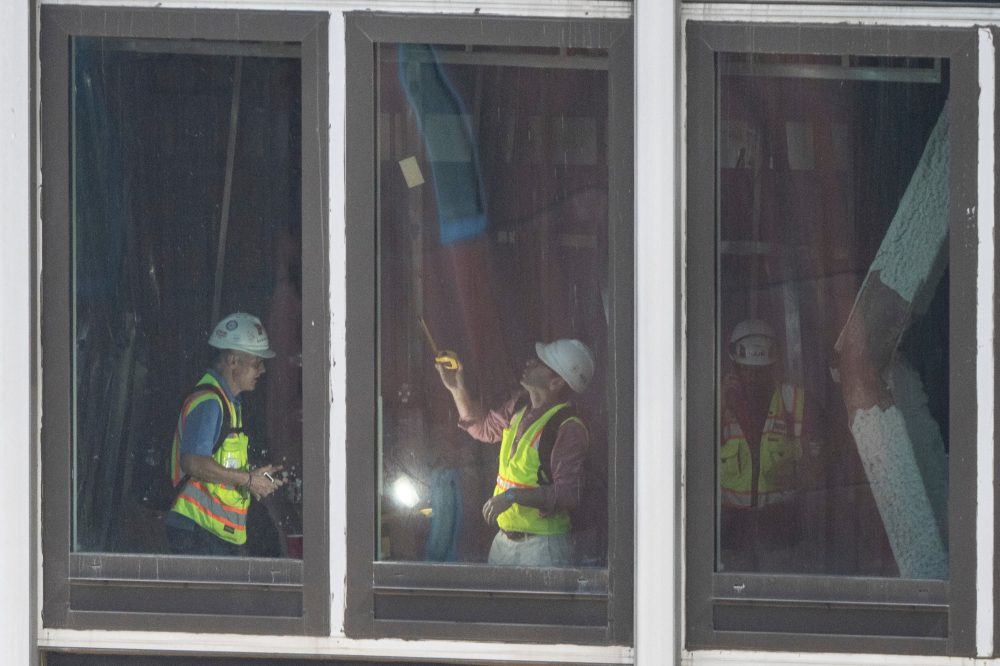
Two steel columns buckled inside the former Pfizer headquarters in midtown Manhattan, triggering evacuations and bringing work to a standstill on one of the largest office-to-residential conversion projects in the United States.
The ambitious project involves transforming two office buildings — one dating back to 1909 and another built in the 1960s — into roughly 1,600 apartments. The plan includes adding more than a dozen floors on top of the older structure and significantly redesigning and expanding the newer one. The column failure occurred on the 21st floor of the newer building, and crews have since installed temporary supports while an investigation is underway.
Structural engineering experts say the project is extraordinarily complex, requiring careful attention to whether older buildings can handle new weight loads and how office floor layouts can be reconfigured for people to actually live in.
Despite the setback, none of the experts interviewed said the incident should shake public confidence in engineers’ ability to carry out such work.
“I don’t think it really brings into question our understanding of how to do something like this,” said Ben Schafer, a structural engineering professor at Johns Hopkins University.
According to adaptive reuse firm Collaborative Construction Management’s website, the nine-story 1909 building will be “threaded through” with a new concrete addition of roughly 30 stories.
Schafer, who has no involvement in the project, explained that the likely approach is to keep the century-old building bearing its own weight while constructing an entirely new structural system to carry the added floors above it.
“My interpretation would be that they’re going to leave that building carrying its own load, and they’re just going to poke holes in it so that they can take the load from the building that they’ve put above it and bring it all the way down to the foundation,” Schafer said.
For the newer tower, Schafer said the challenge is different — cutting openings in existing floor plates to allow natural light into apartments, while also making sure the steel frame can handle the additional weight being placed on it.
City officials have not yet identified the cause of the column failure. However, both Schafer and Emily Guglielmo, a structural engineer based in San Francisco, believe the buckled columns were most likely caused by the increased load placed on the structure.
Spokespersons for MetroLoft, the project’s developer, did not respond to requests for comment. However, Nathan Berman, the firm’s founder, acknowledged in a Wall Street Journal interview that the extra weight from widening the top 15 or so floors of the building likely caused the damage.
Guglielmo believes the failure may have stemmed from incorrect original design assumptions, an error during the design or construction phase, or construction crews inadvertently overloading or weakening the structure.
She noted that adding floors to existing buildings is a common practice in densely built cities where land is limited, but it demands a thorough review of original construction documents and a careful inspection of the building before any additional stories are attempted.
“In cities and towns that don’t have that available geography, you’re going to see a lot more of this type of a design where there’s an adaptive reuse to an existing building,” Guglielmo said.
Many structural engineers view demolition as a last resort, pointing to both environmental and financial costs.
“Tearing buildings down is a terrible waste,” Schafer said, noting that buildings and the broader construction industry account for roughly 40% of the world’s energy-related carbon emissions. “From a sustainability standpoint, that’s a disaster.”
In addition to the environmental impact, tearing down and removing the debris from large buildings is especially costly in densely packed cities like New York.
James LaFave, a structural engineering professor at the University of Illinois, said a steel-framed building from the 1960s — like the former Pfizer structure — would typically be a “very good” candidate for a conversion project.
In recent years, cities nationwide have looked to office-to-housing conversions as a way to breathe new life into downtown areas that have struggled since the pandemic. New York City has been especially aggressive in this push, making zoning changes and offering tax incentives to encourage housing production. A report from the city comptroller’s office last year found 44 adaptive reuse projects in New York that, as of early 2025, had been completed, were underway, or had been cleared to move forward.
Pfizer vacated the building in 2023 after relocating to a new office near Penn Station, leaving the property empty. Construction on the conversion began in 2024.
Joshua Harris, director of Fordham University’s Real Estate Institute, said office-to-residential conversions remain a critical piece of addressing housing shortages in New York and beyond, even though they carry real risks.
“In a certain sense, it’s not terribly surprising that this happened, and we should have a little bit of grace,” he said. “These are very, very complicated surgical procedures being done to very old buildings.”
“This is part of the reality of fixing the housing crisis,” Harris added. “Things like this can happen. It doesn’t look as complex as putting a rocket into space, but, in a real estate sense, construction in an environment like Manhattan on 42nd Street and Second Avenue is very complex.”
Guglielmo said that strong building codes, regular inspections, and experienced construction crews make structural failures like this uncommon in the United States.
“We’re very fortunate here in the United States that we are not seeing these types of failures on a day-to-day basis,” she said. “We’re privileged to have really robust building codes that explain to us as engineers how to do our designs in a way that’s safe.”
Harris said the incident will likely serve as a wake-up call for the industry, prompting developers to take a closer look at similar projects already in progress.
“If this building has a problem, all the other projects that have been sort of greenlit, they’re going to want to review to make sure that it’s not something similar,” he said.