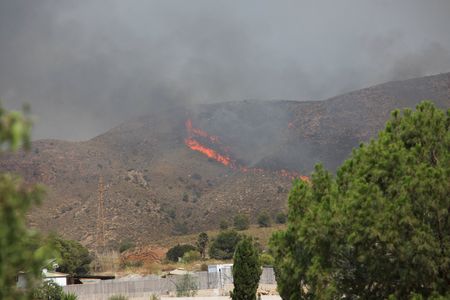

DUBAI, United Arab Emirates — A wave of unexplained, unclaimed airstrikes struck Iran following the U.S. military’s announcement that it had concluded its own campaign of attacks, raising fresh questions about who else may be taking aim at the Islamic Republic.
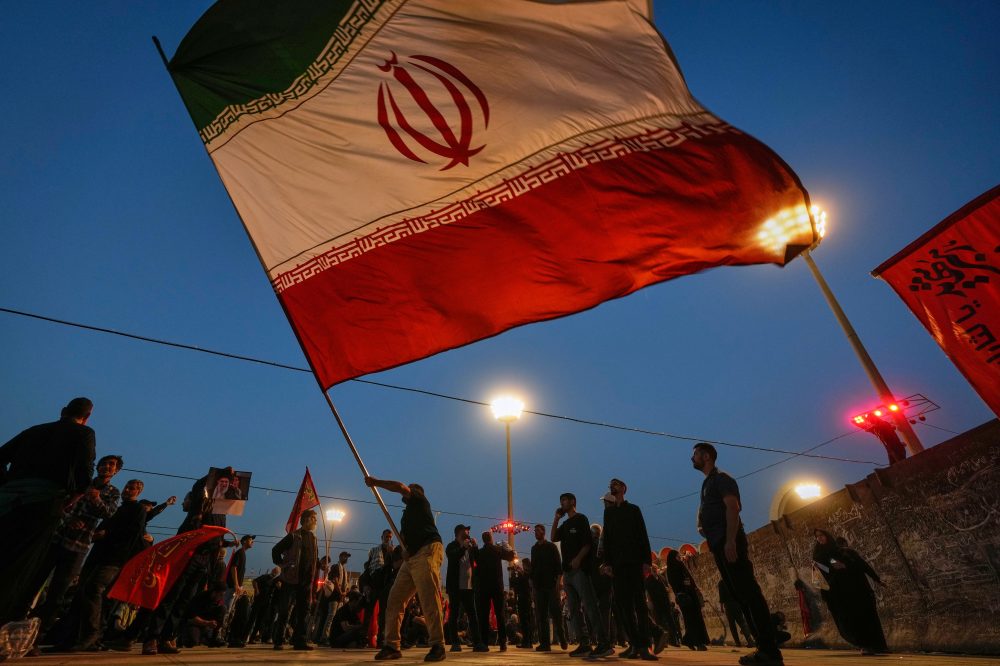
The strikes occurred on Thursday, at the very moment Iran was preparing to hold burial services for the late Supreme Leader Ayatollah Ali Khamenei. The explosions affected multiple locations across southern Iran. Iran’s government has stopped short of directly blaming any particular country, though one member of parliament issued a pointed warning to the United Arab Emirates, accusing it of secretly supporting the United States in its military campaign against Iran.
Gulf Arab nations, which have repeatedly been targeted by Iran since the conflict began on February 28, did not immediately respond when asked to comment on Friday about the strikes. Both those countries and the U.S. have been insisting that the Strait of Hormuz must remain open for international shipping. Iran, however, is demanding sole control over the strait — through which roughly one-fifth of the world’s oil and natural gas flows — and has called on vessels to begin paying fees to Tehran, despite the waterway being recognized internationally for decades as open to all.
Iran’s control over the strait during the conflict helped trigger a global energy crisis, though oil prices have fallen sharply from wartime peaks of $120 per barrel.
Israel, which participated in the war against Iran, has also not claimed responsibility for any recent strikes on Iranian territory.
The U.S. military’s Central Command announced around 6:30 a.m. local Iran time on Thursday that it had finished a round of strikes hitting approximately 90 targets. Shortly afterward, Iranian state media and news outlets reported additional explosions and airstrikes targeting the country’s Bushehr and Sistan and Baluchestan provinces, as well as the cities of Ahvaz and Chabahar, among other locations. Central Command did not respond to a request for comment about those additional strikes.
In response to Thursday’s attacks, Iran launched a broader round of retaliatory strikes across the Middle East, sending missiles toward Bahrain, Jordan, Kuwait, and Qatar. Air raid sirens sounded in all four countries, forcing residents to seek shelter. One person was reportedly injured in Kuwait as air defense systems worked to intercept incoming fire across the region.
The leader of the UAE, Sheikh Mohammed bin Zayed Al Nahyan, flew to Kuwait shortly after the Iranian attack to meet with that country’s ruling emir. Gulf Arab nations also held phone calls with Qatar’s foreign minister, who — along with Pakistan — has been playing a central role in mediating negotiations between Iran and the United States over the interim agreement currently in place to prevent a return to open warfare.
Officials say that during the Iran war, both Saudi Arabia and the UAE launched airstrikes against Iran after Tehran struck energy infrastructure inside their borders.
Israel, which under Prime Minister Benjamin Netanyahu has been engaged in an aggressive campaign against Iran, has not struck the Islamic Republic since June. Israel has also typically been quick to claim credit when it carries out attacks on Iran.
Israel’s government said Netanyahu spoke with Trump on Thursday evening, with Trump briefing Netanyahu “on American moves in the Gulf.”
Israel’s defense minister, Israel Katz, also renewed threats that his country was prepared to confront Iran if the situation demanded it. “The Israel military is on alert and ready to renew the campaign, to reestablish aerial superiority, and to carry out a blue-white (Israeli) strike in Iran to remove threats, even for a third time,” Katz said at a military ceremony. “If we will have to return, we will return with even greater force.”
On Friday, Iranian state media reported that Esmail Kousari — a member of the Iranian parliament’s national security committee and a former commander in the paramilitary Revolutionary Guard — warned that the UAE would “pay the price for its cooperation with the United States.” He accused the Emirates of playing a “behind-the-scenes” role in the recent U.S. strikes on Iran.
Throughout the conflict, Iran repeatedly accused Gulf Arab states of actively supporting the U.S. war effort — accusations those nations denied. The U.S. has maintained a significant military presence across Gulf Arab nations since the 1991 Gulf War, including in Bahrain, which serves as the headquarters for the U.S. Navy’s 5th Fleet.
Iran continues to insist it must have exclusive control of the Strait of Hormuz. Meanwhile, the U.S. is urging ships to take an alternate southern route through Oman’s territorial waters to steer clear of Iran. The Joint Maritime Information Center, a multinational body overseen by the U.S. Navy, issued a new advisory on Friday directing vessels to use that route. A similar advisory earlier in the week prompted an Iranian attack on Tuesday that resulted in three ships being struck.
“Notwithstanding recent unprovoked attacks on merchant vessels, mariners are reminded that the southern route of the (strait) has been expanded and remains available for all traffic,” the maritime center stated.