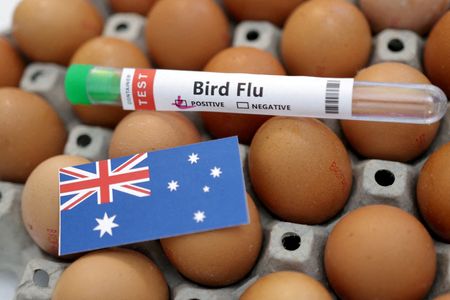

Australia has confirmed its first detection of the deadly H5N1 bird flu strain in a native seabird, signaling a new stage in the virus’s expansion across the country.
The infected bird — a greater crested tern — was found in the South Australian coastal town of Robe. Laboratory analysis conducted by Australia’s national science agency confirmed the positive result, Agriculture Minister Julie Collins announced.
Until now, every confirmed H5N1 case in Australia had involved migratory seabirds. This marks the first time the virus has been found in a bird species native to the country.
Friday’s announcement also included confirmation of two additional infections in South Australia and one in Western Australia, pushing the nation’s total number of confirmed detections to 12.
Collins described the situation as “concerning” but said it was not entirely unexpected. She noted that officials have found no evidence of widespread bird deaths or any spread of the virus into the poultry industry or broader agricultural sector.
“Our scientists are undertaking further work to establish the potential pathway that resulted in the Australian sea bird’s infection,” Collins said.
She added, “What we do know is that this is a coastal seabird that has been overlapping coastal range with migratory seabirds that have previously tested positive for H5.”
Australia made history in June as the last continent to record a mainland H5N1 case. The virus had previously been detected on Heard Island, a sub-Antarctic Australian territory located roughly 4,100 kilometers — about 2,600 miles — from the Australian mainland, in late 2025.