
South Korean chipmaker SK Hynix made its long-awaited entrance into U.S. markets on Friday, with its American trading debut serving as a major indicator of how confident investors remain in the ongoing artificial intelligence spending wave — even as chip stocks have recently lost some steam.
The $26.5 billion share offering ranks as the second-largest stock sale in U.S. history, trailing only SpaceX’s record-breaking IPO last month. The proceeds will allow SK Hynix to construct new manufacturing facilities while giving the company direct access to the world’s largest pool of investors.
Semiconductor stocks have pulled back somewhat in recent weeks after a remarkable stretch of gains, driven in part by investor concerns that AI spending could slow down. SK Hynix’s own shares have fallen about 25% from the record high they reached just two weeks ago — yet the stock still sits roughly 650% above where it was a year ago.
Thomas Hayes, chairman at Great Hill Capital in New York, described the current climate bluntly: “Global semiconductors is the most crowded trade in the world right now. The bankers and the issuer, in this case SK Hynix, are meeting demand where it is. They’re seeing excessive valuations, and they want to take advantage of it.”
SK Hynix shares climbed 2.2% to 2.233 million won — equivalent to about $1,479.98 — on the Seoul exchange Friday, following the company’s sale of American Depositary Receipts at $149 each. That price represented a 2.7% premium over the stock’s average closing price during the three most recent trading sessions. Every ten ADRs correspond to a single common share.
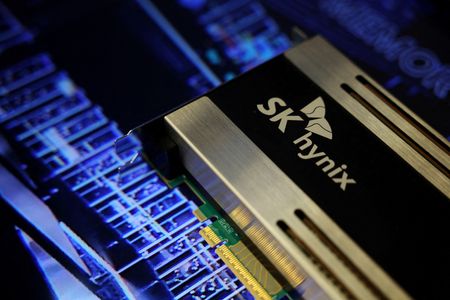
Based in Icheon, South Korea, SK Hynix holds the top position globally in producing high-bandwidth memory chips, known as HBM chips. These components are critical for the enormous data-processing demands of AI-focused graphics processing units made by companies such as Nvidia and AMD.
As major technology companies pour money into advanced AI processors, HBM chips have become increasingly scarce, pushing prices higher and making their manufacturers some of the most sought-after investments on Wall Street. Investors have come to view these chip suppliers as the essential infrastructure providers — the “picks and shovels” — of the AI revolution.
Giuseppe Sette, co-founder of the investment analysis platform Reflexivity, explained the appeal of the listing: “This is the purest large-cap way for U.S. investors to own the AI-memory theme, and Hynix deliberately picked Nasdaq to tap that demand and the higher valuations U.S. chip names command versus Seoul.” He added a note of caution: “SK Hynix gets its deal done on the strength of the story, but companies coming after it may face a tougher, more selective market.”
SK Hynix’s U.S.-based rival Micron has also surged dramatically, rising 711% over the past year. Analysts believe SK Hynix’s Nasdaq listing could help narrow the valuation gap between the two companies. Despite leading the world in HBM chip production, SK Hynix trades at roughly 6.8 times projected earnings, compared to Micron’s valuation of about 13 times forward earnings, according to data from LSEG.
Technology giants racing to build faster and more capable AI systems are funneling hundreds of billions of dollars into the underlying infrastructure, raising money through both stock offerings and debt markets. Analysts anticipate that spending will keep growing in the near term. A note from BofA Securities this week projected that global cloud and AI infrastructure capital expenditures could near $1.5 trillion by 2027 — a jump of 40% to 50% compared to current annual levels.
Still, questions are mounting about whether those massive investments will ultimately pay off, raising the possibility that major cloud providers could eventually be forced to pull back on spending.
Matt Kennedy, senior strategist at Renaissance Capital — a firm specializing in IPO research and related investment funds — summed up the uncertainty: “Investors will weigh the strength of the past year’s rally against this latest volatility… Oversupply fears are inherent to the industry.”