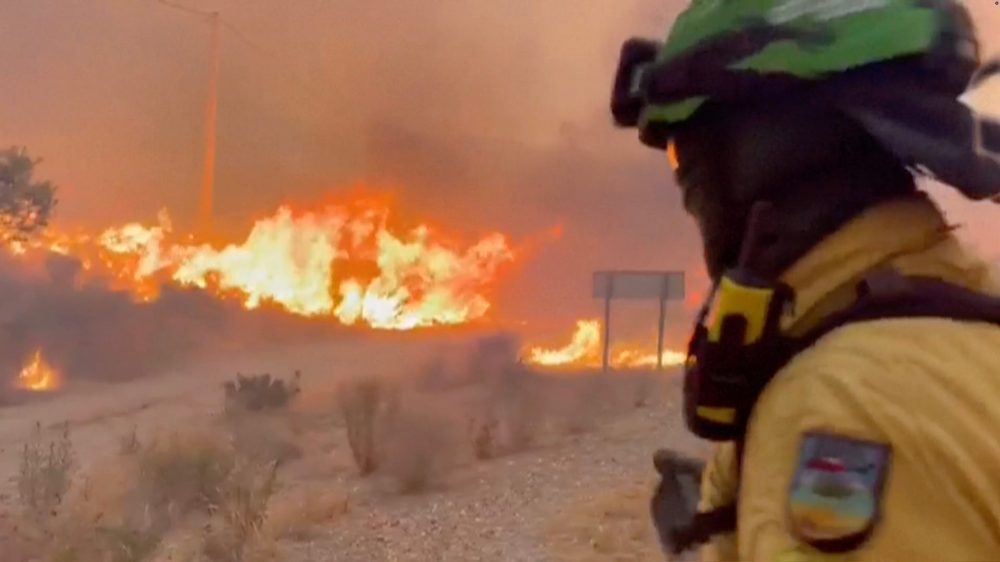

A devastating wildfire in southern Spain has killed at least 11 people, placing it among the most deadly fires ever recorded in the country, officials announced Friday as extreme heat continues to bake much of the nation.
The blaze, burning in the Almeria region, claimed several victims who were found inside charred vehicles. Eight additional people sustained injuries in the fire. A massive response effort is underway, with 150 firefighters and 220 soldiers from Spain’s military emergency unit working to bring the flames under control.
Regional emergency officials indicated that four British citizens appear to be among those killed. Andalusia’s regional leader Juan Manuel Moreno told the Cadena Ser radio station that 19 people remain unaccounted for. Authorities had initially reported 12 deaths but revised that figure down Friday morning.
The fire ignited in a small village situated in a dry, semi-arid zone near the Sierra de Los Filabres mountains. While officials have not confirmed an official cause, callers who first reported the fire told authorities they believed a downed power line had ignited a blaze that quickly spread into a neighboring forest.
In addition to the human toll, the fire forced road closures and prompted the evacuation of approximately 1,000 residents from the area.
Spanish Prime Minister Pedro Sánchez offered his condolences, posting on X that he felt “immense sadness and desolation in the face of the terrible consequences of the fire affecting the province of Almeria.”
Spain has faced increasingly severe and frequent heat waves in recent years, with temperatures regularly climbing above 40 degrees Celsius, or 104 degrees Fahrenheit. Dry conditions, high heat, and strong winds allow small fires to rapidly grow out of control. This past June, Spain endured several days of record-breaking heat, with more than 1,000 deaths linked to the extreme temperatures.
Parts of Western Europe are currently experiencing their third heat wave in just six weeks.
Europe is warming faster than any other continent on Earth, with temperatures rising at twice the global average rate since the 1980s, according to the European Union’s Copernicus Climate Change Service. Globally, 2025 ranked as the third-hottest year on record, bringing multiple intense heat events across the continent.
Scientists caution that climate change, driven in part by the burning of fossil fuels such as gasoline, oil, and coal, is making heat waves and dry conditions more frequent and severe — leaving regions like southern Spain increasingly at risk for catastrophic wildfires.