
Greek anti-terrorist police announced Friday the arrest of three individuals tied to a string of firebomb attacks targeting conservative politicians — attacks that claimed one life and left four others injured.
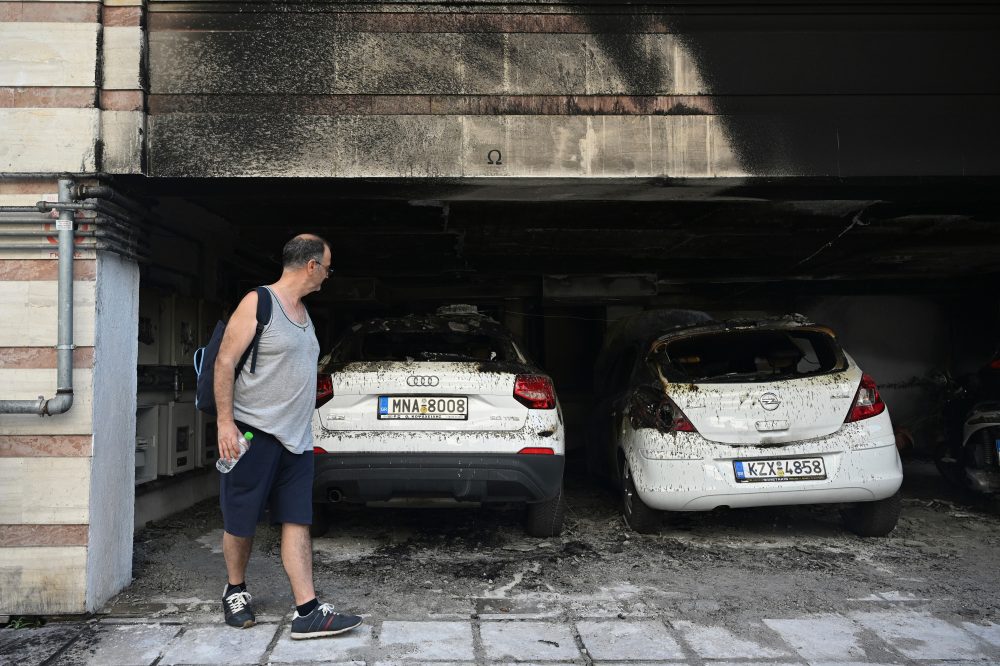
The bombings took place in the early morning hours of July 1st in Thessaloniki, a major city in northern Greece. The targets were members of Greece’s ruling conservative New Democracy party. A homemade bomb constructed from camping gas canisters detonated beneath the car of parliamentary candidate Afroditi Nestora, which was parked outside her apartment building. The explosion killed Nestora’s 72-year-old mother.
Nestora herself sustained burns in the attack and remains in the hospital. She briefly left her hospital bed on Thursday to attend her mother’s funeral. Her father and two other residents of the building were also hurt in the blast.
Two additional bombings occurred the same night, also directed at New Democracy party members. Those attacks caused property damage but resulted in no injuries.
Greece has faced politically motivated violence for decades, stretching back to the 1970s. Domestic extremist groups have carried out small-scale bombings over the years, typically going after symbols of authority — including the homes and property of politicians, law enforcement, and other public figures. Crude devices made from camping gas canisters are commonly used, and while the attacks mostly result in material damage, deadly incidents do occur.
Although the most active groups from the 1980s and 1990s have been broken up, new organizations have continued to emerge in their place.
Police said a 29-year-old man was taken into custody in Thessaloniki, while a 26-year-old woman was arrested on the southern island of Crete. Both are suspected of direct involvement in the bombing at Nestora’s home. A third man was arrested on suspicion of sheltering the two suspects at his apartment before and after the attack. Authorities noted that the search for any additional suspects remains ongoing.
This latest incident is part of a broader pattern of politically motivated violence in Greece. In May 2025, a 38-year-old woman died in Thessaloniki when a bomb she was carrying exploded in her hands — authorities believe she had intended to plant it outside a bank. Two months after that, a bomb went off outside the Thessaloniki home of the president of Greece’s prison guards association. He was not hurt, though two bystanders suffered minor injuries from broken glass.
In April of last year, an explosion near the offices of Greece’s main railway company rocked a busy area of central Athens. No one was injured, but the attack came during a period of intense public anger over a 2023 rail disaster that killed 57 people. A newly emerged extremist group claimed responsibility. And in June 2024, a police officer assigned to protect a senior judge’s home in Athens was wounded in a gasoline bomb attack.