
Investors chasing the latest market trends are getting a reminder that a popular investment isn’t always a winning one.
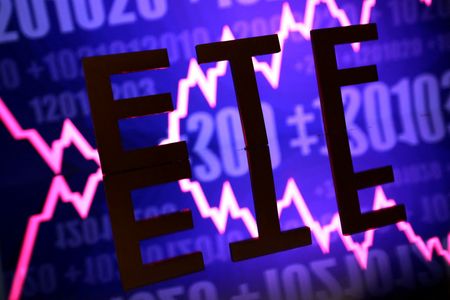
The Roundhill Meme Stock ETF has climbed roughly 35% so far in 2026, including a 3.5% jump on Thursday alone. That rise has been fueled in part by gains from companies such as AST Spacemobile, Terawulf, and Lumentum Holdings.
Much of the excitement can be traced to the ongoing artificial intelligence boom, which has sent shares of profitable chip companies soaring while also reigniting a wave of speculative trading. That speculative energy has brought back leveraged ETFs, wild price swings in smaller companies, and a general sense that meme stock mania has returned.
But despite this year’s strong run, the fund — which holds about $20 million in assets — is still trading below the price it launched at in October 2025. That means investors who got in from the very beginning are still in the red, even after the 2026 rebound.
The situation illustrates a point that often gets lost during market booms: short-term investment gains can be driven by hype and popularity, but over time, factors like a company’s profitability, competitive standing, and the price originally paid tend to matter far more.
Olga Bitel, chief investment strategist at William Blair Investment Management, offered this perspective: “If you are looking to invest for the long term, however you define that long term, then you need to really understand the fundamentals of the business and what that business could potentially be worth.”
She added: “Just because retail investors participate en masse in these exciting companies and IPOs, doesn’t mean you shouldn’t do the work and figure out what this thing actually does, where it fits into the ecosystem and whether it can deliver on the promises.”
Those same concerns could apply to some of the most talked-about names in the market right now, including SpaceX and potential future public offerings from AI companies OpenAI and Anthropic. Both have attracted enormous investor interest thanks to rapid growth and their leading roles in emerging technology — but whether their financial results will live up to sky-high expectations remains an open question.
History offers a cautionary tale. During the dot-com boom in 2000, Cisco Systems became the most valuable company in the world as investors bet heavily on its role in the internet’s expansion. Cisco did go on to dominate the networking equipment market, but those who bought near the peak had to wait 25 years before the stock returned to its dot-com high.
Anthropic and OpenAI could face a similar test. Both carry massive private-market valuations despite not yet turning a consistent profit. In May, Anthropic raised money at a valuation of $965 billion — ahead of OpenAI, which was last valued at $852 billion back in March. Anthropic is just now approaching its first quarterly operating profit, while continuing to spend heavily on developing and deploying its AI systems. OpenAI also spent more than it earned in the first quarter of 2026.
As for the meme stocks themselves, the ETF closed Thursday at $8.41 — leaving those who bought at launch down about 15%. Meanwhile, the S&P 500 and the Nasdaq have each gained around 12% over that same period.
The fund’s construction reflects its high-risk nature. Its portfolio turns over nearly five times per year, one of the fastest rates on Wall Street, and nearly 60% of its assets are concentrated in its 10 largest holdings. Those include fuel cell energy developer Bloom Energy, fiber-optic manufacturer Applied Optoelectronics, and Australia-based data center company IREN Limited. Holdings are chosen largely based on implied volatility and retail trading activity, essentially making the fund a wager on investor sentiment.
Dave Mazza, CEO of Roundhill Investments, addressed the fund’s performance in a statement: “The MEME ETF is designed to provide investors exposure to stocks with the potential for meme-like behavior, and that comes with volatility in both directions. The fund’s inception coincided with the peak of the last retail cycle, which speaks to timing rather than to whether these stocks can deliver strong moves on the upside, as we have seen this year.”
Will McGough, chief investment officer at Prime Capital Financial, summed it up this way: “The retail army of traders certainly helps trends happen, but there’s obviously no free lunch in investing.”