
MANILA, Philippines — The Philippines marked the anniversary Friday of a 2016 international arbitration decision that invalidated China’s broad territorial claims in the South China Sea — a ruling that Washington and allied nations have repeatedly cited in pushing back against Beijing’s growing influence in the region.
China refused to participate in the arbitration process, which the Philippines launched in 2013, and has dismissed the July 12, 2016 decision by a tribunal formed under the United Nations Convention on the Law of the Sea as illegitimate.
Despite the ruling, Beijing continues to assert control over nearly the entire sea passage — a critical global shipping corridor. Those claims are also disputed by the Philippines, Vietnam, Malaysia, Brunei, and Taiwan, making the South China Sea one of Asia’s most volatile potential conflict zones.
Washington has repeatedly urged China to abide by the ruling. Both the previous Biden administration and the current Trump administration have stated that the United States is bound by treaty to come to the Philippines’ defense if Filipino forces, ships, or aircraft face an armed attack in the contested waters. The Philippines is described as the United States’ oldest treaty ally in Asia.
Clashes between Chinese and Philippine forces, as well as Chinese and Vietnamese forces and fishing fleets, have grown more frequent in recent years.
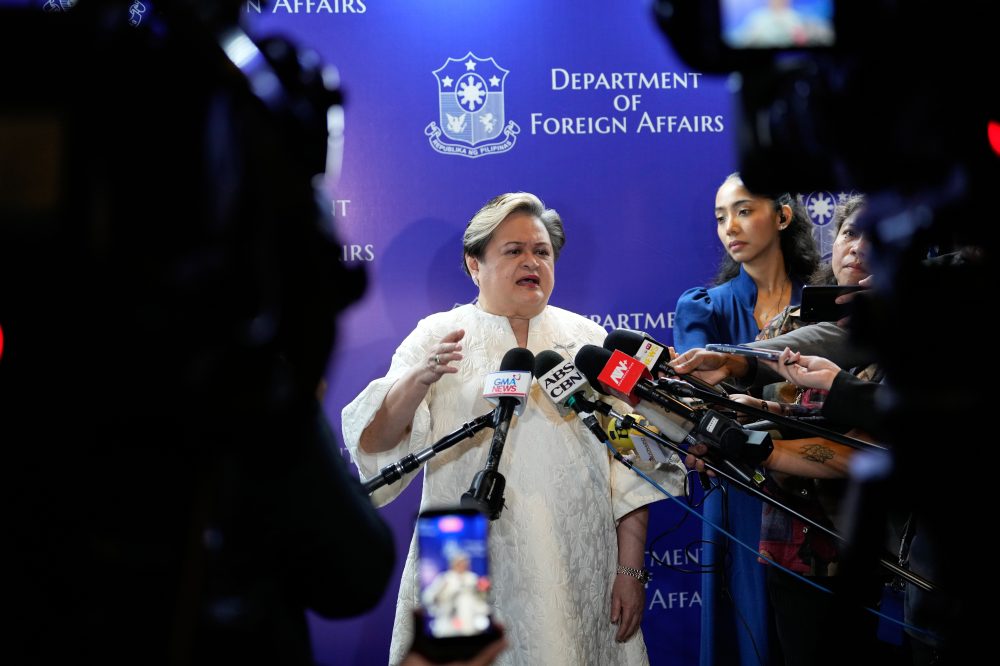
Philippine Foreign Secretary Maria Theresa Lazaro spoke Thursday, describing the ruling as legally binding and likening it to a navigational beacon.
“When the waters grow turbulent, when unilateral claims cloud the horizon and when the shadow of coercion looms, nations need something far more permanent than political convenience,” Lazaro said. “They need a lighthouse.”
Australian Foreign Minister Penny Wong also weighed in with criticism of China, stating that Australia would “continue to register our concerns about China’s vessels engaging in destabilizing and dangerous conduct in the South China Sea.”
China had not immediately responded publicly, but through a statement issued by its embassy in Manila, Beijing made clear it would never accept the ruling, calling it “illegal, null and void.”
“The award will not alter the historical and factual basis for China’s sovereignty over the islands of the South China Sea and their adjacent waters,” the Chinese embassy in Manila stated, adding that the decision “will not weaken China’s resolve and determination to safeguard its sovereignty and maritime rights and interests.”
The arbitration tribunal ruled largely in the Philippines’ favor, finding under the 1982 U.N. Convention on the Law of the Sea that “there was no legal basis for China to claim historic rights to resources” in the South China Sea beyond the standard territorial boundaries recognized under the convention.
That convention, widely considered the governing treaty for the world’s oceans, took effect in 1994 and has been ratified by more than 170 countries and parties, including both China and the Philippines.