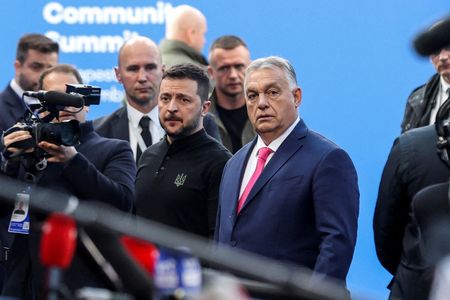
European law enforcement agencies announced Friday they have identified 22 individuals connected to a coordinated campaign of explosive package attacks throughout Europe last year, with investigators pointing to Russia’s military intelligence service as the orchestrating force.
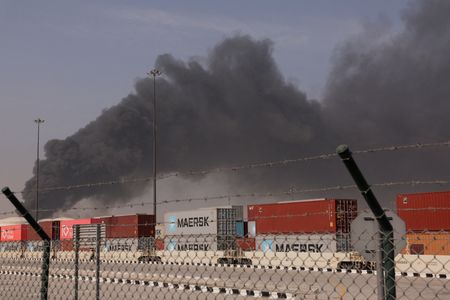
The incidents involved detonations at shipping facilities across Britain, Germany, and Poland, with security experts believing these attacks served as rehearsals for a broader Russian scheme targeting cargo aircraft headed to the United States.
Russian officials have consistently rejected any involvement in these operations or broader allegations of conducting sabotage campaigns, including arson incidents, designed to undermine nations supporting Ukraine.
Eurojust, which coordinates criminal investigations across European Union member states, revealed that investigators from Germany, Poland, the Netherlands, Britain, and Lithuania worked together to identify the suspects located in Lithuania and Poland, all allegedly operating under direction from Russia’s GRU intelligence service.
“The suspected perpetrators were recruited from Russia, Latvia, Estonia, Lithuania and Ukraine and were often in a vulnerable socio-economic situation,” the Eurojust statement said.
“It is suspected that the acts carried out by these suspects were executed on behalf of the military-intelligence service of the Russian Federation.”
Russia’s defense ministry, which oversees military intelligence operations, has not yet responded to requests for comment. Moscow routinely dismisses such accusations as anti-Russian sentiment.
Lithuania’s Deputy General Prosecutor Arturas Urbelis announced during a news briefing that five individuals holding Russian, Ukrainian, and Lithuanian citizenship will face terrorism charges in Lithuanian courts, with potential sentences reaching 10 years imprisonment upon conviction.
Lithuanian authorities reported that four packages containing “self-made, explosive-incendiary charges” were dispatched from Vilnius on July 19, 2024.
One package being handled by DHL ignited at Leipzig airport in eastern Germany just before workers planned to load it onto a Britain-bound aircraft, according to Lithuanian officials.
A second explosive device detonated aboard a DPD delivery truck traveling through Poland, while a third package exploded inside a DHL storage facility in Birmingham, England.
The fourth package, also transported by DPD truck in Poland, failed to activate due to technical problems, investigators reported. None of these incidents resulted in injuries.
Eurojust investigators also discovered evidence of two ‘test packages’ sent to destinations in the United States and Canada, along with two additional parcels intercepted in Amsterdam that were destined for North American locations.
British law enforcement confirmed that counter-terrorism specialists continue investigating the Birmingham explosion. Last year, authorities arrested a Romanian citizen on charges of assisting foreign intelligence services before releasing him pending further investigation.
“The strength of cooperation in this case has led us to collectively identify what we believe to be Russian military intelligence involvement in a series of incidents across Europe,” said Vicki Evans, Britain’s Senior National Coordinator for Counter Terrorism Policing.
A deadly assault on a military installation in northern Benin has left 15 soldiers dead and five others wounded, according to military officials who confirmed the attack on Friday.
The violence occurred Wednesday in the northern village of Kofouno, where extremist fighters targeted a military camp in the latest escalation of regional conflict. Militant organizations with ties to al Qaeda and ISIS have been expanding their operations across border areas connecting Niger, Benin and Nigeria, transforming remote travel routes into dangerous battlegrounds.
Jama’at Nusrat al-Islam wal-Muslimin (JNIM), an organization affiliated with al Qaeda, has taken credit for orchestrating the deadly assault.
“The attack resulted in the loss of 15 of our personnel and five wounded, whose lives are not in danger,” stated Colonel James Johnson, who serves as spokesperson for Benin’s armed forces.
Johnson reported that military forces managed to eliminate at least four of the “terrorists” and destroyed multiple motorcycles as the attackers fled the scene. He also disputed JNIM’s assertion that the group had gained control of the Kofouno military facility.
The West African nation seldom makes public statements regarding extremist violence in its northern territories, though officials acknowledged last April that a JNIM operation had resulted in 54 military deaths.
Security challenges in northern Benin contributed to an unsuccessful military coup attempt in December, when dissatisfied soldiers tried to remove President Patrice Talon from power. The conspirators cited worsening security conditions in the north “coupled with the disregard and neglect of our fallen brothers-in-arms” as justification for their actions.
Assistance from neighboring nations, including Nigeria, helped prevent the coup from succeeding.
Benin is preparing for a presidential election scheduled for next month, which will conclude Talon’s time in office.
Moscow is sharing sensitive intelligence with Tehran that reveals the whereabouts of American naval vessels and aircraft operating throughout the Middle East, according to a Friday report from the Washington Post citing three sources with knowledge of the intelligence.
The Washington Post indicated that while the full scope of Moscow’s assistance to Tehran remains unclear, Iran’s capacity to track American forces has been compromised following strikes conducted by the United States and Israel against Tehran in recent days.
The regional conflict has intensified dramatically, sparking a cycle of retaliatory attacks by Iran while drawing in neighboring countries as Tehran attempts to inflict significant costs on America, Israel, and their regional partners.
American military officials have confirmed that six reserve personnel were killed in Kuwait after a drone attack struck a US military installation at Port Shuaiba. Trump and other high-ranking officials have cautioned that the ongoing conflict will likely lead to additional American military casualties.
When asked about the reported Russian assistance to Iran, a White House representative chose not to address the allegations directly.
“The Iranian regime is being absolutely crushed. Their ballistic missile retaliation is decreasing every day, their navy is being wiped out, their production capacity is being demolished, and proxies are hardly putting up a fight,” stated White House spokeswoman Anna Kelly in response to Reuters’ inquiries.
The Kremlin acknowledged Friday that Russia maintains communication with Iranian leadership representatives but refused to elaborate when reporters questioned whether Moscow was providing assistance to Tehran.
For Russia, the Middle East conflict has delivered unexpected economic benefits, with substantially increased demand for Russian oil and natural gas, helping to revive exports that had suffered under sanctions imposed due to Moscow’s invasion of Ukraine. During Ukraine’s conflict with Russia, Washington has provided Kiev with intelligence support.
Neither the Russian Embassy in Washington nor Russia’s United Nations mission in New York provided immediate responses to requests for comment.
Danish officials announced Friday that military conflicts across the Middle East could delay overseas ballots from reaching Denmark ahead of the nation’s upcoming general election on March 24.
The Iranian war has created widespread aviation disruptions throughout the region, forcing the shutdown of major transportation centers in Dubai, Doha, and Abu Dhabi. This has left both travelers and mail shipments without reliable routing options.
“The Ministry of Foreign Affairs can’t under these circumstances guarantee that postal votes cast in countries affected by the current situation will arrive in time for the general election,” the ministry said in a statement.
According to ministry officials, the delivery concerns affect ballots submitted from Middle Eastern nations, as well as potentially from Asian countries where mail routing typically travels through Middle Eastern transit points before reaching Europe.
The ministry has not released estimates regarding the number of Danish citizens living abroad who planned to participate in the election through overseas voting.
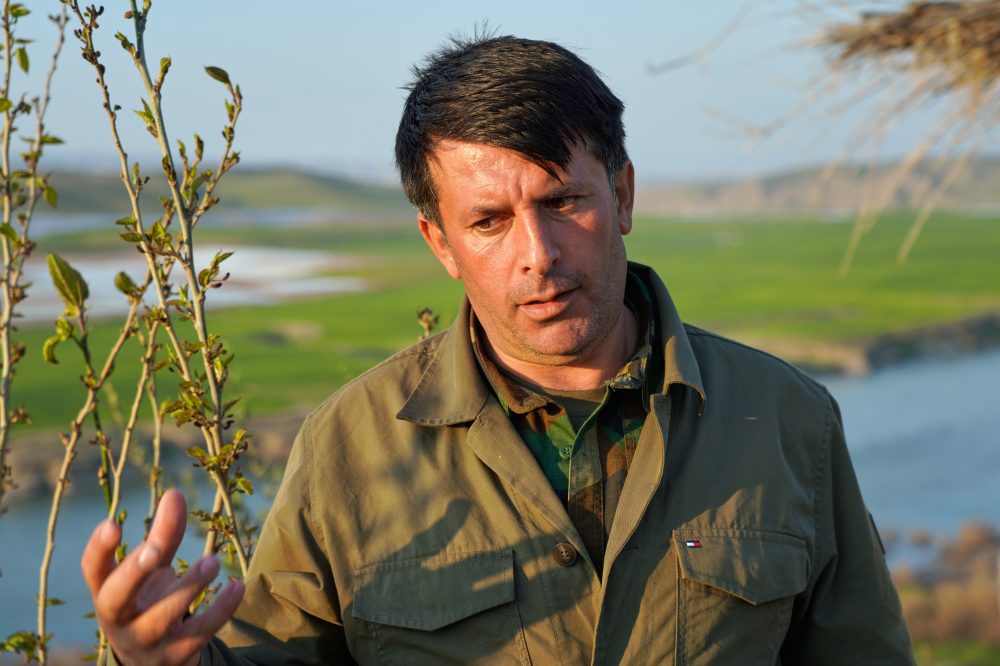
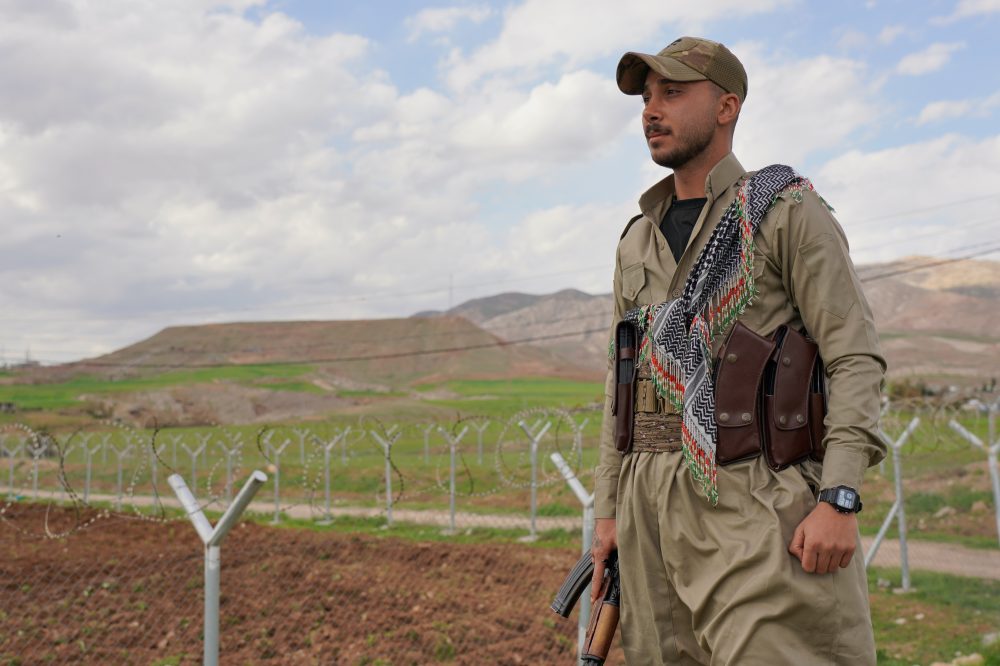
IRBIL, Iraq — Leaders of an armed Kurdish opposition group operating from northern Iraq have clarified to The Associated Press that while they’re not preparing immediate strikes against Iran, they would participate in any U.S.-led ground invasion of their homeland.
These statements seem designed to calm Iraqi Kurdish authorities, who have expressed concerns about attacks being launched from their region against Iran, worried about being drawn deeper into the Middle Eastern conflict that has escalated following American and Israeli military actions against Iran.
Speaking to the AP on Thursday, Khalil Nadiri from the Kurdistan Freedom Party PAK explained that in case of American ground operations, “then we would enter alongside the coalition forces.” However, he emphasized that “The Kurds must not place themselves as the spearhead of the attack.”
Nadiri revealed that his organization maintains armed members already operating within Iran’s borders and wouldn’t necessarily need cross-border assistance to launch an internal uprising.
According to Nadiri, the Kurdish organizations have maintained communication with both American and Israeli officials, though he rejected claims that they’ve received material support from either nation.
These clarifications follow earlier reports this week from Kurdish officials indicating that Iranian Kurdish opposition groups in northern Iraq were preparing for possible cross-border military actions, with the U.S. allegedly requesting Iraqi Kurdish support for such operations.
PAK military commander Rebaz Sharifi described potential U.S. and allied weapons support for Kurdish groups as “a very positive development,” while also confirming they haven’t received such assistance to date.
Sharifi expressed expectations that President Donald Trump “might want the peshmerga forces of Eastern Kurdistan to participate in the conflict during a ground invasion,” adding that “if it reaches that point, we, for our part, would be pleased with it.”
Both officials worked to address Iraqi Kurdish leaders’ concerns about using Iraq’s semi-autonomous Kurdish territory as a staging area for attacks.
Kurdistan Regional Government spokesperson Peshawa Hawramani stated earlier this week that “allegations claiming that we are part of a plan to arm and send Kurdish opposition parties into Iranian territory are completely unfounded,” emphasizing that Iraqi Kurdish parties don’t want to “expand the war and tensions in the region.”
Iranian forces and affiliated Iraqi militias have already conducted numerous missile and drone strikes targeting northern Iraq, hitting American military installations and the consulate in Irbil, along with Iranian Kurdish opposition group facilities.
Sharifi reported that PAK locations have endured two ballistic missile strikes and four drone attacks since the conflict began, resulting in one fighter’s death and three wounded personnel.
Nadiri explained that “since the (Iraqi) Kurdistan region has adopted a policy of not becoming a part of this conflict and because we do not want to disrupt the stability and security here and we respect the laws of this region, consequently, the environment has not yet been established for us to move our forces back into Eastern Kurdistan.”
The term “Eastern Kurdistan” refers to Iran’s Kurdish-populated regions, according to these groups.
The prospect of Kurdish military participation has created friction with other Iranian opposition factions, particularly those aligned with former shah’s son Reza Pahlavi, who has criticized the Kurds as separatists seeking to divide Iran.
Sharifi stated that his organization’s “ultimate goal is the statehood of the Kurds in all four regions and the reunification of Kurdistan,” referencing Kurdish populations spread across Iran, Iraq, Turkey and Syria.
Nadiri suggested that a confederal arrangement might serve as a “viable solution,” allowing Kurdish areas to remain within Iran while preserving their “own sovereignty, identity, and unique characteristics.”
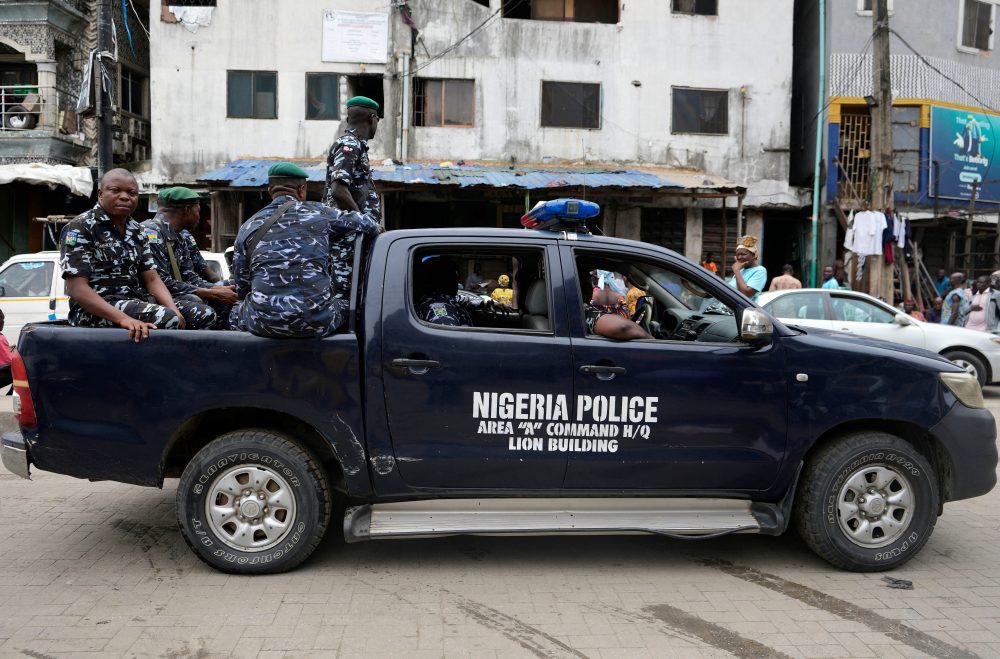
ABUJA, Nigeria — Extremist fighters launched a devastating assault on a northeastern Nigerian community Friday, seizing more than 300 civilians including women and children, according to local authorities.
The mass abduction occurred in Ngoshe, a town located in Borno state, regional official Bulama Sawa confirmed. Speaking to The Associated Press, Sawa indicated the assault appeared to be revenge for a recent military strike that eliminated three leaders from the extremist organization Boko Haram.
No organization has stepped forward to take credit for Friday’s mass kidnapping. Nigeria continues struggling with widespread security challenges involving multiple armed factions. The United States has deployed military personnel to the West African country to provide guidance to local forces combating the ongoing violence.
Additional assaults occurred this week targeting the settlements of Konduga, Marte, Jakana, and Mainok from Wednesday through early Friday morning, a military representative confirmed.
Military spokesman Uba Sani reported that forces successfully defended against the attacks on Konduga, Marte, Jakana and Mainok communities, though “a number of brave soldiers paid the supreme price in the line of duty,” including a senior officer. Sani declined to provide specific casualty figures.
Sani characterized the operations as “failed attacks” that demonstrated the “increasing desperation of terrorist elements under sustained operational pressure” from government forces.
Security analyst Ulf Laessing from the Konrad Adenauer Foundation explained that Friday’s Ngoshe assault exploited the Nigerian military’s struggle to maintain control across vast territories where extremist organizations operate. These groups have also gained strength through enhanced coordination across borders and deploying drones for reconnaissance before launching strikes.
“The army is fighting a ghost — fighters descending with motorbikes on villages and disappearing into the bush before the army can respond in time,” Laessing observed.
The most significant extremist organizations include Boko Haram and a splinter group aligned with the Islamic State known as Islamic State West Africa Province. Additional threats come from the IS-connected Lakurawa organization and various criminal gangs focused on kidnapping for profit and illegal resource extraction.
The security situation has deteriorated further with the involvement of additional militants from nearby Sahel countries, including Jama’at Nusrat al-Islam wal-Muslimin, which conducted its inaugural attack on Nigerian territory last year.
United Nations statistics indicate several thousand Nigerians have lost their lives in the ongoing violence. Security experts argue the government’s efforts to safeguard civilians remain inadequate.
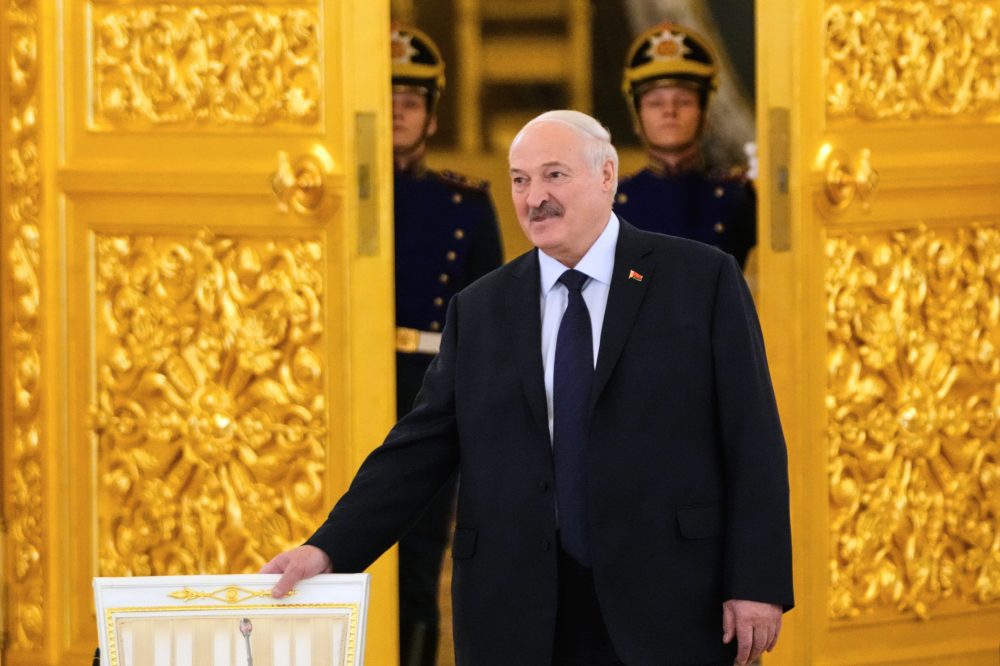
Belarus President Alexander Lukashenko has freed 18 additional prisoners as he continues working to rebuild diplomatic relationships with the United States.
Thursday’s presidential decree released 18 individuals, with 15 of them previously convicted on extremism charges that Belarus commonly uses in cases with political motivations. Officials reported that 11 of those granted clemency were women.
The prisoner releases represent the most recent development in a series encouraged by President Donald Trump’s administration. Lukashenko, who has faced Western isolation following his contested 2020 reelection that sparked widespread demonstrations and harsh government responses, has been working to repair relations with Washington through these releases.
Following a phone conversation between the two presidents in August, Lukashenko has freed 123 individuals, including Nobel Peace Prize winner Ales Bialiatski and notable opposition leaders Maria Kolesnikova and Viktar Babaryka. The United States responded by removing sanctions from Belarus’ potash fertilizer industry and national carrier Belavia.
This week’s pardons push the total beyond 140 releases. U.S. special envoy for Belarus John Coale praised the action on X Thursday, calling it “another notable step in the relationship between the U.S. and Belarus as President Trump has tasked me with getting all the political prisoners out.”
However, the Belarusian human rights organization Viasna reports that 1,140 political prisoners still remain incarcerated.
Human rights advocates continue warning that government oppression persists alongside the releases, with new arrests and convictions ongoing.
This week alone, well-known Belarusian musician and poet Aleh Khamenka received a three-year prison sentence plus substantial fines for extremist activities related to his work with a prohibited radio station. Khamenka was arrested in June following a home search and has been imprisoned for over six months.
Additionally, Belarusian officials this week classified the PEN Belarus writers’ association, which includes more than 100 members, as an extremist group.
PEN Belarus leader Tatsyana Nyadbay told The Associated Press in a phone interview that the designation was “horrendous” because it “puts the writers who remain in Belarus at risk.”
The organization’s membership includes 2015 Nobel Literature Prize recipient Svetlana Alexievich and 2022 Nobel Peace Prize winner Bialiatski. Alexievich departed Belarus after the 2020 demonstrations, while Bialiatski served more than five years in prison on charges widely considered politically driven.
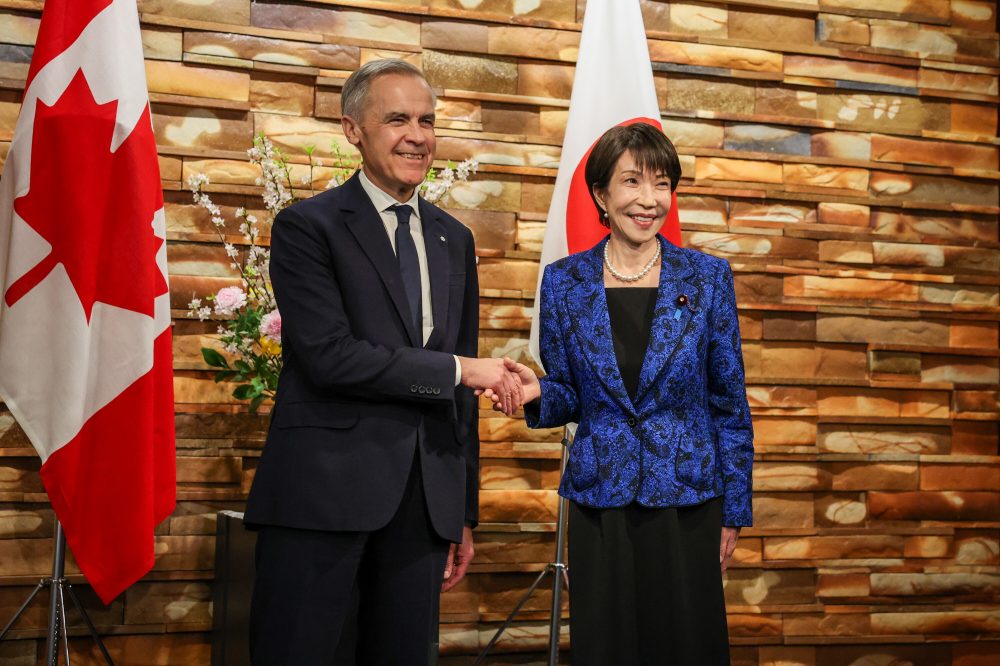
Japanese Prime Minister Sanae Takaichi and Canadian Prime Minister Mark Carney finalized a comprehensive strategic partnership Friday, establishing enhanced cooperation across defense, economic, and energy sectors amid rising concerns over global oil supplies due to Middle Eastern conflicts.
The two leaders emphasized the critical nature of energy security during these times of “geopolitical uncertainty,” as outlined in an official statement from Japan’s Foreign Ministry.
Meeting in Tokyo, Takaichi and Carney committed to collaborative efforts in diversifying energy sources and expanding trade relationships to strengthen energy supply networks, according to the ministry’s published roadmap.
“The world is at a turning point. We see the manifestations in the Middle East. We see it everywhere,” Carney stated during their joint press briefing.
This marked Carney’s inaugural visit to Japan since assuming office last year, occurring as Middle Eastern warfare raises alarm over petroleum shipments passing through Iran’s Strait of Hormuz. During his Australia trip earlier this week, Carney advocated for reducing tensions in the Iranian conflict.
The leaders also established plans for bilateral discussions on economic security and cybersecurity policies, addressing China’s increasing assertiveness in commercial and military spheres throughout the Indo-Pacific region.
Tokyo and Ottawa will begin negotiations toward a defense agreement designed to streamline military visit procedures, joint training exercises, and other collaborative operations.
Both nations plan to enhance cooperation between their defense industries as Japan works to expand its limited defense export sector, supporting Takaichi’s initiative to strengthen Japan’s military capabilities and arms manufacturing to improve partnerships with allied countries.
On Friday morning, Takaichi’s ruling Liberal Democratic Party and coalition partner Japan Innovation Party presented a proposal to eliminate restrictions on lethal weapons exports, marking another departure from Japan’s post-war pacifist policies. Government officials expect formal approval of this proposal within the coming months.
Travel blogger Alyssa Ramos endured a grueling 48-hour escape from Kuwait that spanned four continents, but she says federal officials provided no assistance during her ordeal.
“They keep going on the news and saying they’re doing everything they can to get Americans out,” Ramos stated upon reaching Miami Thursday. “I know for a fact they’re not.”
According to Ramos, her multiple attempts to contact the U.S. Embassy in Kuwait led her to the consular section, where staff members told her they were unable to assist with departure arrangements and advised her to register for the government’s smart traveler program while remaining sheltered.
Ramos represents numerous American nationals and foreign citizens who fled Middle Eastern countries or remained trapped there Friday, nearly seven days after Israeli-American strikes against Iran quickly drew more than a dozen neighboring nations into the conflict. U.S. travelers expressed mounting anxiety and irritation as they faced shuttered airports, grounded flights, and concerning federal advisories, while nations like Poland, Australia, and France rapidly deployed military aircraft or hired commercial planes to retrieve their citizens.
“Having the State Department or whoever tell us, you need to get out immediately, well, but there’s no help. So you’re on your own to get your own travel plans. That was the most stressful thing,” Chicago resident Susan Daley remarked after touching down Thursday on the initial commercial flight from Dubai to San Francisco since Iran hostilities commenced February 28. Daley had been conducting business in the United Arab Emirates.
The Trump administration has rejected accusations that the federal response was inadequate.
State Department officials announced that the first government-arranged evacuation flight returned from the Middle East Thursday, with additional flights expected each day. Officials did not immediately specify passenger counts or departure locations. The agency reports that through Thursday, it has “directly assisted” 10,000 citizens throughout the region who sought help or information.
A social media update from the assistant secretary of state for public affairs featured a photograph of Americans boarding a chartered aircraft displaying the New England Patriots NFL team logo. This plane appears to be at least the second such flight to arrive at Dulles International Airport near Washington.
Through Thursday, approximately 20,000 Americans had returned safely to the United States since warfare began, according to State Department figures. Regional U.S. embassies continued advising Americans to depend on commercial aviation for departure, despite widespread closures or severe restrictions across Gulf airspace.
Without guidance from Washington or consular offices, some travelers reported using WhatsApp group conversations and social media crowdsourcing for commercial flight information and alternate departure routes from the United Arab Emirates, Kuwait, and neighboring countries. Several established GoFundMe fundraising campaigns to cover hotel costs and other expenses accumulated during extended stays in Dubai and additional Gulf cities.
Ramos established WhatsApp group discussions Monday to assist individuals who contacted her through her social media presence, “My Life’s a Travel Movie,” seeking evacuation guidance following her challenging departure.
Within three days, over 2,200 people joined conversations focused on leaving Dubai, Doha, Qatar, and Kuwait. Participants coordinated shared transportation to functioning airports, exchanged trusted driver recommendations, and shared pricing information including accepted payment methods.
Thursday brought a message from one member explaining that her spouse and two children had attempted leaving Dubai but experienced two flight cancellations, with their diabetic 2-year-old’s medication supply dwindling. Fellow members immediately provided suggestions and assistance.
Jason Altmire, a former three-term Democratic congressman from Pennsylvania, successfully departed Dubai after the UAE partially restored airspace access and Emirates airline restarted limited service.
“We never heard anything from the State Department other than the general email advising us to find our own way out,” Altmire explained in an email interview. “I found this, along with the ‘you’re on your own’ State Department voicemail, to be infuriating.”
Congressional Democrats wrote Secretary of State Marco Rubio Tuesday, stating that “the lack of clear preparation, planning, and communication to Americans abroad is unacceptable and a violation of the State Department’s basic mission to provide consular assistance and the protection of U.S. citizens overseas.”
Rubio acknowledged Tuesday that the U.S. had arranged recovery flights but faced obstacles from airspace restrictions.
“We know that we’re going to be able to help them,” he stated, while noting that “it’s going to take a little time because we don’t control the airspace closures.”
American Cory McKane, trapped in Dubai, secured departure from the region Wednesday following an exhausting, sleepless, and costly journey to Muscat, Oman.
Rather than risk complications at Dubai’s congested airport, McKane and companions rented a vehicle and drove to the Oman border. There, he reported, taxi operators demanded up to $650 to transport stranded travelers to Muscat’s airport, where flights continued operating.
McKane credited knowledgeable local contacts and a WhatsApp group created by stranded travelers for sharing resources and guidance.
“Everyone’s been sending each other resources because, quite frankly, the U.S. has not done a single thing in any capacity. That’s been really disappointing,” McKane stated.
Commercial flight availability has remained restricted since conflict began. Aviation analytics company Cirium reported that more than 29,000 of roughly 51,000 scheduled Middle East airport flights were canceled through Friday.
Oman, Egypt, Saudi Arabia, and Jordan have become crucial departure points for evacuation flights due to continued flight operations in those nations. However, airspace over Iran, Iraq, Qatar, Bahrain, Kuwait, and Syria remained closed, according to flight-tracking service Flightradar24.
Azerbaijan shuttered its southern airspace Thursday after accusing Iran of a drone strike on its territory that wounded four civilians and damaged airport infrastructure.
Trenten Higgins, who traveled by taxi from Israel to Jordan, managed to fly from its capital to New York Thursday. He described the State Department as unhelpful.
“Every alert that they gave and all the advice they gave was a day at least too late,” he explained. “Even when it wasn’t too late, it was impossible to act upon and then they would just hang up.”
America sided with Russia, China, and Niger on Thursday when voting against a United Nations nuclear agency resolution that criticized strikes on Ukraine’s electrical systems, according to diplomatic sources.
The International Atomic Energy Agency’s 35-member Board of Governors approved the measure, marking the seventh Ukraine-focused resolution since Russia’s invasion of its neighbor four years ago. However, this represents the first instance of American opposition to such a resolution.
“While we continue supporting the IAEA’s work in-country, we do not support the Board’s current consideration of an unnecessary resolution that does not help achieve peace between Ukraine and Russia,” the United States said in its statement to the board before the vote.
President Donald Trump has recently pushed Ukraine toward accepting a rapid peace agreement that might require surrendering territory to Russia. Ukrainian leadership has rejected any territorial concessions.
Diplomats present at the private session reported the resolution succeeded with 20 supporting votes from nations including France, Britain, Australia, Canada, South Africa and Argentina, while facing 10 abstentions and four opposing votes. Countries abstaining included Brazil, Egypt, Morocco and Saudi Arabia.
According to the text reviewed by Reuters, the current resolution used less forceful language than earlier versions. The document stated the board “reemphasizes that attacks targeting Ukraine’s energy infrastructure for the off-site power supply of nuclear power plants, including at the ZNPP (Zaporizhzhia Nuclear Power Plant), represent a direct threat to nuclear safety and security.”
This action comes after America abstained during a UN General Assembly vote in February marking the invasion anniversary, when members approved a resolution supporting Ukraine’s territorial integrity and expressing alarm over escalating Russian strikes against civilians and essential energy systems.
That General Assembly measure succeeded with 107 nations supporting, 12 opposing, and 51 abstaining.
American officials explained their General Assembly abstention by stating the resolution contained provisions that might interfere with ongoing diplomatic efforts to resolve the conflict.
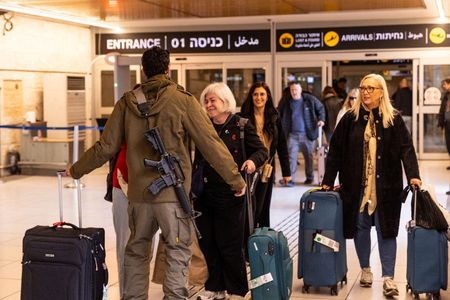
Israeli authorities announced Thursday that over 20,000 citizens have successfully returned to their homeland following the closure of the country’s airspace during weekend military operations involving Iran, according to the Transportation Ministry.
Officials began gradually reopening Israeli airspace Thursday, permitting limited flights to touch down at Ben Gurion International Airport outside Tel Aviv.
The country shut down its airspace Saturday when U.S.-Israeli military operations against Iran commenced, leading to retaliatory missile attacks from Iran that left tens of thousands of travelers stranded in foreign countries.
Transportation Ministry data indicates approximately 120,000 Israeli citizens currently overseas are requesting assistance to return home, with officials estimating the complete repatriation process will require seven to 10 days to complete.
According to Israel’s Population and Immigration Authority, nearly 300,000 Israelis traveled internationally over the past three months, while airlines report tens of thousands of customers are now seeking return passage.
The Transportation Ministry stated it is working to increase travel options through air, land, and sea entry points for both arrivals and departures.
The majority of returning Israelis have entered the country through land border crossings into Eilat, the southern Red Sea resort destination.
Israeli carriers have conducted evacuation flights from European destinations to Taba, Egypt and Aqaba, Jordan — both cities neighboring Eilat.
While these alternative route flights continue, Israel’s four national airlines — flag carrier El Al, Israir, Arkia and Air Haifa — have resumed service to Tel Aviv. Despite the gradual airspace reopening, only arriving aircraft are currently permitted, limited to one landing hourly due to ongoing Iranian missile threats.
“We are doing everything to return every Israeli home safely,” stated Transportation Minister Miri Regev, a former military Brigadier General.
“With the opening of airspace, the return of Israelis to Israel began, and we continue to work around the clock together with all parties to expand the options for returning and leaving the country in accordance with security restrictions,” she added.
The initial aircraft to reach Ben Gurion included Israir and Arkia flights arriving from Rome, plus an El Al flight from Athens. Additional flights from European cities, the United States, and Asia are scheduled.
Ben Gurion Airport announced outbound flights will restart Sunday, though initially restricted to 50 passengers per departure.
Israeli airlines have suspended ticket sales from March 15 through March 21 to prioritize rebooking customers whose previous flights were canceled when airspace restrictions were implemented.
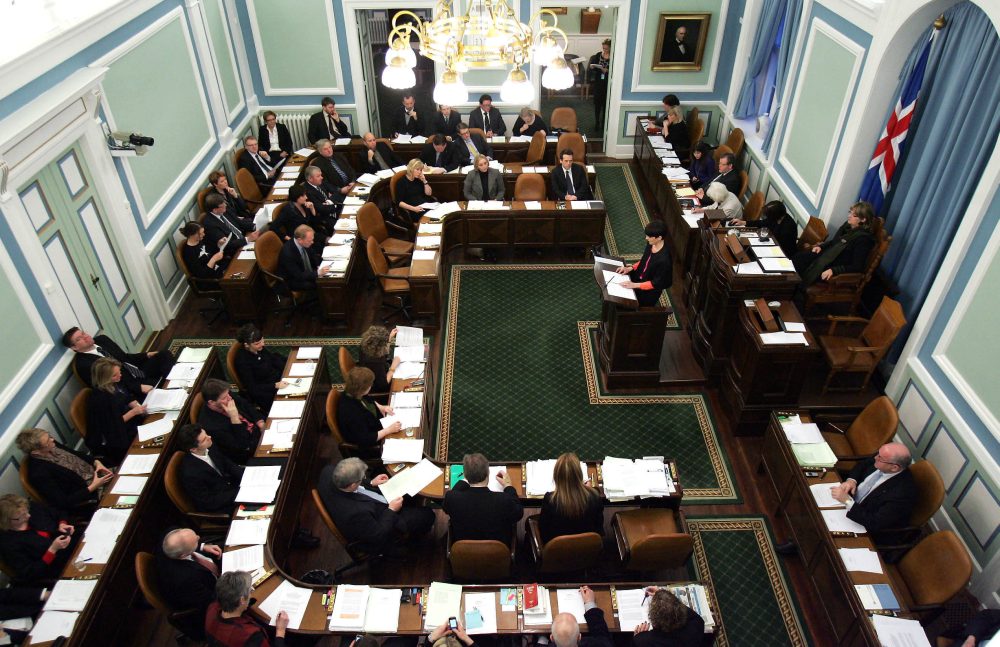
Iceland’s Cabinet has greenlit a proposal for a summer referendum asking voters whether the nation should restart negotiations to join the European Union, according to national broadcaster RUV.
The government approved the resolution Friday, scheduling the vote for August 29. However, Iceland’s parliament, known as the Althingi, must first give its approval before citizens can head to the polls.
This Arctic island nation of 400,000 residents is reconsidering its relationship with the EU as geopolitical tensions mount and economic pressures intensify.
The center-left coalition led by Prime Minister Kristrun Frostadottir, which took office in 2024, originally planned to conduct this referendum by 2027. However, recent statements by U.S. President Donald Trump about acquiring Greenland prompted officials to accelerate their timeline.
During heated international discussions about his territorial ambitions, Trump repeatedly confused Greenland with Iceland in his public remarks.
Multiple factors have heightened Iceland’s security anxieties, including inflation concerns, the ongoing conflict between Russia and Ukraine, and strained relationships across the Atlantic. Without its own military forces, Iceland depends on NATO protection and a defense partnership with the United States.
Iceland has historically resisted EU membership due to fears of losing control over its valuable fishing territories in the North Atlantic to vessels from other European countries.
The nation initially sought EU membership in 2009 following the devastating collapse of its banking industry during the worldwide financial meltdown. However, negotiations were put on hold in 2013 when conservatives took power, and talks officially concluded in 2015.
Currently, Iceland maintains access to EU markets through the European Economic Area agreement and participates in the Schengen zone, which allows unrestricted travel between member countries.
The EU is presently conducting membership discussions with ten nations, including Albania, Moldova, Montenegro, and Ukraine leading the queue.
EU membership involves an extensive, multi-year evaluation process overseen by the European Commission, examining 35 different areas ranging from government transparency and financial systems to fishing rights, transportation infrastructure, farming policies, and fundamental freedoms including expression and worship.
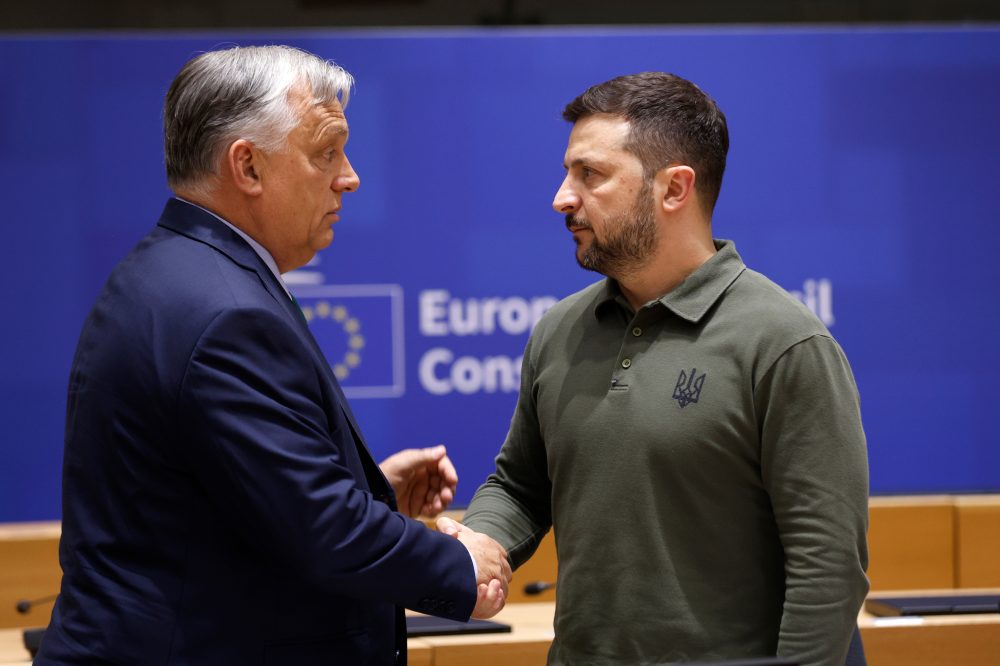
Every existing EU member must vote unanimously to accept new applicants. Hungary has indicated it may block Ukraine’s potential membership.
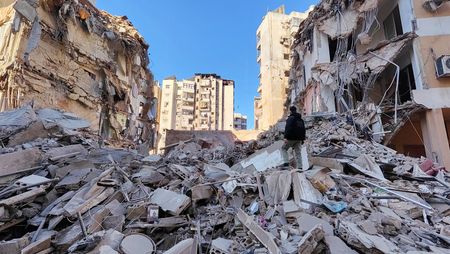
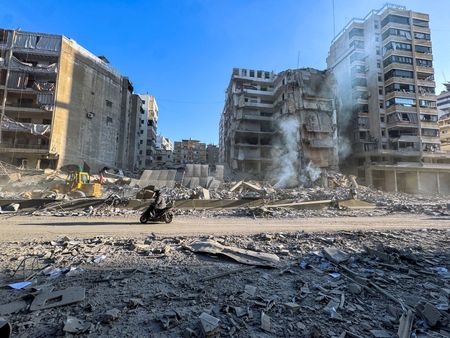
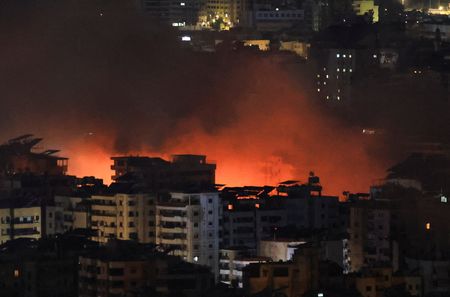
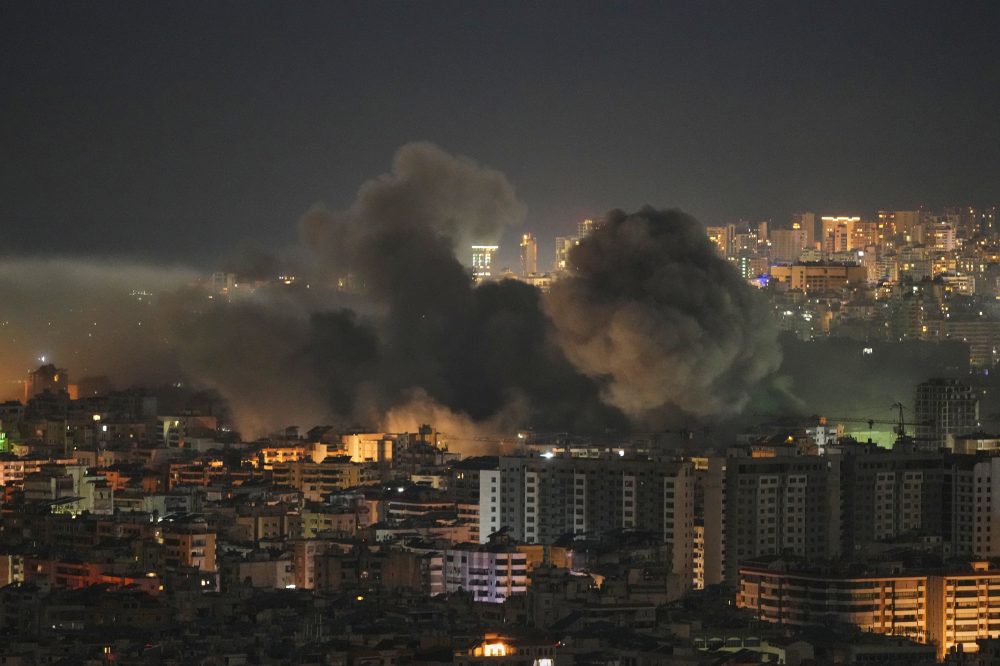
BEIRUT, March 5 – Israeli military officials directed civilians to evacuate Hezbollah-controlled neighborhoods in southern Beirut on Thursday, creating widespread panic as thousands fled the densely populated areas during the fourth day of intense fighting between Israel and the Iran-backed militant group.
Through a social media post, an Israeli military representative instructed people living in the southern districts to move toward the east and north, sharing a detailed map of four large neighborhoods that must be cleared. Some of these areas sit close to Beirut’s main airport.
“Save your lives, evacuate your homes immediately,” wrote Israeli military spokesperson Avichay Adraee in his warning message, adding that traveling southward could put residents in grave danger.
Television broadcasts captured scenes of congested roadways as civilians escaped both in vehicles and on foot from the targeted neighborhoods. Warning shots echoed through the southern districts, alerting remaining residents to leave immediately.
The conflict expanded to include Lebanon this Monday after Hezbollah launched attacks, prompting Israel to respond with concentrated air campaigns targeting the southern suburbs of Beirut, along with areas in southern and eastern Lebanon.
A day earlier on Wednesday, Israeli forces had instructed residents across roughly 8% of southern Lebanon’s territory to abandon their homes.
The combination of Israeli strikes and evacuation directives has displaced tens of thousands of Lebanese citizens from both the southern suburbs and southern regions this week. Lebanese health officials report 77 deaths so far.
No Israeli casualties have been documented from Hezbollah’s attacks during this period.
The southern suburbs of Beirut house predominantly Shi’ite Muslim communities and rank among the capital’s most crowded residential zones. These same neighborhoods suffered extensive damage from Israeli bombardment during conflicts with Hezbollah in both 2024 and 2006.
Two crew members died and four others sustained injuries when an Algerian military transport plane went down Thursday moments after departing from the Boufarik air base, according to reports from Ennahar TV citing the country’s defense ministry.
The small military aircraft experienced the fatal incident shortly following its departure from the base on March 5th. The defense ministry confirmed the casualty figures through the television network’s reporting.
Cross-border warfare between Pakistan and Afghanistan intensified on Friday as military forces from both countries conducted fresh attacks against each other, with each nation asserting they eliminated numerous enemy combatants in what represents the most severe hostilities between these neighboring countries to date.
International pleas for de-escalation have gone unheeded as the violence, now stretching into its ninth consecutive day, shows no signs of diminishing in what Pakistani officials have characterized as an “open war.”
Afghanistan’s Taliban-controlled Defense Ministry reported that their military units “destroyed numerous Pakistani military posts” across border areas in Nangarhar, Kandahar, Kunar, Paktia, and Khost provinces, resulting in the deaths of multiple Pakistani soldiers.
Pakistani government media outlets reported their nation’s aerial and ground forces delivered devastating blows in recent operations against Afghan military targets and members of the Pakistani Taliban, a militant organization called Tehrik-e-Taliban Pakistan or TTP.
Pakistani authorities stated the combat remains active and their armed forces “inflicted heavy losses” on Afghanistan, though they provided no additional specifics.
Pakistan has consistently blamed Afghanistan’s Taliban leadership in Kabul for providing sanctuary to the TTP, an allegation Afghan officials reject. Following the Afghan Taliban’s return to control in Afghanistan during August 2021, TTP attacks inside Pakistan have increased significantly.
Pakistani officials say their military campaign, which began last week, will persist until Afghanistan implements concrete measures to control the TTP and other militant groups operating within Afghan borders.
The United Nations mission in Afghanistan has called for an immediate end to hostilities, warning the fighting is exacerbating Afghanistan’s already critical humanitarian crisis. On Friday, the UN mission, known as UNAMA, posted on social media platform X that 56 civilians have died inside Afghanistan so far.
Multiple individuals sustained injuries Friday after Afghan mortar rounds struck a village in Mohmand, located in northwestern Khyber Pakhtunkhwa province, according to local official Mohammad Asif.
Death toll reports have differed dramatically between the two sides. Earlier this week, Afghanistan claimed their forces eliminated 150 Pakistani soldiers since combat began, while losing 28 Afghan troops.
On Friday, Pakistan’s Information Minister Attaullah Tarar posted on X that Pakistani military forces have killed 527 Afghan soldiers.
The frontier area, where extremist groups including al-Qaida and the Islamic State maintain operations, remains largely off-limits to journalists, and The Associated Press cannot independently confirm the competing casualty figures.
Whether diplomatic initiatives by other Muslim countries will bring Kabul and Pakistani leadership to peace talks in the near future remains uncertain.
On Wednesday, Turkish President Recep Tayyip Erdogan proposed mediating a fresh ceasefire during a phone conversation with Pakistan’s Prime Minister Shehbaz Sharif.
The following day, Malaysian Prime Minister Anwar Ibrahim held discussions with Afghanistan’s Prime Minister Mullah Mohammad Hasan Akhund, as confirmed by Taliban government spokesman Zabihullah Mujahid.
The current hostilities brought an end to a previous ceasefire negotiated by Qatar and Turkey in October, when the two countries had previously approached the brink of war. That agreement, finalized in Qatar, led to six days of discussions in Istanbul, producing a deal to maintain the truce and conduct additional negotiations in November.
Hungarian officials announced Friday they had arrested seven Ukrainian nationals suspected of money laundering while transporting approximately $82 million in cash and gold, as Ukraine condemned the action as hostage-taking during an ongoing disagreement over oil deliveries.
The Hungarian Tax Authority deployed counter-terrorism units to intercept two Ukrainian armored vehicles carrying the money to Ukraine, marking a significant escalation in tensions that have already led Budapest to block billions of euros in European Union assistance for Kyiv.
Footage shared on the Hungarian government’s Facebook page depicted armed counter-terrorism officers exiting a van as the Ukrainian vehicles stopped at a service station, aiming weapons at windshields before handcuffing occupants and forcing them to the ground.
“The National Tax and Customs Administration (NAV) is pursuing criminal proceedings on suspicion of money laundering,” the authority said in a statement.
“On March 5, 2026, it detained seven Ukrainian citizens, including a former Ukrainian intelligence service general, and two armoured cash-in-transit vehicles, which were transporting a total of $40 million, 35 million euros and nine kilograms of gold from Austria to Ukraine.”
The tax officials reported collaborating with counter-terrorism units. Hungarian Foreign Minister Peter Szijjarto demanded Kiev provide explanations about cash movements through Hungary.
Government spokesperson Zoltan Kovacs announced later that the seven detainees would face expulsion from Hungary. Officials did not immediately clarify what would happen to the transported funds.
Ukraine’s ambassador to Hungary, Sandor Fegyir, traveled to the Budapest Counter-Terrorism Centre headquarters attempting to meet the detained Ukrainians, according to two Reuters witnesses.
Ukrainian Foreign Minister Andrii Sybiha identified the detained individuals as Oschadbank employees.
“In fact, we are talking about Hungary taking hostages and stealing money,” Sybiha wrote on X. “This is state terrorism and racketeering.”
He demanded immediate release of Ukrainian citizens and said Ukraine would request the EU to “provide a clear qualification of Hungary’s unlawful actions.”
Ukraine also issued travel warnings for its citizens regarding Hungary, stating it could not ensure their safety given what it termed “arbitrary actions” by Hungarian authorities.
Hungary and Slovakia claim Ukraine is intentionally postponing oil flow restoration through the damaged Druzhba pipeline for political purposes. Kiev rejects these accusations, explaining it requires time to fix damage from Russian drone attacks on energy infrastructure from January 27.
Hungarian Prime Minister Viktor Orban, confronting a significant challenge to his 16-year leadership in April 12 elections, has centered his campaign around the Ukraine war, claiming opposition parties would involve Hungary in the conflict.
He has blocked new EU sanctions against Moscow and a substantial Ukrainian loan due to the oil disagreement.
Sybiha posted on X that Kiev demanded “Hungary stop dragging Ukraine into its domestic politics and electoral campaign.”
During a state radio appearance, Orban again accused Kiev of blackmail and pledged Hungary would employ all available methods until oil deliveries restart. He did not reference the Ukrainian detentions.
Ukraine’s Oschadbank described its employees’ activities as standard operations.
“Since the start of the full-scale invasion, foreign currency and bank metals have been transported exclusively by land,” it said in a statement. “Similar trips are carried out by Oschadbank’s cash collection vehicles on a weekly basis.”
Lithuanian intelligence officials issued a stark warning Friday about Russia’s military buildup along NATO’s borders, suggesting Moscow is positioning forces that could serve as staging areas for future conflicts with the Western alliance.
According to Lithuania’s annual security threat assessment released Friday, Russia could be prepared for a “wide-scale military conflict” with NATO within six years if international sanctions are removed.
“Russia would likely create not only a 30-50 percent larger army than it had before the war but also a relatively modern one. Strategic reserves of weapons and ammunition would be fully restored. Russia would be ready for a conventional military conflict with NATO,” the Lithuanian intelligence report said.
The assessment indicates that Moscow’s primary objectives include shifting Europe’s power balance in its favor and achieving complete control over Ukraine. Lithuanian officials noted that Russian forces are gaining combat experience in Ukraine while simultaneously strengthening border positions.
Russia’s defense ministry has not yet responded to requests for comment regarding the intelligence findings.
The report highlights how Russian military production has accelerated with Chinese assistance, allowing Moscow to decrease its dependence on Western technology. Intelligence officials warn that Russia’s excess weapons stockpiles following the conflict could create “consequences for global security.”
Lithuania, which shares borders with both Russia and its ally Belarus, has emerged as one of Ukraine’s strongest supporters and most vocal critics of Russian actions since joining NATO and the European Union.
The intelligence assessment referenced mysterious package explosions that occurred in 2024, which Lithuanian authorities attributed to Russian military intelligence operations that could potentially be expanded to cause casualties.
However, the report concluded that various gas pipeline disruptions, power cable failures, and telecommunications outages affecting the Baltic Sea region since 2023 were accidental, despite involving vessels departing from Russian ports. Officials did not explain their methodology for reaching this determination.
Baltic nations have maintained heightened security measures following these underwater infrastructure incidents since Russia’s 2022 invasion of Ukraine. NATO leadership has announced plans to increase its regional military presence in response.
Finland retrieved an anchor in 2023 that authorities believe came from a Chinese cargo ship suspected of damaging the Estonia-Finland gas pipeline and multiple fiber-optic connections. That investigation continues, with Finnish officials declining to specify whether they consider the incident intentional or accidental.
When questioned about the pipeline and cable damage, Mindaugas Mazonas, Lithuania’s military intelligence chief, told reporters: “The investigation was not undertaken by our intelligence… but we have the answer that this was a non-intentional incident.”
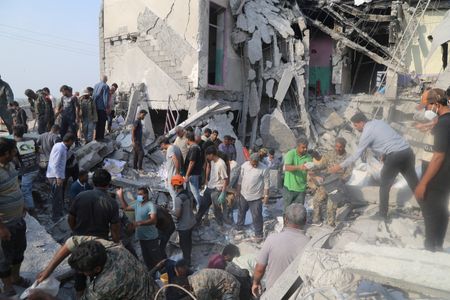
Healthcare facilities in Gaza are facing a dire shortage of medical supplies, according to a Friday announcement from the World Health Organization, even after Israel allowed a major border crossing to reopen earlier this week.
WHO’s regional director Hanan Balkhy reported that certain critical items including gauze and needles have been completely exhausted, based on data provided by Gaza’s Health Ministry. The territory has been severely impacted by two years of conflict between Israel and Hamas.
“Stocks of essential medicines, trauma supplies and surgical consumables are critically low, and fuel shortages continue to limit hospital operations,” Balkhy stated.
“The situation is difficult, and we will be running out of whatever is remaining,” she added.
Earlier this week on Tuesday, Israeli military authorities announced the reopening of the Kerem Shalom border crossing “for the gradual entry of humanitarian aid.” The crossing had been previously shuttered due to concerns about missile attacks from Iran during heightened tensions following Israeli and U.S. military strikes against Iran last Saturday.
Meanwhile, the Rafah crossing connecting to Egypt – which serves as the primary evacuation route for Gaza residents – continues to remain closed, halting medical evacuations according to WHO officials.
The United Nations agency reports that approximately 18,000 individuals, including wounded children and patients with chronic conditions, are currently waiting for medical evacuation from the territory.
Balkhy confirmed that her organization managed to bring in some medical equipment and fuel supplies on Tuesday and Wednesday, though several transport trucks remain waiting in the Egyptian city of al-Arish.
“We’re talking about … maximum 200 out of 600 daily trucks that need to go in are going in so that is really not enough to support the needs in Gaza,” she explained.
The WHO official emphasized the urgent need for additional fuel shipments to keep medical facilities operational.
Following the conclusion of the Israel-Hamas conflict with an unstable ceasefire last October, 18 of Gaza’s 36 hospitals remain closed. The facilities that continue operating are having difficulty maintaining essential medical services including surgical procedures, dialysis treatment, and intensive care units, Balkhy reported.
Middle Eastern sovereign wealth funds, accumulated over decades from oil and gas revenues, face their biggest test as regional conflicts threaten to drain the $5 trillion emergency reserves these nations have carefully built.
Iranian strikes targeting Gulf infrastructure have created potential financial pressures not seen in years. While crude prices jumped 20% since last Friday, the attacks have disrupted critical oil exports through the Strait of Hormuz and forced shutdowns at major facilities, including Saudi Aramco’s largest domestic refinery and Qatar’s natural gas operations.
Extended military confrontations could compel treasury officials in Riyadh, Abu Dhabi, Doha and Kuwait to access their sovereign reserves, financial experts warn. These governments now face mounting defense expenditures, supply chain disruptions affecting everything from food to medical supplies, and potential economic downturns.
“SWFs (sovereign wealth funds) give countries like the UAE strong financial buffers, and regional governments will rely on their deep pools of sovereign wealth if and as needed,” said Paris-based Robert Mogielnicki, who runs an investment and geopolitical advisory firm and is a non-resident scholar at the Arab Gulf States Institute.
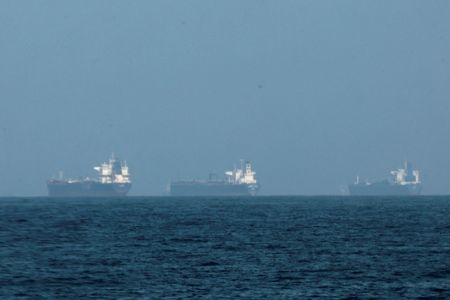
The Strait of Hormuz, which carries roughly one-fifth of global oil consumption, remains critical for energy giants Saudi Aramco and Abu Dhabi National Oil Company (ADNOC). Both companies have historically moved most crude exports through this waterway. Alternative shipping routes exist but lack sufficient capacity to handle typical Gulf volumes.
“The impact of the current Iran-related crisis depends on how energy flows and prices evolve,” Global SWF, a research group, said in a report on Wednesday.
Gulf nations have worked to reduce dependence on natural resources, yet hydrocarbon revenues still anchor public budgets with varying degrees of stability. The UAE expects fiscal surpluses approaching 5% of GDP through 2025 and 2026, while Saudi Arabia recorded a 276 billion riyal ($73.54 billion) budget shortfall last year, with additional deficits projected ahead.
JPMorgan analysts have already reduced growth projections for non-oil sectors across Gulf Cooperation Council members – Saudi Arabia, UAE, Oman, Bahrain, Kuwait and Qatar. They anticipate a 1.2 percentage-point decline from earlier estimates, with the UAE facing the steepest downward revision of 2.3 percentage points. Hydrocarbon sectors might rebound later this year depending on conflict duration, JPMorgan noted.
The investment bank warned that non-hydrocarbon industries would suffer lasting damage, with heightened risks to diversification goals including domestic investment, foreign capital attraction and talent recruitment.
International borrowing costs could also increase for these nations. Saudi Arabia approved a 217 billion riyal ($57.86 billion) borrowing authorization in January. The kingdom’s sovereign wealth fund, the Public Investment Fund (PIF), alongside Aramco, banks and other entities, has raised approximately $27 billion since early this year, representing one of their most aggressive fundraising periods, JPMorgan reported February 2.
“PIF may face more (financial and operational) constraints (than purely portfolio-oriented peers) since it is not only a global investor but is also the main funding force for Vision 2030,” said Ana Nacvalovaite, an Oxford academic specialising in sovereign wealth funds.
PIF was already redirecting focus domestically as the kingdom seeks to attract investment amid growing fiscal strain and the need to finance Vision 2030. This ambitious plan requires hundreds of billions in government spending across tourism and other sectors to reduce hydrocarbon dependence.
Following the 2008 global financial crisis, regional funds became crucial lifelines for international investors, supporting institutions from Barclays to Credit Suisse. Not every investment succeeded, leading funds to adopt more strategic approaches in recent years.
These entities have committed massive resources to technology and artificial intelligence, making these sectors central to economic diversification efforts away from oil dependency.
PIF has allocated tens of billions toward domestic and international technology ventures, including stakes in SoftBank’s Vision Fund. Mubadala has invested heavily in robotics and AI infrastructure, while Abu Dhabi’s MGX, launched last year with Mubadala as a founding partner, has collaborated with BlackRock on a $30 billion AI infrastructure initiative.
High-profile investments in media, entertainment and sports reflect efforts to project influence and capture growth in consumer industries. PIF acquired majority control in Electronic Arts and invested billions in professional golf through LIV Golf, boxing and e-sports.
Last December, the Saudi fund, Abu Dhabi’s L’imad and Qatar Investment Authority combined forces to support Paramount Skydance’s $108 billion offer for Warner Bros Discovery. This unusual three-way partnership demonstrated Gulf states’ appetite for entertainment assets and growing influence in global dealmaking.
However, continued military escalation and increased domestic needs could pause investment activities, according to Nacvalovaite.
“Priority is security of the citizens and the supply chains e.g. food security and drinking water,” she said.
The $1 trillion Kuwait Investment Authority (KIA), established in 1953 as the world’s first sovereign wealth fund, provides historical context for these institutions’ emergency role. When Iraqi forces invaded in 1990, KIA’s London operations effectively functioned as the country’s finance ministry, coordinating transfers to the government in exile.
Since then, every major Gulf fund has maintained similar emergency preparedness: accumulating during prosperous periods and deploying during crises, despite operating under different mandates and strategies. While PIF serves as a domestic investment vehicle for Saudi Vision 2030, KIA and Abu Dhabi Investment Authority focus exclusively on international investments.
Not all sovereign capital could be quickly mobilized during deeper crises. Funds like Mubadala, with greater emphasis on private equity, infrastructure assets, and illiquid alternatives, might face more challenging divestment processes.
U.S. Treasury bonds and publicly traded stocks may offer the first and easiest liquidation options. Abu Dhabi’s ADIA was among investors that sold a large block of shares in U.S. company Medline this week.
“Public markets are the easiest source of liquidity, but they’re also the most visible and can be costly to exit during volatility,” said Sam Bourgi, finance analyst at InvestorsObserver.
“The base case is that Gulf SWFs are not forced sellers.”
Some investment activity continues currently. Mubadala joined a group committing approximately $4 billion to life insurance company Athora Holding, according to Friday’s announcement, while ADIA and a QIA subsidiary appeared this week among cornerstone investors for Japanese payment firm PayPay’s U.S. initial public offering.
Reduced outbound investing and quiet portfolio adjustments rather than emergency asset sales represents a more probable scenario, Bourgi explained.
Qatar’s QIA chose to deploy sovereign resources domestically during the 2008 financial crisis to stabilize its banking system, purchasing assets from local bank portfolios to restore market confidence.
Peter Jädersten, CEO of fundraising advisory firm Jade Advisors, said efforts would focus on quickly restoring confidence, though he cautioned the process may require time.
“I think the SWFs’ portfolios will have a short-term reset, but so will other long term investors across the globe like endowments and pension funds. I don’t think it will make a dent in the long-term portfolios of the region’s SWFs,” he said.
A Dubai-based entrepreneur who launched a pet travel service last Saturday found himself overwhelmed with evacuation requests instead of the animal transport inquiries he expected, as Middle East tensions drive desperate residents to seek private jet escapes.
Samuel Lait’s company PetX Jets was designed to ferry pets and their owners between Dubai and the United Kingdom, but regional conflict has transformed his business model overnight. His inbox now overflows with requests from travelers of all ages – young couples, expectant parents, and seniors – all seeking passage out of the United Arab Emirates.
The ongoing U.S.-Israeli military operations against Iran reached their seventh day Friday, with the crisis threatening to spread beyond Middle Eastern borders and prompting mass exodus attempts from the region.
“The original idea was to transport pets and their owners between the UK and Dubai primarily. And that’s very much changed since Saturday,” Lait explained.
“We’re trying to sort of move with what’s happening,” he added, noting his company may accelerate launch plans originally scheduled for June.
Major UAE airports, typically ranking among the globe’s busiest aviation hubs, are operating at severely reduced capacity despite gradual flight resumptions. This limitation has pushed many residents and visitors to seek escape routes through neighboring Oman and Saudi Arabia, often utilizing private aircraft services.
Altay Kula, who heads France-based private jet brokerage Jet-VIP with Middle East operations, described the overwhelming demand surge since regional tensions escalated.
“Since the escalation of tensions in the region, we have seen a significant increase in bookings … every 10 minutes we have requests, every 20 minutes. I mean, the request is very important at the moment,” Kula stated.
According to Kula, current airspace restrictions have complicated departure logistics, driving clients to “seek solutions to leave the Middle East, particularly Dubai and Qatar,” often through Riyadh and Muscat airports.
Despite the business opportunity, both operators face significant obstacles, particularly skyrocketing charter costs that have priced out many potential customers.
Jet-VIP’s standard Dubai-to-Istanbul routes previously cost $50,000 for six-passenger light jets and $110,000 for larger aircraft accommodating 15 travelers. These rates have now doubled to $100,000 and $200,000 respectively.
“A lot of the flights that we were offered initially were out of Oman. So the prices there were still astronomical because the demand has obviously gone through the roof,” Lait observed, expressing frustration with aircraft costs as his startup attempts to begin operations.
Kula identified another challenge: limited airport slots as traffic surges at Muscat and Riyadh facilities.
“Sometimes it can take up to 24 hours just to have the authorisation to go to Oman and to pick up the passengers,” he explained, adding that his company prefers Dubai operations but faces slot availability issues due to airspace restrictions.
For now, Lait’s PetX Jets remains in holding pattern, waiting for conditions to improve.
“Our aim is to really try and hold out until the Dubai airspace opens and those aircraft become more in line with the prices that we’ve seen in the weeks and months leading up to Saturday,” Lait concluded.
NICOSIA, Cyprus – Political leaders in Cyprus are weighing whether to challenge Britain’s decades-long military presence on their island following a drone attack that heightened fears of being pulled into regional conflict with Iran.
The debate over Britain’s two military installations – Akrotiri and Dhekelia – has simmered since Cyprus achieved independence in 1960, but tensions escalated after Monday’s drone strike on Akrotiri base. Security sources believe the Iranian-made drone was launched by Hezbollah, Iran’s regional partner.
While no injuries occurred in the attack, the incident prompted emergency evacuations of nearby residents and placed the island on heightened security alert.
When questioned about potentially reassessing the British military installations, Cypriot President Nikos Christodoulides told media Friday: “There is nothing I can rule out.”
Foreign Minister Constantinos Kombos, formerly a law professor, responded cautiously when asked about the bases’ future status: “I no longer have the luxury in life of just expressing my legal opinion about things. Any decision on issues of this importance are not taken in the heat of the moment or during a crisis.”
However, local media took a stronger stance. Columnist Costas Venizelos wrote in the pro-government newspaper Phileleftheros: “The bases should take a hike. They are endangering our safety.”
The military facilities span approximately 99 square miles along Cyprus’s southern and eastern shorelines, housing roughly 7,000 British military members and their families, plus about 12,000 Cypriots living in surrounding areas.
Cypriot leadership expressed anger over weekend comments by British Prime Minister Keir Starmer, who failed to clearly deny potential use of the Cyprus facilities in U.S. and Israeli operations targeting Iran. Britain later issued clarifying statements and sent Defense Minister John Healey to Cyprus for diplomatic discussions.
“Yes, there was irritation” regarding Starmer’s remarks, President Christodoulides acknowledged during a Thursday interview with Greek television network Skai TV.
On Friday, Christodoulides also conducted meetings with MI6 intelligence chief Blaise Metreweli, though discussion details remain undisclosed.
Legal scholars in Cyprus argue the military arrangements warrant fresh examination under current international standards, describing the bases as colonial remnants incompatible with United Nations principles.
Britain’s Defense Ministry maintains the installations comply with international regulations, with a spokesperson stating: “Our Sovereign Base Areas are fully legal under international law.”
Cyprus experts point to Britain’s 2025 agreement transferring Chagos Islands sovereignty to Mauritius following international court rulings against colonial-era territorial separation as a potential model.
“That implies something similar can and should be implemented in the case of Cyprus – that the bases be placed on a new footing fully compliant with international law,” stated Costas Clerides, former Cypriot attorney-general and Supreme Court justice.
The controversy appears likely to persist, though Cypriot officials privately acknowledge reluctance to escalate tensions while their own Greek-Turkish territorial dispute remains unresolved.
“It’s not that simple,” one government official noted.
The British military presence represents one of the UK’s most strategically important overseas positions, supporting Middle Eastern operations for decades and serving as a key Mediterranean foothold.
NAIROBI, Kenya — A United Nations investigation has determined that Uganda provided military assistance for South Sudan’s aerial bombardments that resulted in civilian deaths and severe injuries from burns approximately one year ago.
According to findings from the U.N. Commission on Human Rights in South Sudan, coordinated air attacks conducted by both nations “targeted civilian-populated areas predominantly affecting Nuer communities in opposition-affiliated areas.” The Nuer people represent South Sudan’s second-largest ethnic community.
Uganda has military personnel stationed in South Sudan supporting President Salva Kiir’s administration against forces aligned with opposition leader Riek Machar, who lost his vice presidential position in September following criminal allegations. Uganda’s military leadership states their troops operate in South Sudan through government invitation under a mutual security pact.
As Machar currently faces trial on charges including treason, combat has escalated in regions considered his power base, where government forces work to scatter rebel fighters.
The U.N. investigation noted that the bombardments extensively employed “improvised incendiary devices.”
Uganda deployed forces to South Sudan in March 2025, bringing military equipment including tanks and armored vehicles. This deployment occurred after militia forces captured a military installation near the Ethiopian frontier.
Several weeks following this incident, authorities placed Machar under house detention for his suspected involvement in coordinating the assault, accusations he refutes. The government has subsequently depended on air-based attacks to establish dominance in expanding conflicts with Machar’s supporters and additional armed factions.
Uganda’s President Yoweri Museveni previously deployed his military to intervene in South Sudan’s civil war from 2013-2018 on several occasions supporting Kiir’s side, contributing to shifting the conflict in his direction. Current hostilities jeopardize a peace agreement established in 2018.
During a March 2025 assault in Wunaliet, located 15 kilometers (9 miles) from Juba, the capital, residences were consumed by flames after aircraft released “barrels of liquid that ignited,” according to witness accounts provided to the U.N. commission. Those who survived reported observing “civilians set alight, including a boy burnt beyond recognition.” Military quarters housing opposition troops also sustained damage.
Following the attack by one day, Gen. Muhoozi Kainerugaba, who is Museveni’s son and serves as chief military commander, published on X that Uganda had struck opposition forces.
“Our air offensive will not stop until Riek Machar makes peace with my uncle Afande Salva,” he wrote. Though Kiir is not Kainerugaba’s actual uncle, this language demonstrates the tight relationship between both governments.
The social media post, which was subsequently removed, included video footage that appeared to display explosive fires recorded from inside an aircraft.
Aircraft tracking information indicates that a turboprop aircraft that flew circular patterns over the bombing location had departed from Uganda earlier that day and was under Ugandan military operation, according to the U.N. findings.
The investigation stops short of definitively establishing Uganda’s participation level in operations or their precise role, noting only evidence of “high degrees of planning, operational integration and command-level authorization.”
In November, Uganda rejected claims of participating in South Sudan combat missions. The country has also disputed using “chemical weapons and barrel bombs” and maintains it does not target civilians.
Previously, Amnesty International concluded that Uganda had breached a 2018 U.N. weapons embargo prohibiting member nations from supplying most military aid to South Sudan, including arms and personnel. A U.N. expert panel reached similar conclusions in November.
BRUSSELS (AP) — European Union leaders announced Friday they are blocking visa-free travel privileges for Georgian government officials and diplomats for a minimum of one year, citing the country’s deteriorating democracy and violent response to peaceful demonstrators.
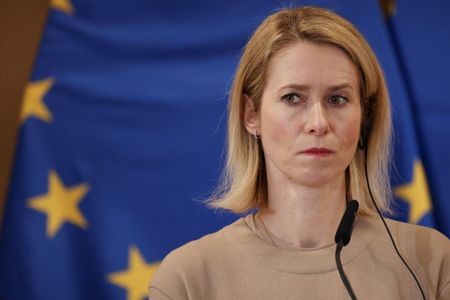
EU foreign policy chief Kaja Kallas issued a strong statement condemning the Georgian government’s actions: “If a government attacks its own people, silences journalists, and curtails freedom, there are consequences.”
The nation has been gripped by widespread demonstrations and civil unrest ever since Georgia’s ruling Georgian Dream party announced in November 2024 it was stopping efforts to pursue EU membership — a constitutional objective supported by many Georgian citizens.
This decision sparked massive street protests that authorities have responded to with widespread detentions and aggressive police tactics. The controversy intensified following a disputed parliamentary election where the governing party claimed victory amid opposition allegations of electoral fraud.
According to the European Commission, officials made the decision to halt official travel privileges “in response to Georgia’s deliberate and persisting violation of the commitments taken under its visa-free regime in key areas of democracy and fundamental rights.”
The violations specifically include a “crackdown on protesters, opposition politicians, and independent media,” which have “resulted in breaches of several fundamental rights and international legal standards.”
The EU’s executive body stated the travel suspension will remain in effect until March 6, 2027, with the possibility of a two-year extension if Georgian leadership fails to resolve the democratic governance and rule of law concerns.
European governments have also been instructed to increase scrutiny of all Georgian citizens entering EU territory. Officials warned that diplomats and government representatives attempting to use personal passports instead of official diplomatic documents could face complete entry bans.
Kallas emphasized the EU’s position on supporting Georgian citizens while rejecting their government’s actions: “The people of Georgia have our full support but there is no place for those representing repression in our union.”
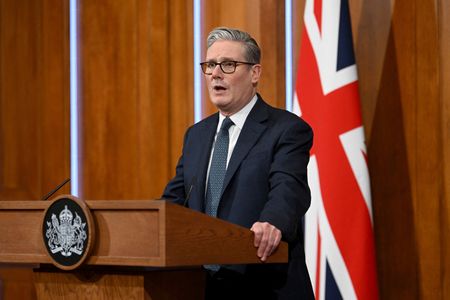
LONDON, March 5 – British Prime Minister Keir Starmer announced Thursday the deployment of four more Typhoon fighter aircraft to Qatar as tensions continue to rise across the Middle East region.
The decision comes as Britain faces scrutiny over its measured approach to the Iran crisis and following a drone strike on a crucial military installation in Cyprus, which has raised questions among allies about the nation’s military capabilities.
President Donald Trump has also taken aim at Starmer, accusing the British leader of not offering adequate backing for U.S. military actions against Iran.
During a Thursday press briefing, Starmer defended Britain’s strategy, stating the country had been positioning military assets throughout the region even before hostilities began.
“My focus is providing calm, level headed leadership in the national interest,” Starmer stated.
“That means deploying our military and diplomatic strength to protect our people, and it means having the strength to stand firm by our values and our principles, no matter the pressure to do otherwise,” he added.
The Prime Minister explained that the four additional Typhoon aircraft will reinforce the existing squadron stationed in Qatar to bolster defensive capabilities both there and across the broader region.
“We have the right plan for defence,” he declared.
Turkish intelligence officials reached out to Britain’s MI6 spy agency last month seeking expanded assistance in safeguarding Syrian President Ahmed al-Sharaa amid growing threats from Islamic State operatives, according to five sources with knowledge of the situation.
The appeal underscores international efforts to stabilize a nation still experiencing intermittent violence more than a year after Bashar al-Assad’s government fell, as broader regional tensions from the U.S.-Israeli conflict with Iran add to the uncertainty.
International partners view Sharaa as essential to avoiding a return to religious warfare or renewed civil conflict, following 14 years of internal strife that forced millions to flee the country and enabled Islamic State to seize large portions of Syrian territory.
The extremist organization has intensified assaults on Syrian military and security forces in recent weeks, branding Sharaa, who previously led rebel forces, as their “number one foe.”
The exact nature of Turkey’s National Intelligence Organization’s request to MI6 remains unclear, as does any expanded role the British agency may have assumed.
Turkey, Britain, and the United States endorsed Sharaa’s leadership last year in efforts to help unify and reconstruct the nation of 26 million people. Both London and Washington have eliminated most economic sanctions targeting Syria and Hayat Tahrir al-Sham, the Islamic organization Sharaa previously commanded.
Sources speaking to reporters demanded anonymity due to the delicate nature of the intelligence matters.
Turkish intelligence, the Turkish foreign ministry, Britain’s foreign office, and Syria’s defense and interior ministries declined to provide statements when contacted.
The sources, including Syrian government officials and foreign representatives, all pointed to mounting concerns over multiple reported Islamic State schemes to eliminate Sharaa.
A Turkish official revealed that the National Intelligence Organization, which has been instrumental in helping Syria’s new administration establish control, reached out to MI6 for additional support following a recent incident. A high-ranking Syrian security official described the request as coming after a “high-risk assassination plot,” noting that Turkish, British, and Syrian intelligence services maintain constant information sharing.
Specific details about the assassination scheme were not disclosed.
Another Western intelligence source familiar with the matter suggested Turkey may want to establish a Western intelligence presence in Damascus to create separation between Turkish and Israeli agencies, which are currently in disagreement.
According to the United Nations Office of Counter-Terrorism, Islamic State targeted Sharaa and two top cabinet officials in five unsuccessful assassination attempts last year. Syrian authorities successfully prevented two of these plots, as reported in November.
Calling Sharaa a “watchdog” of the international anti-Islamic State alliance, the terrorist group carried out six strikes against Syrian government forces last month as part of what they termed a “new phase.”
Syrian officials publicly confirmed for the first time Thursday that they work closely with Turkish intelligence, announcing their joint success in preventing an Islamic State attack in the capital.
Turkish security officials said their intelligence service identified a three-person team planning remote explosive attacks, allowing Syrian partners to stop an “imminent assault.”
A U.S. diplomatic source briefed on the developments said the Turkish request to MI6 stemmed from the Islamic State’s renewed activity.
The Western intelligence source indicated the two agencies might increase collaborative planning and technical operations, though no final decision has been reached regarding deploying British personnel to Damascus.
A Syrian security official characterized a physical British presence as “highly risky.” They noted that MI6 cooperation was discussed during a February 26 meeting in Damascus between a delegation led by Britain’s Syria special envoy Ann Snow and Syria’s deputy interior minister, Major General Abdulqader Tahan.
Before breaking away from Al Qaeda’s Syrian branch in 2016, Sharaa served as a commander in the Nusra Front. He later headed a coalition of Islamic rebel groups that successfully overthrew Assad’s government in late 2024.
LONDON — Authorities in London announced Friday the detention of four individuals accused of conducting surveillance operations targeting the Jewish community while working for Iranian intelligence.
The Metropolitan Police revealed in their announcement that the detained suspects consist of one Iranian citizen and three individuals holding both British and Iranian citizenship. Officers took them into custody on charges of providing assistance to a foreign intelligence operation. Law enforcement apprehended the men at various locations throughout north London just after 1 a.m., alleging they conducted surveillance on specific sites and people.
According to police officials, the detained men range in age from 22 to 55 years old, and investigators continue searching the arrest locations along with additional nearby properties.
Authorities also detained six additional men on charges of providing assistance to the primary suspects, according to the police force.
“We understand the public may be concerned, in particular the Jewish community, and as always, I would ask them to remain vigilant and if they see or hear anything that concerns them, then to contact us,” said Commander Helen Flanagan, who is in charge of counterterrorism policing in London.
These detentions occur amid ongoing military exchanges between Iran and both the United States and Israel, with Iran launching retaliatory attacks against Israeli targets, American military installations, and other regional locations. While Britain does not participate in offensive military actions, the country provides support for regional defensive operations.
The Campaign Against Antisemitism expressed appreciation to law enforcement “for foiling this alleged plot” while criticizing the British government for inadequately addressing Iranian threats.
“The U.K. may not be acting against Iran but Iran is acting against us,” it said in a statement.
“The government’s failure to keep its promise to proscribe the Islamic Revolutionary Guard Corps — the main instrument that the Islamic Republic uses to foment antisemitic violence worldwide — has sent the message that support for the brutal Iranian regime and its Jew-hating and West-hating ideology is perfectly acceptable in Britain,” it added.
British security officials express growing alarm over Iranian espionage activities within the United Kingdom.
Ken McCallum, director of Britain’s MI5 domestic intelligence agency, revealed in October that authorities had prevented more than 20 “potentially lethal Iran-backed plots” during the preceding year.
McCallum claimed that Iran and Russia increasingly employ “ugly methods,” including “surveillance, sabotage, arson or physical violence.” British officials have accused Iran of utilizing criminal networks to execute attacks throughout Europe.
According to intelligence reports, Iranian-supported schemes primarily focus on opposition Persian-language news organizations and Jewish communities.
ISLAMABAD (AP) — Shiite Muslim communities across Pakistan organized demonstrations Friday to condemn what they described as joint US-Israeli military operations that killed Iran’s Supreme Leader Ayatollah Ali Khamenei, prompting American diplomatic officials to warn citizens about potential security threats.
Under heavy police supervision, approximately 300 demonstrators conducted a peaceful sit-in within Pakistan’s capital city, displaying images of Khamenei while shouting anti-American and anti-Israeli slogans. Law enforcement positioned shipping containers along routes to the US Embassy in Islamabad as a precautionary measure against possible escalation.
Officials confirmed that demonstration organizers had committed to avoiding any march toward the diplomatic facility, which sits roughly 3 kilometers away from the protest site. The sit-in was scheduled to conclude Friday evening.
The Iranian leader, who maintained power since 1989, served as an influential religious and political symbol for Shiite communities globally, including those in Pakistan. News of his death during the joint military operation that initiated conflict last week has triggered widespread anger among Shiite populations.
Enhanced security measures were implemented in Karachi, the major port city where hundreds of Shiite demonstrators had attacked the US Consulate earlier this week, breaking windows and attempting arson. Law enforcement responded with batons, tear gas and live ammunition to control the crowds. The Karachi violence resulted in 10 protester deaths, while an additional 13 people died during unrest in northern cities such as Skardu and Gilgit.
Friday’s Karachi protesters maintained a distance of approximately 4 kilometers from the consulate building.
Sunni Muslim groups also organized separate, smaller demonstrations in both Islamabad and Karachi Friday, expressing opposition to the US-Israeli military campaign against Iran. These gatherings occurred away from American diplomatic properties and proceeded without violent incidents.
Prior to Friday’s demonstrations, US Embassy officials in Islamabad advised American citizens to restrict outdoor activities. An updated travel advisory also discouraged visits to Pakistan’s Balochistan province in the southwest, Khyber Pakhtunkhwa in the northwest, and the contested Kashmir region due to elevated risks of terrorist attacks and kidnapping.
Shiite Muslims represent approximately 15 percent of Pakistan’s 250 million residents, while the majority practice Sunni Islam.
A significant military conflict in the Middle East is creating massive disruptions across global energy markets and supply chains, with impacts that financial experts say could rival those seen during the COVID-19 pandemic.
The crisis began last Saturday when joint U.S.-Israeli military operations targeted Iran, resulting in the death of Iranian Supreme Leader Ayatollah Ali Khamenei. Iran responded with widespread retaliatory strikes throughout the region, escalating tensions dramatically.
Energy markets are experiencing their most dramatic price swings since Russia’s 2022 invasion of Ukraine. Brent crude oil has surged past $87 per barrel while West Texas Intermediate has climbed above $84, marking weekly increases exceeding 20% and 25% respectively. Year-to-date, both benchmarks have spiked more than 40%.
The scale of energy disruption is unprecedented. The strategically crucial Strait of Hormuz has been effectively shut down, stranding hundreds of oil tankers. Qatar has halted its liquefied natural gas operations, Saudi Arabia suspended production at a major refinery, and Iraq has completely stopped crude oil production.
Asian markets are bearing the brunt of the crisis, with refineries in the region dependent on Middle Eastern sources for nearly 60% of their crude supply now scrambling for alternatives. Several facilities have already scaled back operations, and Asian jet fuel prices skyrocketed more than 70% on Wednesday alone, reaching record highs. European natural gas prices have also surged.
President Donald Trump addressed the energy situation Thursday, saying regarding rising gasoline costs, “They’ll drop very rapidly when this is over, and if they rise, they rise.”
The administration is taking some measures to address the crisis. The U.S. has temporarily relaxed restrictions on Indian purchases of Russian oil to help ease pressure on India’s refineries. While the Treasury Department considered intervening in oil futures markets to control prices, officials have reportedly decided against that approach for now.
Earlier this week, Trump announced the U.S. would provide insurance coverage and naval escorts to help reopen the blocked Strait of Hormuz, though analysts suggest this initiative may be insufficient given the current situation.
Stock markets worldwide are showing mixed reactions to the crisis. Asian equity markets, particularly those in countries heavily dependent on Middle Eastern energy imports, have suffered significant losses. South Korea’s Kospi index, which had been among the top performers in early 2024, is heading toward its worst weekly decline in six years at approximately 10.5%.
European stock markets have also weakened since the conflict began, though less severely than their Asian counterparts. U.S. equities have performed relatively better, benefiting from America’s position as the world’s largest energy producer and a rebound in technology stocks.
The U.S. dollar has emerged as one of the major beneficiaries during the conflict, rising roughly 1.5% this week, though this may not be solely due to safe-haven demand. Treasury yields have increased as concerns about potential inflation from the energy crisis have outweighed investors’ typical flight to safety.
Interestingly, gold prices, despite being up Friday, are actually down for the week overall. This could indicate investors are selling the precious metal to cover losses elsewhere, or it might reflect the speculative nature that has driven gold’s massive gains over the past year.
Financial markets may briefly shift attention today with the release of February U.S. employment data, amid ongoing concerns about artificial intelligence’s impact on jobs. However, focus is expected to return quickly to Middle Eastern developments.
Regardless of how or when this conflict concludes, experts believe it has the potential to fundamentally alter global perspectives on defense strategy, energy security, and resource nationalism. This shift comes at a particularly critical time when the artificial intelligence revolution is driving unprecedented demand for energy, metals, and minerals.
The crisis highlights the vulnerability of global supply chains and the interconnected nature of modern energy markets, with effects rippling far beyond the immediate region of conflict.
Courts in Indonesia have delivered severe punishments to two Thai citizens involved in transporting an enormous quantity of methamphetamine, marking one of the nation’s most significant narcotics seizures in recent memory.
On Friday, judicial authorities in Batam imposed a life sentence on Weerapat Phongwan for his role in coordinating and supervising the drug distribution network, according to court officials. His co-defendant, Teerapong Lekpradub, received a 17-year prison term after being convicted of serving as a middleman in the narcotics transaction.
The arrests took place last May when Indonesian law enforcement intercepted a fishing vessel carrying 67 containers filled with methamphetamine totaling nearly 2 tons in weight. Court records reveal the drugs had been concealed inside tea bag packaging, as demonstrated in police footage from the investigation.
Authorities apprehended the suspects in maritime territory off Karimun in the Riau Islands province, located close to Singapore. Along with the two Thai nationals, four Indonesian citizens were also taken into custody during the operation.
The legal proceedings continued Thursday when the same court sentenced another defendant, Fandi Ramadhan, to five years behind bars. Verdicts for the remaining three accused individuals are expected to be announced next week.
The case gained widespread attention on social media platforms after Ramadhan’s relatives appealed to President Prabowo Subianto, requesting presidential intervention to secure his release.
According to local news sources, the narcotics originated from Phuket, Thailand, and investigators believe they were supplied by an international criminal organization with operations spanning Thailand, Myanmar, and Laos.
Indonesia maintains extremely harsh penalties for drug-related offenses. The country demonstrated its tough stance in 2015 when it executed two Australian citizens connected to the notorious Bali Nine smuggling ring for attempting to transport heroin from the popular tourist destination.
Iceland’s government announced Friday it will hold a public vote on August 29 to decide whether the country should restart negotiations for European Union membership, accelerating a commitment to conduct the referendum by 2027 amid growing global tensions.
The Nordic island nation walked away from EU membership discussions in 2013 after four years of negotiations. However, recent polling indicates renewed public interest in joining the European bloc, driven by increasing living expenses and the ongoing conflict in Ukraine.
The urgency surrounding EU membership has intensified following repeated statements from U.S. President Donald Trump about potentially annexing Greenland, which sits between Iceland and the United States. This has heightened concerns for the North Atlantic nation of nearly 400,000 residents.
According to public broadcaster RUV, Foreign Minister Katrin Gunnarsdottir announced at a news conference that the government reached a unanimous decision on the referendum proposal.
Should voters approve restarting membership talks, any final agreement reached with the European Union would then face a separate public vote on actual membership in the bloc.
BEIRUT – Nearly 100,000 Lebanese residents have sought refuge in emergency shelters following extensive Israeli military evacuation orders that a top United Nations official described as unprecedented in their scope, according to a Friday report.
The Israeli military issued evacuation directives on Thursday targeting residents of southern Beirut neighborhoods, including areas under control of the Iranian-backed Hezbollah organization, along with sections of the eastern Bekaa Valley. These orders came one day after similar warnings were issued for large areas of southern Lebanon, as fighting continues between Israeli forces and Hezbollah militants.
Imran Riza, who serves as the U.N. Humanitarian Coordinator for Lebanon, described the situation to Reuters as extraordinary in its magnitude.
“What we saw in the last couple of days is, I would say … unprecedented in terms of the scale here in Lebanon of the warnings, the displacement orders, and the reaction, the panic also, that this has all created,” Riza explained.
According to Riza’s Friday morning assessment, the displaced population has filled 477 emergency shelters across the country, with only 57 facilities still having available space.
“At the moment, there are about 100,000 people that are, as of this morning, in some 477 collective shelters. There are some 57 shelters that still have some space, but basically the capacity is being reached very, very quickly,” he stated.
The evacuation orders have triggered chaos and traffic jams as residents scramble to find safe locations, Riza observed.
“We had people moving all over the place and not knowing where to go to. So yes, I think we’re going to have an increased number quite quickly,” he said.
Riza referenced the 2024 conflict between Hezbollah and Israeli forces, which displaced over one million Lebanese residents, with 75-80% finding accommodation outside official shelter facilities.
“This time again, the majority will not be in shelters probably,” he predicted.
KYIV – Ukrainian President Volodymyr Zelenskyy announced Friday that his country successfully secured the release of 300 military personnel and two civilians from Russian custody during the second consecutive day of prisoner exchanges between the two nations.
The freed Ukrainian troops included soldiers of various ranks – from enlisted personnel to non-commissioned officers and commissioned officers – who had been stationed at multiple battlefront locations spanning from the eastern regions of Donetsk and Luhansk to the southern area of Kherson, according to Zelenskyy’s statement.
The Ukrainian president shared images on social media showing the returning servicemen stepping off transportation vehicles, embracing one another and sharing cigarettes in what appeared to be emotional reunion scenes.
A Jakarta court delivered what human rights organizations are calling a significant win for civil liberties on Friday, clearing four activists of accusations they sparked Indonesia’s most devastating civil unrest in more than two decades.
The unrest began in August of last year when thousands of students, civil rights advocates, and ordinary citizens took to the streets nationwide to oppose government budget decisions, particularly increased financial benefits for elected officials.
What started as peaceful demonstrations escalated into deadly violence following the police killing of a motorcycle taxi operator in Jakarta. The chaos continued through September, ultimately claiming 10 lives.
According to data from an independent monitoring group established by human rights organizations, authorities have detained nearly 7,000 individuals through February 2026, with 500 receiving sentences and 125 remaining behind bars.
The Central Jakarta court on Friday cleared Delpedro Marhaen, an employee of the Lokataru Foundation, a nonprofit that provides legal support to demonstrators. Marhaen became a prominent symbol of the movement following his September arrest.
Three additional defendants, including a coworker of Marhaen’s and two other advocates, also received acquittals.
The court determined none of the defendants were guilty of encouraging participation in the August demonstrations. They were also cleared of accusations they fueled violence by distributing false information and inflammatory content on social platforms.
The presiding judge further ruled they had not recruited underage participants, dismissing child exploitation charges against them.
“The ruling not only belongs to us but also belongs to all political prisoners.. Imagine we have been arrested for six months but now we are proven not guilty,” Marhaen stated following the proceedings while draping himself in an Iranian flag.
The Commission for the Disappeared and Victims of Violence characterized the decision as an “oasis in the rollback of Indonesia’s democracy.”
The Indonesian Legal Aid Foundation praised the outcomes as a modest triumph for individual freedoms while emphasizing the need for government action to safeguard free speech rights.
Political observers noted the demonstrations represented the first major challenge for President Prabowo Subianto following his overwhelming 2024 electoral success.
The civil disorder has been characterized as the most severe since 1998, when student demonstrations resulted in the removal of former President Suharto and concluded three decades of authoritarian governance.
JAKARTA, Indonesia (AP) — The Indonesian government announced Friday it will prohibit minors under age 16 from accessing major social media platforms, according to Communication and Digital Affairs Minister Meutya Hafid.
Minister Hafid revealed in a media statement that she has approved new government regulations preventing children younger than 16 from maintaining accounts on dangerous digital platforms. The restricted platforms encompass YouTube, TikTok, Facebook, Instagram, Threads, X, Bigo Live and Roblox.
The new restrictions will roll out in phases beginning March 28, continuing until every platform meets government compliance requirements.
“The basis is clear. Our children face increasingly real threats. From exposure to pornography, cyberbullying, online fraud, and most importantly addiction. The government is here so that parents no longer have to fight alone against the giant of algorithms,” Hafid stated.
The minister explained the government views these measures as essential action during what she called a digital crisis to protect children’s future welfare.
“We realize that the implementation of this regulation may cause some discomfort at first. Children may complain and parents may be confused about how to respond to their children’s complaints,” Hafid acknowledged.
This announcement follows Indonesia’s Ministry of Communication and Digital Affairs conducting an unannounced visit to Meta Platforms’ Jakarta headquarters earlier this week due to concerns about dangerous content management across Facebook, Instagram, and WhatsApp.
Ministry officials stated the inspection resulted in a formal warning to Meta regarding insufficient adherence to Indonesian national regulations.
The Associated Press contacted TikTok and Meta for statements but has not received responses.
With this action, Indonesia becomes the first Southeast Asian country to limit children’s social media access.
Australia previously implemented similar teen social media restrictions in December 2024, resulting in social media companies removing approximately 4.7 million accounts belonging to minors in that country.
GENEVA – The United Nations refugee agency announced Friday that the escalating conflict in the Middle East has become a “major humanitarian emergency,” with displacement numbers reaching alarming levels across the region.
According to UN officials, close to 100,000 individuals have been forced from their homes within Lebanon, while thousands of Syrian refugees living there have returned across the border to Syria. The crisis stems from ongoing conflicts that began when a U.S.-Israeli military operation targeting Iran commenced on February 28.
Israeli authorities have ordered mass evacuations from southern Lebanon and certain areas of Beirut as fighting continues with Hezbollah, the Iranian-supported Lebanese organization.
“UNHCR has declared the escalating crisis in the Middle East as a major humanitarian emergency requiring an immediate response across the region and into Southeast Asia,” stated Ayaki Ito, who serves as the UN refugee agency’s Director of Emergency and Programme Support, during a press conference in Geneva.
Ito warned that current displacement figures likely represent a conservative estimate of the actual crisis scope.
The UN official also reported that approximately 100,000 people have been displaced within Iran during the initial days of the conflict, with UNHCR personnel in the country handling hundreds of daily assistance requests from Iranian citizens.
Health concerns are mounting as well, according to World Health Organization regional director Hanan Balkhy, who announced increased disease monitoring efforts in Lebanon due to the massive population displacement.
“It worries us very much, the numbers of the displaced populations and the lack of adequate water and sanitation,” Balkhy explained.
Officials at one of Germany’s most recognizable landmarks announced Thursday that they will implement tourist admission fees for the first time as they grapple with escalating maintenance expenses.
Leaders of Cologne Cathedral revealed plans to begin charging visitors during the latter half of 2024, though they have not yet disclosed the specific price for entry.
The magnificent Gothic structure, featuring distinctive twin spires, rises prominently above Cologne’s central train station along the Rhine River and serves as the city’s most recognizable feature. Work on the cathedral commenced in 1248, with final completion occurring in 1880. The United Nations Educational, Scientific and Cultural Organization designated it as a World Heritage site in 1996.
Approximately 6 million people visit the cathedral annually.
Cathedral leadership explained that inflation combined with increasing staff expenses have created ongoing financial pressure for building maintenance. Officials project spending approximately 16 million euros ($18.6 million) on upkeep during the current year.
Financial reserves previously used to address budget shortfalls have been significantly depleted, particularly because paid visits to the cathedral’s towers and treasury were suspended for extended periods throughout the coronavirus pandemic.
Church administrators have implemented cost-cutting measures, including leaving vacant positions unfilled in the cathedral architect’s department, but acknowledge these steps cannot provide a sustainable long-term solution.
Individuals visiting for religious services and prayer will not be subject to the new entrance fee. Cathedral dean Guido Assmann noted that tourists represent approximately 99% of all visitors, according to German news agency dpa.
NATO Secretary-General Mark Rutte acknowledged Thursday that he’s aware of criticism regarding his enthusiastic praise of President Donald Trump, but maintained that the American leader merits such recognition.
During a Reuters interview at NATO headquarters in Brussels, the former Dutch prime minister addressed concerns from officials and analysts who claim his complimentary approach toward Trump undermines Europe’s standing and its defense capabilities.
“I hear the criticism, obviously. I’m not deaf,” Rutte stated during the interview.
Rutte gained attention at a previous NATO summit when he compared Trump to a “daddy” figure during last year’s Israel-Iran tensions. His selection to lead the alliance was influenced partly by his ability to maintain strong relations with Trump, which diplomats credit with helping preserve NATO unity despite presidential criticism of the organization.
The NATO leader defended his approach, citing Trump’s instrumental role in securing alliance agreement on new defense spending goals. Member nations committed to allocating 5% of their GDP to defense-related expenses – including 3.5% for core defense and 1.5% for broader security measures. This represents a significant increase from NATO’s previous 2% GDP target for defense spending.
Rutte expressed support for recent U.S.-Israeli military operations against Iran, describing them as “decisive action to take out this capability of Iran to pose a threat as an exporter of terrorism and chaos to the Middle East, to Europe, to the world.”
“I think if a president of a country is … providing that type of leadership, some praise is warranted,” he explained.
The NATO chief’s comments come amid escalating tensions between Trump and Spain. The president threatened comprehensive trade sanctions against Madrid after Spain refused to permit American military bases on its territory to support operations against Iran. Trump also criticized Spain for not committing to the 5% defense spending target.
Despite the dispute, Rutte offered positive remarks about Spain’s NATO participation during the interview.
“Their troops are part of many foreign land forces, many initiatives, many NATO missions. I really want to commend them for that,” he said.
When asked whether he had intervened in the Trump-Spain disagreement, Rutte indicated his preference for a measured approach. “When there are debates between allies, I always try to stay a bit muted, and therefore being able, if necessary, to help a bit,” he responded.
Moscow issued a stern warning Friday following Finland’s announcement that it plans to end its prohibition on hosting nuclear weapons within its borders.
Kremlin spokesperson Dmitry Peskov accused the Nordic nation of heightening European tensions and declared that Russia would take countermeasures if nuclear arms are actually deployed on Finnish soil.
Finland, which borders Russia along an extensive frontier, abandoned its Cold War-era neutral stance and became a NATO member in 2023 following Russia’s invasion of Ukraine.
The Finnish government announced Thursday its intention to remove the long-standing prohibition on nuclear weapons within its territory, potentially allowing such weapons to be stationed there during wartime.
“This is a statement that leads to an escalation of tensions on the European continent,” Peskov stated during a press briefing.
“This statement adds to Finland’s vulnerability, a vulnerability provoked by the actions of the Finnish authorities. The fact is that by deploying nuclear weapons on its territory, Finland is beginning to threaten us. And if Finland threatens us, we take appropriate measures,” he continued.
The ongoing conflict in Ukraine and concerns about unpredictable policies from U.S. President Donald Trump, particularly his expressed interest in acquiring Greenland, have prompted European nations to reassess their defense strategies and nuclear policies.
GENEVA – The top United Nations human rights official on Friday criticized Israel’s widespread evacuation directives targeting southern Lebanon and Beirut’s southern neighborhoods, calling them potentially problematic under international law.
UN Human Rights Chief Volker Turk expressed alarm over what he described as massive displacement orders affecting vast numbers of people. “These blanket, massive displacement orders we are talking here about hundreds and thousands of people,” Turk stated.
“This raises serious concern under international humanitarian law, and in particular when it comes to issues around forced transfer,” he continued.
The concerns came after Israeli forces conducted intensive bombing campaigns against Hezbollah-controlled areas in Beirut’s southern districts following evacuation warnings to residents. Meanwhile, the Iranian-supported militant group issued its own warnings for Israelis living near the border to evacuate.
Israeli military officials on Thursday directed civilians in southern Beirut neighborhoods to relocate toward eastern and northern areas, releasing a detailed map identifying four major districts residents must abandon, including zones near the capital’s international airport.
The escalation began Monday when Hezbollah launched attacks that drew Lebanon into the expanding Middle Eastern conflict, prompting Israel to respond with concentrated air campaigns targeting southern Beirut suburbs and Lebanon’s southern and eastern regions.
Speaking from Geneva, Turk warned about Lebanon’s emerging role as a critical conflict zone. “Lebanon is becoming a key flashpoint. I’m extremely concerned and worried about the latest developments,” he said, referencing recent rocket exchanges and military responses.
Through its Hebrew-language Telegram account early Friday, Hezbollah issued evacuation warnings for Israeli communities within a 3-mile radius of the border.
Previous fighting in 2024 had forced tens of thousands of Israelis from border communities to evacuate, though many had subsequently returned home. Israeli authorities have indicated no current plans for additional evacuations.
Turk emphasized the urgent need for international intervention, stating, “The world urgently needs to see steps to contain the Middle East crisis.”
GENEVA – The escalating Middle East conflict is severely hampering international humanitarian operations, creating bottlenecks in critical supply routes that deliver emergency aid worldwide, according to ten relief officials who spoke with Reuters.
As the U.S.-Israeli military action against Iran reaches its seventh day, the conflict has triggered widespread disruption across global transportation networks. Airspace restrictions and the complete shutdown of shipping through the vital Strait of Hormuz have sent shockwaves through international markets and supply chains.
Emergency assistance to Gaza and Sudan has nearly come to a standstill, while expenses for feeding hundreds of millions facing hunger worldwide continue to climb dramatically.
“People in dire need of assistance will have to wait longer for food,” stated Jean-Martin Bauer, Director of Food Security at the World Food Programme.
Essential supplies including emergency shelters, tarps, and lighting equipment intended for Gaza and the West Bank have become trapped in logistics networks, according to the International Organization for Migration.
DUBAI RELIEF CENTER STRUGGLES WITH TRANSPORT BARRIERS
Relief organizations report that escalating operational expenses are putting additional pressure on budgets already strained by significant reductions in donor funding. The IOM revealed that shipping companies are now imposing emergency fees of roughly $3,000 per shipping container.
International aid groups that maintain emergency supply stockpiles at Dubai’s Humanitarian Hub for quick regional deployment are encountering major obstacles in moving materials through transportation networks.
The International Federation of Red Cross and Red Crescent Societies is unable to transport medical trauma supplies to assist the Iranian Red Crescent with search and rescue operations from its Dubai facility, which houses emergency inventory worth 10 million Swiss francs ($13 million), explained Cecile Terraz, an IFRC director.
The organization cannot move supplies through Jebel Ali port – the region’s primary container facility, which sustained fire damage from intercepted missile debris – a critical transit point for cargo moving to aircraft or through the Strait of Hormuz.
Operations at the World Health Organization’s Dubai hub have also been suspended, according to regional director Hanan Balkhy, blocking 50 emergency requests from 25 nations and disrupting critical programs including polio immunization campaigns.
The disruption is expected to create widespread secondary effects across other regions.
Sudan, already experiencing severe famine conditions, faces particular vulnerability due to additional shipping restrictions implemented February 28 affecting the Suez Canal and the Bab el-Mandeb Strait at the Red Sea’s southern entrance, the UNHCR reported.
“We are particularly concerned about Africa,” a UNHCR spokesperson stated, noting that some shipments are being rerouted around the Cape of Good Hope, adding up to three weeks to delivery times.
Expenses for fuel, transportation, and insurance coverage are also increasing, with Terraz indicating the IFRC may need to reduce shipments to the Iranian Red Crescent.
Emma Maspero, senior manager at UNICEF’s Copenhagen supply division, expressed hope that aircraft carrying time-sensitive humanitarian cargo such as vaccines could receive priority treatment despite airspace limitations.
JAKARTA – Indonesia has become the latest nation to impose strict social media limitations on minors, announcing Friday that children under 16 will be blocked from accessing popular platforms in an effort to combat online dangers and addiction.
Communications and Digital Minister Meutya Hafid revealed the government will implement new restrictions through regulations that take effect March 28. The policy makes Indonesia the first non-Western nation to establish such comprehensive social media age limits.
Multiple countries have recently enacted similar protective measures as concerns grow about social media’s effects on young people’s safety and mental wellbeing. Australia implemented its under-16 social media prohibition in December, while Spain announced comparable restrictions last month. Indonesia’s regional neighbor Malaysia also plans to enforce a 16-year age minimum starting in 2026.
The Indonesian restrictions will target what officials call “high risk platforms,” specifically naming TikTok, Facebook, Instagram, and Roblox. Accounts belonging to underage users will face systematic deactivation as the new rules roll out.
“The process will be done gradually until all platforms perform their obligations,” Hafid explained in her video announcement, though she did not specify what companies must do to comply with the requirements.
The minister acknowledged the policy may create initial challenges for families. “We realise this may cause discomfort in the beginning. Children may complain and parents may be confused dealing with their complaints,” she stated.
Hafid emphasized the serious online threats facing young users, saying “Our children are facing risks, from porn, cyberbullying, online fraud to most importantly, addiction.”
The affected companies – TikTok, Meta (which operates Facebook and Instagram), and Roblox – have not yet provided responses to the announcement. Indonesian ministry officials also have not released additional details about how the regulations will be implemented.
Data from Indonesia’s internet service providers’ association shows the scope of the challenge, with internet usage reaching nearly 80% of the country’s 280 million residents in 2024. Their survey of 8,700 people found that nearly half of children under 12 have internet access, with some already using the platforms targeted by the new restrictions. Among Gen Z users aged 12 to 27, internet penetration reaches 87%.
The Finnish government announced Thursday its intention to remove a comprehensive prohibition on nuclear weapons within its borders, a policy shift that would bring the country in line with its Nordic neighbors and potentially allow atomic weapons deployment on Finnish territory during wartime.
The current Nuclear Energy Act, enacted in 1987, forbids the importation, production, possession, and detonation of nuclear explosives within Finland’s boundaries. Some Finnish citizens have viewed this restriction as potentially favoring Russia in any future conflict.
After maintaining a neutral stance throughout the Cold War, Finland became a NATO member in 2023 following Russia’s comprehensive military assault on Ukraine in 2022.
“The amendment is necessary to enable Finland’s military defense as part of the alliance and to take full advantage of NATO’s deterrence and collective defence,” Finnish Defence Minister Antti Hakkanen told a press conference.
The legislative proposal will now advance to parliament, where the current right-wing coalition government maintains a majority.
Other Scandinavian nations including Sweden, Denmark, and Norway maintain policies opposing nuclear weapons on their soil during peacetime but lack statutory prohibitions during wartime scenarios.
This week, NATO members France and Germany revealed intentions to enhance nuclear deterrence cooperation with European allies, representing a strategic adjustment as the continent confronts increased Russian threats and instability connected to the Iran situation.
Swedish Prime Minister Ulf Kristersson explained his nation’s position to reporters recently, stating that Sweden’s approach involves avoiding permanent foreign military forces or nuclear weapons during peacetime. When questioned about potentially hosting French nuclear armaments, Kristersson noted: “If we were to find ourselves in a completely different situation, that particular formulation would not apply.”
Finland maintains a 1,340-kilometer boundary with Russia and established a defense agreement with the United States in 2024, granting American forces access to 15 Finnish military installations and operational areas.
PRISTINA, Kosovo — President Vjosa Osmani announced Friday her decision to dissolve Kosovo’s Parliament, triggering another round of early elections after legislators failed to select her replacement by Thursday’s midnight deadline.
This political turmoil represents yet another crisis for the Balkan nation, which already conducted snap elections in December following almost a year of political gridlock.
The 120-member assembly was required to choose a new president to succeed Osmani, who has served since 2021. Thursday evening’s voting attempt collapsed when insufficient lawmakers showed up to meet quorum requirements.
Prime Minister Albin Kurti has pointed fingers at opposition parties for boycotting the legislative session. His governing Vetevedosje (Self-Determination) party has petitioned the Constitutional Court to temporarily halt the deadline, allowing the presidential selection process to continue.
The timing of the court’s decision remains uncertain, and it’s unclear whether any ruling could reverse Osmani’s parliamentary dissolution.
During Friday’s public statement, Osmani characterized the crisis as “completely avoidable” and emphasized that legislators had sufficient opportunity to select a president.
“It is a great misfortune for this state that they did not choose the interests of the Republic of Kosovo,” Osmani declared. “I have issued the decree for the dissolution of the assembly, and through this decree I am fulfilling the constitutional obligation that is clearly defined.”
Vetevedosje dominated December’s early elections and partnered with ethnic minority groups to establish a new administration in February.
The party had previously won February 2025 elections but failed to secure a parliamentary majority, creating the deadlock that necessitated December’s snap vote.
Kosovo, once a Serbian province, proclaimed independence in 2008 after a 1998-99 conflict that concluded with U.S.-led NATO military intervention. Serbia continues to reject Kosovo’s sovereignty, maintaining ongoing regional tensions.
BUDAPEST, Hungary — Ukrainian officials are accusing Hungarian authorities of detaining seven bank workers and illegally confiscating millions of dollars in cash from armored vehicles passing through the country.
Foreign Minister Andrii Sybiha posted on X late Thursday that Hungarian officials were holding seven Ukrainian citizens who work for state-owned Oschadbank. The employees were traveling in two armored vehicles between Austria and Ukraine when they were stopped, according to Sybiha.
The vehicles were transporting money as part of routine operations between government banks, the foreign minister explained.
Oschadbank released its own statement revealing that Hungarian authorities had confiscated $40 million in U.S. dollars, along with 35 million euros and 9 kilograms of gold.
According to the bank, GPS tracking showed the vehicles were located in central Budapest near a Hungarian law enforcement facility, though the whereabouts of the bank workers remained unclear.
Hungarian Interior Ministry officials have not yet responded to requests for comment about the incident.
This development has intensified the already strained relationship between Hungary and Ukraine, stemming from disputes over Hungary’s access to Russian oil via a pipeline running through Ukrainian territory.
The Druzhba pipeline has been shut down since January 27. Ukrainian officials say Russian drone attacks damaged the pipeline’s infrastructure, making repairs dangerous for workers and leaving the system vulnerable to future strikes.
Hungarian leadership, however, claims Ukraine is intentionally blocking Russian oil deliveries and has promised retaliatory actions against Kyiv until the oil supply resumes.
Hungary and Slovakia have both resisted European Union efforts to reduce dependence on Russian energy, continuing to purchase Russian fossil fuels despite Moscow’s invasion of Ukraine.
Hungarian Prime Minister Viktor Orbán referenced the bank vehicle detention during Friday radio comments, stating: “We will stop things that are important to Ukraine passing through Hungary until we get the approval of the Ukrainians for oil shipments.”
Orbán has maintained friendly ties with the Kremlin while launching an aggressive anti-Ukraine campaign before next month’s elections. He has previously halted diesel deliveries to Ukraine, blocked EU sanctions against Russia, and prevented a 90-billion-euro loan to Kyiv over the oil pipeline dispute.
The Hungarian leader has also positioned military units at critical energy facilities throughout Hungary, claiming Ukraine is planning sabotage operations.
During Thursday’s economic forum, Orbán announced Hungary would use “force,” including “political and financial tools,” to pressure Ukraine into restarting oil deliveries.
Ukrainian Foreign Minister Sybiha responded sharply to Orbán’s remarks on X, writing: “We are talking about Hungary taking hostages and stealing money.”
“If this is the ‘force’ announced earlier today by Mr. Orban, then this is a force of a criminal gang,” Sybiha continued. “This is state terrorism and racketeering.”
Sybiha announced that Ukraine plans to bring the matter before the European Union to seek clarification on Hungary’s actions.
Military forces from Pakistan and Afghanistan engaged in gunfire at multiple locations along their shared border Friday, while United Nations officials reported that more than 100,000 people have been forced from their homes due to the week-long military conflict.
The two South Asian countries show no indication of resolving their most severe military confrontation in recent years, contributing to regional instability that also includes recent U.S. and Israeli military actions against Iran, which shares borders with both Afghanistan and Pakistan.
The fighting has escalated to include Pakistani airstrikes targeting Taliban government facilities, including strikes on the Bagram airfield located north of Afghanistan’s capital, Kabul.
Afghanistan’s Defense Ministry reported that Taliban military units attacked Pakistani military facilities along the 1,600-mile border, eliminating multiple outposts and bringing down an unmanned aircraft.
Pakistani military officials confirmed they conducted ground and aerial operations targeting military objectives in areas including Kandahar, the Taliban’s stronghold where senior leadership is based, and eliminated several Afghan border installations.
Demonstrators gathered in Kabul Friday to condemn Pakistan’s military actions against Afghan territory, shouting slogans opposing Pakistan, according to eyewitness accounts. The Bakhter news service reported that a substantial crowd in Laghman Province also protested Pakistan’s recent military operations.
Residents of border communities have informed Reuters that military units begin heavy artillery exchanges after dark, putting civilian homes at risk during evening hours when families gather to end their daily fast during the sacred month of Ramadan.
Multiple residents reported that family members and community members have evacuated the area.
“The situation in Afghanistan and Pakistan remains tense amid active conflict along the border,” the United Nations refugee agency stated, estimating that approximately 115,000 people in Afghanistan and 3,000 in Pakistan have abandoned their homes.
Multiple nations have volunteered to facilitate peace talks, with Turkey being the most recent, though the Iran conflict has shifted focus away from Gulf nations that had previously offered assistance.
Pakistani government representative Mosharraf Zaidi confirmed that no peace discussions were underway to resolve the conflict.
“There is nothing to talk about. There will be no dialogue and no negotiations,” he stated on state-controlled Pakistan TV. “Terrorism from Afghanistan has to end – that is Afghanistan’s problem. Pakistan’s responsibility is to protect its citizens.”
The military confrontation started last week when Pakistan launched airstrikes within Afghanistan that Islamabad claimed were aimed at militant bases. Afghanistan denounced the strikes as territorial violations and declared retaliatory military actions.
Pakistani officials have accused Kabul of sheltering militants who launch attacks on Pakistan from Afghan territory. Taliban leadership has rejected claims of supporting such organizations and maintains that Pakistan’s militant problems are domestic issues.
Friday saw the Taliban’s defense ministry claim it had also attacked a military installation in Pakistan’s southwestern Balochistan province. Reuters was unable to confirm the strike, and Pakistan’s military has not acknowledged any damage in that area.
Both nations have consistently claimed they caused significant damage to opposing forces and eliminated hundreds of enemy soldiers, without offering proof. Reuters has been unable to confirm these claims.
The U.N. mission in Afghanistan reported 56 civilian deaths and 128 injuries in the country since hostilities began. Taliban government officials have stated 110 civilians have died.
Pakistan has disputed both casualty counts, maintaining it only targets militants and supporting infrastructure.
ZURICH, March 5 – The ongoing instability across the Middle East stems directly from the breakdown of international legal standards, according to the European Union’s foreign policy leader Kaja Kallas, who delivered these remarks Thursday.
Speaking at the University of Zurich, Kallas blamed the deterioration of global order on major world powers choosing to act independently rather than following established international protocols. She specifically criticized Russia while also taking aim at China and the United States.
“Today, the chaos we see around us in the Middle East is a direct consequence of the erosion of international law,” she stated, claiming that Russia’s military action in Ukraine has emboldened other nations to ignore international standards.
Regarding China’s role, Kallas accused the nation of exploiting weakened international regulations to expand its reach across the Asia-Pacific area while applying economic pressure to European countries.
“Without restoring international law, together with accountability, we are doomed to see repeated violations of the law, disruption and chaos,” Kallas warned.
When addressing America’s role, she described Washington’s foreign policy changes as having “rocked the transatlantic relationship to its foundation, with aftershocks in other parts of the world,” characterizing the impact on global stability as “seismic.”
“The current direction is a new world order characterised by competition and coercive power politics, a world order dominated by a handful of military powers who aim to establish and secure spheres of influence,” Kallas explained.
The EU official delivered her comments during the Churchill Special Lecture, marking approximately eight decades since Britain’s wartime Prime Minister Winston Churchill addressed the same university and advocated for creating a “United States of Europe” in the aftermath of World War Two’s destruction.
Ukrainian President Volodymyr Zelenskiy announced Thursday that his country has successfully secured the release of 200 prisoners of war through a new exchange agreement with Russia. The freed soldiers include military personnel who were taken captive during Russia’s prolonged assault on the port city of Mariupol in the early months of 2022.
Speaking on social media platform X, Zelenskiy emphasized his government’s commitment to bringing all captured personnel home. “Every time our people come home, it proves that Ukraine is working to bring everyone back. No one is forgotten,” the Ukrainian leader stated.
Zelenskiy also acknowledged international assistance in facilitating the prisoner exchange, specifically recognizing American involvement in the process. “We involve mediators. I am grateful to everyone who helps Ukraine. I thank the United States for its support in making this exchange possible,” he said.
The prisoner swap represents the latest in a series of exchanges between the two nations since Russia’s invasion began in February 2022.
Maritime workers worldwide have gained new protections allowing them to decline assignments on vessels traveling through the Middle East Gulf region, including the strategic Strait of Hormuz, following an elevation of the area’s threat assessment to maximum levels, according to major labor organizations and shipping industry representatives who announced the decision Thursday.
Approximately 300 vessels currently remain anchored on either side of the Strait as the U.S.-led conflict with Iran continues to intensify. Starting February 28, nine vessels have sustained damage and at least one crew member has lost their life.
Under new arrangements finalized Thursday through negotiations between maritime workers and commercial shipping operators via the International Bargaining Forum (IBF), crew members may decline to enter the region and receive company-funded transportation home plus compensation equivalent to two months of basic salary.
Additionally, workers will earn increased wages for operating in the area, and death or disability benefits will be doubled, according to a statement from the International Transport Workers’ Federation (ITF).
“Today’s designation ensures that seafarers on vessels covered by IBF agreements have critical protections if they operate in this dangerous region,” ITF General Secretary Stephen Cotton said.
“The fact we have to take these measures at all is a damning indictment of the situation facing seafarers today. No worker should have to risk being killed or maimed simply for doing their job – particularly when that job is transporting the oil and goods that keep the world’s economies running.”
The Australian Defense Department has filed a formal complaint with Beijing after describing a Wednesday incident between military helicopters as dangerous and unprofessional conduct by Chinese forces.
According to defense officials, an Australian military helicopter was conducting operations over international waters in the Yellow Sea when a Chinese aircraft intercepted it on Wednesday.
The Chinese helicopter reportedly flew to the same altitude as the Australian aircraft before moving dangerously close, accelerating its speed, and then banking toward the Australian helicopter, forcing the crew to perform emergency maneuvers to avoid a collision.
Defense officials stated in their complaint: “This was an unsafe and unprofessional manoeuvre that posed a risk to our aircraft and its personnel.”
The Australian helicopter was conducting standard patrol operations in the Yellow Sea as part of international efforts to monitor and enforce United Nations Security Council sanctions targeting North Korea, according to the defense department.
Officials confirmed that no crew members were injured during the confrontation between the Chinese People’s Liberation Army-Navy helicopter and the Australian Defence Force aircraft.
This confrontation represents another chapter in an ongoing pattern of military incidents involving Chinese forces that Australian officials have publicly denounced using similar language.
Just last October, Australia condemned what it termed dangerous and unprofessional behavior by a Chinese fighter pilot who released flares in close proximity to an Australian maritime surveillance aircraft.
Chinese embassy officials have not yet provided any response to requests for comment regarding the latest incident.
Kosovo’s President Vjosa Osmani disbanded the national legislature on Friday and ordered another round of snap elections after lawmakers missed the constitutional deadline to select a new president.
The 120-member legislative body had until Thursday at midnight to choose a head of state, but Prime Minister Albin Kurti’s governing Vetevendosje party failed to gather enough support or convince opposition members to back their candidate, Foreign Minister Glauk Konjufca.
“A parliament that cannot elect a president cannot continue indefinitely to drag out the process as is being attempted,” Osmani stated.
Opposition groups had requested a compromise candidate that all parties could support, while Kurti pushed forward with his foreign minister as the nominee.
This represents the third emergency election in slightly more than 12 months for Kosovo, which previously held snap voting on December 28 following the legislature’s inability to establish a government after February 2025’s electoral contest.
PARIS – France’s Transport Minister Philippe Tabarot revealed Friday that 60 French vessels remain stranded in Middle Eastern waters as regional tensions continue to disrupt maritime traffic.
The ships are distributed between two critical waterways, with the majority trapped in Persian Gulf waters while others remain stuck in the Red Sea corridor. French officials are maintaining regular communication with crew members aboard the affected vessels.
“There are around fifty ships – 52 to be precise – in the Persian Gulf and eight in the Red Sea, and we are also in permanent contact with the crews, as there are French sailors aboard a number of these vessels,” Tabarot stated during an interview with French media outlets CNews and Europe 1.
The announcement comes as France works to establish an international alliance aimed at protecting commercial shipping routes through the volatile region. The initiative seeks to ensure safe passage for maritime traffic amid escalating Middle Eastern conflicts that have severely impacted global shipping operations.
Ukrainian President Volodymyr Zelenskyy announced Thursday his unwillingness to restore a Russian oil pipeline that supplies Central European nations, even as diplomatic friction intensifies with Hungary and Slovakia over the supply disruption.
Oil deliveries to Hungary and Slovakia through the Druzhba pipeline have been suspended since January 27, following what Ukrainian authorities describe as Russian drone strikes that damaged the infrastructure running through Ukrainian land.
Leaders in Hungary and Slovakia, both nations that continue purchasing Russian energy unlike most EU members, have blamed Ukraine for intentionally blocking the oil supply. Ukrainian officials counter that ongoing Russian bombardments make repair work dangerous for workers, and that any fixes would leave the pipeline exposed to additional attacks.
During Thursday’s press briefing, Zelenskyy made clear his opposition to pipeline restoration despite pressure from the affected countries.
“To be honest, I wouldn’t restore it. This is my position,” Zelenskyy said.
Hungarian Prime Minister Viktor Orbán’s administration, considered Moscow’s strongest EU ally, has prevented a 90-billion euro ($106 billion) European loan to Ukraine due to the oil supply halt, and has threatened to oppose future Ukraine-supporting measures until deliveries restart.
Orbán, currently behind in polling ahead of next month’s significant electoral contest, has intensified his anti-Ukraine rhetoric domestically, characterizing the war-torn nation as a major threat. Without providing proof, he has alleged that Ukraine and Zelenskyy aim to destroy Hungary economically, and has warned citizens that his electoral defeat would drag the country into direct conflict with Russia.
At an economic conference Thursday, Orbán declared his determination to prevail in the oil dispute with Ukraine.
“We will win and we will win with force” in the feud with Ukraine over oil shipments, Orbán said.
“We have political and financial tools, and with these we will compel them, unconditionally and preferably as soon as possible, to reopen the Druzhba pipeline,” Orbán said. “I will make no pact, there will be no compromise. We will defeat them.”
Both Hungary and Slovakia have suggested dispatching an investigation team to examine the pipeline damage in western Ukraine and determine repair possibilities. Zelenskyy stated Thursday that no formal EU request for site access has reached him, though he expects “I think it will certainly come in one format or another.”
Zelenskyy expressed hope that “one person” would not obstruct the crucial 90-billion euro EU loan that Ukraine requires to maintain its defense against Russian aggression.
“This is Russian oil, and there are certain principles that have no price,” he continued. “They kill us, and we have to give oil to Orbán because he cannot win elections without it?”
ZURICH – Switzerland and the European Union announced Thursday their intention to strengthen collaboration on security and defense matters, with plans to share more information about global conflict zones from Ukraine to the Middle East.
The announcement came through a joint declaration released after diplomatic meetings in Zurich between Swiss Foreign Minister Ignazio Cassis and EU foreign policy chief Kaja Kallas.
According to a draft of the agreement, the top diplomatic officials from both sides plan to establish annual dialogue sessions and increase information sharing regarding regions of mutual concern, including Ukraine, the Middle East, Africa, Asia, Latin America and the United States.
The partnership will enhance collaboration on foreign policy, security and defense matters, with Swiss officials receiving invitations to participate in EU Foreign Affairs Council meetings and related preparatory sessions when deemed appropriate.
The cooperation framework also covers areas such as human rights initiatives, peace mediation efforts, multilateral affairs, restrictive measures, consular services, and international crisis management.
The agreement outlines plans to increase coordination between EU diplomatic missions and Swiss embassies and diplomatic posts in third countries and international organizations.
Acting Venezuelan President Delcy Rodriguez has finalized petroleum agreements with energy giant Shell, according to state-controlled media reports released Thursday, though specific terms of the contracts were not disclosed.
State broadcaster VTV aired footage without sound showing Rodriguez meeting with formally dressed officials, including U.S. Interior Secretary Doug Burgum, who is currently visiting the South American nation.
Shell has not yet provided a response to requests for information about the agreements.
Military-focused state television channel TV FANB announced the development on their Telegram platform, stating: “In a decisive step toward strengthening our industry, Acting President Delcy Rodríguez led the signing of important agreements with international oil company Shell. This strategic alliance reaffirms that Venezuela continues to be a safe and reliable destination for foreign investment, driving the development of the hydrocarbons sector and the nation’s economic stability.”
Burgum, who leads the U.S. National Energy Dominance Council, has praised Rodriguez’s efforts to welcome international investment in the country’s oil and mining sectors, mirroring statements made by President Donald Trump.
This marks the second visit by a U.S. cabinet member to Venezuela following January’s American military operation that resulted in the capture of former President Nicolas Maduro. Energy Secretary Chris Wright made a trip to the country in February.
Venezuela’s parliament approved comprehensive oil sector legislation in January that reduced tax burdens, enhanced the petroleum ministry’s authority, and provided independence for private energy companies, among other changes designed to encourage investment.
Israeli military forces unleashed a series of intensive nighttime bombardments against Hezbollah strongholds in southern Beirut after instructing civilians to evacuate the area, while the militant organization issued counter-warnings for Israelis living near the Lebanese border.
The night sky above Beirut’s southern districts was illuminated by explosions and bright flashes, according to video evidence. Israeli defense officials reported conducting 26 separate bombing campaigns throughout the night, focusing on what they described as Hezbollah command centers and ammunition depots.
Israeli military representatives had instructed southern suburb residents on Thursday to relocate toward the east and north, releasing a detailed map that highlighted four major sections of the capital that needed immediate evacuation, including zones near Beirut’s airport.
In response, Hezbollah published a Hebrew-language warning on its Telegram platform early Friday morning, urging Israeli citizens to abandon communities located within 5 kilometers (3 miles) of the Lebanese frontier.
“Your military’s aggression against Lebanese sovereignty and safe citizens, the destruction of civilian infrastructure and the expulsion campaign it is carrying out will not go unchallenged,” Hezbollah said.
Throughout the 2024 conflict between the two forces, tens of thousands of Israeli residents were relocated from border communities, though many have subsequently returned home. Israeli government representatives have stated there are currently no immediate plans for additional evacuations.
Lebanon became entangled in the broader Middle Eastern conflict this past Monday when Hezbollah initiated attacks, sparking a fresh Israeli military campaign concentrated on Beirut’s southern neighborhoods and Lebanon’s southern and eastern regions.
Israeli authorities have also directed Lebanese civilians to abandon extensive areas throughout southern and eastern Lebanon.
Lebanon’s health ministry reports that this week’s Israeli military operations have resulted in 123 deaths and 683 injuries. These statistics do not separate civilian casualties from military personnel.
No Israeli deaths have been documented from Hezbollah’s retaliatory strikes.
The Shiite Muslim organization, which Iran’s Revolutionary Guards founded in 1982, suffered significant losses during Israel’s 2024 military campaign.
COLOMBO, Sri Lanka — Sri Lankan authorities began moving more than 200 Iranian sailors from their disabled vessel to land on Friday, after the ship requested emergency assistance while positioned in international waters near the island nation. The operation follows Wednesday’s sinking of an Iranian warship by an American submarine, which has heightened tensions throughout the Indian Ocean region.
Navy spokesman Commander Buddhika Sampath confirmed that crew members from the IRIS Bushehr were initially being transported to Colombo’s port, with plans to relocate the vessel itself to a harbor on the island’s eastern coastline.
“The process of bringing personnel ashore is currently underway,” Sampath explained, noting that the sailors would undergo health screenings and immigration processing before being housed at the Welisara naval facility, located approximately 12 miles north of Colombo.
Sri Lanka’s decision to assume responsibility for the Iranian ship follows Wednesday’s attack when U.S. forces destroyed the Iranian warship IRIS Dena in waters near the island. The submarine strike represents one of the uncommon occasions since the Second World War where an underwater vessel has successfully targeted and destroyed a surface military ship, demonstrating the widening reach of American-Israeli operations against Iran.
The destroyed IRIS Dena had recently taken part in multinational naval training exercises organized by India, involving military forces from 74 nations including the United States, which participated with surveillance aircraft and ocean patrol operations, according to India’s Defense Ministry.
Following the underwater assault, Sri Lankan naval forces managed to save 32 crew members while retrieving 87 bodies from the wreckage.
Iran’s top diplomat Abbas Araghchi condemned the incident as an “atrocity at sea” and warned that America would “bitterly regret” the assault.
On Thursday evening, Sri Lankan President Anura Kumara Dissanayake explained that officials chose to take charge of the IRIS Bushehr following consultations with Iranian representatives and the vessel’s commanding officer, after mechanical problems disabled one of the ship’s engines.
“We must recognize this represents an exceptional circumstance. When a vessel from one nation requests entry to our harbor, we must evaluate such requests in accordance with international maritime agreements and protocols,” Dissanayake explained to reporters Thursday evening.
In a Friday social media post, he added: “No civilian should die in wars. Our approach is that every single life is as precious as our own.”
Iranian state media had previously identified the IRIS Bushehr as a naval support vessel equipped with helicopter landing capabilities.
The situation illustrates how Iran-related conflicts are expanding beyond Middle Eastern boundaries into the Indian Ocean, creating a challenging diplomatic situation for Sri Lanka as it attempts to balance humanitarian duties, international maritime regulations, and its traditional neutral foreign policy stance.
Dissanayake indicated that select crew members would stay aboard to assist Sri Lankan naval personnel in steering the ship to Trincomalee, a port facility on the island’s northeastern shore roughly 165 miles from Colombo. The remaining Iranian sailors will be accommodated at a military installation, he said, emphasizing that Sri Lanka was maintaining neutrality while honoring humanitarian commitments.
“We have maintained a transparent position. We will not show favoritism toward any nation, nor will we bow to pressure from any state,” he declared.
DUBAI, United Arab Emirates (AP) — Following the death of Iran’s Supreme Leader Ayatollah Ali Khamenei in an Israeli strike last week, attention has turned to his son Mojtaba Khamenei as a leading contender for the nation’s highest position, despite his lack of formal government experience.
The 54-year-old has remained out of public view since Saturday’s Israeli airstrike on his father’s offices claimed the life of the 86-year-old leader. The attack also killed Mojtaba’s spouse, Zahra Haddad Adel, whose family has deep connections to Iran’s religious government structure.
While Iranian state media hasn’t disclosed his location, officials believe Mojtaba remains alive and has sought refuge as American and Israeli military operations continue targeting Iran.
His candidacy for succession has previously drawn criticism for potentially establishing a religious dynasty similar to Iran’s historical monarchy. However, the deaths of his father and wife, now viewed by hardliners as war martyrs against America and Israel, may strengthen his position with the elderly religious leaders of the 88-member Assembly of Experts responsible for choosing Iran’s next supreme leader.
The future leader will inherit command of Iran’s military forces during wartime and oversight of the country’s highly enriched uranium reserves that could potentially produce nuclear weapons if authorized.
According to United Against Nuclear Iran, a U.S. advocacy organization, Mojtaba’s role paralleled that of Ahmad Khomeini, son of Iran’s founding Supreme Leader Ruhollah Khomeini, serving as “a combination of aide-de-camp, confidant, gatekeeper and power broker.”
President Donald Trump may have inadvertently strengthened Mojtaba’s prospects by denouncing him during a Thursday interview with Axios and demanding involvement in Iran’s leadership selection process.
“They are wasting their time. Khamenei’s son is a lightweight. I have to be involved in the appointment,” Trump stated, referencing his administration’s actions regarding former Venezuelan leader Nicolás Maduro.
Trump further declared: “Khamenei’s son is unacceptable to me. We want someone that will bring harmony and peace to Iran.”
Born in Mashhad in 1969, approximately a decade before Iran’s 1979 Islamic Revolution, Mojtaba witnessed his father’s opposition activities against Shah Mohammad Reza Pahlavi during his childhood.
An official account of Ali Khamenei’s life describes an incident where the shah’s secret police, known as SAVAK, raided their residence and assaulted the religious leader. When the children awakened afterward, they were initially told their father had departed for a holiday.
“But I told them, ‘There is no need to lie.’ I told them the truth,” the elder Khamenei reportedly said.
Following the shah’s overthrow, the Khamenei family relocated to Tehran, Iran’s capital city. Mojtaba participated in the Iran-Iraq conflict as part of the Habib ibn Mazahir Battalion, a Revolutionary Guard paramilitary unit whose veterans later gained prominent intelligence roles, likely with Khamenei family support.
When his father assumed the supreme leadership in 1989, Mojtaba and his relatives gained access to billions in assets controlled by Iran’s bonyads, or foundations, which manage wealth from state enterprises and former royal holdings.
His influence expanded alongside his father’s authority as he operated from offices in central Tehran. U.S. diplomatic documents released by WikiLeaks in the late 2000s dubbed the younger Khamenei “the power behind the robes.” One report alleged he monitored his father’s communications, functioned as his “principal gatekeeper,” and was building his own political network.
A 2008 diplomatic cable described Khamenei as “widely viewed within the regime as a capable and forceful leader and manager who may someday succeed to at least a share of national leadership; his father may also see him in that light,” while noting his limited religious credentials and relatively young age.
“Mojtaba is, however, due to his skills, wealth, and unmatched alliances, reportedly seen by a number of regime insiders as a plausible candidate for shared leadership of Iran upon his father’s demise, whether that demise is soon or years in the future,” the document stated.
The U.S. Treasury reports that Mojtaba has maintained close relationships with Iran’s Revolutionary Guard, including leaders of its overseas Quds Force and the volunteer Basij militia that brutally crushed nationwide demonstrations in January.
During Trump’s initial presidency in 2019, the United States imposed sanctions on him for working to “advance his father’s destabilizing regional ambitions and oppressive domestic objectives.”
These accusations include claims that Mojtaba secretly backed hardline President Mahmoud Ahmadinejad’s 2005 election victory and his controversial 2009 reelection that triggered Green Movement demonstrations.
Former presidential candidate Mahdi Karroubi, who ran in both 2005 and 2009, condemned Mojtaba as “a master’s son” and accused him of election interference. His father reportedly responded at the time that his son was “a master himself, not a master’s son.”
Iran has experienced only one previous supreme leader transition since the Islamic Revolution. Ayatollah Ruhollah Khomeini passed away at 86 after spearheading the revolution and guiding Iran through its eight-year conflict with Iraq.
The incoming leader will assume power following the 12-day conflict with Israel and during ongoing U.S.-Israeli efforts to neutralize Iran’s nuclear capabilities and military strength, while hoping Iranian citizens will revolt against their theocratic government.
Iran’s supreme leader sits at the center of the nation’s intricate Shiite religious government structure and maintains ultimate authority over all state affairs. The position also includes commander-in-chief responsibilities for the country’s armed forces and the Revolutionary Guard, a paramilitary organization the United States classified as terrorist in 2019 and which gained significant power under his father’s leadership.
The Guard directs the self-proclaimed “Axis of Resistance,” a network of militant organizations and allies throughout the Middle East designed to oppose American and Israeli interests, while also controlling substantial business interests in Iran and the nation’s ballistic missile capabilities.
JERUSALEM – Israel’s Defense Minister Israel Katz disclosed Thursday that his country made the determination to eliminate Iran’s Supreme Leader Ali Khamenei back in November, with plans to execute the mission approximately six months down the road.
The Iranian leader was eliminated during the opening hours of a combined U.S.-Israeli aerial operation that commenced Saturday, marking the first time a nation’s highest leader has been assassinated via airstrike.
The collaborative military offensive is approaching the conclusion of its initial week following opening strikes that eliminated the nation’s leadership and triggered a broader regional conflict, featuring Iranian strikes on Israel, the Gulf region and Iraq, along with Israeli operations targeting Iran’s partner Hezbollah in Lebanon.
“Already in November we were convened with the prime minister in a very tight forum and the prime minister (Benjamin Netanyahu) set the goal of eliminating Khamenei,” Katz stated during an interview with Israel’s N12 TV news. He indicated the original timeframe was established for mid-2026.
According to Katz, the strategy was ultimately coordinated with Washington and moved up to around January following the outbreak of demonstrations in Iran, when Israel grew worried that the pressured religious leadership might initiate an assault on Israeli and American interests throughout the Middle East.
Israeli officials have stated their objective is to remove what they perceive as an existential danger from Iran’s atomic weapons program and missile development capabilities, while also seeking to achieve governmental transformation. Iran’s leadership has thus far demonstrated no indication of surrendering authority.
NEW DELHI – Karnataka, a southern Indian state known for hosting the technology hub Bengaluru, has implemented a groundbreaking restriction prohibiting minors under 16 from accessing social media platforms, according to an announcement made Friday by the state’s Chief Minister.
Chief Minister Siddaramaiah, who goes by a single name, revealed this historic decision during his budget address on Friday, making Karnataka the first Indian state to enact such a comprehensive ban.
“With the objective of preventing adverse effects of increasing mobile usage on children, usage of social media will be banned for children under the age of 16,” Siddaramaiah stated during his speech.
The announcement positions Karnataka as a pioneer in addressing concerns about young people’s exposure to social media platforms and excessive screen time, particularly significant given the state’s prominence as India’s technology capital.
SINGAPORE – Asian fuel oil markets are facing severe supply disruptions as ongoing conflict in the Middle East dramatically reduces shipments through the critical Strait of Hormuz waterway, forcing traders to scramble for alternative sources from Western nations.
The supply crunch is expected to significantly impact bunker fuel availability for maritime vessels, with major shipping ports like Singapore bracing for additional price increases in the coming weeks. These rising refueling expenses will ultimately be passed on to companies that transport goods worldwide.
Market anticipation of worsening shortages triggered a dramatic price surge in fuel oil markets this week, particularly affecting high-sulfur fuel oil that typically originates from Middle Eastern sources.
Data from Kpler reveals that fuel oil shipments from the Strait of Hormuz to Asian markets normally reach 1.2 million metric tons monthly, equivalent to approximately 246,000 barrels daily, with roughly 70% destined for Southeast Asian countries.
Total fuel oil exports passing through the Strait of Hormuz generally amount to about 3.7 million tons each month, according to the data.
Current tanker movement through the strait has dropped to roughly 90% below last week’s levels, based on Kpler’s vessel tracking analysis.
“When such a large share of the global high-sulphur complex depends on a single chokepoint, even partial transit disruption can tighten balances quickly and amplify bunker volatility,” said Sumit Ritolia, lead analyst for refining and supply modelling at Kpler.
High-sulfur bunker fuel prices for delivery in Singapore, the world’s primary ship refueling center, have jumped more than 40% since hostilities began, while low-sulfur fuel oil costs have increased over 30%.
Western refineries could potentially provide some high-sulfur supply, but extremely elevated tanker rates are making trade economics nearly impossible, according to fuel oil traders.
“Everyone is struggling to find oil for the second half of March. Tankers are too expensive and arbitrage to Singapore is closed,” a Singapore-based trader said.
Potential supply alternatives include the United States and Mexico, traders noted, though available quantities remain inadequate. Venezuela represents another possible source, but those shipments have stayed in Western markets throughout this year.
“Obviously there is also Russia but these barrels remain sensitive for some buyers,” another trader said. Russian fuel continues to face sanctions due to the Ukraine conflict.
Iranian fuel oil also operates under longstanding sanctions, though China maintains purchases. However, those deliveries have also ceased due to the current conflict.
Any reduction in Iranian high-sulfur fuel oil supply would likely drive China’s independent asphalt manufacturers to increase straight-run fuel oil purchases from Russia, further limiting availability in the Singapore Strait, according to consultancy FGE NexantECA.
Some are turning to regional Asian refineries, but production volumes are expected to decrease as facilities reduce output amid crude oil shortages caused by the Middle Eastern conflict.
In low-sulfur markets, price increases have been more moderate since some supply continues from Brazil and Nigeria, although shipments from Kuwait’s al-Zour refinery remain blocked in the Gulf region.
Future replenishment expenses are anticipated to rise significantly due to broader market constraints, traders indicated.
Although the market is currently managing with substantial onshore inventory stockpiles in Singapore plus volumes held on vessels, these reserves are expected to decline rapidly in upcoming weeks, traders said.
A devastating explosion shattered the quiet of Tamar Biton’s kitchen as she prepared for what should have been her eldest son’s 17th birthday celebration. The Iranian missile strike that hit her home in Beit Shemesh, Israel, created destruction beyond anything she had ever witnessed.
Rushing to the remains of her window, Biton discovered flames and devastation stretching in every direction.
“I couldn’t find my kids, but I was sure they would be able to rescue them from underneath the rubble,” she recalled.
Her hopes would not be realized. A full day passed before rescue workers confirmed the deaths of three of her four children: Yaakov, who was hours away from his 17th birthday; Avigail, 15; and Sarah, 13.
The three siblings were among nine fatalities when Sunday’s Iranian missile attack leveled a synagogue and surrounding homes in Beit Shemesh. Israeli emergency services reported that 65 individuals required hospitalization, with two in critical condition.
This attack represents the most devastating single incident in Israel since hostilities erupted Saturday with American and Israeli military action against Iran. The expanding conflict now involves 14 nations throughout the Middle East and beyond, with casualty reports showing at least 1,230 deaths in Iran and over 100 in Lebanon, while Israeli losses total 11 people.
The surviving family members – Tamar, her husband Yitzhak, and their 4-year-old daughter Rachel – are now staying at a Jerusalem hotel while observing the traditional Jewish mourning period, their home having been completely destroyed.
Throughout endless hours of visitors offering condolences, Tamar shared memories of each lost child.
She described Yaakov as a born leader and gifted speaker who attended his father’s Jewish seminary and inspired friends to embrace religious observance. Avigail possessed intelligence, sensitivity, and deep thoughtfulness, while Sarah brought endless energy to household and community service.
When recounting these memories, Tamar’s face brightened as she recalled specific moments with each child she laid to rest Monday evening at Jerusalem’s Mount of Olives cemetery, among Judaism’s most sacred burial grounds.
Yet between these stories, she appeared to fold inward under the weight of her loss.
That tragic morning, Yitzhak had been leading a religious text study session attended by his son and Yaakov’s closest friend, 16-year-old Gavriel Ravach. Both young men perished in the attack.
Multiple families suffered similar devastating losses, including volunteer paramedic Ronit Elimelech, 45, who died alongside her mother Sara Elimelech. Penina Cohen lost both her husband Yosef and mother-in-law Buria. Her son, scheduled to celebrate his bar mitzvah Monday, instead attended funeral services for his father and grandmother, Cohen explained to Israeli President Isaac Herzog during his hospital visit.
When warning sirens announced the incoming missile Sunday afternoon, Yitzhak decided to remain in their house while Yaakov, Avigail, and Sarah headed toward the synagogue’s underground shelter, following official civilian safety protocols.
Rescue teams discovered Yaakov inside the protective shelter, though it remains uncertain whether his sisters reached safety in time, Tamar explained. The missile’s impact completely flattened the synagogue above the shelter and demolished homes across multiple nearby blocks.
As rescue efforts continued without finding her children alive, Tamar’s prayers shifted focus.
“I said to my husband, ‘Please let something be left of them — or do you think it’s just ash and that’s why they can’t identify them?’” she shared Thursday.
Yitzhak described attempting to search for his children despite overwhelming fear of what he might discover.
“They started taking out bodies, and I kept saying, ‘Where are my children? Where are my children?’ When they came and asked for a DNA sample, I knew the answer,” he explained.
Both parents maintain their religious faith, sharing stories with visitors about Yaakov’s commitment to avoiding digital devices forbidden by Orthodox Judaism and their daughters’ charitable actions.
Yitzhak plans to establish a Jewish seminary honoring his children’s memory, focused on promoting unity among Israeli youth and addressing divisive issues like unfounded hatred and negativity.
“They sanctified God’s name with their life, and also after their death, they continue sanctifying his name,” Yitzhak said, tears streaming down his face.
Tamar credits her daily spiritual practices with sustaining her faith through this tragedy.
“Faith isn’t built in a day,” she reflected. “Faith is a gift from God, and faith is what gives you the ability to stand in front of these challenges, these experiences, in front of these waves.”
LAGOS, Nigeria (AP) — Thousands of young partygoers packed into a spacious venue in Lekki, an affluent Lagos neighborhood, on a recent Friday evening.
The massive hall remained shrouded in darkness, illuminated only by pulsing green strobe lights emanating from the stage, making it nearly impossible to see faces just a few feet away. These attendees had gathered for what they called therapy.
This was Group Therapy, a wildly popular rave event in Lagos that offers participants an entirely different nighttime experience unavailable elsewhere in Nigeria’s bustling commercial capital.
For generations, Lagos nightlife has revolved around table service culture — an exclusive club atmosphere centered on how much patrons spend on beverages and premium seating arrangements. This competitive party environment has increasingly excluded young Nigerians struggling with the country’s soaring inflation rates.
Group Therapy operates differently — no reserved tables exist. Party-goers in Lekki moved together in close quarters on the dance floor. A single modest bar offered beverages at prices significantly lower than standard Lagos nightclubs.
“At raves, the dance floor is present. You go to a usual Lagos party, and there is no dance floor,” DJ Aniko, the founder of Group Therapy, told The Associated Press. “We barely have spaces to just dance, spaces you can just go to literally have a nice time. Most places you have to make a reservation, or book a table, it is a lot more complicated.”
Yetunde Onikoyi, 28, started going to raves last year.
“Ever since then, I have been hooked by the neck; it is like a chokehold. I always want to be here,” Onikoyi said.
Traditional nightclub culture operates on a table service model where partying becomes a competition over who purchases the most beverages at premium prices, with seating arranged in multiple tiers including VVIP, VIP and general admission.
Individual bottles can range from 100,000 naira ($72.34) to nearly one million naira, effectively excluding most young residents dealing with challenging economic conditions. Servers parade through venues carrying drinks with LED displays identifying tables of the evening’s biggest spenders. Group Therapy admission costs only 21,000 naira ($15.19), with no obligation to buy drinks.
Industry observers say rave culture has emerged as a direct response to traditional club table service.
“Raves are more democratic,” said Oluwamayowa Idowu, founder of Culture Custodian, a leading culture publication in Lagos. “What this says is that people don’t have the purchasing power to sustain a club lifestyle. Clubs are still open and busy, but just generally in today’s climate, there is more of a focus on you enjoying yourself as opposed to you performing enjoying yourself.”
Aniko told the AP that several patrons have reached out to create separate seats, requests which they have declined on several occasions.
“Finding a place that still focuses on the human aspects of things, as against the materialism or need to amass as much as possible, is always a blessing,” said Dayo Williams, a consultant who had come to the party.
DJs took turns at their equipment throughout the late evening into early morning hours, delivering continuous high-energy beats that energized the venue, building to thunderous peaks before transitioning into new musical sequences. Crowds of dancers moved rhythmically while bodies swayed energetically.
Beginning around 2022 following post-pandemic integration of South African musical styles, DJs started incorporating African sound elements into house music — an electronic dance music subgenre that has become the preferred choice for Lagos raves. These events, considered more welcoming than traditional clubs, have gained popularity among younger generations challenging Nigeria’s conservative social norms.
House music “evokes feelings,” said Zia Yusuf, a content writer and creator who attended. “You just connect to the music, and you connect to the music with other people who connect to the music with you.”
Cultural analysts view this as part of South African musical influence spreading globally, similar to amapiano’s rise.
Nigeria has recently gained international recognition through its artists’ explosive success, sharing its music worldwide while simultaneously embracing various imported genres. The selection of house music is intentional, according to Aniko. Aniko doesn’t want musicians to control Group Therapy like they often do in big clubs, sometimes previewing unreleased songs or dictating the audience’s choice for the night.
“Once you are reliant on the mainstream industry for the music, the mainstream creeps into the space,” Aniko said.
Extensive areas of Cuba experienced widespread power failures this week following a major electrical outage that struck the island’s western regions. Officials attributed the latest blackout to the country’s deteriorating power infrastructure and ongoing fuel shortages that continue to plague the nation’s electrical system.
In Mexico City, Colombian superstar Shakira made history by shattering the attendance record at the iconic Zócalo plaza. Approximately 400,000 devoted fans packed the historic square for the final show of her “Las Mujeres Ya No Lloran” tour, nearly two decades after her initial performance at the same venue.
Tragedy struck Bolivia when a military aircraft transporting 18 tons of fresh currency notes went down, resulting in the deaths of more than 20 individuals aboard the flight.
This photo collection was assembled by Leslie Mazoch, a photo editor based in Mexico City.
KATHMANDU, Nepal — Ballot counting commenced Friday across Nepal following the nation’s historic parliamentary election, marking the first countrywide voting since deadly youth-led demonstrations drove the previous administration from office in September.
By Friday morning, the Election Commission had initiated vote tallying in 53 out of 165 districts, with officials planning to start processing ballots in all remaining areas before day’s end.
Authorities deployed helicopters to transport ballot boxes from isolated mountain polling locations, some requiring multiple days of trekking to reach on foot, according to election administrators.
Officials projected final results would be available by weekend, estimating approximately 60% of eligible citizens participated in the voting.
Citizens directly selected 165 representatives for the House of Representatives, parliament’s lower house. The remaining 110 positions in the 275-seat legislature will be filled using proportional representation, where parties receive seats based on their overall vote percentages.
Enthusiastic crowds assembled outside ballot-counting facilities throughout the country. In Kathmandu, the capital city, candidate supporters celebrated with cheers and campaign chants.
Political observers characterize the race as a three-candidate competition, driven by citizen frustration over rampant corruption and calls for increased governmental transparency.
The National Independent Party, established in 2022, has emerged as the leading contender, mounting a serious challenge against two established political forces: the Nepali Congress and the Communist Party of Nepal (Unified Marxist–Leninist).
The upstart party’s prime ministerial nominee is Balendra Shah, a rapper-turned-politician who captured Kathmandu’s mayoral office in 2022 and became a prominent leader during the 2025 demonstrations that removed former Prime Minister Khadga Prasad Oli.
The 35-year-old Shah, capitalizing on widespread dissatisfaction with established political organizations, emphasized healthcare and educational improvements for Nepal’s impoverished population throughout his campaign.
The 2025 anti-government demonstrations, sparked initially by social media restrictions, evolved into massive public opposition to corruption and ineffective leadership. The unrest resulted in dozens of deaths and hundreds of injuries as demonstrators stormed government facilities and security forces responded with gunfire.
Although the Congress and Communist parties maintain dedicated supporter networks, Shah’s organization attracted significantly larger campaign audiences, demonstrating its increasing popularity among younger voters seeking political alternatives.
Military operations across the Middle East have intensified as Israeli forces launched attacks on the capitals of both Iran and Lebanon, while American forces reportedly targeted an Iranian naval drone vessel, escalating the campaign against Iran’s maritime fleet.
Early Friday morning brought fresh Iranian counter-attacks against neighboring nations hosting American military installations, though initial reports indicated no casualties from these strikes.
The current round of military action has now entered its second week, with conflicts spanning multiple countries throughout the region.
According to Israeli defense officials, their operations have successfully eliminated the majority of Iran’s air defense systems and missile launching capabilities. Meanwhile, U.S. Defense Secretary Pete Hegseth issued a warning that military operations against Tehran were “about to surge dramatically.”
Iranian officials have issued threats regarding the potential devastation of military and economic infrastructure across the Middle East, with the ongoing conflict creating significant volatility in global financial markets.
Saudi Arabia’s Defense Ministry reported successfully intercepting and destroying three unmanned aircraft in eastern areas surrounding Riyadh.
Earlier on Friday, Saudi officials announced they had successfully stopped a cruise missile targeting the city of Kharj.
Iranian state media reported Friday that a governing council convened to plan a gathering of the Assembly of Experts, the body responsible for choosing Iran’s next supreme leader.
The governing council consists of President Masoud Pezeshkian, chief justice Gholam Hossein Mohseni Ejehi, and religious leader Ayatollah Ali Reza Arafi.
Officials provided no specific timeline for selecting the supreme leader and gave no details about whether the 88-member religious assembly would convene in person or conduct remote voting.
Facilities connected to the Assembly of Experts have sustained damage during the ongoing Israeli-American air campaign.
Dubai citizens have begun receiving widespread text alerts cautioning them about their online activities.
According to a message from Dubai law enforcement, “photographing or sharing security or critical sites, or reposting unreliable information, may result in legal action and compromise national security and stability.”
The warning provided no additional specifics.
This development follows similar but more severe warnings issued by Bahrain as the Iranian conflict continues across the region.
The United Arab Emirates operates as a union of seven ruling territories, including Dubai and Abu Dhabi.
While the UAE maintains relatively liberal social policies compared to regional neighbors, the nation enforces strict regulations on public expression and prohibits political organizations and worker unions.
TOKYO (AP) — Japan’s Foreign Ministry announced Friday that Iranian authorities are holding a second Japanese citizen, prompting officials to call for the prompt release of both detained individuals.
According to ministry officials, the second person was taken into custody prior to the February 28 military operations conducted by U.S. and Israeli forces against Iran.
While the ministry reported that the detained individual remains safe and healthy, they declined to provide additional information about when the arrest occurred or whether it connects to the detention of a Japanese reporter disclosed last month.
Japanese authorities had previously acknowledged the first person’s detention while declining to reveal the individual’s name.
During a Friday parliamentary session, Foreign Minister Toshimitsu Motegi stated that officials successfully made contact with both detainees following the February 28 strikes and verified their well-being. The government is “doing everything to support them, their families and others involved,” Motegi said.
Motegi revealed he had asked for their prompt release during a meeting with Iran’s ambassador earlier this week.
The Committee to Protect Journalists has identified the first detained person as Shinnosuke Kawashima, who serves as the Tehran bureau chief for Japan’s public broadcaster NHK. The organization’s report cited an unnamed source who requested anonymity due to concerns about possible retaliation.
According to CPJ, Kawashima was taken into custody on January 20 by the Islamic Revolutionary Guard Corps and was moved to Evin Prison on February 23.
The press freedom organization has called for Kawashima’s immediate release along with other journalists being held for their professional activities.
JAKARTA, March 6 – Indonesian President Prabowo Subianto has pledged to Islamic leaders that he will exit President Donald Trump’s ‘Board of Peace’ initiative should it fail to serve Palestinian interests, according to a government announcement released Friday.
The nation with the world’s largest Muslim population has faced domestic backlash for its involvement in the peace board and its commitment to provide military personnel for Gaza stabilization efforts. Critics and religious organizations argue this stance undermines Indonesia’s historic advocacy for Palestinian rights.
During a Thursday evening gathering with Islamic group representatives, Prabowo defended his rationale for board membership, as detailed in an official government communication statement.
According to the statement, Hanif Alatas from the Islamic Brotherhood Front reported that Prabowo would abandon the board if Palestinian and Indonesian priorities are not served.
“The president said that if he sees that there is no longer any benefit for Palestine…and that it is not in line with Indonesia’s national interests, he will withdraw,” Hanif stated.
The Indonesian Ulema Council, a prominent religious authority, had earlier demanded Indonesia’s departure from the board citing America’s involvement in the current Iran conflict.
Meanwhile, Nahdlatul Ulama, Indonesia’s most significant Muslim organization, suggested the government could leverage board membership to promote Middle Eastern de-escalation.
“Indonesia could declare that the (board’s) agenda is on hold until there are talks on de-escalation and peace from the American-Israeli war against Iran,” stated chief Yahya Cholil Staquf in a Thursday announcement from Prabowo’s office.
Foreign Minister Sugiono previously confirmed that all Board of Peace deliberations have ceased due to the ongoing war.
French President Emmanuel Macron announced Thursday that his nation will bolster its partnership with Lebanon’s military by delivering armored transport vehicles along with operational and logistical assistance, as the Middle Eastern country becomes increasingly entangled in regional warfare.
“Everything must be done to prevent this country, which is close to France, from being dragged into war once again,” Macron wrote in a social media post on X.
The French president issued direct appeals to regional leaders to avoid expanding the conflict. “In this moment of great danger, I call on the Israeli Prime Minister not to extend the war to Lebanon. I call on Iranian leaders not to involve Lebanon further in a war that is not its own,” Macron stated.
The announcement comes during a week when Lebanon has been drawn deeper into the ongoing Middle Eastern conflict, prompting international concern about regional stability.
President Donald Trump stated during a Thursday phone conversation with Reuters that America should have influence in determining who will lead Iran next, while also expressing backing for Kurdish opposition groups taking aggressive action.
During the interview, Trump indicated the leadership selection process remains in early stages but suggested that Mojtaba, the deceased Supreme Leader Ayatollah Ali Khamenei’s son, would not be a likely candidate, though he did not provide additional details.
“We want to be involved in the process of choosing the person who is going to lead Iran into the future,” Trump stated. “We don’t have to go back every five years and do this again and again.”
The president also voiced support for Iranian Kurdish forces taking offensive measures against the current regime.
“I think it’s wonderful that they want to do that, I’d be all for it,” the president commented.
When questioned about whether America would provide or had already offered air support, Trump replied, “I can’t tell you that,” while noting the Kurdish groups’ goal would be “to win.”
“If they’re going to do that, that’s good,” Trump added.
According to three knowledgeable sources, Iranian Kurdish militias have recently discussed with American officials whether and how they might launch attacks against Iran’s security apparatus in the nation’s western regions.
The coalition of Iranian Kurdish organizations, operating from the Iran-Iraq border area within Iraq’s semi-autonomous Kurdistan region, has been preparing for potential attacks designed to weaken the country’s military capabilities, while the United States and Israel continue bombing Iranian positions.
Trump also expressed optimism that the critical Strait of Hormuz shipping passage near Iran would stay operational.
Iran has prioritized shutting down the Strait of Hormuz, the narrow waterway between Iran and Oman that handles one-fifth of global crude oil and liquefied natural gas shipments. Maritime traffic through this vital energy corridor has nearly stopped following Iranian strikes on six commercial vessels.
“They have no navy, you know the navy is now at the bottom of the sea,” Trump remarked. “I’m watching Hormuz very closely.”
WASHINGTON – The U.S. State Department announced Thursday it is expanding charter flight operations to evacuate American citizens stranded throughout the Middle East following regional airspace shutdowns caused by escalating conflict.
The evacuation efforts come after lawmakers criticized the Trump administration’s initial response to assist Americans seeking to leave the region since hostilities between the U.S.-Israel alliance and Iran erupted.
Military strikes launched Saturday, followed by Iran’s counterattacks against neighboring countries, have forced widespread closure of airspace across the region. The shutdowns have disrupted major flight corridors and left thousands of travelers unable to depart.
Secretary of State Marco Rubio’s department reported Wednesday that the first government-chartered evacuation flight had left the Middle East headed for the United States, though officials provided limited specifics about the operation.
Assistant Secretary of State for Global Public Affairs Dylan Johnson posted on X Thursday: “At the direction of @SecRubio, Department of State charter flight and ground transportation operations are underway and will continue to ramp up with additional flights and ground transports taking place today.”
Officials have not specified which nations will serve as departure points for the charter flights.
Johnson instructed American citizens currently in Kuwait, Bahrain, the United Arab Emirates, Qatar, Saudi Arabia, and Israel to complete crisis intake forms to receive updates about upcoming flights and ground transport arrangements. He noted that a newly formed task force has provided assistance to over 10,000 Americans since the crisis started.
Initially, the State Department had only issued travel advisories for U.S. citizens in Israel and Lebanon as regional tensions escalated. However, Iran’s military response has struck American diplomatic facilities and civilian infrastructure across multiple countries, including Gulf Arab states that serve as major transportation centers.
Security warnings for Americans in Kuwait, the United Arab Emirates, Iraq, Qatar and Bahrain were distributed after fighting commenced. On Monday, the U.S. instructed Americans across 14 Middle Eastern nations to leave immediately using “available commercial transportation” without providing government-backed alternatives, prompting sharp criticism from members of Congress.
JERUSALEM – Former President Donald Trump has intensified his pressure on Israeli President Isaac Herzog to pardon Prime Minister Benjamin Netanyahu, arguing that the embattled leader needs to concentrate exclusively on confronting Iran without legal distractions.
During a Thursday interview with Israel’s N12 television network, Trump used Netanyahu’s familiar nickname while making his appeal. “President Herzog must give Bibi a pardon today. I don’t want there to be anything troubling Bibi other than the war with Iran … Herzog is a disgrace … he promised me five times to give Bibi a pardon,” Trump stated.
Herzog’s office responded by emphasizing that during wartime, the pardon matter is not his current priority. The Israeli president’s statement acknowledged Trump’s contributions to Israeli security and his stance on Iran, while affirming Israel’s sovereignty and commitment to legal principles.
“The president will examine the request according to the law, the good of the state, his conscience and free of any internal or external pressure,” Herzog’s office declared.
Netanyahu holds the distinction of being Israel’s first serving prime minister to face criminal charges. He has consistently denied allegations of bribery, fraud, and breach of trust stemming from his 2019 indictment. The prime minister formally submitted his pardon petition in November.
This marks another instance of Trump advocating for Netanyahu’s pardon, though Herzog has previously challenged Trump’s assertions about promised pardons. The timing coincides with recent joint U.S.-Israeli military operations against Iran conducted over the weekend.
Israeli law grants the president pardoning authority for convicted individuals, though no historical precedent exists for mid-trial pardons. The legal procedures involved in such pardons typically require considerable time to complete.
A rescue mission to evacuate French citizens from the United Arab Emirates encountered dangerous conditions Thursday when the chartered aircraft had to reverse course due to missile activity in the area, according to French Transport Minister Philippe Tabarot.
The Air France plane, commissioned by the French government to retrieve nationals from the UAE, abandoned its mission after coming under threat from missile fire, Tabarot announced on the social media platform X.
“This situation reflects the instability in the region and the complexity of repatriation operations,” Tabarot added.
The evacuation effort began Wednesday as part of France’s emergency response to extract citizens from the Middle East region. Multiple nations are currently working to rescue thousands of their people who remain trapped as tensions escalate between the United States and Israel against Iran.
President Donald Trump has voiced his backing for Iranian Kurdish forces to carry out strikes against Iran as a week-long Middle East conflict continues expanding across the region.
Speaking to Reuters during a Thursday phone interview, Trump expressed enthusiasm about the prospect of Kurdish forces entering Iran. “I think it’s wonderful that they want to do that, I’d be all for it,” the president stated.
The expanding warfare has now stretched across seven days, with Iranian forces targeting Israel, Gulf nations, Cyprus, Turkey, and Azerbaijan. The conflict has even reached the Indian Ocean near Sri Lanka, where an American submarine destroyed an Iranian naval vessel.
Israel announced Friday it had launched what it called a “broad-scale” series of strikes against infrastructure facilities in Tehran, while Iranian forces continued bombarding Gulf cities.
Sources familiar with the situation report that Iranian Kurdish militia groups have been in discussions with U.S. officials recently about potential attacks on Iranian security forces in the country’s western regions. These Kurdish coalitions, operating from the Iran-Iraq border area within Iraqi Kurdistan’s semi-autonomous territory, have been preparing for such operations aimed at weakening Iran’s military capabilities.
Thursday saw Iranian drone strikes hit an Iranian opposition facility in Iraqi Kurdistan, according to security officials.
Trump also indicated the United States should play a role in selecting Iran’s next leadership following last week’s airstrikes that killed Supreme Leader Ayatollah Ali Khamenei. “We’re going to have to choose that person along with Iran. We’re going to have to choose that person,” he declared.
However, Defense Secretary Pete Hegseth clarified Thursday that U.S. military goals in Iran remain unchanged despite the president’s comments about leadership selection. “There’s no expansion in our objectives. We know exactly what we’re trying to achieve,” Hegseth explained.
Azerbaijan announced preparations for unspecified retaliation after reporting that four Iranian drones entered its territory and wounded four individuals in the Nakhchivan region. President Ilham Aliyev addressed his Security Council, stating: “We will not tolerate this unprovoked act of terror and aggression against Azerbaijan.” Iran has disputed targeting its neighbor.
Lebanon’s Iran-supported Hezbollah organization issued warnings Friday morning for Israeli civilians to leave communities within three miles of the Lebanese border. The group posted a Hebrew-language message on Telegram declaring: “Your military’s aggression against Lebanese sovereignty and safe citizens, the destruction of civilian infrastructure and the expulsion campaign it is carrying out will not go unchallenged.”
During a briefing at Central Command headquarters in Florida, Hegseth and Admiral Brad Cooper, who oversees U.S. Middle East operations, assured that American ammunition supplies can support continued bombardment operations without time limits. “Iran is hoping that we cannot sustain this, which is a really bad miscalculation,” Hegseth told media representatives. “Our munitions are full up and our will is ironclad.”
The Pentagon has designated the military operation as “Operation Epic Fury,” focusing on eliminating Iran’s offensive missile capabilities, missile manufacturing facilities, and naval forces while preventing Tehran from developing nuclear weapons.
Cooper reported that U.S. forces have struck at least 30 Iranian vessels, including a massive drone carrier comparable in size to World War II-era aircraft carriers. He noted that B-2 bombers recently deployed dozens of 2,000-pound penetrator bombs against deeply buried ballistic missile sites, while also targeting missile production installations.
According to Cooper’s assessment, Iranian ballistic missile attacks have declined by 90% since the conflict’s opening day, with drone strikes decreasing by 83% over the same period.
The Iranian Red Crescent Society reports at least 1,230 fatalities within Iran, including 175 schoolchildren and educators killed at an elementary school in Minab during the war’s first day. Lebanon’s Health Ministry has documented 77 deaths in that country. Thousands of residents evacuated southern Beirut Thursday following Israeli evacuation warnings.
The military campaign represents a significant political risk for the Republican president, as polling indicates limited public support and Americans express concern over rising gasoline costs due to energy supply disruptions. Trump has dismissed these economic worries.
Wall Street markets declined Thursday amid climbing oil prices, reflecting the operation’s economic consequences. The global impact has intensified as nations worldwide face reduced access to one-fifth of international oil and liquefied natural gas supplies, while air transportation remains disrupted and worldwide logistics networks face increasing complications.
Initial ballot counting from Nepal’s general election shows a former rapper’s political party building a commanding early advantage over traditional political establishments.
Balendra Shah, age 35, who previously served as mayor of Nepal’s capital Kathmandu, sees his centrist Rastriya Swatantra Party holding leads in 37 parliamentary seats based on preliminary tallies released Friday morning by election officials.
The results represent a striking shift from Nepal’s established political order. Former Prime Minister K P Sharma Oli’s Communist Party of Nepal (Unified Marxist-Leninist – UML) currently leads in just three constituencies, while the historic Nepali Congress party under 49-year-old Gagan Thapa shows strength in five races.
Shah’s three-year-old party appears positioned for a potential upset victory as counting continues across the Himalayan nation. Election authorities expect complete results by Friday night or Saturday.
Nepal’s parliamentary system includes 275 total seats in the lower chamber. Direct voting determines 165 positions, with the remaining 110 allocated through proportional representation.
During campaign events, Shah successfully mobilized younger demographics seeking political transformation, drawing substantial crowds throughout the country. His appeal resonated particularly with voters frustrated by decades of governmental instability and economic stagnation.
The 35-year-old candidate even challenged 74-year-old Oli directly in the Jhapa 5 district near the Indian border, demonstrating his party’s national ambitions.
Nepal’s 30 million citizens have endured persistent political turmoil that has undermined the predominantly agricultural economy while increasing joblessness. Widespread corruption has worsened these fundamental challenges.
These longstanding problems sparked massive street protests last September after authorities imposed social media restrictions. The demonstrations resulted in violent confrontations and deaths, ultimately forcing Oli’s resignation from the prime minister’s office.
The South Asian nation, situated between regional powers China and India, now faces the possibility of significant political realignment under Shah’s leadership.
Fishing communities along Mexico’s Gulf Coast are facing an environmental crisis as oil continues washing up on their shores, threatening the livelihoods of residents who depend on the sea for their income.
In the coastal village of Jicacal, located in Veracruz state, local residents have taken matters into their own hands, working together to clear hardened petroleum from their beaches as the thick substance continues moving along the shoreline. Officials have yet to inform the community about what caused the contamination.
The region serves as a major hub for Mexico’s petroleum industry, with extensive drilling operations both offshore and on land. State-owned oil giant Pemex has stated that none of its installations were responsible for this week’s environmental incident.
Local fisher Aurora Apolonia Martinez explained how she discovered the contamination: “As usual, we went out fishing and cast our nets, and we realized that the net was full of oil.” The crude oil has made fishing equipment completely unusable.
Reuters reached out to Pemex for additional information regarding monitoring activities the company promised to conduct in the affected area, but received no immediate response.
Environmental advocacy group Cemda reported this week that more than twelve contaminated locations have been documented along the Gulf coastline in Veracruz and the adjacent state of Tabasco since March 1st.
While Pemex has rejected any blame for the current incident, the corporation has been linked to multiple similar environmental disasters in recent years. Just last October, crews extracted 2.7 million liters of spilled oil from the Pantepec River in Veracruz following a pipeline rupture.
The contamination has struck two communities that rely heavily on fishing and coastal tourism – Jicacal and the nearby village of Las Barrillas. Local tourism operators report that visitors are avoiding the area due to the environmental damage.
Tourism business owner Nicolás Vargas from Las Barrillas emphasized the urgency of the cleanup effort: “What we are interested in is cleaning up the entire beach,” noting that without proper remediation, tourists will not visit the area.
Two major Middle Eastern airlines have started operating reduced flight schedules despite continued missile threats that are creating chaos for air travelers across the region.
Emirates and Etihad Airways began offering limited service from their United Arab Emirates bases on Friday, as tens of thousands of passengers remain stranded due to widespread airspace closures stemming from the U.S.-Israel conflict with Iran.
The dangerous conditions became clear when a French government charter flight attempting to evacuate citizens from the UAE was forced to return Thursday after encountering missile fire, according to French Transport Minister Philippe Tabarot.
“This situation reflects the instability in the region and the complexity of repatriation operations,” Tabarot stated.
Abu Dhabi-based Etihad announced Friday it would operate restricted service through March 19, connecting to 25 cities including London, Paris, Frankfurt, Delhi, New York and Toronto.
Dubai-based Emirates, meanwhile, said it was running reduced operations to 82 destinations including London, Sydney, Singapore and New York, with connecting passengers only accepted if their next flight was confirmed to operate.
Flight tracking data shows Dubai International Airport, typically the world’s busiest, saw traffic nearly double from Wednesday to Thursday but still remained at just 25% of normal capacity.
The disruptions have particularly affected travelers flying between Europe and Asia-Pacific destinations. Under normal circumstances, Emirates, Qatar Airways and Etihad collectively handle about one-third of Europe-to-Asia passengers and more than half of all travelers from Europe to Australia, New Zealand and surrounding Pacific islands.
Qatar’s Doha airport remains completely closed, though the airline has arranged some emergency flights from Oman and Saudi Arabia.
Aviation data reveals the scope of the crisis: between February 28 when fighting began and March 5, over 25,000 of the 44,000 scheduled Middle East flights were canceled.
The conflict has also sent fuel costs skyrocketing, with Singapore jet fuel prices hitting a record $225 per barrel this week before settling around $195 – nearly double last week’s levels. Industry experts blame supply shortage concerns from Middle Eastern refineries.
Airlines worldwide are feeling the financial impact, with share prices falling across the board. Qantas dropped more than 3% Friday, Air New Zealand fell nearly 7%, Cathay Pacific declined over 2%, and Singapore Airlines was down more than 1%. Major Chinese carriers including Air China, China Eastern, and China Southern saw declines between 2% and 4%.
Passengers describe desperate and expensive attempts to escape the region. Ed Short, who arrived at London’s Heathrow Airport Thursday, said finding alternative routes home from Dubai was “absolute chaos.”
“We paid 1,500 pounds ($2,005) to get across to Muscat (Oman) to get on the plane,” Short explained. “We’d spent about 20,000 pounds booking Emirates flight instead. So we’re hoping we get those back.”
With no end to the conflict in sight, aviation experts predict the disruptions will continue. Saudi budget airline flynas announced it would begin operating limited flights between Saudi Arabia and Dubai starting Friday.
A former newspaper publisher in Hong Kong who received a 20-year prison sentence will not challenge his national security conviction, according to his attorneys who announced the decision Friday.
Jimmy Lai, age 78, previously operated the Apple Daily publication and has been a vocal opponent of China’s Communist government. In December, a court determined he was guilty of working with foreign entities in a conspiracy and plotting with associates to distribute seditious content.
The Associated Press received confirmation of this decision through a text message from Lai’s legal representatives, bringing to a close several years of court proceedings. The attorneys declined to provide reasons for choosing not to pursue an appeal.
Legal experts suggest his guilty verdict demonstrates how press freedoms and civil liberties have deteriorated in Hong Kong, the former British territory that became part of China again in 1997. Government officials maintain the case was unrelated to journalism freedom, arguing the accused individuals disguised harmful activities against China and Hong Kong as legitimate news work.
Lai became among the first high-profile individuals detained when the security legislation took effect in 2020. Apple Daily’s top editorial staff faced arrests within twelve months, leading the publication – which regularly criticized both Beijing and Hong Kong leadership – to cease operations in June 2021.
Given Lai’s advanced age of 78 years, the substantial prison term has sparked worries he may remain incarcerated for life.
Following his sentencing, Lai’s family members suggested that a potential diplomatic visit from U.S. President Donald Trump to Beijing might prove essential for obtaining their father’s freedom, noting that Lai holds British citizenship.
The White House announced Trump’s scheduled trip to China from March 31 through April 2 for discussions with Chinese President Xi Jinping, though Beijing has not yet provided official verification.
Officials from both China and Hong Kong have supported Lai’s punishment, stating it demonstrates their commitment to legal principles.
DUBAI, United Arab Emirates (AP) — Heavy Israeli bombardments hammered the capitals of both Iran and Lebanon during the early morning hours Friday, while American forces apparently destroyed an Iranian naval drone vessel, escalating military operations against Tehran’s maritime fleet.
Tehran launched fresh counter-strikes across the Middle East following a complete week of sustained attacks, prompting U.S. Defense Secretary Pete Hegseth to caution that the bombardment was “about to surge dramatically.”
Israeli defense forces announced Friday morning they had initiated “a broad-scale wave of strikes” against Tehran, Iran’s capital city. Local witnesses characterized the Israeli bombardments as exceptionally heavy, causing residential buildings in the vicinity to tremble. Additional reports indicated explosions near the Iranian city of Kermanshah, an area housing several missile installations.
Israeli military officials stated their strikes have already eliminated the majority of Iran’s air defense systems and missile launching platforms.
The conflict has expanded to impact nations throughout the Middle East and beyond. During the early Friday hours, Iran launched missile and drone assaults against Kuwait, Qatar, Saudi Arabia and Bahrain, all nations that provide bases for American military personnel. No immediate casualty reports were available.
In Lebanon, where the conflict has heightened clashes between Israel and Iran-backed Hezbollah forces, Israel conducted multiple airstrikes from late Thursday into Friday morning targeting Beirut’s southern neighborhoods and surrounding regions. Vehicle traffic clogged roadways as drivers attempted to evacuate or find protective shelter.
American and Israeli forces have pummeled Iran with nationwide bombardments, focusing on their military infrastructure, leadership structure and atomic weapons program.
Tehran’s assaults have focused on neighboring Arab states, interrupted petroleum deliveries and disrupted international aviation routes. The conflict has claimed at least 1,230 lives in Iran, over 120 in Lebanon and approximately twelve in Israel, based on government reports from these nations. Six American service members have lost their lives.
American military forces reported early Friday they attacked an Iranian drone vessel, causing it to catch fire.
The U.S. military’s Central Command distributed black-and-white video footage showing the burning vessel. Iranian military officials had not immediately confirmed the attack.
The drone vessel, designated IRIS Shahid Bagheri, represents a modified cargo ship featuring a 180-meter-long flight deck for unmanned aircraft. The ship can navigate up to 22,000 nautical miles without requiring port refueling, according to reports from its 2005 commissioning.
Adm. Brad Cooper, commanding officer of U.S. Central Command, characterized the vessel as “roughly the size of a World War II aircraft carrier.”
“And as we speak, it’s on fire,” Cooper informed media representatives.
Speaking with Cooper, Hegseth provided limited information Thursday when he announced an impending escalation.
“It’s more fighter squadrons, it’s more capabilities, it’s more defensive capabilities,” Hegseth stated. “And it’s more bomber pulses more frequently.”
Qatar’s Defense Ministry announced early Friday it successfully intercepted a drone assault aimed at Al Udeid Air Base, which houses the forward command center of U.S. Central Command.
Saudi Arabia intercepted and eliminated three ballistic projectiles launched early Friday toward Prince Sultan Air Base south of Riyadh, hosting American personnel, according to a Saudi Defense Ministry representative.
Emergency warning systems activated in Bahrain, where Interior Ministry officials reported Iranian strikes hit two hotels and an apartment complex. Officials stated no casualties occurred. In Kuwait, where six American soldiers died Sunday, Kuwaiti military forces said their air defense systems engaged when missiles and drones violated Kuwait’s airspace.
During brief White House comments Thursday, U.S. President Donald Trump once again encouraged Iranian citizens to “help take back your country.” This time he pledged America would provide them “immunity” during the conflict and continuing threats under Iran’s current government.
“So you’ll be perfectly safe with total immunity,” Trump declared, without providing specifics about the meaning. “Or you’ll face absolutely guaranteed death.”
In a discussion with news outlet Axios, Trump stated he should participate in selecting Iran’s new supreme leader to succeed Ayatollah Ali Khamenei, who died in the war’s initial strikes. Trump spoke critically of Khamenei’s son, Mojtaba Khamenei, being considered a leading candidate to succeed his father, describing him as “a lightweight.”
“We want someone that will bring harmony and peace to Iran,” Trump stated.
Iran has not sought discussions with America to end the expanding conflict, Iran’s ambassador to Egypt informed the Associated Press Thursday. Ambassador Mojtaba Ferdousi Pour rejected Trump’s claims that Iran desires negotiations.
He explained that insufficient trust prevents such discussions after nuclear agreement talks failed twice and resulted in warfare.
“There will be no trust in Trump,” Ferdousi Pour stated.
Meanwhile, Iranian Foreign Minister Abbas Araghchi accused the U.S. Navy of conducting “an atrocity at sea” for destroying the Iranian warship IRIS Dena in the Indian Ocean, resulting in at least 87 crew deaths.
The Iranian vessel was returning from naval exercises hosted by India’s navy that America also participated in. Sri Lankan officials reported 32 crew members were rescued. Araghchi indicated it carried “almost 130” personnel.
An Iranian religious leader subsequently demanded on state television the killing of both Israelis and “Trump’s blood.”
Israel executed at least 11 airstrikes from late Thursday through early Friday, focusing on Beirut’s southern neighborhoods. Blazes erupted near a fuel station.
Israeli military forces issued an alert Thursday evening, encouraging residents to “save your lives and evacuate your homes immediately.” Two medical facilities evacuated patients and personnel. No casualties were immediately confirmed.
Lebanon’s health ministry reported the fatality count has increased to 123 since renewed fighting between Israel and Hezbollah, which attacked Israel during the war’s opening phase.
A representative for the U.N. peacekeeping mission in southern Lebanon, Tilak Pokharel, stated Thursday that peacekeepers had observed and heard fighting, including ground battles, in southern Lebanon as additional Israeli forces crossed the border.
NEW YORK — Global demand for essential minerals that fuel everything from cell phones to military weapons systems may increase threefold by 2030 and grow four times larger by 2040, according to a senior United Nations official who addressed the Security Council on Thursday.
Undersecretary-General Rosemary DiCarlo highlighted how dramatically the strategic landscape has shifted in recent years. “A decade ago, minerals such as lithium, cobalt and nickel had limited strategic importance,” DiCarlo explained. “Today, they underpin the technologies powering the digital economy and the energy transition.”
DiCarlo delivered her remarks during a special Security Council session organized by the United States, which currently leads the council this month. The meeting focused on “Energy, Critical Minerals and Security.”
The UN political chief characterized critical minerals as a primary economic force of this century, noting that global commerce in raw and partially processed minerals totaled roughly $2.5 trillion in 2023.
“This represents more than 10% of global trade,” she explained. “Demand could triple by 2030 and quadruple by 2040.” DiCarlo’s office confirmed these statistics came from 2025 UN research reports.
Energy Secretary Chris Wright, who led the session, emphasized that America and its partners must avoid excessive reliance on any single nation “for materials critical to our economies and national security.”
“The work we’re doing today, especially on the strategic importance of critical minerals and energy, is directly tied to preventing conflict and building a world where countries can cooperate and move forward together,” Wright stated.
The current administration is taking aggressive steps to secure critical mineral supplies necessary for electric cars, advanced aircraft and other cutting-edge technologies. China has maintained tight control over rare earth minerals and restricted their export following President Donald Trump’s comprehensive tariff policies implemented last year.
Although both nations agreed to ease import duties and rare earth limitations, China’s current restrictions remain more stringent than before Trump assumed office. His administration recently announced plans to establish a critical minerals trading partnership with allied nations to challenge China’s market control.
China’s UN representative Fu Cong acknowledged to the council that accelerating global energy transformation and advancing technologies like artificial intelligence are driving increased demand for critical minerals and related resources. He noted that supply and demand imbalances are becoming more severe “as the world enters a new period of turbulence and transformation.”
Fu called for enhanced international collaboration to maintain reliable resource availability and supply networks, “thereby supporting global economic growth.”
The Chinese ambassador also encouraged all nations to join China’s “green mining” initiative, which was introduced at November’s G20 summit in South Africa to transform mining industry practices.
The U.S. strategy to diversify critical mineral sources includes partnerships with Australia and Ukraine, while also strengthening cooperation with Venezuela and Congo.
Interior Secretary Doug Burgum announced Thursday that Venezuela’s leadership will provide security guarantees to mining companies investing in mineral-rich regions previously dominated by guerrilla fighters, criminal organizations and other illegal entities.
Last month, Congolese President Felix Tshisekedi proposed giving American companies access to eastern Congo’s abundant mineral deposits — largely undeveloped due to ongoing violence and valued at approximately $24 trillion — in exchange for U.S. assistance in combating rebel forces and developing essential infrastructure.
Congo’s UN Ambassador Zenon Mukongo, representing a current council member nation, emphasized the importance of private sector compliance with domestic regulations and ensuring their activities don’t fund armed groups or enable illegal mineral extraction.
Taiwan’s Defense Minister Wellington Koo dismissed a rival political party’s alternative military spending plan on Friday, calling their proposed timeline unrealistic and their funding insufficient to meet the island’s security needs.
The Kuomintang opposition party, working with a smaller allied party that together control parliament, put forward their own defense budget proposal this week that would allocate roughly one-third of the $40 billion in additional military spending requested by Taiwan President Lai Ching-te.
President Lai had announced the substantial defense spending increase last year as a response to escalating military threats from China, which continues pressing Taiwan to acknowledge Chinese sovereignty over the island. The United States has also urged Taiwan to significantly boost its defense expenditures.
Rather than reviewing the president’s original proposal, the opposition parties advanced their own plan limiting spending to T$380 billion ($11.96 billion) with all projects required to finish by the end of 2028.
Speaking to media in Taipei, Minister Koo explained that the government’s spending plan covers advanced artillery systems and unmanned anti-armor equipment.
“If everything is required to be delivered and fully implemented before that deadline, it would in effect shut down these projects, making their execution impossible,” he said.
The opposition’s proposal also restricts weapons purchases to government-to-government deals with the United States while blocking commercial sales channels, which the Kuomintang views as prone to irregularities and insufficient oversight.
Koo countered that eliminating commercial procurement options would “create a major gap in our overall defence and operational capabilities and significantly undermine the improvement of our joint combat capabilities.”
The defense minister emphasized that both the U.S. administration and Congress support the government’s comprehensive spending proposal.
Kuomintang leaders have criticized President Lai’s military budget as “sky-high” and lacking transparency, demanding stronger oversight mechanisms.
KMT chairperson Cheng Li-wun recently revealed her party maintains communication with China’s Communist Party leadership and expressed hopes to meet with Chinese President Xi Jinping during a potential China visit this year.
Beijing regularly conducts military exercises in waters surrounding Taiwan and refuses diplomatic engagement with President Lai, whom Chinese officials label a “separatist.” Lai maintains that Taiwan’s citizens alone should determine their island’s future.
The budget dispute comes amid increasing pressure from American lawmakers, who serve as Taiwan’s primary international ally and weapons supplier, to avoid delays in defense spending approvals.
Media mogul Jimmy Lai has chosen not to challenge his conviction and two-decade prison sentence, according to his legal representative who spoke Friday.
The 78-year-old Hong Kong businessman will accept the lengthy prison term that has sparked condemnation from international leaders, including officials in Britain and the United States, a member of his defense team confirmed to reporters.
Lai received his conviction in December and was sentenced in February on two conspiracy charges related to working with foreign forces, plus one charge for publishing seditious content. The sentencing brings to a close a nearly five-year legal battle.
In an unexpected turn last month, a Hong Kong court reversed his fraud conviction and related prison sentence in an unrelated case, a decision that came after he had already received the 20-year term.
Cuban officials announced Thursday evening that another victim has died from injuries sustained during last week’s deadly speedboat incident, bringing the total death toll to five.
According to Cuba’s interior ministry, Roberto Alvarez Avila succumbed to his injuries on March 4th while receiving medical care at a hospital. Alvarez Avila had been hospitalized following the confrontation in which Cuban military forces opened fire on a speedboat that had entered the nation’s territorial waters.
The initial incident resulted in four Cuban citizens being killed and six others wounded when government forces engaged the vessel.
The North Atlantic Treaty Organization announced Thursday it has elevated its missile defense readiness across the alliance after successfully intercepting an Iranian ballistic missile targeting Turkey.
According to Colonel Martin O’Donnell, spokesperson for the Supreme Headquarters Allied Powers Europe, the enhanced security measures will continue until Iran’s “continued, indiscriminate attacks across the region subsides.” O’Donnell made the announcement in a statement posted on X.
The NATO spokesperson praised Wednesday’s defensive response as flawlessly carried out. “In less than 10 minutes, NATO service members identified a threat to allies, a ballistic missile, confirmed its trajectory, alerted land- and sea-based missile defence systems and launched an interceptor to defeat the threat and protect our territory and its people,” O’Donnell stated.
Despite the missile attack, NATO Secretary General Mark Rutte confirmed Thursday that the alliance will not activate Article 5, its mutual defense provision, as concerns grow about potential involvement in the escalating conflict between the United States and Iran.
When questioned about the specifics of the heightened defense measures, Rutte declined to provide additional details.
American and Qatari government representatives are exploring the acquisition of Ukrainian drone defense technology as an economical solution to counter Iranian Shahed attacks in the Gulf region, according to a knowledgeable source.
These preliminary negotiations involve government officials rather than private contractors and focus on technology that can detect approaching hostile drones and jam their communications systems, the source revealed.
Neither Qatar’s International Media Office nor the Pentagon provided responses to requests for comment.
Ukrainian President Volodymyr Zelenskiy confirmed Thursday evening that Washington had sought Kyiv’s assistance in neutralizing Shahed drones.
“I have instructed that the necessary resources be provided and that Ukrainian specialists be present to ensure the necessary security,” Zelenskiy stated, though he didn’t elaborate further or specifically reference Ukrainian interceptor drones.
The Ukrainian leader mentioned earlier that several Middle Eastern nations had made similar requests, emphasizing he would only approve agreements that wouldn’t compromise Ukraine’s defensive capabilities against Russia’s ongoing invasion. Zelenskiy has expressed willingness to trade drone technology for air defense missiles.
A Western diplomatic source in the Gulf confirmed that Ukrainian representatives visited Doha this week to meet with Qatari officials and share Ukraine’s drone defense expertise. The delegation also traveled to Abu Dhabi, according to the diplomat.
Iran has launched hundreds of missiles and drones targeting Gulf nations following extensive US and Israeli airstrikes on Saturday that eliminated much of the Islamic Republic’s senior leadership.
Gulf states have successfully intercepted most of these attacks using American-manufactured PAC-3 Patriot systems, the same technology Ukraine depends on to protect its energy infrastructure and military installations from Russian missiles.
However, Ukraine has developed significantly more cost-effective methods for destroying Shahed kamikaze drones throughout its four-year conflict with Russia, which has deployed these Iranian-designed weapons extensively during the war.
According to Kyiv, Russia has launched 19,000 long-range drones at Ukraine this winter, with most being successfully intercepted.
Following the outbreak of conflict with Iran, Ukraine’s SBU security service issued warnings to Ukrainian companies against selling weapons to Middle Eastern countries without official authorization from Kyiv, the initial source reported.
Neither the SBU nor Ukraine’s defense ministry responded to comment requests.
A third source indicated that Britain is supporting Ukraine in preliminary discussions with Gulf states regarding the deployment of Ukrainian drones to intercept Shaheds.
This source suggested that some drones might be provided through Project Octopus, an existing joint interceptor drone venture between London and Kyiv.
Britain’s Ministry of Defence didn’t respond to inquiries. Ukrspecsystems, the Ukrainian company operating the Octopus drone facility in the UK, declined to comment.
Zelenskiy revealed Wednesday that he had conversations with leaders from the UAE, Qatar, Bahrain, Jordan, and Kuwait, without providing specific details.
While the Financial Times initially reported Ukraine’s discussions with Washington, Qatar’s involvement and Britain’s participation had not been previously disclosed.
The United States and its Gulf partners have depleted hundreds of air defense missiles, each costing millions of dollars, since the Iranian conflict began.
Lockheed Martin currently manufactures approximately 600 PAC-3 missiles annually, though production is planned to increase to 2,000 under a seven-year Pentagon contract.
Kyiv has faced shortages of these missiles for months, creating concerns about its ability to counter Russian ballistic missiles, against which the Patriot system remains Ukraine’s only effective defense.
Zelenskiy has suggested exchanging Ukrainian interceptor drones for Patriot system missiles.
Taras Tymochko from Come Back Alive, a Ukrainian foundation that has purchased tens of thousands of interceptor drones through donations, questioned who besides Ukrainian operators could effectively use them.
“It’s rather difficult to remove our pilots from their operations and send them to the Middle East,” Tymochko explained. “There’s a significant need to scale up existing training capacities in Ukraine to share experience with our partners.”
The European Union’s foreign policy chief delivered sharp criticism of Iran on Thursday, accusing the nation of deliberately working to expand the ongoing Middle East conflict through attacks on neighboring countries.
Speaking to reporters during a visit to Zurich, Switzerland, EU diplomat Kaja Kallas described Iran’s actions as part of a broader strategy to involve more nations in regional warfare.
“Iran is an exporter of war,” Kallas stated during a joint press conference with Swiss Foreign Minister Ignazio Cassis. “Right now, the regime tries to drag as many countries into this war as possible.”
When questioned about whether Iran might be attempting to pull NATO forces into the conflict and what steps the EU was taking to prevent such escalation, Kallas responded that Tehran was working to “sow chaos” throughout the region while launching attacks on other nations “indiscriminately.”
The EU official noted that both NATO and the European Union maintain procedures allowing member nations to request assistance when needed, though she emphasized that no such requests have been made to date.
Kallas suggested that Iran’s position has been significantly weakened and expressed optimism that Iranian citizens might soon have the opportunity to “determine their own future.” She confirmed the EU continues pursuing diplomatic solutions aimed at reducing tensions across the region.
During an earlier address at the University of Zurich, Kallas connected the Middle Eastern instability to broader breakdowns in international law, arguing that Russia’s military action in Ukraine had emboldened other nations to ignore global rules.
She also pointed to China as taking advantage of weakened international standards to expand its presence in the Asia-Pacific while applying economic pressure to European nations.
“Without restoring international law, together with accountability, we are doomed to see repeated violations of the law, disruption and chaos,” Kallas warned.
Addressing recent shifts in U.S. foreign policy, the EU diplomat said Washington’s changing approach had “rocked the transatlantic relationship to its foundation, with aftershocks in other parts of the world,” describing its effect on global order as “seismic.”
“The current direction is a new world order characterised by competition and coercive power politics, a world order dominated by a handful of military powers who aim to establish and secure spheres of influence,” Kallas concluded.
Pentagon investigators are examining the possibility that American military forces may have been behind a devastating attack on a girls’ school in Iran that occurred over the weekend, according to two defense officials who spoke anonymously about the ongoing probe.
The incident took place Saturday at a school in Minab, located in southern Iran, during coordinated military operations by US and Israeli forces against the country. Iran’s United Nations representative in Geneva, Ali Bahreini, reported that 150 female students lost their lives in the strike, though Reuters has been unable to verify this casualty figure independently.
While military investigators consider US involvement probable, they have not yet finalized their findings or wrapped up their examination of the evidence. The officials cautioned that additional information could still surface that might clear American forces of responsibility and identify another party as being behind the attack.
Defense Secretary Pete Hegseth confirmed Wednesday that the military is conducting an investigation into what happened. During a press briefing, he stated: “We’re investigating that. We, of course, never target civilian targets. But we’re taking a look and investigating that.”
Secretary of State Marco Rubio similarly told journalists Monday that America would not intentionally strike a school facility. “The Department of War would be investigating that if that was our strike, and I would refer your question to them,” Rubio commented.
The White House avoided directly addressing the investigation, though press secretary Karoline Leavitt provided a statement saying: “While the Department of War is currently investigating this matter, the Iranian regime targets civilians and children, not the United States of America.”
Central Command spokesperson Captain Timothy Hawkins declined to provide additional details, explaining: “It would be inappropriate to comment given the incident is under investigation.”
According to sources familiar with the military coordination, American and Israeli forces have been dividing their Iranian operations both by location and target type. While Israel has focused on missile facilities in western Iran, US forces have been hitting similar targets along with naval installations in the southern region.
Iranian state media broadcast footage Tuesday showing funeral services for the young victims. Small coffins wrapped in Iranian flags were transported by truck and carried through large crowds toward burial sites.
The United Nations human rights office has called for a thorough investigation without specifying who they believe carried out the attack. UN spokesperson Ravina Shamdasani told reporters in Geneva: “The onus is on the forces that carried out the attack to investigate it.”
Under international humanitarian law, intentionally targeting schools, hospitals, or other civilian facilities would constitute a war crime. Should American involvement be confirmed, this incident would represent one of the most serious civilian casualty events in decades of US Middle Eastern military operations.
Investigators have not disclosed what evidence has led to their preliminary assessment, what type of weapon may have been used, or how much longer the investigation might continue.
WASHINGTON – The Trump administration has launched an aggressive campaign to diminish China’s expanding influence across Latin America, implementing sanctions and diplomatic pressure on multiple nations in recent weeks.
The United States has imposed travel restrictions on three Chilean government officials due to concerns over a potential underwater fiber optic cable project involving China. Additionally, American officials have cautioned Peru against allowing Chinese control over a massive port facility.
Following threats from President Trump to reclaim the Panama Canal under American authority, Panama’s government took control of two port facilities at both ends of the canal that were previously operated by a Hong Kong-based company.
The situation escalated further when U.S. forces detained Venezuela’s former President Nicolás Maduro in January, putting China’s substantial investments in the oil-rich nation at risk.
These recent actions are part of Trump’s broader strategy to reestablish American leadership in the Western Hemisphere. This weekend, the president is welcoming Latin American leaders to his Miami-area golf resort for a gathering called the “Shield of Americas” summit.
Administration allies argue these measures are essential to counter what they view as China’s harmful influence in America’s backyard, expressing concern that Beijing’s growing presence could shift global power dynamics. Critics, however, question whether such direct confrontation will succeed given China’s deep-rooted interests throughout the region.
Francisco Urdinez, who serves as an associate professor at the Political Science Institute of the Pontifical Catholic University of Chile, expressed concern that Latin American nations may be forced to choose sides.
“Trump’s approach is making hedging increasingly difficult,” he stated. “The most likely outcome is a more fragmented region. Right-leaning governments will align more closely with Washington, while left-leaning governments will maintain or deepen ties with China. Countries caught in the middle will try to manage the tension case by case.”
According to Urdinez’s research documented in his 2026 publication “Economic Displacement: China and the End of US Primacy in Latin America,” only Cuba conducted more trade with China than the United States in 2001.
However, two decades later, his findings show that every South American nation except Paraguay and Colombia now trades more extensively with China than with America.
“China’s core advantage is its economic weight, plain and simple,” he explained.
Rebecca Ray, a senior academic researcher at Boston University’s Global Development Policy Center, noted that China has established itself as essential and sometimes irreplaceable in Latin American sectors where American investment has been lacking.
“The U.S. did not invest in the industries that the developing world in general is eyeing to close their infrastructure gaps. The U.S. is not investing in green energy; the U.S. is not investing in green mobility,” Ray explained. “Meanwhile, over the last 20 years, China has leapfrogged technologically into these new industries, and Chinese companies have had to develop technologies that nobody else has in order to make those industries practical.”
Data from AidData, a research facility at Virginia’s William & Mary university, reveals that between 2014 and 2023, China delivered approximately $153 billion in loans and grants to Latin American and Caribbean nations – making it the region’s largest official financing source. This figure significantly exceeds the roughly $50.7 billion provided by the United States during the same period.
The White House’s National Security Strategy, published in December, acknowledged “years of neglect” as the cause of diminished American influence in the Western Hemisphere. The document pledged to prevent “non-Hemispheric competitors the ability to position forces or other threatening capabilities, or to own or control strategically vital assets, in our Hemisphere.”
China’s economic expansion has translated into diplomatic gains. Since 2016, five regional countries – Panama, the Dominican Republic, El Salvador, Nicaragua and Honduras – have severed diplomatic relations with Taiwan and established embassies in Beijing, seeking improved economic opportunities.
However, among the 12 nations worldwide that continue to recognize Taiwan’s independence, seven are located in Latin America, demonstrating the ongoing competition between the world’s two largest economies.
Taiwan remains the most contentious issue in U.S.-China relations. Beijing views Taiwan as Chinese territory and has pledged to forcibly annex the island if necessary. American law requires the U.S. to supply Taiwan with adequate military equipment to prevent any mainland attack.
China also provides weapons and police equipment to Latin American countries while offering training for their law enforcement and military forces.
The Chinese-constructed Chancay port in Peru, among Latin America’s deepest harbors, has generated concern in Washington about potential military applications.
“President Trump is right to focus on defending the Western Hemisphere from China,” declared Rep. John Moolenaar, a Michigan Republican who leads the House Select Committee on the Chinese Communist Party. “President Trump has made it clear we stand with our friends in the region against China’s efforts to undermine America’s interests.”
Enrique Millán-Mejía, senior fellow on economic development at the Atlantic Council’s Adrienne Arsht Latin America Center, believes Latin American countries want to diversify beyond China economically, and America has significant opportunities to offer.
“There is some discontent about the presence of China as an investor and how the footprint and the outcome of those investments has not been significantly positive for the economy, and they are trying to align more with the U.S. — with the promise that the U.S. might invest in strategic sectors,” Millán-Mejía explained.
He warned that China maintains substantial advantages through existing investments in crucial areas including infrastructure, security, logistics and technology. Nevertheless, he anticipates Latin American nations will adopt pragmatic approaches, seeking benefits from relationships with both superpowers.
“Certainly, for Latin America, it’s very important to have a very good and close relationship with the U.S., because the U.S. is very near to them. But obviously, from an economic standpoint, it’s good to keep at least trade relations with China,” Millán-Mejía noted.
Sun Yun, who directs the China program at the Stimson Center, a Washington-based think tank, emphasized that China’s primary focus in Latin America is commercial.
“There’s no competition with the U.S. for dominance from the Chinese view,” Sun stated. “They will prioritize protection of their assets and will not give up facilities such as a port without a fight.”
She indicated that China expects reciprocal treatment from the United States.
“What they are trying to do is to argue that Taiwan is fairly and squarely in China’s sphere of influence,” Sun explained. “If the U.S. expects China to respect its own definition, then the U.S. should also respect China’s definition of the Western Pacific, especially Taiwan, to be a core national interest for China.”
BRUSSELS (AP) — Kurdish officials have revealed to The Associated Press that thousands of experienced Kurdish fighters in northern Iraq are making preparations for possible cross-border military operations against Iran, with support from the United States.
Three Kurdish officials, speaking anonymously due to lack of authorization for public statements, confirmed that President Donald Trump met with leaders from Iraq’s two primary Kurdish political parties on Sunday to discuss the developing situation.
The involvement of armed Kurdish forces at this time, while Israel and the United States maintain their strikes against Iran, could pose a serious challenge to Iranian military defenses. However, it also threatens to draw Iraq — where several Iranian Kurdish organizations maintain operational bases — further into the expanding conflict.
Here’s an examination of the Kurdish people and their complex Middle Eastern relationships:
The Kurdish population represents one of the world’s most significant stateless ethnic communities, with approximately 30 million people living as minority populations across Turkey, Iraq, Iran and Syria. They maintain their distinct language with multiple regional dialects, and the majority practice Sunni Islam.
While Kurds have never achieved independent statehood, they maintain semi-autonomous governance in northern Iraq and previously controlled much of northeastern Syria for several years. Many Kurdish groups have conducted insurgency operations aimed at creating an independent nation they call Kurdistan.
Iran hosts approximately 9 million Kurds, primarily concentrated along the nation’s western boundaries with Iraq and Turkey. This population has maintained longstanding grievances and has staged multiple rebellions against both the current Islamic Republic government and the previous monarchical system.
Prior to the current conflict, Amnesty International documented that Iranian Kurds experience “systemic discrimination” and noted that in previous years “security forces killed or injured many unarmed Kurdish cross-border couriers (kulbars) with impunity.”
Multiple Kurdish opposition organizations have engaged in armed resistance against Iranian government forces throughout recent decades.
Several of these groups established operational headquarters in Iraq, creating diplomatic tensions between Tehran and Baghdad’s central government until 2023, when both nations reached an accord to disarm the Iranian Kurdish organizations.
Leading up to the current warfare, five Iranian Kurdish organizations formed an alliance committed to toppling the Islamic Republic and securing Kurdish self-determination rights. On Thursday, a sixth organization joined this coalition.
“For the first time, all major Kurdish parties have come together as one in a new coalition — a historic step toward shaping a new future for Kurds and a democratic Iran,” said Abdullah Mohtadi, secretary general of the Komala Party of Iranian Kurdistan.
However, coordinating with other Iranian opposition movements to remove Tehran’s leadership may present significant challenges.
Kurdish groups have historically faced disappointment in their dealings with American presidents.
In 1975, President Gerald Ford failed to shield Kurdish forces from defeat by Iraqi military units.
In 1988, President Ronald Reagan took no action to prevent Iraqi forces from deploying chemical weapons against Kurdish populations.
In 1990, President George Bush urged Kurdish uprising against Saddam Hussein following his Kuwait invasion but provided no support when Iraqi forces violently suppressed the rebellion.
More recently in January, Trump permitted Syrian forces to capture Kurdish-controlled territory that had been secured during the Syrian civil war and through costly battles against Islamic State militants.
Turkey, a crucial NATO member and potential refuge destination for war displaced persons, would likely oppose Western arms transfers to Kurdish fighters, regardless of their Iranian targets.
Since 1984, Turkey has conducted an intensive military campaign against armed Kurdish insurgents, resulting in tens of thousands of casualties and extending into Iraq and Syria.
On Thursday, Turkey expressed opposition to potential Iranian Kurdish dissident participation in the Iranian conflict, cautioning about increased regional instability.
Turkish authorities classify the primary Kurdish dissident organization, PJAK, as a terrorist entity with connections to separatist movements fighting Turkey. Turkey’s defense ministry stated Thursday that PJAK’s operations “negatively affect not only Iran’s security but also the overall peace and stability of the region.”
Combat has already broken out throughout Kurdish territories spanning the Iran-Iraq border region.
While Israel and the United States have conducted strikes throughout Iran, Iranian military forces and their Iraqi allies have launched missile and drone attacks against U.S. military installations and the U.S. Consulate in Irbil, as well as Iranian Kurdish group facilities.
Khalil Nadiri, representing the Kurdistan Freedom Party operating from northern Iraq’s semi-autonomous Kurdish territory, confirmed Wednesday that some of their personnel had relocated to positions near the Iranian border in Sulaymaniyah province and remained on alert status.
In January, the organization claimed responsibility for conducting operations inside Iran during extensive protest suppression efforts. Iranian state media subsequently designated them “terrorists” without providing supporting evidence, a classification that carries capital punishment in Iran.
Representatives from Iraq’s Kurdish regional government and Iraqi Kurdish political organizations have stated their opposition to launching attacks against Iran from their territory, citing concerns about severe retaliation.
Peshawa Hawramani, spokesperson for the Kurdistan Regional Government, declared in an official statement that “allegations claiming that we are part of a plan to arm and send Kurdish opposition parties into Iranian territory are completely unfounded” and emphasized that Iraqi Kurdish parties do not wish to “expand the war and tensions in the region.”
CAIRO (AP) — Persian Gulf allies are expressing growing frustration with the Trump administration over what they describe as inadequate warning before U.S.-Israeli military actions that sparked a wave of Iranian retaliatory attacks across the region.
Sources from two Gulf nations revealed their governments’ disappointment with how Washington has managed the conflict, especially regarding last Saturday’s initial strike against Iran. These countries received no advance warning of the joint U.S.-Israeli operation and had previously cautioned that such actions would bring catastrophic regional consequences.
According to one official, Gulf states are increasingly frustrated and angry that American military forces have provided insufficient protection for their territories. The source indicated regional leaders believe U.S. operations prioritize defending Israel and American personnel while leaving Gulf countries to fend for themselves, noting that his nation’s missile interceptor supplies are “rapidly depleting.”
The Gulf officials requested anonymity due to the sensitive diplomatic nature of their statements.
Saudi Arabia, Kuwait, and Bahrain’s governments declined to provide comment when contacted.
White House spokeswoman Anna Kelly responded: “Iran’s retaliatory ballistic missile attacks have decreased by 90% because Operation Epic Fury is crushing their ability to shoot these weapons or produce more. President Trump is in close contact with all of our regional partners, and the terrorist Iranian regime’s attacks on its neighbors prove how imperative it was that President Trump eliminate this threat to our country and our allies.”
Pentagon officials did not provide a response.
While Gulf Arab governments have maintained restrained official positions, prominent figures with government connections have publicly criticized U.S. actions, suggesting Israeli Prime Minister Benjamin Netanyahu pulled President Donald Trump into an unnecessary conflict.
“This is Netanyahu’s war,” former Saudi intelligence chief Prince Turki al-Faisal stated during a CNN interview Wednesday. “He somehow convinced the president (Trump) to support his views.”
During private congressional briefings this week, Pentagon leadership acknowledged difficulties in stopping Iranian drone swarms, leaving some American assets in the Gulf region exposed to attack.
Iran views Gulf countries as strategic targets within easy reach of short-range missiles, with numerous high-value objectives including U.S. military personnel, prominent commercial and tourist sites, and energy infrastructure that affects global oil supplies.
Since hostilities began, Iran has launched no fewer than 380 missiles and more than 1,480 drones against five Arab Gulf states, based on official reports compiled by AP. Local authorities report at least 13 fatalities in those nations.
Six American soldiers died Sunday in Kuwait when an Iranian drone struck an operations facility at a civilian port, located more than 10 miles from the primary Army installation. A family member of one deceased soldier, who served with an Iowa-based supply and logistics unit, described the operations center as a shipping container-style structure without defensive measures.
During Tuesday’s congressional briefings, Defense Secretary Pete Hegseth and Joint Chiefs Chairman Gen. Dan Caine informed lawmakers that U.S. forces cannot intercept most incoming unmanned aerial vehicles, particularly Shahed drones, according to three briefing attendees.
When pressed by legislators about apparent lack of preparation for Iranian drone swarms targeting regional U.S. assets, Caine and Hegseth provided no specific explanations, one attendee reported.
A U.S. official familiar with Gulf region security arrangements explained that America lacks comprehensive capabilities throughout the area to effectively counter waves of one-way attack drones targeting locations beyond traditional military installations in Iraq and Syria.
Recent drone strikes caused limited fire damage at the U.S. embassy in Riyadh, Saudi Arabia, while another attack sparked a small blaze near the American consulate in Dubai, United Arab Emirates.
The U.S. and Middle Eastern partners sought assistance Thursday from Ukraine, which has developed expertise countering Iranian Shahed drones, according to Ukrainian President Volodymyr Zelenskyy. When asked about Zelenskyy’s remarks, Trump told Reuters Thursday, “Certainly, I’ll take, you know, any assistance from any country.”
Kuwait-based Chatham House analyst Bader Mousa Al-Saif suggested the U.S. underestimated risks to Gulf Arab partners, assuming Iranian retaliation would primarily target American forces and Israel.
“I don’t think they saw that there would be as much exposure to the Gulf,” he explained, calling the absence of Gulf protection plans evidence of “U.S. short-sightedness.”
Gulf nation frustration stems partly from Israel’s superior success rate in intercepting drones and missiles compared to their own defensive capabilities, according to a diplomatic source unauthorized to speak publicly.
While Gulf air defense systems lack Israel’s sophistication, U.S. officials reportedly remain puzzled by Gulf countries’ reluctance to launch counter-strikes against Iranian targets.
Elliott Abrams, who handled Iran and Venezuela policy during Trump’s first presidency, noted that American security officials and Gulf allies understood Iran’s strike capabilities.
“And the neighbors knew it and were afraid of it. But it was never clear that Iran would actually do it, because they have a lot to lose,” Abrams explained. “These attacks will leave long-term enmity, and if they keep up, the Gulf Arabs may start attacking Iran.”
Former U.S. ambassador to Saudi Arabia Michael Ratney observed that while Gulf states want to see Iran weakened, they harbor serious concerns about the ongoing conflict’s economic damage, regional instability, and uncertain duration.
Ratney, currently a senior adviser with the Center for Strategic and International Studies’ Middle East program, stated: “What comes next? The countries of the Gulf will have to bear the brunt of whatever that is.”
KUALA LUMPUR – A major ally within Malaysian Prime Minister Anwar Ibrahim’s governing coalition is evaluating whether to continue its partnership as disagreements intensify over how the administration has handled corruption allegations at the nation’s anti-graft watchdog.
Malaysia has spent the past ten years attempting to restore public trust and investor confidence following a massive fraud scheme at the 1MDB state fund that saddled the nation with enormous debt and resulted in a former prime minister’s imprisonment.
Though not as extensive as the 1MDB case, accusations of extensive wrongdoing at the Malaysian Anti-Corruption Commission (MACC) have put fresh focus on Anwar’s anti-corruption promises after he declined demands for a thorough investigation.
These accusations, combined with ongoing frustrations about sluggish governance reform progress, have prompted the Democratic Action Party (DAP) – the coalition’s largest member and longtime backer of Anwar during his two-decade career as a progressive opposition figure – to reconsider its alliance.
“I expect the party to evaluate its position in the relevant coalitions when the time comes for elections, to determine the best strategy going forward,” DAP disciplinary chief Tony Pua told Reuters.
However, Pua noted the party won’t pull its support during the current term to avoid creating political chaos.
Anwar’s office declined to comment. The prime minister has stated his government is working diligently to resolve governance problems and eliminate corruption while recognizing the difficulty of ending systemic graft.
MACC director Azam Baki has faced mounting pressure to resign following Bloomberg’s reports suggesting he potentially violated shareholding regulations for government officials and that the agency assisted business groups in taking over companies. Azam and the MACC have rejected these claims.
Officials have established a committee to investigate these accusations, with results anticipated this week.
Yet Anwar has rejected DAP’s requests for a royal commission of inquiry into the broader misconduct allegations, leading coalition members and political observers to warn that an inadequate response could alienate voters, worsen internal divisions, and jeopardize government stability.
“If this issue is not contained or solved quickly, it will be a major issue until the next election,” stated Adib Zalkapli from political risk firm Viewfinder Global Affairs.
While Malaysia’s next national election isn’t required until early 2028, two government legislators indicated Anwar might call snap elections as soon as July.
One lawmaker from Anwar’s People’s Justice Party (PKR) revealed they and several colleagues are contemplating running as independents after losing faith in the prime minister’s leadership. These officials requested anonymity given the sensitive nature of the situation.
PKR member Hassan Karim emphasized the need for comprehensive reforms to combat systemic corruption.
“The prime minister and his government must terminate the contract of the MACC chief immediately and promptly form the RCI,” he stated.
Anwar’s time in office has featured internal cabinet disputes, public frustration over increasing living expenses, and concerns about democratic backsliding.
Although his administration has enacted some progressive changes, including ending mandatory death sentences, other initiatives have stalled.
Parliament narrowly rejected a constitutional amendment this week that would have capped prime ministerial terms at 10 years after several government-supporting lawmakers missed the vote.
Anwar’s coalition also suffered a significant defeat in November’s regional election, the first of multiple upcoming contests that will gauge support for the prime minister before national voting begins.
DAP’s Pua called the November defeat surprising and said it motivated party leadership to demand faster reforms.
The party, which holds 40 seats versus PKR’s 31, plans to meet in July to decide whether its leaders should step down from all government roles, including cabinet positions – a step Pua said would be necessary if promised changes aren’t delivered.
“If we don’t withdraw, the party will lose all credibility and can expect a punishing outcome from the elections,” Pua explained.
On Friday morning, the Lebanese militant group Hezbollah issued an evacuation directive to Israeli civilians residing in communities located within approximately three miles of the Lebanon-Israel border, according to a Hebrew-language statement distributed through the organization’s Telegram messaging platform.
The militant group’s announcement followed closely after Israeli authorities had issued their own evacuation orders targeting residents of Dahiyeh, the southern suburban area of Beirut, which led to a mass departure from that section of Lebanon’s capital city.
The broader Middle East conflict expanded to include Lebanon earlier this week when Hezbollah initiated hostilities, which subsequently triggered retaliatory Israeli air operations targeting both Beirut’s southern neighborhoods and regions throughout southern and eastern Lebanon.
In their statement, Hezbollah declared: “Your military’s aggression against Lebanese sovereignty and safe citizens, the destruction of civilian infrastructure and the expulsion campaign it is carrying out will not go unchallenged.”
Israeli officials have indicated they will not comply with demands to evacuate their border communities and have instead deployed additional military personnel to Lebanon, characterizing this action as a protective strategy designed to safeguard Israeli civilians living in the border region.
BERLIN – German officials announced Thursday they will not be deploying additional military personnel to the Middle East region, even as several European partner nations prepare to move naval vessels to the eastern Mediterranean waters.
The decision comes in response to recent developments following a drone attack targeting a British military installation in Cyprus, which has prompted coordinated defensive measures from multiple allies.
Italian Defense Minister Guido Crosetto informed lawmakers Thursday that his country, along with Spain, France, and the Netherlands, will dispatch warships to help defend Cyprus in the upcoming days.
Meanwhile, Britain plans to deploy a destroyer vessel and extra helicopter units equipped with anti-drone technology to the area, while collaborating with France and Greece to strengthen Cyprus’s air defense systems.
While Germany maintains naval participation in the ongoing UN UNIFIL peacekeeping operation in Lebanon, defense officials emphasized that their military priorities remain centered on NATO operations in eastern Europe.
“Germany is currently not planning any additional military capabilities beyond its existing contributions to international missions in the Middle East,” defense ministry officials stated.
The ministry noted that their anti-aircraft frigate “Sachsen” is presently engaged in NATO’s Cold Response training exercise in Arctic waters.
The official statement echoed remarks from Defense Minister Boris Pistorius, who told parliament: “Germany is not a party in this war. The Bundeswehr is not taking part in this war.”
Philippine security officials announced Thursday that classified details about the country’s naval supply operations in the South China Sea were stolen and delivered to Chinese intelligence operatives.
National Security Council spokesperson Cornelio Valencia disclosed the security breach one day after Manila revealed it had detained several Filipino citizens suspected of conducting espionage activities for China in what authorities described as a “serious national security matter.”
Valencia characterized the intelligence leak as “alarming” while noting its limited extent, and confirmed that communication methods used to transfer the sensitive data have been terminated.
“Rotation and resupply data fall under operational security because disclosing it can endanger personnel, and that has been compromised,” Valencia stated.
The South China Sea has become a flashpoint for tensions, with Philippine and Chinese naval forces regularly clashing during Manila’s missions to resupply its military outposts in the contested waters. Recent weeks have seen increasingly hostile public disputes between Chinese diplomatic officials, Philippine legislators, and Coast Guard representatives regarding the disputed maritime region.
Valencia confirmed that authorities have detained three Filipino nationals and indicated “there could be more.” He refused to specify whether formal criminal charges would be pursued.
Reuters previously interviewed the three suspects last month under conditions requiring anonymity, as arranged with security sources.
One detained individual, who accessed intelligence about military deployments, supply operations, and staff rotations through connections with a Philippine Coast Guard employee, admitted to transmitting this information using a specially provided mobile device.
The suspect demonstrated the phone to Reuters, which featured a Tetris video game that, when activated with a secret code, revealed a concealed messaging application used for handler communication.
“What I can say is that they’re cooperating with our security services,” Valencia explained. “They have confessed and admitted to it. They disclosed the data that they were able to get and share, the assessments they made and how they were recruited.”
Beijing’s Foreign Ministry dismissed Manila’s espionage allegations Thursday, declaring: “We object to it, the case is not clear and there is no conclusive evidence.”
A second suspect revealed to Reuters that a Filipino woman initially contacted him while he worked as a junior employee at the Department of National Defence, offering payment for writing opinion pieces.
The arrangement eventually evolved into providing intelligence about South China Sea matters and the defense department’s diplomatic cooperation with Philippine partners, including the United States, according to his account.
He explained that he initially remained unaware of his work for Chinese operatives and only grew suspicious later, but found it difficult to withdraw due to financial necessity. He said this activity occurred from 2023 through 2025.
This recruitment approach reflects tactics observed in other international intelligence campaigns, where apparently legitimate consulting or writing opportunities serve as initial contact points before gradually escalating into requests for classified materials.
Reuters previously reported that organizations connected to Chinese interests have employed consulting companies and secret employment opportunities to target individuals, frequently exploiting economic hardships and progressively seeking increasingly sensitive data – a strategy experts identify as consistent with established Chinese intelligence methods.
Philippine legislators from both government and opposition parties are working to modernize outdated espionage legislation that would broaden their historically wartime-focused scope to address peacetime and cyber-enabled security threats.
WASHINGTON – International leaders including the United States and European Union released a collaborative statement Thursday voicing deep alarm about ongoing and recent breaches of peace agreements in the eastern region of the Democratic Republic of Congo.
The coalition of nations is demanding that all involved parties honor their commitments to cease hostilities and return to the negotiating table to resolve the conflict through diplomatic means.
The joint declaration highlights growing international frustration with the deteriorating security situation in the mineral-rich eastern provinces of Congo, where various armed groups have repeatedly broken truces despite previous agreements to end the fighting.
A corruption scandal involving Brazil’s central bank has sent shockwaves through the country’s capital, raising serious questions about the integrity of the nation’s financial oversight system.
The controversy centers around Daniel Vorcaro, the owner of the now-defunct Banco Master, who was taken into custody Wednesday as part of an expanding criminal investigation. Authorities allege that Vorcaro paid bribes to two high-level central bank officials while also conspiring with an associate he nicknamed “Sicario” – a reference to Mexican cartel assassins – to threaten and intimidate his perceived enemies.
The targets of these alleged intimidation schemes included former bank employees, household staff, and members of the media.
What began as an investigation into fraudulent lending practices at Master has mushroomed into a far-reaching probe that now encompasses public pension systems, a government-owned bank, and senior officials connected to Vorcaro.
The central bank’s reputation as an institution of principled civil servants resistant to political pressure had seemed intact when regulators shut down Banco Master last November. However, federal investigators have now shattered that perception with allegations that Vorcaro corrupted former central bank director Paulo Sergio Neves de Souza and ex-banking supervision chief Belline Santana.
Court-approved surveillance of communications revealed that the two officials allegedly provided insider information and guidance to Vorcaro in exchange for payments, according to federal police.
Neither Souza nor Santana could be reached for comment, and their legal representatives were not immediately identified.
The central bank has refused to discuss how the scandal might affect its credibility or past regulatory actions involving the implicated officials. However, the institution issued a public statement expressing support for the federal police investigation and promising appropriate legal consequences for any confirmed violations.
A source with direct knowledge of the ongoing investigations described the alleged misconduct as “absolutely unacceptable, absurd and horrifying,” while noting that the central bank’s institutional decision-making process ultimately led to the correct outcome.
Despite any opposition from Souza and Santana, the source explained, the central bank prevented regional lender BRB from acquiring Banco Master and proceeded with the troubled bank’s liquidation.
Nevertheless, the revelations have intensified criticism that regulators acted too slowly, allowing Master’s financial problems to worsen while technical evaluations overseen by Souza and Santana may have minimized the severity of the situation.
“The central bank was slow to rein in Master and it was slow to liquidate it,” said another source familiar with the regulator’s decision-making process.
Souza, who directly oversaw bank supervision as a board member, served on the monetary policy committee for nearly six years from 2017 to 2023 – precisely when Banco Master was pursuing aggressive expansion.
Court documents authorizing Wednesday’s police raids referenced messages showing that both he and Santana assisted Vorcaro with regulatory issues, including advance review of submissions to the central bank.
The judicial ruling cited evidence suggesting they received bribes while serving in senior positions, including Vorcaro’s efforts to establish fraudulent consulting contracts that were used to funnel money to the two officials.
Both officials continued working at the central bank in different supervisory capacities until January, when they resigned from their leadership roles during an internal investigation. They remained as career employees until Wednesday’s court order suspended them. Formal termination would require separate administrative proceedings.
“I was surprised and, above all, saddened. There is deep dismay,” said one former director who worked alongside Souza. Three additional sources who served with him expressed similar shock.
“It is very sad. But any wrongdoing by two officials must be separated from the institution and its staff,” one source commented, noting that the central bank’s own internal reviews helped support the investigation by federal police and prosecutors.
A federal police source, speaking anonymously, concurred that current findings suggest corruption by individual civil servants rather than systemic institutional failure.
Souza joined the central bank as a career employee in 1998 and was appointed to the board under former President Michel Temer. He continued serving through former President Jair Bolsonaro’s administration and into the early months of current President Luiz Inacio Lula da Silva’s term, departing in July 2023.
His time in leadership coincided with Banco Master’s meteoric growth, built primarily on selling high-yield securities to individual investors with marketing that emphasized protection by the Credit Guarantee Fund.
Before Vorcaro’s 2017 acquisition, the institution operated as Banco Maxima and was already on the central bank’s confidential list of problematic lenders, flagged for loans that disregarded basic principles of “selectivity, liquidity and guarantees.”
Regulatory approval for the young banker’s takeover of the rebranded institution came in 2019 under current governor Roberto Campos Neto. Two sources familiar with Vorcaro’s influence said he maintained strong political connections in Brasilia that helped him portray a risky business model as beneficial for market competition.
Despite controlling less than 1% of Brazil’s total banking assets, Master’s collapse last November amid cash flow problems and mismanagement has cost the deposit insurance fund approximately 40 billion reais ($7.7 billion) – roughly one-third of its available resources. The bill has grown larger with the liquidation of other institutions under Master’s corporate umbrella.
The deposit insurance fund relies on mandatory contributions from banks, with larger institutions bearing most of the burden for new funding requirements.
The financial strain received some relief this week when the central bank permitted 30 billion reais in reserve requirements that would normally be deposited with the regulator to be redirected to the insurance fund this year.
Nine individuals sustained injuries early Friday morning when a Ukrainian drone loaded with explosives and metal fragments crashed beside a residential building in Sevastopol, located in the Russian-controlled Crimean peninsula, according to local officials.
The Moscow-appointed regional leader Mikhail Razvozhayev reported that the unmanned aircraft came down adjacent to a five-story apartment complex in the port city, resulting in significant structural damage to the building.
Among the nine casualties, six individuals required hospitalization for their injuries, with three of the wounded being minors, Razvozhayev stated.
The incident occurred in Sevastopol, which serves as the home base for Russia’s Black Sea naval forces. Russia took control of the Crimean peninsula in 2014, though international governments and Western nations continue to reject Moscow’s territorial claims over the region.
Australian Prime Minister Anthony Albanese confirmed Friday that three defense personnel from his country were present on a U.S. submarine when it launched a torpedo attack against an Iranian warship in the Indian Ocean, though he emphasized the Australians played no role in the strike itself.
The attack took place off Sri Lanka’s southern coastline earlier this week, representing the first instance since World War Two that the United States has destroyed an enemy vessel using torpedo weaponry. Recovery efforts by Sri Lankan officials have retrieved the remains of 87 Iranian naval personnel.
Speaking to Sky News, Albanese explained the Australian personnel were participating in training exercises connected to the AUKUS defense agreement between Australia, the United States, and Britain. This partnership aims to assist Australia in obtaining and constructing nuclear-powered submarine capabilities.
The Prime Minister made clear that no Australian military members took part in any hostile operations against Iran. “These are long-standing third country arrangements that have been in place for a long period of time,” Albanese stated.
While Australia maintains its position as a strong U.S. ally, the nation has declined to take on any combat responsibilities in the current conflict. However, Australian leadership has expressed support for initiatives designed to prevent Iran from acquiring nuclear weapons capability.
The Middle Eastern conflict intensified Thursday as American and Israeli aircraft conducted strikes across multiple Iranian locations, while Gulf region cities faced additional bombardment.
Jamaica’s foreign ministry announced Thursday that the Caribbean nation will discontinue its medical cooperation agreement with Cuba, as reported by local publication The Gleaner.
Officials stated that both governments were unable to reach consensus on conditions for a renewed partnership, according to the ministry’s statement published by The Gleaner.
Cuban medical personnel currently stationed in Jamaica will be permitted to complete their existing contract periods, The Gleaner reported.
Health and Wellness Minister Christopher Tufton had indicated that approximately 300 Cuban physicians and healthcare workers were serving throughout Jamaica, even though their previous agreement had lapsed in 2023.
This decision makes Jamaica among the most recent nations to scale back medical partnerships with Cuba, occurring as President Donald Trump’s administration intensifies pressure on countries to cut diplomatic and economic connections with Cuba’s communist leadership.
In February, Guatemala declared it would terminate its program that brought Cuban medical professionals to serve in that country.
The Bahamas announced in June that it was moving forward with plans to end contracts with Cuban healthcare workers following consultations with U.S. officials.
The United States and Venezuela have reached an agreement to restore diplomatic ties, marking a dramatic reversal in their historically tense relationship, according to a Thursday announcement from the State Department.
This development follows multiple visits by Trump administration representatives to the South American country after a U.S. military action removed former President Nicolás Maduro from office in January. The Trump administration has since intensified efforts to persuade Maduro supporters still in leadership positions to embrace its plans for the oil-wealthy nation.
Diplomatic ties between Washington and Caracas were severed during another international crisis in 2019, which occurred during Trump’s first term in office. The American Embassy in Caracas was shuttered, with diplomatic personnel relocating to Colombia.
According to the State Department’s official statement, discussions between both nations have been “focused on helping the Venezuelan people move forward through a phased process that creates the conditions for a peaceful transition to a democratically elected government.”
The diplomatic breakthrough was revealed following a two-day trip by U.S. Interior Secretary Doug Burgum to Venezuela, primarily aimed at offering security guarantees to mining corporations considering investments in the South American country, where mineral-rich territories containing resources like gold have historically been under the control of criminal organizations.
Acting President Delcy Rodríguez, who previously served as Maduro’s vice president, stated on government television that these measures “will strengthen relations between our two countries.”
Following the extraordinary U.S. intervention in Venezuela, the Trump administration has urged the government to welcome foreign investment in its petroleum industry. Rodríguez’s administration has passed an amnesty measure that could lead to the freedom of political figures, advocates, legal professionals and numerous others, essentially recognizing that the government has imprisoned hundreds of individuals for political reasons.
This past Sunday, Venezuela’s leading opposition figure and 2025 Nobel Peace Prize recipient María Corina Machado announced her plans to return to Venezuela within the coming weeks and confirmed that national elections would take place.
These dramatic transformations would have seemed impossible just months earlier in the South American country. Venezuela’s dominant political movement, called Chavismo, has successfully weathered numerous challenges over the years, including American economic sanctions and a devastating financial collapse.
Ukraine’s Foreign Minister Andrii Sybiha has leveled serious accusations against Hungary, claiming the country detained seven workers from Ukraine’s state savings bank who were carrying cash back from Austria on Friday.
The allegations emerged on social media platform X shortly after Hungarian Prime Minister Viktor Orban threatened to use “political and financial tools” to pressure Ukraine into reopening the Druzhba pipeline, which transports Russian oil to Hungarian refineries.
According to Sybiha, the bank workers were traveling in two vehicles through Hungarian territory when authorities stopped them. The foreign minister said their current location remains unclear.
Sybiha made explosive claims about the detention, stating: “In fact, we are talking about Hungary taking hostages and stealing money. If this is the ‘force’ announced earlier today by Mr Orban, then this is a force of a criminal gang. This is state terrorism and racketeering.”
The incident highlights growing tensions between the two neighboring countries over energy infrastructure and Ukraine’s ongoing conflict with Russia.