
Two major Middle Eastern airlines have started operating reduced flight schedules despite continued missile threats that are creating chaos for air travelers across the region.
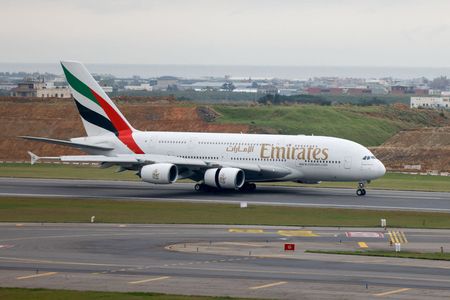
Emirates and Etihad Airways began offering limited service from their United Arab Emirates bases on Friday, as tens of thousands of passengers remain stranded due to widespread airspace closures stemming from the U.S.-Israel conflict with Iran.
The dangerous conditions became clear when a French government charter flight attempting to evacuate citizens from the UAE was forced to return Thursday after encountering missile fire, according to French Transport Minister Philippe Tabarot.
“This situation reflects the instability in the region and the complexity of repatriation operations,” Tabarot stated.
Abu Dhabi-based Etihad announced Friday it would operate restricted service through March 19, connecting to 25 cities including London, Paris, Frankfurt, Delhi, New York and Toronto.
Dubai-based Emirates, meanwhile, said it was running reduced operations to 82 destinations including London, Sydney, Singapore and New York, with connecting passengers only accepted if their next flight was confirmed to operate.
Flight tracking data shows Dubai International Airport, typically the world’s busiest, saw traffic nearly double from Wednesday to Thursday but still remained at just 25% of normal capacity.
The disruptions have particularly affected travelers flying between Europe and Asia-Pacific destinations. Under normal circumstances, Emirates, Qatar Airways and Etihad collectively handle about one-third of Europe-to-Asia passengers and more than half of all travelers from Europe to Australia, New Zealand and surrounding Pacific islands.
Qatar’s Doha airport remains completely closed, though the airline has arranged some emergency flights from Oman and Saudi Arabia.
Aviation data reveals the scope of the crisis: between February 28 when fighting began and March 5, over 25,000 of the 44,000 scheduled Middle East flights were canceled.
The conflict has also sent fuel costs skyrocketing, with Singapore jet fuel prices hitting a record $225 per barrel this week before settling around $195 – nearly double last week’s levels. Industry experts blame supply shortage concerns from Middle Eastern refineries.
Airlines worldwide are feeling the financial impact, with share prices falling across the board. Qantas dropped more than 3% Friday, Air New Zealand fell nearly 7%, Cathay Pacific declined over 2%, and Singapore Airlines was down more than 1%. Major Chinese carriers including Air China, China Eastern, and China Southern saw declines between 2% and 4%.
Passengers describe desperate and expensive attempts to escape the region. Ed Short, who arrived at London’s Heathrow Airport Thursday, said finding alternative routes home from Dubai was “absolute chaos.”
“We paid 1,500 pounds ($2,005) to get across to Muscat (Oman) to get on the plane,” Short explained. “We’d spent about 20,000 pounds booking Emirates flight instead. So we’re hoping we get those back.”
With no end to the conflict in sight, aviation experts predict the disruptions will continue. Saudi budget airline flynas announced it would begin operating limited flights between Saudi Arabia and Dubai starting Friday.