
President Donald Trump has voiced his backing for Iranian Kurdish forces to carry out strikes against Iran as a week-long Middle East conflict continues expanding across the region.
Speaking to Reuters during a Thursday phone interview, Trump expressed enthusiasm about the prospect of Kurdish forces entering Iran. “I think it’s wonderful that they want to do that, I’d be all for it,” the president stated.
The expanding warfare has now stretched across seven days, with Iranian forces targeting Israel, Gulf nations, Cyprus, Turkey, and Azerbaijan. The conflict has even reached the Indian Ocean near Sri Lanka, where an American submarine destroyed an Iranian naval vessel.
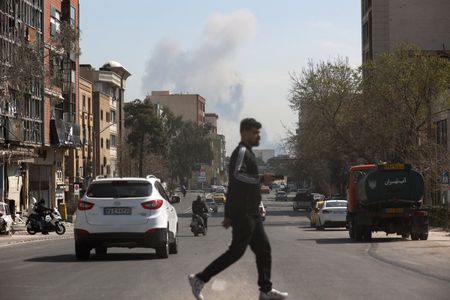
Israel announced Friday it had launched what it called a “broad-scale” series of strikes against infrastructure facilities in Tehran, while Iranian forces continued bombarding Gulf cities.
Sources familiar with the situation report that Iranian Kurdish militia groups have been in discussions with U.S. officials recently about potential attacks on Iranian security forces in the country’s western regions. These Kurdish coalitions, operating from the Iran-Iraq border area within Iraqi Kurdistan’s semi-autonomous territory, have been preparing for such operations aimed at weakening Iran’s military capabilities.
Thursday saw Iranian drone strikes hit an Iranian opposition facility in Iraqi Kurdistan, according to security officials.
Trump also indicated the United States should play a role in selecting Iran’s next leadership following last week’s airstrikes that killed Supreme Leader Ayatollah Ali Khamenei. “We’re going to have to choose that person along with Iran. We’re going to have to choose that person,” he declared.
However, Defense Secretary Pete Hegseth clarified Thursday that U.S. military goals in Iran remain unchanged despite the president’s comments about leadership selection. “There’s no expansion in our objectives. We know exactly what we’re trying to achieve,” Hegseth explained.
Azerbaijan announced preparations for unspecified retaliation after reporting that four Iranian drones entered its territory and wounded four individuals in the Nakhchivan region. President Ilham Aliyev addressed his Security Council, stating: “We will not tolerate this unprovoked act of terror and aggression against Azerbaijan.” Iran has disputed targeting its neighbor.
Lebanon’s Iran-supported Hezbollah organization issued warnings Friday morning for Israeli civilians to leave communities within three miles of the Lebanese border. The group posted a Hebrew-language message on Telegram declaring: “Your military’s aggression against Lebanese sovereignty and safe citizens, the destruction of civilian infrastructure and the expulsion campaign it is carrying out will not go unchallenged.”
During a briefing at Central Command headquarters in Florida, Hegseth and Admiral Brad Cooper, who oversees U.S. Middle East operations, assured that American ammunition supplies can support continued bombardment operations without time limits. “Iran is hoping that we cannot sustain this, which is a really bad miscalculation,” Hegseth told media representatives. “Our munitions are full up and our will is ironclad.”
The Pentagon has designated the military operation as “Operation Epic Fury,” focusing on eliminating Iran’s offensive missile capabilities, missile manufacturing facilities, and naval forces while preventing Tehran from developing nuclear weapons.
Cooper reported that U.S. forces have struck at least 30 Iranian vessels, including a massive drone carrier comparable in size to World War II-era aircraft carriers. He noted that B-2 bombers recently deployed dozens of 2,000-pound penetrator bombs against deeply buried ballistic missile sites, while also targeting missile production installations.
According to Cooper’s assessment, Iranian ballistic missile attacks have declined by 90% since the conflict’s opening day, with drone strikes decreasing by 83% over the same period.
The Iranian Red Crescent Society reports at least 1,230 fatalities within Iran, including 175 schoolchildren and educators killed at an elementary school in Minab during the war’s first day. Lebanon’s Health Ministry has documented 77 deaths in that country. Thousands of residents evacuated southern Beirut Thursday following Israeli evacuation warnings.
The military campaign represents a significant political risk for the Republican president, as polling indicates limited public support and Americans express concern over rising gasoline costs due to energy supply disruptions. Trump has dismissed these economic worries.
Wall Street markets declined Thursday amid climbing oil prices, reflecting the operation’s economic consequences. The global impact has intensified as nations worldwide face reduced access to one-fifth of international oil and liquefied natural gas supplies, while air transportation remains disrupted and worldwide logistics networks face increasing complications.