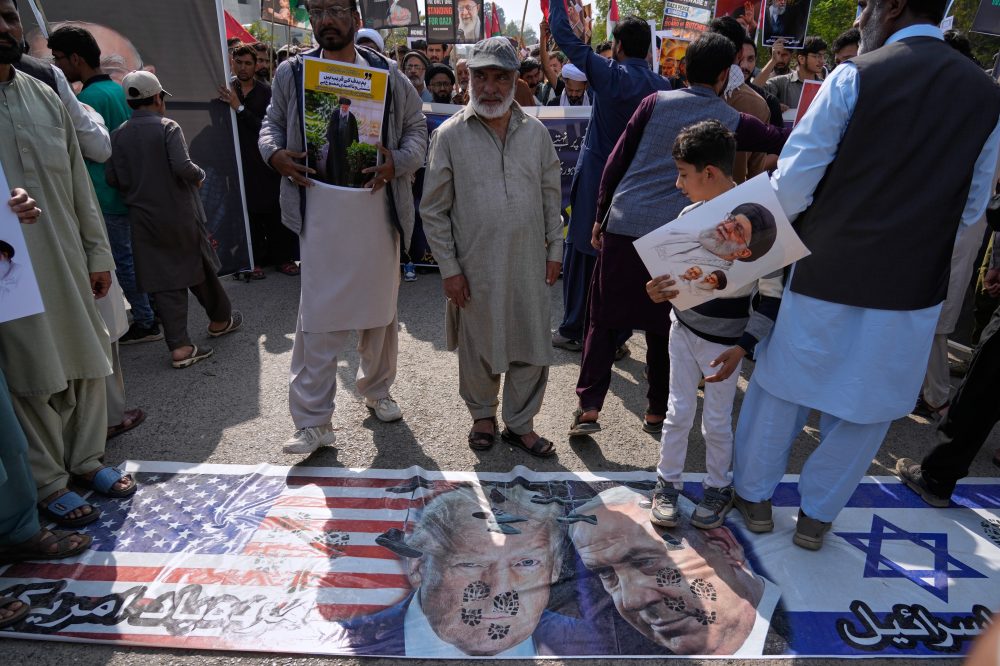

ISLAMABAD (AP) — Shiite Muslim communities across Pakistan organized demonstrations Friday to condemn what they described as joint US-Israeli military operations that killed Iran’s Supreme Leader Ayatollah Ali Khamenei, prompting American diplomatic officials to warn citizens about potential security threats.
Under heavy police supervision, approximately 300 demonstrators conducted a peaceful sit-in within Pakistan’s capital city, displaying images of Khamenei while shouting anti-American and anti-Israeli slogans. Law enforcement positioned shipping containers along routes to the US Embassy in Islamabad as a precautionary measure against possible escalation.
Officials confirmed that demonstration organizers had committed to avoiding any march toward the diplomatic facility, which sits roughly 3 kilometers away from the protest site. The sit-in was scheduled to conclude Friday evening.
The Iranian leader, who maintained power since 1989, served as an influential religious and political symbol for Shiite communities globally, including those in Pakistan. News of his death during the joint military operation that initiated conflict last week has triggered widespread anger among Shiite populations.
Enhanced security measures were implemented in Karachi, the major port city where hundreds of Shiite demonstrators had attacked the US Consulate earlier this week, breaking windows and attempting arson. Law enforcement responded with batons, tear gas and live ammunition to control the crowds. The Karachi violence resulted in 10 protester deaths, while an additional 13 people died during unrest in northern cities such as Skardu and Gilgit.
Friday’s Karachi protesters maintained a distance of approximately 4 kilometers from the consulate building.
Sunni Muslim groups also organized separate, smaller demonstrations in both Islamabad and Karachi Friday, expressing opposition to the US-Israeli military campaign against Iran. These gatherings occurred away from American diplomatic properties and proceeded without violent incidents.
Prior to Friday’s demonstrations, US Embassy officials in Islamabad advised American citizens to restrict outdoor activities. An updated travel advisory also discouraged visits to Pakistan’s Balochistan province in the southwest, Khyber Pakhtunkhwa in the northwest, and the contested Kashmir region due to elevated risks of terrorist attacks and kidnapping.
Shiite Muslims represent approximately 15 percent of Pakistan’s 250 million residents, while the majority practice Sunni Islam.