
WASHINGTON – The Trump administration has launched an aggressive campaign to diminish China’s expanding influence across Latin America, implementing sanctions and diplomatic pressure on multiple nations in recent weeks.
The United States has imposed travel restrictions on three Chilean government officials due to concerns over a potential underwater fiber optic cable project involving China. Additionally, American officials have cautioned Peru against allowing Chinese control over a massive port facility.
Following threats from President Trump to reclaim the Panama Canal under American authority, Panama’s government took control of two port facilities at both ends of the canal that were previously operated by a Hong Kong-based company.
The situation escalated further when U.S. forces detained Venezuela’s former President Nicolás Maduro in January, putting China’s substantial investments in the oil-rich nation at risk.
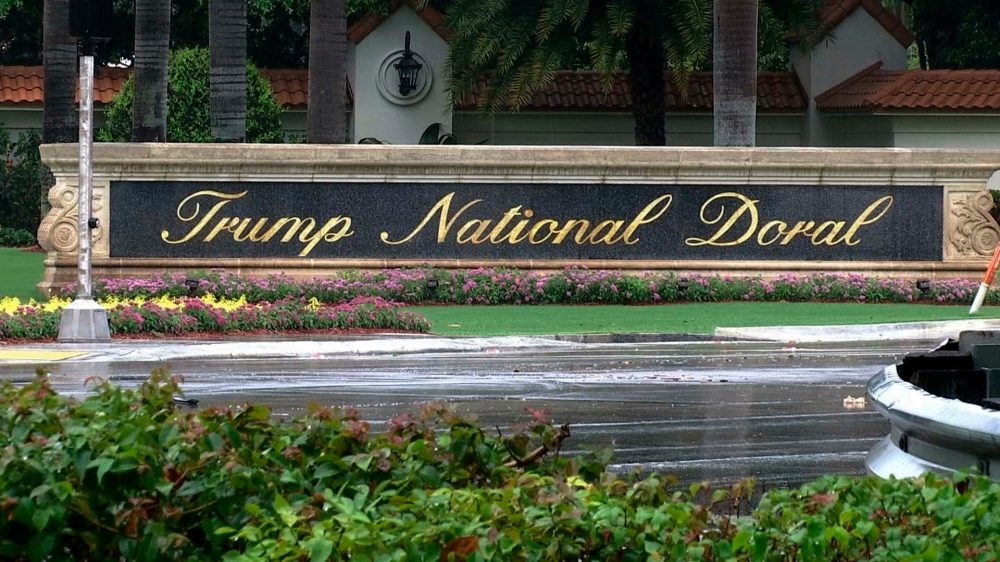
These recent actions are part of Trump’s broader strategy to reestablish American leadership in the Western Hemisphere. This weekend, the president is welcoming Latin American leaders to his Miami-area golf resort for a gathering called the “Shield of Americas” summit.
Administration allies argue these measures are essential to counter what they view as China’s harmful influence in America’s backyard, expressing concern that Beijing’s growing presence could shift global power dynamics. Critics, however, question whether such direct confrontation will succeed given China’s deep-rooted interests throughout the region.
Francisco Urdinez, who serves as an associate professor at the Political Science Institute of the Pontifical Catholic University of Chile, expressed concern that Latin American nations may be forced to choose sides.
“Trump’s approach is making hedging increasingly difficult,” he stated. “The most likely outcome is a more fragmented region. Right-leaning governments will align more closely with Washington, while left-leaning governments will maintain or deepen ties with China. Countries caught in the middle will try to manage the tension case by case.”
According to Urdinez’s research documented in his 2026 publication “Economic Displacement: China and the End of US Primacy in Latin America,” only Cuba conducted more trade with China than the United States in 2001.
However, two decades later, his findings show that every South American nation except Paraguay and Colombia now trades more extensively with China than with America.
“China’s core advantage is its economic weight, plain and simple,” he explained.
Rebecca Ray, a senior academic researcher at Boston University’s Global Development Policy Center, noted that China has established itself as essential and sometimes irreplaceable in Latin American sectors where American investment has been lacking.
“The U.S. did not invest in the industries that the developing world in general is eyeing to close their infrastructure gaps. The U.S. is not investing in green energy; the U.S. is not investing in green mobility,” Ray explained. “Meanwhile, over the last 20 years, China has leapfrogged technologically into these new industries, and Chinese companies have had to develop technologies that nobody else has in order to make those industries practical.”
Data from AidData, a research facility at Virginia’s William & Mary university, reveals that between 2014 and 2023, China delivered approximately $153 billion in loans and grants to Latin American and Caribbean nations – making it the region’s largest official financing source. This figure significantly exceeds the roughly $50.7 billion provided by the United States during the same period.
The White House’s National Security Strategy, published in December, acknowledged “years of neglect” as the cause of diminished American influence in the Western Hemisphere. The document pledged to prevent “non-Hemispheric competitors the ability to position forces or other threatening capabilities, or to own or control strategically vital assets, in our Hemisphere.”
China’s economic expansion has translated into diplomatic gains. Since 2016, five regional countries – Panama, the Dominican Republic, El Salvador, Nicaragua and Honduras – have severed diplomatic relations with Taiwan and established embassies in Beijing, seeking improved economic opportunities.
However, among the 12 nations worldwide that continue to recognize Taiwan’s independence, seven are located in Latin America, demonstrating the ongoing competition between the world’s two largest economies.
Taiwan remains the most contentious issue in U.S.-China relations. Beijing views Taiwan as Chinese territory and has pledged to forcibly annex the island if necessary. American law requires the U.S. to supply Taiwan with adequate military equipment to prevent any mainland attack.
China also provides weapons and police equipment to Latin American countries while offering training for their law enforcement and military forces.
The Chinese-constructed Chancay port in Peru, among Latin America’s deepest harbors, has generated concern in Washington about potential military applications.
“President Trump is right to focus on defending the Western Hemisphere from China,” declared Rep. John Moolenaar, a Michigan Republican who leads the House Select Committee on the Chinese Communist Party. “President Trump has made it clear we stand with our friends in the region against China’s efforts to undermine America’s interests.”
Enrique Millán-Mejía, senior fellow on economic development at the Atlantic Council’s Adrienne Arsht Latin America Center, believes Latin American countries want to diversify beyond China economically, and America has significant opportunities to offer.
“There is some discontent about the presence of China as an investor and how the footprint and the outcome of those investments has not been significantly positive for the economy, and they are trying to align more with the U.S. — with the promise that the U.S. might invest in strategic sectors,” Millán-Mejía explained.
He warned that China maintains substantial advantages through existing investments in crucial areas including infrastructure, security, logistics and technology. Nevertheless, he anticipates Latin American nations will adopt pragmatic approaches, seeking benefits from relationships with both superpowers.
“Certainly, for Latin America, it’s very important to have a very good and close relationship with the U.S., because the U.S. is very near to them. But obviously, from an economic standpoint, it’s good to keep at least trade relations with China,” Millán-Mejía noted.
Sun Yun, who directs the China program at the Stimson Center, a Washington-based think tank, emphasized that China’s primary focus in Latin America is commercial.
“There’s no competition with the U.S. for dominance from the Chinese view,” Sun stated. “They will prioritize protection of their assets and will not give up facilities such as a port without a fight.”
She indicated that China expects reciprocal treatment from the United States.
“What they are trying to do is to argue that Taiwan is fairly and squarely in China’s sphere of influence,” Sun explained. “If the U.S. expects China to respect its own definition, then the U.S. should also respect China’s definition of the Western Pacific, especially Taiwan, to be a core national interest for China.”