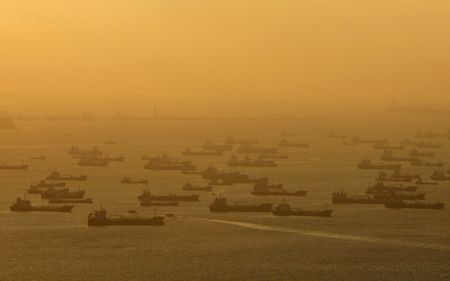

SINGAPORE – Asian fuel oil markets are facing severe supply disruptions as ongoing conflict in the Middle East dramatically reduces shipments through the critical Strait of Hormuz waterway, forcing traders to scramble for alternative sources from Western nations.
The supply crunch is expected to significantly impact bunker fuel availability for maritime vessels, with major shipping ports like Singapore bracing for additional price increases in the coming weeks. These rising refueling expenses will ultimately be passed on to companies that transport goods worldwide.
Market anticipation of worsening shortages triggered a dramatic price surge in fuel oil markets this week, particularly affecting high-sulfur fuel oil that typically originates from Middle Eastern sources.
Data from Kpler reveals that fuel oil shipments from the Strait of Hormuz to Asian markets normally reach 1.2 million metric tons monthly, equivalent to approximately 246,000 barrels daily, with roughly 70% destined for Southeast Asian countries.
Total fuel oil exports passing through the Strait of Hormuz generally amount to about 3.7 million tons each month, according to the data.
Current tanker movement through the strait has dropped to roughly 90% below last week’s levels, based on Kpler’s vessel tracking analysis.
“When such a large share of the global high-sulphur complex depends on a single chokepoint, even partial transit disruption can tighten balances quickly and amplify bunker volatility,” said Sumit Ritolia, lead analyst for refining and supply modelling at Kpler.
High-sulfur bunker fuel prices for delivery in Singapore, the world’s primary ship refueling center, have jumped more than 40% since hostilities began, while low-sulfur fuel oil costs have increased over 30%.
Western refineries could potentially provide some high-sulfur supply, but extremely elevated tanker rates are making trade economics nearly impossible, according to fuel oil traders.
“Everyone is struggling to find oil for the second half of March. Tankers are too expensive and arbitrage to Singapore is closed,” a Singapore-based trader said.
Potential supply alternatives include the United States and Mexico, traders noted, though available quantities remain inadequate. Venezuela represents another possible source, but those shipments have stayed in Western markets throughout this year.
“Obviously there is also Russia but these barrels remain sensitive for some buyers,” another trader said. Russian fuel continues to face sanctions due to the Ukraine conflict.
Iranian fuel oil also operates under longstanding sanctions, though China maintains purchases. However, those deliveries have also ceased due to the current conflict.
Any reduction in Iranian high-sulfur fuel oil supply would likely drive China’s independent asphalt manufacturers to increase straight-run fuel oil purchases from Russia, further limiting availability in the Singapore Strait, according to consultancy FGE NexantECA.
Some are turning to regional Asian refineries, but production volumes are expected to decrease as facilities reduce output amid crude oil shortages caused by the Middle Eastern conflict.
In low-sulfur markets, price increases have been more moderate since some supply continues from Brazil and Nigeria, although shipments from Kuwait’s al-Zour refinery remain blocked in the Gulf region.
Future replenishment expenses are anticipated to rise significantly due to broader market constraints, traders indicated.
Although the market is currently managing with substantial onshore inventory stockpiles in Singapore plus volumes held on vessels, these reserves are expected to decline rapidly in upcoming weeks, traders said.