
Hungarian officials announced Friday they had arrested seven Ukrainian nationals suspected of money laundering while transporting approximately $82 million in cash and gold, as Ukraine condemned the action as hostage-taking during an ongoing disagreement over oil deliveries.
The Hungarian Tax Authority deployed counter-terrorism units to intercept two Ukrainian armored vehicles carrying the money to Ukraine, marking a significant escalation in tensions that have already led Budapest to block billions of euros in European Union assistance for Kyiv.
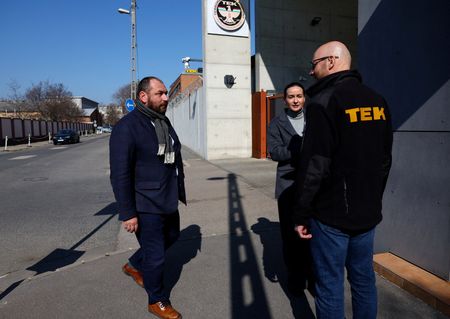
Footage shared on the Hungarian government’s Facebook page depicted armed counter-terrorism officers exiting a van as the Ukrainian vehicles stopped at a service station, aiming weapons at windshields before handcuffing occupants and forcing them to the ground.
“The National Tax and Customs Administration (NAV) is pursuing criminal proceedings on suspicion of money laundering,” the authority said in a statement.
“On March 5, 2026, it detained seven Ukrainian citizens, including a former Ukrainian intelligence service general, and two armoured cash-in-transit vehicles, which were transporting a total of $40 million, 35 million euros and nine kilograms of gold from Austria to Ukraine.”
The tax officials reported collaborating with counter-terrorism units. Hungarian Foreign Minister Peter Szijjarto demanded Kiev provide explanations about cash movements through Hungary.
Government spokesperson Zoltan Kovacs announced later that the seven detainees would face expulsion from Hungary. Officials did not immediately clarify what would happen to the transported funds.
Ukraine’s ambassador to Hungary, Sandor Fegyir, traveled to the Budapest Counter-Terrorism Centre headquarters attempting to meet the detained Ukrainians, according to two Reuters witnesses.
Ukrainian Foreign Minister Andrii Sybiha identified the detained individuals as Oschadbank employees.
“In fact, we are talking about Hungary taking hostages and stealing money,” Sybiha wrote on X. “This is state terrorism and racketeering.”
He demanded immediate release of Ukrainian citizens and said Ukraine would request the EU to “provide a clear qualification of Hungary’s unlawful actions.”
Ukraine also issued travel warnings for its citizens regarding Hungary, stating it could not ensure their safety given what it termed “arbitrary actions” by Hungarian authorities.
Hungary and Slovakia claim Ukraine is intentionally postponing oil flow restoration through the damaged Druzhba pipeline for political purposes. Kiev rejects these accusations, explaining it requires time to fix damage from Russian drone attacks on energy infrastructure from January 27.
Hungarian Prime Minister Viktor Orban, confronting a significant challenge to his 16-year leadership in April 12 elections, has centered his campaign around the Ukraine war, claiming opposition parties would involve Hungary in the conflict.
He has blocked new EU sanctions against Moscow and a substantial Ukrainian loan due to the oil disagreement.
Sybiha posted on X that Kiev demanded “Hungary stop dragging Ukraine into its domestic politics and electoral campaign.”
During a state radio appearance, Orban again accused Kiev of blackmail and pledged Hungary would employ all available methods until oil deliveries restart. He did not reference the Ukrainian detentions.
Ukraine’s Oschadbank described its employees’ activities as standard operations.
“Since the start of the full-scale invasion, foreign currency and bank metals have been transported exclusively by land,” it said in a statement. “Similar trips are carried out by Oschadbank’s cash collection vehicles on a weekly basis.”