
A corruption scandal involving Brazil’s central bank has sent shockwaves through the country’s capital, raising serious questions about the integrity of the nation’s financial oversight system.
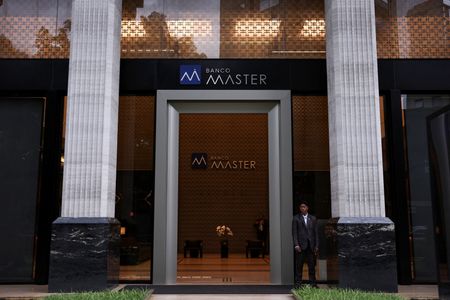
The controversy centers around Daniel Vorcaro, the owner of the now-defunct Banco Master, who was taken into custody Wednesday as part of an expanding criminal investigation. Authorities allege that Vorcaro paid bribes to two high-level central bank officials while also conspiring with an associate he nicknamed “Sicario” – a reference to Mexican cartel assassins – to threaten and intimidate his perceived enemies.
The targets of these alleged intimidation schemes included former bank employees, household staff, and members of the media.
What began as an investigation into fraudulent lending practices at Master has mushroomed into a far-reaching probe that now encompasses public pension systems, a government-owned bank, and senior officials connected to Vorcaro.
The central bank’s reputation as an institution of principled civil servants resistant to political pressure had seemed intact when regulators shut down Banco Master last November. However, federal investigators have now shattered that perception with allegations that Vorcaro corrupted former central bank director Paulo Sergio Neves de Souza and ex-banking supervision chief Belline Santana.
Court-approved surveillance of communications revealed that the two officials allegedly provided insider information and guidance to Vorcaro in exchange for payments, according to federal police.
Neither Souza nor Santana could be reached for comment, and their legal representatives were not immediately identified.
The central bank has refused to discuss how the scandal might affect its credibility or past regulatory actions involving the implicated officials. However, the institution issued a public statement expressing support for the federal police investigation and promising appropriate legal consequences for any confirmed violations.
A source with direct knowledge of the ongoing investigations described the alleged misconduct as “absolutely unacceptable, absurd and horrifying,” while noting that the central bank’s institutional decision-making process ultimately led to the correct outcome.
Despite any opposition from Souza and Santana, the source explained, the central bank prevented regional lender BRB from acquiring Banco Master and proceeded with the troubled bank’s liquidation.
Nevertheless, the revelations have intensified criticism that regulators acted too slowly, allowing Master’s financial problems to worsen while technical evaluations overseen by Souza and Santana may have minimized the severity of the situation.
“The central bank was slow to rein in Master and it was slow to liquidate it,” said another source familiar with the regulator’s decision-making process.
Souza, who directly oversaw bank supervision as a board member, served on the monetary policy committee for nearly six years from 2017 to 2023 – precisely when Banco Master was pursuing aggressive expansion.
Court documents authorizing Wednesday’s police raids referenced messages showing that both he and Santana assisted Vorcaro with regulatory issues, including advance review of submissions to the central bank.
The judicial ruling cited evidence suggesting they received bribes while serving in senior positions, including Vorcaro’s efforts to establish fraudulent consulting contracts that were used to funnel money to the two officials.
Both officials continued working at the central bank in different supervisory capacities until January, when they resigned from their leadership roles during an internal investigation. They remained as career employees until Wednesday’s court order suspended them. Formal termination would require separate administrative proceedings.
“I was surprised and, above all, saddened. There is deep dismay,” said one former director who worked alongside Souza. Three additional sources who served with him expressed similar shock.
“It is very sad. But any wrongdoing by two officials must be separated from the institution and its staff,” one source commented, noting that the central bank’s own internal reviews helped support the investigation by federal police and prosecutors.
A federal police source, speaking anonymously, concurred that current findings suggest corruption by individual civil servants rather than systemic institutional failure.
Souza joined the central bank as a career employee in 1998 and was appointed to the board under former President Michel Temer. He continued serving through former President Jair Bolsonaro’s administration and into the early months of current President Luiz Inacio Lula da Silva’s term, departing in July 2023.
His time in leadership coincided with Banco Master’s meteoric growth, built primarily on selling high-yield securities to individual investors with marketing that emphasized protection by the Credit Guarantee Fund.
Before Vorcaro’s 2017 acquisition, the institution operated as Banco Maxima and was already on the central bank’s confidential list of problematic lenders, flagged for loans that disregarded basic principles of “selectivity, liquidity and guarantees.”
Regulatory approval for the young banker’s takeover of the rebranded institution came in 2019 under current governor Roberto Campos Neto. Two sources familiar with Vorcaro’s influence said he maintained strong political connections in Brasilia that helped him portray a risky business model as beneficial for market competition.
Despite controlling less than 1% of Brazil’s total banking assets, Master’s collapse last November amid cash flow problems and mismanagement has cost the deposit insurance fund approximately 40 billion reais ($7.7 billion) – roughly one-third of its available resources. The bill has grown larger with the liquidation of other institutions under Master’s corporate umbrella.
The deposit insurance fund relies on mandatory contributions from banks, with larger institutions bearing most of the burden for new funding requirements.
The financial strain received some relief this week when the central bank permitted 30 billion reais in reserve requirements that would normally be deposited with the regulator to be redirected to the insurance fund this year.