
IRBIL, Iraq — Leaders of an armed Kurdish opposition group operating from northern Iraq have clarified to The Associated Press that while they’re not preparing immediate strikes against Iran, they would participate in any U.S.-led ground invasion of their homeland.
These statements seem designed to calm Iraqi Kurdish authorities, who have expressed concerns about attacks being launched from their region against Iran, worried about being drawn deeper into the Middle Eastern conflict that has escalated following American and Israeli military actions against Iran.
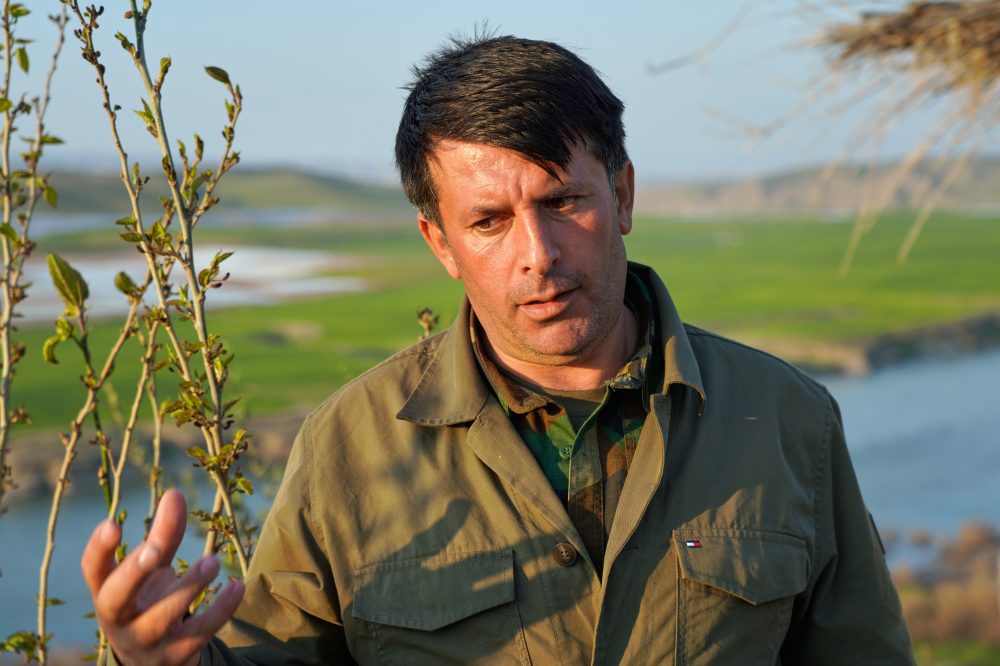
Speaking to the AP on Thursday, Khalil Nadiri from the Kurdistan Freedom Party PAK explained that in case of American ground operations, “then we would enter alongside the coalition forces.” However, he emphasized that “The Kurds must not place themselves as the spearhead of the attack.”
Nadiri revealed that his organization maintains armed members already operating within Iran’s borders and wouldn’t necessarily need cross-border assistance to launch an internal uprising.
According to Nadiri, the Kurdish organizations have maintained communication with both American and Israeli officials, though he rejected claims that they’ve received material support from either nation.
These clarifications follow earlier reports this week from Kurdish officials indicating that Iranian Kurdish opposition groups in northern Iraq were preparing for possible cross-border military actions, with the U.S. allegedly requesting Iraqi Kurdish support for such operations.
PAK military commander Rebaz Sharifi described potential U.S. and allied weapons support for Kurdish groups as “a very positive development,” while also confirming they haven’t received such assistance to date.
Sharifi expressed expectations that President Donald Trump “might want the peshmerga forces of Eastern Kurdistan to participate in the conflict during a ground invasion,” adding that “if it reaches that point, we, for our part, would be pleased with it.”
Both officials worked to address Iraqi Kurdish leaders’ concerns about using Iraq’s semi-autonomous Kurdish territory as a staging area for attacks.
Kurdistan Regional Government spokesperson Peshawa Hawramani stated earlier this week that “allegations claiming that we are part of a plan to arm and send Kurdish opposition parties into Iranian territory are completely unfounded,” emphasizing that Iraqi Kurdish parties don’t want to “expand the war and tensions in the region.”
Iranian forces and affiliated Iraqi militias have already conducted numerous missile and drone strikes targeting northern Iraq, hitting American military installations and the consulate in Irbil, along with Iranian Kurdish opposition group facilities.
Sharifi reported that PAK locations have endured two ballistic missile strikes and four drone attacks since the conflict began, resulting in one fighter’s death and three wounded personnel.
Nadiri explained that “since the (Iraqi) Kurdistan region has adopted a policy of not becoming a part of this conflict and because we do not want to disrupt the stability and security here and we respect the laws of this region, consequently, the environment has not yet been established for us to move our forces back into Eastern Kurdistan.”
The term “Eastern Kurdistan” refers to Iran’s Kurdish-populated regions, according to these groups.
The prospect of Kurdish military participation has created friction with other Iranian opposition factions, particularly those aligned with former shah’s son Reza Pahlavi, who has criticized the Kurds as separatists seeking to divide Iran.
Sharifi stated that his organization’s “ultimate goal is the statehood of the Kurds in all four regions and the reunification of Kurdistan,” referencing Kurdish populations spread across Iran, Iraq, Turkey and Syria.
Nadiri suggested that a confederal arrangement might serve as a “viable solution,” allowing Kurdish areas to remain within Iran while preserving their “own sovereignty, identity, and unique characteristics.”