
LAGOS, Nigeria (AP) — Thousands of young partygoers packed into a spacious venue in Lekki, an affluent Lagos neighborhood, on a recent Friday evening.
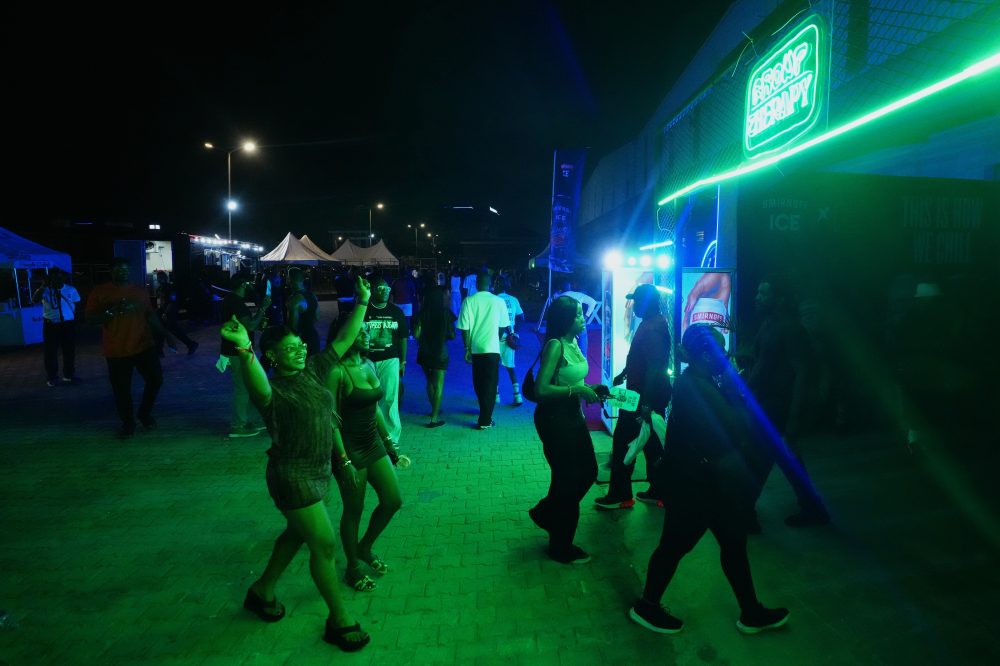
The massive hall remained shrouded in darkness, illuminated only by pulsing green strobe lights emanating from the stage, making it nearly impossible to see faces just a few feet away. These attendees had gathered for what they called therapy.
This was Group Therapy, a wildly popular rave event in Lagos that offers participants an entirely different nighttime experience unavailable elsewhere in Nigeria’s bustling commercial capital.
For generations, Lagos nightlife has revolved around table service culture — an exclusive club atmosphere centered on how much patrons spend on beverages and premium seating arrangements. This competitive party environment has increasingly excluded young Nigerians struggling with the country’s soaring inflation rates.
Group Therapy operates differently — no reserved tables exist. Party-goers in Lekki moved together in close quarters on the dance floor. A single modest bar offered beverages at prices significantly lower than standard Lagos nightclubs.
“At raves, the dance floor is present. You go to a usual Lagos party, and there is no dance floor,” DJ Aniko, the founder of Group Therapy, told The Associated Press. “We barely have spaces to just dance, spaces you can just go to literally have a nice time. Most places you have to make a reservation, or book a table, it is a lot more complicated.”
Yetunde Onikoyi, 28, started going to raves last year.
“Ever since then, I have been hooked by the neck; it is like a chokehold. I always want to be here,” Onikoyi said.
Traditional nightclub culture operates on a table service model where partying becomes a competition over who purchases the most beverages at premium prices, with seating arranged in multiple tiers including VVIP, VIP and general admission.
Individual bottles can range from 100,000 naira ($72.34) to nearly one million naira, effectively excluding most young residents dealing with challenging economic conditions. Servers parade through venues carrying drinks with LED displays identifying tables of the evening’s biggest spenders. Group Therapy admission costs only 21,000 naira ($15.19), with no obligation to buy drinks.
Industry observers say rave culture has emerged as a direct response to traditional club table service.
“Raves are more democratic,” said Oluwamayowa Idowu, founder of Culture Custodian, a leading culture publication in Lagos. “What this says is that people don’t have the purchasing power to sustain a club lifestyle. Clubs are still open and busy, but just generally in today’s climate, there is more of a focus on you enjoying yourself as opposed to you performing enjoying yourself.”
Aniko told the AP that several patrons have reached out to create separate seats, requests which they have declined on several occasions.
“Finding a place that still focuses on the human aspects of things, as against the materialism or need to amass as much as possible, is always a blessing,” said Dayo Williams, a consultant who had come to the party.
DJs took turns at their equipment throughout the late evening into early morning hours, delivering continuous high-energy beats that energized the venue, building to thunderous peaks before transitioning into new musical sequences. Crowds of dancers moved rhythmically while bodies swayed energetically.
Beginning around 2022 following post-pandemic integration of South African musical styles, DJs started incorporating African sound elements into house music — an electronic dance music subgenre that has become the preferred choice for Lagos raves. These events, considered more welcoming than traditional clubs, have gained popularity among younger generations challenging Nigeria’s conservative social norms.
House music “evokes feelings,” said Zia Yusuf, a content writer and creator who attended. “You just connect to the music, and you connect to the music with other people who connect to the music with you.”
Cultural analysts view this as part of South African musical influence spreading globally, similar to amapiano’s rise.
Nigeria has recently gained international recognition through its artists’ explosive success, sharing its music worldwide while simultaneously embracing various imported genres. The selection of house music is intentional, according to Aniko. Aniko doesn’t want musicians to control Group Therapy like they often do in big clubs, sometimes previewing unreleased songs or dictating the audience’s choice for the night.
“Once you are reliant on the mainstream industry for the music, the mainstream creeps into the space,” Aniko said.