Category: World News

  • British Finance Minister Vows Economic Stability Amid Middle East Crisis

    British Finance Minister Vows Economic Stability Amid Middle East Crisis

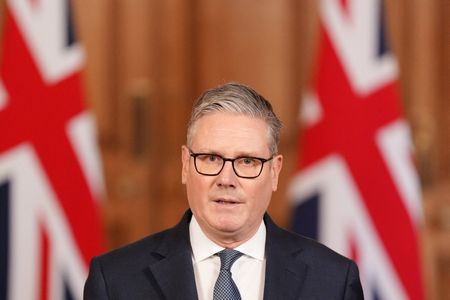
    British Finance Minister Rachel Reeves pledged Tuesday to navigate her nation’s economy through turbulent times sparked by ongoing Middle East conflicts, while hinting at strengthened relationships with European Union partners and assuring business leaders of economic stability.

    During her budget address to Parliament, Reeves recognized the substantial economic challenges confronting Britain, particularly the nation’s vulnerability to inflation driven by escalating energy prices linked to the U.S.-Israeli conflict with Iran.

    “This government has the right economic plan for our country, a plan that is even more important in a world that in the last few days has become yet more uncertain,” Reeves declared to Parliament members in a presentation that offered few major policy changes.

    “It is incumbent on me and on this government to chart a course through that uncertainty, to secure our economy against shocks and protect families from the turbulence that we see beyond our borders,” she added.

    Financial experts noted that Reeves, similar to finance leaders worldwide, faces challenges largely outside her influence.

    Matthew Amis from Aberdeen Investment expressed this sentiment: “Geopolitics and the surge higher in energy prices are the only game in town and Chancellor Reeves’ Spring Statement will not be changing that.”

    The nation’s independent budget analysts reduced their economic growth forecast for the current year to 1.1% from their earlier projection of 1.4%. While growth estimates for the following two years increased slightly to 1.6%, this figure represents roughly half the pre-2007-08 financial crisis average.

    The Office for Budget Responsibility noted their projections were calculated before recent Middle East developments, warning these events “could have very significant impacts on the global and UK economies.”

    The office lowered inflation predictions for this year and indicated government debt through the decade’s end would be somewhat less than previously anticipated.

    However, officials highlighted the magnitude of challenges facing Reeves even prior to recent regional conflicts, noting British public debt relative to economic output stands at nearly twice the developed-nation average.

    Elliott Jordan-Doak from Pantheon Macroeconomics consultancy suggested Britain’s financial situation appears more concerning than Reeves acknowledged.

    “The government has shown little ability to stick to its plans, racking up a raft of policy U-turns during its first two years in office,” Jordan-Doak observed.

    “We expect more will follow, with the local elections in May likely to serve as a catalyst for further domestic political turmoil, placing pressure on the leadership to ease fiscal policy,” he continued.

    This pressure has intensified for Keir Starmer following his Labour Party’s loss in last week’s parliamentary seat election.

    Reeves highlighted the importance of consistent government policy and infrastructure investment, criticizing the former Conservative government for permitting inflation increases and interest rate climbs to 15-year peaks.

    “Stability is the single most important precondition for economic growth,” she stated.

    The finance minister hopes a period of steady policymaking following Brexit-related political upheaval from a decade ago will motivate business investment.

    Numerous business owners argue that increased taxes and expenses imposed by Reeves discourage employment growth.

    In her address, she announced upcoming proposals for enhanced post-Brexit trade relationships with the European Union and outlined government reforms targeting youth unemployment reduction, which has increased significantly.

    Nevertheless, her economic agenda confronts substantial obstacles.

    Britain maintains the highest inflation rate among Group of Seven nations, preventing the Bank of England from reducing interest rates as rapidly as other central banks.

    Elevated inflation also increases government expenses for inflation-indexed bonds, which comprise approximately 25% of national debt.

    Government bond yields climbed for consecutive days Tuesday as investors expressed concern that this week’s doubled gas prices, if maintained, might prevent the Bank of England from lowering borrowing costs this year.

    The surge in wholesale gas prices, representing the largest component of Britain’s domestic energy price ceiling, could elevate pricing levels for the July-September period if sustained.

    Oil prices have increased 15%, prompting motoring organizations to request government reversal of the fuel duty freeze scheduled to end in September.

    Britain’s debt office announced plans to sell 252.1 billion pounds in government bonds during the upcoming financial year, decreasing from 303.7 billion pounds in the current 2025/26 fiscal year ending this month.
  • State Department Evacuates Staff, Tells Americans to Leave Middle East

    State Department Evacuates Staff, Tells Americans to Leave Middle East

    The State Department announced Tuesday it is withdrawing non-essential staff from American diplomatic missions throughout the Middle East while calling on U.S. citizens to immediately exit the region, even as ongoing military operations have severely limited travel options.

    Federal officials have ordered the evacuation of non-emergency government workers and their families from American embassies in Bahrain, Qatar, the United Arab Emirates, Kuwait, and Jordan. Similar evacuations had already occurred at diplomatic posts in Lebanon and Israel.

    On Monday, the department issued urgent advisories for American citizens in 16 Middle Eastern nations to depart immediately using “available commercial transportation.” However, the U.S. embassy in Jerusalem stated it could not provide assistance to Americans attempting to leave the area.

    California Congressman Ted Lieu criticized the evacuation guidance on social media, writing: “You told Americans to depart now via commercial means when you know many airports/airspace are closed.” Lieu demanded that Washington immediately arrange government evacuation flights for stranded citizens, adding: “Maybe you should have thought of a frickin’ plan first.”

    The U.S.-Israeli air campaign against Iran, which began Saturday, has created global disruptions to energy markets and international aviation. Iranian drone strikes targeted the American embassy in Saudi Arabia overnight.

    As Washington continues what many consider one of the most significant military actions in recent years, the United States currently lacks Senate-confirmed ambassadors in numerous regional countries, including Saudi Arabia, Qatar, Iraq, Egypt, Kuwait, Algeria, and the UAE.

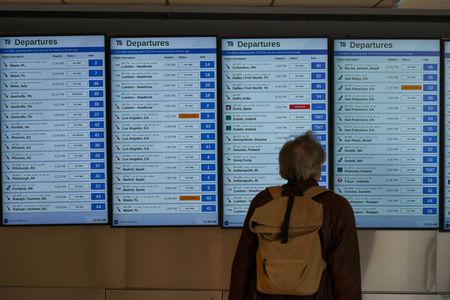
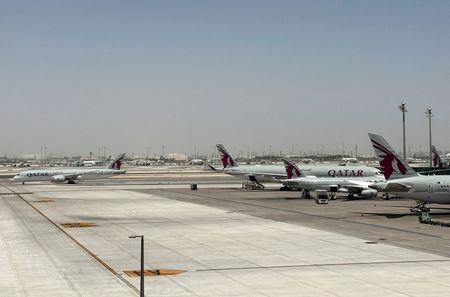
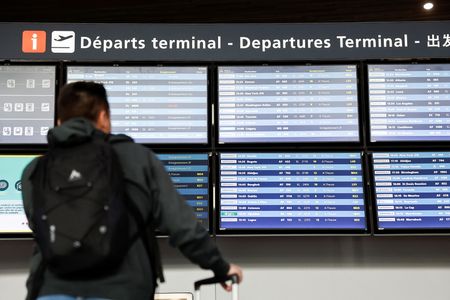
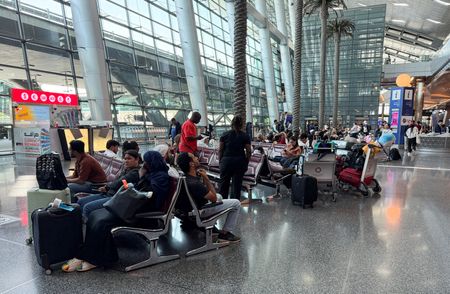
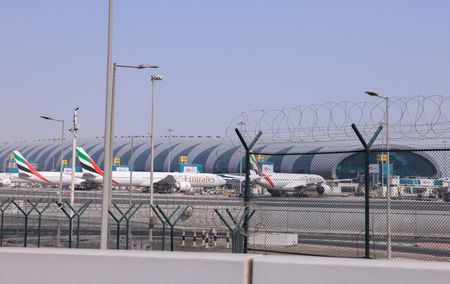
    Key aviation centers in the Gulf region remain shuttered for the fourth consecutive day Tuesday, including Dubai’s international airport – typically the world’s busiest for international travel, processing more than 1,000 daily flights. The closures have left tens of thousands of travelers stranded while ticket costs have skyrocketed.

    “The U.S. Embassy is not in a position at this time to evacuate or directly assist Americans in departing Israel,” the embassy posted on social media. Officials noted that citizens could register for shuttle services operated by Israel’s Ministry of Tourism to reach the Taba border crossing into Egypt.

    Embassy officials emphasized they cannot guarantee the safety of this evacuation route. “The U.S. Embassy cannot make any recommendation (for or against) the Ministry of Tourism’s shuttle. If you choose to avail yourself of this option to depart, the U.S. government cannot guarantee your safety,” the statement read.

    The State Department has not responded to inquiries about specific departure methods for Americans given the lack of commercial flight availability.

    Department officials said Monday they had activated an inter-agency task force to handle the crisis and established a dedicated WhatsApp communication channel that has attracted 15,000 users. No mention was made of government-assisted citizen evacuations.

    Oil prices jumped approximately 7% Tuesday, marking the third consecutive day of increases as the U.S.-Israeli conflict with Iran expanded. Former President Trump posted on social media overnight that America possesses a “virtually unlimited supply” of military equipment and that “wars can be fought ‘forever,’ and very successfully, using just these supplies.”

  • Nations Rush to Evacuate Citizens as Middle East Flights Halted After Strikes

    Nations Rush to Evacuate Citizens as Middle East Flights Halted After Strikes

    Nations across the globe are working urgently to evacuate their citizens from the Middle East after widespread flight cancellations left hundreds of thousands of people stranded following recent U.S. and Israeli military operations against Iran.

    The crisis has prompted governments to launch emergency repatriation efforts, though closed airspace throughout much of the region is creating significant challenges for rescue operations.

    Australia’s Foreign Minister Penny Wong revealed that approximately 115,000 Australians are currently in the affected region. She indicated that discussions with airlines are underway to assist stranded citizens, though evacuations remain challenging while regional airspace stays restricted. “Airspace is not open. So whether or not it is an Australian flight or a commercial flight, the flights are not able to occur,” Wong explained, declining to confirm specific government evacuation plans.

    France faces one of the largest evacuation challenges, with roughly 400,000 French citizens spread across about twelve affected nations, including both residents and travelers. Officials report that over 25,000 people have registered through the Foreign Ministry’s “Ariane” tracking system. French authorities have positioned consular teams at Israel’s borders with Egypt and Jordan to help citizens exit overland, while establishing similar operations in the UAE near borders with Oman and Saudi Arabia where flights remain possible.

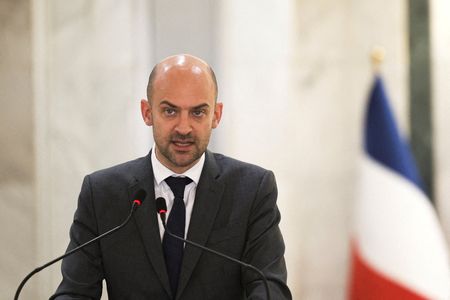
    Germany is taking a targeted approach to assist approximately 30,000 stranded citizens, with officials stating that tour operators should handle most evacuations while military intervention remains a final option. Berlin has arranged two Lufthansa charter flights departing from Riyadh and Muscat, focusing on vulnerable individuals including children, expectant mothers, and disabled travelers. Foreign Minister Johann Wadephul confirmed that crisis response teams are assessing border crossing possibilities amid uncertainty about reaching charter departure points.

    Greek Prime Minister Kyriakos Mitsotakis announced his country has developed evacuation plans for thousands of Greek nationals, though implementation remains difficult due to ongoing airspace restrictions.

    Italy achieved an early success in evacuation efforts, with a charter flight carrying 127 Italian citizens landing at Rome’s Fiumicino airport late Monday evening, March 2. These passengers had been stranded in Oman or transferred there from Dubai, with one traveler reporting flight costs of approximately 1,500 euros.

    The Philippines faces a particularly complex situation with over 2.4 million Filipino workers and residents throughout the Middle East, including 31,000 in Israel and 800 in Iran. President Ferdinand Marcos Jr. has called on Filipinos in affected areas to seek safety, promising government-arranged repatriation flights once security conditions improve. More than 1,000 migrant workers have already requested evacuation assistance.

    Spain has initiated citizen evacuations, with Foreign Minister Jose Manuel Albares confirming that over 175 Spaniards arrived Tuesday evening on a flight from Abu Dhabi. Additional flights are planned from the United Arab Emirates via Istanbul, while Spain strengthens embassy operations in the UAE, Saudi Arabia, Oman and Bahrain to support ongoing evacuation efforts.

    Slovenia organized four police-escorted buses Tuesday to transport Slovenian families with children from Dubai to Muscat airport in Oman, according to Prime Minister Robert Golob’s office. The first evacuation flight departed Tuesday evening with Wednesday morning arrival expected, followed by two additional flights scheduled for Wednesday.

    Switzerland has taken a different approach, with foreign ministry officials stating they will not organize evacuations for at least 4,400 Swiss travelers in the region. The ministry noted approximately 35,000 Swiss residents live in affected areas, primarily in Israel and the UAE, while a dedicated helpline has handled about 2,000 inquiries since Saturday.

    The United Arab Emirates is facilitating departures by launching “special flights” across the country’s airports to help tens of thousands of stranded passengers leave the region, according to state media reports.

    The United Kingdom has begun initial repatriation operations, with the first flights carrying British nationals arriving Monday evening. Prime Minister Keir Starmer stated the UK is “working on all options” to support an estimated 300,000 British citizens in the region, urging them to follow local guidance and official travel advisories. Foreign Secretary Yvette Cooper confirmed that 102,000 Britons have registered their location with the Foreign Office.

    The United States has issued urgent departure advisories for Americans in more than a dozen Middle Eastern countries but has not yet announced specific repatriation flights. Mora Namdar, the State Department’s assistant secretary for consular affairs, urged U.S. citizens to leave using available commercial transportation “due to safety risks.” Secretary of State Marco Rubio encouraged Americans to register with the Smart Traveler Enrollment Program and monitor ongoing security updates.

  • British Rapper Sentenced to 12 Years for Fatal Hit-and-Run in London

    British Rapper Sentenced to 12 Years for Fatal Hit-and-Run in London

    LONDON – A prominent British rapper has been sentenced to 12 years behind bars after pleading guilty to a fatal hit-and-run that claimed the life of a young college student from Nepal.

    Justin Clarke-Samuel, known professionally as Ghetts, received his sentence Tuesday at London’s Old Bailey courthouse for the death of 20-year-old Yubin Tamang, which occurred in north London last year.

    The 41-year-old musician had entered a guilty plea in December, admitting to causing Tamang’s death while operating his vehicle under dangerous conditions. He also acknowledged a separate charge of reckless driving involving his BMW M5 prior to the deadly collision.

    During court proceedings, prosecutor Philip McGhee detailed how Clarke-Samuel had consumed alcohol before getting behind the wheel and driving recklessly toward his residence. The prosecutor described how the rapper ignored traffic signals and reached speeds approaching 70 miles per hour before the fatal impact.

    Clarke-Samuel has achieved significant recognition in the British music scene, earning a nomination for the prestigious 2024 Mercury Prize for his fourth album titled “On Purpose, with Purpose.” He previously took home the best male performer award at the 2021 MOBO Awards and has worked alongside major recording artists such as Ed Sheeran.

  • Israel Deploys More Troops to Lebanon as Hezbollah Declares War Readiness

    Israel Deploys More Troops to Lebanon as Hezbollah Declares War Readiness

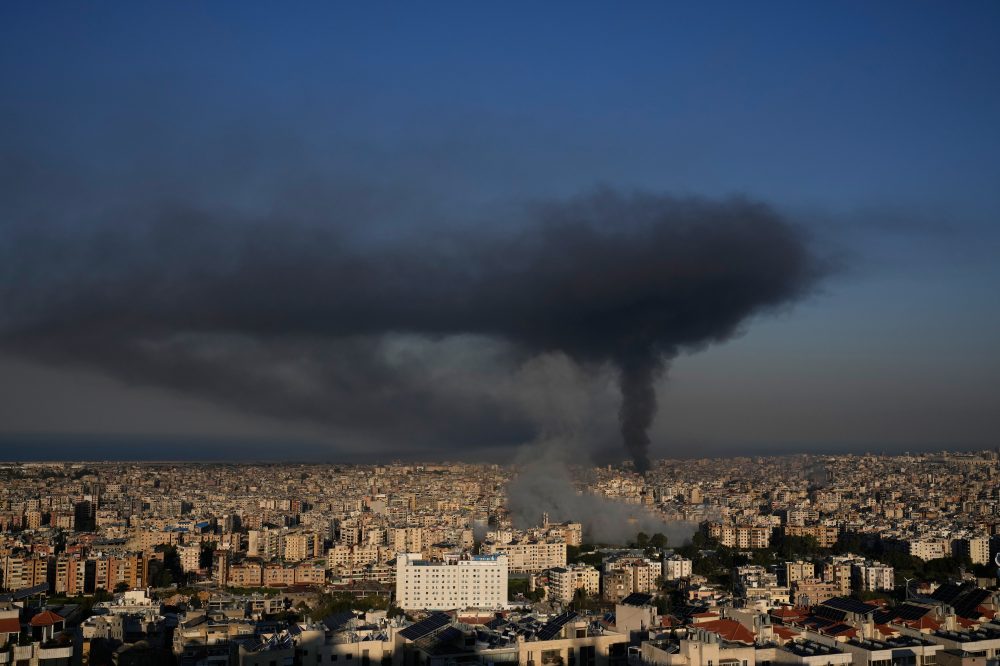
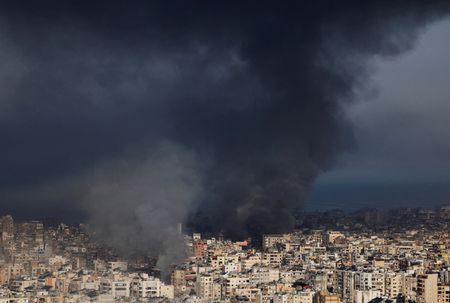
    BEIRUT — Israeli military forces deployed additional personnel into southern Lebanon on Tuesday while issuing evacuation orders for more than 80 villages, as the Iran-backed militant organization Hezbollah declared its preparedness for full-scale warfare, intensifying regional tensions.

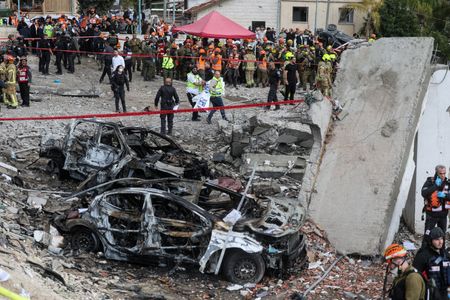
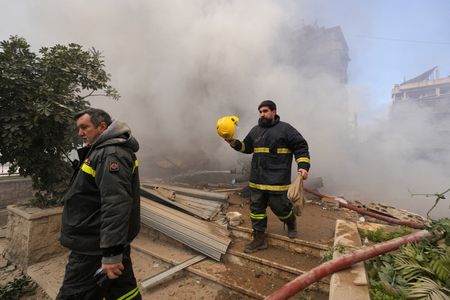
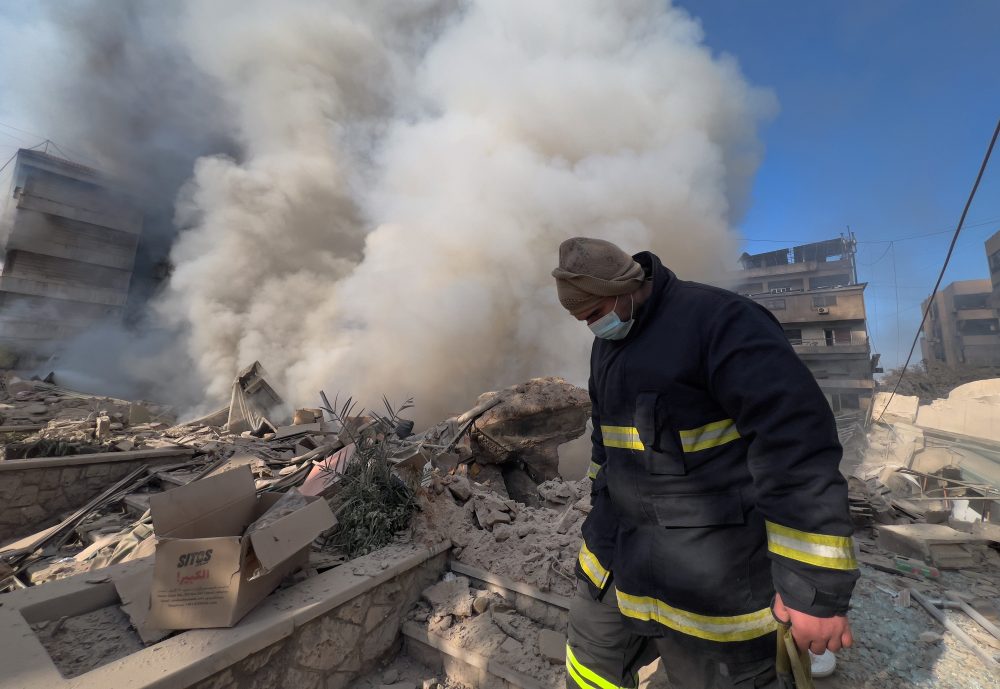
    The current escalation began when Hezbollah launched rockets and drone attacks toward northern Israeli territory early Monday. Israel responded with extensive aerial bombardments that resulted in 52 deaths across Lebanon, including a Palestinian fighter and a Hezbollah intelligence commander in Beirut’s southern neighborhoods. The strikes wounded over 150 individuals and forced tens of thousands from their homes.

    On Tuesday morning, Hezbollah launched two separate rocket barrages targeting northern Israel, while Israeli overnight airstrikes damaged facilities housing Hezbollah’s television and radio broadcasting operations. Beirut’s southern districts faced multiple unannounced strikes during the early afternoon hours, with Israeli military officials later confirming they had targeted Hezbollah leadership.

    Israeli military Arabic spokesperson Avichay Adraee broadcast warnings to residents across more than 80 communities, instructing them to depart immediately and warning against returning until authorities provide clearance.

    A high-ranking Hezbollah leader indicated that following more than twelve months of maintaining ceasefire conditions while enduring continued Israeli attacks on Lebanese territory, the organization’s restraint has reached its limit, forcing a return to active resistance and open conflict with Israel.

    “The Zionist enemy wanted an open war, which it has not stopped since the ceasefire agreement,” declared Mohamoud Komati. “So let it be an open war.”

    Lebanese President Joseph Aoun informed diplomatic representatives from Saudi Arabia, Qatar, the United States, France and Egypt on Tuesday that Hezbollah has been launching rockets from positions north of the Litani river. Lebanese authorities maintain they have successfully disarmed Hezbollah forces south of the river near the Israeli border, with Lebanese military units maintaining complete operational control of the border region.

    Just prior to Aoun’s statements, Israeli military commanders announced the deployment of additional forces into southern Lebanese territory, establishing new positions at multiple strategic locations near the border, while Lebanon’s official National News Agency reported Lebanese army units were withdrawing from certain border positions.

    Spokesperson Adraee posted on social media platform X that the troop movements within Lebanese territory represent efforts to strengthen forward defensive capabilities and establish additional security measures.

    A Lebanese military official confirmed to The Associated Press that Israeli forces had entered several Lebanese areas, noting that the Lebanese army was conducting “repositioning” operations in the region.

    The United Nations peacekeeping mission in southern Lebanon, designated as UNIFIL, reported that peacekeepers witnessed Israeli forces entering Lebanese territory at multiple locations Tuesday morning “before returning south of the Blue Line,” the official designation for the border between both nations.

    Israel conducted a ground offensive into Lebanon during October 2024 throughout its most recent conflict with Hezbollah. Israeli forces withdrew from most southern Lebanese areas following a U.S.-mediated ceasefire that ended hostilities in November 2024, though they have maintained control of five positions on the Lebanese side of the border since that time.

    Following the ceasefire implementation, Israel has maintained almost daily military strikes, primarily targeting southern Lebanon, claiming that Hezbollah has been attempting to reconstruct its military capabilities in the area.

    Hezbollah initiated rocket attacks against Israel one day after the militant Palestinian organization Hamas conducted its assault on southern Israel on October 7, 2023, which sparked the Gaza conflict. After months of limited fighting, the confrontation intensified into full warfare during September 2024 before a U.S.-brokered ceasefire officially ended the fighting two months later.

  • 26 Medical Workers Missing Month After South Sudan Hospital Attacks

    26 Medical Workers Missing Month After South Sudan Hospital Attacks

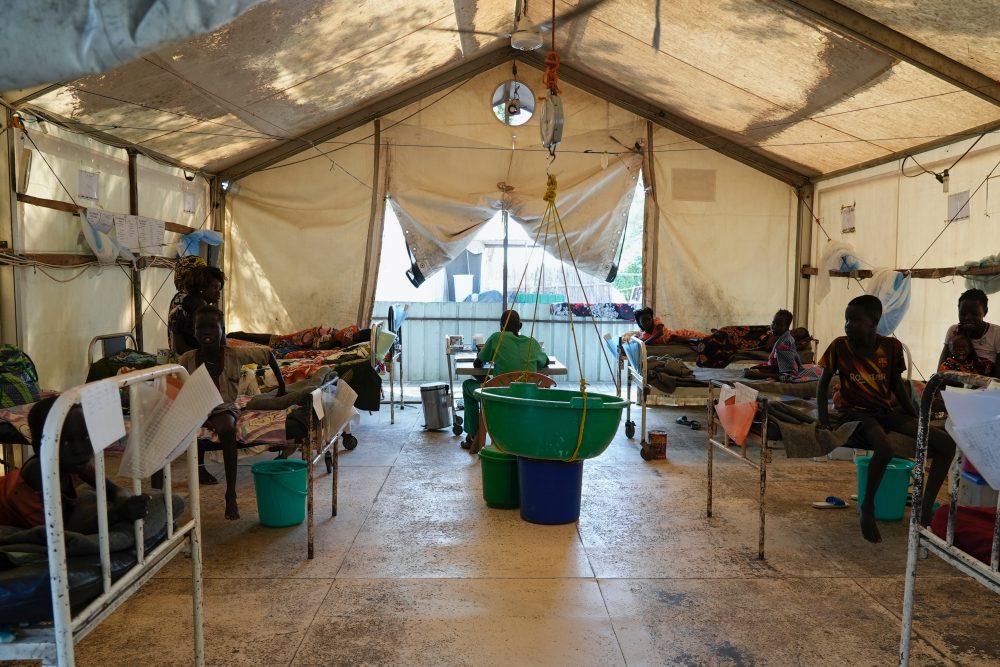
    NAIROBI, Kenya — Twenty-six humanitarian medical workers with Doctors Without Borders have been missing for a month following violent attacks on two medical facilities in South Sudan, the international medical organization announced.

    The medical charity, which operates under the French acronym MSF, reported that government forces bombed their hospital facility in Lankien on February 3rd, while unidentified attackers raided their medical center in Pieri the same day. Both locations are situated in Jonglei State, positioned northeast of South Sudan’s capital city Juba, in areas controlled by opposition forces.

    Medical personnel at both locations evacuated alongside local residents into remote countryside regions where armed conflicts and aerial attacks continue. The violence has forced an estimated 280,000 people from their homes since December.

    In a Monday statement, MSF revealed that “26 of 291 of our colleagues working in Lankien and Pieri remain unaccounted for.”

    “We have lost contact with them amid ongoing insecurity,” the organization stated.

    The humanitarian group indicated that communication difficulties may stem from poor network coverage throughout much of the region. Medical staff who have been reached reported “destruction, violence and extreme hardships.”

    Military confrontations intensified dramatically in December when opposition fighters seized multiple government positions across north-central Jonglei. Government forces launched a January counterattack that regained most previously lost territory.

    Civilians who fled to Akobo, an opposition-controlled community near Ethiopia’s border, recounted brutal violence committed by government troops. Many survivors reported going without food or water during multi-day journeys to reach safe areas.

    The February assaults on MSF medical centers represent part of increased violence targeting humanitarian personnel, equipment and facilities, according to aid organizations. MSF facilities have suffered 10 separate attacks within the past year.

    “This violence has taken an unbearable toll not only on health care services, but on the very people who kept them running,” stated Yashovardhan, MSF’s mission director in South Sudan, who uses only one name.

    “Medical workers must never be targets,” he emphasized. “We are deeply concerned about what has happened to our colleagues and the communities we serve.”

  • Trump Criticizes UK Leader Over Iran Strike Disagreement

    Trump Criticizes UK Leader Over Iran Strike Disagreement

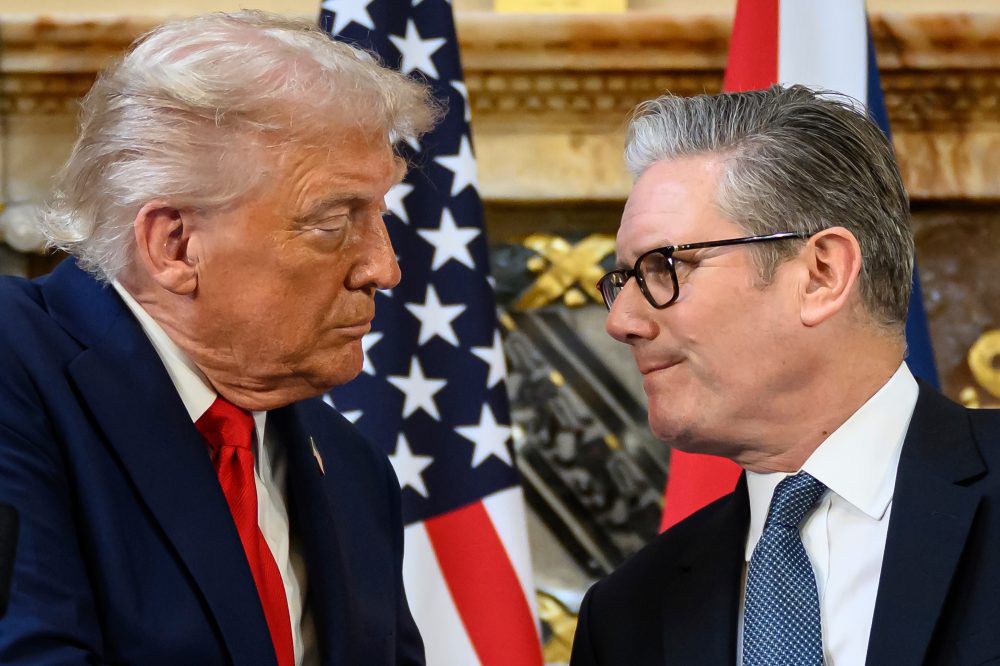
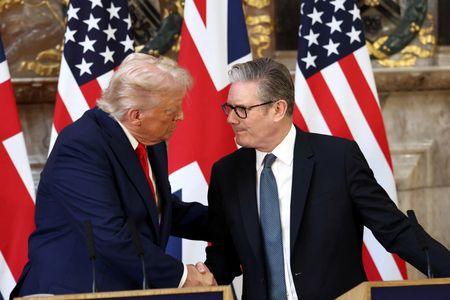
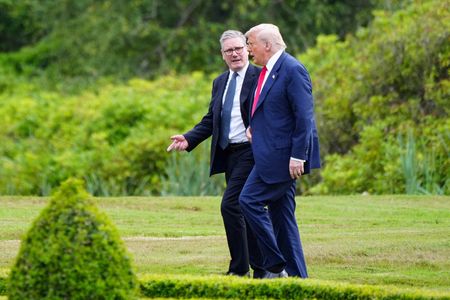
    LONDON — British Prime Minister Keir Starmer has consistently avoided public criticism of Donald Trump throughout their political relationship.

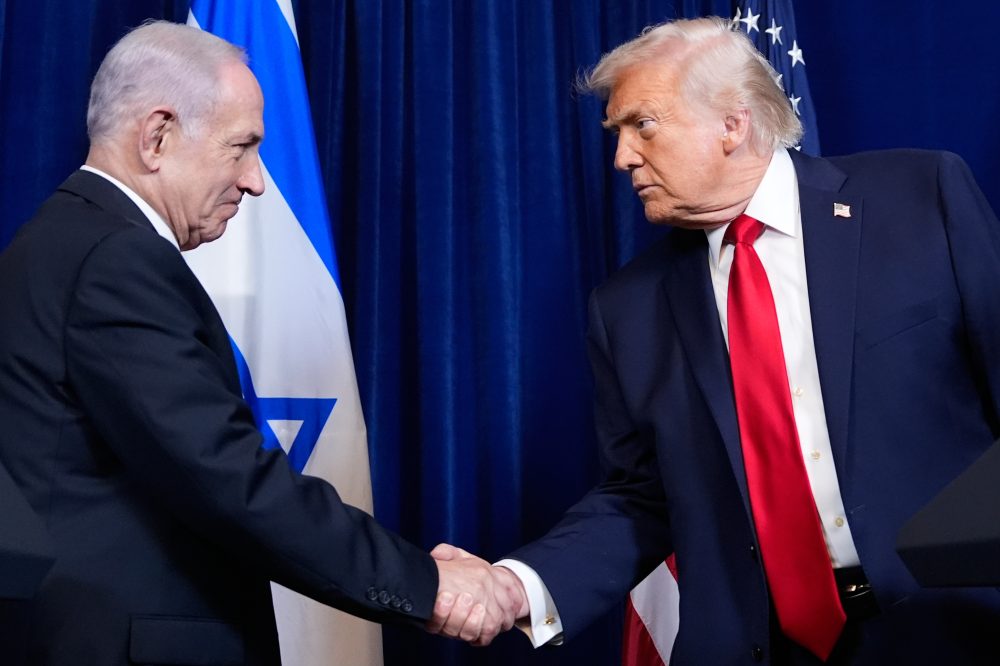
    However, that diplomatic courtesy isn’t being returned as Trump openly criticizes the UK leader for his unwillingness to fully support American-Israeli military operations against Iran.

    This disagreement is creating turbulence in a diplomatic partnership that Starmer had carefully cultivated, adding more pressure to already strained Atlantic relations affected by Trump’s “America first” policies and transactional diplomatic style.

    “This was the most solid relationship of all. And now we have very strong relationships with other countries in Europe,” Trump stated during a Tuesday interview with British newspaper The Sun.

    “I mean, France has been great. They’ve all been great,” Trump continued. “The U.K. has been much different from others.”

    “It’s very sad to see that the relationship is obviously not what it was,” he concluded.

    Initially, Starmer prohibited U.S. aircraft from operating out of British military installations for Saturday’s Iran operations. He subsequently permitted American forces to utilize English bases and the Diego Garcia facility in the Indian Ocean for targeting Iran’s missile systems and storage facilities, while refusing access for broader military objectives.

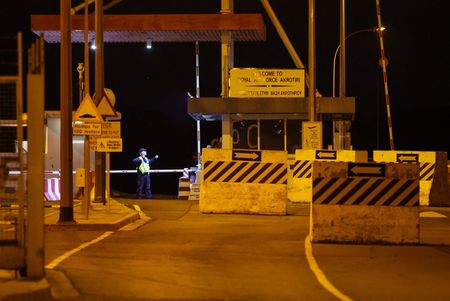
    Following an Iranian drone attack on the British Akrotiri base in Cyprus during the weekend, Starmer maintained that Britain “will not join offensive action.”

    The UK leader delivered an unusual, though indirect criticism of Trump’s approach, stating Britain rejects “regime change from the skies.”

    “Any U.K. actions must always have a lawful basis and a viable, thought-through plan,” Starmer addressed Parliament on Monday.

    “President Trump has expressed his disagreement with our decision not to get involved in the initial strikes, but it is my duty to judge what is in Britain’s national interest,” Starmer continued.

    The Financial Times characterized this as Starmer’s “Love Actually moment” — referencing the 2003 film scene where Hugh Grant’s British prime minister confronts Billy Bob Thornton’s intimidating American president.

    Tensions between the leaders have been escalating over recent months. Starmer and fellow European officials condemned Trump’s territorial ambitions regarding Greenland earlier this year. Trump has also criticized Britain’s decision to transfer the Chagos Islands, which house the Diego Garcia base, to Mauritius, despite his administration’s previous support for the arrangement.

    Former British Foreign Office chief Peter Ricketts told The Observer that Trump’s America has “effectively given up on any effort to be consistent with international law.”

    This represents a fundamental conflict for Starmer, a former barrister and England and Wales’ ex-chief prosecutor who prioritizes legal compliance.

    This dispute undermines Starmer’s attempts to build rapport with Trump following his 2025 return to the presidency. Britain arranged a royal state visit with King Charles III for Trump, and Starmer has repeatedly commended the president’s ongoing efforts to resolve the Russia-Ukraine conflict.

    The Iranian conflict has created divisions among European leadership, with reactions ranging from condemnation to endorsement.

    NATO Secretary-General Mark Rutte expressed complete support for Trump’s Iranian military action and the killing of Iran’s supreme leader, describing the conflict as vital for European security.

    Britain, France, and Germany issued a joint statement saying they weren’t participants in the strikes but were ready to support “necessary and proportionate defensive action to destroy Iran’s capability to fire missiles and drones at their source.”

    Spanish Prime Minister Pedro Sánchez denounced the strikes as “unjustifiable” and “dangerous.”

    British public opinion surveys indicate widespread skepticism about American justifications for the conflict. However, Conservative politicians have attacked Starmer for avoiding military participation. Conservative Party leader Kemi Badenoch declared her party “stands behind America taking this necessary action against state-sponsored terror.”

    Foreign Office Minister Stephen Doughty rejected suggestions that the U.S.-UK “special relationship” was deteriorating.

    “Our relationship with the United States is strong,” he told Parliament Tuesday. “It has endured, it continues to endure, and it will endure into the future on both the economic and the security fronts.”

  • China Takes Cautious Stance Following U.S.-Israeli Strikes on Iran

    China Takes Cautious Stance Following U.S.-Israeli Strikes on Iran

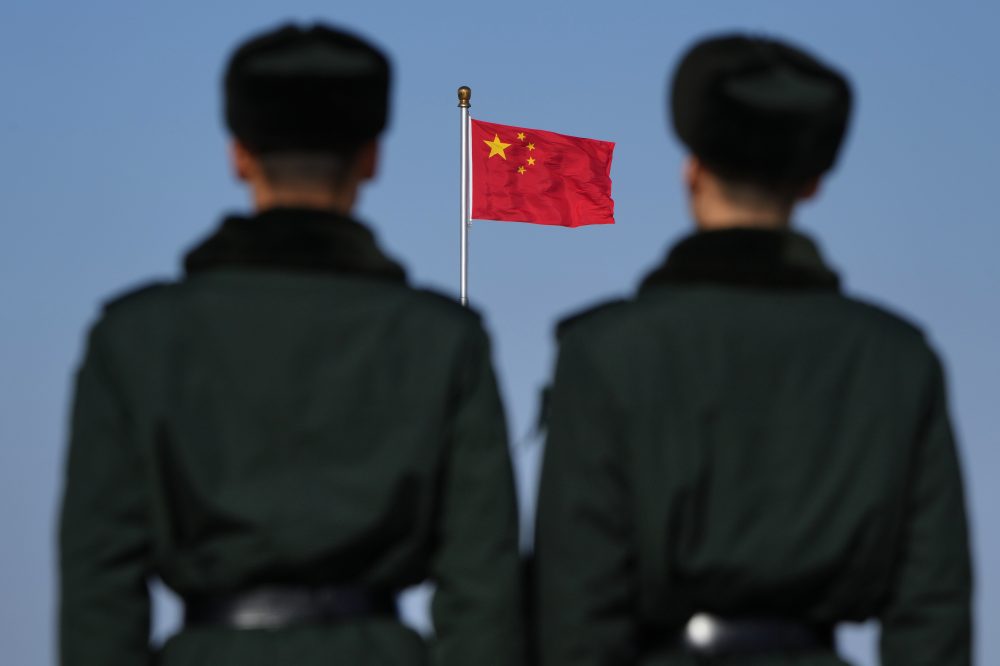
    BEIJING (AP) — Following the U.S. and Israeli military strikes against Iran, Beijing took several hours before issuing its initial official statement. Chinese officials expressed being “highly concerned” and urged an immediate end to military actions while pushing for renewed diplomatic discussions.

    The following day, China’s Foreign Minister Wang Yi denounced the attacks as unacceptable and reiterated calls for increased dialogue.

    Beijing showed no signs of direct military involvement — though such action would be unrealistic. Consistent with its approach to other recent conflicts, including previous Iranian attacks, China has criticized military force while staying uninvolved, prioritizing its strategic long-term goals.

    Among those priorities is an eagerly awaited visit from U.S. President Donald Trump to Beijing, scheduled for approximately early April.

    While China’s military capabilities have expanded significantly and the nation has participated in joint exercises with Iran and established a military installation in Djibouti, East Africa in 2017, Beijing’s primary military focus remains protecting Asian interests, particularly regarding Taiwan and the South China Sea.

    China has engaged in Middle Eastern diplomacy when opportunities arise, notably facilitating improved relations between Iran and Saudi Arabia in 2023. However, Beijing views America’s military campaigns in Afghanistan and Iraq as warnings to avoid similar entanglements, according to William Yang, an International Crisis Group analyst.

    “China is reluctant to project military power beyond its immediate periphery and it is also unwilling to play the role of security guarantor in unstable regions like the Middle East,” he said.

    Similarly, Beijing has offered diplomatic and economic assistance to Russia and Venezuela while avoiding military involvement in Ukraine or Latin America.

    China’s sideline position demonstrates the boundaries of its global political influence, according to Craig Singleton, a senior China fellow at the Foundation for Defense of Democracies, a Washington research organization.

    “Beijing’s response has been predictably restrained, underscoring China’s limited ability to shape events once hard power is in motion,” he said. “Beijing can signal unease; however, it cannot meaningfully deter or influence U.S.-Israeli military action.”

    China’s displeasure with the Iranian strikes is unlikely to derail U.S. relations or disrupt plans for Trump’s meeting with Chinese President Xi Jinping next month, experts believe.

    For Chinese leadership, the American relationship holds far greater importance than Iranian ties across multiple areas, including trade, economics, and Taiwan policy.

    While Beijing may engage in verbal disputes with Washington regarding Iran, the risks of creating additional conflict with Trump exceed any potential benefits, said George Chen, a partner at The Asia Group.

    “U.S.-China relations are already complicated enough for President Trump and Xi to handle,” he said. Adding Iran to the mix “won’t be something that both sides are keen to do.”

    Nevertheless, Beijing might delay Trump’s visit, he noted.

    As Iran’s largest oil customer, China prioritizes energy security and has developed backup sources. The primary concerns involve rising fuel costs and potentially losing access to oil and natural gas from the broader Middle Eastern region.

    China purchased approximately 1.4 million barrels daily — representing 13% of China’s total maritime oil imports — from Iran last year, data company Kpler reported. However, the firm calculates that sufficient oil is currently being shipped to sustain China for another four to five months. This timeframe would allow Chinese independent refineries to adapt and find alternatives, with discounted Russian oil being their main option, said Muyu Xu, a senior Kpler analyst.

    China has invested years in supply diversification and reserve building, Singleton noted. “The loss of Iranian oil appears marginal, not material, at least in the short-term,” he said.

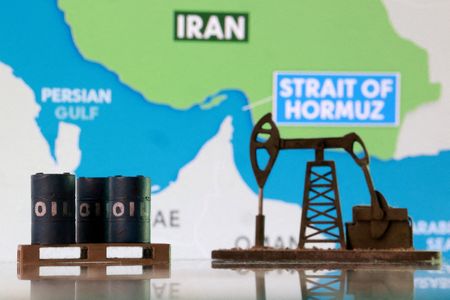
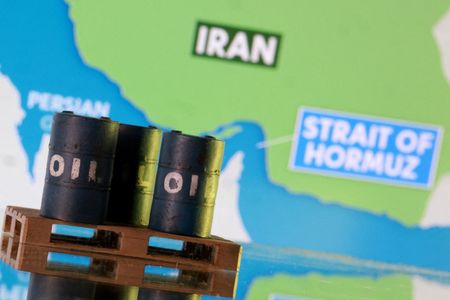
    Iran’s potential closure of the Strait of Hormuz — the narrow Persian Gulf entrance — poses greater concern, as do possible attacks on Gulf state liquefied natural gas facilities.

    QatarEnergy, a significant supplier, suspended liquefied natural gas production Monday following facility attacks.

    China is unlikely to provide weapons to Iran for fighting the U.S. for multiple reasons, analysts indicate.

    “Tangible military aid, if any, would be limited to existing long-term defense trade arrangements rather than rapid battlefield support, and it would be constrained by Beijing’s interest in avoiding direct confrontation with the U.S. and its allies,” said Muhammad Zulfikar Rakhmat, a researcher at Indonesia’s Center of Economic and Law Studies.

    China has condemned American arms supplies to Ukraine, claiming they extend the conflict.

    Iran’s missile capabilities rely on Chinese technology, said James M. Dorsey, an adjunct senior fellow at Singapore’s Nanyang Technological University. However, he predicted China would choose caution over selling missiles to Iran’s military.

    “What China wants is this to end,” he said.

  • Afghan Child Malnutrition Crisis Worsens as 3.7 Million Need Treatment

    Afghan Child Malnutrition Crisis Worsens as 3.7 Million Need Treatment

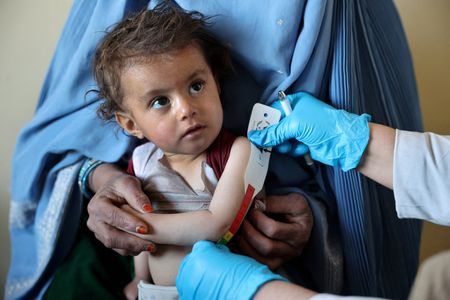
    A devastating hunger crisis in Afghanistan is pushing hundreds of thousands more children toward severe malnutrition this year, according to a United Nations official who spoke Tuesday from Geneva.

    The situation has deteriorated dramatically since international forces withdrew in 2021 and the Taliban returned to control, leading to massive reductions in foreign assistance. Natural disasters, including earthquakes, have made conditions even worse.

    John Aylieff, who directs the World Food Programme’s operations in Afghanistan, delivered alarming statistics during a press conference in Geneva.

    “Acute malnutrition among children is soaring. Last year we saw the highest surge ever recorded in Afghanistan, and this year, a staggering 3.7 million children will need malnutrition treatment,” Aylieff stated.

    He revealed that an additional 200,000 children will require urgent nutritional intervention compared to previous estimates.

    The funding shortage has created a tragic gap in care, with the UN agency possessing resources to help only 25% of children requiring acute malnutrition treatment, according to Aylieff.

    Geographic barriers compound the problem, as many families cannot reach medical facilities. Aylieff expressed particular worry about children stranded by heavy snow in Afghanistan’s mountainous regions.

    The country’s harsh winter season proves especially deadly for vulnerable children, Aylieff explained, noting that most child deaths occur “during the winter… at home silently.”

    “What I fear is when the snow is melted at the end of March or in April, we will find there has been a very high toll of child deaths in the villages,” he warned.

    The crisis has intensified as neighboring Pakistan and Iran have forced over 5 million people to return to Afghanistan since late 2023, overwhelming the country’s already strained resources.

    Recent military clashes between Pakistani and Afghan forces near border areas where many returnees have settled have forced the World Food Programme to halt some operations.

    “We foresee that acute malnutrition will be driven up further by the conflict as people are prevented from accessing health services,” Aylieff said, warning that tens of thousands of children face increased danger.

  • Rising Oil Prices Still Can’t Fix Russia’s Growing Budget Crisis

    Rising Oil Prices Still Can’t Fix Russia’s Growing Budget Crisis

    MOSCOW – Oil prices have surged to their highest point since July 2024 following recent U.S. and Israeli military actions against Iran, but even this boost won’t be enough to rescue Russia’s struggling federal budget, new analysis reveals.

    The Kremlin is grappling with a widening budget shortfall, largely driven by declining revenues from oil and natural gas sales that typically account for nearly 25% of government income.

    Although international crude oil climbed above $83 per barrel this Tuesday, Russian petroleum sells at a significant markdown compared to the global Brent standard. February data shows Russian oil traded at an average discount of $26.50 per barrel below international rates.

    This price penalty stems primarily from Western economic sanctions imposed over Moscow’s invasion of Ukraine, including a price ceiling that the European Union reduced to $44.10 per barrel starting February 1st, designed to limit Russia’s petroleum earnings.

    Government finances have been severely strained by massive defense and security expenditures since Russia launched its military operation in Ukraine in February 2022.

    Financial analysis indicates Russia’s Urals oil blend would need to jump more than 50% from its March 2nd level of 3,582 rubles ($46.13) per barrel to reach the government’s budget projections.

    Moscow’s 2026 budget planning assumes oil will sell for 5,440 rubles per barrel (approximately $59) with an exchange rate of 92.2 rubles per dollar.

    Alternatively, if oil prices remain steady, the ruble would need to weaken dramatically to 117.5 per dollar from its current rate of around 77.65 to balance the budget.

    Central bank advisor Kirill Tremasov indicated Saturday that officials don’t anticipate a ruble collapse, while cautioning that the current oil price surge may be temporary.

    “Therefore, the government is focusing on a long-term forecast, not on what will happen in the next week or month,” he explained to reporters.

    Russia’s public debt could potentially expand to nearly three times the official projection by year’s end as reduced oil sales and deeper price cuts erode revenues, while government spending may exceed estimates.

    The budget projects 8.92 trillion rubles in oil and gas revenue this year, though current collection rates are falling behind this target.

  • Tunisian Court Sentences Billionaire, Former PM in Corruption Cases

    Tunisian Court Sentences Billionaire, Former PM in Corruption Cases

    TUNIS – Tunisia’s judicial system delivered significant corruption verdicts Tuesday, with a court imposing lengthy prison terms on two prominent figures in unrelated graft cases, according to legal representatives.

    The court handed down a 20-year prison sentence to Marouan Mabrouk, widely recognized as Tunisia’s wealthiest individual, while former Prime Minister Youssef Chahed received a six-year term in a separate corruption proceeding.

    Mabrouk, the North African nation’s top businessman, has remained behind bars since the final months of 2023. Meanwhile, Chahed, who led Tunisia’s government between 2016 and 2020, is currently residing outside the country.

  • Middle East Experts: Iran’s Gulf Attacks Could Spark Broader Coalition War

    Middle East Experts: Iran’s Gulf Attacks Could Spark Broader Coalition War

    DUBAI – Middle East experts are warning that Iran’s recent missile attacks on Gulf nations could backfire dramatically, potentially driving these countries into a stronger military alliance with the United States and expanding the current conflict.

    Regional analysts suggest that Tehran’s decision to target economic centers, ports, and energy facilities across Gulf states may have been a strategic miscalculation that could unite these nations against Iran rather than pressure them to influence U.S. policy.

    The missile strikes hit six different Gulf countries, all of which maintain military partnerships with Washington and house American forces on their territory. Iran’s apparent goal was to compel these nations to pressure President Trump into ending military operations, but experts believe the strategy has had the opposite effect.

    Abdulaziz Sager, who leads the Gulf Research Center think tank based in Saudi Arabia, explained the difficult position these nations now face. “The Gulf states now face stark choices: to join the United States more openly in its war effort — allowing their skies and territory to be used and potentially participating in military operations — or risk further escalation on their own soil,” Sager told Reuters.

    According to Sager, the possibility of remaining neutral disappeared when Iranian rockets began striking their territory, “forced us to be their enemies,” and pushed previously cautious governments toward open cooperation with Washington and active defense of their interests.

    The crisis escalated following the death of Iran’s Supreme Leader Ali Khamenei on Saturday, which occurred during the initial phase of U.S. and Israeli military operations that Trump described as necessary to address security threats and prevent Iranian nuclear weapons development.

    In response to the Iranian assault, the Gulf Cooperation Council — comprising Saudi Arabia, UAE, Qatar, Bahrain, Kuwait, and Oman — convened an urgent ministerial session on Sunday. The group invoked United Nations Charter Article 51, established clear boundaries, and indicated their willingness to engage in collective defense as energy disruptions and security concerns intensify.

    The GCC delivered a clear message to Tehran that the Iranian offensive had actually strengthened cooperation among Gulf nations. The council warned that continued attacks risked converting the Gulf region from a defensive position into an “active theatre of response,” and member states have now coordinated joint air-defense networks and surveillance operations throughout regional airspace.

    Regional experts describe the situation as presenting a harsh choice: retaliate and risk broader warfare, or remain passive while accepting deteriorating security, economic damage, and diminished international standing under repeated attacks.

    Gulf leadership has communicated warnings to Tehran through various channels, both direct and indirect, indicating that additional attacks would result in significantly more severe consequences for Iran.

    “Practically, they’re going to try and wait as much as possible. The Americans are hitting them and the Israelis are hitting them,” said one Gulf insider.

    This source noted uncertainty about Iran’s current command structure — whether the strikes on energy infrastructure were centrally authorized or conducted by independent units. Two possibilities are emerging: either military command has broken down with units operating independently, or strategic decisions remain centrally coordinated.

    The implications extend well beyond the Gulf region, with global oil shipments, maritime routes, and energy infrastructure under threat, endangering a crucial energy corridor and creating worldwide economic repercussions.

    International energy markets are experiencing one of their most serious disruptions in recent decades. Missile threats have forced temporary shutdowns at several Gulf energy installations, including Qatar’s liquefied natural gas facilities that supply approximately 20% of global demand, demonstrating the potential market impact.

    Ebtesam Al-Ketbi, who heads the Emirates Policy Center, warned of broader international involvement if the crisis continues. “If the strikes continue at this pace, and the Gulf cannot withstand a prolonged conflict, disruption to oil shipping lanes or closure of the Strait of Hormuz, it would be natural for other countries to step in, because global interests would be directly affected,” Al-Ketbi told Reuters.

    Mohammed Baharoon, who directs the Dubai Public Policy Research Center, argued that the case for expanding the anti-Iran coalition has been strengthened by the UAE’s classification of the Iranian strikes as terrorist acts.

    “Iran is pushing the Gulf into an expanding coalition against it,” Baharoon stated. “By attacking Gulf states, Iran is turning them into enemies and risking a wider war no one wants.”

    The targeting of Western-affiliated locations — including a British installation in Cyprus and facilities housing French personnel in Abu Dhabi — has raised the possibility of eventual NATO involvement in the conflict.

    The UAE has sustained the heaviest Iranian assault, with 63% of strikes hitting its airports, ports, and petroleum infrastructure. Officials calculate that 165 ballistic and cruise missiles, plus 600 drones, were launched during the initial 48-hour period.

    Weekend missile strikes on Doha, Dubai, and Manama also targeted these Gulf cities’ reputations as prosperous financial, investment, and tourism centers, damaging their image as secure and stable destinations.

    Although the UAE seeks to prevent full-scale warfare, it has responded quickly through diplomatic means, summoning Iran’s ambassador, recalling its own representative, shuttering its Tehran embassy, and raising the matter at the U.N. Security Council.

    Gulf officials indicate that Iran’s large-scale deployment of ballistic missiles and drones has fundamentally changed the diplomatic environment.

    They argue that Tehran’s actions have complicated future U.S. negotiations by making it more difficult to treat Iran’s missile capabilities separately from its nuclear program — a perspective now reportedly shared by Sunni Gulf Arab neighbors and Western governments.

  • Middle East Conflict Leaves Thousands of Travelers Stranded Worldwide

    Middle East Conflict Leaves Thousands of Travelers Stranded Worldwide

    BERLIN — Thousands of travelers including religious pilgrims, vacationers, and diplomatic families find themselves trapped throughout the Middle East as escalating warfare involving Iran disrupts transportation across the region.

    Flight cancellations by major carriers and closed airspace over the Gulf have left many seeking emergency shelter during bombing campaigns, while others remain aboard cruise vessels unable to navigate through the Strait of Hormuz.

    The U.S. State Department issued urgent evacuation orders Monday, advising American citizens to immediately exit more than twelve Middle Eastern nations due to mounting security threats from the expanding regional conflict.

    Assistant Secretary of State for Consular Affairs Mora Namdar posted on social media platform X, instructing Americans in nations such as Iran, Iraq, Jordan, Lebanon and Israel to “DEPART NOW” utilizing whatever commercial transport remains available.

    State Department officials have also withdrawn non-essential staff and family members from six countries, recently adding the United Arab Emirates to the evacuation list Tuesday. The UAE, housing Dubai and Abu Dhabi and traditionally viewed as a secure regional haven, has become entangled in the Iranian conflict through missile interceptions and military strikes.

    U.S. Ambassador Mike Huckabee informed Americans in Israel that their optimal escape route leads through Egypt’s Sinai Peninsula region.

    Huckabee posted on social media early Tuesday that the embassy was handling numerous evacuation inquiries while staff members “are sheltering in place.”

    “There are VERY LIMITED options,” he posted. “Not sure when Ben Gurion Airport in Tel Aviv will reopen.” He recommended Americans travel by bus to Egyptian resort destinations Sharm el-Sheikh and Taba in southern Sinai.

    International governments are rushing to organize citizen evacuations from the affected areas.

    Italy’s government has coordinated evacuation flights to Milan and Rome following public criticism of Defense Minister Guido Crosetto. The minister faced political backlash after becoming stranded in Dubai with his family when the U.S.-Israeli military action against Iran began.

    Crosetto flew back to Rome Sunday aboard a military transport. Opposition parties have demanded his resignation, arguing he shouldn’t have traveled to the Middle East during the crisis. Italian Prime Minister Giorgia Meloni has supported her defense minister.

    Approximately 30,000 German tourists remain stuck on cruise ships, in hotels, or at shuttered airports throughout the Middle East, with the initial evacuation flight from Dubai to Frankfurt scheduled to arrive Tuesday afternoon.

    German authorities are arranging chartered aircraft using public funds to evacuate vulnerable individuals including sick travelers, children, and expectant mothers.

    France is coordinating the return of thousands of French nationals, according to the foreign affairs minister’s Tuesday statement. Around 200,000 French residents live in conflict-affected areas, with officials estimating roughly 25,000 French citizens are currently visiting the region.

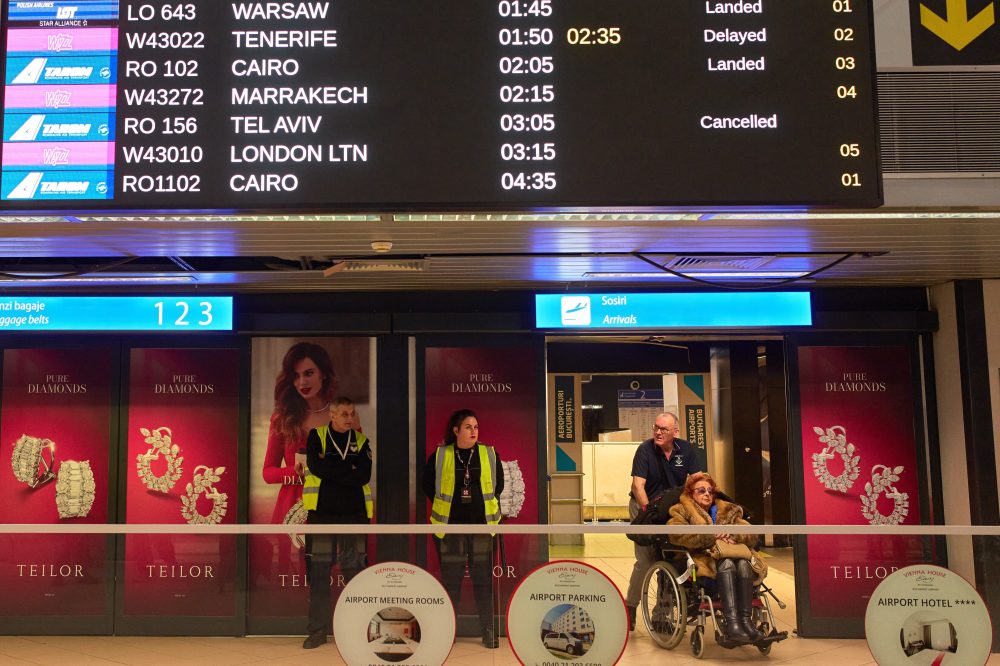
    Romanian tourists reached Bucharest early Tuesday after traveling from Israel through Cairo to flee the violence. Hundreds of Romanian Orthodox pilgrims were stranded in Israel during a religious journey to Bethlehem led by Romanian clergy when fighting erupted. The pilgrimage group was compelled to abandon their trip and return home.

    Pilgrim Mariana Muicaru described her terror while in Israel watching missiles streak overhead.

    “We called our children at 3 a.m. to ask forgiveness because we might die and to tell them we love them and to let them know that it’s over for us,” she told The Associated Press.

    British travelers previously trapped in the United Arab Emirates expressed relief upon landing safely at London’s Heathrow Airport Monday night.

    Adam Barton, traveling with family from Abu Dhabi, said he received emergency alerts while at the airport before departure.

    “We had an alert on our phone, saying to get away from the windows for potential missile attacks,” Barton told Sky News.

    A Dubai flight arrived in Belgrade, Serbia’s capital, early Tuesday morning carrying approximately 200 passengers.

    One passenger told state broadcaster RTS he had been waiting at a hotel and received just 15 minutes to pack his belongings.

  • Energy Prices Spike as Middle East Conflict Disrupts Global Oil Supply

    Energy Prices Spike as Middle East Conflict Disrupts Global Oil Supply

    Energy markets worldwide are experiencing dramatic price increases as ongoing military conflict involving the United States, Israel and Iran has severely disrupted oil and gas operations throughout the Middle East region.

    The price of Brent Crude oil climbed 6% on Tuesday, reaching above $82 per barrel – the highest level seen since July of last year. This represents a more than 15% increase since Friday alone. European natural gas costs have skyrocketed by 40% on Tuesday, following a similar 40% jump the previous day. The surge has also affected other commodities including sugar, fertilizer and soy products.

    The ongoing crisis threatens to reignite inflationary pressures that could undermine economic recovery efforts across Europe and Asia, particularly if hostilities continue in a region responsible for nearly one-third of worldwide oil output and approximately 20% of global natural gas production.

    Maritime traffic through the crucial Strait of Hormuz remains blocked for the fourth consecutive day following Iranian attacks on five vessels, effectively cutting off a vital waterway that handles roughly 20% of the world’s oil and gas shipments.

    Tuesday brought additional infrastructure damage as a fuel storage tank at Oman’s Duqm commercial port sustained a hit, while fires erupted at Fujairah in the United Arab Emirates, a critical regional petroleum hub.

    Major energy producers across the region have been forced to halt operations. Qatar announced the closure of its massive liquefied natural gas plants on Monday – facilities that normally provide about 20% of global LNG exports. Saudi Arabia has suspended operations at its largest domestic refinery, while both Israel and Iraq’s Kurdistan region have also shut down significant portions of their oil and gas production.

    President Donald Trump initiated what many consider the most significant foreign policy risk of his administration when he authorized attacks on Iran over the weekend, resulting in the death of Supreme Leader Ali Khamenei.

    Domestically, gasoline prices have climbed above $3 per gallon for the first time since November, marking a sharp reversal from the $2 prices Trump had previously celebrated as an administration success.

    The rising fuel costs present a substantial political challenge for Trump and Republican lawmakers as they approach November’s midterm elections, with many Americans already facing pressure from increasing costs of everyday necessities.

    Treasury Secretary Scott Bessent and Energy Secretary Chris Wright are expected to unveil measures on Tuesday aimed at reducing the price surge’s impact on American consumers, according to Secretary of State Marco Rubio.

    India, heavily reliant on Middle Eastern energy imports, has implemented gas rationing for industrial users following the shutdown of Qatari production facilities.

    While most Qatari LNG typically flows to Asian markets, European nations also depend on these supplies and are completely reliant on energy imports. Europe faces the challenge of replenishing reserves that were depleted during a harsh winter, likely requiring increased dependence on American gas after cutting ties with Russian energy following the 2022 Ukraine invasion.

    Global shipping costs have reached record highs as the conflict has escalated and Iran has continued targeting vessels attempting to navigate through the strait.

    The blockade of the Strait of Hormuz has left hundreds of oil and LNG tankers stranded near major ports like Fujairah in the UAE, unable to deliver their cargo to customers across Asia, Europe and other destinations.

    Unless alternative transportation can be secured, major oil producers including Saudi Arabia, the UAE, Iraq, Kuwait and Iran will be forced to reduce production within days as they run out of available tankers to transport continuing oil output.

    Western defense analysts are working to determine Iran’s remaining missile and drone capabilities to sustain its current level of attacks.

    While Saudi Arabia, the UAE, Oman and Kuwait have successfully intercepted most missiles and drones aimed at energy infrastructure, ports and airports, concerns are growing about the depletion of their defensive weapon stockpiles.

  • UN: 30,000 Lebanese Flee to Shelters as Israel-Hezbollah Fighting Escalates

    UN: 30,000 Lebanese Flee to Shelters as Israel-Hezbollah Fighting Escalates

    United Nations officials announced Tuesday that roughly 30,000 Lebanese civilians have fled to emergency shelters as military confrontations between Israeli forces and Hezbollah militants intensified throughout the region this week.

    The escalation began when Hezbollah launched rocket attacks toward Israel on Sunday evening, responding to recent U.S. and Israeli military operations targeting Iran. Israeli military forces have since carried out widespread aerial bombardments across Lebanese territory starting Monday.

    UNHCR spokesperson Babar Baloch provided details on the humanitarian crisis, stating that “Conservative estimates suggest that nearly 30,000 people were hosted and registered at collective shelters.”

    Baloch further described the desperate conditions, explaining that “Many more slept in their cars on the side of roads or were still stuck in traffic jams.”

    According to the U.N. World Food Programme, Lebanese authorities have established 21 emergency shelter facilities, though officials anticipate the number of displaced residents will continue climbing significantly.

    The refugee crisis is compounded by Lebanon’s existing population challenges. The nation currently houses approximately 1.5 million Syrian refugees within its borders, representing the world’s highest refugee-to-population ratio among a total Lebanese population of roughly 4 million.

    UNHCR officials noted an uptick in Syrian refugees departing Lebanon to return to Syria, prompting the agency to develop emergency response plans for potential additional population movements. The Syrian refugee population originated from the conflict that erupted in Syria in 2011, which ultimately forced more than 6 million Syrians to seek refuge primarily in Turkey, Lebanon, and Jordan.

    UNICEF reported alarming casualties among Lebanese children, with seven deaths and 38 injuries recorded since Monday’s military operations began. The strikes have targeted civilian neighborhoods, putting young residents at immediate risk.

    UNICEF spokesperson Ricardo Pires emphasized the expanding impact, stating that “Each new escalation expands the circle of harm. Residential areas, schools and critical infrastructure are being affected.”

  • Britain Weighs Naval Response After Drone Attack on Cyprus Air Base

    Britain Weighs Naval Response After Drone Attack on Cyprus Air Base

    LONDON – British leadership remains undecided about deploying naval vessels to protect their Royal Air Force facility at Akrotiri in Cyprus, according to an insider familiar with the discussions, following reports that top officials considered such military action.

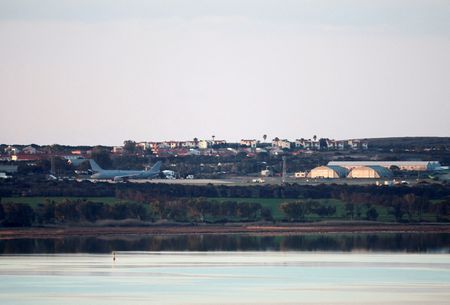
    A drone manufactured in Iran struck a runway at the Akrotiri installation during the early morning hours on Monday. British authorities have attributed the attack on UK military assets to Iranian forces.

    According to reporting from The Times, which referenced three unnamed sources, Defense Minister John Healey conducted discussions Tuesday with high-ranking military officials about potentially dispatching the HMS Duncan warship to the area.

    The Ministry of Defence has not yet provided a response to inquiries regarding these reported deliberations.

    Meanwhile, the Cyprus News Agency, which operates with semi-official status, announced Tuesday that France intends to deploy defensive systems capable of intercepting missiles and drones to Cyprus.

  • Russian Nuclear Chief Warns Iran Plant Faces Danger Amid Regional Fighting

    Russian Nuclear Chief Warns Iran Plant Faces Danger Amid Regional Fighting

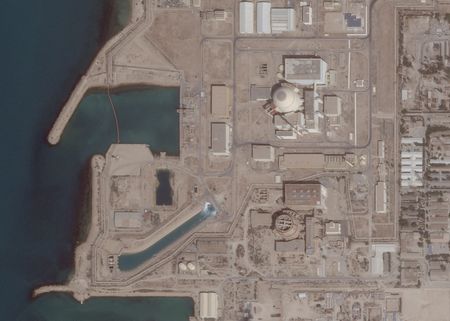
    MOSCOW – The chief executive of Russia’s state nuclear agency Rosatom warned Tuesday that Iran’s Bushehr nuclear facility faces potential danger due to ongoing regional military conflict, according to Russian state media reports.

    Alexey Likhachev, Rosatom’s director, told reporters that the nuclear installation is at risk from the surrounding violence. “There is certainly a threat to the plant,” Likhachev stated, noting that “explosions can be heard just kilometres away.” He emphasized that the facility itself is not being directly attacked.

    The Russian nuclear corporation announced over the weekend that it had removed nearly 100 individuals from Iran, including family members of workers and non-critical personnel. However, essential staff members continue operating the nuclear plant, which Russian engineers constructed in the Iranian coastal city of Bushehr.

    According to reports from the Interfax news service, Likhachev indicated that additional evacuations involving between 150 and 200 people from the facility will occur once security conditions allow for safe departure.

  • Philippine and South Korean Presidents Strengthen Partnership Amid Global Tensions

    Philippine and South Korean Presidents Strengthen Partnership Amid Global Tensions

    MANILA – Two Asian allies strengthened their partnership Tuesday as Philippine President Ferdinand Marcos hosted South Korean President Lee Jae Myung for high-level discussions in the Philippine capital.

    During the state visit, both leaders addressed what Marcos described as “growing uncertainty in geopolitical developments” and committed to supporting a rules-based international order, particularly regarding maritime issues.

    The meeting resulted in expanded collaboration across several key industries. The two nations agreed to work more closely in shipbuilding, nuclear energy development, and artificial intelligence technologies.

    Lee announced that cooperation would extend to infrastructure projects and defense manufacturing. “South Korea and the Philippines plan to work together on critical minerals and supply chains,” Lee stated during the discussions.

    Military modernization emerged as a significant focus, with Lee confirming that South Korean companies would assist in upgrading Philippine armed forces capabilities.

    The leaders also addressed current Middle East tensions during their bilateral talks.

    Multiple memorandums of understanding were formalized covering diverse areas including digital technology advancement, defense equipment procurement, agricultural development, intellectual property protection, foreign language instruction, cultural exchange, and law enforcement cooperation.

  • Asian Allies Worry Iran Conflict Could Weaken U.S. Defense Against China

    Asian Allies Worry Iran Conflict Could Weaken U.S. Defense Against China

    Asian allies of the United States are growing increasingly concerned that ongoing military operations against Iran could weaken America’s ability to counter China’s expanding influence in the Pacific region.

    During a private meeting Monday at ruling party headquarters in Tokyo, Japanese legislators questioned government officials about various aspects of the Iran crisis, including evacuation procedures and energy supplies. However, one particularly pressing concern emerged from the closed-door session, according to a politician who was present: what would happen to regional security if the U.S. redirected military assets from Asia to the Middle East?

    This worry is especially acute for nations like Japan and South Korea, which host significant American military installations designed to counter both Chinese military expansion and threats from nuclear-armed North Korea. Democratic Taiwan, which Beijing claims as its territory and which receives U.S. military support, faces similar concerns.

    Chen Kuan-ting, a Taiwanese ruling party legislator who serves on parliament’s foreign affairs and defense committee, expressed hope for a swift resolution. “We hope this operation is fast, limited, and that resources can be promptly shifted back to Asia,” Chen stated.

    Chen warned that an extended conflict could undermine “stability and peace in the Indo-Pacific” and suggested Taiwan should brace for Beijing to increase “coercion” while America’s attention remains focused elsewhere.

    President Trump has indicated that U.S. Middle East operations might continue for four to five weeks, though they could extend much longer. He plans to meet with Chinese President Xi Jinping at the end of March, although Beijing has not yet confirmed this meeting.

    Chinese foreign ministry spokesperson Mao Ning responded Tuesday by calling Taiwan an internal Chinese matter and stating Beijing “firmly opposes the use of force to infringe on the sovereignty and security of other countries.”

    The U.S. State and Defense Departments have not yet responded to requests for comment on this report.

    According to the Japanese politician who attended Monday’s meeting, a senior foreign ministry official indicated that Tokyo had requested guarantees from Washington that it would not relocate U.S. military resources from the region.

    Current naval deployment statistics highlight the challenge: approximately 40% of operational U.S. Navy vessels are now positioned near the Middle East, according to a recent Center for Strategic and International Studies analysis. This includes the aircraft carrier Abraham Lincoln and at least six missile destroyers that were previously based at Pacific locations in California, Hawaii, and Japan, as reported by the U.S. Naval Institute.

    Meanwhile, the George Washington, currently the sole U.S. carrier assigned to Asia, remains in maintenance at its Yokosuka base in Japan.

    Bryan Clark, a former U.S. defense official who specializes in naval operations at the Hudson Institute, described the situation bluntly: “The U.S. Navy is stretched thin.” He added that if the conflict continues, there’s a genuine possibility America might reduce its Pacific naval presence to strengthen Iran operations, noting that “the fleet is not sufficient to keep a steady presence in every theatre.”

    The Iran operations are also consuming U.S. ammunition stockpiles, a problem defense experts have long highlighted. While the Pentagon has requested increased production from defense contractors, ramping up manufacturing could require several years.

    This munitions shortage particularly concerns U.S. officials because maintaining adequate weapons reserves in the Indo-Pacific region helps discourage Chinese military action against Taiwan, according to a U.S. official who requested anonymity due to the sensitive nature of the topic.

    Japan has already experienced delays in receiving hundreds of Tomahawk missiles ordered from the United States and may face further postponements, said Jan van Tol, a senior fellow at the Center for Strategic and Budgetary Assessments.

    The timing is particularly striking given that Washington released a new security strategy just three months ago, identifying the Indo-Pacific as the primary “geopolitical battleground” and making Taiwan conflict deterrence a top priority.

    Since then, Trump has conducted a bold military operation to capture Venezuela’s leader, threatened to annex Greenland, and partnered with Israel in launching aerial attacks against Iran.

    While Asian allies worry about America’s shifting focus, some analysts suggest Beijing may not benefit immediately. Trump’s actions against Venezuela and Iran have weakened two Chinese allies that provided Beijing with inexpensive oil, supporting China’s economy.

    Some experts theorize that Trump’s military moves might be part of a broader strategy to eventually concentrate on containing China. However, the longer America remains engaged in Middle Eastern conflicts, the more opportunities Beijing might find to advance its interests.

    “The grand strategy is supposed to be ‘contain Iran in the Middle East, then shift resources toward dealing with China,’” explained a Japanese ruling party lawmaker who spoke anonymously. “But the question is whether there will be enough resources left to shift.”

    Jennifer Parker, a former Royal Australian Navy warfare officer and non-resident fellow at Sydney’s Lowy Institute, noted that China has previously capitalized on periods when U.S. attention was directed elsewhere. She pointed to Beijing’s rapid militarization of South China Sea islands while America was focused on the Afghanistan war.

    “Beijing will be watching closely,” Parker observed.

  • Russia Offers to Mediate Arab Concerns with Iran Over Oil Infrastructure Attacks

    Russia Offers to Mediate Arab Concerns with Iran Over Oil Infrastructure Attacks

    MOSCOW – The Kremlin announced Tuesday that Russian President Vladimir Putin plans to communicate Arab nations’ anxieties to Iran regarding Tehran’s attacks on regional oil facilities, as Middle East tensions continue escalating.

    On Monday, Putin conducted multiple telephone conversations with leaders from four Arab Gulf nations, proposing to leverage Moscow’s diplomatic relationship with Tehran – which Russia considers a strategic ally – in an effort to reduce regional hostilities.

    “Putin will certainly make every effort to contribute to at least a slight easing of tensions,” Kremlin spokesman Dmitry Peskov told reporters on Tuesday.

    “Yesterday’s discussions with virtually all of his interlocutors focused on Putin conveying his deep concern about the strikes on their infrastructure to our colleagues in Iran, taking advantage of the dialogue we maintain with the Iranian leadership,” Peskov explained.

    Global oil markets experienced their third consecutive day of price increases Tuesday as Iran retaliated against American and Israeli operations by targeting energy facilities in Gulf nations and attacking vessels in the Strait of Hormuz.

    While Putin sent condolences to Iranian Supreme Leader Ayatollah Ali Khamenei’s family through a message to President Masoud Pezeshkian over the weekend, the Kremlin has not announced additional communications with top Iranian officials since Saturday’s strikes commenced.

    The Russian leader has also avoided contact with U.S. President Donald Trump, with Peskov confirming no such discussion is currently scheduled.

  • United Nations Demands Probe Into Deadly Attack on Iranian Girls’ School

    United Nations Demands Probe Into Deadly Attack on Iranian Girls’ School

    GENEVA – United Nations human rights officials are demanding a thorough investigation into what they’re calling a devastating assault on a girls’ educational facility in Iran, though they stopped short of directly identifying those responsible for the attack.

    Speaking at a press conference in Geneva, U.N. human rights office spokesperson Ravina Shamdasani characterized the incident as appalling and emphasized the need for immediate action. “The High Commissioner (Volker Turk) calls for a prompt, impartial and thorough investigation into the circumstances of the attack. The onus is on the forces that carried out the attack to investigate it,” Shamdasani stated, using the word “horrific” to describe what occurred.

    The incident has drawn international attention, with U.S. Secretary of State Marco Rubio responding to reports about the attack. Rubio stated that American military forces “would not deliberately target a school,” addressing claims made by Iranian state media outlets that more than 160 people lost their lives on the opening day of combined U.S. and Israeli military strikes against Iran.

  • Moscow Claims No Proof Iran Developed Nuclear Arms as US-Israel Strike Continues

    Moscow Claims No Proof Iran Developed Nuclear Arms as US-Israel Strike Continues

    MOSCOW – Russia’s Foreign Minister declared Tuesday that his country has discovered no proof supporting allegations that Iran was constructing nuclear weapons, challenging the primary rationale behind the continuing US-Israeli military offensive.

    President Donald Trump has provided multiple explanations for initiating military action against Iran. During his most comprehensive public remarks Monday, Trump stated he authorized the strikes to prevent Tehran’s nuclear and ballistic missile development programs.

    During discussions with Brunei’s foreign minister in Moscow, Sergei Lavrov stated: “We still see no evidence that Iran was developing nuclear weapons, which was the main, if not the only, justification for the war.”

    Lavrov noted that the military assault on Iran has created ripple effects across the entire region, with Arab nations experiencing economic hardship and human losses.

    The Russian official renewed Moscow’s demand for an immediate end to fighting from all sides:

    “As an unconditional first step, we must do everything possible to stop any actions that result in civilian casualties.”

    Lavrov referenced reports of a school bombing incident in Iran.

    Iranian government media have blamed Israel and the United States for an attack on a girls’ elementary school in a southern Iranian community that Tehran claims resulted in over 160 deaths.

    Secretary of State Marco Rubio responded that American military forces would not intentionally target educational facilities.

  • UN Food Programme: Critical Gaza Aid Crossing Set to Reopen

    UN Food Programme: Critical Gaza Aid Crossing Set to Reopen

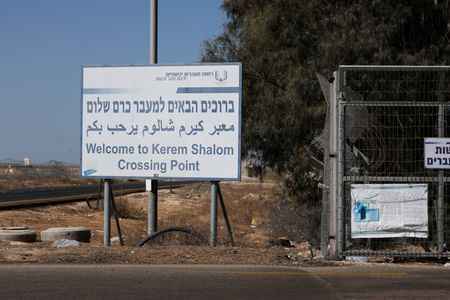
    The United Nations World Food Programme announced Tuesday that a crucial humanitarian corridor into Gaza will resume operations in the coming hours after being temporarily shuttered.

    Relief supplies are expected to flow through the Kerem Shalom crossing between Tuesday and Wednesday, according to WFP officials.

    “That is timely for us, and we need to get in aid as fast as we can,” said Samer Abdel Jaber, WFP Regional Director for the Middle East, North Africa, and Eastern Europe, speaking to reporters in Geneva through a video connection from Cairo.

    The Israeli government coordination agency COGAT confirmed it would restart operations at the Kerem Shalom crossing beginning Tuesday, allowing humanitarian assistance to gradually flow into the Gaza Strip.

    According to COGAT’s Saturday announcement, border crossings into Gaza had been suspended during Israeli and U.S. military operations against Iran. These crossings serve as essential lifelines for delivering humanitarian relief and evacuating patients requiring urgent medical care.

  • Middle East Conflict Threatens UK Economic Outlook as Oil Prices Surge

    Middle East Conflict Threatens UK Economic Outlook as Oil Prices Surge

    LONDON (AP) — The escalating Middle East conflict is disrupting economic projections that British Treasury chief Rachel Reeves plans to present on Tuesday, as petroleum costs climb and financial markets decline.

    Reeves initially anticipated her address to Parliament would be a modest presentation, featuring economic data that generally indicated positive trends.

    But financial experts caution that the Middle East crisis may derail her Spring Statement predictions, potentially slowing economic expansion, fueling price increases, and raising government borrowing costs. Most notably, Brent crude oil prices have jumped more than 15% this week, climbing above $80 per barrel — a level that would likely drive up energy costs and inflation while limiting economic growth if it continues.

    “With the world plunged into fresh uncertainty, she is likely to strike a highly cautious tone, focusing on maintaining stability and sticking to fiscal rules amid heightened tensions,” said Susannah Streeter, chief investment strategist at Wealth Club, an investment service.

    Before her parliamentary address, Treasury officials indicated Reeves will emphasize the need for economic steadiness during these turbulent global times.

    Looking back at government policies, Reeves plans to highlight declining inflation rates and interest rate reductions that are helping to reduce financial burdens on British families.

    “This government has the right economic plan for our country, in a world that has become yet more uncertain,” she is expected to tell lawmakers.

    The Labour administration, which has seen its popularity decline since winning the 2024 general election, had been counting on 2026 to demonstrate that Britain’s economy was becoming more stable than it had been in recent years.

    Recent economic data has suggested growth momentum in early 2026. Inflation is projected to drop significantly in upcoming months, which could prompt the Bank of England to reduce interest rates further. The central bank maintained its primary rate at 3.75% last month.
  • Satellite CEO: Space Now a Military Battleground as Nations Rush to Orbit

    Satellite CEO: Space Now a Military Battleground as Nations Rush to Orbit

    The chief executive of satellite operator SES declared Monday that outer space has transformed into a critical military battlefield where nations are racing to establish dominance across all orbital levels.

    Adel Al-Saleh made these remarks during a company earnings call as SES stock climbed 4%, part of a broader surge in European defense-related investments amid growing Middle East tensions.

    Investment analysts from Citi noted that defense investors are increasingly focused on orbital missile defense technologies, including President Donald Trump’s Golden Dome program, as regional conflicts expand.

    Al-Saleh emphasized that modern military operations depend heavily on instantaneous intelligence sharing between defense units. He pointed to France’s nuclear-powered aircraft carrier Charles de Gaulle as a prime example, noting how the vessel commanded a multi-ship Pacific mission last year using SES satellite communication networks.

    “Space is now a war-fighting domain,” Al-Saleh told investors, explaining that military leaders now view space capabilities with the same strategic importance as air dominance, maritime strength, or cyber warfare defense.

    The SES executive highlighted his company’s competitive advantage in providing secure network “slices” that give governments complete operational control, a service that aligns with Europe’s increasing desire for strategic independence.

    “There is an acceleration across all nations around the world, especially the United States and the European Union, to build up these capabilities at scale,” Al-Saleh explained.

    He noted that European countries now consider space technology essential for meeting NATO defense spending requirements, particularly as they work to develop autonomous military capabilities.

    “The outlook is positive and is accelerated with conflicts,” Al-Saleh stated, while noting that even without active conflicts, developing independent space capabilities remains a top priority for numerous countries.

    Looking ahead, SES plans extensive vertical integration to “take control over some of the supply chains that are critical for innovation,” focusing on dual-purpose satellites that combine both military and commercial functions.

  • WHO Reports Iranian Hospital Evacuated Following Nearby Blast Damage

    WHO Reports Iranian Hospital Evacuated Following Nearby Blast Damage

    The World Health Organization confirmed Monday that medical personnel evacuated a Tehran hospital following explosions in the immediate vicinity, as the agency investigates potential damage to multiple Iranian healthcare facilities.

    A WHO representative explained that patients at Gandhi Hospital in Iran’s capital were relocated after nearby blasts caused secondary damage to the medical facility. “We understand patients were moved due to nearby explosions that caused collateral damage to the hospital,” the spokesperson stated.

    Reuters received witness accounts on March 1 indicating the hospital sustained damage from Israeli military strikes.

    The international health agency is currently attempting to confirm additional reports concerning possible damage at Tehran’s Motahari Hospital, along with emergency medical facilities located in Sarab in Iran’s northwest region and another facility in the western Hamadan province.

    These incidents follow the beginning of U.S.-Israeli military operations against Iran that commenced on February 28.

    The WHO maintains an operational presence in Iran and collaborates with Iranian authorities on health crisis response and disease prevention efforts. The organization routinely investigates attacks on medical infrastructure globally while maintaining neutrality regarding responsibility.

    During Monday’s Human Rights Council session in Geneva, Iran’s U.N. representative Ali Bahreini declared that medical facilities had faced “indiscriminate attacks,” though he provided no additional specifics.

  • Trump Criticizes British PM Over Delayed Access to Military Base for Iran Strikes

    Trump Criticizes British PM Over Delayed Access to Military Base for Iran Strikes

    LONDON, March 2 – President Donald Trump expressed strong frustration with British Prime Minister Keir Starmer over delays in granting the United States access to a crucial military base for operations against Iran, according to an interview published in the Daily Telegraph on Monday.

    The president told the British publication he felt “very disappointed” after Starmer initially refused to allow American forces to use the Diego Garcia air base for strikes targeting Iranian positions. While Britain eventually reversed course Sunday evening, approving the base’s use for what Starmer termed “defensive” operations against Iranian targets, Trump criticized the timeline of the decision.

    Speaking to the Telegraph, Trump said the delay was excessive and unprecedented. “That’s probably never happened between our countries before,” the president stated, suggesting Starmer’s hesitation stemmed from legal concerns about the military action.

    The president argued that immediate approval should have been granted for American operations at Diego Garcia, a strategically vital joint U.S.-British facility located in the Indian Ocean. Trump justified this position by noting Iran’s responsibility for casualties affecting British citizens, telling the newspaper Iran had killed “a lot of people from your country.”

    The discussion comes after joint American-Israeli military operations against Iran resulted in the death of Supreme Leader Ali Khamenei on Saturday. Britain did not participate in those strikes.

    Military tensions have escalated since Saturday’s operations began, with Iran launching missile attacks against Gulf nations. On Sunday, an Iranian-manufactured drone struck Britain’s RAF Akrotiri installation in Cyprus, though officials reported minimal damage and no injuries.

    Trump described the eventual access to Diego Garcia as “useful” for future American military operations, while also expressing criticism of Starmer’s recent diplomatic agreement regarding the Chagos Islands, where the Diego Garcia base is situated.

  • Guinea, US Strike $143M Health Partnership Deal Over Five Years

    Guinea, US Strike $143M Health Partnership Deal Over Five Years

    The West African nation of Guinea has forged a significant health partnership with the United States, establishing a five-year cooperation deal worth nearly $143 million, according to Guinea’s Finance Minister Mariama Cire Sylla.

    The memorandum of understanding will deploy $142.6 million between 2026 and 2030, with the United States contributing $91.27 million and Guinea providing $51.33 million, Sylla announced via Facebook on Sunday.

    “This partnership will strengthen the fight against malaria, accelerate the elimination of polio, modernize our laboratories, consolidate human resources in health, and improve the quality of our health data systems,” the minister stated.

    This bilateral agreement comes as the United States has shifted toward direct country partnerships with African nations following the dissolution of its aid agency last year, which resulted in reduced funding and terminated contracts globally.

    However, global health advocacy groups have raised objections to certain aspects of these arrangements. Critics point to provisions requiring countries to quickly share pathogen data with Washington that could potentially trigger epidemics, as a prerequisite for receiving funds, while offering no assurance that these nations will gain access to medical innovations developed from their data.

    According to U.S. government statistics, the annual American contribution under this health agreement represents approximately one-third of the assistance Guinea received through USAID during 2024.

  • Major Airlines Ground Flights After Middle East Military Strikes

    Major Airlines Ground Flights After Middle East Military Strikes

    International air travel has been thrown into chaos following military strikes involving the United States and Israel against Iran, forcing major airlines worldwide to suspend thousands of flights and strand countless passengers.

    The conflict has led to the temporary shutdown of crucial Middle Eastern aviation centers, including Dubai, Doha, and Abu Dhabi, creating ripple effects across the global airline industry.

    Here’s a breakdown of flight cancellations by carrier:

    AEGEAN AIRLINES
    The Greek national carrier has halted service to Tel Aviv, Beirut, Erbil, and Baghdad until March 10 early morning arrivals. Dubai and Abu Dhabi routes remain suspended through March 6 evening arrivals, while Riyadh and Jeddah flights won’t resume until March 7 early arrivals.

    AIR BALTIC
    Latvia’s national airline has grounded all Tel Aviv operations through March 9 and Dubai service through March 6.

    AIR CANADA
    The Canadian flag carrier has suspended Dubai and Tel Aviv routes until March 22, with service planned to resume March 23.

    AIR EUROPA
    Spain’s carrier has canceled Tel Aviv flights through March 9.

    AIR FRANCE KLM
    Air France suspended Tel Aviv, Beirut, Dubai, and Riyadh service through March 5. KLM has grounded Dubai, Riyadh, and Dammam flights until March 9, while Tel Aviv service remains canceled for the entire winter schedule.

    AIR INDIA
    The Indian carrier extended its Middle East flight suspension through March 3.

    BLUEBIRD AIRWAYS
    The Greek airline canceled all Israel flights through March 8.

    BRITISH AIRWAYS
    The IAG-owned carrier suspended flights to Amman, Abu Dhabi, Bahrain, Dubai, Doha, and Tel Aviv through March 5.

    CATHAY PACIFIC AIRWAYS
    Hong Kong’s flagship airline canceled Dubai and Riyadh service through March 14.

    DELTA
    The American carrier suspended New York-JFK to Tel Aviv flights through March 8 and return flights through March 9.

    EL AL ISRAEL AIRLINES
    EL AL and Sundor flights to and from Israel were suspended until 2:00 AM March 5.

    EMIRATES
    The Dubai-based carrier announced limited flight operations beginning March 2 evening, with all other services suspended indefinitely.

    ETIHAD AIRWAYS
    Abu Dhabi’s national carrier suspended all hub operations until 1000 GMT March 4.

    FINNAIR
    Finland’s airline canceled Doha flights through March 10 and Dubai service through March 28, while avoiding airspace over Iraq, Iran, Syria, and Israel.

    INDIGO
    India’s largest airline suspended all flights using Middle Eastern airspace until at least March 2, with additional cancellations through March 5.

    ITA AIRWAYS
    Italy’s carrier suspended Tel Aviv flights and avoided airspace over Israel, Lebanon, Jordan, Iraq, and Iran through March 8. Dubai cancellations extend through March 4, with Riyadh service halted March 2-4.

    JAPAN AIRLINES
    JAL canceled Tokyo-Doha flights from February 28 through March 7, plus the March 8 return flight.

    LOT POLISH AIRLINES
    Poland’s carrier suspended Tel Aviv flights through March 18, Dubai service through March 4, and Riyadh routes through March 8.

    LUFTHANSA
    Germany’s flagship airline grounded flights to Tel Aviv, Beirut, Amman, Dammam, Erbil, and Tehran through March 8, with Dubai service suspended through March 4.

    MALAYSIA AIRLINES
    The Malaysian carrier suspended Doha, Jeddah, and Madinah flights through March 4.

    NORWEGIAN AIR
    The Scandinavian airline canceled Dubai flights through March 10, with weekly reassessments planned.

    PEGASUS
    Turkey’s budget carrier suspended Iraq, Jordan, and Lebanon flights through March 6, with Iran service canceled through March 12.

    QATAR AIRWAYS
    The Doha-based airline suspended operations due to Qatari airspace closure.

    SINGAPORE AIRLINES
    Singapore’s flag carrier canceled Dubai flights through March 7, while subsidiary Scoot suspended Jeddah service through March 7.

    TAROM
    Romania’s national airline suspended Tel Aviv, Beirut, and Amman flights through March 2, with March 3 Tel Aviv flights under review.

    TURKISH AIRLINES
    Turkey’s carrier canceled select flights to Bahrain, Dammam, Riyadh, Iran, Iraq, Jordan, Kuwait, Lebanon, Oman, Qatar, Syria, and the United Arab Emirates.

    TUS AIRWAYS
    Cyprus’s airline canceled all Israel flights through March 8.

    VIRGIN ATLANTIC
    The British carrier suspended Riyadh and Dubai flights through March 2, plus a March 3 Dubai-London flight.

    WIZZ AIR
    The budget airline suspended flights to Israel, Dubai, Abu Dhabi, Amman, and Saudi Arabia through March 7.

  • Israeli PM Netanyahu Risks US Relations in Joint War Against Iran

    Israeli PM Netanyahu Risks US Relations in Joint War Against Iran

    During his lengthy political tenure, Israeli Prime Minister Benjamin Netanyahu has built his nation’s foreign strategy on two fundamental principles: maintaining an unbreakable alliance with America and waging continuous diplomatic and secret warfare against Iran’s Islamic Republic leadership.

    Currently, as Israel and America engage in combined military operations against Iranian leadership, these two strategic foundations may conflict with one another. By drawing the United States into what he considers Israel’s fight for survival against Iran, Netanyahu is making a risky bet that could strain this crucial relationship through a conflict with extensive ramifications.

    Certainly, convincing President Donald Trump to participate in this military campaign represents a major victory for Netanyahu and demonstrates the solid bond between these two leaders. Should they succeed, both nations could quickly achieve their mutual objective of removing Iran’s current government while avoiding a lengthy regional conflict.

    However, should this military engagement become extended, the partnership between these allies may face significant challenges.

    “A large part of the American public will view it as the Israeli tail wagging the American dog and that it is dragging the United States to a war in the Middle East that isn’t theirs,” said Ofer Shelah, a research fellow at the Institute for National Security Studies, a Tel Aviv, Israel-based think tank. The drop in public support that might unleash “will be very harmful for Israel in the medium and long term,” he said.

    But, he added, in a nod to the Israeli leader’s political ambitions: “Netanyahu is not interested in the medium and long term.”

    For Netanyahu, convincing Trump to launch coordinated strikes against Iran represents the pinnacle of his decades-long relationship with Washington. As Israel’s leader with the longest tenure, Netanyahu speaks perfect English following his American upbringing and has consistently presented himself as Israel’s connection to the United States.

    While he frequently highlights his close connections with various American presidents and congressional members, Netanyahu has witnessed declining American public support for Israel over the last two years. Gallup surveys indicate that American Middle East sympathies have shifted significantly in favor of Palestinians.

    This changing public opinion has been primarily influenced by Democratic voters. However, certain Republicans and even some Trump supporters have become increasingly vocal against the diplomatic and financial assistance America has maintained for Israel during the past two and a half years of multi-front warfare that began with Hamas’ October 7, 2023 assault. The horrific imagery from Gaza’s conflict has increased Israel’s global isolation.

    Through this new Iranian conflict — the second within twelve months — Netanyahu confronts an adversary that he and numerous Israelis consider a threat to their existence, pointing to Iran’s backing of anti-Israeli militant groups throughout the region, its missile capabilities, and its nuclear ambitions. He has spearheaded the international campaign against Iran for most of his career.

    Netanyahu said Sunday in a statement that the U.S. involvement “allows us to do what I have been hoping to do for 40 years — to deliver a crushing blow to the terror regime.” Netanyahu’s office did not immediately respond to an Associated Press request for comment.

    Several days into this conflict, Israeli and American military forces appear to be operating in perfect coordination to attack targets — beginning with the opening strike that eliminated senior Iranian officials, including Supreme Leader Ayatollah Ali Khamenei, through subsequent operations that granted forces complete access to Iranian airspace.

    Yet this conflict has already triggered consequences that may impact Americans domestically. At least six American service members have lost their lives. Regional transportation has been disrupted, stranding hundreds of thousands of passengers. Energy costs have increased, creating the possibility of higher gasoline prices for American consumers and elevated costs for additional products during a period when citizens are already struggling with rising living expenses.

    Uncertainty surrounds the conflict’s trajectory and objectives. It remains unclear whether aerial campaigns alone can remove Iran’s leadership, who might replace that government, and what responsibilities Israel or America would assume in either scenario. Each day brings new potential complications.

    “Many people will blame Israel if things go badly wrong,” wrote Nadav Eyal, a commentator with the Israeli Yediot Ahronoth daily newspaper. “Israel cannot afford to lose the American public’s support under any circumstances. That is more important than striking any individual military facility.”

    Nevertheless, Aaron David Miller, who served as an adviser on Middle East issues to Democratic and Republican administrations over two decades, said that Netanyahu has little to lose from the war.

    With elections scheduled for the fall, Netanyahu can use the war in Iran to divert attention away from the failures of the Oct. 7, 2023, attacks, the worst in Israel’s history. Instead, Netanyahu can set himself up as a brave wartime leader who fulfilled a pledge he has made much of his life to confront Iran.

    He can say he did so with support from the American president, who Miller said can pull the breaks on the war whenever he pleases.

    “If Trump feels as if it’s going south, he’ll find a way to de-escalate,” he said, “and his good friend Benjamin Netanyahu will follow.”

  • Pakistan Claims 67 Afghan Forces Killed as Border Fighting Enters Fifth Day

    Pakistan Claims 67 Afghan Forces Killed as Border Fighting Enters Fifth Day

    Pakistani authorities report that Afghan ground troops launched coordinated attacks against military installations at 16 sites along the southwestern frontier and fired upon numerous positions in the northwest during early Tuesday morning, sparking fierce battles that resulted in 67 Afghan security personnel deaths and one Pakistani military fatality, as cross-border hostilities continued for a fifth straight day.

    Information Minister Attaullah Tarar stated that Pakistan “successfully repelled these multiple attacks” along the Afghan border.

    According to Tarar’s statements on X, Afghan military units conducted ground operations across 16 sites in the southwestern districts of Qilla Saifullah, Nushki and Chaman within Balochistan province. Pakistani forces responded by eliminating 27 Afghan personnel during counter-operations, he reported.

    Tarar also disclosed that Afghan troops initiated assaults at 25 separate locations throughout the border regions of northwestern Khyber Pakhtunkhwa, where Pakistani military units killed 40 Afghan security force members.

    Afghan officials in Kabul have not yet responded to Pakistan’s casualty claims.

    Both nations have consistently reported inflicting substantial casualties on opposing forces since Thursday, when Afghanistan initiated attacks as retaliation for Pakistani air operations conducted the prior Sunday. Pakistani forces have maintained border operations since that time, with Tarar announcing Monday that 435 Afghan security personnel had been eliminated and 31 positions seized during the conflict.

    Kabul has similarly claimed its military units have caused significant Pakistani military losses in recent days.

    The most recent casualty reports followed Pakistani President Asif Ali Zardari’s defense of the continuing Afghan strikes, stating that Islamabad had exhausted diplomatic options before launching operations against militants based in Afghan territory. He urged Kabul to neutralize groups conducting attacks within Pakistan.

    Pakistani officials have characterized their military actions as an “open war” against Afghanistan, causing international concern. The frontier region continues serving as a base for extremist organizations, including al-Qaida and the Islamic State group.

    Pakistan has witnessed increased violence in recent months, which officials blame on the banned Pakistani Taliban, identified as Tehreek-e-Taliban Pakistan or TTP, operating both within Pakistan and from Afghan soil. Islamabad maintains that Afghanistan’s Taliban administration provides sanctuary for the TTP, which Kabul disputes.

    The current cross-border combat terminated a truce arranged by Qatar and Turkey last October. Negotiations held in Istanbul failed to establish a lasting resolution, and Pakistani leadership has declared operations will persist until Afghanistan’s Taliban government implements concrete, verifiable measures to control the TTP and other militant groups responsible for Pakistani violence.

  • Images Reveal Destruction as Lebanese Civilians Evacuate Amid Israeli Airstrikes

    Images Reveal Destruction as Lebanese Civilians Evacuate Amid Israeli Airstrikes

    Thousands of Lebanese residents are evacuating their communities as violence escalates between Hezbollah and Israeli forces, with Associated Press photographers capturing the widespread displacement and destruction.

    The current crisis began when Hezbollah fired rockets into Israeli territory following the death of Iranian Supreme Leader Ali Khamenei. Israeli military forces responded with airstrikes targeting locations throughout Lebanon.

    Associated Press photo editors have compiled visual documentation showing the impact on civilian populations and infrastructure as the conflict continues to unfold.

  • Turkey Seeks End to U.S. Sanctions Before November Elections

    Turkey Seeks End to U.S. Sanctions Before November Elections

    Turkey’s top diplomat revealed that his nation is actively negotiating with Washington to eliminate penalties imposed four years ago, hoping to reach an agreement before America’s November midterm elections.

    Foreign Minister Hakan Fidan disclosed that discussions are ongoing to resolve the CAATSA sanctions that the United States placed on Turkey in 2020. These penalties were triggered when Turkey, despite being a NATO ally, decided to purchase Russia’s S-400 missile defense systems.

    The sanctions also resulted in Turkey’s exclusion from the F-35 fighter aircraft program, a decision that Turkish officials have repeatedly denounced as unfair and unlawful.

    Both nations are now exploring solutions that would eliminate the sanctions and restore Turkey’s ability to purchase the advanced fighter jets. Despite the strong relationship between U.S. President Donald Trump and Turkish President Tayyip Erdogan, which has raised Turkish expectations for a breakthrough this year, meaningful progress has remained limited.

    During a Tuesday evening meal breaking the Ramadan fast with Turkish journalists, Fidan addressed questions about Israel’s stance on potentially lifting the sanctions. Turkey has been highly critical of Israel’s military operations in Gaza.

    “That is the mode they are in now. Let’s see, these battles will continue. Everyone will play the cards in their hands somehow,” Fidan stated, according to Wednesday’s official transcript.

    The Foreign Minister confirmed active efforts to resolve the CAATSA issue before the midterm elections, saying: “Work is underway to obtain a result on CAATSA before the midterms. We have taken the political steps. We’ll see.”

    These developments occur amid ongoing tensions between the United States and Israel on one side, and Iran on the other, with Turkey sharing a border with Iran. Ankara has publicly criticized the American and Israeli military actions against Tehran.

  • Self-Driving Car Company Halts Dubai Operations Amid Middle East Tensions

    Self-Driving Car Company Halts Dubai Operations Amid Middle East Tensions

    A major Chinese self-driving car company has temporarily halted its autonomous taxi operations in Dubai as tensions escalate across the Middle East involving Iran, the United States, and Israel.

    WeRide, which specializes in autonomous vehicle technology, made the decision to pause its Dubai robotaxi service as conflicts in the region intensify, affecting key Middle Eastern markets that have become attractive destinations for the emerging self-driving taxi industry.

    The Gulf region has become a popular expansion target for Chinese autonomous vehicle companies in recent years, drawn by supportive government regulations and strong consumer interest in ride-sharing services.

    WeRide, which first launched its regional robotaxi operations in 2021, confirmed Tuesday that its self-driving taxi fleets in Abu Dhabi and Riyadh remain operational and continue serving the public with regular commercial service.

    The company stated that all regional staff members are “currently working from home and limiting unnecessary outings to ensure their safety and well-being.”

    Other major Chinese robotaxi companies are also closely watching the regional situation. Baidu’s Apollo Go division and Pony.ai are both evaluating their Middle Eastern operations.

    According to a company spokesperson, Apollo Go is “in close coordination with local regulators and will adjust our services as needed to ensure the continued safety of our staff and an orderly response to the local environment.”

    Baidu’s robotaxi division just launched commercial self-driving taxi services in Abu Dhabi this past January.

    Meanwhile, Pony.ai had previously paused its road testing programs in both Doha and Dubai, but resumed testing operations in Doha on Monday.

    The company plans to restart its Dubai testing program “at an appropriate time,” according to officials, noting that its regional operations remain in the testing phase.

  • France Pledges Military Support to Cyprus Following Drone Strike on British Base

    France Pledges Military Support to Cyprus Following Drone Strike on British Base

    French President Emmanuel Macron has committed to deploying defensive military equipment to Cyprus following Monday’s drone assault on a British air installation, according to the Cyprus News Agency on Tuesday.

    The French leader communicated his country’s plans to provide anti-missile and anti-drone defense systems, along with a naval frigate, to Cypriot President Nikos Christodoulides during early morning discussions Tuesday. An unnamed Cypriot government official verified this information, though France’s defense department has yet to respond to requests for comment.

    This assistance comes after Greece offered similar support within hours of the Monday incident at RAF Akrotiri, a British sovereign military facility on the Mediterranean island.

    The initial attack involved an Iranian-manufactured Shahed drone that crashed directly onto the base’s runway, resulting in minor damage. Several hours afterward, two additional drones were successfully intercepted before reaching their targets.

    High-ranking Cypriot authorities believe the assault was conducted using Iranian Shahed drones, most likely deployed by the Iran-supported militant organization Hezbollah operating from Lebanese territory. These officials have emphasized that the British-controlled base, not Cyprus itself, was the intended target.

    The incident follows Britain’s Sunday announcement accepting a U.S. request to utilize its military installations for “defensive” operations against Iran, occurring one day after American and Israeli forces launched military action against Iran, which prompted Iranian counterattacks. British Prime Minister Keir Starmer subsequently clarified that U.S. bomber aircraft were not operating from Britain’s Cyprus bases.

    Cypriot leadership has requested that Britain limit base usage to humanitarian operations only.

    Greece responded Monday by sending four F-16 fighter aircraft to the island. Additionally, two Greek naval vessels, including one equipped with the Centauros anti-drone jamming technology, are en route to Cyprus.

    The Centauros system, which has proven effective against Houthi rebel attacks on shipping routes near Yemen, can identify and disable low-altitude drones similar to the one that struck RAF Akrotiri and avoided radar detection, according to Cypriot defense officials.

  • French Foreign Minister Pledges Military Support for Regional Allies

    French Foreign Minister Pledges Military Support for Regional Allies

    PARIS – France’s top diplomat declared Tuesday that the nation is prepared to provide military assistance to allied countries requesting support in the wake of Iranian counterattacks across the region.

    Foreign Minister Jean-Noel Barrot announced during a television interview that France maintains the authority to take military action when needed. Speaking to BFM TV, Barrot explained the expanding nature of the regional conflict.

    “This war… is dragging a number of countries in the region into the conflict with which we have relations, defence agreements, and interests, including military bases,” Barrot stated during the broadcast.

    The Foreign Minister revealed that French Rafale fighter aircraft have already conducted aerial missions to protect airspace around French military installations throughout the region. French officials are also developing contingency plans to evacuate approximately 400,000 French citizens currently living in Middle Eastern nations impacted by the escalating crisis, according to Barrot’s announcement.

    The evacuation strategy would utilize both civilian airline services and military transport aircraft to remove French nationals facing the highest risk levels, the Foreign Minister indicated.

  • Geneva Weapons Talks Chair Warns Time Running Out for AI Weapon Rules

    Geneva Weapons Talks Chair Warns Time Running Out for AI Weapon Rules

    International discussions about controlling deadly AI-powered weapons have reached a critical juncture, with the leader of Geneva-based negotiations warning that time is running short to establish meaningful regulations.

    Robert in den Bosch, who serves as the Dutch Disarmament Ambassador in Geneva and leads the Convention on Certain Conventional Weapons expert group, emphasized the urgent timeline facing negotiators from 128 countries.

    “If we wait then it almost gets to a stage where you’re too late… We will be overtaken by technological developments,” in den Bosch told Reuters.

    The ongoing discussions, which continue through September, focus on creating a non-binding agreement that could serve as groundwork for future binding regulations on Lethal Autonomous Weapons Systems, commonly known as LAWS.

    These high-stakes conversations have been taking place in the Swiss city since 2014, with participating nations working to ban autonomous weapons that violate current international law while establishing controls for others.

    The urgency has intensified due to increasing use of AI-assisted semi-autonomous weapons in current conflicts across Ukraine, Sudan, Gaza, and other regions.

    Although participating countries acknowledge that international humanitarian law applies to these weapons systems, there are virtually no specific binding international standards governing their use.

    Major powers including Russia and the United States have resisted new legally binding agreements, contending that current laws provide adequate oversight.

    According to in den Bosch, other nations argue that new regulations are essential to address accountability gaps in international humanitarian law, which places responsibilities on countries and individuals rather than machines.

    The draft agreement being debated in Geneva calls for “context appropriate human judgment and control” to ensure weapons systems that “identify, select and engage” targets without human oversight comply with international humanitarian law.

    Despite increasing pressure for immediate action, in den Bosch acknowledged that UN Secretary-General Antonio Guterres’ goal of reaching a legally binding agreement this year will likely not be met.

    He noted that while this deadline falls outside the scope of the Geneva negotiations, the difficulty in achieving consensus even on non-binding measures highlights the challenges in making meaningful progress.

    The discussions are occurring amid heightened geopolitical tensions and recent European withdrawals from landmine ban agreements due to Russian threats.

    A November Review Conference of the Convention on Certain Conventional Weapons could authorize negotiations for a binding protocol after the Geneva talks conclude. However, in den Bosch warned that without agreement, some nations might pursue separate treaty negotiations elsewhere.

  • Israeli Military Plans Extended Iran Operations Without Ground Troops

    Israeli Military Plans Extended Iran Operations Without Ground Troops

    Israeli military officials announced Tuesday they have developed plans for an extended military operation against Iran spanning multiple weeks, though they do not anticipate sending troops on the ground.

    During a virtual press conference, Lieutenant Colonel Nadav Shoshani outlined the military’s timeline, stating, “We have prepared a general scope of weeks.” He noted that the length of operations could shift based on how events unfold, while characterizing current progress in favorable terms.

    Regarding the possibility of Israeli ground troops being sent to Iran, Shoshani dismissed the likelihood of such action.

    “I don’t think that’s something very likely at the moment for Israeli forces. There’s not a practical idea at the moment that I know of,” he explained.

    The current military actions began Saturday when Israel and the United States launched aerial attacks against Iranian targets, which prompted Iran to respond with retaliatory strikes.

    Israeli Prime Minister Benjamin Netanyahu addressed the timeline Monday, indicating the joint U.S.-Israel military engagement with Iran would require “some time” to complete, though he ruled out a conflict lasting multiple years.

  • Israel Sends More Troops to Southern Lebanon Border for Defense

    Israel Sends More Troops to Southern Lebanon Border for Defense

    TEL AVIV, March 3 (Reuters) — Israel moved more troops into southern Lebanon during overnight operations, positioning them defensively along the border to shield Israeli citizens and critical infrastructure from possible Hezbollah attacks, military officials announced Tuesday.

    Lieutenant Colonel Nadav Shoshani explained during a virtual press conference with journalists that the forces are stationed strictly for protection purposes. “We’re only at the borderline area in a defensive manner to prevent attacks against civilians and very strategic important points,” Shoshani stated.

    The troop movement was authorized by Defense Minister Israel Katz, who issued a statement explaining his decision to allow the military to move forward and secure additional positions within Lebanon. This action followed rocket attacks launched by Hezbollah against Israel on Sunday evening, which came as a response to coordinated strikes by the United States and Israel targeting Iran.

    Since November 2024, Israeli military forces have maintained control over five strategic positions within southern Lebanon territory.

  • Trump Expresses Disappointment in Weakened US-Britain Relationship

    Trump Expresses Disappointment in Weakened US-Britain Relationship

    President Donald Trump expressed his disappointment with the current state of US-Britain relations following Prime Minister Keir Starmer’s initial reluctance to provide military backing for recent strikes against Iran.

    In an interview with The Sun newspaper on Tuesday, Trump described the deterioration of what was once considered among the strongest international partnerships as disappointing. This marked his second consecutive day of criticizing the British leader in interviews with UK media outlets.

    “It’s very sad to see that the relationship is obviously not what it was,” Trump stated, noting that he never anticipated such a shift in what he called the “most solid of all” relationships.

    The president highlighted that other nations, particularly France, had provided greater assistance during the military action. Starmer announced late Sunday that he would permit the United States to utilize British military installations for defensive operations, though these facilities were not employed during the original assault on Iran.

    While acknowledging that Britain’s participation wasn’t essential for US operations in the Middle East, Trump emphasized his expectation for British support. “It’s not going to matter, but (Starmer) should have helped… he should have,” the president remarked.

    “I mean, France has been great. They’ve all been great. The UK has been much different from others,” Trump added.

    Responding to Trump’s criticism, senior British official Darren Jones spoke with Times Radio, affirming the continued importance of the US-UK alliance while referencing lessons learned from Britain’s participation in the 2003 Iraq conflict.

    “One of the lessons of Iraq was that it’s better to be involved in these situations when you are aligned with international partners, and as I say, with a clear legal basis in the plan,” Jones explained.

    During parliamentary proceedings Monday, Starmer defended his decision-making process. “President Trump has expressed his disagreement with our decision not to get involved in the initial strikes, but it is my duty to judge what is in Britain’s national interest. That is what I have done, and I stand by it,” the Prime Minister declared.

  • France, China Team Up to Seek De-escalation in Iran Conflict

    France, China Team Up to Seek De-escalation in Iran Conflict

    PARIS – France’s top diplomat Jean-Noel Barrot conducted a phone conversation Monday with Chinese Foreign Minister Wang Yi, focusing on collaborative efforts to reduce tensions in the Iran conflict, according to a statement from Barrot’s office.

    The two foreign ministers pledged to pursue diplomatic solutions that would ensure regional security while considering the needs and desires of Iranian citizens, the statement revealed.

    During the discussion, Barrot “reiterated the Iranian regime’s responsibility for the ongoing escalation, after it unjustifiably attacked several countries in the region,” according to the official statement.

    The French minister also condemned Iran’s government for its refusal to comply with United Nations Security Council resolutions regarding nuclear programs, missile activities, assistance to armed non-governmental groups, and rejection of sincere international negotiations.

    Barrot emphasized that France had no involvement in or advance knowledge of military actions taken by the United States and Israel. He stressed that nations “must give precedence to international institutions to solve disputes and, where needed, the use of force.”

    Both diplomatic leaders committed to maintaining ongoing discussions about the crisis.

  • Lebanese Terror Group Launches First Attack on Israel in 18 Months

    Lebanese Terror Group Launches First Attack on Israel in 18 Months

    The Lebanese militant organization Hezbollah conducted its first rocket and drone assault against Israeli territory in a year and a half on Monday, according to Israeli military sources, triggering Israeli counterstrikes on Lebanese positions and representing a major intensification following the group’s entry into hostilities that erupted after joint U.S.-Israeli operations targeting Iran.

    Israeli military officials reported Monday that defense systems successfully intercepted a rocket aimed at a missile defense installation in Haifa, while other projectiles fell in unpopulated regions. No casualties were immediately reported from the incoming fire on Israeli soil.

    Israel responded with aerial bombardments against Lebanese locations, including a strike in Beirut where Israeli forces said they targeted a high-ranking Hezbollah operative.

    During remarks at a General Staff meeting, Israeli military commander Lt. Gen. Eyal Zamir announced that forces had “launched an offensive campaign against Hezbollah” following the organization’s decision to join combat operations against Israel. His comments came as Israeli leadership indicated readiness for expanded military actions along the northern frontier.

    The Iranian-supported militant organization previously declared it would “confront the aggression” by the United States and Israel after their attacks on Iranian targets. In a Sunday statement mourning Iranian Supreme Leader Ayatollah Ali Khamenei, Hezbollah leader Naim Qassem pledged the group would fulfill its obligations and would not retreat from what he called the “field of honor and resistance.”

    Israeli Defense Minister Israel Katz announced Israel’s intention to eliminate Hezbollah’s command structure, specifically naming Qassem as a target. “The Hezbollah terror organization will pay a heavy price for the firing toward Israel, and Naim Qassem, Hezbollah’s secretary general, who decided on the firing under pressure from Iran, from now on, he is a marked target for elimination,” Katz posted on X.

    He further stated that anyone who “follows the path” of Iran’s former supreme leader Ali Khamenei, who Israeli forces killed on Saturday, “will soon find himself together with him in the depths of hell with all those eliminated from the axis of evil.”

    The Lebanese organization had stayed out of the 12-day direct confrontation between Israel and Iran that occurred last June. Israeli authorities characterized Monday’s attacks as a shift from that previous position and cautioned that additional Hezbollah aggression would prompt escalated military responses.

  • Middle East Conflict Strands Thousands of Travelers in Makeshift Airport Hotels

    Middle East Conflict Strands Thousands of Travelers in Makeshift Airport Hotels

    Travelers trapped in Middle Eastern airports are making the best of a dire situation, sporting matching counterfeit athletic wear purchased from local shops and exchanging advice about finding basic necessities like clean underwear.

    “It’s our uniform,” explained Erika Macikova, a 49-year-old winemaker from Slovakia who found herself stuck in Doha while returning from a wellness retreat in Sri Lanka. With her luggage locked away at the airport, she was relocated to a hotel with hundreds of other passengers and began hunting down open stores, then sharing their locations with fellow stranded travelers.

    This marks the third consecutive day that tens of thousands of passengers throughout the Middle East have remained in travel limbo, as growing tensions between the United States, Israel and Iran have caused worldwide flight disruptions and shuttered key airports, including Dubai – the planet’s busiest international travel hub.

    The situation represents the most significant disruption to worldwide aviation since the COVID-19 pandemic.

    Most affected travelers, including Macikova, were simply making connecting flights through the region. Dubai processes over 1,000 daily flights, and together with neighboring Doha and Abu Dhabi, serves as a critical junction for east-west aviation, channeling long-distance flights between Europe and Asia through precisely timed connections.

    The crisis extends well beyond Middle Eastern borders, with tens of thousands of passengers stuck in locations ranging from Bali to Kathmandu to Frankfurt.

    According to the UAE’s aviation authority, approximately 20,200 travelers received assistance on Saturday alone. Flight tracking data reveals that no fewer than 4,000 flights were canceled over the three-day period.

    In Dubai, James Gaskin spent Monday morning cleaning his undergarments and collection of decorative socks in his hotel bathroom sink. The 53-year-old purchasing manager from northern England had already depleted his supply of clean clothing during a business trip to India when his connecting flight to Britain was canceled. He joined hundreds of other passengers at a nearby hotel.

    Gaskin, like many others, said he had minimal understanding of the unfolding situation when he arrived at Dubai airport.

    “A lady came to the gate and just stood on a chair and made an announcement that everyone’s got to leave the airport. All very calm and orderly,” he recalled. “In a British way, I did six hours of queuing without any real drama.”

    However, the luggage area became chaotic, he noted, as travelers frantically searched baggage carousels for their belongings.

    “Even though it was pandemonium, I was pretty relaxed,” he said.

    But then “there were quite a few bangs, the airport got hit,” he continued. “That brought it home.”

    “The general feeling is, the longer it goes on, the more edgy people are getting.”

    Throughout hotels across the region, strangers are exchanging information about locating laundry facilities, navigating airline customer service, retrieving baggage, and whether it’s practical to combine resources and attempt overland departure.

    They congregate in hotel common areas for games or sports viewing, venture to shopping centers for snacks, and have established WhatsApp communication groups.

    Many are attempting to avoid dwelling on their circumstances, despite overhead explosions that remind them of their predicament.

    Macikova was spending maximum time indoors at the hotel where she felt safest. She had buried herself in a romance book, while Gaskin struggled with boredom. Though his spouse had provided him access credentials for various streaming platforms, he hadn’t been motivated to use them.

    British companions Julie Hardy and Francis McKay, who had completed a two-week southern India tour, were accommodated at the same single-story hotel near the airport.

    On Sunday, they hired a taxi to visit a nearby shopping center to purchase medicine, cheese and crackers, and enjoy a meal. They described it as enjoyable, though the evenings prove more challenging.

    Saturday evening, two alerts sounded on Hardy’s mobile device and she hurried to the hotel lobby wearing her nightgown, which nobody appeared to find unusual.

    “I’m very reluctant to go to bed up here,” she explained. “I would rather be downstairs for as long as possible… I can’t relax, because I think something’s going to happen in the night and I’m going to have to get up quickly and evacuate.”

    McKay also felt anxious and, though it seemed overly dramatic, questioned whether she would reunite with her family:

    “It’s the unknown, and I’ve never been in a war zone.”

  • UN Reports 42 Civilians Dead in Afghanistan-Pakistan Border Fighting

    UN Reports 42 Civilians Dead in Afghanistan-Pakistan Border Fighting

    The United Nations Assistance Mission in Afghanistan announced Tuesday that border violence between Afghanistan and Pakistan has resulted in the deaths of at least 42 civilians, with another 104 people suffering injuries.

    The casualty figures cover a five-day span of hostilities that took place from February 26 through March 2, according to the UN mission’s statement issued from Kabul.

    The cross-border confrontations have highlighted ongoing tensions between the neighboring countries, with innocent civilians bearing the brunt of the violence during this recent escalation.

  • US Hits Rwanda Military with Sanctions Over Congo Rebel Support

    US Hits Rwanda Military with Sanctions Over Congo Rebel Support

    The Treasury Department announced Monday it has placed financial penalties on Rwanda’s military leadership and defense forces, alleging the African nation is providing assistance to armed rebels operating in the Democratic Republic of Congo.

    According to Treasury officials, Rwanda’s military has been providing training, equipment and direct combat support to the March 23 Movement, commonly known as M23, which operates in eastern Congo and has been linked to widespread human rights violations and mass population displacement.

    “The Rwandan Defense Force is actively supporting, training, and fighting alongside the March 23 Movement (M23), a U.S.- and United Nations-sanctioned armed group responsible for human rights abuses and a mass displacement crisis in the Democratic Republic of the Congo,” Treasury Department officials stated.

    The penalties specifically target four Rwandan military leaders, including army chief of staff Vincent Nyakarundi and the nation’s top defense official.

    International observers, including Congolese officials, American diplomats and United Nations investigators, have long alleged Rwanda provides backing to M23 forces, which have expanded dramatically from several hundred members in 2021 to approximately 6,500 fighters today, UN data shows.

    Eastern Congo has become a battleground for more than 100 different armed factions competing for control of the region’s valuable mineral resources near the Rwandan border. M23 has emerged as the most powerful among these groups. The ongoing violence has generated what refugee agencies describe as one of the planet’s worst humanitarian emergencies, forcing more than 7 million residents from their homes.

    Combat operations persist across multiple areas of eastern Congo despite diplomatic efforts, including a US-brokered agreement between Congolese and Rwandan leadership and continued talks between rebel representatives and Congo’s government. The fighting has resulted in significant casualties among both civilians and military personnel.

    Rwanda’s government rejected the American sanctions as unfair and inaccurate. “The sanctions issued today by the United States — unjustly targeting only one party to the peace process — misrepresent the reality and distort the facts of the conflict in eastern Democratic Republic of Congo,” government spokesperson Yolande Makolo stated Monday.

    Makolo further claimed Congo has broken peace agreements through what she described as “indiscriminate” aerial bombardments and ground military operations.

  • Shipping CEO: 10% of World’s Container Ships Stuck in Middle East Crisis

    Shipping CEO: 10% of World’s Container Ships Stuck in Middle East Crisis

    A shipping industry leader revealed that approximately 100 container vessels are among 750 ships currently stranded near the Strait of Hormuz due to escalating tensions between Iran and Western allies.

    Jeremy Nixon, who leads Ocean Network Express (ONE), disclosed these figures during a maritime industry gathering in Long Beach, California on Monday. Nixon explained that this represents roughly one-tenth of all container ships operating worldwide.

    “About 10% of the container ship global fleet is caught up in this,” Nixon stated at the conference.

    The maritime crisis developed after insurance companies halted coverage for ships traveling through the strategic waterway connecting Iran and Oman. This crucial passage handles approximately 20% of the world’s oil supply along with substantial natural gas shipments.

    Iranian military officials have escalated their threats, with a Revolutionary Guards commander announcing on state television Monday that vessels attempting passage through the strait would face destruction.

    Nixon warned of significant supply chain disruptions ahead, saying “All of that cargo is going to start backing up” at major shipping terminals throughout Europe and Asia.

    The shipping executive, who will step down from his CEO position on July 1, confirmed that ONE has joined competitors including industry giant MSC in suspending cargo reservations bound for Middle Eastern destinations.

    Ocean Network Express operates as a joint venture between three major Japanese shipping corporations: Nippon Yusen Kaisha, Mitsui O.S.K. Lines, and K Line.

  • Israeli Families Celebrate Purim Holiday in Underground Bomb Shelters

    Israeli Families Celebrate Purim Holiday in Underground Bomb Shelters

    TEL AVIV, Israel (AP) — What typically brings vibrant street festivals and elaborate costume celebrations has moved underground this year, as Israeli families observed the Jewish holiday of Purim from the safety of reinforced bomb shelters while their nation remains at war with Iranian forces.

    On Monday in Tel Aviv, residents dressed in glittering outfits, animal ears, swashbuckling attire, and colorful plumage gathered in a shopping center’s basement parking area that doubles as a protective shelter. They came together for the ceremonial Purim story reading, followed by live music and traditional dancing.

    “It’s all about choosing happiness, choosing to be joyful, no matter what else is going on,” said Mariel Margulis, a Tel Aviv resident who had set up a tent in the parking garage and lived there for the past few days with her husband and 6-month old son. They dressed up as people having a bath, complete with bath robes, and their son, Amichai, as a rubber ducky, and created a bathtub play area for him next to their tent.

    The ancient Purim narrative from the Book of Esther recounts how Haman, a royal advisor to King Ahashverosh, devised a scheme to eliminate all Jews throughout the empire. Queen Esther and her relative Mordechai ultimately prevented this genocide. These events unfolded in Shushan, located in ancient Persia—territory that encompasses present-day Iran.

    “It feels biblical in proportions, what’s happening right now, and we’re doing the little bit we can, staying calm, staying joyful,” said Mariel. Nearby, Amichai slept through the loud “boos” from the crowd to drown out the name of Haman, the villain of the story, during a reading from the Book of Esther.

    “It’s like the same plot of Purim with a different cast,” said Daniel Margulis, Mariel’s husband.

    This cherished festival, embraced by observant and non-religious Jews alike, commenced Monday evening across most Jewish communities worldwide. In historically fortified cities like Jerusalem, the holiday begins one day later according to tradition.

    During peaceful years, families in elaborate disguises fill city centers while children consume countless triangular pastries called hamantaschen. Custom dictates wearing costumes and consuming significant amounts of alcohol during the festivities.

    Jerusalem typically sees performers positioned on balconies above busy streets, with neighborhood block parties continuing well into the night throughout the ancient stone walkways.

    Organizers had scheduled large-scale celebrations this year following a two-year hiatus. Multiple municipalities had cancelled or reduced their Purim activities over the previous two years because of the Israel-Hamas conflict.

    However, the recent military action by Israel and the United States against Iran on Saturday once again forced modifications to holiday plans.

    “We came because the kids didn’t want to miss out on Purim, they were really excited to get dressed up,” said Elysa Rapoport, a Tel Aviv resident who works in investments. Her daughters dressed up as Barbie Cowgirl and Rumi from K-pop Demon Hunters.

    With most traditional Purim events cancelled, the family carefully planned their route to ensure quick access to protective shelters along the way. Iranian rocket attacks have forced Israeli citizens to seek shelter repeatedly throughout both day and night hours.

    “This just feels surreal,” Rapoport said, looking over the celebrations, as hundreds of people gathered and danced under the parking lot’s fluorescent lights. Nearby, people and their dogs who had moved into the shelter for the duration of the war lounged on air mattresses, scrolling through their phones.

    “It’s not the most optimal conditions, we’re used to our synagogue, but we’re here together with all of the nation of Israel,” said Gabi Grinshtain, a 39-year-old environmental consultant. “These are important days, and the setting is less important.”

  • Haiti Begins Political Party Registration for First Election in Over 10 Years

    Haiti Begins Political Party Registration for First Election in Over 10 Years

    PORT-AU-PRINCE, Haiti — The Haitian government launched a 10-day window Monday allowing political organizations to register for participation in planned general elections, marking a significant milestone for the Caribbean nation that has been without elections for more than ten years amid ongoing deadly criminal violence.

    Security forces carrying heavy weapons formed a protective perimeter around the Provisional Electoral Council’s main building as representatives from established political organizations collected required registration documents.

    Among those present was Pierre Dieu-Donné Delice, a mental health professional leading a newly formed political organization called Tools for Another Haiti. Speaking with The Associated Press, Delice expressed frustration with the temporary administration that has governed since President Jovenel Moïse’s assassination at his home in July 2021.

    “They love transition because there’s no control. They can do whatever they want,” Delice stated regarding Haiti’s current leadership.

    The nation’s current interim leader is Prime Minister Alix Didier Fils-Aimé, who governs a troubled nation where criminal organizations maintain control over approximately 90% of Port-au-Prince and significant territory in central regions.

    Fils-Aimé enjoys support from the United States government and previously shared authority with a temporary presidential council created in 2024, almost three years following Moïse’s death. The council concluded its mandate on February 7 as legally required, making Fils-Aimé the country’s sole executive authority.

    Officials have committed to conducting general elections by late August with potential runoff voting scheduled for early December, though the feasibility remains questionable.

    “The conditions are not ready yet for an election,” Delice observed, pointing to continuing criminal violence across multiple regions. “There is no way for candidates to campaign there. … If the situation stays the way it is now, it will be impossible to have an election.”

    United Nations data indicates more than 5,900 deaths and over 2,700 injuries occurred throughout Haiti last year.

    The criminal violence has forced a historic 1.4 million people from their homes in the nation of approximately 12 million residents.

    Delice personally experienced displacement when heavily armed criminal groups attacked his family’s residence in the central coastal community of Arcahaie.

    He relocated his political organization’s operations from his hometown to Port-au-Prince and now relies on watercraft or aircraft to connect with regional party supporters because criminal groups maintain control over major transportation corridors leading to and from the capital, sometimes firing on passing vehicles.

    Joseph André Gracien Jean, the cabinet official overseeing electoral affairs, welcomed Monday’s launch of political party registration.

    “Today, we take a big step,” he informed the AP. “People should be elected to return to a democratic order.”

    He indicated the council would not delay party registration until security improves nationwide.

    “It’s a long process; step by step, we are moving forward,” Gracien Jean explained. “What’s important is that the executive branch is making an effort.”

    The registration window closes March 12, with officials anticipating increased activity before the deadline.

    André Jonas Vladimir Paraison, who leads Haiti’s National Police, recently informed the AP that law enforcement continues developing plans for conducting elections safely.

    A new criminal suppression unit is anticipated to replace the current U.N.-supported mission headed by Kenyan officers that remains both understaffed and inadequately funded in the coming months.

  • Netanyahu: War Against Iran Won’t Drag On For Years

    Netanyahu: War Against Iran Won’t Drag On For Years

    Israeli Prime Minister Benjamin Netanyahu expressed confidence that the current military conflict with Iran will conclude swiftly and won’t develop into a prolonged engagement spanning multiple years, as fighting expanded across the Middle East on Tuesday.

    While President Donald Trump had originally estimated the military operation would span four to five weeks, he has since advocated for a more comprehensive campaign against Iran.

    Netanyahu dismissed concerns about the conflict becoming another lengthy regional war during an appearance on Fox News’ “Hannity” show Monday evening.

    “I said it could be quick and decisive. It may take some time, but it’s not going to take years. It’s not an endless war,” Netanyahu stated during the television interview.

    On Tuesday, the fourth day of hostilities, air defense systems intercepted incoming Iranian missiles over Tel Aviv, causing explosions that rattled buildings throughout the city.

    Israeli forces struck Iran’s state television network IRIB facilities in Tehran while simultaneously targeting Hezbollah militants across multiple Lebanese towns.

    Two Iranian drones hit the American embassy in Riyadh early Tuesday morning, causing minimal damage and igniting a small fire, according to Saudi Arabia’s Defense Ministry. Saudi forces intercepted at least eight additional drones before they could reach the capital city.

    Iran’s Islamic Revolutionary Guard Corps announced Tuesday that its naval units had destroyed the primary command center at a U.S. airbase in Bahrain during what they called the 14th phase of “Operation Promise of the Truth 4.”

    The IRGC reported launching an extensive drone and missile assault on the Sheikh Isa area facility during early morning hours, claiming 20 drones and three missiles successfully hit their designated targets.

    Neither the U.S. State Department nor the White House provided immediate responses to requests for comment regarding these attacks.

    Secretary of State Marco Rubio warned Monday that “the hardest hits are yet to come from the U.S. military” as the offensive against Iran continues.

    When questioned about the duration of American involvement in Iran, Rubio acknowledged uncertainty and didn’t dismiss the possibility of Trump authorizing ground troops for Middle Eastern combat operations.

    “We believe the objectives we have set for this mission, the destruction of their ballistic missile capabilities, both launch capibilities and manufacturing can be achieved without ground forces,” Rubio explained to reporters.

    “Right now we are not postured for ground forces. But obviously the president has those options and he is not going to rule out anything.”

    The joint U.S.-Israeli aerial campaign against Iran commenced Saturday with strikes on Tehran that resulted in the death of Iranian Supreme Leader Ali Khamenei. Iranian and Hezbollah retaliation has expanded the conflict throughout the Gulf region, causing civilian casualties across Iran, Israel, and Lebanon.

    American military officials reported striking over 1,250 Iranian targets and destroying 11 Iranian naval vessels. Six U.S. service members have died in Iran’s weekend retaliatory strikes against Kuwait.

    Kuwaiti forces accidentally shot down three American F-15E fighter aircraft during an Iranian assault, U.S. Central Command confirmed. All six crew members successfully ejected and were rescued safely.

    The warfare has severely disrupted global aviation and halted maritime traffic through the Strait of Hormuz, where twenty percent of worldwide oil commerce passes along Iran’s coastline, driving petroleum prices sharply higher.

    Key Gulf transportation centers, including Dubai’s international airport – typically the world’s busiest with over 1,000 daily flights – remained shuttered for the fourth consecutive day due to the conflict. Tens of thousands of travelers remain stranded in what represents aviation’s greatest challenge since the COVID-19 pandemic.

    Asian airline stocks continued declining Tuesday as carriers monitored fuel cost increases and experienced booking surges from passengers avoiding Middle Eastern carriers.

    International oil and gas shipping costs skyrocketed, with Middle Eastern supertanker rates reaching record levels after Tehran began targeting vessels transiting the Strait of Hormuz, according to Tuesday shipping data and industry sources.

    Trump has justified the war by citing an immediate Iranian threat to the United States, though he hasn’t provided specific details and some congressional members say he’s presented no supporting evidence.

    Rubio told reporters Monday that America acted preemptively after learning of ally Israel’s planned Iranian strikes and anticipating Tehran’s response would endanger U.S. installations.

    “We knew that that would precipitate an attack against American forces, and we knew that if we didn’t preemptively go after them before they launched those attacks, we would suffer higher casualties,” Rubio explained.

    In his most comprehensive public statements about the conflict, Trump said Monday he authorized the attack to disrupt Tehran’s nuclear program and rapidly expanding ballistic missile capabilities.

    Satellite imagery analysis revealed what appears to be the first documented strikes on an Iranian nuclear facility since hostilities began, according to an independent policy research organization’s Monday report.

    Iran has rejected accusations of pursuing nuclear weapons and characterized the U.S.-Israeli assault as unprovoked, occurring during ongoing Tehran-Washington nuclear agreement negotiations.

    Trump abandoned a previous international nuclear limitation agreement with Iran in 2018, three years after its initial signing during his first presidency.

    Trump’s Iranian military action represents the most significant U.S. foreign policy risk in decades and poses considerable political danger for his Republican Party in upcoming midterm elections, with only twenty-five percent of Americans supporting the Iranian attack according to a recent Reuters/Ipsos survey.

    Russia, China, and Turkey have all condemned the military campaign.

  • Death of French Activist Sparks Coordinated Far-Right Rallies Across Europe

    Death of French Activist Sparks Coordinated Far-Right Rallies Across Europe

    The death of a young French extremist has sparked an unprecedented wave of coordinated demonstrations across Europe, revealing the growing international connections between far-right organizations and raising alarm among security officials.

    Twenty-three-year-old Quentin Deranque died following a violent confrontation with left-wing activists in Lyon, France on February 14. His death has been compared by some to a “Charlie Kirk moment,” referencing last year’s shooting of the American conservative figure.

    In response to Deranque’s death, extremist groups from multiple countries organized memorial events in more than two dozen European cities, including Rome, Dresden, and Zagreb. The most significant gathering occurred in Lyon one week after the incident, drawing approximately 3,000 participants who displayed Nazi salutes and chanted racist and anti-LGBTQ slurs.

    Austrian far-right figure Martin Sellner, who organized a memorial in Vienna, declared in a social media video: “His death must awaken a European-wide movement.”

    The Lyon demonstration attracted participants from several countries, including members of Germany’s Identitarian movement, which German intelligence agencies classify as an extremist organization with connections to the Alternative for Germany (AfD) political party. Italian neo-fascist groups CasaPound and Lealta Azione also participated, according to their social media communications.

    French government officials confirmed the attendance of extremist groups from Italy, Switzerland, and Germany, though they declined to identify specific organizations.

    Monitoring far-right membership remains challenging across Europe, with few governments releasing comprehensive data. Germany, which maintains strict surveillance of such groups due to its historical experience with Nazism, reported 50,520 right-wing extremists in 2024—a 50% increase from 2020 figures.

    MAINSTREAM POLITICAL INFLUENCE

    A 2023 French parliamentary investigation concluded that international cooperation among far-right groups primarily involved sharing ideological content rather than establishing “operational links” between organizations.

    However, report author and former parliamentarian Eric Poulliat now acknowledges a significant change, stating: “It is an evolution.”

    Berlin-based researcher Lorenz Blumenthaler from the Amadeu Antonio Foundation confirmed this assessment, noting: “The far right is actually quite successful in forming international bonds.” He added that Deranque’s death provided these groups with additional opportunities “to mobilise even further” through social media platforms.

    Despite government warnings about far-right threats, extremist ideologies have gained acceptance in mainstream political discourse. Concepts like “remigration”—forcibly removing non-white immigrants and their descendants—have transitioned from fringe discussions into the platforms of parties such as Germany’s AfD and policies promoted by the Trump administration.

    Britain’s Reform UK party has proposed mass deportations and eliminating primary pathways for immigrant citizenship. France’s National Rally advocates for “national preference” policies, seeking to revoke residency rights for unemployed immigrants and limit family reunification programs.

    SECURITY RESPONSE

    Lyon municipal authorities expressed concern about activists traveling from across France and Europe for the demonstration, positioning police at city entry points according to a source familiar with the mayor’s office operations.

    French intelligence agencies are actively monitoring far-right mobilization following Deranque’s death, with security sources noting his transformation into a European-level symbol and expressing worry about potential revenge attacks.

    During a recent interview addressing foreign influence concerns ahead of France’s upcoming presidential election, Foreign Minister Jean-Noel Barrot highlighted far-right attempts to undermine democratic institutions following the killing.

    “Our responsibility is to prevent it from doing so and to do so to regain control of our public space,” Barrot stated during a franceinfo television appearance, amid French criticism of warnings from the U.S. State Department and Italian Prime Minister Giorgia Meloni about left-wing threats.

    Several European nations have implemented entry restrictions against prominent far-right figures in recent years. Switzerland and Germany have barred Austria’s Sellner, while Britain denied visa-free access to Dutch influencer Eva Vlaardingerbroek.

    Sellner dismissed these restrictions, telling Reuters: “These measures just create more attention and more interest in what I have to say.” Vlaardingerbroek did not respond to requests for comment.

    Greek officials confirmed they are monitoring far-right reactions to Deranque’s death. Switzerland’s intelligence service stated it tracks violent right-wing extremists with known international connections. German, Italian, and British authorities declined to comment on security concerns regarding far-right groups and their cross-border activities.

    COORDINATED MESSAGING

    The Lyon demonstration united various far-right factions, including groups connected to major extremist political parties such as France’s National Rally and Germany’s AfD.

    German media collective Filmkunstkollektiv wrote on its Telegram channel regarding the Lyon march: “As alternative filmmakers, it is our foremost duty to spread the news of the murder of the young patriot as widely as possible.”

    Simon Kaupert, who founded the collective, confirmed to Reuters that his organization has collaborated with the AfD and Identitarian movement chapters across Austria, Germany, and France.

    More than 30 members of Italian group Lealta Azione attended the Lyon demonstration. The organization’s activists have previously campaigned alongside and sought election with Prime Minister Meloni’s party and Deputy Prime Minister Matteo Salvini’s far-right League party.

    The official march organizer and government liaison was Aliette Espieux, an anti-abortion activist who campaigned in Lyon’s 2020 municipal elections on a combined National Rally-Christian Democratic Party ticket called “For the love of Lyon.”

    The AfD, Lealta Azione, National Rally, and Espieux did not respond to requests for comment.

    A German far-right activist and influencer using the online name “Arminius,” who participated in the march but refused to provide his real identity, explained the strategic importance of international cooperation: “The right only has potential if it works together.”

    “Networking with other European activists is extremely important to learn from each other and work together on greater projects,” he added.

  • German Chancellor Merz Meets Trump Amid Iran Crisis, Trade Tensions

    German Chancellor Merz Meets Trump Amid Iran Crisis, Trade Tensions

    German Chancellor Friedrich Merz arrives at the White House Tuesday for high-stakes discussions with President Donald Trump, addressing complex issues from recent U.S.-Israeli military operations in Iran to potential new trade restrictions and Merz’s recent diplomatic trip to China.

    The German leader’s Washington visit coincides with Germany and France revealing plans to strengthen their nuclear deterrence partnership, signaling European nations’ efforts to adjust to shifting Atlantic alliance dynamics while facing continued Russian aggression and potential Middle East instability.

    Coming directly from meetings with Chinese President Xi Jinping, Merz aims to preserve the strong working relationship he’s built with Trump during the past year, bolstered by Germany’s leadership in boosting military spending commitments.

    However, the diplomatic mission requires careful navigation given European questions about the international legal basis for the Iran operations, plus significant anxiety over Trump’s warnings of additional global trade penalties.

    Merz becomes the first European head of government to visit Washington following the Iran military actions — which have shut down a critical global oil shipping route and disrupted international aviation — and after the Supreme Court’s February 20 decision declaring Trump’s emergency trade measures unlawful.

    While originally planned to center on commercial relations, the talks will likely focus heavily on the U.S.-Israeli operation that resulted in the deaths of Iran’s Supreme Leader Ayatollah Ali Khamenei and other top Iranian officials during the weekend.

    Speaking Sunday, Merz avoided condemning the American airstrikes while declining to fully support an action that Trump opponents claim lacked proper justification and international legal foundation.

    “We recognize the dilemma,” he said, explaining that repeated attempts over past decades had not put Iran off trying to acquire nuclear weapons or oppressing its own people. “So we’re not going to be lecturing our partners on their military strikes against Iran.”

    Jeff Rathke, who leads the American-German Institute, a Washington think tank, indicated the Trump administration holds modest expectations for the meeting, with no significant investment deals anticipated.

    “It makes it inevitable that the U.S. and Israeli attacks in Iran will be more of a focal point,” which could prove risky for Merz, Rathke said. “He might be asked directly whether Germany supports the U.S. and whether Germany would provide material support to the U.S. campaign, if asked.”

    Charles Lichfield, who directs economic analysis at the Atlantic Council’s GeoEconomics Center, suggested Trump likely wants to hear from Merz about his China meetings before his own planned visit there within a month.

    “Merz can tell Trump about what he heard and what he saw in China, and say, ‘We need to do something together. We’ll be stronger against China together,’” he said, noting that industrial overcapacity and global imbalances were key elements of the U.S. agenda for the Group of 20 nations this year.

    Merz might also use the trip to press Trump for more detail on what he plans to do next on Iran, said Julianne Smith, who served as U.S. ambassador to NATO under former President Joe Biden.

    “So, if nothing else, it can be a fact-finding mission to try to determine, ‘Do you guys have a plan for the day after?’” she said.

  • State Department Evacuates Non-Essential Staff from Middle East Posts

    State Department Evacuates Non-Essential Staff from Middle East Posts

    The State Department announced Tuesday that it has directed all non-essential American government employees and their family members to evacuate from three Middle Eastern nations: Bahrain, Iraq and Jordan.

    Officials said the evacuation directive was issued due to heightened security concerns stemming from escalating tensions between the United States and Iran.

    The announcement comes as American officials continue to assess potential threats to U.S. personnel stationed throughout the region amid the ongoing diplomatic and military standoff with Iranian forces.

  • Malaysian PM Reveals Conspiracy to Undermine Government Through Foreign Media

    Malaysian PM Reveals Conspiracy to Undermine Government Through Foreign Media

    KUALA LUMPUR – Malaysian Prime Minister Anwar Ibrahim revealed new information Tuesday about an alleged conspiracy designed to overthrow his administration, telling lawmakers that a suspect hired a global public relations company to orchestrate attacks on government institutions.

    Speaking before parliament, Ibrahim detailed how the scheme was allegedly developed in response to a major corruption probe being conducted by Malaysia’s Anti-Corruption Commission (MACC) targeting the unnamed suspect.

    Law enforcement officials announced last week they were examining a potential conspiracy to “sabotage national stability” using legislation designed to protect parliamentary democracy from threats.

    The prime minister explained that the public relations campaign launched in August 2024 and was designed to continue through Malaysia’s next scheduled general election in early 2028. The strategy reportedly involved recruiting media organizations, financial institutions, and elected officials.

    “Their strategy… was to contact all foreign media with a strategy of undermining the government’s efforts, especially the MACC’s,” Ibrahim stated during his parliamentary address, referencing materials seized by investigators.

    “And then to use their power and contacts in foreign countries to shape a narrative questioning the authority of the Malaysian government and organise a movement through the Malaysian parliament. That is what worries us.”

    According to Ibrahim, official documents show Bloomberg was among the media companies specifically targeted in the alleged conspiracy. Bloomberg representatives have not yet responded to requests for comment regarding these claims.

    Authorities have not disclosed the identity of either the suspected individual or the international PR company involved.

    A government task force is separately examining claims made in a recent Bloomberg investigation suggesting MACC chief Azam Baki may have violated stock ownership regulations.

    Baki has expressed readiness to face investigation, stating he has “nothing to hide” and confirming all his financial disclosures comply with civil service requirements.

    Political leaders, including members of Ibrahim’s own governing alliance, have demanded a royal commission investigate additional Bloomberg reporting alleging widespread impropriety within the anti-corruption agency.

    MACC officials have dismissed these claims as “baseless” and accused critics of attempting to damage the agency’s corporate investigations and enforcement activities.

    Ibrahim indicated Tuesday that establishing a royal commission would be “premature” while the special committee expects to finish its investigation within days.

  • Flight Costs Skyrocket Between Asia and Europe After Middle East Airport Shutdowns

    Flight Costs Skyrocket Between Asia and Europe After Middle East Airport Shutdowns

    Travelers flying between Asia and Europe are facing dramatically higher ticket prices and limited availability after major Middle Eastern airports shut down due to the ongoing U.S.-Israel conflict with Iran.

    Dubai International Airport, which typically processes more than 1,000 daily flights and ranks as the world’s busiest international hub, has now been closed for four straight days as of Tuesday. Other major Gulf region airports have also suspended operations, creating severe capacity shortages on popular travel corridors including Australia to Europe, where Emirates and Qatar Airways typically dominate the market.

    The crisis has overwhelmed travel agencies with desperate customers seeking alternatives. Australia’s Flight Centre Travel Group reports call volumes to their retail locations and emergency help lines have jumped 75% since the situation began, with staff working continuously to assist stranded passengers, according to Global Managing Director Andrew Stark.

    “Australians are very resilient and are already rebooking flights to the UK/Europe via alternative routes via China, Singapore, and other Asian hubs, as well as North America via hubs such as Houston,” Stark explained.

    Airlines providing direct Asia-Europe service can navigate around the restricted Middle Eastern airspace by routing northward through the Caucasus region and Afghanistan, or taking southern paths through Egypt, Saudi Arabia, and Oman. However, these longer flight paths increase both travel time and fuel consumption, pushing up operational costs just as oil prices have surged, potentially leading to permanently higher ticket prices.

    “Right now the whole of the Middle East is out of bounds, which is a high price for some airlines,” stated Subhas Menon, who leads the Association of Asia Pacific Airlines. “If then Europe can only be served at a high cost, airline profitability will be undermined. At the end of the day, the price to pay is connectivity.”

    Aviation analysts suggest carriers offering direct flights or connections through unaffected hubs – such as Hong Kong’s Cathay Pacific Airways, Singapore Airlines, and Turkish Airlines – could benefit in the short term as passengers abandon Gulf-based airlines.

    Website searches conducted by Reuters on Tuesday revealed extremely limited near-term availability and inflated pricing for Asia-to-London flights. Cathay Pacific’s Hong Kong-London route showed no economy seats available until March 11, with one-way tickets starting at HK$21,158 ($2,705.28) on that date, compared to more typical HK$5,054 pricing later in the month.
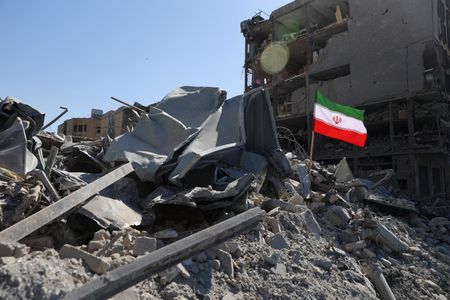
    Qantas Airways has no economy-class availability on Sydney-London flights via its standard Perth and Singapore connections until March 17, when tickets cost A$3,129 ($2,220.03) one-way. For immediate travel, the airline offers expensive alternatives with unusual stopovers in cities like Los Angeles and Johannesburg.

    Thailand’s Transport Minister Phiphat Ratchakitprakarn noted that Thai Airways is seeing completely booked Europe-bound flights as European vacationers choose direct routing instead of Middle Eastern connections. Bangkok-London searches showed sold-out conditions through late next week, with economy tickets priced at 71,190 baht ($2,265) on March 15, dropping to 27,045 baht by March 18.

    Taiwan’s EVA Airways reported booking surges for European destinations as both Asian and European travelers hunt for alternative routing solutions. Chinese airline websites displayed dramatically elevated fares on China-UK routes, with economy seats virtually unavailable for immediate departure.

    Typically, round-trip economy tickets from Beijing to London cost less than 10,000 yuan ($1,452.71), but Air China’s only Wednesday option is business class at 50,490 yuan one-way.

  • Iranian Drone Attack Targets US Embassy in Saudi Arabia Amid Regional Escalation

    Iranian Drone Attack Targets US Embassy in Saudi Arabia Amid Regional Escalation

    DUBAI, United Arab Emirates (AP) — Iranian forces launched a drone assault on the American Embassy in Saudi Arabia’s capital early Tuesday morning, continuing a pattern of regional strikes while the United States and Israel intensified their bombing campaign against Iran in what President Donald Trump described as the beginning of an extended military operation potentially lasting over a month.

    Two Iranian drones targeted the U.S. Embassy in Riyadh, resulting in a “limited fire” and minimal structural damage, Saudi Arabia’s Defense Ministry reported, though officials declined to provide additional specifics. This incident occurred one day after Iranian forces struck the American Embassy in Kuwait.

    The broadening scope of Iran’s retaliatory strikes throughout the Gulf region, combined with the intensity of American and Israeli bombardments, the death of Iranian Supreme Leader Ayatollah Ali Khamenei, and the absence of any clear withdrawal strategy suggest a potentially extended conflict with widespread implications.

    Iranian retaliation has reached numerous Middle Eastern nations previously considered secure, with recent strikes targeting two Amazon data centers in the United Arab Emirates and causing damage near another facility in Bahrain, the company confirmed Tuesday. Tehran’s forces have also attacked energy infrastructure in Qatar and Saudi Arabia, while targeting multiple vessels in the Strait of Hormuz, the critical waterway handling one-fifth of global oil trade, causing petroleum and natural gas prices to spike worldwide.

    The State Department has advised American citizens to evacuate more than a dozen Middle Eastern nations due to security concerns, with many other countries issuing similar warnings, though widespread airspace closures have left numerous travelers unable to depart.

    Trump indicated that military operations will likely continue for four to five weeks, though he expressed readiness “to go far longer than that.”

    “The hardest hits are yet to come from the U.S. military,” Secretary of State Marco Rubio declared to reporters prior to briefing Congress members on the Iranian operation.

    According to the Iranian Red Crescent Society, the American-Israeli campaign has resulted in at least 555 fatalities. Israeli casualties include 11 deaths from Iranian missile strikes on multiple locations within the country. Israel’s counter-strikes against Hezbollah have killed dozens in Lebanon.

    “Military escalation would force more families from their homes and hit civilians hard,” warned Amy Pope, director general of the International Organization on Migration, as she urged the global community Tuesday to push for de-escalation.

    “Millions are already displaced in the region,” she added.

    The American military has acknowledged six service member deaths. All casualties were Army personnel from a single logistics unit stationed in Kuwait, according to a U.S. official speaking anonymously due to lack of authorization for public comment.

    Casualty reports include three deaths in the United Arab Emirates, with one fatality each in Kuwait and Bahrain.

    Iran’s foreign minister shared imagery Monday depicting graves he claimed belonged to over 160 girls killed in a U.S.-Israeli attack on a Minab school. “Their bodies were torn to shreds,” Foreign Minister Abbas Araghchi posted on X.

    In Israel, funeral services were held Monday evening at Jerusalem’s Mount of Olives for three young siblings killed in an Iranian strike.

    The conflict’s confusion became evident when American forces reported that Kuwait had “mistakenly shot down” three U.S. fighter aircraft during Iran’s multi-pronged assault using planes, ballistic missiles and drones. U.S. Central Command confirmed all six pilots safely ejected.

    Iranian state television reported that strikes caused two explosions at a Tehran broadcasting facility early Tuesday, though no injuries were reported.

    Iran’s International Atomic Energy Agency ambassador Reza Najafi informed reporters that Sunday airstrikes hit the Natanz nuclear enrichment facility.

    “Their justification that Iran wants to develop nuclear weapons is simply a big lie,” he stated.

    Neither Israel nor the United States have confirmed targeting the facility, which American forces bombed during the 12-day Iran-Israel conflict in June. Israeli officials have stated their focus on “leadership and nuclear infrastructure.”

    Trump outlined the military campaign’s goals as destroying Iran’s missile capabilities, eliminating its naval forces, preventing nuclear weapon acquisition, and stopping support for allied groups like Lebanon’s Hezbollah, which launched missiles at Israel Monday.

    Iran maintains it has not enriched uranium since June, while asserting its right to do so and characterizing its nuclear program as peaceful.

    However, Israeli Prime Minister Benjamin Netanyahu claimed in a Monday evening Fox News Channel Hannity interview that Iran was constructing “new sites, new places” underground for atomic bomb production.

    “We had to take the action now and we did,” Netanyahu said, providing no supporting evidence for his assertion.

    Associated Press analysis of satellite imagery revealed minimal activity at two Iranian nuclear facilities before the conflict began. Experts suggested Tehran was likely evaluating damage from 2025 U.S. strikes and potentially salvaging remaining materials.

    The conflict has extended into Lebanon, where Iranian-backed Hezbollah militants fired missiles at Israel Monday, though no injuries or damage were reported.

    Israeli retaliation included strikes on Lebanon. The nation’s Health Ministry documented at least 52 deaths and 154 injuries from overnight attacks in Beirut suburbs and southern Lebanon.

    Israeli military spokesperson Brig. Gen. Effie Defrin stated that Israel maintains “all options on the table,” including a possible ground invasion of Lebanon.

    Early Tuesday morning brought additional Israeli airstrikes on Beirut, with officials claiming they targeted “Hezbollah command centers and weapons storage facilities.”

    Hezbollah reported launching drones against an Israeli air base. Israeli military forces confirmed downing two drones.

    An Iranian-affiliated militant group in Iraq has also claimed responsibility for strikes on American military installations.

  • Middle East Conflict Escalates as Trump Projects Weeks-Long War with Iran

    Middle East Conflict Escalates as Trump Projects Weeks-Long War with Iran

    Middle Eastern warfare has reached a critical juncture, with President Donald Trump indicating American forces possess “the capability to go far longer” than the originally estimated four-to-five week duration for military action against Iran.

    Throughout Tehran, explosive sounds echoed across the city during overnight hours and into Tuesday morning, as American and Israeli forces have maintained their assault on Iran following the death of Supreme Leader Ayatollah Ali Khamenei this past Saturday.

    Iranian forces and their regional partners have retaliated with strikes against Israeli territory, Gulf nations in the vicinity, and infrastructure vital to global oil and gas supplies.

    The ferocity of the combat and absence of a clear withdrawal strategy have created conditions for an extended confrontation with widespread ramifications. American and Israeli officials have offered inconsistent explanations regarding the conflict’s goals and potential resolution.

    During a Monday evening appearance on Fox News Channel’s “Hannity” program, Israeli Prime Minister Benjamin Netanyahu justified the military action, claiming Iran was constructing “new sites, new places” that would render “their ballistic missile program and their atomic bomb program immune within months,” though he offered no supporting evidence.

    Associated Press examination of satellite imagery revealed minimal operations at two Iranian nuclear facilities prior to hostilities, with experts suggesting Tehran was likely evaluating damage from American June strikes and attempting to recover remaining materials.

    Recent developments include:

    Iran’s capital experienced continuous explosive sounds throughout nighttime hours extending into early Tuesday morning.

    Local residents reported observing aircraft flying overhead during the attacks.

    The specific targets of these strikes remained unclear in immediate reports.

    Iranian state broadcasting aired a Revolutionary Guard statement early Tuesday, announcing missile and drone strikes against a Bahraini air installation.

    Israeli military operations struck Lebanon’s capital city Tuesday morning.

    Israeli defense forces stated they were attacking “Hezbollah command centers and weapons storage facilities in Beirut.”

    Hezbollah responded by launching drone attacks against an Israeli airfield.

    Israeli military officials reported successfully intercepting two incoming drones.

    Japan has instructed its shipping companies to keep vessels away from Persian Gulf waters to protect crew safety.

    Chief Cabinet Secretary Minoru Kihara announced Tuesday that the Transport Ministry had contacted the Japanese Shipowners’ Association, urging maximum protection for personnel in the region.

    Kihara stated that ships currently in Gulf waters should anchor in secure locations.

    Monday saw Japanese Foreign Minister Toshimitsu Motegi meeting with Iranian ambassador Peiman Seadat, reiterating Japan’s position that Iran must cease attacks on neighboring nations and other destabilizing activities.

    Motegi emphasized the critical importance of maintaining security in the Strait of Hormuz for Japan’s energy needs.

    Iran’s Foreign Minister Abbas Araghchi attempted to shift blame to the United States early Tuesday, characterizing American involvement as entering “a war of choice on behalf of Israel.”

    Following Trump’s call for Iranians to overthrow their government, Araghchi made a similar appeal to American citizens.

    “Shedding of both American and Iranian blood is thus on Israel Firsters,” Araghchi posted on X. “American people deserve better and should take back their country.”

  • Iran Military Operations Give Trump Upper Hand Before China Summit

    Iran Military Operations Give Trump Upper Hand Before China Summit

    WASHINGTON/BEIJING – Recent American military operations targeting Iran have placed Chinese President Xi Jinping in a difficult position as he prepares for a scheduled summit with President Donald Trump, marking the second time in two months that Washington has taken military action against one of China’s key allies.

    Trump plans to travel to Beijing by the end of March, following the January capture of Venezuelan leader Nicolas Maduro during a dangerous operation in Caracas and the ongoing U.S.-Israeli air campaign that resulted in the death of Iran’s Supreme Leader Ayatollah Ali Khamenei on Saturday. Both nations have served as significant oil providers for China.

    The upcoming meeting, which Trump’s administration says will center on trade discussions, remains uncertain in both its outcome and whether it will proceed as planned.

    A week ago, Trump appeared to be heading into the Beijing talks from a position of weakness after the Supreme Court struck down several of his tariff policies. However, the tables have turned, with Xi now appearing unsteady and struggling to formulate a strong response to America’s largest military engagement since the Iraq conflict.

    Although Beijing has denounced the U.S.-led operations as “unacceptable” and urged restraint, analysts note that China’s cautious reaction demonstrates both its limited capacity to affect American military decisions and the transactional character of its diplomatic relationships.

    Former U.S. ambassador to Beijing Nicholas Burns, who served under President Joe Biden, wrote on X that China is “proving to be a feckless friend for its authoritarian allies.”

    Xi must now navigate the uncomfortable choice between welcoming Trump on the international stage or withdrawing from the proposed March 31 to April 2 summit. Chinese officials have not yet confirmed these meeting dates.

    If Xi chooses to move forward, he may be calculating that Washington will ultimately suffer if it becomes mired in a prolonged Middle Eastern conflict.

    Trump has indicated the Iranian operation could continue for approximately four weeks, potentially extending nearly to his China visit.

    China’s Washington embassy did not respond to inquiries about whether the Iranian situation has affected plans to receive Trump. When asked about how the Iran strikes might influence discussions with Xi, a White House representative said Trump was “taking decisive action to eliminate major national security threats,” without referencing China specifically.

    CHINA FACES UNIQUE VULNERABILITIES

    The U.S. military campaign presents both immediate and symbolic risks for China.

    As the globe’s top purchaser of Iranian petroleum, China imported 13.4% of its total seaborne oil from Iran last year. This creates exceptional vulnerability to supply interruptions as the conflict develops, especially if the Strait of Hormuz – the planet’s most critical oil shipping lane – becomes blocked.

    Although China has options to diversify its oil sources, analysts explain that losing Iranian supplies in the near term would create substantial price pressures, squeezing profit margins for the manufacturing sector that forms the backbone of China’s economy.

    The American assault on Iran also demonstrates to Beijing and its partners that U.S. military forces can operate effectively not just in their immediate region, but globally.

    “The strikes on Iran and the potential regime change will severely impact China’s interests,” stated Zhao Minghao, an international relations specialist at Shanghai’s Fudan University.

    Zhao added: “China is assessing the deeper intentions behind U.S. actions in Venezuela and Iran, as the U.S. may increase pressure on China by controlling the international energy market.”

    The White House was certainly aware of these implications when it announced Trump’s China trip dates while preparing for the Iranian attack. A source with knowledge of U.S.-China communications told Reuters that the White House continues to wait for an official invitation from Chinese leadership.

    BANKING ON RESTRAINED CHINESE REACTION

    Currently, the United States is wagering that its Iranian operations will not provoke any Chinese military intervention.

    A U.S. official informed Reuters that there is no expectation of China providing material assistance to Iran during American operations, nor that continued U.S. Middle East involvement would encourage Beijing to act more aggressively in the short term in the Indo-Pacific region, where China has undertaken an unprecedented military expansion.

    The primary American worry is that challenges in quickly restocking ammunition supplies could diminish “medium-term deterrence” against potential Chinese military moves toward Taiwan, the official explained.

    Limited in its capacity to challenge America’s global military presence, China will likely step back and allow the United States to bear responsibility for any resulting Middle Eastern instability, reinforcing Beijing’s message that Washington acts recklessly and creates instability, according to analysts.

    Zha Daojiong, an energy security expert at China’s Peking University, told Reuters that Chinese leadership would not feel obligated to assist Iran in the conflict and would reject the “purely rhetorical construction” in Western discourse suggesting an alliance with Iran.

    “The direct parties to the conflict make their own bed and get to sleep in it,” Zha stated.

  • Taiwan Backs U.S., Israel While Calling for Iranian Freedom

    Taiwan Backs U.S., Israel While Calling for Iranian Freedom

    Taiwan’s government declared its backing for global initiatives aimed at bringing democratic freedoms to the Iranian people, while also expressing solidarity with the United States and Israel in their recent military actions.

    The announcement came Tuesday from Taiwan’s foreign ministry, as the island nation continues to strengthen ties with democratic partners amid increasing military threats from China, which claims sovereignty over Taiwan.

    Taiwan’s leadership, led by President Lai Ching-te, has frequently compared their nation’s security challenges to those facing Israel, particularly as Beijing has intensified military pressure on the island in recent years.

    The relationship between Taiwan and Israel has deepened significantly since Hamas launched its attack on southern Israel in October 2023, sparking the ongoing conflict in Gaza. Taiwan has provided unwavering support to Israel throughout this period.

    When questioned about Taiwan’s position on recent U.S. and Israeli military operations against Iran, Foreign Ministry spokesperson Hsiao Kuang-wei emphasized Taiwan’s commitment to democratic values.

    “We support the international community’s efforts to help the Iranian people pursue freedom and democracy and we hope the Iranian people can soon enjoy freedom, democracy and human rights,” Hsiao stated.

    The spokesperson also criticized Iran’s recent “indiscriminate military attacks,” specifically mentioning the missile and drone strikes targeting Qatar, the United Arab Emirates, and other nations in the Gulf region.

    During parliamentary proceedings earlier Tuesday, Deputy Foreign Minister Francois Wu, who conducted a confidential visit to Israel in late 2023, characterized U.S. and Israeli objectives as efforts to “eliminate terrorism.”

    “Of course, the U.S. and Israel are both allies of Taiwan’s,” Wu noted.

    While Taiwan maintains unofficial relationships with both Israel and the United States, it lacks formal diplomatic recognition from either nation. However, Washington remains Taiwan’s primary international supporter and weapons provider.

    Taiwan severed diplomatic connections with Iran in 1971 when Tehran officially recognized the People’s Republic of China.

  • Israel Launches Fresh Military Strikes Against Iran’s Capital

    Israel Launches Fresh Military Strikes Against Iran’s Capital

    The Israeli Defense Forces announced Monday night that they have launched another series of military attacks targeting Iran’s capital city of Tehran.

    Before conducting the operations, Israeli military officials had warned Tehran civilians to evacuate certain areas of the city, with particular emphasis on neighborhoods surrounding the headquarters of IRIB, Iran’s state-run television and radio network.

    The announcement marks the latest escalation in ongoing tensions between the two Middle Eastern nations.

  • Detained Americans in Iran Face Growing Danger Amid Military Strikes

    Detained Americans in Iran Face Growing Danger Amid Military Strikes

    WASHINGTON – Detainee advocates are sounding the alarm about the safety of Americans currently held or trapped in Iran as military strikes between the U.S., Israel, and Iran continue to intensify.

    According to advocacy groups, Iran is currently holding at least six U.S. citizens or permanent residents in custody. These individuals are part of what experts believe could be thousands of dual U.S.-Iranian citizens and green card holders who have remained in the country despite ongoing State Department advisories against traveling there due to arrest risks.

    “The regime’s history of seeking to leverage Americans for political aims is long established,” explained Ryan Fayhee, who serves on the board of the Foley Foundation advocacy organization. “I would have to imagine that any American is potentially at risk.”

    The concerns have intensified following Saturday’s coordinated U.S.-Israeli military operations against Iran, which resulted in the death of Supreme Leader Ali Khamenei and other high-ranking officials. Iran has responded with retaliatory strikes throughout the region, raising fears that Tehran may seek additional ways to strike back against America.

    Kieran Ramsey, formerly an FBI assistant director who once led the U.S. hostage recovery unit and now works with Global Reach advocacy group, highlighted the scope of the problem. “There are hundreds, if not thousands, if not more, of dual nationals that are back there that still have familial ties despite the risks,” Ramsey stated.

    The situation is complicated by Iran’s refusal to acknowledge dual citizenship, which prevents other nations from offering diplomatic protection or consular assistance to their citizens who also hold Iranian nationality.

    A knowledgeable source revealed that the State Department lacks precise information about how many Americans are currently in Iran. Neither the office of the U.S. Special Presidential Envoy for Hostage Affairs, the White House, the State Department, nor Iran’s U.N. mission provided immediate responses to requests for comment.

    President Donald Trump has prioritized the release of Americans who are wrongfully detained or held hostage internationally. According to White House figures, more than 70 Americans have been freed since his second term began in January 2025. However, Trump has not outlined specific protection measures for those detained since Saturday’s military strikes commenced.

    Just hours before the U.S.-Israeli attacks began, Secretary of State Marco Rubio made a significant announcement on Friday, designating Iran as the first state sponsor of wrongful detention under a Trump executive order from September 5.

    Rubio indicated this designation could lead to restrictions on using U.S. passports for travel to and from Iran, along with other unspecified actions, unless Tehran stops taking “hostages” and frees all Americans. He did not specify the total number of detained Americans.

    While detainee advocates viewed Rubio’s announcement as a warning to Iran against harming American prisoners or other U.S. citizens, they worry the message might be ignored given the disruption to Iran’s leadership structure from the strikes.

    “When you have kinetic action and military strikes like this, it just ups the risk factor for these folks exponentially,” Ramsey warned.

    Elizabeth Richards, research director at the Foley Foundation, confirmed that at least six dual U.S.-Iranian citizens or legal permanent residents are known to be detained in Tehran’s Evin Prison – a facility notorious for housing political prisoners and foreign nationals – or are prevented from leaving Iran. Three of these individuals have not been publicly identified.

    Israeli forces bombed Evin Prison during a 12-day aerial campaign against Iran last June, resulting in at least 71 deaths according to Iranian officials.

    Among those currently held at Evin is Shahab Dalili, a green card holder who was arrested in 2016 while heading to the airport after his father’s funeral. He received a 10-year sentence for allegedly collaborating with a foreign government, the Foley Foundation reports.

    Fayhee represents Reza Valizadeh, a dual U.S.-Iranian citizen and journalist who was arrested in 2024 after returning to Iran to see his aging parents. He also received 10 years for “collaboration with a hostile government,” according to the Foley Foundation.

    Also imprisoned at Evin is Kamran Hekmati, a 70-year-old Jewish Iranian-American who owns a jewelry business and was arrested last year, according to Ramsey, who represents Hekmati’s family.

    Hekmati was found guilty of traveling to Israel under a law prohibiting such visits within the past decade, despite providing evidence that his last visit occurred 13 years before his arrest, Ramsey explained.

    The elderly man, who is battling bladder cancer, also faces espionage charges for which he has not been convicted. His attorney was informed these charges stem from alleged meetings with Israeli intelligence operatives.

    According to Ramsey, Iran frequently adds espionage charges as a way to signal that a detainee will only be released through a prisoner exchange with Washington.

  • 12-Year-Old Discovers Crocodile Swimming 1,200 Miles from Home in Australia

    12-Year-Old Discovers Crocodile Swimming 1,200 Miles from Home in Australia

    MELBOURNE, Australia (AP) — When 12-year-old Lionel Saunders called his mother to report seeing a crocodile in their neighborhood creek, Stephanie Kirsop thought he was pulling her leg.

    The Newcastle family lives in a temperate coastal region located 2,000 kilometers (1,200 miles) away from where crocodiles naturally inhabit Australia’s tropical northern areas.

    Young Lionel and his companions discovered the 39-inch juvenile reptile on Saturday afternoon in the local waterway. While officials were initially doubtful about the sighting, they managed to capture the wandering crocodile by Sunday evening.

    “My son took videos because he was trying to convince me it was real and I didn’t believe him. It did look like a crocodile but I was like, no it’s a log,” Kirsop explained on Tuesday.

    “He rang me back a little bit later and he’s like: ‘I’m so serious mom. You have to come down here and have a look,’” she recalled. “The whole drive down there I’m thinking this is going to be a trick. They’re going to laugh at me.”

    When Kirsop arrived at the scene, there was no mistaking what she saw.

    “There is a little crocodile just swimming around in the creek where local kids go to fish and sometimes kids swim in there. Wow,” she said.

    After contacting a wildlife rescue organization, Kirsop was told crocodiles weren’t found in their region. She provided photographic and video evidence to prove otherwise.

    The case was then forwarded to the Australian Reptile Park, a facility that houses crocodiles in climate-controlled conditions.

    Billy Collett, the park’s manager, initially wondered if the images might be digitally created fakes. However, police verification confirmed a genuine crocodile was indeed present in Ironbark Creek.

    “I was a bit suspicious because we get a lot of phone calls. These days with AI, it’s just so crazy,” Collett explained.

    Upon examination, Collett identified the animal as an Australian freshwater crocodile, scientifically known as crocodylus johnstoni. This species is smaller and poses less threat than saltwater crocodiles.

    “They’re capable of inflicting a serious injury,” Collett noted regarding the smaller variety.

    Collett’s rescue team successfully captured the reptile on Sunday evening, approximately 3 kilometers (2 miles) from its original location.

    “I just wanted to get him out of there because he would’ve perished in winter,” Collett stated. The Southern Hemisphere is currently experiencing autumn weather.

    The healthy crocodile will remain at the reptile park while officials determine its permanent placement, as crocodiles receive protection under Australian wildlife laws.

    Collett believes the animal was likely an escaped or abandoned pet that had outgrown its aquarium home or become too hazardous for private ownership.

  • Israeli PM: Military Action Against Iran Won’t Drag On for Years

    Israeli PM: Military Action Against Iran Won’t Drag On for Years

    Israeli Prime Minister Benjamin Netanyahu provided reassurance Monday that current military operations against Iran will not become a drawn-out conflict spanning multiple years.

    Speaking during an appearance on Fox News’ “Hannity” show, Netanyahu addressed concerns about the duration of the military campaign that commenced over the weekend with coordinated U.S.-Israeli strikes on Tehran.

    “I said it could be quick and decisive. It may take some time, but it’s not going to take years. It’s not an endless war,” Netanyahu stated during the television interview.

    The military action began Saturday with airstrikes targeting Iranian positions, resulting in the death of Iranian Supreme Leader Ali Khamenei. Iran has responded with retaliatory strikes against Israeli targets and launched missiles at Arab nations hosting American military installations throughout the Middle East.

    President Donald Trump had initially estimated the conflict would last approximately four to five weeks, though he later suggested it might extend beyond that timeframe while defending the decision to engage in comprehensive military action against Iran.

    Netanyahu dismissed comparisons to other regional conflicts that have stretched on for years, emphasizing this operation would have a more defined endpoint.

    The Israeli leader expressed optimism that the military campaign could create opportunities for sustainable peace across the Middle East, potentially including normalization between Israel and Saudi Arabia.

    When questioned about prospects for lasting regional stability, Netanyahu responded affirmatively: “Yes I do.”

    Recent polling data from Reuters/Ipsos indicates limited American support for the military intervention, with only one-quarter of respondents backing the strikes on Iran that have intensified Middle Eastern tensions.

    The lengthy conflicts in Iraq and Afghanistan have left many Americans wary of extensive military commitments overseas, contributing to skepticism about the current operation.

    Netanyahu suggested the joint U.S.-Israeli military pressure could encourage Iranian citizens to challenge their government’s authority.

    “Now, of course, it’s up to the people of Iran in the final count to change the government, but we are creating – America and Israel together are creating – the conditions for them to do so,” he explained.

    Trump’s stated objectives for the military campaign have evolved since operations began. Initially, he called on Iranians to “take back your country” and suggested regime change as a goal.

    However, in more recent statements Monday, Trump focused on preventing Iran’s nuclear weapons development – which Tehran denies pursuing – and dismantling its long-range missile capabilities, without mentioning government overthrow.

    Israel is widely regarded as the sole nuclear-armed nation in the Middle East, while the United States also maintains nuclear weapons capabilities.

  • Notorious Mexican Drug Lord ‘El Mencho’ Laid to Rest in Lavish Golden Coffin

    Notorious Mexican Drug Lord ‘El Mencho’ Laid to Rest in Lavish Golden Coffin

    GUADALAJARA, Mexico — Mexican authorities conducted the burial of one of the country’s most notorious drug kingpins Monday, as Nemesio Oseguera Cervantes, better known as ‘El Mencho,’ was laid to rest in an elaborate gleaming gold coffin surrounded by massive floral arrangements and heavy military security.

    A federal source verified that the head of the Jalisco New Generation Cartel was interred at a burial ground in Zapopan, located on the outskirts of Guadalajara, Mexico’s second most populous city. The funeral procession drew dozens of attendees, with many holding black umbrellas despite clear skies while a traditional banda ensemble performed regional Mexican music.

    The source speaking about the burial site asked to remain unnamed as they lacked permission to discuss the matter publicly. Mexico’s Attorney General’s Office refused to verify where El Mencho was buried, citing safety concerns.

    Enhanced security measures had been in place since Sunday at a mortuary where massive floral displays began arriving without identification. Several arrangements featured rooster imagery made from flowers, referencing Oseguera Cervantes’ nickname as the ‘Lord of the Roosters.’

    Mexican military forces fatally shot Oseguera Cervantes just over a week ago during an operation to apprehend him. According to his death certificate reviewed by The Associated Press, he succumbed to numerous gunshot injuries.

    His death triggered widespread violence spanning approximately 20 states. The death certificate aligns with Defense Secretary Ricardo Trevilla’s account of the capture mission, in which he stated that the cartel boss and two security personnel sustained severe injuries during a firefight with troops near a residence in Tapalpa, Jalisco. All three perished while being transported to medical facilities.

    The official document detailed that Oseguera Cervantes sustained gunshot trauma to his torso, stomach, and lower extremities.

    Following his death, his remains were transported to Mexico City for forensic examination before being released to relatives on Saturday, according to a brief Attorney General’s Office announcement.

    The death certificate also indicates that Oseguera Cervantes was designated for burial, which is typical protocol in violent death cases to preserve potential forensic evidence for future investigations. The paperwork did not specify the intended burial site.

    Law enforcement’s security worries about the burial location are justified. The cartel leader’s death prompted revenge attacks by the organization across multiple states. Over 70 individuals lost their lives between the initial military action and subsequent violence. Officials report that enforcement operations targeting other senior cartel members remain ongoing.

    Mexican drug lord burials are traditionally shrouded in secrecy, which their followers exploit to build legendary status around these figures. Within hours of El Mencho’s death, songwriters had already composed ballads called narcocorridos commemorating his demise.

    In Culiacan, located in adjacent Sinaloa state and headquarters of the similarly named cartel, a graveyard is famous for its opulent tombs and monuments housing former drug bosses including Ignacio Coronel — a former El Mencho partner — and Arturo Beltrán Leyva.

    One drug leader, Nazario Moreno of the violent, religiously-themed Knights Templar cartel, gained notoriety for being reportedly killed twice — first in 2010, then actually eliminated in 2014.

    Some remains vanish entirely, such as Heriberto Lazcano, the notorious Zetas leader whose corpse was taken in 2012. Others meet unusual ends, like Amado Carrillo Fuentes, the ‘Lord of the Skies,’ who perished during failed cosmetic surgery.

  • China’s Tech Dreams Face Reality Check as Economic Struggles Mount

    China’s Tech Dreams Face Reality Check as Economic Struggles Mount

    BEIJING — While China showcases impressive technological achievements including martial arts-performing robots and vehicles that park themselves, the nation’s economic modernization efforts are encountering significant obstacles as the property sector remains in decline, small enterprises face hardships, and young adults find employment increasingly scarce.

    The contrast between President Xi Jinping’s vision of a high-technology, AI-powered future and the stark reality of decelerating economic expansion forms the setting for this week’s National People’s Congress gathering, China’s primarily ceremonial legislative body that convenes Thursday.

    Approximately 3,000 representatives will travel to Beijing for the sessions, where senior officials will reveal China’s yearly economic growth objectives and legislators will approve a five-year policy roadmap extending through 2030.

    “What we’ll see is the trade-off between whether it’s going to be industry and tech, or looking after domestic demand,” said Alexander Davey, an analyst at the Mercator Institute for China Studies. “These are the two priorities that are juggling for Xi Jinping right now.”

    In Guangdong province’s southern region, households reduced major expenditures during February’s Lunar New Year celebration. Even traditional good-luck plants such as orchids, typically purchased as symbols of wealth and fortune, saw price reductions of up to 40% compared to the previous year.

    This budget-conscious behavior has prompted small business operators to voice concerns about difficult economic conditions.

    Chinese officials announced the country achieved “around 5%” economic expansion in 2025, though economists express skepticism regarding certain government statistics.

    The moderately strong growth rate received support from robust industrial output as overseas sales increased, withstanding tariff increases imposed by U.S. President Donald Trump and additional trade disruptions.

    “Hitting the 2025 growth target is hardly reassuring as the Chinese economy is losing growth momentum, with rising imbalances and enormous structural problems being papered over by a surge in export-driven growth,” Eswar Prasad, a professor of economics and trade policy at Cornell University, told The Associated Press in emailed comments.

    China’s real estate sector downturn started multiple years ago, with fragmented recovery attempts showing only sporadic improvement. Numerous property companies failed to meet debt obligations as government officials restricted excessive lending practices. With home values declining 20% or more since 2021, market recovery remains distant.

    The collapse of this major industry eliminated hundreds of thousands of positions, and with 12.7 million university graduates entering employment markets this year, over 16% of young Chinese remain jobless. Some are abandoning competitive pursuits entirely, choosing to “lie flat.”

    Households whose primary wealth consists of property ownership have become hesitant about spending, undermining consumer demand and complicating long-term plans to transition the economy toward greater domestic consumption.

    The congressional session may introduce new initiatives to strengthen social services and additional support measures, which economists describe as overdue and essential for sustained, stable growth.
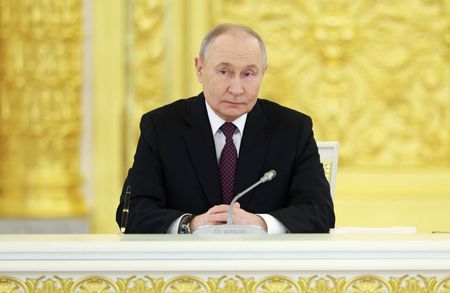
    Export dependency currently helps maintain China’s economic activity. The country generated a $1.2 trillion trade surplus in 2025, with overseas sales keeping manufacturing facilities operational. Despite ongoing U.S.-China trade tensions, shipments have increased to markets including Europe and Latin America, though trading partners are expressing resistance.

    Under Xi’s leadership, China has emphasized developing cutting-edge technologies including artificial intelligence, robotics, semiconductors, electric vehicles, and clean energy. Extensive government backing has enabled companies to produce more EVs, televisions, solar panels, and other goods than China and its partners require.

    “To achieve those goals, the government is going to have to continue to provide subsidies and preferential support for high-tech and strategic industries,” said Leah Fahy, a China economist at Capital Economics. “(That) will, in turn, continue to fuel overcapacity.”

    The International Monetary Fund recently recommended China reduce extensive state subsidies and support for industries that numerous Western nations claim provide unfair competitive advantages over international competitors. Meanwhile, social welfare and other economic sectors remain underdeveloped.

    The emphasis on what the governing Communist Party calls “high quality development” will likely persist under the 2026-2030 five-year plan that lawmakers are expected to approve during the congress.

    Throughout recent decades, China’s evolution into a manufacturing powerhouse was supported by explosive construction of residential buildings, commercial structures, transportation networks, harbors, and rail systems. However, technology supply chains are more limited, generating fewer employment opportunities. The economic spillover effect is considerably weaker, according to Lynn Song, chief economist for Greater China at ING Bank.

    “If anything, the more successful the so-called future industries become, the more they will draw resources away from the traditional sectors that still provide the bulk of employment and livelihoods for most people,” said Henry Gao, a professor of law at Singapore Management University.

    The yearly congressional gathering presents an elaborate spectacle. Thousands of representatives occupy Beijing’s Great Hall of the People. Military musicians perform while delegates representing various ethnic communities attend wearing traditional attire.

    Despite the ceremony, the meeting functions largely as political theater. The congress spans just one week, with nearly unanimous final-day voting that formalizes decisions previously made by party leadership. The event demonstrates unity while confirming established policies and direction.

    This leadership has increasingly focused on Xi, who has concentrated authority since assuming control in 2012. Now 72, he ranks among modern China’s most influential leaders. Some observers believe Xi may follow Mao Zedong’s example, the revolutionary founder of communist China, and govern indefinitely.

    Congressional reports contain numerous references to the party’s essential function, “with Comrade Xi Jinping at its core.”

    Following his rise to power, Xi intensified existing anti-corruption efforts, compelling many officials to resign for investigation and prosecution, including senior military leadership.

    Prior to the congress opening, the national legislature expelled nine military officers from membership, expanding a multi-year military cleanup. Last month, Gen. Zhang Youxia, the highest-ranking military official below Xi, was removed due to suspected disciplinary infractions.

    Xi’s measures may diminish China’s military preparedness in the near term, but he is also ensuring the armed forces will demonstrate greater political loyalty over time, according to a Center for Strategic and International Studies analysis.

    The anti-corruption campaigns have eliminated potential political opponents, and his firm control over power significantly reduces the likelihood that other officials will contest his vision of transforming China into a technologically self-reliant leader and 21st-century global superpower.

  • Canadian PM Visits Australia to Strengthen ‘Middle Power’ Alliance

    Canadian PM Visits Australia to Strengthen ‘Middle Power’ Alliance

    Canadian Prime Minister Mark Carney landed in Australia Tuesday for diplomatic talks focused on strengthening the partnership between two nations he describes as “middle powers” navigating what he calls a “rupture” in global stability.

    Both countries, which maintain strong alliances with the United States, are conducting these discussions as conflicts intensify in the Middle East. The leaders plan to enhance collaboration, particularly as both nations serve as major suppliers of essential minerals.

    Carney’s current diplomatic tour spans multiple destinations across the Asia-Pacific, including Japan and India, where he has already secured trade agreements and worked to repair relationships with New Delhi following a year of tensions over Sikh separatist issues.

    The relationship between Canada and Australia remains strong, with both governments planning to expand partnership efforts in defense operations, maritime security, essential mineral resources, commerce, and artificial intelligence development, according to statements from Carney’s administration prior to his arrival.

    During his visit, Carney will speak before Australia’s parliament and hold discussions with Prime Minister Anthony Albanese. Last week, Albanese characterized Canada as among Australia’s “closest friends, built on generations of trust” and advocated for stronger connections to advance mutual national objectives.

    Western governments are working to establish their own reserves of critical minerals essential for semiconductor manufacturing and defense equipment production, as China—currently the world’s leading producer—restricts supply chains.

    “There’s a lot Canada and Australia can do together on critical minerals as producer nations,” Australian Resources Minister Madeline King stated Monday when discussing Carney’s diplomatic visit.

    During a prominent address at the World Economic Forum in Davos last month, Carney emphasized the importance of “middle powers” forming closer partnerships.

    “Middle powers must act together because if we’re not at the table, we’re on the menu,” he declared.

    At Wednesday’s scheduled appearance at Sydney’s Lowy Institute think tank, Carney plans to expand on these themes, discussing changes in international dynamics and the potential advantages they present for nations like Canada and Australia.

  • State Department Orders Americans to Leave 15 Middle East Nations Immediately

    State Department Orders Americans to Leave 15 Middle East Nations Immediately

    WASHINGTON – Federal officials issued an urgent evacuation order Monday, directing American citizens to leave 15 Middle Eastern nations immediately following escalating military actions between the United States, Israel, and Iran.

    The State Department’s assistant secretary for consular affairs, Mora Namdar, instructed U.S. nationals to utilize any available commercial flights to exit the region “due to safety risks.”

    The evacuation directive encompasses Bahrain, Egypt, Iran, Iraq, Israel, the West Bank and Gaza, Jordan, Kuwait, Lebanon, Oman, Qatar, Saudi Arabia, Syria, United Arab Emirates and Yemen. This follows the department’s recent updates to regional travel advisories warning Americans against visiting these areas.

    Earlier Monday, the U.S. Embassy in Amman, Jordan, confirmed its staff had evacuated the facility “due to a threat.”

    Federal authorities have established an inter-agency emergency task force to handle the crisis and coordinate America’s response to the expanding conflict, according to a U.S. official.

    The escalation began Saturday when American and Israeli forces launched coordinated attacks on Iranian targets, resulting in the deaths of numerous high-ranking officials, including Supreme Leader Ayatollah Ali Khamenei. Iran retaliated with counter-strikes against U.S. and Israeli positions throughout the region.

    President Donald Trump indicated Monday that military planners initially estimated the conflict would span four to five weeks, though he acknowledged it could extend beyond that timeframe.

    The regional warfare has claimed numerous lives and triggered a surge in energy costs after Iranian leadership threatened to target vessels attempting passage through the Strait of Hormuz, a critical waterway for global oil shipments.

    Treasury Secretary Scott Bessent and Energy Secretary Chris Wright plan to unveil measures Tuesday aimed at addressing rising energy prices, according to the nation’s top diplomat, Marco Rubio.

    “We anticipated this could be an issue, and Secretary Wright and Bessent will begin to roll out those steps, starting tomorrow, to mitigate, to mitigate against the impact that could have,” Rubio stated before briefing congressional leadership about the strikes.

  • Rubio Denies US Would Target Schools After Iran Reports 160+ Deaths

    Rubio Denies US Would Target Schools After Iran Reports 160+ Deaths

    Secretary of State Marco Rubio has responded to Iranian allegations that more than 160 people were killed when a girls’ elementary school was struck during weekend military operations between the United States, Israel, and Iran.

    Iranian state media claimed the deadly incident occurred at a school in Minab, a town in southern Iran, on Saturday during the opening day of coordinated U.S. and Israeli military action against Iran. The reported casualties would make it the most lethal single event in the current conflict.

    When questioned by reporters Monday about the alleged school strike, Rubio emphasized that American military policy prohibits such attacks. “The United States would not deliberately target a school,” Rubio stated, adding that “The Department of War would be investigating that if that was our strike, and I would refer your question to them.”

    Rubio acknowledged the severity of the allegations while noting the lack of confirmed details. “It will be very tragic, but I can’t speak to the details behind it because I just don’t have it. It will be a tragic outcome if it’s happened. I don’t have the details as to what led to it but what is clear is that the United States will not deliberately target a school,” he explained.

    The Pentagon and U.S. Central Command have not provided official statements regarding the specific incident. However, Central Command informed media organizations over the weekend that it was “looking into” reports concerning “civilian harm resulting from ongoing military operations.”

    The alleged attack has drawn sharp criticism from international figures and organizations. Both UNESCO, the United Nations’ cultural and educational agency, and Nobel Peace Prize recipient Malala Yousafzai have denounced the reported strike. Under international humanitarian law, intentional attacks on schools, hospitals, and other civilian infrastructure constitute war crimes.

    U.N. Under-Secretary-General for Peacebuilding Rosemary DiCarlo confirmed Monday that she was aware of the Iranian reports regarding the deaths and noted that American officials have indicated they are examining the claims.

    Israel’s U.N. Ambassador Danny Danon, when asked about the strike that Iranian media attributed to both Israel and the United States, said he had encountered varying accounts of the incident, including reports suggesting Iran’s Islamic Revolutionary Guard Corps was responsible for targeting the school.

    Reuters has been unable to verify the reports independently.

    The current air campaign by U.S. and Israeli forces against Iran commenced Saturday with strikes on Tehran and has expanded as Iran has launched retaliatory attacks.

    Iranian Supreme Leader Ali Khamenei was reportedly killed during the weekend operations. President Donald Trump has indicated the military campaign may continue for several weeks.

  • US Intelligence Warns of Potential Iranian Retaliation After Leader’s Death

    US Intelligence Warns of Potential Iranian Retaliation After Leader’s Death

    WASHINGTON – Federal intelligence officials are warning that the United States could face retaliatory strikes from Iran and its allied groups following the weekend death of Iranian Supreme Leader Ali Khamenei, according to a government assessment obtained by news outlets.

    The Department of Homeland Security’s Office of Intelligence and Analysis issued the threat evaluation on February 28, stating that Iranian forces and proxy organizations “probably” present a risk for targeted strikes within American borders, though officials believe a major physical assault remains improbable.

    Intelligence analysts indicate their primary immediate worry centers on Iran-supported “hacktivists” launching smaller-scale digital warfare against American computer systems, including website vandalism and coordinated service disruption attacks.

    “Although a large-scale physical attack is unlikely, Iran and its proxies probably pose a persistent threat of targeted attacks in the Homeland, and will almost certainly escalate retaliatory actions — or calls to action — if reports of the Ayatollah’s death are confirmed,” the DHS document stated.

    The Department of Homeland Security has not yet provided a response to requests for additional information.

    Iranian officials on Sunday verified reports confirming Khamenei’s death during Saturday’s military operation, which was first disclosed by Israeli forces and President Donald Trump.

    The homeland security evaluation further indicated that Iran would likely maintain its offensive operations against American and coalition forces throughout the Middle East region and would almost certainly hold top U.S. leadership responsible for any domestic unrest triggered by Trump’s statements advocating for governmental overthrow.

    The combined U.S.-Israeli military campaign against Iran that began Saturday expanded Monday as Israeli forces struck Lebanese targets following Hezbollah counterattacks, while Tehran continued launching missiles and unmanned aircraft against Gulf nations housing American military installations.

    Meanwhile, law enforcement officials investigating a deadly shooting at an Austin, Texas establishment Sunday that claimed at least two lives say it remains premature to determine whether the perpetrator acted in response to the Iranian conflict.

    The deceased shooter, who was fatally wounded by responding officers, was photographed wearing clothing displaying the Iranian flag with “IRAN” written in the nation’s colors of green, white and red, along with a sweatshirt bearing the phrase “Property of Allah,” according to a federal law enforcement source.

  • First Lady Makes History Chairing UN Security Council Meeting on Children

    First Lady Makes History Chairing UN Security Council Meeting on Children

    First Lady Melania Trump made history Monday by becoming the first spouse of any world leader to preside over a United Nations Security Council session, leading discussions about protecting children and education during armed conflicts.

    The groundbreaking meeting, titled “Children, Technology, and Education in Conflict,” took place just two days following U.S. and Israeli military operations against Iran that have raised UN concerns about child welfare in the region.

    The session occurred as the United States assumed the Security Council’s monthly rotating leadership role, representing another example of how President Trump has integrated family members into significant foreign policy matters.

    According to her office, the First Lady’s goal was to highlight education as a pathway to promoting tolerance and global peace. During her address to the council, she stated: “The U.S. stands with all of the children throughout the world. I hope soon peace will be yours.”

    The timing proved controversial following Iran’s accusations against Israel and the U.S. regarding a Saturday attack on a girls’ elementary school in Minab, a southern Iranian community. Iran’s UN representative Amir Saeid Iravani reported that 165 female students were killed in the strike, though Reuters has been unable to verify these claims independently.

    Iravani criticized what he called the “deeply shameful and hypocritical” nature of the U.S. hosting a meeting about child protection in warfare “while at the same time launching missile strikes against Iranian cities and bombing schools and killing children.”

    Following the Iranian allegations, UNICEF released a statement Saturday acknowledging the reports and warning that the Middle East military escalation “marks a dangerous moment for millions of children in the region.” The statement supported UN Secretary-General Antonio Guterres’ appeal for immediate hostilities to end.

    Secretary of State Marco Rubio responded Monday, telling reporters that “the United States will not deliberately target a school.”

    Israel’s UN representative indicated he had received conflicting accounts, including reports that Iran’s Revolutionary Guard Corps was responsible for targeting the school, while expressing regret over any civilian casualties.

    During Monday’s Security Council session, China’s UN ambassador Fu Cong addressed school attacks without directly referencing Iran’s claims, noting that such strikes represent serious violations against children as defined by the United Nations. He emphasized the need for thorough investigations and accountability measures from the international community.

    President Trump has consistently criticized the United Nations throughout his political career, describing the 193-nation organization as inefficient and requiring significant reforms. Under his administration, the United States has accumulated billions in unpaid UN budget contributions, with the debt increasing substantially during Trump’s tenure.

    UN spokesperson Stephane Dujarric commented last week that Melania Trump’s decision to chair the meeting demonstrated “the importance that the United States feels towards the Security Council and the subject at hand.”

    Last month, President Trump adopted a more cooperative approach toward the UN during the inaugural meeting of his Board of Peace, an initiative he claims will address global conflicts, though many international leaders worry it’s intended to supersede the United Nations.

    While the First Lady has maintained a relatively low public profile throughout Trump’s presidencies, she has previously championed children’s issues, including sending a letter to Russian President Vladimir Putin in 2025 requesting the return of Ukrainian children relocated to Russia during the ongoing conflict.

  • Local Residents React to U.S. Military Action Against Iran

    Local Residents React to U.S. Military Action Against Iran

    While military tensions escalate in the Middle East with ongoing missile exchanges, Americans across the region are voicing their opinions about recent U.S. military strikes targeting Iran.

    Citizens in Harrisburg, Pennsylvania shared their perspectives on the unfolding international crisis and what they think about America’s military response to the situation.

    The developing story continues to draw attention as the conflict between the two nations intensifies, prompting discussions among local communities about the implications of the military action.

  • Families of Nepal Protest Victims Pin Hopes on Thursday’s Election

    Families of Nepal Protest Victims Pin Hopes on Thursday’s Election

    KATHMANDU, March 3 – Last September 8th, 23-year-old student Rashik Khatiwada joined hundreds of demonstrators outside Nepal’s parliament, protesting government corruption and joblessness with a sign declaring “FUCK THE SYSTEM!”

    Two hours later, he was fatally shot.

    Khatiwada became one of 77 casualties during two days of deadly demonstrations that ultimately toppled Prime Minister K.P. Sharma Oli’s government and transformed Nepal’s political landscape ahead of Thursday’s national elections.

    The youth-driven protests have intensified calls for political reform throughout Nepal, particularly among families who lost relatives during the violence.

    “What have past leaders done for this country over the last three decades? They accumulated wealth for themselves and placed their own people in positions of power to benefit from it,” Rashik’s mother, Rachana Khatiwada, questioned. “What did they truly do for the nation?”

    This widespread frustration with established politicians has opened doors for newcomers like 35-year-old former rapper Balendra Shah, now a leading candidate for prime minister. Khatiwada has thrown her support behind his campaign.

    The 46-year-old homemaker joined the Rastriya Swatantra Party as a proportional representation candidate after Shah became a member in January, despite having little previous political involvement.

    Khatiwada explained her political engagement stems from wanting justice for her son and other protest victims’ families.

    “We demanded accountability for those responsible for the deaths of so many children, and the interim government failed to deliver,” she stated.

    A government-appointed investigative commission examining the protests, including authorities’ use of live rounds against young protesters, has received three deadline extensions. The commission’s conclusions won’t be published until after the election.

    ARTIST WHO NEVER RETURNED

    On September 8th morning, 34-year-old Binod Maharjan completed his usual routine of feeding pigeons on his family’s rooftop before suddenly departing, abandoning his breakfast of rice and lentils.

    “My son said he would return home and eat the meal he had left behind,” recalled his 75-year-old mother, Lata Maya Maharjan. “He never came back.”

    The family learned of Binod’s protest participation only after his older brother got a call from a childhood friend and rushed to Kathmandu’s Everest Hospital.

    “My mind went completely silent,” Kaji Ratna Maharjan remembered, describing the bullet wound near his brother’s mouth and exit wound behind his head. “I still cannot put into words what I felt when I saw his lifeless body.”

    Though Binod left school early, he devoted himself to artistic pursuits. His painted murals decorate virtually every surface of the family’s three-story brick home.

    His bedroom featured a hand-drawn Nepal map and artwork depicting Shiva, his favored Hindu god, while he slept on yak hide with horns positioned near his pillow.

    In his mother’s bedroom, Binod created a self-portrait showing his characteristic long dreadlocks and cigarette, surrounded by his nieces and nephews.

    “We do not understand politics, but those who do and are actively involved in it must focus on ending corruption and creating jobs in this country,” said Kaji Ratna Maharjan, who plans to vote Thursday alongside his mother. “Only then can we prevent another protest like the September uprising in Nepal.”

    WIDOW CAMPAIGNS FOR CHANGE

    Each day before sunrise, Parbati Subedi begins work as a house cleaner before reporting to her primary job in a major Nepali corporation’s sanitation department.

    Though exhausting, this demanding routine provides the 28-year-old widow with 30,000 Nepalese rupees ($206) monthly to support herself and her daughter following her husband’s death during September’s uprising.

    Security officer Dev Kumar Subedi, 29, suffered a fatal stomach gunshot wound on September 9th while participating in the second day of anti-government demonstrations.

    “I believe this protest happened because people wanted change in Nepal and change in our leaders,” Subedi said. “Those in power forgot about families like ours, for whom putting two meals on the table is a daily struggle.”

    Subedi received 1.5 million rupees compensation from the interim government that replaced Oli’s administration, payment made to families of 42 among the 77 killed who were designated as martyrs.

    However, additional commitments including job opportunities for relatives, ongoing medical assistance, and pension benefits remain unfulfilled, according to multiple families of the deceased, including Subedi.

    Following her late husband’s political preferences, Subedi supports the RSP and Shah based on his mayoral performance in Kathmandu, even creating social media content encouraging voters to back their campaign.

    “I believe they will genuinely work towards improving the country,” she said. “But if it’s any of the other parties, I have little hope that things will change.”

    ($1 = 145.5 Nepalese rupees)

  • Major Argentine Union Challenges President’s Labor Law Changes in Court

    Major Argentine Union Challenges President’s Labor Law Changes in Court

    BUENOS AIRES, Argentina — The largest labor union organization in Argentina took legal action Monday to stop major workplace reforms championed by President Javier Milei that would dramatically reshape employment laws across the South American nation.

    Congress gave final approval to the legislation on Friday, which provides business owners with increased authority over employment decisions, terminations, compensation packages and union negotiations while reducing the traditional influence labor organizations have wielded.

    “This law represents a serious infringement of collective and individual rights that expressly violate constitutional principles,” the General Confederation of Labor, known as CGT, declared in their official statement following the court filing in Buenos Aires.

    The legal challenge questions whether the reforms comply with Argentina’s constitution, claiming they breach the “principle of progressivity” that protects existing worker benefits from being rolled back, as well as the “protective principle” designed to prevent workplace exploitation and maintain fair employer-employee relationships.

    “The damages are not collateral effects of an isolated decision, but are consistent with the national government’s economic and social program,” CGT officials stated, pointing to more than 300,000 job losses that have occurred since Milei assumed the presidency in late 2023 with promises of fiscal discipline and major economic changes.

    Following the legislation’s passage on Friday, Milei described the overhaul as “historic” and declared, “We have a labor modernization.”

    The path to approval was marked by significant conflict between Milei’s administration and opposition lawmakers. Tensions reached a peak last month as the bill moved through the lower chamber, with CGT organizing a day-long national work stoppage while protesters from multiple left-wing organizations fought with law enforcement officers near the congressional building.

    Milei views these modifications to Argentina’s five-decade-old employment laws as essential for attracting international investment, enhancing worker productivity and generating new employment opportunities in a nation where approximately 40 percent of the workforce operates without official documentation.

    Labor representatives contend the legislation will undermine worker safeguards that have been fundamental to Argentina since Peronism, the nation’s influential populist movement, emerged in the 1940s.

    The judicial system will now determine whether to accept or reject the CGT’s legal challenge, a ruling that might lead to a temporary halt of the reforms while judges deliberate on a final decision.

  • Trump Defends Iran War Strategy Amid Growing Criticism from Allies

    Trump Defends Iran War Strategy Amid Growing Criticism from Allies

    WASHINGTON — President Donald Trump defended his military strategy against Iran on Monday as criticism grows over his administration’s handling of the expanding Middle East conflict.

    The backlash isn’t limited to political opponents — some of Trump’s own supporters are questioning the war effort as fighting spreads across the region, energy costs climb, and casualties mount in what officials say could be just the beginning of a prolonged campaign.

    Speaking to the New York Post on Monday, Trump declined to rule out deploying American ground forces to the conflict zone. Defense Secretary Pete Hegseth later told reporters the administration wouldn’t engage in what he called the “foolish” practice of revealing military plans in advance.

    “I don’t have the yips with respect to boots on the ground — like every president says, ‘There will be no boots on the ground.’ I don’t say it,” Trump stated. “I say ‘probably don’t need them,’ (or) ‘if they were necessary.’”

    The president and his senior staff worked to justify their approach as Iran launched retaliatory drone and missile attacks against Israel, U.S. military installations throughout the region, and Persian Gulf allies. Monday also saw Israel and Hezbollah, Iran’s proxy force in Lebanon, exchange fire, creating another battlefield in the widening conflict.

    Trump returned to the White House promoting an “America First” agenda focused on avoiding the extended military engagements that characterized previous administrations. His foreign policy platform has consistently emphasized rejecting “the failed policy of nation building and regime change.”

    During a Saudi Arabia visit last year, he reiterated this position, stating that “so-called ‘nation-builders’ wrecked far more nations than they built — and the interventionists were intervening in complex societies that they did not even understand themselves.”

    However, Trump now faces a military engagement of his own making that has raised concerns about another lengthy Middle Eastern entanglement for America.

    “I’m not happy about the whole thing. I don’t think this was in America’s interests,” said Erik Prince, a Trump supporter and private security executive, during Sunday’s appearance on former Trump advisor Steve Bannon’s “War Room” podcast. “It’s gonna uncork a significant can of worms and chaos, and destruction in Iran now.”

    Prince continued, “I don’t see how this is in keeping with the president’s MAGA commitment. I am disappointed.”

    Additional Trump supporters expressing doubts about the Iran strike include YouTube personality Benny Johnson, social media influencer Andrew Tate, and media figure Tucker Carlson.

    Nevertheless, numerous Trump loyalists continue supporting the president’s choice, dismissing suggestions of internal division within their political movement.

    “No, ma’am, I think Iran, they’re bad actors,” said Rep. Tim Burchett, R-Tenn., when asked about the disagreement. “They’ve killed Americans. In Iraq, they supply armaments. Hezbollah is part of their pact and they’ve supplied them with armaments and funds. And they do business with Chinese, so absolutely not. I think we’re good.”

    During a White House appearance Monday, Trump described the combined American-Israeli military campaign as “substantially ahead of schedule” and projected four to five weeks to achieve administration goals, though he acknowledged the timeline could extend further.

    “We have capability to go far longer than that,” Trump declared.

    Hegseth provided less specific timing estimates.

    “President Trump has all the latitude in the world to talk about how long it may or may not take. Four weeks, two weeks, six weeks,” Hegseth explained. “It could move up. It could move back.”

    Joint Chiefs Chairman Dan Caine warned reporters that additional American military casualties are anticipated as operations continue. By Monday, six U.S. personnel had died in combat with others seriously wounded during Iran’s widespread retaliatory attacks across the region.

    The administration hasn’t specified who should assume leadership of Iran after eliminating Supreme Leader Ayatollah Ali Khamenei and numerous other senior officials in the conflict’s initial strikes.

    When announcing major combat operations, Trump urged the Iranian Revolutionary Guard Corps to surrender their weapons. However, military experts note that airstrikes alone rarely achieve the type of government overthrow Trump seeks in Iran.

    The president also hasn’t promised support for Iranian opposition groups he’s encouraged to revolt against the Islamic government following the bombing campaign’s conclusion.

    Trita Parsi, executive vice president of the Quincy Institute for Responsible Statecraft, a Washington policy organization, suggested Trump might accept “regime collapse” or “regime implosion” instead.

    “That is very different (than regime change), not only because potentially it could be achieved, but it’s also something that enables the Trump administration to wash their hands of the consequences of this,” Parsi explained.

    Meanwhile, Israel is urging Trump to maintain extended operations that could definitively end Iran’s religious government.

    “I think the Israelis’ biggest concern may be that President Trump would take … sort of the early offering, declaring victory,” said Daniel Shapiro, former U.S. ambassador to Israel under Obama and current Atlantic Council distinguished fellow. “I think they’d like to see this go longer, with the president’s support.”

    Administration officials briefed congressional staff privately Sunday that American intelligence hadn’t detected Iranian preparations for preemptive strikes against the U.S. Instead, officials acknowledged broader regional threats from Iran’s missile capabilities and allied forces.

    Nevertheless, Trump reiterated Monday his position that action was required due to concerns over Iran developing ballistic missiles capable of reaching American territory.

    Iran hasn’t confirmed pursuing intercontinental ballistic missile development. The U.S. Defense Intelligence Agency stated in an unclassified report last year that Iran could create a functional intercontinental ballistic missile by 2035 “should Tehran decide to pursue the capability.”

    The president also restated claims that Iran was rebuilding its nuclear capabilities despite U.S. strikes last June during the 12-day Israel-Iran conflict that he said “obliterated” three major nuclear installations.

    International Atomic Energy Agency Director Rafael Grossi confirmed Monday that Iran maintains an “ambitious” nuclear program but currently lacks weapons development efforts. Iran has blocked IAEA inspectors from examining its damaged nuclear facilities.

    Kelsey Davenport, nonproliferation policy director at the Arms Control Association, argued that “regime change is not a viable nonproliferation strategy.”

    “Iran’s nuclear program cannot be bombed away. Iran’s nuclear knowledge cannot be bombed away,” she stated. “Even if there’s regime change, Iran’s program will still pose a proliferation risk.”

  • Brazil Plans $48 Billion Green Investment Push Under Lula Administration

    Brazil Plans $48 Billion Green Investment Push Under Lula Administration

    Brazil’s administration plans to generate more than $48 billion in environmentally-focused investments throughout President Luiz Inacio Lula da Silva’s four-year presidency, according to a departing government official.

    Tatiana Rosito, who stepped down Monday from her role as international affairs secretary at Brazil’s Finance Ministry, stated the government anticipates mobilizing over 250 billion reais during this timeframe. She emphasized that 2026 will focus on strengthening programs already in motion.

    Rosito, who will transition to serve as the World Bank’s regional director for China, Korea and Mongolia beginning in July, explained that Brazil has developed an extensive collection of financing mechanisms highlighted during the country’s leadership roles in the G20, BRICS and COP30.

    She noted that the current emphasis involves producing tangible outcomes and securing investment capital instead of developing additional financial tools.

    Brazil’s recent policy initiatives have helped reestablish the nation as a significant international participant, with other countries recognizing Latin America’s largest economy as moving beyond promises toward actual implementation, Rosito explained.

    Among the major initiatives are establishing national guidelines for ecological transformation, releasing sovereign sustainable bonds in international markets, and introducing EcoInvest, which leverages government funding to draw private sector investment into environmental projects.

    Rosito highlighted the Brazil Investment Platform for Climate and Ecological Transformation (BIP), a system that catalogs sustainable projects seeking financial backing.

    Following Brazil’s introduction of this platform during its 2024 G20 leadership, the country assisted in creating a network of comparable programs under its COP presidency to encourage collaboration on sustainable and climate financing among developing nations.

    Over 15 countries, including Colombia, Nigeria and South Africa, have subsequently revealed plans to establish their own platforms, according to Rosito.

    “I don’t see many people viewing this as an ecosystem, but it is,” she stated, characterizing Brazil’s sustainable finance initiative as an innovative framework developed primarily from the ground up that facilitates real investments and supports strategic emerging industries.

    Rosito observed that sustainable development discussions have been “all but erased” from certain international forums, especially the G20 under this year’s U.S. leadership, and maintained that Brazil and its allies must continue advocating to keep these issues prominent.

    Mathias Alencastro, formerly an adviser to Finance Minister Fernando Haddad, will replace Rosito at the Finance Ministry, as Reuters initially reported Friday.

  • Iran Threatens to Fire on Ships in Critical Oil Transit Route

    Iran Threatens to Fire on Ships in Critical Oil Transit Route

    Iranian military commanders issued their strongest warning yet regarding the strategically vital Strait of Hormuz, declaring the waterway completely off-limits to shipping traffic on Monday.

    A high-ranking Revolutionary Guards official announced that Tehran would use military force against any vessels attempting to navigate through the passage, which handles roughly one-fifth of the world’s oil transportation.

    “The strait (of Hormuz) is closed. If anyone tries to pass, the heroes of the Revolutionary Guards and the regular navy will set those ships ablaze,” stated Ebrahim Jabari, a senior adviser to the Guards commander-in-chief, according to Iranian state media reports.

    The waterway serves as the planet’s most critical petroleum export channel, linking major Gulf oil-producing nations including Saudi Arabia, Iran, Iraq and the United Arab Emirates to the Gulf of Oman and Arabian Sea.

    Tehran’s decision to shut down the passage stems from recent military actions by the United States and Israel on February 28, which targeted Iranian leadership. President Donald Trump has publicly encouraged Iranian citizens to remove their current government officials.

    Iran responded by launching multiple missile strikes against neighboring Gulf states that house American military installations, including Qatar, Kuwait and Bahrain. Iranian forces also targeted the United Arab Emirates, Saudi Arabia and Oman with missile attacks.

    This blockade represents the fulfillment of longstanding Iranian promises to seal off the narrow shipping channel if the country faced military aggression.

    The strait measures approximately 21 miles across at its most constricted section, yet facilitates the passage of about 20% of daily global oil consumption.

    Energy markets have remained focused on escalating tensions between Iran and its longtime adversaries, the United States and Israel, with concerns that expanded conflict could severely impact oil supplies and destabilize the broader region.

    The closure compounds existing shipping challenges caused by Yemen’s Iran-backed Houthi forces, who have conducted drone and missile attacks against vessels in the Red Sea and Gulf of Aden since the Gaza conflict began in 2023.

  • Central Asian Nations Call for Peace Amid Middle East Crisis

    Central Asian Nations Call for Peace Amid Middle East Crisis

    On Monday, diplomatic leaders from Central Asia gathered to address the growing crisis in Iran and surrounding Middle East territories, according to an announcement from Kazakhstan’s Foreign Ministry.

    The diplomatic gathering was notable for bringing together representatives from nearly all regional nations simultaneously, with participants advocating for peaceful resolution to the current turmoil affecting Iran and neighboring areas.

    According to the ministry’s official statement, the foreign ministers emphasized “the importance of de-escalating tensions, adhering to international law, and combining efforts in the interest of maintaining regional security, peace, and stability.”

    Kazakhstan’s top diplomat Yermek Kosherbayev conducted meetings with his counterparts representing Kyrgyzstan, Tajikistan, Turkmenistan, Uzbekistan, and Azerbaijan during the diplomatic session.

    Kosherbayev acknowledged the assistance provided by Turkmenistan and Azerbaijan in helping evacuate people from Iran, noting that the participating nations were ready to work together on additional evacuations and related matters.

    The diplomatic discussions occurred as military actions intensified throughout the region on Monday, with U.S. and Israeli forces expanding air operations against Iran. Meanwhile, Israel launched strikes against Lebanon following Hezbollah attacks, and Tehran continued launching missiles and drone strikes targeting Gulf nations.

  • Authorities Arrest Man Suspected of Spying on Strategic Mediterranean Naval Base

    Authorities Arrest Man Suspected of Spying on Strategic Mediterranean Naval Base

    ATHENS – Authorities in Greece have taken a 36-year-old man into custody at Athens airport following allegations that he conducted surveillance activities at a critical naval installation on Crete, according to police sources who spoke Monday.

    The arrest occurred based on intelligence provided by Greece’s national security service. The facility in question, Souda Bay, serves as a vital strategic location for Greek, American, and NATO military operations in the eastern Mediterranean region.

    The naval base recently hosted the U.S. aircraft carrier Gerald R. Ford during a resupply mission, highlighting its importance to American military operations in the area.

    Investigators have opened a formal inquiry into the allegations and are currently analyzing digital materials, including photographic evidence that was allegedly collected by the suspect, police officials confirmed.

    Records show the accused individual was registered at a hotel in close proximity to Souda last month. As of now, he has not provided any response to the charges against him, according to one law enforcement official.
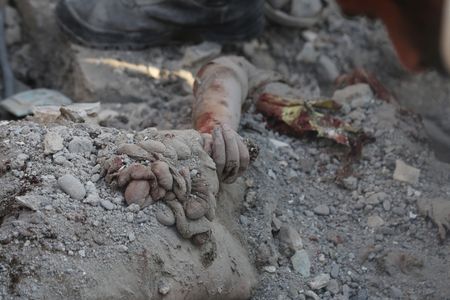
    This incident follows a similar case from June, when Greek police apprehended an Azerbaijani citizen also suspected of espionage activities. That individual had similarly taken up residence at a hotel near the same naval and air force installation in western Crete for several days.

    Security measures at the facility have been enhanced following recent military strikes conducted by Israel and the United States against Iran over the weekend.

  • Cuban Officials Detain 10 Panamanian Citizens Over Anti-Government Signs

    Cuban Officials Detain 10 Panamanian Citizens Over Anti-Government Signs

    Cuban authorities have taken 10 Panamanian nationals into custody, accusing them of producing anti-government propaganda materials on Saturday, according to the country’s Interior Ministry.

    Officials claim the detainees were hired by unidentified sponsors who promised payment in exchange for traveling to Cuba to create what authorities describe as subversive messaging.

    The detentions come just days after Cuban officials reported another alleged infiltration attempt, where armed Cuban exiles attempted to enter the country via speedboat. That incident resulted in a deadly confrontation at sea, leaving four attackers dead and six others wounded and in Cuban custody.

    These incidents unfold as Cuba faces significant economic and energy challenges, with U.S. sanctions creating what officials describe as an oil embargo that has worsened fuel shortages and power outages across the island nation.

    According to the Interior Ministry’s statement, the Panamanian citizens face charges for “acts of propaganda against the Cuban constitutional order.” Cuban law imposes sentences of three to eight years for “inciting against social order, international solidarity, or the socialist state,” and prohibits creating, distributing, or possessing such materials in any form.

    Ministry officials say the detained individuals confessed they had been “instructed to enter Cuba to create signs with subversive content.”

    “Once this objective was achieved, they were to leave the country and, upon their return to Panama, would receive a sum of money that, according to their initial statements, ranged between $1,000 and $1,500 each,” the Interior Ministry said.

    Panama’s embassy in Havana has not yet responded to requests for comment regarding the arrests.

    These restrictions on free expression have long been cited by Cuban exiles as justification for maintaining U.S. economic sanctions against Cuba’s Communist leadership.

  • European Leader Supports Lebanon’s Move to Halt Hezbollah Military Operations

    European Leader Supports Lebanon’s Move to Halt Hezbollah Military Operations

    BRUSSELS – The head of the European Council expressed strong support Monday for Lebanon’s commitment to halt Hezbollah’s armed operations and hold accountable those who launched attacks against Israel.

    Antonio Costa, the European Council President, praised the Lebanese government’s stance following a conversation with Lebanon’s President Joseph Aoun. Costa emphasized the critical need for renewed security cooperation between Israel and Lebanon.

    “It is now important for Israel and Lebanon to resume security coordination, so the Lebanese Armed Forces can disarm Hezbollah and ensure the security of all Lebanese people,” Costa wrote on the social media platform X.

    During separate diplomatic communications, Costa reached out to Cyprus President Nikos Christodoulides to offer European Union solidarity after an Iranian-made Shahed drone struck a British military installation on the Mediterranean island. Intelligence suggests the drone attack was likely carried out by Hezbollah, which receives backing from Iran.

    Costa also thanked Greek Prime Minister Kyriakos Mitsotakis, expressing “appreciation” for Greece’s military assistance provided to Cyprus in response to the incident.

  • Infamous Sicilian Crime Boss Dies Behind Bars at 87

    Infamous Sicilian Crime Boss Dies Behind Bars at 87

    A powerful Sicilian organized crime leader who spent more than three decades behind bars has passed away at age 87, according to two sources familiar with the situation who spoke Monday.

    Benedetto “Nitto” Santapaola died while incarcerated at a maximum-security facility in Milan, where he was serving multiple life sentences for homicide and additional criminal charges following his 1993 arrest, one source confirmed.

    Italy’s justice ministry has not yet provided a statement regarding the death.

    Santapaola earned the fearsome nicknames “il cacciatore” (the hunter) and “il licantropo” (the werewolf) during his reign as the head of organized crime operations in Catania, a major city in eastern Sicily, spanning from the late 1970s through the early 1990s.

    The deceased crime boss was prosecuted and found guilty as one of the masterminds behind the 1992 assassinations of Giovanni Falcone and Paolo Borsellino, two of Italy’s most renowned prosecutors dedicated to fighting organized crime.

  • Iranian TV Networks Hit by Airstrikes, Satellite Feeds Hijacked

    Iranian TV Networks Hit by Airstrikes, Satellite Feeds Hijacked

    Fighter jets struck two facilities belonging to Iran’s state broadcasting network in Tehran on Sunday evening, resulting in casualties among staff members and temporarily knocking transmissions off the air.

    The attacks targeted complexes operated by the Islamic Republic of Iran Broadcasting (IRIB), with explosions visible across Tehran. Broadcasting resumed within minutes from backup studios, though programming remained limited and some radio services experienced significant interruptions.

    An IRIB presenter, reporting from an alternate studio in Tehran’s Jame Jam area, confirmed that the network had suffered attacks from US and Israeli forces before announcing the return to regular programming.

    The current broadcasting setup stems from damage sustained during a 12-day conflict in June, when missiles from Israeli aircraft completely destroyed IRIB’s primary facility known as the Glass Building in northern Tehran. Since that time, the News Network has operated from multiple locations, including backup studios and repurposed facilities.

    Financial constraints have hampered efforts to establish a permanent replacement site. According to sources within IRIB, the broadcaster’s Political Department had sought emergency funding for a new studio outside the main complex, but the request was denied and postponed to the following budget year. Economic difficulties have reduced commercial advertising income, forcing the organization to scatter operations across various buildings, some outside protected areas.

    In the hours following the physical attacks, hackers compromised Iranian television satellite transmissions, inserting content featuring Israeli Prime Minister Benjamin Netanyahu and portions of a speech by President Donald Trump directed at Iranian citizens, along with footage related to the recent strikes.

    Around midnight Tehran time, Tasnim News Agency, which has ties to the Islamic Revolutionary Guard Corps, confirmed that multiple state radio employees were killed or wounded during Sunday’s assault on Iran’s primary radio facility in southern Tehran near the city center.

    The Israeli airstrikes occurred in multiple phases and also damaged Police Station 113 near Tehran’s Grand Bazaar and several military and security installations in the vicinity. Local sources reported uncertainty about whether the main radio building at Arg Square was deliberately targeted or suffered collateral damage from nearby strikes.

    Additionally, Noor News, a Telegram channel with connections to Iranian security agencies, reported that Channel 2 of state television, situated outside the primary IRIB compound, also came under attack.

    Prior to the commencement of US and Israeli operations, sources indicated that IRIB had activated emergency protocols starting at midnight Saturday, implementing wartime staffing schedules and preparing for potential cyber attacks and threats to live broadcasting capabilities. Another source revealed that news regarding the death of Supreme Leader Ali Khamenei had reached IRIB executives and the Political Department by Saturday afternoon, with broadcast managers developing plans to announce the development in the early morning hours.

  • Two Palestinian Brothers Killed in West Bank Settler Attack

    Two Palestinian Brothers Killed in West Bank Settler Attack

    Two Palestinian brothers died Monday after Israeli settlers opened fire in their village in the occupied West Bank, according to the Palestinian Health Ministry, as violent incidents by settlers continue to increase throughout the territory during ongoing regional conflicts.

    The Palestinian Health Ministry named the victims as Mohammad and Faheem Mo’mar in an official statement. Mohammad, age 52, suffered a fatal gunshot wound to the head while Faheem, 48, was struck in the pelvis. Both men died in Qaryout, their home village located in the northern West Bank.

    This deadly incident raises the total number of Palestinians killed in settler attacks this year to three, following the February 19 shooting death of Nasrallah Abu Siyam, a 19-year-old Palestinian American.

    Video footage distributed by Palestinian news outlets and Breaking the Silence, an organization of former Israeli military personnel, captured approximately 10 settlers positioned near a Palestinian residence in Qaryout. The footage shows one settler aiming a rifle at the home’s upper level. Additional video shows Palestinians hurriedly carrying an injured, bleeding man toward medical assistance.

    The Palestinian Red Crescent reported that at least three additional people sustained injuries during the shooting.

    Israeli military officials have not yet provided a response to requests for comment.

    Medical personnel transported the wounded to a hospital in Nablus, a city in the central West Bank, where Associated Press reporters observed family members mourning over one brother’s body. Village residents assisted medical staff in moving bloodied victims onto surgical tables and covering both the deceased and injured with blankets.

    Adham Johary, a village resident, explained to the AP that settlers had been spotted operating a bulldozer at the town’s perimeter before fleeing when young Palestinian men approached.

    “Less than 10 minutes later, more than 10 settlers attacked nearby houses. The young residents attempted to defend the area, and random gunfire was directed at the young men and the entire area,” Johary stated.

    Human rights organizations and Palestinians maintain that Israeli officials consistently fail to pursue legal action against settlers or ensure accountability for violent acts. The United Nations humanitarian office documented that 2023 saw the highest daily average of settler attacks resulting in deaths, injuries or property destruction — five incidents per day — since tracking began in 2006.

    COGAT, the military authority overseeing the territory, announced closures of West Bank and Gaza crossings citing security concerns. West Bank Palestinians report that travel limitations have severely restricted access to essential services, preventing some villages from reaching urban centers with medical facilities and commercial establishments.

  • Middle East Travel Chaos: Airlines Restart Limited Service After Iran Strikes

    Airlines across the Middle East have started to cautiously restore flight operations after suspending service due to military strikes against Iran by Israeli and U.S. forces over the weekend.

    While some carriers resumed limited schedules on Monday, the travel disruption has left hundreds of thousands of passengers stranded across the region. Major aviation hubs in Dubai, Abu Dhabi, Doha and other Gulf cities had grounded commercial flights as a safety precaution following the escalating military action.

    The gradual return of air service comes as airlines assess security conditions and work to clear massive passenger backlogs. Many international carriers are still evaluating when it will be safe to fully restore normal flight schedules to and from Middle Eastern destinations.

    Travel industry officials expect it could take days or weeks to accommodate all affected passengers, depending on how the regional security situation develops.

  • Cuban Leader Calls for Immediate Economic Overhaul as Oil Crisis Deepens

    Cuban Leader Calls for Immediate Economic Overhaul as Oil Crisis Deepens

    HAVANA — During a Monday session with his Council of Ministers, Cuban President Miguel Díaz-Canel announced that his administration must take immediate action to overhaul the nation’s economic and social framework as oil supplies continue to diminish across the Caribbean island.

    Díaz-Canel’s announcement comes as Cuba grapples with mounting pressure from a recent oil embargo and suspended petroleum deliveries from Venezuela following U.S. actions against the South American nation in January.

    “We must focus, immediately, on implementing the urgent, most necessary transformations that must be made to the economic and social model,” Díaz-Canel stated, according to reports from state-controlled media outlets.

    According to government media sources, the president outlined that Cuba’s economic and social restructuring efforts would involve expanding business and local government independence, along with downsizing state bureaucracy and governmental institutions.

    Díaz-Canel urged local governments to take charge of various initiatives, including attracting foreign investment, creating partnerships between government and private enterprises, and developing investment opportunities with Cuban expatriates, state media reported.

    Prime Minister Manuel Marrero Cruz emphasized that the nation’s immediate priorities center on boosting food production and overhauling the electrical infrastructure as the country continues to experience widespread blackouts and fuel shortages.

    Energy and Mines Minister Vicente de la O Levy told state media that local governments are moving too slowly in creating transition plans, despite efforts to distribute solar panels to medical professionals, educators, and students. He stressed that municipalities must develop self-reliant sustainability plans using local resources.

    In recent weeks, Cuba has enacted strict fuel conservation policies, including suspending certain public transit services and shifting educational instruction to online platforms.

    While the U.S. Treasury Department provided some relief last week by relaxing certain restrictions on Venezuelan oil sales to Cuba, experts predict the island’s energy and economic challenges will continue.

    Beyond energy concerns, Cuba faces mounting difficulties from intensified U.S. sanctions, which government data shows have eliminated approximately $8 billion in revenue between March 2024 and February 2025 — representing a nearly 50% increase in losses compared to the previous year.

  • First Lady to Chair Historic UN Security Council Meeting on Children Amid Iran Conflict

    First Lady to Chair Historic UN Security Council Meeting on Children Amid Iran Conflict

    NEW YORK (TV Delmarva) — First Lady Melania Trump is set to make history Monday when she chairs a United Nations Security Council session focused on children caught in war zones, marking the first time a world leader’s spouse has led the UN’s most influential body.

    The historic session will address “Children, Technology, and Education in Conflict,” with Trump’s office stating the discussion will “emphasize education’s role in advancing tolerance and world peace.” The meeting was planned before weekend hostilities erupted between the US, Israel, and Iran.

    As the United States holds the Security Council’s rotating monthly presidency for March, Trump was granted the opportunity to lead the 15-member body that typically sees presidents, prime ministers, and foreign ministers at the helm.

    The timing proves particularly significant as the administration faces scrutiny over military actions affecting civilian populations. Iranian state media reported that airstrikes on Saturday struck a girls’ school in southern Iran, resulting in at least 165 deaths and numerous injuries. Israeli military officials stated they had no knowledge of operations in that region, while US military representatives said they were investigating the reports.

    All eyes will be on the First Lady’s remarks, particularly whether she addresses how current military operations impact children in conflict zones.

    Saturday’s emergency Security Council session grew heated as Secretary-General António Guterres criticized both US and Israeli airstrikes as violations of international law and the UN Charter. He equally condemned Iran’s retaliatory strikes for breaching Middle Eastern nations’ sovereignty and territorial boundaries.

    Trump has previously engaged in diplomatic efforts regarding children in conflict situations. Last summer, she wrote directly to Russian President Vladimir Putin before his meeting with President Trump, which her office credited with helping reunite displaced children from the Russia-Ukraine conflict with their families.

    Russia’s 2022 invasion of Ukraine resulted in Ukrainian children being removed from their homeland to be raised as Russians, prompting Ukrainian President Volodymyr Zelenskyy to seek international assistance in family reunification efforts.

    The appearance comes amid strained US-UN relations, as President Trump has withdrawn America from key UN organizations including the World Health Organization and UNESCO, while reducing funding to numerous others. The US has also fallen behind on mandatory contributions, owing the United Nations billions of dollars.

    This financial shortfall has created a crisis at the UN, with Guterres warning in late January of “imminent financial collapse” unless payment structures are reformed or all 193 member countries fulfill their financial obligations.

    When asked whether the First Lady’s participation signals improved US-UN cooperation, UN spokesman Stephane Dujarric described it as demonstrating “the importance that the United States feels towards the Security Council and the subject.”

  • Joint US-Israel Military Campaign Against Iran Reaches Critical Turning Point

    Joint US-Israel Military Campaign Against Iran Reaches Critical Turning Point

    Military analysts are closely monitoring a joint American-Israeli aerial campaign against Iran that has reached a pivotal moment, with experts identifying two potential outcomes that could reshape Middle East dynamics for years to come.

    According to Brigadier General (retired) Eran Ortal, who spoke with The Media Line, “There is no precedent for regime change through an air campaign.” However, the current military operations are testing whether sustained pressure and leadership elimination can trigger Iran’s internal collapse.

    The coordinated strikes, which began February 28 under US Operation Epic Fury and Israeli Operation Roaring Lion, have evolved beyond typical military degradation campaigns. Experts say the key question is whether communication breakdowns, leadership losses, and mounting pressure can fracture Tehran’s control enough to spark revolution from within.

    Professor Danny Orbach, a military historian at Hebrew University of Jerusalem, explained the strategy to The Media Line: “The goal is not for the regime to fall, but to create conditions that will enable the Iranian people to topple it. If the Iranians don’t take advantage of the opportunity, the war might end with less ambitious goals achieved—the destruction of the Iranian navy, its missile arsenal, and the remnants of its nuclear program.”

    CENTCOM characterized the initial assault as one of the most intensive American firepower deployments in the region in decades, utilizing cruise missiles and advanced fighter jets launched from air, land, and sea platforms.

    The conflict entered a new phase after social media footage showed Iranian citizens celebrating in streets following confirmation that Supreme Leader Ayatollah Ali Khamenei was killed in an airstrike. This development has pushed the confrontation beyond conventional capability degradation into uncertain political territory.

    Both Israeli Prime Minister Benjamin Netanyahu and US President Donald Trump have urged Iranian citizens to capitalize on this moment and overthrow their government, though success remains far from guaranteed.

    “The duration of the operation depends on its goal,” Ortal noted. “This goal could change as the success of the operation becomes apparent.”

    Israeli sources report that initial strike phases involved hundreds of targets and over 1,200 munitions, suggesting a potentially extended campaign ahead.

    Ortal outlined two possible scenarios emerging from current operations. The first involves leadership elimination and communication failures combining with public pressure to create governmental rupture—though he emphasized that airpower alone has never historically achieved regime change.

    “Seeing Iranians celebrating the attack in the streets increases the optimism that this scenario could materialize,” Ortal said. “This could create a domino effect that cannot be foreseen in which the disappearance of senior leadership, major communications disruption, and extreme public pressure destabilize the leadership, who then abandons their positions.”

    Should internal collapse fail to materialize, the alternative outcome would leave Iran’s government politically intact but strategically crippled. “This will leave the regime without military capabilities, weak and neutralized and fully subordinate to American whims and future coercion,” Ortal explained.

    Orbach emphasized the strategic importance of targeting Iran’s naval capabilities, particularly regarding the Strait of Hormuz. “The navy is more important than what most people think,” he said. “The navy is the ability to project power, especially through the threat of blocking the Hormuz Strait. Its destruction will humiliate them and turn them into a country that cannot project power.”

    The Hormuz Strait carries approximately one-fifth of global oil trade, making any disruption capable of affecting worldwide energy markets, shipping schedules, and commercial insurance costs. Eliminating Tehran’s maritime leverage would significantly reduce its ability to threaten neighbors or the global economy during future crises.

    The strikes target the foundation of Iran’s decades-long regional strategy: proxy networks combined with missile and drone capabilities designed to deter direct attacks and impose escalation costs. Dismantling these tools fundamentally alters Iran’s negotiating position and battlefield options.

    “Iran’s ability to influence the Middle East is tied to two abilities—its proxies and its missiles,” Ortal said. “Iran no longer has air defense systems, and its missile launchers are gradually depleting. Iran has no ability to face this, leaving the regime subdued to American pressure it will not be able to withstand.”

    Iran’s nuclear program provides crucial context for current hostilities. The 2015 Joint Comprehensive Plan of Action temporarily limited Tehran’s enrichment activities in exchange for sanctions relief, but following US withdrawal in 2018, Iran expanded enrichment and reduced international oversight, escalating tensions that led to today’s confrontation.

    Orbach argued that achieving complete regime collapse would require expanding targets beyond military assets to include internal enforcement mechanisms used for protest suppression and population control.

    “The way to increase the odds of toppling the regime is to eliminate its leader and his heirs, in several rounds, rendering them weak and scared,” Orbach said, estimating slim survival chances for the current government. “In addition, the oppression mechanisms of the regime also need to be hit. The question is how long Israel and the US will persist in this effort.”

    Iran’s domestic conditions may prove as significant as strike intensity. Years of sanctions, corruption, and heavy security expenditures have damaged the economy, while inflation, infrastructure deterioration, power shortages, and water crises have intensified public dissatisfaction—factors that could amplify political consequences if leadership and control systems continue deteriorating.

    “Iran’s economy is in a catastrophic state and deteriorating further,” Orbach observed. “This will only worsen after the war, including raging inflation and the water crisis. Add to this a succession struggle and popular unrest, and it is hard to see the regime surviving in the long run.”

    Even if political objectives become more modest over time, Ortal believes the military impact alone could transform regional dynamics for years. “Even if the goals of the operation will be downgraded, still Iran will be rendered extremely weak and subdued for a substantial number of years,” he said.

    Analysts identify four key indicators that will reveal the campaign’s direction: whether strikes expand beyond military targets to internal enforcement apparatus; whether Iran’s naval influence around Hormuz Strait gets neutralized; whether domestic unrest grows from scattered incidents into sustained pressure; and whether Washington and Jerusalem begin describing success in narrower terms focused on long-term military degradation.

    The central uncertainty remains what Ortal highlighted: while airpower can eliminate leaders, disrupt communications, and destroy capabilities, it cannot vote, demonstrate, or govern. Coming days will determine whether these strikes merely dismantle Iran’s security infrastructure—or create opportunities for Iranians themselves to dismantle the system controlling it, potentially defying historical patterns that Ortal says have defined previous air campaigns.

  • UAE Oil Terminal Hit by Drone Strike, Operations Continue Despite Fire

    UAE Oil Terminal Hit by Drone Strike, Operations Continue Despite Fire

    Officials in the United Arab Emirates reported Monday that a drone strike ignited a blaze at the Musaffah fuel storage facility, though the attack did not disrupt normal operations at the critical energy hub.

    The Abu Dhabi media office confirmed authorities quickly managed the emergency situation. “Abu Dhabi authorities have responded today to a fire resulting from the targeting of a Musaffah fuel tank terminal by a drone. The situation was promptly contained,” the office said.

    Officials confirmed no one was hurt in the incident.

    The targeted facility serves as a key distribution point operated by Abu Dhabi National Oil Company, where fuel products are loaded onto trucks for delivery. The site connects to an extensive pipeline system spanning 1,600 kilometers that supplies petroleum products throughout the Abu Dhabi emirate.

    This marks another attack on the Musaffah facility, which previously came under fire from Yemen’s Iranian-backed Houthi rebels in 2022 during their ongoing conflict with the Saudi-led military coalition.

    The strike occurred as regional tensions intensify following a series of attacks across the area. Earlier Monday, Saudi Arabia’s national oil company Aramco was forced to close its Ras Tanura refinery after a drone strike, marking what appears to be an escalation on the third consecutive day of regional attacks launched by Tehran following a U.S.-Israeli operation against Iran.

    Meanwhile, QatarEnergy suspended production of liquefied natural gas and related products after attacks targeted facilities at Ras Laffan, according to an informed source speaking to Reuters.

  • Former Bulgarian President Forms New Coalition Ahead of Election

    Former Bulgarian President Forms New Coalition Ahead of Election

    SOFIA – Former Bulgarian President Rumen Radev announced Monday that he has formed a new three-party coalition named Progressive Bulgaria to compete in the nation’s parliamentary elections scheduled for April 19.

    The move marks the country’s eighth electoral contest in just seven years, highlighting Bulgaria’s ongoing political turmoil. Radev, who resigned from his largely ceremonial presidential position in January, remains widely favored among Bulgarian voters, with polling data indicating his new alliance could secure over 30 percent of voter support.

    During his presidency, Radev exercised significant unofficial political influence throughout a turbulent period that culminated in the most recent government’s downfall on December 11. He stepped down from office nearly twelve months ahead of schedule.

    The administration collapsed after sustained public demonstrations against increased taxes and what protesters viewed as inadequate efforts to combat corruption within the government.

    Taking to Facebook, Radev declared: “‘Progressive Bulgaria’ is the answer to the expectations of Bulgarians for dismantling the oligarchic corruption model. In order to succeed, we will fight for a decisive victory and it depends on the voice of all Bulgarians.”

    The new coalition unites three left-oriented political groups: Our People Movement, Social Democratic Party, and the Socialdemocrats movement.

    Since becoming a eurozone member on January 1, Bulgaria has struggled with persistent governmental instability. Political parties have been unable to establish lasting governing partnerships since 2021 due to a divided parliament.

  • British PM: Iran Becomes More Dangerous After Leader’s Death

    British PM: Iran Becomes More Dangerous After Leader’s Death

    LONDON, March 2 – British Prime Minister Keir Starmer warned lawmakers Monday that Iran has intensified its military attacks on regional targets following the death of Supreme Leader Ali Khamenei, describing the nation’s current tactics as increasingly dangerous.

    Speaking before Parliament, Starmer cautioned that Khamenei’s death has not deterred Iran from conducting strikes against military and economic infrastructure across the region.

    “The death of Khamenei will not stop Iran from launching these strikes,” Starmer addressed Parliament members. “In fact, their approach is becoming even more reckless and more dangerous to civilians.”

    The Prime Minister’s comments highlight growing international concerns about Iran’s military activities in the aftermath of their longtime leader’s passing.

  • Denmark Partners with France on Nuclear Defense Strategy

    Denmark Partners with France on Nuclear Defense Strategy

    COPENHAGEN – Danish Prime Minister Mette Frederiksen announced Monday that her country has formed a strategic nuclear defense partnership with France, marking a significant shift in European security cooperation.

    The announcement came as French President Emmanuel Macron revealed plans to expand France’s nuclear capabilities and enhance deterrent measures through unprecedented collaboration with European allies, describing it as a fundamental shift in nuclear policy.

    “Enhanced cooperation will help bolster Europe’s deterrent strength. Regrettably, this has become essential as we anticipate Russia’s military threat will grow in the years ahead,” Frederiksen explained to reporters.
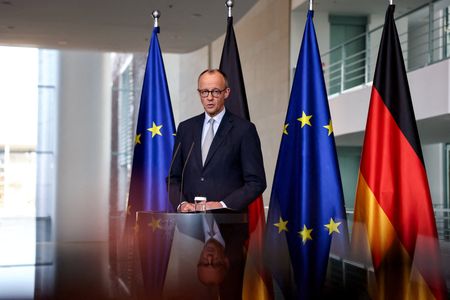
    The Danish leader emphasized that this new European partnership would work alongside existing security frameworks. “We want to make clear today that this strategic cooperation will supplement, not substitute for, our deterrent collaboration within NATO,” she stated.

    Danish Defense Minister Troels Lund Poulsen clarified that the strategic partnership will not involve placing nuclear weapons within Denmark’s borders.

  • Former Colombian Rebels Face Political Extinction in Weekend Elections

    Former Colombian Rebels Face Political Extinction in Weekend Elections

    BOGOTA, Colombia — One-time guerrilla fighters who previously dominated Colombia’s countryside now face an uphill battle to maintain their existence as a legitimate political organization during this Sunday’s crucial congressional elections.

    The former Revolutionary Armed Forces of Colombia members, operating under the political banner Comunes (Commoners), face steep odds in securing sufficient votes to keep their legislative positions or even preserve their official party recognition.

    During the previous two legislative terms, the organization held 10 assured congressional positions — a benefit provided through their 2016 peace agreement with Colombia’s government.

    However, those guaranteed positions have now expired according to the peace accord’s provisions, forcing Comunes to compete alongside all other political organizations without special advantages.

    Political analysts anticipate the former insurgents will struggle to maintain their legislative presence amid fierce competition from over a dozen parties vying for Senate and House positions.

    “They have not really gained the support of the people,” stated Yan Basset, who teaches political science at Bogota’s Rosario University.

    The ex-rebels conducted kidnappings affecting thousands of citizens and carried out bombing attacks on numerous rural communities throughout their 50-year war against Colombia’s government.

    According to Basset, the conflict’s negative legacy persists, “and obviously for many Colombians it is difficult to forgive.”

    Despite having secured legislative seats, Comunes demonstrated poor electoral performance in past voting cycles.

    The organization captured 89,300 votes across Colombia during 2018’s congressional races. This figure dropped to 50,100 by 2022.

    This downward trend poses serious consequences since Colombian election regulations mandate parties secure at least 3% of total votes to maintain official recognition for candidate nominations and government funding eligibility. The previous election required 509,000 votes to achieve that essential 3% threshold.

    To boost their electoral prospects this cycle, Comunes has partnered with Fuerza Ciudadana, an organization established two decades ago by progressive activists and scholars that recently secured mayoral victories and a gubernatorial win in northern Colombia.

    The former guerrillas also seem to be downplaying their brand identity to make their candidates more appealing to ordinary voters. Campaign materials including flyers, banners and stickers prominently display Fuerza Ciudadana’s branding, while Comunes’ red rose emblem is notably missing from most promotional content.

    Comunes additionally registered their coalition under the Fuerza Ciudadana name with election officials, guaranteeing the partner organization’s orange symbol, not their own, will be visible on Sunday’s voting forms.

    “Politics in Colombia is very complex,” remarked Carlos Carreño Marín, a former FARC military leader.

    Marín participated in FARC’s negotiating team for the 2016 peace agreement and has served as a Comunes congressional representative since 2018.

    The 48-year-old is now working to retain his Bogota legislative position while recognizing the difficulty ahead.

    “We are in an intense struggle against parties that have been doing this for two centuries,” he explained.

    Nearly 300 congressional positions will be decided during Sunday’s voting.

    The election results could significantly impact President Gustavo Petro’s constitutional reform agenda. Petro has criticized judicial officials and lawmakers for obstructing his initiatives to nationalize Colombia’s healthcare infrastructure and overhaul the retirement system.

  • Iran Conflict Disrupts Key Oil Route, Sending Energy Prices Soaring

    Iran Conflict Disrupts Key Oil Route, Sending Energy Prices Soaring

    Energy markets experienced significant volatility Monday as escalating conflict involving Iran led to major disruptions in shipping through the Strait of Hormuz, underscoring the critical importance of this waterway to global oil distribution.

    This narrow channel serves as the gateway from the Persian Gulf, facilitating the transport of approximately 20% of worldwide oil supplies. Vessels navigating these waters, which border Iran to the north, transport petroleum and natural gas from major producers including Saudi Arabia, Kuwait, Iraq, Qatar, Bahrain, the UAE and Iran itself. The majority of these energy exports are destined for Asian markets.

    Any interruption to shipping through this strategic waterway creates significant ripple effects throughout global energy markets.

    “The scale of what is at stake cannot be overstated,” said Hakan Kaya, senior portfolio manager at investment management firm Neuberger Berman. He explained that while oil companies could manage a partial slowdown lasting one to two weeks, a complete or near-complete blockage extending a month or longer would drive crude oil prices, currently trading around $70 on Monday, “well into triple digits” and push European natural gas prices “toward or above the crisis levels seen in 2022.”

    The Strait of Hormuz forms a curved waterway measuring approximately 33 kilometers (21 miles) across at its most constricted point. It links the Persian Gulf with the Gulf of Oman, providing ships access to international waters and global destinations. Although Iran and Oman maintain territorial claims within the strait, international maritime law recognizes it as open waters accessible to all vessels. The United Arab Emirates, known for Dubai’s iconic skyline, is also positioned adjacent to this vital shipping lane.

    Throughout history, the Strait of Hormuz has served as a crucial trade corridor, with ceramics, ivory, silk and textiles flowing from China through the region. In contemporary times, it accommodates massive oil tankers transporting petroleum and gas from regional producers. Most of these shipments reach Asian destinations, including China, which remains Iran’s sole remaining oil purchaser.

    Although Saudi Arabia and the UAE operate pipelines that can bypass the strait, the U.S. Energy Information Administration notes that “most volumes that transit the strait have no alternative means of exiting the region.”

    Previous threats to this shipping route have triggered global energy price increases, including during the Israel-Iran conflict in June.

    While the strait remains officially open, vessel traffic has declined dramatically due to disrupted satellite navigation systems, according to data analytics company Kpler in a Sunday statement on X. The U.K. Maritime Trade Operations Center documented attacks on multiple ships in waters surrounding the strait and issued warnings about increased electronic interference affecting vessel tracking systems.

    A drone boat loaded with explosives attacked a Marshall Islands-flagged oil tanker in the Gulf of Oman, the eastern approach to the strait, resulting in one crew member’s death, Omani officials confirmed.

    Iran has been issuing threats to vessels approaching the Strait of Hormuz and is suspected of conducting several attacks.

    In mid-February, Iran temporarily blocked portions of the strait, claiming the action was part of military exercises. Oil prices surged approximately 6% in subsequent days.

    This closure represented a rare, possibly unprecedented shutdown of the waterway.

    During previous periods of regional tension and warfare, Iran has periodically interfered with shipping through the narrow passage. During the Iran-Iraq war of the 1980s, both nations targeted tankers and other vessels, deploying naval mines that completely halted traffic at various times. However, Iran has not followed through on repeated threats to completely close the waterway since the 1980s, even during last year’s 12-day conflict when Israel and the United States conducted strikes on Iran’s nuclear and military facilities.

  • Timeline: How Trump Ordered Joint US-Israeli Military Operation Against Iran

    Timeline: How Trump Ordered Joint US-Israeli Military Operation Against Iran

    WASHINGTON — Hours after expressing frustration with stalled nuclear negotiations, President Donald Trump authorized a large-scale military operation against Iran that eliminated key leadership figures and disrupted global markets.

    The sequence of events began Friday afternoon when Trump spoke to media outside the White House before departing for Texas, stating his dissatisfaction with ongoing indirect discussions with Iran.

    “I’m not happy with the way they’re going,” Trump told reporters at 12:25 p.m. EST regarding the nuclear negotiations. When questioned about his next steps, he responded, “No, I haven’t,” regarding whether he had reached a final decision.

    While traveling on Air Force One to Texas events at 3:38 p.m. EST, Trump authorized the military action dubbed “Operation Epic Fury.”

    “The president directed, and I quote, ‘Operation Epic Fury approved … Good luck,’” General Dan Caine, chairman of the Joint Chiefs of Staff, revealed during a Monday press conference.

    According to Caine, this authorization triggered final preparations across all joint U.S. military branches, with air defense systems positioning themselves and flight crews conducting last-minute rehearsals of their attack plans. Simultaneously, aircraft began receiving final armaments while two U.S. carrier strike groups moved toward launch positions.

    During his continued flight to Texas, Trump made multiple Truth Social posts, including one nine minutes after approving the strike that ordered the government to cease using Anthropic artificial intelligence technology following a public disagreement between the company and Pentagon regarding AI safety measures.

    Upon arriving in Texas at 4:03 p.m. EST, Trump addressed reporters at the Port of Corpus Christi about the negotiations, reiterating his displeasure without revealing the approved operation. When asked about his proximity to deciding on strikes, he declined to answer.

    “I’d rather not tell you,” Trump responded. “You would have had the greatest scoop in history, right? Yeah.”

    The actual military action commenced at 1:15 a.m. EST, based on Caine’s Monday timeline presentation.

    “Across every domain — land, air, sea, cyber,” American forces “delivered synchronized and layered effects designed to disrupt, degrade, deny and destroy Iran’s ability to conduct and sustain combat operations on the U.S. side,” Caine explained.

    During the Pentagon briefing, Caine described the operation as involving “thousands of service members from all branches, hundreds of advanced fourth- and fifth-generation fighters, dozens of refueling tankers, the Lincoln and Ford carrier strike group and their embarked air wings.”

    He emphasized that ammunition and fuel supplies maintained continuous flow with support from an extensive network including intelligence and surveillance operations, while additional forces continued deploying to the region.

    The military action followed months of CIA efforts to monitor senior Iranian leadership movements, particularly Supreme Leader Ayatollah Ali Khamenei. This intelligence was shared with Israel, leading to adjustments in Saturday’s strike timing, according to an anonymous source familiar with the operation.

    In Tehran, explosions were audible as Israel’s defense minister announced a state of emergency.

    Three coordinated strikes at separate locations occurred within sixty seconds, eliminating Khamenei and approximately 40 senior officials, including the paramilitary Revolutionary Guard commander and Iran’s defense minister, an Israeli military official confirmed.

    At 4:37 p.m. EST, Trump used his Truth Social platform to announce Khamenei’s death, stating the supreme leader was “unable to avoid our Intelligence and Highly Sophisticated Tracking Systems.”

    On Sunday at 12:21 p.m. EST, Trump posted on Truth Social that American forces had “destroyed and sunk 9 Iranian Naval Ships,” would be “going after the rest” and “largely destroyed their Naval Headquarters.”

    Later Sunday at 4:06 p.m. EST, the Republican president released a video message stating that U.S. military and allies struck hundreds of Iranian targets, including Revolutionary Guard installations and air defense systems “all in a matter of literally minutes.”

    Trump indicated the strikes would persist until “all of our objectives are achieved” without specifying those goals.

    Also Sunday, Trump administration officials informed congressional staff during private briefings that U.S. intelligence had not indicated Iran was planning a preemptive attack against America, according to three briefing participants.

    Instead, administration officials acknowledged a broader regional threat from Iran’s missile capabilities and proxy forces, two sources reported.

    A senior White House official also stated Sunday that Iran’s “new potential leadership” had expressed openness to discussions with the United States.

    In a Sunday New York Times interview, Trump suggested the assault could continue for “four to five weeks.”

    Monday at 8 a.m. EST, Defense Secretary Pete Hegseth clarified during a Pentagon briefing that the U.S. was not pursuing nation-building in Iran and that continued strikes would not lead to prolonged conflict.

    “This is not Iraq. This is not endless,” he stated. “This is not a so-called regime change war, but the regime sure did change, and the world is better off for it.”

    During Monday trading, oil prices surged as tanker disruptions near the Strait of Hormuz sparked concerns about Persian Gulf supply shortages. U.S. oil reached approximately $71.97 per barrel. MarineTraffic.com reported that strait transit had decreased 70% since Saturday.

    The strikes also unsettled global markets, with U.S. futures following European and Asian markets downward. Both S&P 500 and Dow Jones Industrial Average futures dropped roughly 1%.

  • Dubai Airport Hub Faces Major Test After Middle East Conflict Disrupts Global Travel

    Dubai Airport Hub Faces Major Test After Middle East Conflict Disrupts Global Travel

    Recent escalations in Middle East tensions have exposed just how dependent worldwide aviation has become on a select few major airport hubs, with Dubai’s international airport – the globe’s busiest – at the center of widespread travel disruptions.

    The Gulf region’s commercial powerhouse has built an impressive aviation empire over four decades, growing from Emirates’ humble beginnings with just two leased aircraft and a pair of flight routes to today’s massive operation connecting 110 countries through 454,000 annual flights.

    “That we’ve got such a well-spread geographic business model and are well spread between visitors and those in transit suggests it’s very robust and will continue to survive any geopolitical tension that exists, wherever it may be,” Dubai Airports CEO Paul Griffiths told Reuters in a recent interview.

    However, Saturday’s U.S. and Israeli military actions against Iran brought these regional conflicts directly to Dubai’s front door, including a direct assault on the airport facility itself.

    Now Dubai confronts the enormous challenge of managing tens of thousands of stranded travelers while rebuilding its flight network and protecting incoming traffic that makes up half of its operations.

    Industry experts generally believe the Gulf aviation hubs will bounce back from this setback, provided regional warfare doesn’t drag on indefinitely. However, the simultaneous closure of all three primary Gulf hubs – Dubai, Abu Dhabi and Doha – comes at a time when competitors from Turkey, Saudi Arabia and India are expanding their own operations.

    “There’s no doubt at all this is temporary. They have seen major incidents before and recovered very quickly due to their importance as global hubs,” said UK-based travel consultant Paul Charles. “They will recover quickly, even if there is substantial uncertainty in the short term.”

    Some analysts express more skepticism about the recovery timeline. While the aviation sector rebounded from pandemic losses due to demand exceeding available flights, this situation threatens passenger demand itself.

    “Travellers are likely to consider more direct flights rather than stop over in Dubai or Doha. All this hub traffic is likely to take a hit,” said independent aviation adviser Bertrand Grabowski.

    Despite these concerns, geography and economics continue working in the Gulf hubs’ favor.

    “One third of the world’s population is within four hours’ flying time and two thirds within eight hours,” said Dubai Airports’ Griffiths.

    “We’ve seen the incredible aggregation power that a hub delivers.”

    Nevertheless, challenges to the Gulf’s aviation dominance are emerging. Turkish Airlines stands to gain significantly through its major hub positioned outside the conflict area, according to independent aviation analyst John Strickland.

    Saudi Arabia is also expanding its aviation presence, with India following suit as Asian carriers capture more passengers.

    Technical improvements in aircraft manufacturing, which previously benefited Gulf carriers, are now working against their hub model. Airbus recently started construction on a second ultra-long-range A350 aircraft to support Qantas plans for direct Sydney-to-London service.

    Emirates launched operations during the height of the Iran-Iraq conflict in 1985. Its explosive expansion contributed to Gulf Air’s breakup – the airline that previously served Qatar, Bahrain, Abu Dhabi and Oman – as Qatar and Abu Dhabi established independent carriers, creating today’s three competing Gulf aviation hubs.

    With Dubai’s reputation for stability now questioned following Iranian attacks and defensive missile debris, analysts say the biggest uncertainty surrounds future passenger traffic to Dubai itself.

    The timing has also raised concerns about the already-postponed development of a massive new airport facility outside the city.

    Dubai destination traffic “will doubtless recover, but there is likely to be some lasting damage”, Grabowski said.

    For Emirates and its partner airline flydubai, recovery may require leveraging their market influence to restore normal operations.

    “People have short memories and they might be incentivised by some bargain deals to bring people back, but I don’t think that would need to be there for long,” said Eddy Pieniazek, head of advisory at aviation and leasing consultancy Ishka.

  • US Hits Rwanda Military with Sanctions Over Congo Fighting

    US Hits Rwanda Military with Sanctions Over Congo Fighting

    WASHINGTON – The Biden administration announced Monday it has levied financial penalties against Rwanda’s military forces and high-ranking defense officials, the Treasury Department confirmed on its website, following ongoing combat operations across multiple areas in eastern Democratic Republic of Congo.

    The African nations had previously agreed to a ceasefire arrangement in Washington this past December, which was part of former President Trump’s initiative to establish stability in the area and encourage substantial Western financial investment totaling billions of dollars.

    However, military conflicts have persisted since that agreement, undermining the previous administration’s peace-building efforts in the region.

    The Treasury Department’s website shows that Monday’s penalties include Vincent Nyakarundi, who serves as Rwanda’s army chief of staff, along with the nation’s chief defense staff and two additional Rwandan officials.

    Rwandan government representatives have not yet provided a response to requests for comment on the sanctions.

  • Switzerland Maintains Diplomatic Bridge Between US and Iran During Conflict

    Switzerland Maintains Diplomatic Bridge Between US and Iran During Conflict

    GENEVA – Swiss officials confirmed Monday that diplomatic communications between Washington and Tehran continue flowing through Switzerland’s neutral channels, even as military operations between U.S.-Israeli forces and Iran entered their third day.

    The Swiss foreign ministry told Reuters via email that the diplomatic pathway “is available to both parties and operates in both directions,” though ministry officials declined to elaborate on specific details of the communications.

    Switzerland has served as a diplomatic intermediary between America and Iran for more than four decades, taking on the role of neutral “protecting power” to represent American diplomatic interests in Iran after the two nations severed official relations following Iran’s 1979 Islamic Revolution.

    Swiss diplomatic officials also reported that all of their regional embassies continue normal operations and are providing assistance to Swiss citizens in the area who require support during the ongoing conflict.

  • Turkish President Condemns US, Israeli Strikes on Iran as Illegal

    Turkish President Condemns US, Israeli Strikes on Iran as Illegal

    ANKARA – Turkish President Tayyip Erdogan condemned recent strikes against Iran carried out by the United States and Israel, calling them a “clear violation” of international law during remarks made Monday.

    The Turkish leader made his comments while addressing attendees at a Ramadan iftar dinner in the capital city of Ankara, where he also expressed that Turkey stands with the Iranian people during this difficult time.

    Erdogan announced that Turkey plans to increase diplomatic engagement across all levels of government to help broker a ceasefire and restore stability to the region. He warned that allowing the current conflict to persist poses significant dangers that extend beyond the immediate area and could create global consequences that no nation is equipped to manage.

  • Trump Announces Military Action Against Iran to Stop Nuclear, Missile Programs

    Trump Announces Military Action Against Iran to Stop Nuclear, Missile Programs

    WASHINGTON – President Donald Trump confirmed Monday that he has authorized U.S. military forces to conduct strikes against Iran with the goal of stopping Tehran’s nuclear weapons development and rapidly expanding ballistic missile capabilities.

    Speaking from the White House East Room, Trump revealed that military operations he initiated on Friday are moving faster than anticipated. The president had initially estimated the campaign would run four to five weeks, though he acknowledged it might extend longer than planned.

    The president stated that preventing Iran from acquiring nuclear weapons serves as a primary motivation for the military action, despite Tehran’s denials of pursuing such capabilities. Trump also cited the need to disrupt Iran’s long-range ballistic missile development as a key objective.

    During his White House appearance, Trump provided his most detailed public remarks about the conflict, following earlier video statements and brief media interviews over the weekend that sometimes presented conflicting goals for the military engagement.

    The president reported that U.S. forces had successfully destroyed 10 Iranian naval vessels and conveyed optimism about the campaign’s progress thus far.

  • Pakistani Leader Justifies Military Strikes Against Afghanistan

    Pakistani Leader Justifies Military Strikes Against Afghanistan

    Pakistan’s leader stood by his nation’s military operations against Afghanistan during remarks to lawmakers Monday, asserting that diplomatic solutions were exhausted before launching strikes against militant groups operating from Afghan soil.

    The Pakistani government previously declared it was engaged in “open war” with Afghanistan, raising concerns among international observers. The disputed border region serves as a base for extremist organizations such as al-Qaida and ISIS.

    “(The Afghan Taliban) must choose to dismantle the terror groups that survive on conflict and its war economy,” President Asif Ali Zardari told parliament members, emphasizing that “no state accepts serial attacks on its soil.”

    Following Pakistani air operations last Sunday, Afghanistan responded with counter-attacks on Thursday. Pakistan has since conducted multiple border operations, with Information Minister Attaullah Tarar asserting that 435 Afghan military personnel were eliminated and 31 Afghan positions seized.

    Afghan officials dispute these assertions.

    Afghanistan’s deputy government spokesperson Hamdullah Fitrat reported that Pakistani military forces launched mortar attacks on a displaced persons camp in Kunar province’s eastern region, resulting in three children’s deaths and three additional injuries.

    Afghan defense officials stated their forces targeted a Pakistani military installation near Paktia province, inflicting “substantial losses and heavy casualties.”

    Pakistani military officials declined to comment but have maintained they exclusively target Afghan military sites to prevent civilian harm.

    Pakistan has experienced increased violence recently, attributing the attacks to the banned Pakistani Taliban organization, Tehreek-e-Taliban Pakistan (TTP), which operates within Pakistan and from Afghan territory.

    Pakistani officials claim Afghanistan’s Taliban leadership provides sanctuary for TTP fighters, an allegation Kabul rejects.

    The current border hostilities terminated a truce negotiated by Qatar and Turkey last October, after Istanbul peace talks failed to produce a lasting resolution.

    Zardari emphasized Pakistan’s willingness to negotiate, stating, “We have never walked away from dialogue.”

    The Pakistani president renewed accusations that Afghanistan serves as India’s proxy by harboring militant organizations. “Stop being used by another country as a battlefield for their ambitions,” he declared.

    Zardari referenced a recent United Nations Security Council monitoring team assessment that characterized militant presence in Afghanistan as a threat extending beyond the region.

  • US Faces Hurdles Securing Congo’s Critical Minerals Despite New Partnership Deal

    US Faces Hurdles Securing Congo’s Critical Minerals Despite New Partnership Deal

    The United States is encountering significant roadblocks in its mission to secure critical minerals from the Democratic Republic of Congo, despite establishing a partnership agreement just months ago, according to diplomatic and industry sources.

    Congo holds the world’s most extensive cobalt reserves along with substantial copper and lithium deposits, making it a cornerstone of America’s strategy to reduce Western dependence on China for essential minerals.

    Following the December signing of a minerals agreement between the US and Congo, officials in Kinshasa provided Washington with a list of 44 potential projects last month covering copper, cobalt, lithium, tin, gold, and energy resources, as Reuters previously reported.

    This US-Congo collaboration aims to attract investment and support a peace agreement that Washington helped negotiate between Congo and Rwanda. The Congolese government has alleged that Rwanda backs M23 rebel forces currently battling government troops in eastern regions.

    However, many of the proposed mining sites are located in politically unstable areas or face licensing complications, making rapid and dependable mining agreements difficult to achieve, according to sources including Congolese government and mining sector officials who requested anonymity due to the sensitive nature of ongoing discussions.

    One American diplomat suggested that Kinshasa may be intentionally delaying new agreements to pressure Washington into taking stronger action against M23 before moving forward. Reuters was unable to independently confirm this assertion.

    The Congolese government did not provide immediate responses to comment requests. Speaking on background, a senior government official dismissed the allegations as “speculation.”

    “The agreement has its own rhythm: a period for receiving offers, a period for negotiation,” the official explained. Rwanda, which denies supporting M23, also did not respond immediately to requests for comment.

    The US State Department informed Reuters that America remains “deeply concerned” about violence in eastern Congo and continues pressing regional partners to strengthen the ceasefire, calling on Rwanda to cease M23 support and withdraw according to December’s peace agreement.

    The department expressed Washington’s desire to see rapid advancement on major deals, including a proposal for Glencore to transfer copper and cobalt operations to the US-supported Orion consortium, US-based Virtus Minerals’ attempt to acquire Congo-focused Chemaf, and expansion of the Lobito Corridor railway.

    According to Joshua Walker from NYU’s Congo Research Group, Kinshasa’s decision to include the Rubaya mine on the shortlist indicates Congo’s desire for stronger US action against M23. The mine produces approximately 15% of global coltan and currently operates under M23/AFC control.

    Walker noted that investment remains unlikely while the group maintains territorial control.

    American security influence has already impacted some mining operations. Alphamin Resources resumed operations at its Bisie tin mine only after US diplomatic intervention helped reduce fighting in surrounding areas, though the company warns that renewed violence could threaten access and operations.

    Michael Bahati, chief analyst at advisory firm Ascendance Strategies, identified Congo’s licensing bottlenecks as a fundamental obstacle to new US investment. Additionally, some assets on Kinshasa’s list face disputes, incomplete ownership documentation, and delayed transparency reporting.

    At Manono, a world-class lithium site, US-backed KoBold is working to resolve a dispute with Australia’s AVZ, while China’s Zijin in the same region prepares for June shipments.

    High-quality copper-cobalt properties, including Chemaf and Gecamines’ holdings, encounter political disputes and permitting histories that discourage Western financial institutions. Chemaf’s proposed sale to US-backed Virtus has stalled after owners indicated that the approximately $30 million offer fails to address the company’s substantial debts.

    Even for simpler opportunities like tailings reprocessing or proposed cobalt refineries, Kinshasa has indicated that success depends on governance improvements and security assurances that only Washington can help provide.

    These obstacles highlight a disconnect between US strategic goals and its capacity to deploy capital quickly, according to Geraud-Christian Neema, an analyst specializing in African natural resource geopolitics.

    Washington continues focusing on “ready-to-produce” properties. A longer-term transformation would require US companies willing to accept Congo-level risks and wait years for profits, a commitment “not many US firms are prepared to make,” he explained.

    Congolese officials admit they want American companies to accelerate their pace but say they cannot bypass compliance requirements.

    While US and other Western companies must satisfy obligations including anti-corruption screenings, establishing clear ownership chains, and documenting community impact assessments, Chinese firms operate under different regulatory frameworks.

    At Manono, Zijin’s early progress in developing roads, power systems, and port connections is already influencing the project. KoBold’s Congo representative said the company plans to utilize that infrastructure once ownership disputes are settled, reflecting the compliance challenges facing US-backed enterprises.

    The difference is evident throughout Congo’s mining industry – Chinese operators can manage uncertainty that Western companies cannot, enabling Beijing-linked firms to advance projects while American companies remain caught in extended due-diligence processes.

    Currently, Kinshasa has successfully drawn Washington deeper into its critical-minerals sphere, gambling that US engagement will yield security and political benefits, NYU’s Walker observed.

    “What that engagement will ultimately look like, however, remains uncertain.”

    With Chinese companies already controlling more than 70% of Congo’s copper-cobalt and other rare mineral assets, nothing yet indicates Washington can substantially weaken Beijing’s dominance.