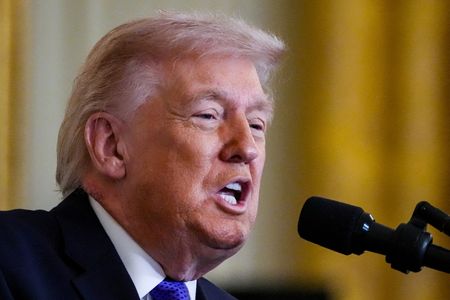

President Donald Trump stated during a Thursday phone conversation with Reuters that America should have influence in determining who will lead Iran next, while also expressing backing for Kurdish opposition groups taking aggressive action.
During the interview, Trump indicated the leadership selection process remains in early stages but suggested that Mojtaba, the deceased Supreme Leader Ayatollah Ali Khamenei’s son, would not be a likely candidate, though he did not provide additional details.
“We want to be involved in the process of choosing the person who is going to lead Iran into the future,” Trump stated. “We don’t have to go back every five years and do this again and again.”
The president also voiced support for Iranian Kurdish forces taking offensive measures against the current regime.
“I think it’s wonderful that they want to do that, I’d be all for it,” the president commented.
When questioned about whether America would provide or had already offered air support, Trump replied, “I can’t tell you that,” while noting the Kurdish groups’ goal would be “to win.”
“If they’re going to do that, that’s good,” Trump added.
According to three knowledgeable sources, Iranian Kurdish militias have recently discussed with American officials whether and how they might launch attacks against Iran’s security apparatus in the nation’s western regions.
The coalition of Iranian Kurdish organizations, operating from the Iran-Iraq border area within Iraq’s semi-autonomous Kurdistan region, has been preparing for potential attacks designed to weaken the country’s military capabilities, while the United States and Israel continue bombing Iranian positions.
Trump also expressed optimism that the critical Strait of Hormuz shipping passage near Iran would stay operational.
Iran has prioritized shutting down the Strait of Hormuz, the narrow waterway between Iran and Oman that handles one-fifth of global crude oil and liquefied natural gas shipments. Maritime traffic through this vital energy corridor has nearly stopped following Iranian strikes on six commercial vessels.
“They have no navy, you know the navy is now at the bottom of the sea,” Trump remarked. “I’m watching Hormuz very closely.”