
NICOSIA, Cyprus – Political leaders in Cyprus are weighing whether to challenge Britain’s decades-long military presence on their island following a drone attack that heightened fears of being pulled into regional conflict with Iran.
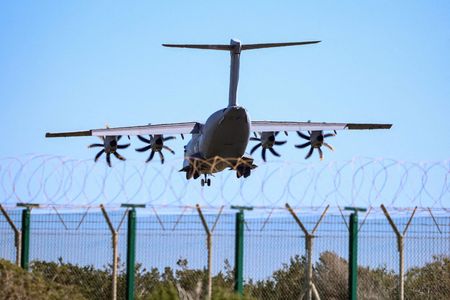
The debate over Britain’s two military installations – Akrotiri and Dhekelia – has simmered since Cyprus achieved independence in 1960, but tensions escalated after Monday’s drone strike on Akrotiri base. Security sources believe the Iranian-made drone was launched by Hezbollah, Iran’s regional partner.
While no injuries occurred in the attack, the incident prompted emergency evacuations of nearby residents and placed the island on heightened security alert.
When questioned about potentially reassessing the British military installations, Cypriot President Nikos Christodoulides told media Friday: “There is nothing I can rule out.”
Foreign Minister Constantinos Kombos, formerly a law professor, responded cautiously when asked about the bases’ future status: “I no longer have the luxury in life of just expressing my legal opinion about things. Any decision on issues of this importance are not taken in the heat of the moment or during a crisis.”
However, local media took a stronger stance. Columnist Costas Venizelos wrote in the pro-government newspaper Phileleftheros: “The bases should take a hike. They are endangering our safety.”
The military facilities span approximately 99 square miles along Cyprus’s southern and eastern shorelines, housing roughly 7,000 British military members and their families, plus about 12,000 Cypriots living in surrounding areas.
Cypriot leadership expressed anger over weekend comments by British Prime Minister Keir Starmer, who failed to clearly deny potential use of the Cyprus facilities in U.S. and Israeli operations targeting Iran. Britain later issued clarifying statements and sent Defense Minister John Healey to Cyprus for diplomatic discussions.
“Yes, there was irritation” regarding Starmer’s remarks, President Christodoulides acknowledged during a Thursday interview with Greek television network Skai TV.
On Friday, Christodoulides also conducted meetings with MI6 intelligence chief Blaise Metreweli, though discussion details remain undisclosed.
Legal scholars in Cyprus argue the military arrangements warrant fresh examination under current international standards, describing the bases as colonial remnants incompatible with United Nations principles.
Britain’s Defense Ministry maintains the installations comply with international regulations, with a spokesperson stating: “Our Sovereign Base Areas are fully legal under international law.”
Cyprus experts point to Britain’s 2025 agreement transferring Chagos Islands sovereignty to Mauritius following international court rulings against colonial-era territorial separation as a potential model.
“That implies something similar can and should be implemented in the case of Cyprus – that the bases be placed on a new footing fully compliant with international law,” stated Costas Clerides, former Cypriot attorney-general and Supreme Court justice.
The controversy appears likely to persist, though Cypriot officials privately acknowledge reluctance to escalate tensions while their own Greek-Turkish territorial dispute remains unresolved.
“It’s not that simple,” one government official noted.
The British military presence represents one of the UK’s most strategically important overseas positions, supporting Middle Eastern operations for decades and serving as a key Mediterranean foothold.