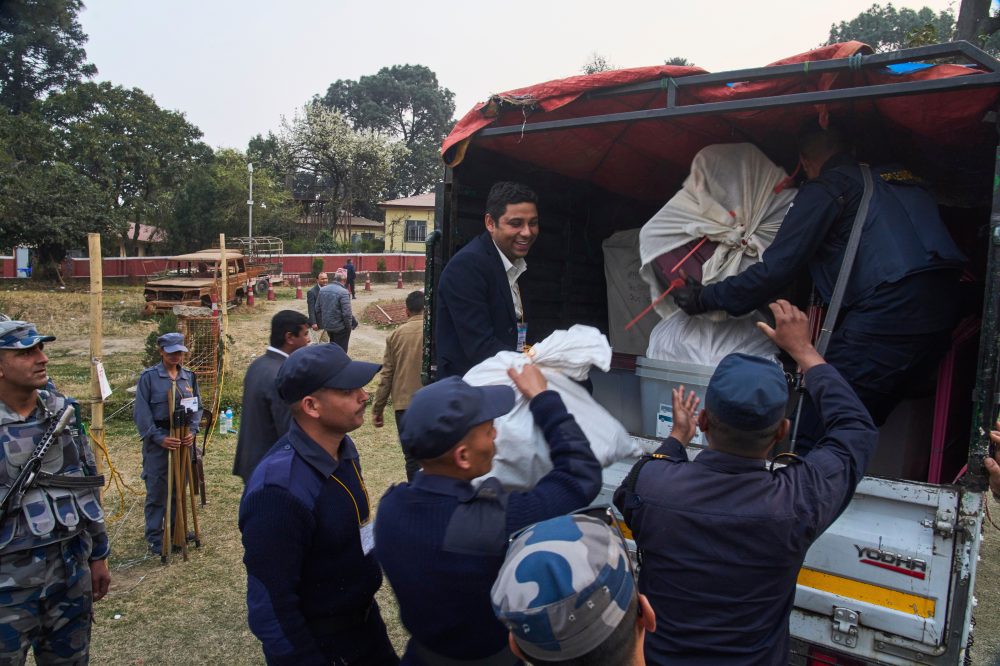

KATHMANDU, Nepal — Ballot counting commenced Friday across Nepal following the nation’s historic parliamentary election, marking the first countrywide voting since deadly youth-led demonstrations drove the previous administration from office in September.
By Friday morning, the Election Commission had initiated vote tallying in 53 out of 165 districts, with officials planning to start processing ballots in all remaining areas before day’s end.
Authorities deployed helicopters to transport ballot boxes from isolated mountain polling locations, some requiring multiple days of trekking to reach on foot, according to election administrators.
Officials projected final results would be available by weekend, estimating approximately 60% of eligible citizens participated in the voting.
Citizens directly selected 165 representatives for the House of Representatives, parliament’s lower house. The remaining 110 positions in the 275-seat legislature will be filled using proportional representation, where parties receive seats based on their overall vote percentages.
Enthusiastic crowds assembled outside ballot-counting facilities throughout the country. In Kathmandu, the capital city, candidate supporters celebrated with cheers and campaign chants.
Political observers characterize the race as a three-candidate competition, driven by citizen frustration over rampant corruption and calls for increased governmental transparency.
The National Independent Party, established in 2022, has emerged as the leading contender, mounting a serious challenge against two established political forces: the Nepali Congress and the Communist Party of Nepal (Unified Marxist–Leninist).
The upstart party’s prime ministerial nominee is Balendra Shah, a rapper-turned-politician who captured Kathmandu’s mayoral office in 2022 and became a prominent leader during the 2025 demonstrations that removed former Prime Minister Khadga Prasad Oli.
The 35-year-old Shah, capitalizing on widespread dissatisfaction with established political organizations, emphasized healthcare and educational improvements for Nepal’s impoverished population throughout his campaign.
The 2025 anti-government demonstrations, sparked initially by social media restrictions, evolved into massive public opposition to corruption and ineffective leadership. The unrest resulted in dozens of deaths and hundreds of injuries as demonstrators stormed government facilities and security forces responded with gunfire.
Although the Congress and Communist parties maintain dedicated supporter networks, Shah’s organization attracted significantly larger campaign audiences, demonstrating its increasing popularity among younger voters seeking political alternatives.