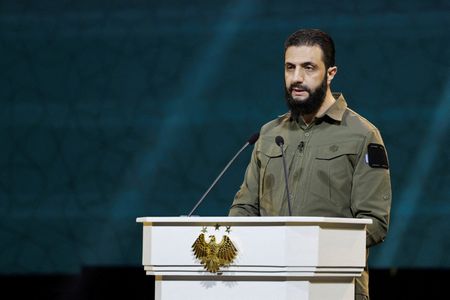

Turkish intelligence officials reached out to Britain’s MI6 spy agency last month seeking expanded assistance in safeguarding Syrian President Ahmed al-Sharaa amid growing threats from Islamic State operatives, according to five sources with knowledge of the situation.
The appeal underscores international efforts to stabilize a nation still experiencing intermittent violence more than a year after Bashar al-Assad’s government fell, as broader regional tensions from the U.S.-Israeli conflict with Iran add to the uncertainty.
International partners view Sharaa as essential to avoiding a return to religious warfare or renewed civil conflict, following 14 years of internal strife that forced millions to flee the country and enabled Islamic State to seize large portions of Syrian territory.
The extremist organization has intensified assaults on Syrian military and security forces in recent weeks, branding Sharaa, who previously led rebel forces, as their “number one foe.”
The exact nature of Turkey’s National Intelligence Organization’s request to MI6 remains unclear, as does any expanded role the British agency may have assumed.
Turkey, Britain, and the United States endorsed Sharaa’s leadership last year in efforts to help unify and reconstruct the nation of 26 million people. Both London and Washington have eliminated most economic sanctions targeting Syria and Hayat Tahrir al-Sham, the Islamic organization Sharaa previously commanded.
Sources speaking to reporters demanded anonymity due to the delicate nature of the intelligence matters.
Turkish intelligence, the Turkish foreign ministry, Britain’s foreign office, and Syria’s defense and interior ministries declined to provide statements when contacted.
The sources, including Syrian government officials and foreign representatives, all pointed to mounting concerns over multiple reported Islamic State schemes to eliminate Sharaa.
A Turkish official revealed that the National Intelligence Organization, which has been instrumental in helping Syria’s new administration establish control, reached out to MI6 for additional support following a recent incident. A high-ranking Syrian security official described the request as coming after a “high-risk assassination plot,” noting that Turkish, British, and Syrian intelligence services maintain constant information sharing.
Specific details about the assassination scheme were not disclosed.
Another Western intelligence source familiar with the matter suggested Turkey may want to establish a Western intelligence presence in Damascus to create separation between Turkish and Israeli agencies, which are currently in disagreement.
According to the United Nations Office of Counter-Terrorism, Islamic State targeted Sharaa and two top cabinet officials in five unsuccessful assassination attempts last year. Syrian authorities successfully prevented two of these plots, as reported in November.
Calling Sharaa a “watchdog” of the international anti-Islamic State alliance, the terrorist group carried out six strikes against Syrian government forces last month as part of what they termed a “new phase.”
Syrian officials publicly confirmed for the first time Thursday that they work closely with Turkish intelligence, announcing their joint success in preventing an Islamic State attack in the capital.
Turkish security officials said their intelligence service identified a three-person team planning remote explosive attacks, allowing Syrian partners to stop an “imminent assault.”
A U.S. diplomatic source briefed on the developments said the Turkish request to MI6 stemmed from the Islamic State’s renewed activity.
The Western intelligence source indicated the two agencies might increase collaborative planning and technical operations, though no final decision has been reached regarding deploying British personnel to Damascus.
A Syrian security official characterized a physical British presence as “highly risky.” They noted that MI6 cooperation was discussed during a February 26 meeting in Damascus between a delegation led by Britain’s Syria special envoy Ann Snow and Syria’s deputy interior minister, Major General Abdulqader Tahan.
Before breaking away from Al Qaeda’s Syrian branch in 2016, Sharaa served as a commander in the Nusra Front. He later headed a coalition of Islamic rebel groups that successfully overthrew Assad’s government in late 2024.