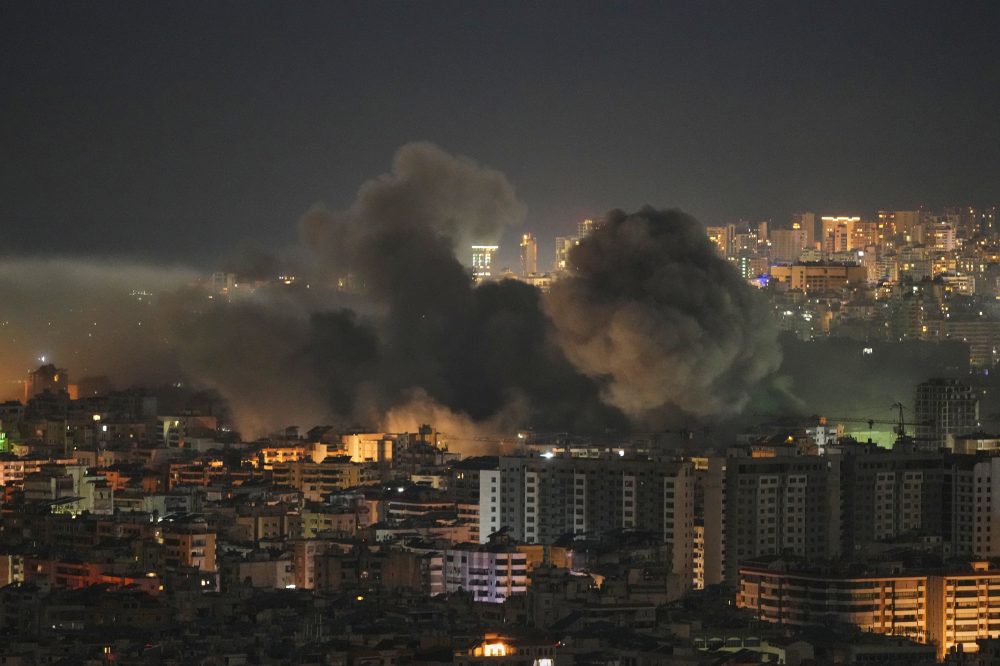

Military operations across the Middle East have intensified as Israeli forces launched attacks on the capitals of both Iran and Lebanon, while American forces reportedly targeted an Iranian naval drone vessel, escalating the campaign against Iran’s maritime fleet.
Early Friday morning brought fresh Iranian counter-attacks against neighboring nations hosting American military installations, though initial reports indicated no casualties from these strikes.
The current round of military action has now entered its second week, with conflicts spanning multiple countries throughout the region.
According to Israeli defense officials, their operations have successfully eliminated the majority of Iran’s air defense systems and missile launching capabilities. Meanwhile, U.S. Defense Secretary Pete Hegseth issued a warning that military operations against Tehran were “about to surge dramatically.”
Iranian officials have issued threats regarding the potential devastation of military and economic infrastructure across the Middle East, with the ongoing conflict creating significant volatility in global financial markets.
Saudi Arabia’s Defense Ministry reported successfully intercepting and destroying three unmanned aircraft in eastern areas surrounding Riyadh.
Earlier on Friday, Saudi officials announced they had successfully stopped a cruise missile targeting the city of Kharj.
Iranian state media reported Friday that a governing council convened to plan a gathering of the Assembly of Experts, the body responsible for choosing Iran’s next supreme leader.
The governing council consists of President Masoud Pezeshkian, chief justice Gholam Hossein Mohseni Ejehi, and religious leader Ayatollah Ali Reza Arafi.
Officials provided no specific timeline for selecting the supreme leader and gave no details about whether the 88-member religious assembly would convene in person or conduct remote voting.
Facilities connected to the Assembly of Experts have sustained damage during the ongoing Israeli-American air campaign.
Dubai citizens have begun receiving widespread text alerts cautioning them about their online activities.
According to a message from Dubai law enforcement, “photographing or sharing security or critical sites, or reposting unreliable information, may result in legal action and compromise national security and stability.”
The warning provided no additional specifics.
This development follows similar but more severe warnings issued by Bahrain as the Iranian conflict continues across the region.
The United Arab Emirates operates as a union of seven ruling territories, including Dubai and Abu Dhabi.
While the UAE maintains relatively liberal social policies compared to regional neighbors, the nation enforces strict regulations on public expression and prohibits political organizations and worker unions.