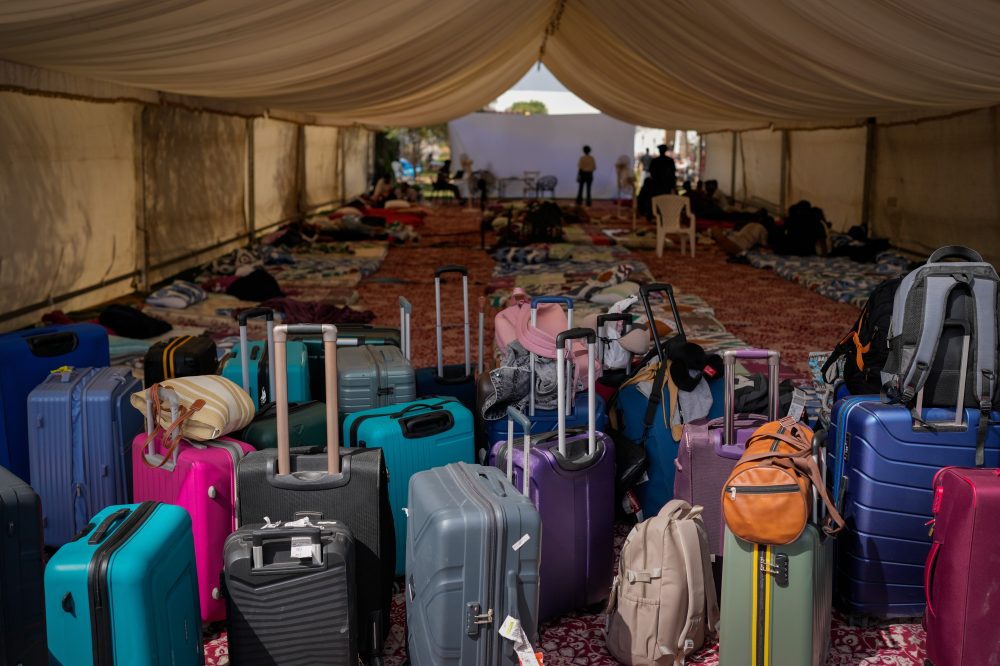
The ongoing U.S.-Israeli conflict with Iran has sent shockwaves through global aviation markets, with airline stocks across Asia taking a major hit as oil costs reach their highest levels since July 2022.
Fuel prices have surged dramatically, with crude oil climbing 20% during early Monday trading as concerns mount over supply disruptions and extended shipping delays caused by the escalating Middle Eastern crisis.
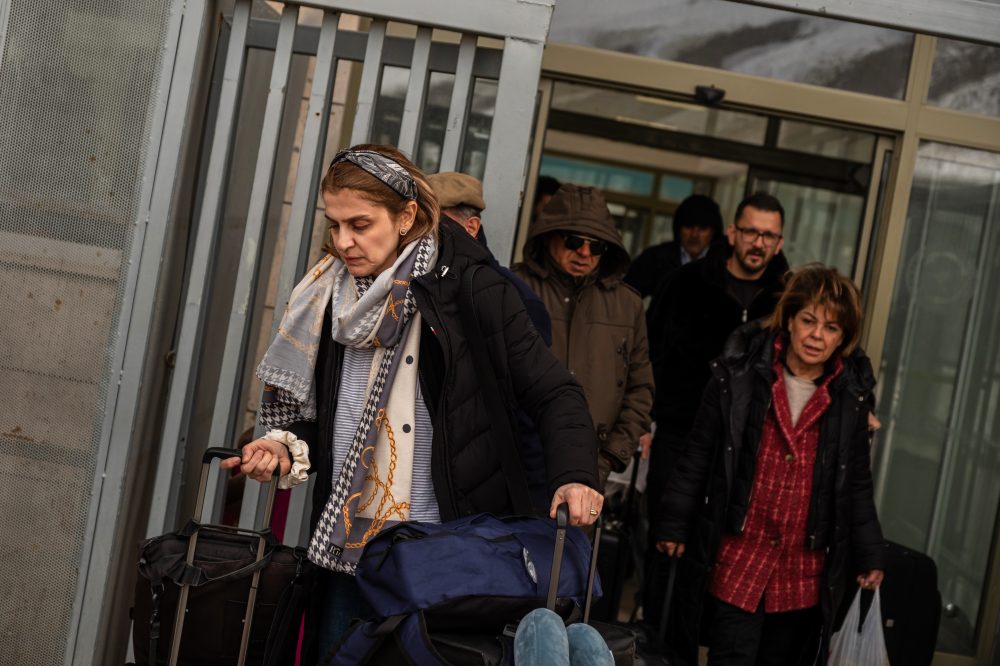
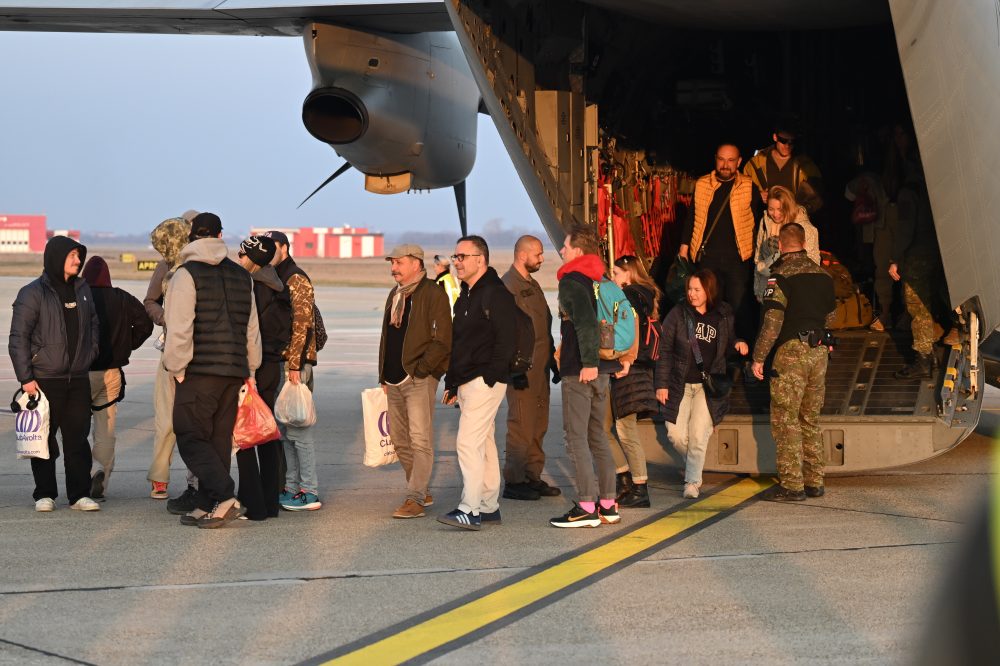
Travelers caught in the conflict zone are paying extraordinary amounts to flee the region, making last-minute airport runs, taking overland routes to safer transportation hubs, and in some cases requiring fighter jet escorts for commercial aircraft departures.
Regional airspace remains largely restricted due to missile and drone threats, forcing many passengers to seek private jet alternatives as charter services and limited commercial operations struggle to handle the evacuation of thousands of stranded travelers.
Flight tracking data from Cirium shows that over 37,000 flights serving Middle Eastern destinations have been grounded between February 28, when hostilities began, through March 8.
Aviation industry expert Brendan Sobie, based in Singapore, noted that airlines were already facing challenging conditions before this latest crisis due to political instability, economic pressures, and supply chain complications.
“Now that already high level of uncertainty has increased even further,” he said.
Major carriers saw significant stock declines Monday, with Qantas Airways, Air New Zealand, Cathay Pacific, Japan Airlines, Korean Air Lines, China Southern, and China Eastern all experiencing drops ranging from 4% to over 10%.
Aviation fuel represents airlines’ second-biggest operational cost after personnel expenses, typically consuming 20-25% of their operating budgets. While many Asian and European carriers maintain oil hedging strategies, most U.S. airlines abandoned this practice in recent decades.
“If crude is rising 20%, jet fuel is rising several times more as it is even more scarce, adding significant cost to operations together with crew resources which are stretched due to longer flying times when airspace is closed,” said Subhas Menon, head of the Association of Asia Pacific Airlines.
Australia has instructed family members of diplomatic personnel in the United Arab Emirates to evacuate following escalating violence that brought Iranian attacks to several Gulf cities and temporarily shut down Dubai International Airport on Saturday.
Oman’s Muscat International Airport has requested private jet operators limit “additional flights” to prioritize government and commercial services amid fresh airspace restrictions affecting regional travel recovery efforts, according to internal communications obtained by Reuters.
Turkish carriers including Turkish Airlines, AJet, Pegasus, and SunExpress have suspended all service to Iraq, Syria, Lebanon, and Jordan through March 13, Turkish Transport Minister Abdulkadir Uraloglu announced Sunday.
The U.S. State Department reported completing more than a dozen charter evacuation flights, removing thousands of American citizens from the Middle East since last week.
Air India has expanded its schedule with dozens of additional European and North American routes through March 18 to meet increased demand for direct services as Middle Eastern airspace closures eliminate connecting flight options.
Pilots interviewed by Reuters described mounting psychological pressure from managing multiple global conflict zones spanning Ukraine, Afghanistan, and Israel, forcing them to navigate increasingly restricted airspace while avoiding military drone activity.
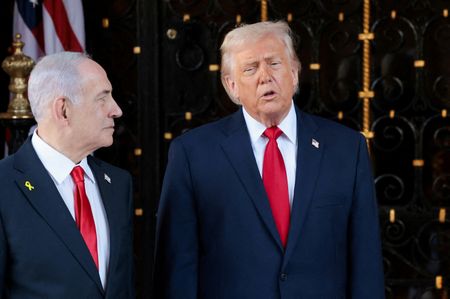
WASHINGTON – President Donald Trump indicated Sunday that decisions regarding the conclusion of military operations against Iran would be coordinated jointly with Israeli Prime Minister Benjamin Netanyahu.
During a telephone interview with The Times of Israel, Trump emphasized that the Israeli leader would play a significant role in determining how to resolve the ongoing conflict.
“I think it’s mutual … a little bit. We’ve been talking. I’ll make a decision at the right time, but everything’s going to be taken into account,” Trump stated during the phone conversation.
The president’s comments suggest close coordination between Washington and Jerusalem on Middle East military strategy and conflict resolution.
SEOUL, March 9 – South Korean lawmakers are set to complete work on legislation Monday that would clear the path for a parliamentary vote this week on a massive $350 billion US investment package tied to a trade agreement between the two nations.
The National Assembly is scheduled to hold a full vote on March 12, as South Korea moves to address Washington’s concerns about slow progress in implementing the bilateral trade arrangement.
Known as the “Special Act on Investment in the U.S.,” the legislation would establish an investment framework along with a risk oversight committee to carry out last year’s accord. The agreement calls for South Korean investment in American shipbuilding and semiconductor industries in exchange for reduced US tariffs.
Earlier this year in January, President Donald Trump warned of potential tariff increases on South Korean goods, criticizing lawmakers for what he called legislative delays on the trade agreement.
Senior South Korean government leaders have maintained that the US-South Korea trade arrangement continues to be effective, even after a February Supreme Court ruling that eliminated many of Trump’s tariff policies.
However, Seoul officials have expressed worries about how American investments might affect South Korea’s already struggling won currency. They emphasized that investment decisions would depend on business viability assessments and foreign exchange market stability.
The parliamentary committee, featuring members from both the governing Democratic Party and opposition People Power Party, plans to conduct a final review of the legislation in subcommittee Monday morning before seeking approval at an afternoon session.
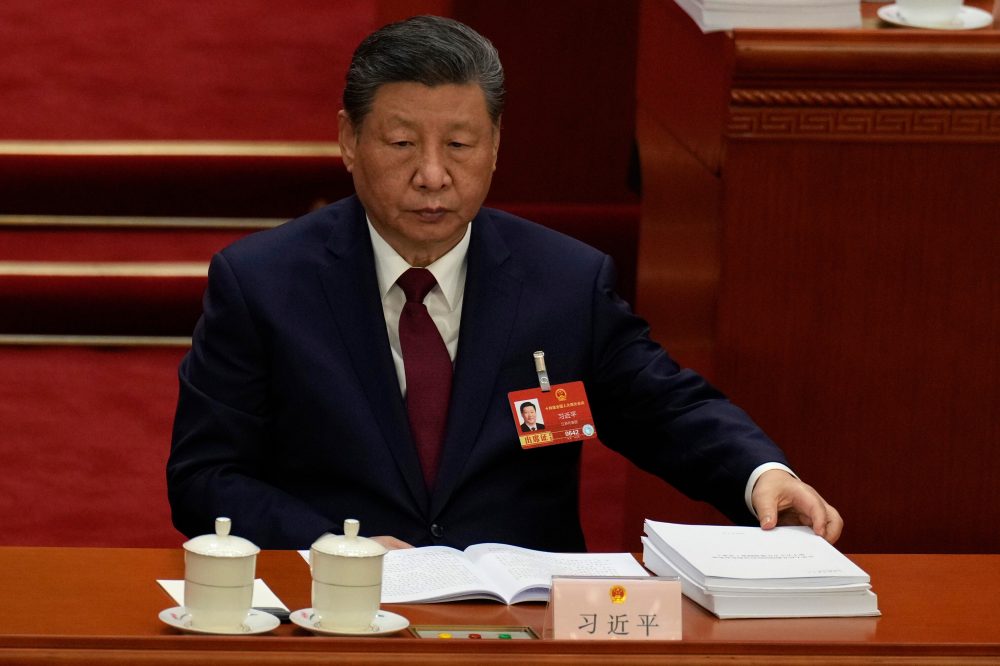
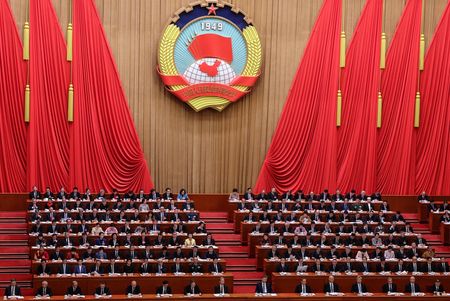
BEIJING — China’s national legislature has revealed two comprehensive economic strategies during its annual session, showcasing priorities that could significantly impact the worldwide economy.
The 2026 government blueprint identifies “establishing a strong domestic market” as its primary objective, followed by speeding up technological development. However, the longer five-year strategy places greater emphasis on achieving technological breakthroughs.
This distinction reveals Beijing’s careful balancing approach. The ultimate objective involves transitioning from low-cost production to a technology-focused economy.
However, more pressing concerns involve addressing an extended period of economic weakness that has undermined consumer and business confidence. Given China’s massive export presence, its decisions impact nations and employment worldwide.
These strategies, introduced during the National People’s Congress opening, provide insight into government priorities. The rubber-stamp legislature is expected to officially approve them when the eight-day session concludes Thursday.
Experts consider technological advancement the much more significant objective for Chinese President Xi Jinping and his vision of establishing the country as a major power capable of challenging the United States on matters from trade disputes to Taiwan issues.
Addressing a provincial delegation during the National People’s Congress, Xi urged new developments, innovative breakthroughs and “seizing the strategic high ground of science and technology,” state media reported.
China’s dramatic expansion into becoming the world’s second-biggest economy has elevated it to middle-income status. To continue progressing, Xi has championed policies shifting the economy toward higher-value sectors.
Government support for electric vehicles, for instance, has transformed China into a rising force in the international automotive sector while aligning with national environmental objectives.
The five-year blueprint promises to “target the frontiers of science and technology,” accelerating progress in sectors including artificial intelligence, quantum computing, biotechnology and renewable energy.
This initiative has grown and evolved as technology has become a competitive arena with the United States carrying national security consequences.
Washington has limited Chinese companies’ access to cutting-edge technologies, including semiconductors powering AI systems. Officials justify this by stating these components could end up in military applications during a period when both nations are defense rivals.
Beijing has responded by investing heavily in developing these technologies domestically while finding methods to stay competitive using less sophisticated components.
China must “fight the battle for key core technologies,” the five-year strategy stated. Specific objectives, beyond AI, electric vehicles and robotics, include advancing semiconductors, batteries, biomedicine and 6G wireless networks.
The blueprint also committed to expanding production of China’s domestic passenger aircraft, the C919, and achieving progress in developing indigenous commercial jet engines. Washington temporarily blocked Western-supplied engines for the C919 last year during trade war escalation with China.
Rare earth elements — where China dominates globally — were emphasized as an area where it should preserve its competitive advantage as America and other nations work to develop their own sources of these essential materials for advanced technology and military equipment.
Despite China’s domestic economic cooling, increasing exports have maintained overall growth. However, tariffs imposed by President Donald Trump have revealed the dangers of depending too heavily on international markets.
China managed to redirect exports to alternative markets, but this faces obstacles as its record trade surplus approaching $1.2 trillion raises concerns about threats to manufacturing jobs and broader economies in other nations.
This has strengthened China’s drive to boost domestic consumer spending, making the economy less reliant on external factors.
“Facing a complex and challenging international environment, we must remain committed to the strategy of expanding domestic demand,” the annual economic blueprint stated.
Despite strong rhetoric, analysts suggest the effort appears designed to stabilize the economy rather than stimulate it. The annual plan establishes a growth target of 4.5% to 5% for 2026, allowing for potential decline from last year’s 5% increase.
Meanwhile, the government is prepared to provide substantial subsidies for high-tech manufacturing advances, analysts noted.
“Technological development and self-sufficiency remain central priorities, and industrial policy will continue to be deployed as an essential tool to achieve them,” Capital Economics researchers wrote in their analysis.
Similar subsidies to wind and solar sectors created manufacturing oversupply that was exported at extremely low prices, undermining international competitors. The outcome could be an even greater imbalance between China’s enormous manufacturing capacity and weaker domestic consumption, further increasing its exports.
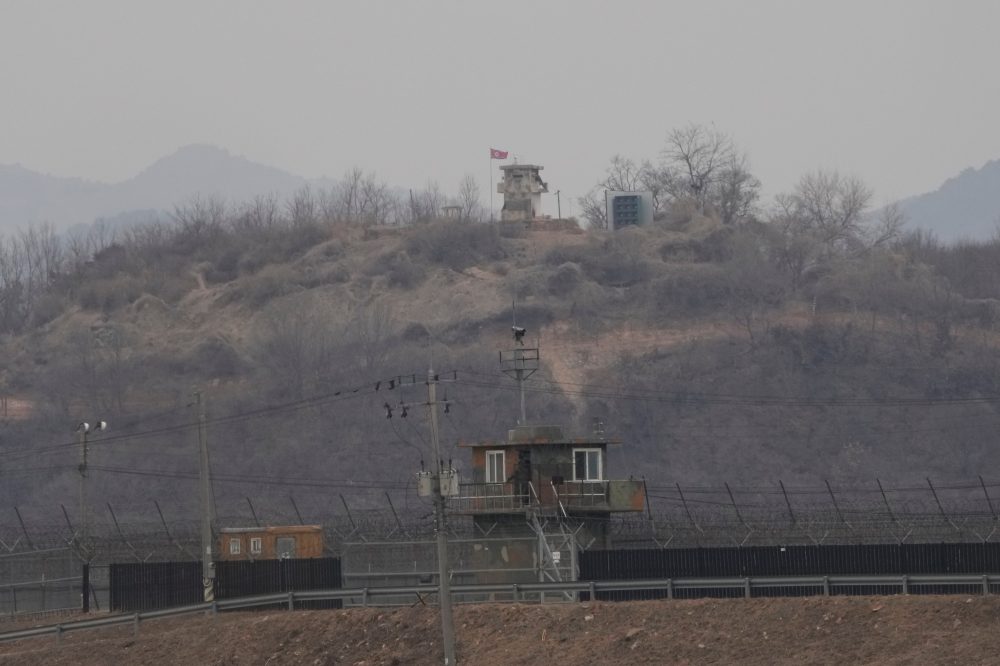
SEOUL, South Korea — American and South Korean forces kicked off a major joint military training operation on Monday, with the exercise taking place as the United States continues to handle escalating conflicts in the Middle East.
According to South Korea’s Joint Chiefs of Staff, approximately 18,000 South Korean military personnel are participating in the Freedom Shield exercise, which will continue until March 19. Officials with U.S. Forces Korea have not disclosed how many American service members are involved in the training activities.
The joint military operation is happening while South Korean news outlets report speculation that Washington may be moving some military resources from South Korea to assist with operations against Iran in the Middle East region.
Last week, U.S. Forces Korea officials stated they would not discuss specific military asset movements due to security concerns. South Korean government representatives also refused to address media reports suggesting certain U.S. Patriot missile defense systems and additional equipment were being transferred to Middle East locations, though they indicated such moves would not significantly affect the partnership’s overall defense capabilities.
The Freedom Shield exercise may provoke an angry reaction from North Korea, which has consistently characterized these joint military drills as preparation for invasion and has used them as justification to increase its own military activities and weapons testing programs. Both allied nations maintain the exercises serve defensive purposes.
North Korea has ended all significant diplomatic communication with both Washington and Seoul after the failed 2019 summit between leader Kim Jong Un and former U.S. President Donald Trump. Relations have deteriorated further as Kim has taken advantage of Russia’s Ukraine invasion to rapidly expand his nuclear weapons program and strengthen military ties with Moscow, which has received thousands of North Korean soldiers and substantial weapons shipments to support its war efforts.
The current allied exercises follow a significant political gathering in Pyongyang last month, during which Kim reaffirmed his hostile stance toward “enemy” Seoul while suggesting potential dialogue with Washington, urging the United States to abandon its requirement for North Korea’s denuclearization as a condition for negotiations.
Freedom Shield represents one of two yearly “command post” training exercises between the allies, with the second being Ulchi Freedom Shield in August. These operations primarily use computer simulations to evaluate joint operational readiness while incorporating updated warfare scenarios and security threats. The March exercise will include an accompanying field training component called Warrior Shield, though the number of field exercises has decreased to 22 this year compared to 51 in the previous year.
Although U.S. and South Korean military officials explain that field exercises typically occur throughout the year, some observers believe the allies may be reducing the intensity of spring training operations to encourage diplomatic opportunities with North Korea. South Korean President Lee Jae Myung has expressed interest in diplomatic solutions, and several of his senior officials have indicated optimism that Trump’s anticipated visit to China in late March or April might create possibilities for engagement with Pyongyang.
More than 200,000 American citizens who have made Israel their home are experiencing firsthand the challenges of living through an active conflict with Iran, sharing stories of resilience mixed with weariness as they adapt to a reality filled with air raid sirens and shelter runs.
Among them is Yehiel Levin, a former US Army serviceman originally from Santa Monica, California, who relocated to Israel three years ago following multiple deployments to Iraq and other combat areas. Despite battling post-traumatic stress disorder, Levin finds the current situation manageable due to his military background.
“I spent so much time living in chaos in Iraq, the situation here doesn’t really bother me,” Levin shared with The Media Line.
However, the veteran expressed mixed feelings about witnessing the United States and Israel collaborating militarily against Iran.
“I understand that Iran is definitely evil and has to be destroyed, and the leadership has to completely change,” explained Levin, who shares a Jerusalem home with his partner and her daughter. “At the same time, as somebody who was sent to fight in Iraq, I’m really, really, really against the US getting involved in anything that doesn’t directly relate to it. I’m kind of torn when it comes to that. But it’s pretty cool to watch both countries work hand in hand.”
The daily reality of wartime life poses particular challenges for American families with children, who must balance professional responsibilities with the unpredictable demands of seeking shelter during attacks.
Ariela Lerman, a recently divorced mother of two young children, has found her routine completely disrupted by the conflict. Both children now refuse to leave her side, with her five-and-a-half-year-old daughter Ruthie describing how each siren makes her heart race so intensely it feels like it might burst from her chest.
Managing the children primarily alone, Lerman relies on supportive neighbors who assist in quickly moving her family to their building’s basement shelter when alerts sound. Despite this community support, the psychological and practical burden continues to mount.
“If this continues for another week or so, I’m probably gonna completely lose it,” said Lerman, who moved to Jerusalem from Baltimore and works from home. “I work basically from home and thankfully have an amazing boss who understands that I am a single mom and do not have the capacity to work when they’re both at home … One of the days when we had like seven sirens during the day, I barely got anything done when I really needed to get things done. And the other day, I was just so exhausted because I barely got any sleep.”
To cope with the situation, Lerman has increased her children’s screen time significantly and invested heavily in art materials and activities to keep them occupied indoors. Even routine errands have become complicated, with one recent store trip nearly derailed when her daughter became hysterical at the prospect of separation, requiring her father’s intervention to allow Lerman to leave briefly.
Laura Cornfield faces different challenges as a single mother raising three teenagers. While her older children still want to maintain social connections, this creates constant anxiety about their whereabouts during air raid warnings.
“Every time … you hear a boom, you’re concerned. If you’re not with them, you’re even more concerned,” Cornfield explained.
Her family’s designated safe room doubles as her teenage son’s bedroom, making it an less-than-ideal gathering space for her daughters during alerts. Educational continuity has also suffered, with remote learning proving difficult for students accustomed to classroom interaction.
“The challenge is having them join their Zoom classes, because it’s very difficult for kids to be interested in Zoom when they’re used to interpersonal interactions in a classroom,” Cornfield told The Media Line. “Being in front of a computer to study for more than two hours a day is very difficult for a generation of students who suffer from ADHD.”
Some Americans have chosen to remain in Israel despite the escalating situation. Lauren Hamrick, a Christian country music artist, made Tel Aviv her home during the High Holidays after spending the summer there, deliberately staying despite the ongoing conflict.
“I can’t explain it,” Hamrick told The Media Line. “Israel is the kind of place that chooses you. No one ends up here by accident.”
She elaborated on her decision: “Everything that had been happening here, politically, socially, spiritually, I didn’t want to miss a second of it, and so I chose to uproot my life and to come to Israel and to add to the conversation as an observer, as an ally, as just a witness to this great history.”
While Hamrick didn’t anticipate the current escalation following the previous Iran conflict in June 2025, she maintains her faith provides protection, though she acknowledges the physical and emotional drain of the situation.
“When you go to the shelter every 30 minutes to an hour, it’s completely exhausting,” Hamrick observed. “You start to lose a sense of self. You forget your own first name, what you look like, and whether and when you can shower. The experience certainly is taxing on the human spirit.”
Despite the hardships, Hamrick draws strength from observing how Israeli citizens handle wartime conditions based on their previous experiences.
“They show you how to do war,” Hamrick said. “I’m just in this posture of learning how to fight, and I am learning it from the best fighters, the blessed fighters. And I think that the whole thing has given me a lot of pause and made me feel very introspective and very prayerful.”
As an American witnessing the cooperation between her birth country and adopted home, Hamrick expressed strong support for the collaborative military effort.
“Trump is in real time debunking the lie that America first means America only,” Hamrick told The Media Line. “I tell people that America’s war is Israel’s war and Israel’s war is America’s war … Trump carried out that preemptive strike, knowing that Iran was preparing to strike first… I commend the president’s bravery.”
Looking toward the future, Hamrick believes the current military action will ultimately prove beneficial for regional security.
“God bless America, God bless Israel,” she concluded. “I’m proud to have upgraded my life to live in this splinter of land in the eastern Mediterranean, watching it all with my own two eyes.”
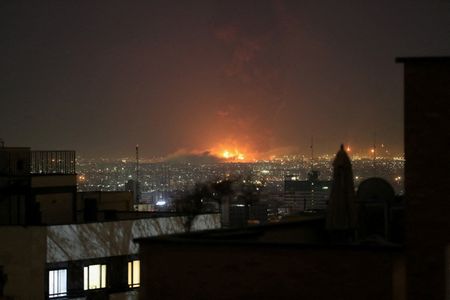
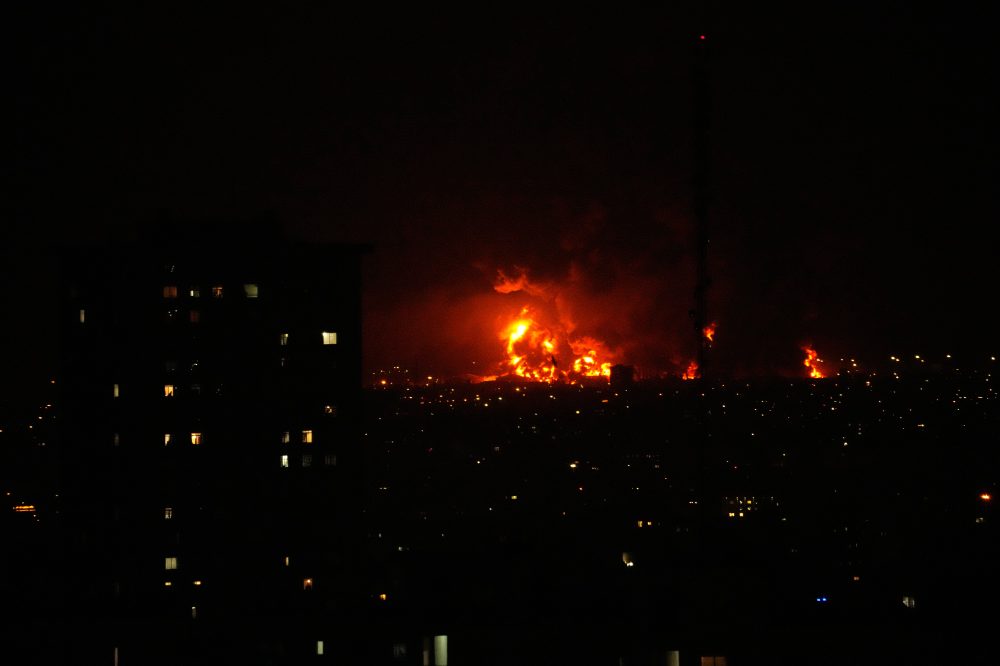
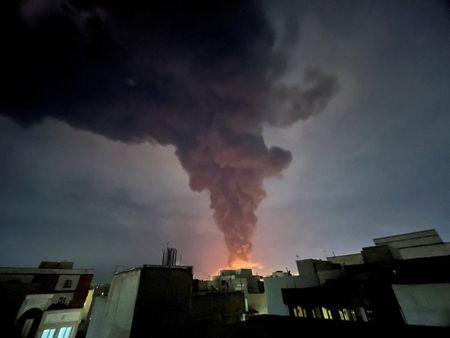
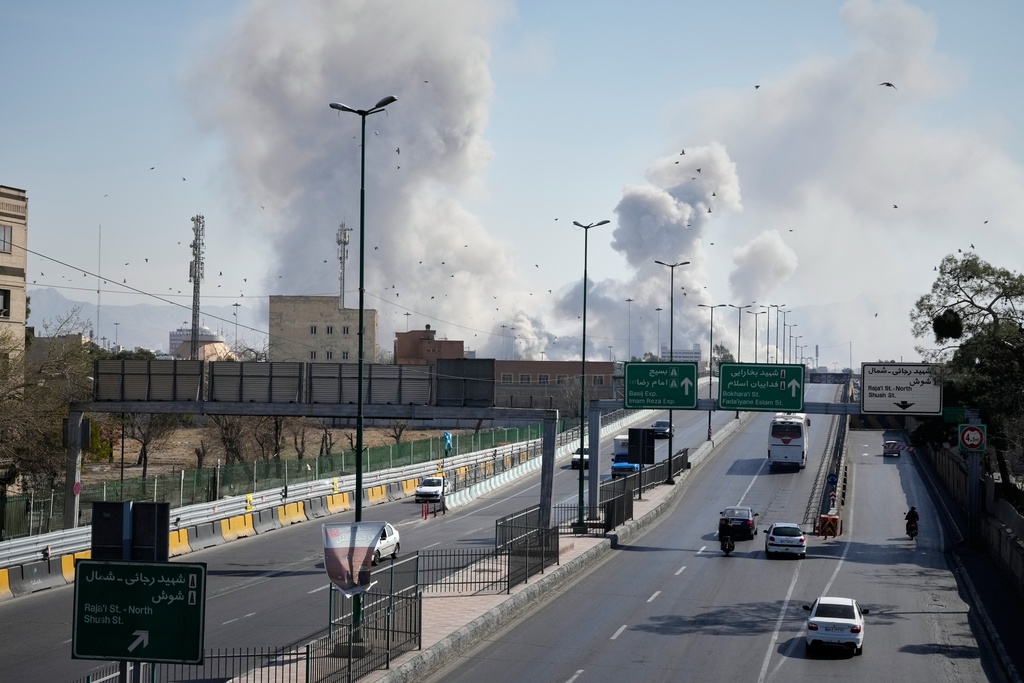
Israeli Defense Forces announced Saturday they conducted airstrikes against Iranian oil infrastructure and key ballistic missile facilities, marking the first time Tehran’s petroleum sites have been attacked in the ongoing two-week conflict.
Military officials report targeting fuel storage facilities directly connected to Iran’s military operations and overseen by the Islamic Revolutionary Guard Corps (IRGC). Opposition sources suggest approximately 30 locations may have been struck, according to Jerusalem Post reporting.
Israeli forces conducted nighttime operations against multiple fuel storage sites in Tehran and surrounding areas on Saturday evening.
“The military forces of the Iranian terror regime make direct and frequent use of these fuel tanks to operate military infrastructure. Through them, the Iranian terror regime distributes fuel to various consumers, including military entities in Iran,” the IDF said in a statement.
Military leaders described the operation as “an additional step in deepening the damage to the military infrastructure of the Iranian terror regime.” The announcement followed reports of a second wave of attacks on government-connected targets in Iran’s capital.
Iranian news outlet Fars cited oil ministry officials confirming Israeli aircraft struck three fuel depots in western Tehran, specifically targeting facilities in Kuhak and Shahran districts, plus another location in nearby Karaj.
Tehran responded with missile launches toward Israel Saturday evening, causing no reported injuries but destroying one residence in Lod. Hezbollah forces also fired rockets into Israeli territory overnight.
Although Iranian President Masoud Pezeshkian issued apologies to Gulf states for earlier attacks, explosions and damage occurred in Bahrain and the UAE, with one fatality reported in Dubai.
Prime Minister Benjamin Netanyahu announced Saturday night that the joint Israeli-American military campaign would proceed, stating that a “moment of truth” was approaching when Iranians could overthrow their government.
Netanyahu revealed Israel maintains “an organized plan with many surprises” for upcoming conflict phases, “to destabilize the regime, to enable change.”
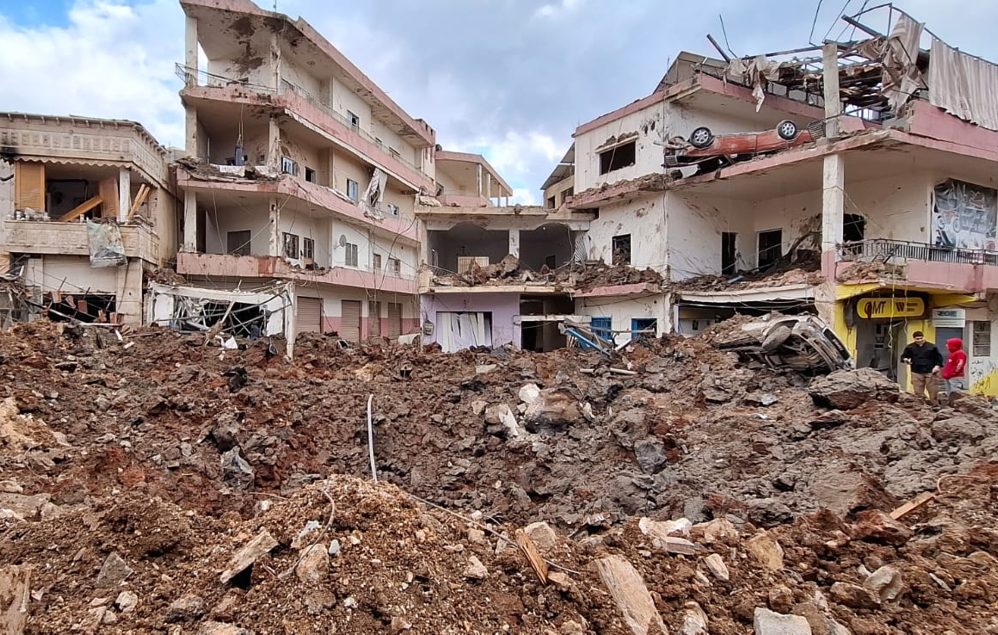
A former British military commander is warning that Israel’s expanding military operations in Lebanon signal something far more significant than typical border conflicts.
Retired British Army Colonel Richard Kemp told The Media Line that Israel’s current campaign represents part of a larger strategic effort to eliminate Hezbollah’s remaining ability to pose threats during what he sees as an inevitable broader conflict with Iran.
According to Kemp, the Iran-supported organization has spent years building up its rocket and missile capabilities specifically for deployment during a regional conflict that would involve Iran and its proxy forces.
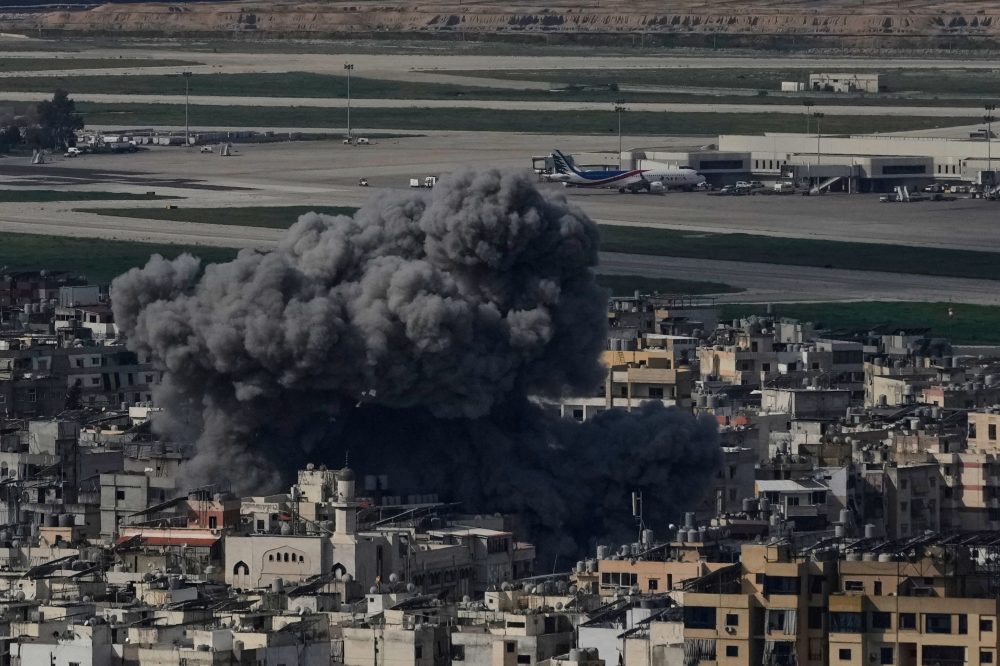
The assessment comes as Israeli forces continue ground operations in Lebanon following fresh missile strikes launched by Hezbollah forces. Kemp contends that these military actions go beyond responding to immediate border threats.
“Hezbollah exists for this very moment,” Kemp explained, suggesting that the group’s extensive weapons stockpile was accumulated with the specific purpose of targeting Israel during a wider Middle Eastern confrontation involving Iranian forces and allied groups.
Medical emergency teams report that six people sustained injuries Sunday afternoon when Iranian cluster missiles impacted central Israel, marking another escalation in the eight-day conflict between the two nations.
According to United Hatzalah and Magen David Adom emergency services, the casualties included a 40-year-old man in serious condition, a 25-year-old man with moderate injuries, and a 56-year-old man who suffered minor wounds. Three additional victims received treatment for minor injuries.
Fire and rescue crews responded to two main impact zones in central Israel where cluster munition fragments had scattered, with firefighting teams actively working at both locations as part of the emergency response effort.
Sunday’s violence began early, with five separate rocket attacks targeting Israel starting at approximately 2 a.m. local time. These initial strikes did not produce severe casualties. A seventh wave of missiles was launched later in the afternoon, though preliminary assessments suggested minimal damage or injuries.
Israel’s Health Ministry released statistics Sunday showing that 1,619 individuals have needed hospital care since the conflict with Iran commenced.
Currently, 87 people remain in medical facilities receiving treatment. Four patients are fighting for their lives in critical condition, with two of those cases directly linked to Iranian missile impacts. Medical staff are treating 31 people for moderate injuries and 50 for minor wounds, while two patients are still being evaluated by doctors.
Emergency response teams continue surveillance of strike locations while providing ongoing medical support as officials evaluate the damage from the most recent missile bombardment.
Coinciding with International Women’s Day observances, the latest installment of ‘Facing the Middle East with Felice Friedson’ examines female leaders who are transforming their communities and working to overcome longstanding obstacles in a region marked by conflict and political instability.
Episode 19 of the program centers around the Women Champions for Change project, bringing together participants from Israel, other Middle Eastern nations, and international locations to discuss the impact women can have when given leadership opportunities rather than simply being included in existing structures.
The initiative, which involves 50 women and is spearheaded by Danny Hakim, features contributions from Hanan Alsanah, Nazanin Afshin-Jam MacKay, and Donna Orender. Their conversations cover topics including women’s empowerment, the ongoing situation in Iran, effective leadership strategies, and fostering collaboration across cultural and political divides.
The program explores how female leadership is creating new possibilities for hope and progress in communities throughout the Middle East, despite the challenges posed by ongoing warfare, deep-seated mistrust, and volatile political conditions.
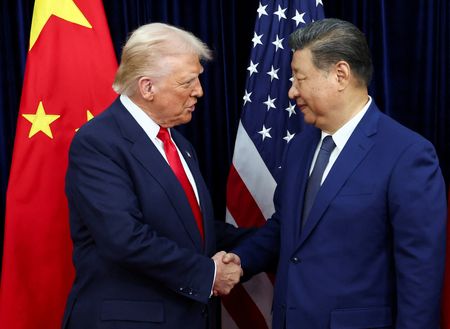
BEIJING/WASHINGTON, March 9 – The scheduled meeting between President Donald Trump and Chinese leader Xi Jinping later this month will likely focus on preserving economic stability rather than delivering major trade breakthroughs, according to five sources familiar with summit preparations.
Corporate executives from America have not yet organized the high-level business delegation that some had hoped to arrange for the visit. Meanwhile, Beijing appears unlikely to secure the investment protections it has been seeking for Chinese businesses operating in the United States.
Both nations are working to preserve the relative calm that has defined relations between the world’s two biggest economies since the end of last year, following a turbulent period characterized by Trump’s trade tariffs and China’s restrictions on rare earth mineral exports.
However, some American corporations had hoped Trump’s trip might accomplish more than just approving deals for Chinese purchases of soybeans and Boeing planes, which are already being discussed.
The upcoming summit – marking the first Trump-Xi encounter since their trade truce agreement in October – has been complicated by Chinese concerns over the Trump administration’s rushed planning process for what typically requires months of careful preparation, three sources with knowledge of the arrangements revealed.
Outstanding issues include Chinese investment clearances and the contentious matter of Trump’s tariffs, along with questions about whether the president will bring the type of prominent business delegation that leaders from Canada, Britain, and Germany recently included on their Chinese state visits.
“This feels like an ever-shrinking state visit. The ambition for what this trip will accomplish seems to be getting smaller by the day,” commented Ryan Hass, who directs the John L. Thornton China Center at the Brookings Institution.
The White House, Treasury Department, Office of the U.S. Trade Representative, and China’s commerce and foreign ministries did not provide responses to inquiries about summit expectations.
A U.S. official confirmed last month that Trump plans to visit China from March 31 through April 2. While China has not officially acknowledged the trip, its senior diplomat indicated Sunday that the meeting agenda was “on the table.”
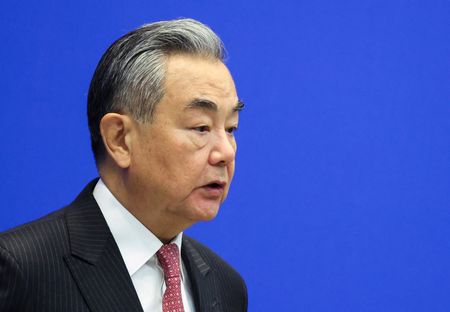
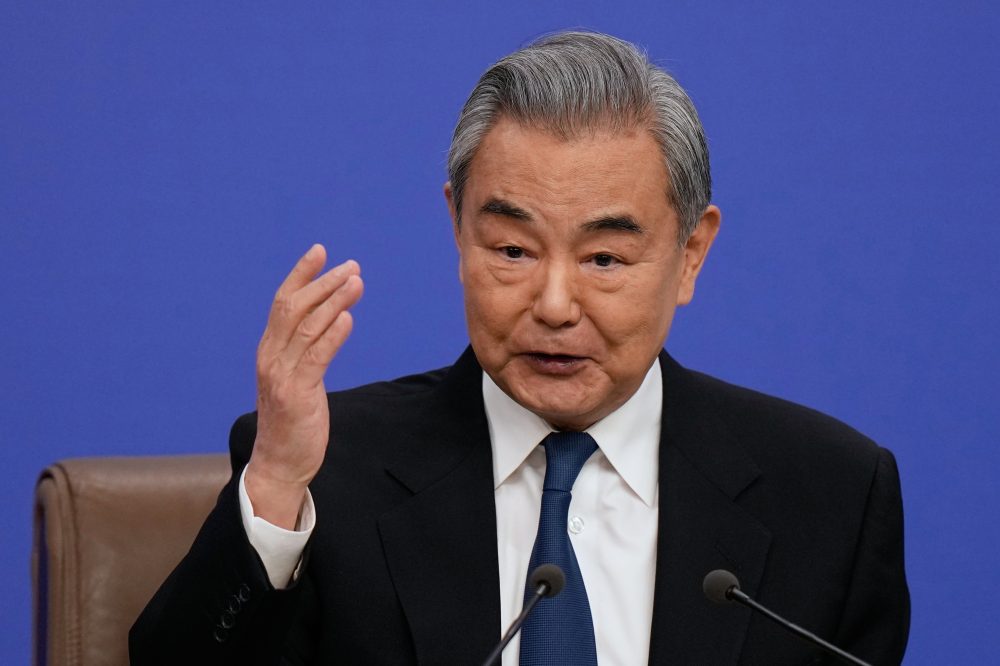
“What is required is for both sides to make thorough preparations to create a conducive environment to manage existing differences,” Foreign Minister Wang Yi stated during a press conference alongside China’s annual parliamentary session in Beijing.
Washington only recently initiated working-level planning meetings across government agencies for the visit, providing minimal time for the highly choreographed state visit that Beijing typically expects, two sources indicated.
American officials regard this visit as one of four possible Trump-Xi meetings planned for this year. A Paris meeting this week between Bessent and Chinese Vice Premier He Lifeng will concentrate on potential outcomes for the Beijing summit, according to someone familiar with the developing preparations.
Trump’s Beijing ambassador, David Perdue, is advocating for a CEO delegation, and U.S. officials in China have made preliminary contact with companies, two sources reported.
However, the U.S. Trade Representative’s office, which has been leading Washington’s summit planning alongside Treasury, has shown reluctance to include CEOs in order to maintain focus on “managed trade,” three sources said.
The Trump administration could still organize a last-minute CEO delegation, three sources suggested. The China Development Forum, which annually attracts dozens of top American business leaders, is scheduled for the week before the summit.
To obtain Chinese investment approval in America, Beijing seeks security assurances, two sources explained, following the required sale of TikTok in the United States.
While Trump invited Chinese car manufacturers to establish U.S. factories in January, a U.S. official noted the president has not pursued an intensive campaign to secure Chinese investment commitments, unlike his approach with Japan, South Korea, and Taiwan.
Several Republican legislators have cautioned Treasury Secretary Scott Bessent against reducing restrictions on Chinese investment.
Tariffs continue to present a potential source of tension.
The U.S. Supreme Court invalidated a 10% fentanyl-related tariff that Trump had placed on China and other nations under emergency authority last month. The Trump administration has informed Beijing it plans to reinstate that tariff under different legal authority, a U.S. official revealed.
However, the summit’s goal is “not to fight about trade,” Trade Representative Jamieson Greer told ABC News last month.
“It’s to maintain stability, make sure that the Chinese are holding up their end of our deal and buying American agricultural products and Boeings and other things, and making sure they are sending us the rare earths that we need,” Greer explained.
One possible summit achievement could involve China’s agreement to purchase approximately 500 narrow-body aircraft from Boeing. Trump previously threatened export restrictions on Boeing components, creating difficulties for China.
Beijing is requesting U.S. concessions in exchange for the purchase, including guaranteed parts availability for multiple years, according to two sources briefed on the discussions. The aircraft deliveries would likely extend into the 2030s due to Boeing’s manufacturing schedule and existing order backlog.
White House officials might still choose to postpone the Boeing agreement to reduce concessions to Beijing and save some announcements for a future summit on American territory, one person knowledgeable about the discussions indicated.
Officials at Muscat International Airport in Oman have instructed private aircraft operators to stop scheduling extra flights as regional airspace restrictions continue disrupting travel throughout the Middle East, Reuters reported Friday based on internal communications.
Airport management sent a message to charter flight companies stating that “flight movements are restricted to approved seasonal scheduled services only” due to current crisis protocols at the facility.
Authorities explained the limitations were implemented to control overcrowding and keep airport operations within manageable capacity levels.
The directive, initially covered by the Financial Times, instructed all carriers and operators to eliminate any reserved time slots not part of the standard seasonal flight schedule and to stop requesting approval for unauthorized flights until conditions improve.
The communication specified that “embassy-sponsored repatriation flights” would be the sole exception during this period, but only with advance diplomatic approval and under the condition that “no commercial sale of seats is undertaken in connection with such operations.”
The escalating conflict involving the United States, Israel and Iran has triggered flight suspensions across Middle Eastern nations, forcing airlines and government officials to address the needs of thousands of displaced travelers.
Regional airspace remains largely restricted due to security threats from missiles and drones, prompting some individuals to seek private aircraft while charter services and reduced commercial flights work to transport tens of thousands of affected passengers.
People have paid premium rates to leave the Middle East region, rushing to departure points or traveling overland to less affected transportation centers, with military aircraft sometimes providing escort services for civilian flights.
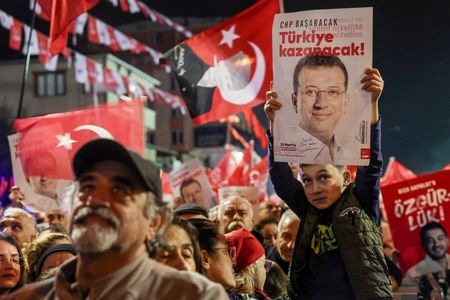
A major corruption trial began Monday for Istanbul Mayor Ekrem Imamoglu, who has been imprisoned for nearly a year and represents the strongest challenge to Turkish President Tayyip Erdogan’s political dominance.
The 55-year-old mayor stands as the primary defendant among more than 400 individuals connected to Istanbul’s city government who face corruption and bribery allegations. Both Imamoglu and his Republican People’s Party (CHP) reject these accusations, which collectively could lead to centuries of imprisonment.
Proceedings are taking place at the Silivri prison complex courthouse located west of Istanbul, where Imamoglu has remained detained. This trial represents the most significant element of a broader legal offensive targeting the CHP that is casting a shadow over Turkish politics as next year’s anticipated elections approach.
Speaking with Reuters, Imamoglu maintained a confrontational stance, challenging Erdogan to immediately schedule elections. However, his chances of opposing the experienced leader appear dim given the ongoing legal assault that international rights organizations and foreign monitors claim has damaged Turkey’s democratic standing as a NATO ally.
Benjamin Ward from Human Rights Watch, serving as deputy director for Europe and Central Asia, offered sharp criticism of the proceedings. “(I)t’s hard to avoid the conclusion that prosecutors are trying to remove Imamoglu from politics and discredit his party in ways that undermine democracy,” Ward stated, characterizing the trial as the culmination of over a year of “weaponising” Turkey’s criminal justice system against the CHP.
Turkish officials reject claims of judicial manipulation, maintaining that the country’s court system operates independently.
Justice Minister Akin Gurlek, recently appointed to his position after previously serving as Istanbul’s chief prosecutor and leading the investigations into Imamoglu, defended his handling of the case. “I simply did my duty as a public prosecutor. My conscience is clear,” Gurlek stated to reporters in remarks released Friday.
Imamoglu’s presidential aspirations have already sustained significant damage when a court in January dismissed his legal challenge to the revocation of his university diploma—a credential mandated for any presidential candidate.
Erdogan, now 72, has maintained control over Turkey either as prime minister or president since 2003. While presidential and parliamentary contests aren’t officially scheduled until 2028, he must hold early elections if he intends to pursue a third presidential term, unless constitutional term restrictions are modified.
DUBAI, March 9 – Iran’s religious establishment has chosen defiance over diplomacy by selecting Mojtaba Khamenei as the nation’s new Supreme Leader following his father’s death, according to regional officials who view the decision as a direct challenge to President Donald Trump’s previous declaration that the son was “unacceptable.”
Ayatollah Ali Khamenei died in a joint U.S.-Israeli military operation at the beginning of the current conflict, which has now entered its second week.
The Assembly of Experts’ selection of Mojtaba as the new leader ensures hardline elements maintain their grip on power in Tehran – a strategic decision that could fundamentally alter Iran’s ongoing conflicts with the United States and Israel while creating ripple effects throughout the region.
“Having Mojtaba take over is the same playbook,” said Alex Vatanka, a senior fellow at the Middle East Institute.
“It’s a big humiliation for the United States to carry out an operation of this scale, risk so much, and end up killing an 86-year-old man, only to have him replaced by his hardline son.”
Within Iran’s intricate religious government structure, the Supreme Leader wields ultimate power over all major decisions, including nuclear policy and international relations, while also providing direction to elected officials and lawmakers.
DECISION SIGNALS CONTINUED CONFRONTATION
Experts believe Mojtaba’s selection – a hardline religious figure whose spouse, mother, and additional relatives also perished in U.S.-Israeli attacks – delivers a clear signal: Iran’s ruling class has abandoned any possibility of negotiation to maintain their system and views continued confrontation, retaliation, and resistance as their only option.
Sources close to the situation indicate that Mojtaba will confront enormous domestic and international pressure from an unhappy citizenry and escalating warfare, though he is anticipated to quickly work to strengthen his authority.
This approach will probably result in increased power for the Islamic Revolutionary Guard Corps, stricter domestic oversight, and widespread oppression to eliminate opposition.
“The world will miss the era of his father,” a regional official close to Tehran told Reuters. “Mojtaba will have no choice but to show an iron fist… even if the war ends, there will be severe internal repression.”
This position follows months of intensifying civil unrest – the most violent since the 1979 Islamic Revolution – which had already undermined the Islamic Republic before hostilities commenced.
Iran was struggling with economic devastation, rising inflation, currency devaluation, and expanding poverty, combined with increasing oppression that had sparked public outrage and demonstrations – challenges that will likely worsen under military governance.
CHALLENGING PERIOD ANTICIPATED
Harsh times await under Mojtaba’s leadership, featuring stricter internal oversight, heightened domestic pressure, and an increasingly aggressive international stance, according to another Iranian source with knowledge of conditions within the country.
Paul Salem, a senior fellow at the Middle East Institute, described Mojtaba as someone unlikely to negotiate with the United States or pursue diplomatic solutions.
“Nobody emerging now is going to be able to compromise,” Salem said. “This is a hardline choice, made in a hardline moment.”
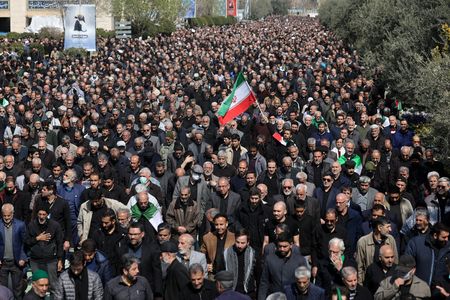
From the perspective of Iran’s religious leaders, many who traditionally refer to America as the “Great Satan,” the killing of Khamenei, the Islamic Republic’s top spiritual leader, has transformed him into a “martyr.”
Religious authorities have portrayed the deceased leader as a heroic figure, comparing him to Imam Hussein – the Shi’ite symbol representing sacrifice and opposition to tyranny.
“Mojtaba is even worse and more hardline than his father,” said Alan Eyre, former U.S. diplomat and Iran specialist, adding that he was the preferred candidate of the Guards. “He’s going to have a lot of revenge to exact.”
This approach involves significant dangers. Israel has indicated that any replacement for Khamenei would become a target, while Trump has stated the conflict might only conclude after Iran’s military commanders and governing elite are eliminated.
NEW LEADER HISTORICALLY OPPOSED MODERATES
An influential mid-level cleric, the 56-year-old Mojtaba has consistently opposed moderate factions supporting Western engagement. His strong connections with senior religious figures and the IRGC – which controls Iran’s security apparatus and economic sectors – provide him with influence throughout the state’s political and enforcement mechanisms.
He built power under his father’s leadership as an important figure in the security structure and the extensive commercial network it oversees, functioning for years as Ali Khamenei’s intermediary and effectively operating as a “mini-supreme leader,” according to analysts.
His rise occurs as the U.S.-Israeli military campaign against Iran escalates, with coordinated attacks targeting fuel facilities and other infrastructure within Iran, while Iranian rockets and unmanned aircraft have attacked Gulf nations, expanding the conflict.
Mojtaba received his education from traditional clerics in Qom’s religious schools, the center of Shi’ite theological education, and maintains the religious title of Hojjatoleslam.
The U.S. Treasury imposed sanctions on Mojtaba in 2019, stating he acted as the supreme leader’s representative in an official role despite never serving in elected or formal government positions.
A Gulf source knowledgeable about regional government perspectives commented on Mojtaba’s selection: “This tells Trump and Washington that Iran will not back down, they will fight on until the finish.”
Salem, from the Middle East Institute, compared Iran’s current path to Iraq under Saddam Hussein after 1991 or Syria under Bashar al-Assad after 2012 – administrations that endured years of conflict and isolation while gradually losing authority.
“They’re doubling down on the hard line,” Salem said. “Internally, it’s terrible — and deeply destabilising.”
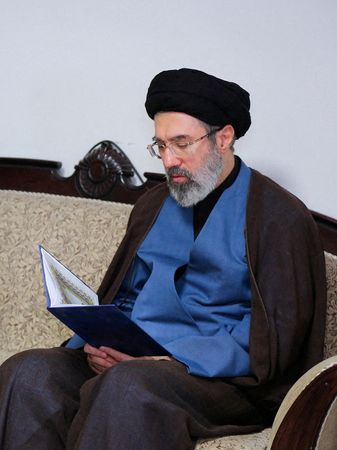
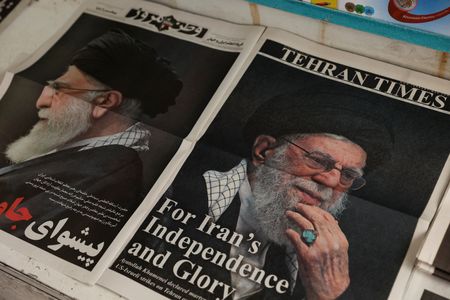
Iran’s clerical leadership has appointed Mojtaba Khamenei, son of the recently killed Supreme Leader Ayatollah Ali Khamenei, to serve as the nation’s new top authority, according to Iranian media reports.
The Assembly of Experts made the announcement more than a week following the elder Khamenei’s death in an airstrike during ongoing U.S.-Israeli military operations against Iran. The 56-year-old cleric survived the same attacks that claimed his father’s life.
Council member Ayatollah Mohsen Heidari Alekasir explained in a Sunday video statement that their choice followed the late leader’s instructions to select someone “hated by the enemy.”
“Even the Great Satan (U.S.) has mentioned his name,” Heidari Alekasir commented, referencing President Donald Trump’s recent description of Mojtaba as an “unacceptable” selection.
The new supreme leader accumulated significant influence during his father’s reign, operating as an unofficial advisor with deep connections to Iran’s security apparatus and the extensive business networks they oversee. He has consistently opposed reform movements attempting to improve relations with Western nations seeking to limit Iran’s nuclear activities.
Mojtaba’s extensive relationships with the elite Revolutionary Guard Corps provide him substantial control throughout Iran’s political and military structures, with sources describing his role as his father’s primary “gatekeeper.”
“He has strong constituency and support within the IRGC, in particular amongst the younger radical generations,” explained Kasra Aarabi, who leads Revolutionary Guard research at United Against Nuclear Iran, a Washington-based policy group.
Iran’s supreme leader holds ultimate authority over all state matters, including international relations and nuclear policy. While Western governments seek to prevent Tehran from developing atomic weapons, Iranian officials maintain their nuclear program serves only peaceful civilian purposes.
The new leader may encounter resistance from Iranian citizens who have demonstrated willingness to organize large-scale demonstrations demanding expanded freedoms, despite violent government suppression.
Born in 1969 in Mashhad, a sacred Shiite city, Mojtaba grew up while his father helped organize resistance against the Shah’s rule. During his youth, he participated in the Iran-Iraq conflict.
His religious education took place in Qom’s conservative seminaries, Iran’s primary center for Shiite theological studies, where he achieved the clerical designation of Hojjatoleslam.
Despite never holding an official government role, Mojtaba has attended loyalist gatherings but rarely makes public statements.
His informal influence has generated significant debate within Iran, as opponents reject any suggestion of hereditary rule in a nation that toppled a U.S.-supported monarchy in 1979.
The U.S. Treasury sanctioned Mojtaba in 2019, stating he acted for the supreme leader “in an official capacity despite never being elected or appointed to a government position” beyond his work in his father’s administration.
Treasury officials said the elder Khamenei had transferred certain duties to his son, who collaborated closely with Quds Force leadership and the Basij religious militia “to advance his father’s destabilising regional ambitions and oppressive domestic objectives.”
Protesters specifically targeted Mojtaba during 2022 demonstrations following a young woman’s death while in police custody after her arrest for allegedly violating the Islamic Republic’s mandatory dress requirements.
In 2024, a widely circulated video showed him announcing the halt of Islamic law classes he taught in Qom, sparking questions about his motivations.
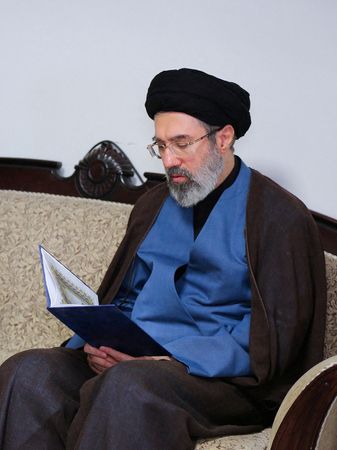
The new leader shares a striking physical resemblance with his father and wears the black turban of a sayyed, signifying his family’s claimed descent from Prophet Mohammad.
Opponents argue Mojtaba lacks sufficient religious qualifications for the supreme leadership role, noting that Hojjatoleslam ranks below Ayatollah, the title held by both his father and Islamic Republic founder Ruhollah Khomeini.
However, he remained a leading candidate, particularly after another potential successor, former President Ebrahim Raisi, perished in a 2024 helicopter accident.
A 2007 U.S. diplomatic document released by WikiLeaks quoted three Iranian contacts identifying Mojtaba as a key channel for accessing his father.
Many observers credit Mojtaba with orchestrating hardliner Mahmoud Ahmadinejad’s unexpected 2005 presidential victory.
He supported Ahmadinejad again during his controversial 2009 reelection, which triggered anti-government demonstrations that security forces, including the Basij, brutally crushed.
Moderate cleric Mehdi Karroubi, who competed in that election, sent a formal complaint to the elder Khamenei alleging Mojtaba’s improper support for Ahmadinejad, though Khamenei dismissed the claims.
Mojtaba’s wife, who died in the recent airstrikes, was the daughter of hardline former parliament speaker Gholamali Haddadadel.
State media in Iran announced Sunday that the country’s Assembly of Experts has selected Mojtaba Khamenei as the nation’s new supreme leader, following the death of his father, Ayatollah Ali Khamenei.
The younger Khamenei, who serves as a mid-ranking cleric, maintains strong relationships with Iran’s influential Revolutionary Guards and had been considered by many within the country’s leadership as a likely candidate to inherit his father’s role. Ayatollah Ali Khamenei died following military strikes conducted by the United States and Israel against Iran.
While Iran’s governing philosophy typically opposes the concept of passing power from father to son, Mojtaba Khamenei commands significant support among the Revolutionary Guards and retains backing from his late father’s office, which continues to wield considerable influence in Iranian politics.
Guinea’s top opposition leader has strongly condemned his country’s government following the dissolution of 40 political organizations, claiming the move represents an effort to establish a single-party system.
On Friday, Guinea’s Ministry of Territorial Administration and Decentralization announced it was eliminating the political parties due to their alleged failure to fulfill required obligations. The official order removes the organizations’ legal recognition and prohibits all political activities, including displaying their names, symbols, logos, and other identifying marks.
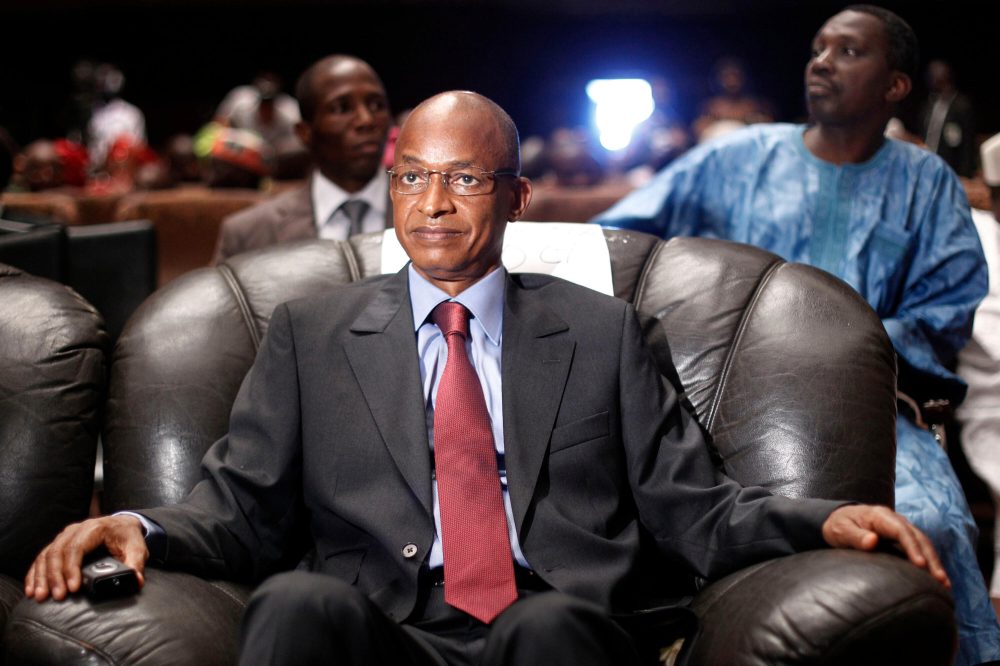
In a Facebook video posted Sunday, Cellou Dalein Diallo, who heads the Union of Democratic Forces of Guinea opposition party that was among those dissolved, criticized President Mamadi Doumbouya for attempting to eliminate political competition to create a single-party system.
“I urge the leaders, activists and supporters of the UFDG, and all Guineans who cherish liberty and justice, to rise as one and use every means to bring an end to this exceptional regime that has lasted far too long,” Diallo stated, noting that peaceful negotiations and court challenges appear unlikely to produce meaningful political reform.
President Doumbouya assumed power following a military takeover in 2021 and won election in December during a contest that excluded all significant opposition candidates. Throughout his leadership, multiple political organizations and news outlets have faced suspension, while various opposition figures and civil rights advocates have been detained or fled the country.
Friday’s dissolution targeted several major political organizations, including Diallo’s group, the Rally of the Guinean People formerly led by ex-President Alpha Condé, and the Union of Republican Forces headed by opposition politician Sidya Touré. All three party leaders currently live outside Guinea.
These organizations had previously been suspended in August for allegedly violating the nation’s political party regulations, just before a constitutional referendum that permitted the military leader to seek the presidency.
Guinea joins multiple West African nations that have experienced military takeovers or attempted coups since 2020, as military leaders have capitalized on public frustration with security problems, economic struggles, and contested elections to seize control.
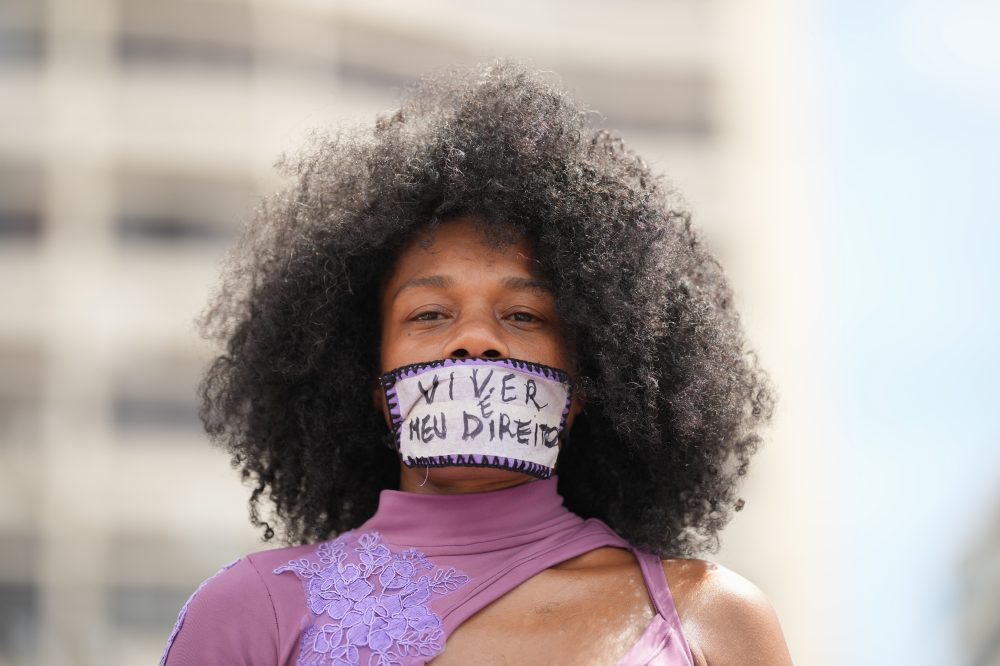
Thousands of protesters filled the streets across Brazil on Sunday during International Women’s Day demonstrations, demanding action against gender-based violence following a shocking alleged gang rape case involving a teenage victim in Rio de Janeiro’s famous Copacabana district.
The incident occurred in January but captured national attention this week after four suspects surrendered to police. Law enforcement officials have classified the attack as a gang rape, intensifying ongoing concerns about escalating violence against women throughout the country and triggering widespread demonstrations and online activism campaigns.
Organizers coordinated at least 15 protest events nationwide, demanding protection for women’s lives and calling for an end to femicide across Brazil.
According to Rio’s Civil Police, the four young men currently held in pretrial detention face rape charges, while a fifth suspect — who is underage — surrendered to authorities Friday and will face comparable charges under juvenile justice laws.
Law enforcement officials issued an arrest warrant for the minor after discovering his alleged connection to another sexual violence case with similarities to the Copacabana incident, according to an email from Rio state prosecutors’ office.
Defense attorneys representing two of the accused have proclaimed their clients’ innocence, while lawyers for the remaining three suspects have not yet made public statements regarding the charges.
Police investigators determined that the victim received an invitation from a school classmate in January to visit a friend’s residence at her elite private school. After entering the apartment, she was forced into a room and confined with the suspects, where she endured sexual assault along with physical and psychological abuse, according to a March 4 police report.
Security camera recordings showing the men entering and exiting the alleged crime location spread rapidly across social media platforms earlier this week.
Public attention intensified after news outlets reported that one suspect’s father worked as undersecretary for governance and compliance in Rio’s state social development and human rights department. The official was terminated from his position following the allegations against his son, according to Wednesday’s announcement in the state government’s official publication.
Brazilian citizens, women’s advocacy organizations, and prominent officials including ministers Anielle Franco and Sônia Guajajara used social media platforms to condemn the case.
“It’s impossible not to feel indignation when a 17-year-old young woman suffers such brutal sexual violence,” declared Racial Equality minister Franco, sister of murdered councilwoman Marielle Franco, while encouraging mass demonstrations on March 8 International Women’s Day.
Violence targeting women in Brazil continues rising, with 1,568 documented femicides in 2025 representing a 4.7% jump from the prior year and more than triple the 2015 figures, data from the Brazilian Forum on Public Safety shows.
Additional crimes against women — including threats, stalking, psychological abuse, physical harm, sexual assault and attempted femicide — have also shown consistent increases over recent years, the research organization reported before March 8.
“Women’s bodies continue to be seen as someone else’s territory, which can be threatened, assaulted, sexually violated and murdered,” the organization stated.
Following multiple high-profile cases and resulting protests last year, Brazil’s government expanded protective measures. President Luiz Inácio Lula da Silva’s administration announced a comprehensive anti-femicide initiative this year involving executive, legislative and judicial branches.
Brazilian officials unveiled emergency measures this week featuring a national task force to execute roughly 1,000 outstanding arrest warrants for known perpetrators, implementation of electronic monitoring systems for individuals subject to protective orders, and deployment of 52 mobile assistance units for women experiencing violence.
Government initiatives carry significant symbolic importance and demonstrate that authorities consider violence against women unacceptable, explained Isadora Vianna, a sociology researcher from Rio de Janeiro State University. However, she emphasized, “it would be more effective to invest massively in policies of prevention and support networks.”
Vianna also highlighted the need for stronger internet regulation to prevent rapid spread of misogynistic content online.
Tatianny Araújo, a 47-year-old veteran women’s rights advocate who has attended more than 30 International Women’s Day events, described this year as uniquely impactful following prominent reports of sexual violence, including the alleged Copacabana gang rape. Her 13-year-old son attends the same school as two suspects currently facing expulsion.
“We feel bad, we cry, we’re consumed by rage and by pain,” Araújo explained. “But at the same time we cannot stop. We have to mobilize, we have to do something.”
Iranian military officials announced Sunday that a deadly submarine attack by United States forces resulted in the deaths of at least 104 personnel, with an additional 32 injured, when their naval vessel was struck in waters near Sri Lanka last week.
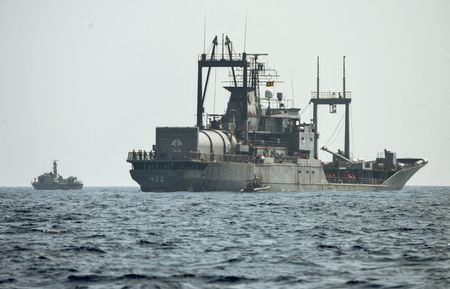
According to Iranian army reports, an American submarine destroyed the frigate Dena while it was positioned approximately 19 nautical miles from Galle, a major port city on Sri Lanka’s southern coastline. The Wednesday incident in the Indian Ocean claimed the lives of numerous naval personnel and marks a significant escalation in the United States’ military actions against Iran’s maritime forces.
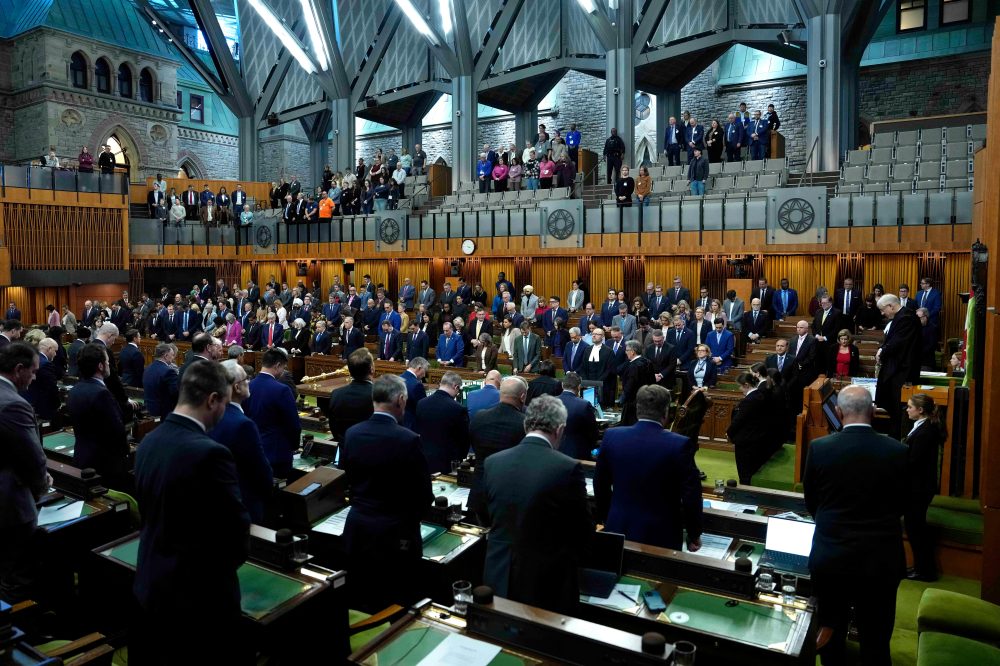
TORONTO (AP) — Three upcoming by-elections could determine whether Canada’s Liberal Party gains complete control of Parliament, Prime Minister Mark Carney announced Sunday.
Carney scheduled the special elections for April 13 in three constituencies: two Toronto-area seats in Scarborough Southwest and University-Rosedale, plus the Montreal-area district of Terrebonne.
Political analysts view the two Toronto constituencies as likely Liberal victories, though the Terrebonne race remains competitive and unpredictable.
With 169 seats currently in the House of Commons, the Liberals sit just three seats short of the 172 needed for majority control, which would enable them to advance their legislative agenda without requiring opposition party backing.
The Liberal caucus has grown recently through defections, as three Conservative MPs — Chris d’Entremont, Michael Ma and Matt Jeneroux — switched parties in recent months.
Jeneroux cited Carney’s World Economic Forum address in Davos as influential in his decision to join the Liberals. The prime minister’s remarks criticizing economic bullying by major powers against smaller nations drew significant international attention and overshadowed U.S. President Donald Trump’s presence at the event.
The Terrebonne election stems from a Supreme Court ruling that overturned the Liberals’ narrow one-vote victory there. The Quebec-based Bloc Québécois had challenged the results after a voter complained about an uncounted mail-in ballot.
Even with victories in all three races, the Liberals would still require House Speaker Francis Scarpaleggia’s tie-breaking votes to guarantee passage of government bills.
Since replacing Justin Trudeau as prime minister in 2025 and winning the subsequent national election, Carney has positioned the Liberal Party toward the political center.
Russian defense officials announced Sunday that military air defense systems successfully shot down 170 Ukrainian drones across multiple regions in central and southern Russia during a concentrated four-hour timeframe.
The intercepts took place between 2 p.m. and 6 p.m. local time (1100-1500 GMT) on March 8, according to Russia’s Defence Ministry. Officials reported no injuries or property damage from the incident.
The Bryansk region, which shares a border with Ukraine, experienced the heaviest drone activity with 73 intercepts recorded. Among the drones targeted were two aircraft reportedly en route to Moscow.
Moscow’s mayor, Sergei Sobyanin, confirmed via Telegram that two drones were brought down while approaching the Russian capital. He noted that emergency response teams were dispatched to examine debris at the crash locations.
The reported number of drone intercepts represents a figure above typical averages for such incidents.
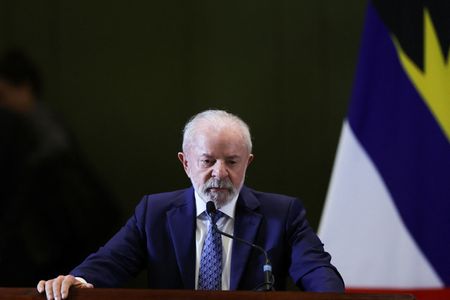
SÃO PAULO, March 8 – Brazilian leader Luiz Inacio Lula da Silva received a clean bill of health during his yearly medical examination conducted Saturday morning, according to officials at São Paulo’s Sirio-Libanes Hospital who released the findings Sunday.
The medical facility confirmed that the president, commonly referred to as Lula, will continue with standard follow-up appointments under the supervision of his healthcare providers, including heart specialist Roberto Kalil Filho and doctor Ana Helena Germoglio. Hospital representatives stated no additional testing is scheduled at this time.
The 80-year-old Brazilian leader announced in 2025 his intention to pursue another presidential term in elections scheduled for later this year. Last year, Lula required two surgical procedures to address and prevent cranial bleeding complications. This marks his second stint as Brazil’s head of state, having previously served from 2003 through 2010 before returning to office in January 2023.
President Donald Trump is reportedly exploring the possibility of launching a military mission to capture Iran’s weapons-grade uranium stockpile, according to a Bloomberg News report published Sunday.
The report, dated March 8th, indicates that three diplomatic sources with knowledge of the discussions have confirmed the administration is examining options for deploying special operations forces to secure Iran’s near-bomb-grade nuclear materials.
Reuters has not been able to independently confirm the Bloomberg report at this time.
BERLIN – Germany’s Green Party claimed victory in Sunday’s state elections in Baden-Wuerttemberg, defeating Chancellor Friedrich Merz’s conservative party and positioning themselves to maintain their governing coalition, according to preliminary election results.
Early projections from public television network ARD placed the environmental party at the top with 32% of votes cast, while Merz’s Christian Democratic Union secured 29%. The far-right Alternative for Germany finished in third position with 17.5%, solidifying its role as the country’s primary opposition force beyond its traditional strongholds in former East Germany.
The Social Democrats, who partner with Merz’s party at the federal level, barely crossed the 5% minimum required for parliamentary representation, earning just 5.5% of votes and highlighting their continued decline in voter support.
This southwestern German state serves as headquarters for major automotive companies including Mercedes-Benz, Porsche, and Bosch, making it one of the nation’s wealthiest regions. However, the area’s car manufacturing sector faces mounting pressure from competitive Chinese electric vehicle producers, impacting the broader regional economy.
Green candidate Cem Ozdemir, seeking the state premier position, represents a moderate voice unlikely to challenge Merz significantly in the Bundesrat, Germany’s federal upper chamber where states hold representation. The Green-CDU partnership has governed Baden-Wuerttemberg for ten years.
These election outcomes underscore the difficulties facing Merz as his promised policy changes remain stalled and Germany’s economy continues its slow recovery following two years of recession. The Greens managed to overtake the Christian Democrats in polling as election day approached, despite initially trailing in the campaign.
The results may increase dissatisfaction among conservative party members already concerned about historically low approval numbers for Merz’s administration in Berlin.
Sunday’s contest marks the first of five state elections scheduled for this year. Rhineland-Palatinate voters will head to polls on March 22, with Berlin, Saxony-Anhalt, and Mecklenberg-Vorpommern following in September.
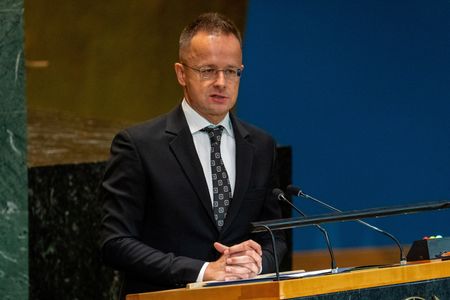
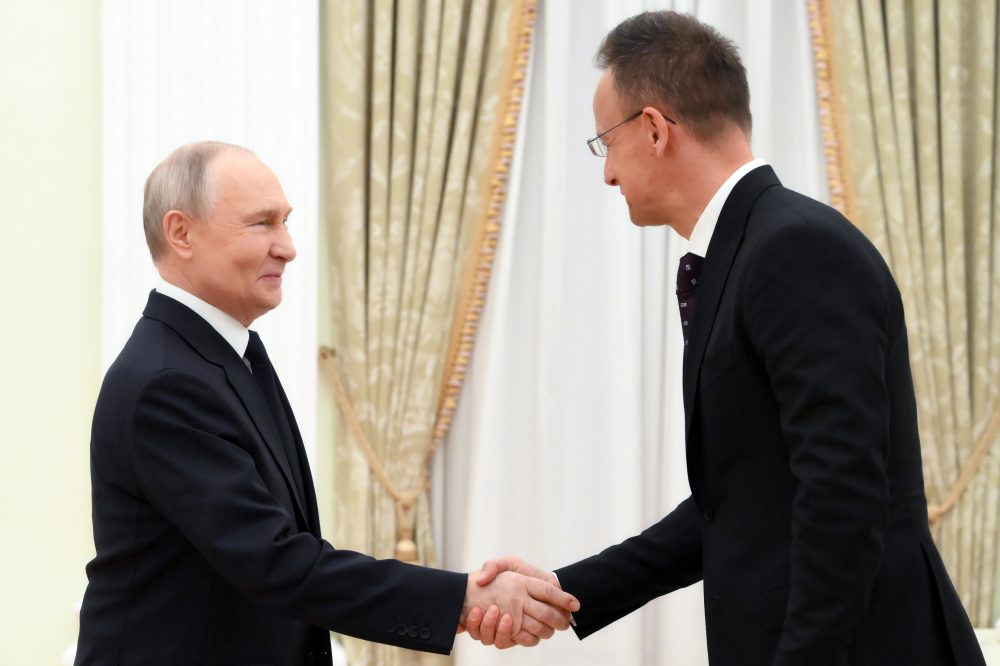
Hungary’s Foreign Minister Peter Szijjarto expressed optimism Wednesday that Russia might release two ethnic Hungarian prisoners of war as he arrived in Moscow for scheduled meetings with Russian President Vladimir Putin.
The diplomatic visit follows a telephone conversation between Hungarian Prime Minister Viktor Orban and Putin on Tuesday, during which they addressed Middle Eastern developments, the Ukrainian conflict, and Hungary’s access to Russian crude oil and natural gas supplies.
Speaking in a Facebook broadcast from Moscow, Szijjarto revealed that two ethnic Hungarian captives had recently reached out to Hungary requesting assistance.
“I hope that after our talks more people will fly home on the plane than who came in this direction,” Szijjarto said.
The issue has become particularly sensitive as Orban’s administration has made the Russian invasion of Ukraine a central theme in campaigning for Hungary’s April 12 parliamentary elections, creating additional strain in relations between Budapest and Kyiv.
Approximately 150,000 ethnic Hungarians reside in Ukraine, with the majority concentrated in the Transcarpathia region. Budapest and Kyiv have maintained a contentious relationship regarding language rights for this community.
Hungary’s government has criticized Ukraine for drafting ethnic Hungarians into military service, arguing that Budapest believes these individuals should be exempt from conscription. Just last Friday, Szijjarto called in Ukraine’s ambassador to Budapest to formally object to the military drafting of two ethnic Hungarian men.
Despite the ongoing conflict in Ukraine, Orban’s administration has preserved friendly ties with Moscow and refuses to abandon its Russian energy imports, creating friction within the European Union. Hungary announced last month it would obstruct the EU’s upcoming sanctions package against Russia and oppose a 90 billion euro ($105 billion) European loan intended to support Ukraine’s defense efforts until oil deliveries through the Druzhba pipeline are restored.
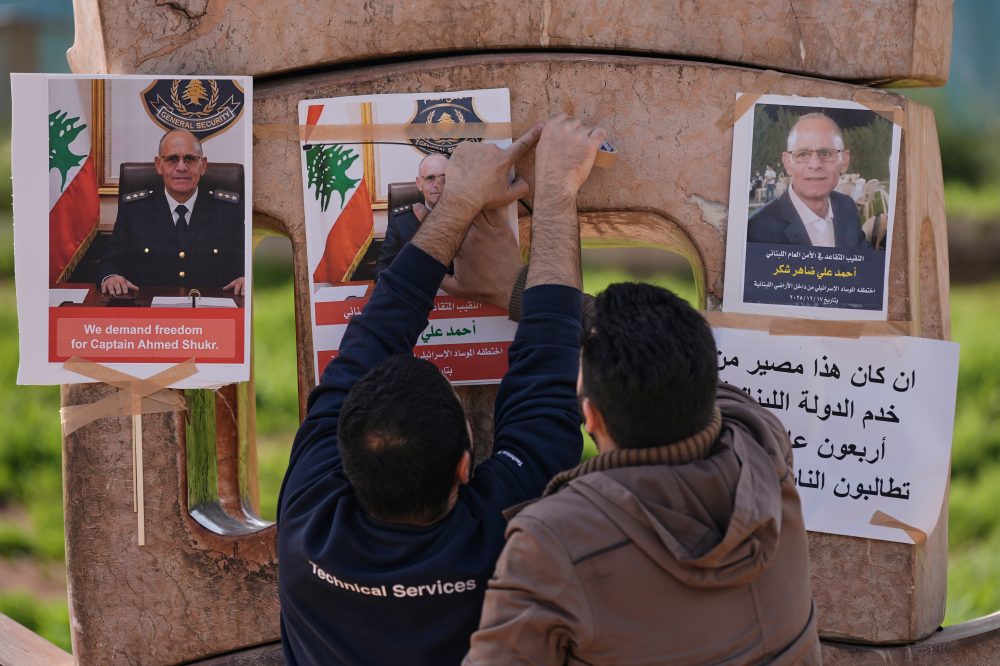
ZAHLE, Lebanon (AP) — A former Lebanese security captain disappeared in December while meeting someone who claimed to want to purchase property from him.
Both Lebanese authorities and relatives of former General Security Directorate Captain Ahmed Shukr suspect he was kidnapped and transported to Israel as part of an intelligence mission to gather details about an Israeli pilot who went missing in Lebanon 40 years ago.
The relatives think Shukr was targeted due to his brother’s potential connections to the vanishing of Israeli navigator Ron Arad. However, the family maintains that Shukr was never affiliated with any militant organization and had no involvement in Arad’s disappearance.
Almost three months following Shukr’s vanishing — and after military strikes by the U.S. and Israel against Iran sparked broader Middle East conflict — Israeli forces conducted a fatal commando raid in Nabi Chit, Lebanon, over the weekend while searching for Arad’s body.
Local witnesses reported that the commando unit started excavating in the Shukr family graveyard in Nabi Chit before encountering resistance from Hezbollah militants and armed local residents. Heavy fighting and air bombardments resulted in 41 deaths and numerous injuries, Lebanon’s Health Ministry reported. Israeli forces suffered no reported losses.
Whether the Israeli mission resulted from intelligence obtained from Shukr remains unclear.
Israeli military officials confirmed the operation sought evidence regarding Arad’s fate and stated his body was not recovered. Military representatives refused to respond when questioned about whether Israel had captured Shukr.
Nevertheless, this event seems consistent with Israel’s long-standing practice of secret operations and military raids deep within Lebanon to capture or eliminate individuals it claims participated in anti-Israeli activities.
Israel has sometimes taken credit for such missions, including seizing a ship captain from northern Lebanon in November 2024 whom Israel described as a high-ranking Hezbollah operative.
In other instances, like the puzzling kidnapping and murder of a Hezbollah-connected Lebanese money changer in April 2024, Israel has stayed quiet, though Lebanese officials claim they possess proof of its participation.
For years, Israel has attempted to determine Arad’s fate after he ejected from his fighter aircraft during an attack on suspected Palestinian militants in 1986 near the southern Lebanese coastal city of Sidon.
A Shiite Muslim group known as the Believers’ Resistance took Arad prisoner following his landing.
In 1994, Israeli commandos transported by helicopter penetrated deep into Lebanon’s eastern Bekaa Valley, capturing Believers’ Resistance leader Mustafa Dirani and bringing him to Israel.
Dirani was freed a decade later through a prisoner swap. He informed the Israeli newspaper Maariv in a 2000 interview that Arad vanished in 1988 when his captors left him to visit family members near a major 1988 battlefield between Hezbollah forces and Israeli troops, who controlled portions of Lebanon then.
However, The Associated Press reported in 2000 that Dirani informed an Israeli court that Iranian soldiers had taken Arad away. An Israeli legal official noted that Dirani provided conflicting stories during his imprisonment.
Following extensive indirect talks between Israel and Hezbollah, the Iran-supported organization submitted a report about Arad through intermediaries in 2008, indicating he likely died while attempting to reach Israel after escaping.
Shukr’s relatives informed AP that months before his disappearance, he became acquainted with a Lebanese citizen named Ali Morad who reached out through social media and leased an apartment the former officer owned south of Beirut.
Shukr’s spouse, Salwa Hazimeh, explained that Morad telephoned her husband in mid-December, informing him that a businessman wanted to purchase land he was selling in Zahle and wished to view it at 5:30 p.m.
“I was standing by him as he spoke and told him that we cannot see the plot of land later in the afternoon but he (Morad) insisted,” she said. Shukr traveled the following day, December 17, to Zahle, where surveillance video captured him exiting his vehicle and entering another car, Hazimeh explained.
“Since then we know nothing about him,” Hazimeh said.
Shukr’s relatives report he suffers from diabetes, hypertension and cardiac issues, requiring continuous medical attention and treatment.
Family members stated Shukr’s cellular phone last showed activity in the eastern village of Ghazzeh around 7 a.m. on December 18. They suspect he was transported overland into Israel through southern Lebanon.
“It looks like an extraordinary rendition,” said Adam Coogle, deputy director with the Middle East and North Africa division at Human Rights Watch. “That is effectively kidnapping someone, then transporting them across borders without any due process.”
Legal authorities in Beirut reported the court system has filed criminal charges against four individuals in the matter, including Morad, plus a Lebanese-French citizen, a Syrian-Swedish citizen and a Lebanese woman who leased a villa with views of Zahle. The legal officials stated an SUV was purchased for $22,000 for Shukr’s abduction and the woman paid $42,000 for one year’s rental of the villa.
Morad’s attorney, Samaher Bourhan, stated her client claims he was a victim who thought he was employed by a foreign corporation and was ultimately exploited in the kidnapping. She explained the company requested him to purchase the vehicle and register it in his name, alleging it was due to their lack of legal status in Lebanon.
“He said that he handed himself over because he had no idea about the operation,” Bourhan said.
Shukr’s wife and his brother, Abdul-Salam Shukr, informed AP that the former officer possesses no knowledge about Arad’s fate.
However, another Shukr family member, who requested anonymity to discuss sensitive details, revealed that Shukr’s brother, Hassan Shukr was a Hezbollah member and knew Arad’s location during his captivity.
The family member stated Arad was confined in a secured room at Hassan Shukr’s in-laws’ residence, who belonged to Dirani’s Believers’ Resistance in Nabi Chit.
Legal officials verified that a Lebanese military document from the 1980s indicated Arad was detained by the Shukr family in Nabi Chit and became sick at one point, prompting them to bring medical professionals to care for him.
The family member reported Hassan Shukr died in the Meidoun battle on May 5, 1988. That day, when fighters returned from combat to Nabi Chit, they discovered the metal door of Arad’s holding room open and the prisoner missing, the family member explained.
The Shukr family member emphasized that Ahmed Shukr was not involved in detaining Arad and lacks any further information about the situation.
An AP team visited the two-level residence that legal officials and Shukr’s family identified as the headquarters used by operatives to execute the kidnapping. Lebanese authorities had sealed the main metal entrance while local residents reported seeing no suspicious activity inside the property, called “Wood Villa.”
A resident from a neighboring building reported Lebanese security personnel gathered evidence from the house in mid-December.
A local merchant stated security agents confiscated his surveillance camera recordings. He mentioned the villa had previously been rented by individuals or groups for celebrations.
Kurdish communities in northeastern Syria are issuing stark warnings to their Iranian counterparts, urging them not to partner with the United States in any confrontation against Tehran’s government.
The advice stems from the Syrian Kurds’ own bitter experience of what they describe as American abandonment in recent months, following more than a decade of cooperation in fighting ISIS.
Speaking from the northeastern Syrian Kurdish city of Qamishli, 45-year-old resident Saad Ali expressed his concerns about potential Iranian Kurdish cooperation with Washington.
“I hope that the Kurds of Iran will not ally themselves with America, because they will abandon them,” Ali stated. “Tomorrow, if an agreement is made between them (the U.S.) and the Iranians, they will eliminate you. Do not make our mistakes.”
The warning comes amid reports that Iranian Kurdish militant groups operating from northern Iraq have recently engaged in discussions with American officials regarding possible operations against Iranian security forces, as tensions escalate between the U.S., Israel, and Iran.
Syrian Kurdish forces had established a partnership with the United States over ten years ago to combat the Islamic State, eventually creating their own semi-independent territory in areas they had liberated from the extremist organization.
However, their situation dramatically changed in January when Syria’s new military forces under President Ahmed al-Sharaa launched a major campaign that seized control of most Kurdish-controlled regions. When Syrian Kurds appealed to Washington for support, they felt betrayed as the U.S. instead encouraged them to integrate with al-Sharaa’s army.
This recent turn of events has left Syrian Kurds feeling disillusioned with American reliability as an ally.
“In my opinion, the Kurds in Iran should maintain a firm stance: they will not engage in any wars within Iranian territory without firm, signed guarantees from the United States regarding the future of these Kurdish regions in Iran,” said 26-year-old Syrian Kurd Amjad Kardo from Qamishli.
“We Kurds here in Syria, in particular, have had a negative experience with the Americans in Syria, and their abandonment of Kurdish resistance movements,” Kardo added.
Sources familiar with Iranian Kurdish leadership indicate that these groups share similar concerns about potential betrayal, echoing the experiences of their Syrian counterparts. These leaders have reportedly sought assurances from the United States, though the specific nature of these guarantees remains unclear.
President Donald Trump’s statements on the matter have been inconsistent. On Thursday, he told reporters it would be “wonderful” if Kurdish forces moved from northern Iraq into Iran, but refused to clarify whether the U.S. would provide air support for such operations. By Saturday, Trump appeared to reverse course, stating he opposed Kurdish fighters entering Iran.
Ahmed Barakat, who leads the Kurdish Progressive Democratic Party in Syria, advised Iranian Kurdish forces to proceed with “extreme caution.”
While acknowledging that the final decision rests with Iranian Kurdish groups, Barakat argued that “accepting the invitation of the United States and being considered the spearhead in confronting or weakening the Iranian regime is not, at present, in the best interest of the Kurds of Iran.”
Recent reports also indicate that Israel has maintained separate discussions with Iranian Kurdish insurgent organizations based in Iraq’s semi-autonomous Kurdish region for approximately one year.
The Kurdish people represent an ethnic minority that has remained without a sovereign state since the dissolution of the Ottoman Empire created modern Middle Eastern boundaries a century ago.
Predominantly Sunni Muslim, Kurds speak a language with Persian roots and primarily inhabit mountainous territories spanning Armenia, Iraq, Iran, Syria, and Turkey.
While Iraqi Kurds have achieved significant autonomy through their regional government controlling three northern provinces, Kurdish populations in Iran, Turkey, and Syria continue to face obstacles in their aspirations for self-governance or statehood.
Iran’s Islamic Republic confronts an unprecedented challenge as it seeks a new leader following the death of Supreme Leader Ayatollah Ali Khamenei, who was killed in U.S. and Israeli airstrikes one week ago.
The regime’s traditional base of unwavering supporters appears to be eroding significantly, creating uncertainty about whether Iran’s next leader can maintain control. Mojtaba Khamenei, the deceased leader’s hardline son, emerges as a leading candidate for succession.
However, interviews conducted by Reuters with militia members, citizens, government officials, and political experts reveal that the Islamic Republic’s support network has contracted dramatically compared to previous decades.
“The strategy in choosing a hardliner as the new leader would be to consolidate the base, but they’re ending up with an increasingly small circle of supporters,” explained Ali Ansari, who teaches modern history at the University of St Andrews in the UK.
“And the longer this goes on, the more it will all fray at the edges,” Ansari added.
The Islamic government originally gained power through a 1979 revolution supported by millions of Iranian citizens. However, years of corrupt governance, authoritarian rule, and poor administration have eroded that backing, creating widespread disillusionment among regular people.
A dedicated group of supporters continues to exist, consistently voting to maintain the Islamic system and participating in street demonstrations to suppress opposition movements.
These well-coordinated loyalists can mobilize rapidly, presenting a significant challenge to any American or Israeli ambitions for regime change.
Mahdi Rastegari, a 32-year-old religious instructor and Basij militia member, demonstrated this commitment: “We have given many martyrs. They have sacrificed themselves for our leader. Now we must show that the path of the leader Khamenei continues. We will solve any problems and support whoever is chosen as leader. We will even give our lives for him.”
Recent electoral data illustrates the hardliners’ minority status. In Iran’s most recent presidential contest, the most conservative candidate, Saeed Jalili, received approximately 9 million votes initially and 13 million in the runoff, while more than 61 million of Iran’s 85-plus million citizens were eligible to participate.
Despite representing a clear minority, the hardliners’ weakness doesn’t provide much encouragement to those seeking political transformation, as the continued military assault has sparked concerns about potential chaos.
Babak, a 34-year-old business owner from Arak who requested anonymity for his surname, expressed this sentiment: “The Guards and the system are still powerful. They have tens of thousands of forces ready to fight to keep this regime in place. We, the people, have nothing.”
The death of Iran’s leader on the conflict’s opening day, combined with emerging divisions within the country’s leadership structure, will test hardline loyalty to the Islamic Republic more severely than ever before.
Individuals like Basij member Rastegari form part of a power structure that extends from the supreme leader’s now-destroyed Tehran headquarters to every town and neighborhood, creating barriers to internal opposition movements.
Since Khamenei’s death, hardline supporters have organized government-sponsored memorial services for him nightly, even as bombs continue falling throughout the nation.
These supporters include genuine believers willing to sacrifice their lives as martyrs for their conviction in clerical rule guided by divine authority, alongside those motivated by personal gain who have profited from publicly backing the system.
Ali Mohammad Hosseini, another Basij member, transitions from working at his father’s grocery store in the Shiite religious center of Qom to spending evenings at checkpoints designed to prevent public dissent.
The 29-year-old stated: “The most important issue is preserving the regime, which is what the Americans are targeting.” He described supporting whichever cleric succeeds Khamenei as a “religious duty” worth dying for.
Such dedication isn’t widespread, though. Hassan, another Basij member who requested only his first name and disclosed his location in the Shiite holy city of Mashhad, expressed skepticism about the Islamic Republic’s future.
“We need to be realistic,” he observed, citing ongoing American pressure and the devastating consequences of destructive airstrikes should a hardliner like Mojtaba Khamenei assume leadership.
Basij members and other system loyalists have historically received benefits including priority university admission, employment opportunities, and discounted bank financing – advantages that a collapsing economy might eliminate.
“We do not even have airports any more. No ports. How are they going to rebuild this economy?” questioned Hassan, who is 29 years old.
Health officials in Gaza reported that two Palestinians died Sunday when an Israeli airstrike targeted their vehicle in Gaza City, marking the most fatal incident in the territory since Israel and the United States began military operations against Iran a week prior.
According to medical personnel, the victims were driving near Al-Azhar University in the western section of Gaza City when the strike occurred. Officials have not yet released the names of those killed. Health authorities also confirmed that several other individuals in the vicinity sustained injuries from the attack.
While such military actions have become less frequent following the commencement of the joint U.S.-Israeli operations targeting Iran, Israeli forces have been responsible for multiple Palestinian deaths throughout the past week.
Israeli military officials have not yet provided a statement regarding Sunday’s airstrike when contacted for comment.
Despite a ceasefire agreement between Israel and Hamas that was negotiated through U.S. mediation and began last October, violent incidents have persisted almost daily. Each party continues to accuse the other of breaking the terms of the truce.
Gaza’s health ministry reports that Israeli forces have killed no fewer than 640 Palestinians since October began. Israeli officials state that four of their soldiers have died in Gaza during the same timeframe due to militant attacks.
The Gaza Strip has suffered extensive destruction during more than two years of Israeli military operations that have resulted in over 72,000 Palestinian deaths, according to local health officials, while leaving large portions of the territory in ruins.
The current conflict began following Hamas’ assault on Israel on October 7, 2023, during which the militant group killed 1,200 individuals and captured more than 250 hostages, based on Israeli government figures.
JUBA, South Sudan (AP) — A massive civilian evacuation is underway in eastern South Sudan as thousands of residents abandon the town of Akobo following a military ultimatum that preceded a planned government assault, authorities reported Sunday.
The mass departure from Akobo, situated close to the Ethiopian border, commenced Saturday evening after government forces issued their evacuation directive.
“The town is now almost empty,” said Nhial Lew, a local official in charge of humanitarian affairs. “Women, children and the elderly have left and crossed into Ethiopia.”
Despite the government setting Monday afternoon as the evacuation deadline, armed conflict has already erupted west of Akobo starting Saturday.
“We are hearing the sound of machine guns approaching,” Lew said on Sunday evening.
On Friday, the South Sudan People’s Defense Forces commanded the U.N. Mission in South Sudan (UNMISS) to shut down its Akobo facility.
Aid organizations and local residents received orders to leave “in order to avoid unnecessary collateral damage,” as government forces prepare their military campaign against “Akobo and surrounding areas,” military spokesperson Lul Ruai Koang announced in an official statement.
The town represents one of the final territorial strongholds controlled by the Sudan People’s Liberation Movement-In Opposition (SPLM-IO), the faction headed by detained Vice President Riek Machar.
The 2018 peace agreement between Machar and President Salva Kiir has virtually disintegrated since hostilities resumed between their respective forces last year.
Military clashes have escalated significantly in northern Jonglei since December, when opposition fighters seized government military positions. Government forces launched a counterattack that forced over 280,000 residents from their homes within weeks.
Akobo, positioned in South Sudan’s far eastern region and controlled by opposition forces since the 2013 civil war outbreak, had been considered a relatively secure sanctuary. A small U.N. peacekeeping presence attracted more than 82,000 displaced individuals seeking safety in and around the community.
UNMISS has not yet issued an official response to the government’s base closure directive.
Two United Nations aircraft transported most humanitarian personnel out of the area Sunday. The International Committee of the Red Cross operates a surgical facility at Akobo County Hospital, where multiple injured patients were receiving care. ICRC personnel had not yet been evacuated.
However, the threat of an imminent attack on Akobo has created anxiety among local medical officials.
“We are worried for our patients at the hospital,” said Dual Diew, the Akobo County health director. “We tried to make a plan to take them to a safer location, but we don’t have enough fuel.”
Saturday saw Akobo residents organize protests against the military ultimatum, with demonstrators marching to the U.N. facility demanding peace and protection.
BEIRUT (AP) — Israeli forces commanded residents of numerous border communities in southern Lebanon to leave their homes “immediately” on Wednesday as bombing campaigns targeting Beirut suburbs grew more intense and Hezbollah claimed additional attacks.
Lebanon became embroiled in the Middle Eastern conflict early Monday after U.S.-Israeli operations against Iran, when the Tehran-backed Hezbollah organization launched rockets and drones into northern Israel. This prompted Israeli counterstrikes across various regions that resulted in more than 50 deaths and approximately 300 injuries.
The fighting has also forced tens of thousands to flee from southern Lebanon, the eastern Bekaa Valley and Beirut’s southern neighborhoods.
Israeli military officials released a directive Wednesday instructing residents of numerous southern Lebanese communities near the Israeli border to evacuate and relocate “immediately” north of the Litani River.
The Israeli army’s Arabic spokesperson cautioned on X that anyone choosing to travel south of the river would be putting their lives at risk.
The region south of the Litani River, comprising roughly 8% of Lebanon’s territory, runs primarily along the Israeli border. Lebanese authorities claim they have removed Hezbollah’s military infrastructure from this area over recent months.
The evacuation directive followed overnight bombing raids on the mainly Christian southeastern neighborhood of Hazmieh that targeted a hotel. Additional strikes hit Aramoun and Saadiyat communities just south of Beirut’s international airport, resulting in six deaths and eight injuries. A separate attack on the eastern city of Baalbek claimed six lives and wounded 15, state media reported.
The four bombing operations occurred without advance notice, typically indicating targeted assassination attempts. Security sources speaking anonymously per protocol said the individual targeted in Hazmieh was a local leader from Beirut’s southern Ghobeiri district who sustained injuries.
“We live in a country where a missile can fall on your head at any moment,” said Maggie Shibli, wife of the owner of the Hotel Comfort in a Hazmieh neighborhood that was struck early Wednesday.
Abbas Najdeh, who was displaced from the southern port city of Tyre and was staying at the hotel, said: “We were sleeping then suddenly I, my children and my wife were thrown away.”
Also Wednesday, Israeli military officials issued multiple warnings for residents to evacuate buildings in Beirut’s southern suburbs, which came under attack shortly thereafter.
Hezbollah announced Wednesday that it conducted multiple operations against Israel, including two attacks where the organization claimed it deployed precision-guided missiles.
The directive for residents to abandon the area south of the Litani River came one day after Israel deployed ground forces into southern Lebanon for the first time since a ceasefire concluded a 14-month Israel-Hezbollah conflict in November 2024.
Whether Israel is planning a ground offensive remained unclear. Lebanon’s government-operated National News Agency documented Israeli artillery bombardment of multiple Lebanese border communities, including Aid al-Shaab and Beit Lif.
In eastern Lebanon, the primary border crossing with Syria temporarily shut down Wednesday after Lebanese authorities received warnings of an imminent Israeli attack, which officials subsequently determined was a false alert. Similar false alarms have occurred throughout Beirut and other Lebanese regions, heightening anxiety among civilians.
The current fighting represents another chapter in the ongoing Hezbollah-Israel conflict. Hezbollah initiated cross-border fire into Israel one day following the Oct. 7, 2023, Hamas-led assault on southern Israel that sparked the Gaza war. Following months of limited combat, full-scale warfare began in September 2024, with Israel subsequently launching a ground offensive into Lebanon.
Israeli troops pulled back from most of southern Lebanon following a U.S.-mediated ceasefire that ended hostilities in late 2024, but maintained control of five positions on Lebanese territory. Israel has also continued conducting nearly daily attacks, mainly in southern Lebanon, claiming that Hezbollah has been attempting to reestablish its military presence in the region.
CAIRO (AP) — A vessel flying the Russian flag and transporting liquefied natural gas burst into flames and went down in Mediterranean waters near Libya’s coastline, North African officials announced Wednesday. Authorities reported no deaths or injuries from the incident.
The vessel was operating under Western economic restrictions and believed to belong to Russia’s covert fleet of energy transport ships attempting to circumvent penalties placed on Moscow due to its military actions in Ukraine. Officials have not yet determined what triggered the blast.
Libya’s Maritime Authority reported that the Arctic Metagaz experienced “sudden explosions, followed by a massive fire” on Tuesday while positioned roughly 240 kilometers (150 miles) from the Libyan port city of Sirte.
The LNG carrier, loaded with 61,000 tons of liquefied natural gas, “completely sank” in waters between Libya and Malta, according to an official statement. Emergency responders successfully evacuated all 30 crew members, who were transferred to another ship en route to Benghazi, Libya.
The vessel had departed from Murmansk, a northwestern Russian port on the Barents Sea, with Port Said, Egypt as its Mediterranean destination. Ship-tracking service MarineTraffic showed the tanker’s final recorded location was in western Mediterranean waters near Malta’s coast.
Turkish President Recep Tayyip Erdogan has stepped forward to help negotiate a fresh ceasefire between Pakistan and Afghanistan as violent border confrontations reached their sixth consecutive day Wednesday.
The hostilities began last week when Afghanistan launched strikes Thursday in response to Pakistani air attacks from the prior weekend. Pakistan has since conducted military operations along the frontier and announced it was engaged in “open war” with Afghanistan, causing concern among international observers.
The current violence has destroyed a previous ceasefire that Qatar and Turkey had successfully negotiated in October, when the two nations had previously approached the brink of war. That agreement, reached in Qatar, led to six days of discussions in Istanbul, producing a deal to maintain the ceasefire and schedule additional negotiations for November.
The November 6-7 talks failed to achieve any progress and diplomatic efforts came to a standstill.
A statement from Turkey’s presidential office revealed that Erdogan spoke by phone with Pakistani Prime Minister Shehbaz Sharif, where he “condemned the terrorist attacks in Pakistan” and pledged Turkey would work to “contribute to the reestablishment of the ceasefire between Pakistan and Afghanistan.”
While Sharif’s office didn’t explicitly acknowledge Erdogan’s mediation proposal, it confirmed the leaders addressed tensions along the 2,611-kilometer (1,622-mile) Afghan-Pakistan frontier. The statement indicated both leaders “exchanged views on recent developments” and would maintain closer “contact in our shared pursuit of peace and stability in the region.”
Afghanistan’s Taliban government hasn’t immediately responded to Erdogan’s proposal, though Kabul might view the Turkish president’s statements as biased or openly favoring Islamabad.
Nevertheless, Turkish Foreign Minister Hakan Fidan contacted Afghan Foreign Minister Amir Khan Muttaqi last week regarding the cross-border crisis, according to Afghanistan’s Foreign Affairs Ministry, though no additional information was provided.
Since the latest combat erupted, both nations have reported causing significant casualties to opposing forces in battles primarily concentrated in Pakistan’s border areas within the northwestern Khyber Pakhtunkhwa province and southwestern Balochistan province.
Death toll accounts have been dramatically inconsistent. The frontier region — where extremist organizations including al-Qaida and ISIS maintain operations — remains inaccessible to journalists, preventing independent verification of casualty claims.
Afghanistan’s Defense Ministry announced Wednesday that its troops had killed or injured dozens more enemy personnel as cross-border combat persisted. Tuesday’s ministry statement claimed Afghan forces eliminated 150 Pakistani soldiers during the previous five days, while acknowledging 28 Afghan military deaths in the same timeframe.
Pakistan’s Information Minister Attaullah Tarar stated Wednesday that 481 Afghan troops had died over the past six days. These contradictory figures cannot be verified.
Pakistan has indicated its military actions will persist until Afghanistan takes confirmed measures to control the Pakistani Taliban, known as Tehrik-e-Taliban Pakistan or TTP, and other militants operating from Afghan soil.
Pakistan has consistently blamed Kabul for sheltering the TTP, a militant organization behind increased attacks within Pakistan since 2021 when the Afghan Taliban regained control in Afghanistan. Kabul rejects these accusations, maintaining it prevents its territory from being used against neighboring countries.
Colombian citizens went to voting stations Sunday to select their new legislative body and determine presidential nominees for the upcoming May election, in a process that will significantly influence the future president’s capacity to advance their political priorities.
More than 3,000 candidates competed for 102 Senate positions and 182 House positions, with political experts anticipating the results will be split among approximately two dozen political parties. This fragmentation will likely require the eventual president to build coalition partnerships to govern effectively.
Additionally, 41.2 million registered voters had the opportunity to participate in primary elections where right-wing, centrist, and left-wing parties selected their presidential nominees. Notable candidates including leftist Ivan Cepeda, conservative Abelardo De La Espriella, and moderate Sergio Fajardo chose not to take part in Sunday’s primary contests.
“It is very important to come and exercise the right to vote. The most important thing is for Colombia to decide its future and for the results to be respected,” said Federico Rodriguez, a 32-year-old business administrator, after voting in Bogota’s north.
“It is a source of pride that we can go out and exercise our right to vote and to democracy, but I also have uncertainty about the results, about knowing what Colombia’s future will be in the next four years,” said university student Isabella Suarez, 21.
Voting locations remained open from 8 a.m. local time until 4 p.m.
Current President Gustavo Petro, whose administration concludes in August, has raised concerns multiple times about the vote-counting technology planned for the elections, suggesting potential problems could occur. However, National Registrar Hernan Penagos has assured voters of the election’s integrity and confirmed that party representatives can monitor the software’s operations.
Defense Minister Pedro Sanchez announced this week that approximately 246,000 military personnel and police officers were deployed on heightened security status to guard against potential violence from criminal organizations that might attempt to interfere with voting or intimidate citizens into supporting specific candidates.
Ukrainian President Volodymyr Zelenskyy announced Sunday that he and Dutch Prime Minister Rob Jetten explored expanding their nations’ collaborative weapons manufacturing efforts during the Dutch leader’s visit to Kyiv.
“It is important that we are producing weapons together with the Netherlands – and we will certainly continue and expand this joint work,” Zelenskyy posted on social media, noting their detailed conversations about investment opportunities and manufacturing capacity.
Over the past several months, Ukraine has intensified its push to develop collaborative defense manufacturing partnerships with European nations, establishing multiple facilities dedicated to producing unmanned aircraft.
With Iran deploying drones against American allies throughout the Gulf region and elsewhere in retaliation for sustained American and Israeli military operations, Ukraine sees an opportunity to strengthen its position with international partners by demonstrating how its hard-earned knowledge from four years of Russia’s comprehensive invasion could prove essential for allies’ future security needs.
According to Zelenskyy, Ukraine possesses unmatched expertise in countering drone attacks, the same technology Iran frequently deploys against Middle Eastern nations.
The Ukrainian leader revealed that his country stands ready to export interceptor drones not needed by Ukrainian forces, with the initial team of Ukrainian military trainers scheduled to deploy to the Middle East on Monday.
“They are coming with the means to help,” Zelenskyy stated, emphasizing that Ukraine would share its knowledge and practical experience in neutralizing “Shahed” drones and cruise missiles.
Ukrainian companies producing cost-effective interceptor drones specifically engineered to destroy hostile unmanned aircraft report having the manufacturing capability to supply international markets in substantial quantities.
Political adversaries are blasting British Prime Minister Keir Starmer for damaging the historic alliance between the United States and United Kingdom following disagreements with President Donald Trump regarding Iran policy.
On Tuesday, Trump labeled Britain as “uncooperative” and criticized Starmer as “not Winston Churchill” following the prime minister’s initial refusal to allow American forces to utilize British military installations for operations against Iran. Starmer subsequently changed his position, permitting US aircraft to operate from English bases and the Diego Garcia facility in the Indian Ocean for strikes on Iranian missile installations threatening British allies across the Middle East.
Despite this reversal, Trump’s frustration persists, leaving Starmer to assess potential consequences for Atlantic partnerships and commercial relationships.
The foundation for post-World War II cooperation between the nations was established when Churchill proclaimed in a 1946 address at Westminster College in Missouri that there existed “a special relationship between the British Commonwealth and Empire and the United States.”
This partnership has endured through decades thanks to shared language, mutual interests, defense collaboration and cultural bonds. Personal connections have sometimes strengthened these ties, including the alliance between Prime Minister Margaret Thatcher and President Ronald Reagan during the 1980s, and the partnership between Tony Blair and Bill Clinton in the 1990s.
However, tensions have emerged periodically. During 1956, Israel, Britain and France launched an operation to control the Suez Canal following Egypt’s nationalization of the waterway. These forces ultimately retreated when President Dwight D. Eisenhower’s administration withheld support and threatened economic penalties, highlighting Britain’s declining influence and America’s growing global dominance.
Ten years later, diplomatic relations reached another low point when British Prime Minister Harold Wilson refused pressure from President Lyndon B. Johnson to participate in the Vietnam conflict.
Blair attempted to prevent similar discord by deploying British forces alongside the American-led Iraq invasion in 2003, based on subsequently discredited intelligence regarding Saddam Hussein’s purported weapons programs. This war resulted in 179 British military deaths, approximately 4,500 American casualties, and thousands of Iraqi fatalities. Blair’s choice remains among the most divisive decisions by a British leader in recent history.
The center-left Starmer had developed unexpectedly positive relations with Trump following the president’s 2025 return to office, though tensions between the leaders have been escalating for months. Trump’s statements about potentially acquiring Greenland drew condemnation from Starmer and fellow European officials earlier this year.
More recently, Trump has criticized Britain’s decision to transfer the Chagos Islands, which house the Diego Garcia installation, to Mauritius, despite his administration’s previous support for the arrangement.
Starmer has strongly suggested he views military action against Iran as unlawful and stated the British government opposes “regime change from the skies.”
Cabinet minister James Murray declared Wednesday that Starmer was proceeding with “a cool head, with a real clarity of purpose,” and maintained that Britain’s connection with America remains “historic, long-lasting and deep.”
However, political rivals and media critics argue that Starmer is marginalizing Britain during a critical period. The conservative Daily Mail announced: “Starmer takes the Great out of Britain.”
Conservative leader Kemi Badenoch argued that Starmer should have endorsed the American-Israeli military campaign.
On Monday, an Iranian-manufactured drone attacked a British air force installation in Cyprus, resulting in “minimal” damage without casualties. Badenoch claimed that Starmer “has the wrong priorities.”
“When our bases are attacked, they call the lawyers,” she stated Wednesday.
American presidential temperament can shift rapidly, and British authorities are optimistic this current disagreement will resolve quickly.
Trump’s warning this week to terminate trade with Spain after Prime Minister Pedro Sánchez condemned Iranian strikes as “unjustifiable” and “dangerous” demonstrates the potential consequences.
The British agreement with Mauritius regarding the Chagos Islands in the Indian Ocean, which Britain considers essential for maintaining the Diego Garcia base’s future, remains suspended pending American approval. A trade agreement signed by Trump and Starmer with considerable ceremony in May has yet to be completed and faces uncertainty following Trump’s recent tariff announcements.
Peter Ricketts, a former British national security adviser, observed that Trump appears to demand “completely blind loyalty” from allies and had launched an “unfair” attack against Starmer. However, he advised British officials against overreacting.
“I think the prime minister should keep calm and carry on,” he told the BBC.
British Prime Minister Keir Starmer defended his measured approach to Middle East military operations on Wednesday, following sharp criticism from President Donald Trump over the United Kingdom’s level of support for American strikes against Iran.
The United Kingdom, traditionally one of America’s closest allies, initially declined to permit U.S. forces to use British military installations for operations against Tehran. London only modified this stance after Iran launched attacks on neighboring countries, at which point the UK agreed to allow limited use of its bases for defensive operations.
Trump publicly criticized Starmer on three separate occasions, including during Tuesday’s Oval Office session with reporters where he stated: “This is not Winston Churchill that we’re dealing with.”
During Wednesday’s parliamentary session, Starmer defended the enduring partnership between the two nations, arguing it extends far beyond presidential commentary. The prime minister had previously insisted that any British military involvement required a “viable, thought-through plan.”
“That is the special relationship in action,” Starmer declared, referencing U.S. aircraft operating from British facilities, British fighter jets defending American installations, and ongoing intelligence cooperation.
“Hanging on to President Trump’s latest words is not the special relationship,” he added.
Acknowledging public concerns about potential military escalation, Starmer promised Britain would proceed “with clarity, with purpose and with a cool head.”
The prime minister faces domestic pressure from multiple directions regarding his military decisions. Left-wing critics demand he denounce the military operations entirely, while conservative opposition figures Kemi Badenoch and Nigel Farage have attacked him for inadequately supporting Britain’s primary intelligence and security partner.
According to Starmer, British and American officials have maintained close coordination for weeks regarding military asset deployment in the region.
Following damage to the runway at Britain’s Akrotiri military base in Cyprus from an Iranian-manufactured Shahed drone strike, London announced the deployment of HMS Dragon, an air-defense vessel, accompanied by additional helicopters equipped with anti-drone technology.
ABU FALAH, West Bank — Violence in the Israeli-occupied West Bank claimed three more Palestinian lives on Sunday, pushing the death count from recent clashes to six as global attention remains fixed on Israel’s wider regional conflict with Iran.
Israeli military officials reported they intervened after receiving word that Israeli settlers were attacking Palestinians close to Khirbet Abu Falah, located east of Ramallah. Two Palestinians died from bullet wounds while a third succumbed to asphyxiation, presumably from tear gas exposure, according to military statements.
The fatalities included cousins Fare’ Hamayel and Thaer Hamayel, along with Mohammad Murra. The community held a combined burial service for all three men.
Amin Shouman, an Abu Falah local who saw the incident unfold, spoke with The Associated Press about what happened. “Dozens of Israeli settlers approached the village from the north and opened fire when they were confronted by a guard committee along the border of the village,” Shouman said.
These latest casualties follow other fatal encounters from the previous week. An Israeli reservist killed one Palestinian in the south Hebron Hills on Saturday, while settlers were responsible for the deaths of two Palestinian brothers in the northern West Bank on Monday.
In an unusual move, Israeli military leadership issued harsh criticism of the settler actions and launched a criminal probe into those responsible.
“This is an unacceptable incident. There will be zero tolerance for civilians who take the law into their own hands,” stated Maj. Gen. Avi Bluth, who leads the military’s Central Command overseeing West Bank operations. “Especially at a time when the IDF is striking our bitter enemies, Iran and Hezbollah, with a firm hand — we cannot allow reckless internal violence to undermine the rule of law and the security of the region.”
Palestinian officials and human rights organizations maintain that Israeli leadership consistently fails to pursue legal action against settlers or ensure accountability for violent acts.
The Palestinian Authority’s Foreign Ministry issued a Saturday statement charging Israel with “exploiting the atmosphere of war” and reduced global focus on West Bank matters to escalate harassment, violence and forced relocation efforts.
Israeli human rights organization Yesh Din documented over 50 cases of settler attacks against Palestinians during just the initial four days of the Iran conflict, which began February 28.
The Palestinian Red Crescent reports that checkpoint shutdowns and gate restrictions implemented due to the war are creating significant barriers for emergency responders throughout the West Bank, particularly during settler violence incidents.
Though authorities have not imposed a complete lockdown like those following the October 7, 2023 attack and last year’s Iran war, Israel has installed hundreds of additional gates throughout the territory, restricting movement between Palestinian communities and severely complicating emergency response efforts. Current gate numbers have reached approximately 1,100, compared to roughly 800 during last year’s conflict, the Red Crescent noted.
Medical professionals and emergency personnel report that movement limitations severely impact their response times, especially after violent settler attacks. Many communities most at risk from such violence are located in West Bank areas under complete Israeli military and civilian authority, situated far from urban medical facilities and reliant on roadways that can be blocked without advance warning.
Greece’s Defense Minister Nikos Dendias announced Sunday that his country anticipates finalizing negotiations with Italy for the acquisition of military warships by next month.
The potential agreement involves purchasing Bergamini class frigates from Italian manufacturers, building on naval cooperation agreements signed between high-level Greek and Italian officials in the previous year. These memorandums paved the path for Athens to acquire two FREMM frigates, with the possibility of obtaining two additional vessels.
Speaking to a Greek publication, Dendias expressed optimism about the timeline. “We hope that negotiations with Italy will be concluded and that we will have signed (a deal) for the acquisition of 2+2 frigates by April,” the minister stated.
The Defense Minister also revealed that Greece is working to equip these frigates with advanced ELSA missile systems of the latest generation.
This warship acquisition represents one component of Greece’s extensive military modernization effort, which includes a comprehensive defense budget of approximately 28 billion euros spread across multiple years. The broader military upgrade also encompasses the purchase of a fourth Belharra frigate from French manufacturers and new submarine vessels, as Greece seeks to maintain military parity with Turkey, its longtime regional competitor.
Israel’s military announced Sunday the deaths of two soldiers during operations in southern Lebanon, representing the first military casualties since fighting with Hezbollah intensified over the past week following increased Israeli airstrikes in the region.
Military officials have not released additional information about how the incident occurred or the specific circumstances surrounding the soldiers’ deaths.
Fighting has persisted along the border between Israel and Lebanon as tensions between Israeli forces and Hezbollah have escalated following joint U.S.-Israeli military operations targeting Iran.
WASHINGTON – Military leaders at the Pentagon reported Wednesday that Iran has significantly reduced its missile activity compared to when hostilities began this past Saturday, with officials citing weakened Iranian military capacity as U.S. operations prepare to move deeper into the country.
General Dan Caine, who serves as chairman of the Joint Chiefs of Staff, announced during a Pentagon briefing that American forces will “now begin to expand inland striking progressively deeper into Iranian territory, and creating additional freedom of maneuver for US forces.”
Defense Secretary Pete Hegseth expressed confidence that America is prevailing in the current conflict with Iran, though he acknowledged the loss of six American service members in the fighting. Hegseth emphasized that the United States has the endurance to outlast Iranian forces.
In a significant naval development, Hegseth verified that U.S. forces destroyed an Iranian warship near Sri Lanka’s coastline, marking the first time since World War Two that an American submarine has used a torpedo to sink an enemy vessel.
“An American submarine sunk an Iranian warship that thought it was safe in international waters. Instead, it was sunk by a torpedo. Quiet death,” Hegseth stated during the briefing.
The naval engagement was initially disclosed through Reuters reporting before receiving official confirmation from the Pentagon.
KEFLAVIK, Iceland — In an unprecedented move, Sweden has deployed military aircraft to patrol Icelandic airspace for the first time as NATO works to demonstrate its commitment to Arctic security to both American and Russian leadership.
Six Swedish Saab Gripen fighter aircraft — representing the pinnacle of Sweden’s defense manufacturing capabilities — have been stationed at Keflavik as part of NATO’s Arctic Sentry operation.
This deployment aims to bolster NATO’s military footprint in the Arctic, a region of growing strategic importance, while addressing internal alliance friction sparked by former President Trump’s interest in purchasing Greenland from Denmark.
Trump had previously pressured NATO members to dramatically boost defense expenditures, particularly in Arctic territories. He had criticized Denmark’s limited military assets protecting Greenland, sarcastically referring to their presence as “two dog sleds.”
The Swedish aircraft are primarily monitoring for Russian long-range bombing aircraft that could launch from installations on the Kola Peninsula, where Russia maintains its Northern Fleet headquarters and nuclear missile facilities.
“Iceland as well as all of the Arctic would be important (in case of a conflict) because that’s the warning chain for attacks against the U.S. or Canada across the Arctic,” explained Major General Frode Arnfinn Kristoffersen, who serves as deputy chief of staff for operations at NATO Joint Force Command Norfolk.
“Russia sees the Arctic as vital to becoming a great power and has also built up new Arctic bases and opened up former Soviet military sites, including deep-water ports and airfields,” Kristoffersen added.
Russian officials have consistently rejected allegations of Arctic territorial ambitions or regional threats, calling such concerns fabricated “horror stories” created by Western nations to rationalize their own military actions.
The Keflavik Air Base, originally constructed during World War II and operated by American forces until 2006, now hosts NATO air patrol operations that began intermittently in 2008.
The harsh, frigid conditions mirror those found throughout Greenland and other Arctic territories.
“We have experiences from operating in this kind of harsh environment…so for us, it’s quite natural to also be able to operate here in Iceland,” stated Major General Jonas Wikman, commander of Sweden’s Air Force.
The JAS 39 Gripen represents a fourth-generation lightweight, single-engine supersonic aircraft capable of multiple mission types, including ground attack, surface strikes, and aerial combat operations.
“It’s perfectly suitable for this weather. It’s built in Sweden for the Swedish climate, and this is basically what we have back in Sweden,” noted Lieutenant Colonel Robin Arvidsson, a fighter pilot and squadron leader in Sweden’s Air Force.
The aircraft requires minimal logistical support and can be refueled and rearmed by a single officer and four enlisted personnel in just 10 minutes.
While NATO countries have accelerated efforts to expand their Arctic military presence, some experts and political figures have challenged the reasoning behind this military expansion, arguing Russia currently presents no immediate danger to Greenland.
“This is very dangerous because it leads to an action-reaction cycle,” warned Pavel Devyatkin, a senior researcher at The Arctic Institute, a Washington-based policy organization.
“There’s a very high chance of an accidental incident, of an escalation,” Devyatkin continued. “These moves from Sweden and from NATO are basically appeasing President Trump.”
Iran’s elite Revolutionary Guards have consolidated their control over military strategy following the elimination of senior commanders, according to insider sources who say this shift is driving Tehran’s aggressive missile and drone operations throughout the Middle East.
The Guards had already distributed authority to lower-level officers before Saturday’s joint U.S.-Israeli strike, implementing a survival strategy that could potentially lead to miscalculations or broader conflict as mid-level commanders gain power to launch attacks on neighboring countries. This week, Iran launched strikes against Turkey, a NATO member.
Within Iran’s borders, the Guards’ expanded influence across all government levels and their strict security measures may prevent popular uprisings, potentially dashing any American or Israeli expectations that their attacks might trigger internal revolt and government overthrow.
The selection of Iran’s next supreme leader following Ayatollah Ali Khamenei’s death on Saturday could further strengthen the Guards’ position, according to Kasra Aarabi, who leads Revolutionary Guards research at United Against Nuclear Iran, a Washington-based policy group.
Mojtaba Khamenei, the late leader’s son and a prominent succession candidate, maintains strong Revolutionary Guards connections, wielding considerable influence over the organization and receiving broad backing, particularly from more extremist lower-ranking members.
“If the conflict suddenly stops and the regime survives, we can be certain the Guards will have an even more important role,” said Aarabi.
DECENTRALIZED COMMAND STRUCTURE BUILDS RESILIENCE
Six Iranian and regional sources with intimate Guards knowledge told Reuters the organization has assumed significantly greater authority since Saturday’s war outbreak, now participating in all major strategic choices.
A security official with Guards connections reported that new commander Ahmad Vahidi attends every senior leadership meeting, with the organization’s primary focus remaining the preservation of Iran’s Islamic revolutionary government and its objectives.
Deputy Defense Minister Reza Talaeinik, himself a Guards member, outlined the elite unit’s resilience preparations during a Tuesday television appearance, explaining that each command position includes designated replacements extending three levels down the hierarchy.
“The role of each unit and section has been organised in such a way that if any commander is killed, a successor immediately takes their place,” he said.
Israeli operations last year eliminated the Guards’ top commander along with intelligence, aerospace, and economic division leaders. Saturday’s airstrike killed current Guards chief Mohammad Pakpour.
This decentralized approach has been Guards doctrine for nearly two decades, developed after observing Iraqi military collapse during the 2003 U.S.-led invasion, Aarabi explained.
“The whole idea was to decentralise so that if one particular province came under attack, it could defend itself and sustain the regime’s authority and rule,” he said.
DUAL MISSION: EXTERNAL DEFENSE AND INTERNAL CONTROL
The strategy ensures Guards can simultaneously function as Iran’s primary military response force against foreign attacks while enforcing domestic security within the Islamic Republic, he noted.
This framework appears effective currently, though continued strikes targeting both senior and junior Guards officers could eventually challenge the organization’s ability to maintain coordinated strategy.
While the Guards contain internal factions with personal conflicts and disagreements about their mission, one source described them as more “united than ever when Iran is under attack.”
Five days into the Israeli and American strikes, signs suggest the command structure may be deteriorating, Aarabi observed, citing increasingly erratic attacks on civilian targets in Gulf nations.
Whether this reflects deliberate strategy to demonstrate global consequences of attacking Iran remains unclear.
Foreign Minister Abbas Araqchi stated Iran’s response was predetermined.
“These units are operating based on general instructions given to them in advance, rather than direct, real-time command from the current political leadership,” he told Al Jazeera.
Though Guards involvement in Iranian strategic decisions now exceeds their pre-war influence, they benefit from surviving political leadership where the three highest officials are former Guards members.
MILITARY AND ECONOMIC EMPIRE
The Islamic Revolutionary Guards Corps formed shortly after Iran’s 1979 revolution to protect the new government against internal and external enemies while balancing regular military forces.
Reporting directly to the supreme leader, it evolved into a parallel state combining military strength, intelligence operations, and economic power focused on preserving Iran’s Islamic governing system.
This mission faced its first major test when Iraq invaded months after the revolution, launching an eight-year conflict that shaped many current Iranian leaders.
Prominent Iranian officials with Guards wartime service include the three non-clerical leaders holding critical positions since Khamenei’s death.
President Masoud Pezeshkian served as battlefield medical officer, Parliament Speaker Mohammad Baqer Qalibaf fought frontline battles before commanding the Guards’ aviation unit, while Ali Larijani, Khamenei’s chief advisor, worked as staff officer behind combat zones.
Beginning in the early 2000s, as war veterans entered leadership roles and Iran’s Western confrontation intensified, Guards influence within the Iranian state expanded significantly.
The Guards assumed control of Iran’s nuclear program, which Tehran maintains serves peaceful purposes but Western nations suspect covers atomic weapons development.
As nuclear-related sanctions took effect, Guards entered economic sectors, with their construction division Khatam al-Anbia securing major contracts including crucial energy projects.
The Guards increasingly became the primary channel to Shiite proxy forces across the Middle East, while their volunteer militia, the Basij, suppressed domestic protests.
BEIJING – Chinese officials announced Wednesday their intention to deploy a diplomatic representative to the Middle East region as tensions and violence continue to mount across the area.
The announcement came from Foreign Minister Wang Yi during telephone discussions with his counterparts in Saudi Arabia and the United Arab Emirates, according to official statements released by China’s foreign ministry.
During his conversation with the Saudi foreign minister, Wang praised the kingdom’s measured approach and commitment to seeking peaceful solutions to regional disputes, according to the Chinese ministry’s account of the call.
In his discussion with UAE officials, Wang emphasized that certain boundaries must be respected during conflicts, stating that the “red line” of protecting civilians in conflicts must not be crossed. He further stressed that attacks should not target non-military facilities, particularly those related to energy infrastructure, and called for ensuring the security of maritime shipping lanes.
The diplomatic outreach comes as Beijing seeks to expand its role as a mediator in international disputes while regional conflicts continue to destabilize the Middle East.
KAPIKOY BORDER CROSSING, Turkey (AP) — The border crossing in Turkey’s Van province stands as one of the limited pathways available to Iranians seeking to reach other parts of the world, following airspace closures in Iran after U.S. and Israeli military actions against Tehran more than a week ago escalated Middle Eastern conflicts.
The majority of people crossing the border in recent days have existing ties to Turkey through employment, relatives, or personal relationships, with many accelerating previously scheduled trips due to the conflict. Several travelers held residency or citizenship in other nations and were using Turkey as a transit point.
Just a handful of Iranian citizens interviewed by The Associated Press at the Kapikoy crossing indicated plans to remain in Turkey indefinitely to avoid the warfare.
Thirty-eight-year-old plastic surgeon Reza Gol explained that the conflict wasn’t his sole motivation for traveling. He was journeying from Iran’s western city of Urmia to treat patients in Istanbul, his former home.
“It’s not clear whether we will leave Iran for good, but I can clear my head a little bit in the meantime,” he said. “You can see it’s not that crowded at the border. Everyone is staying in their houses. For now, people are not leaving everything they have behind and running away.”
Iranian-Canadian dual citizens Pooneh Asghari and her spouse were hesitantly preparing for their flight to Canada, despite no longer maintaining a residence there and both maintaining employment in Iran. Asghari expressed hope for a short absence.
“We’ve been living in Iran for over the last five years,” she said. “All our life is there.”
A woman identifying herself only as Fariba due to safety worries was traveling to Turkey’s western city of İzmir with her son to wait until the conflict subsides.
She explained that most people in her community lack resources to flee, potentially accounting for the absence of mass migration at the border.
“People are very poor now,” she said. “So they are staying at home, and they are scared.”
Turkish entry typically requires no visa for Iranian citizens. Turkey’s trade minister announced Monday the temporary halt of day-trip crossings, while Iranian border authorities have limited some nationals’ passage, according to travelers and regional news outlets.
Since Thursday morning, however, both Iranian citizens and foreign nationals have been moving through the mountainous Kapıköy crossing without issues.
Turkey’s Interior Minister Mustafa Çiftçi reported that 2,032 people entered Turkey from Iran on Wednesday, while 1,966 departed for Iran. Updated statistics weren’t immediately available.
Most border crossers proceeded to Van’s airport to continue traveling. Friday evening found approximately 20 passengers, predominantly Iranian, resting on airport seating while awaiting Saturday morning departures.
Twenty-six-year-old Mehregan, a student in China, was visiting family in Ahvaz during winter break when hostilities began. She drove over 15 hours across Iran to reach the Turkish border. She requested partial anonymity, fearing media interviews could create difficulties with Iranian officials.
The financially struggling student chose to sleep at the airport while waiting for her next day’s Istanbul flight, which would connect to China. However, Saturday’s flight cancellation due to snowstorms forced her to consider city hotels rather than spending another night at the airport.
“If I can’t get on a flight tomorrow from here I will miss my flight to China” and lose the cost of the nonrefundable ticket, she said.
Van, located 1.5 hours from the border, has traditionally attracted Iranians for business, tourism, and commerce. Local hotels and businesses that typically experience busy periods during Iran’s mid-March Nowruz celebrations now anticipate reduced revenue.
“It gets really lively here over Nowruz. A lot of our friends come and spend their holidays here with us,” says Resat Yeşilağaç, owner of two hotels in Van. “Now it’s mostly quiet, apart from people who come because of the war. Most of them are dual nationals and they stop in Van for a day or so before flying out.”
Immigration remains a delicate issue in Turkey, which previously sheltered nearly 4 million Syrian refugees.
Turkey has continued strengthening border security to handle possible waves of people escaping unrest following massive anti-government demonstrations in Iran that faced violent suppression in January.
The defense ministry reported in January that Turkey had constructed 380 kilometers (235 miles) of concrete barriers, 203 observation towers and 43 elevator-equipped towers along the 560-kilometer (350-mile) Iranian border.
Interior Minister Mustafa Ciftci announced Wednesday that Turkey has prepared emergency plans including temporary camps and buffer areas to manage potential refugee flows from Iran. Such an influx hasn’t occurred yet.
Harrison Mirtar, a 53-year-old Iranian-Canadian, crossed at Kapıköy while returning to Canada after visiting his Tehran parents. He expressed frustration about foreign military involvement in his homeland but wasn’t overly concerned about leaving his parents, who survived the devastating Iran-Iraq conflict of the 1980s.
“They are in their homeland,” he said. “Life is going on, but with some bombs.”
Switzerland’s Defense Minister has joined a growing chorus of European officials condemning recent military strikes against Iran by the United States and Israel, declaring the actions violate international law.
Martin Pfister, Switzerland’s Defense Minister, made the remarks during a Sunday interview with SonntagsZeitung newspaper, becoming the latest European leader to express concern over the escalating conflict.
International law experts note that numerous nations view such attacks as unjustifiable under United Nations Charter provisions, which require member states to avoid using force without UN approval or legitimate self-defense justification.
“The Federal Council is of the opinion that the attack on Iran constitutes a violation of international law,” Pfister stated, speaking on behalf of Switzerland’s governing cabinet.
“In our view it constitutes a violation on the prohibition of violence,” the minister continued, urging all involved nations to cease military operations to safeguard civilian lives.
Pfister clarified his criticism extended to all nations failing to comply with international violence prohibitions, specifically naming the United States and Israel.
“The Americans and Israel have attacked Iran from the air. In doing so, they, like Iran, violated international law,” the Swiss official declared.
Similar concerns emerged from Germany, where Vice Chancellor and Finance Minister Lars Klingbeil expressed skepticism about the conflict’s legal justification to the RND newspaper network, stating he harbored “serious doubts that this war is legitimate under international law.”
Klingbeil firmly rejected any potential German involvement in the military operations, emphasizing: “I say clearly: this is not our war. We will not participate in this war.”
The German official warned of broader implications, noting a “great danger that we are sliding ever deeper into a world where there are no longer any rules. We do not want to live in a world where only the law of the strongest applies.”
Spain has similarly condemned the American and Israeli bombing campaigns against Iran, characterizing them as both reckless and illegal actions.
A prominent British rapper has been sentenced to 12 years behind bars for a fatal hit-and-run crash that claimed the life of a young Nepali student in London last year.
Justin Clarke-Samuel, who performs under the stage name Ghetts, was driving while intoxicated and at excessive speeds when the deadly incident occurred in October 2025, court officials revealed.
The 41-year-old musician also received a 17-year driving ban on Tuesday from Judge Mark Lucraft, who described surveillance video evidence as showing “a quite appalling litany of incidents” that led to a “simply shocking” fatal crash with student Yubin Tamang. The 20-year-old victim sustained severe injuries and passed away two days following the collision.
In December, Clarke-Samuel entered a guilty plea at London’s Central Criminal Court to charges of causing death by dangerous driving.
Judge Lucraft acknowledged that the rapper had shown regret through a written statement to the court.
“As you set out, you have done much to help others over the last 10 years and all that good work is marred by driving in drink and taking the life of another young man,” the judge said.
Court testimony revealed that Clarke-Samuel had consumed alcohol at a central London establishment before operating his BMW in a reckless manner at approximately 70 mph. His dangerous driving included ignoring six traffic signals and traveling in oncoming traffic lanes. Tamang was hit while attempting to cross the street and suffered life-threatening injuries.
“Mr. Tamang was still crossing the road. He could do nothing to avoid a collision. Mr. Tamang was catapulted into the air before crashing down on the roadway,” prosecutor Philip McGhee said. He noted that Clarke-Samuel failed to remain at the scene or contact emergency responders, instead traveling eight miles to his residence.
The victim’s parents, Sharmila and Bikash Tamang, expressed their devastation in a court statement, saying their hearts were “broken beyond repair.”
“Our only child, a precious soul, has been taken from us far too soon,” they said. “He came to the U.K. to study and create a better life for himself and his family. Justin Clarke-Samuel has stolen our son’s future and ours with it.”
Defense attorney Ben Aina shared portions of Clarke-Samuel’s written apology to the Tamang family.
“I write from a place of extreme regret, shame and remorse,” the rapper wrote. “I am fully aware that there are no number of apologies that I can say which will soothe the pain that the family and friends of Mr Tamang must feel.”
Clarke-Samuel received recognition as best male act at Britain’s MOBO awards in 2021 and has worked with notable musicians including Ed Sheeran and Stormzy.
HAVANA — Cuban authorities announced Wednesday they have brought terrorism charges against six individuals allegedly involved in a deadly confrontation between a U.S.-flagged speedboat and Cuban military forces along the island nation’s northern coastline.
According to a statement from Cuba’s Prosecutor’s Office, the six suspects of Cuban descent are being held in custody pending trial. Officials pledged to ensure “due process” while continuing to act “in defense of our people and the country’s institutions.”
Cuban officials claim that ten heavily armed Cuban nationals traveling from the United States aboard the vessel fired upon soldiers while attempting to enter the island illegally to carry out terrorist activities. Cuban military personnel returned fire during the confrontation, resulting in the deaths of four individuals.
Authorities displayed weapons and equipment they say were recovered from the vessel, including twelve high-powered firearms, over 12,800 rounds of ammunition, and eleven handguns.
According to chief prosecutor Edward Robert Campbell, who spoke with The Associated Press, terrorism convictions can result in sentences of up to three decades in prison or capital punishment, though Cuba has not carried out executions since implementing a moratorium in 2003.
Defense Secretary Pete Hegseth admitted Wednesday that Iranian aerial assaults might still reach their intended targets, despite his claims that American military dominance is rapidly securing control over the Islamic Republic’s skies.
Speaking to media at the Pentagon, Hegseth emphasized that the United States has invested every available resource and military asset to strengthen air defense networks protecting American troops and regional partners following recent coordinated strikes by the US and Israel against Iran in the expanding regional conflict.
“This does not mean we can stop everything, but we ensured that the maximum possible defense and maximum possible force protection was set up before we went on offense,” he said.
His admission that future drone or rocket attacks across the region might inflict casualties and damage comes as President Donald Trump and senior military officials have cautioned that more American deaths are anticipated in a confrontation that may continue for months.
American military personnel “remain in harm’s way, and we must be clear-eyed that the risk is still high,” Gen. Dan Caine, chairman of the Joint Chiefs of Staff, stated during the same briefing.
A recent Iranian drone attack claimed six soldiers’ lives when it struck an operations facility Sunday at a civilian port in Kuwait, located miles from the primary Army installation. According to the spouse of one fallen soldier from an Iowa-based supply and logistics unit, the targeted facility was a shipping container-style structure lacking protective measures.
Hegseth also indicated the confrontation might extend beyond previous administration estimates, suggesting it could span eight weeks while emphasizing America’s ammunition stockpiles and equipment capacity to prevail in prolonged warfare. He refused to establish definitive timelines, noting the conflict’s duration would depend on how events develop.
“You can say four weeks, but it could be six, it could be eight, it could be three,” he said. “Ultimately, we set the pace and the tempo. The enemy is off balance, and we’re going to keep them off balance.”
Additional military assets continue deploying to the region, including fighter aircraft and bombers, Hegseth reported, with the US committed to “take all the time we need to make sure that we succeed.”
Iranian leadership has promised to completely devastate Middle Eastern military and economic infrastructure, indicating the warfare remains far from concluded and may broaden significantly.
President Trump stated earlier this week that military operations would likely continue four to five weeks but expressed readiness “to go far longer than that.”
A gas tanker from Russia has completely sunk in Mediterranean waters off Libya’s coastline after suffering explosions and catching fire, according to Libya’s maritime rescue agency in a Wednesday advisory obtained by Reuters.
The vessel, identified as Arctic Metagaz with IMO number 9243148, sent out a distress signal on Tuesday evening, March 3, 2026, the Libyan agency reported.
“A distress call was received on Tuesday evening, March 3, 2026, from the commercial tanker named Arctic Metagaz. Information indicates that the tanker experienced sudden explosions followed by a massive fire, which ultimately led to its complete sinking,” the agency stated in their report.
The maritime authority confirmed the vessel’s total loss, explaining that “The tanker has been confirmed to have completely sunk at the site of the incident. The wreckage lies in the maritime area between Libya and Malta (within the Libyan search and rescue zone).”
Russian transport ministry officials stated Wednesday that they believe Ukrainian naval drones carried out an attack on the Arctic Metagaz, though this claim has not been independently verified.
Passengers trapped in Middle Eastern airports are clinging to hope with each phone call, desperately waiting to hear their flights home have been confirmed for departure.
Many travelers refuse to celebrate until their aircraft has actually lifted off and exited the region’s airspace entirely.
“There was just this eerie feeling on the plane. Everyone was just dead quiet. No one really spoke,” described Zoe Jackson, who managed to board one of Tuesday’s initial departures from Dubai.
Jackson explained that passengers didn’t start to unwind until midday, finally believing their nightmare might be ending.
Speaking from the safety of Britain, Jackson revealed she only learned she could travel mere hours before takeoff, when her hotel called at 1 a.m. demanding she leave immediately or lose her opportunity.
Major Gulf airports have dramatically scaled back operations as carriers and nations rush to evacuate thousands of stranded travelers caught in the intensifying conflict between the U.S., Israel, and Iran.
Dubai typically processes over 1,000 daily flights, while neighboring Doha and Abu Dhabi serve as crucial connection points linking Europe and Asia through precisely timed international routes.
Most trapped passengers anticipated brief layovers but have remained stuck – frequently without their belongings – since Saturday.
Wednesday saw dozens of evacuation flights scheduled to depart Dubai.
However, obtaining confirmed seating remains a gamble.
Hotel lobbies buzz with strangers exchanging flight status updates and discussing departure probabilities. Online travel forums debate whether attempting dangerous land crossings might be safer than risking additional cancellations at major transportation centers.
“The biggest decision is whether we stay put or try to cross a land border,” explained Deirdre Amola, an American travel blogger trapped in Dubai. “Then it’s: where should I even try to fly?”
James Gaskin was returning to Britain from India Saturday when he became stranded in Dubai. By Wednesday, he had reached Istanbul with one remaining connection to Manchester.
His escape proved challenging.
Sleep-deprived in Mumbai, Gaskin discovered his connecting flight was canceled and had to coordinate with two booking agents while using his business credit card to secure passage home.
After finally boarding his Dubai connection, the flight sat delayed for over two hours. When the aircraft began moving toward takeoff, it returned to the gate for another postponement.
“When we got out of UAE airspace, everyone kind of cheered,” Gaskin recalled, though he felt conflicted knowing countless others remained trapped.
Among those still waiting are Grzegorz Markiewicz, his wife Malgorzata, and one of their three children – a Polish family stuck in Doha, Qatar while returning from an Australian wedding.
They’ve received no information about potential departure times.
The family is now weighing a grueling six-plus hour desert drive to Riyadh, Saudi Arabia, following other hotel guests who’ve already attempted that route seeking alternative flights.
“We are waiting to hear what they’re going to say about the road, about safety on the road,” Malgorzata stated. “And then we will decide.”
OSLO, Norway — Authorities in Norway are examining reports of a suspected blast that took place near the American Embassy in Oslo during the early hours of Sunday morning, according to officials.
The incident resulted in no casualties. Law enforcement received calls about a “loud bang” or blast occurring at approximately 1 a.m., according to a statement released by Oslo police.
When contacted by reporters, the American Embassy in Oslo directed all inquiries to the U.S. State Department, which has not yet responded to requests for information. Oslo police also have not provided additional comments. Further information about the incident remains unavailable.
A Lebanese resident who recently completed repairs on his war-damaged home now finds himself evacuated once again as renewed conflict strikes his border community.
Hussain Khrais, 66, had recently finished showcasing his reconstructed residence in southern Lebanon, which he had restored following severe damage during 2024 fighting between Israeli forces and Hezbollah. However, fresh hostilities have put his property back in harm’s way.
Khrais evacuated from Khiyam, located approximately three miles from Israel’s border, when Israeli forces launched intensive aerial bombardments last week following rocket and drone attacks by the Iran-supported Hezbollah organization targeting Israeli territory.
“Is the house I worked so hard to build, or the business I started, still there? Or is it all gone?” Khrais said while speaking to Reuters from a family member’s residence near Beirut, where he and his relatives have taken shelter.
“The feeling is very, very upsetting, because we still don’t know if we’ll go back or not.”
This marks neither Khrais’ initial nor secondary displacement experience. Over the past forty years, the elderly man has been forced to relocate at least four separate times due to Israeli military operations and bombing campaigns, consistently returning to find his community destroyed before methodically reconstructing.
During the previous year, he invested several months and approximately $25,000 fixing destruction from the most recent Hezbollah-Israel warfare, which concluded fifteen months earlier. Hezbollah initiated attacks against Israel following joint U.S.-Israeli airstrikes on Iran conducted February 28.
“It really bothers me to think this is the life I’ve lived,” Khrais explained to Reuters. “Once again, displacement, return, rebuilding, restoration — then again displacement, return, rebuilding. What kind of life is that?”
Without assistance from Lebanon’s government and minimal aid from Hezbollah’s social services network, most Lebanese citizens whose properties suffered damage or destruction during 2024’s conflict have relied on personal finances for reconstruction efforts.
Rebuilding efforts have created enormous financial strain on impacted Lebanese households, who continue facing difficulties accessing bank savings following the nation’s 2019 economic crisis.
Two weeks prior, Khrais had expressed concerns to Reuters about potential renewed warfare. “I’m at an age where I can’t start all over again. That’s it,” he had stated.
The current conflict has delivered another devastating impact to Lebanese citizens. Approximately 300,000 individuals have been displaced during the past week due to Israeli bombardments and military evacuation directives, affecting roughly eight percent of Lebanese territory.
Khrais currently shares accommodations with about twenty other displaced family members, including some evacuated from Khiyam and others from Beirut’s southern neighborhoods, which have experienced heavy Israeli bombing.
He remains focused on television coverage, where news reports detail Israeli ground forces and armored vehicles advancing further into his hometown.
“I’ve been in Beirut for four days now, and these four days feel like 400 years,” Khrais stated.
He deeply longs for his residence.
“Maybe the thing I’m most attached to, is when I open the door to my children’s bedrooms and see the pictures of their children hanging on the walls,” he explained.
“That sight is worth the world’s treasures — to see my grandchildren’s pictures in Khiyam.”
Khrais lacks current information regarding his home’s condition. He maintains optimism but acknowledges that if destruction has occurred, he will respond as he always has.
“The big shock would be if I came back and didn’t find it. But my feeling says no, God willing, it will remain. And like I said, even if we don’t find the house, we’ll go back and rebuild,” he said.
QUITO, Ecuador — Military forces from the United States and Ecuador have initiated collaborative operations targeting organized criminal networks in the South American nation, according to U.S. military officials who have not disclosed specific locations or the full extent of the mission.
The U.S. Southern Command announced late Tuesday that both nations’ armed forces had commenced operations, describing the effort as a “powerful example of the commitment of partners in Latin America and the Caribbean to combat the scourge of narco-terrorism.”
A brief 30-second video shared on social media platform X depicted a helicopter flying above several individuals on the ground, though the clip ended without revealing the operation’s location or additional details.
“We are taking decisive action to confront narco-terrorists who have long inflicted terror, violence, and corruption on citizens throughout the hemisphere,” officials stated in the social media post, while withholding further operational specifics.
Neither Ecuador’s foreign affairs nor defense departments immediately provided comments to The Associated Press regarding the joint mission. The operation received no mention during Wednesday’s U.S. defense secretary briefing, which concentrated on Iran-related matters.
Earlier this week, Ecuadorian President Daniel Noboa had announced his administration’s plans to begin collaborative efforts with other nations as part of an expanded campaign against organized crime, as the country confronts ongoing violence connected to narcotics trafficking and unauthorized mining activities.
“Ecuador demands security, our people need to live in peace,” Noboa stated, explaining that both military personnel and police officers would participate in what he characterized as “very important” operations.
The South American nation maintains strong diplomatic ties with the United States, Israel, and Italy, frequently working together on security-related challenges.
In February, Noboa directed the foreign ministry to pursue cooperation agreements with “allied nations” that would enable “the incorporation of special forces” on a temporary basis to assist Ecuadorian police and military personnel.
Government officials recognize Ecuador as a crucial operational center in international drug trafficking networks, where narcotics — especially cocaine — are accumulated, warehoused, and shipped, particularly from the northern Colombian border region. These shipments move through Ecuadorian ports to destinations in Central America, the United States, and Europe.
KUALA LUMPUR, Malaysia — A fresh attempt to locate Malaysia Airlines Flight MH370 has yielded no results after searching vast areas of the southern Indian Ocean floor, Malaysian officials announced Sunday. The aircraft disappeared 12 years ago carrying 239 passengers and crew members.
Malaysia’s Air Accident Investigation Bureau reported that Ocean Infinity, a marine robotics firm, conducted extensive seabed exploration between March 2025 and January 2026, scanning thousands of square kilometers without discovering any verified aircraft remains.
The Texas-based company received approval from Malaysia last year to conduct this latest search operation across a 15,000-square-kilometer area in the southern Indian Ocean, where investigators believe the plane went down. Under the agreement, Ocean Infinity will receive $70 million compensation only if wreckage is found.
Operations took place over 28 days in two separate periods — March 25-28 of last year and from December 31, 2025, through January 23 this year, covering approximately 7,571 square kilometers of ocean floor. Weather conditions occasionally hampered the search efforts, according to the bureau.
“The search activities undertaken have not yielded any findings that confirm the location of the aircraft wreckage,” officials stated, without providing details about when operations might continue.
The Boeing 777 aircraft disappeared from radar systems on March 8, 2014, shortly after departing Kuala Lumpur for Beijing with 239 people aboard, predominantly Chinese citizens. Satellite tracking indicated the plane deviated from its planned route and traveled south toward the remote southern Indian Ocean, where experts believe it crashed.
Previous costly international search missions failed to pinpoint the aircraft’s location, though pieces of debris eventually washed up along the east African coastline and various Indian Ocean islands. Ocean Infinity’s earlier private search mission in 2018 also proved unsuccessful.
Voice 370, an organization representing families of the missing passengers, is calling on the Malaysian government to extend Ocean Infinity’s current contract and explore similar partnerships with other deep-sea exploration firms.
While Ocean Infinity’s agreement continues through June, the advocacy group noted that the company’s search vessel has been reassigned to other projects and likely won’t return soon to complete the remaining search zones due to approaching winter weather and worsening ocean conditions.
“The government pays nothing unless the aircraft is found. Any request by Ocean Infinity to extend the search contract should therefore be granted without hesitation,” the group declared. “If the present search is unsuccessful, we would also urge Malaysia to kindly consider extending similar no find, no fee opportunities to other capable deep sea exploration companies.”
The organization pledged to “continue the fight for answers. We will never give up!”
Military strikes expanded across the Middle East on Sunday as Israeli forces targeted oil storage facilities in Tehran and conducted operations in Lebanon, while Iranian forces struck a desalination plant in Bahrain, marking a dangerous escalation in the regional conflict.
Israeli Prime Minister Benjamin Netanyahu indicated the conflict would intensify, promising “many surprises” in upcoming military operations. The attacks marked the first time civilian industrial infrastructure has become a primary target in the ongoing war.
Tehran’s skyline filled with smoke Sunday morning following Israeli bombardments of oil facilities that created towering flames visible against the night sky in video footage. Iranian state media Fars reported that four oil storage sites and one production transfer facility were hit in Tehran and Alborz provinces, resulting in the deaths of four tanker truck operators.
The conflict, which began February 28 following joint American-Israeli military strikes against Iran, has resulted in significant casualties across the region. Officials report at least 1,230 deaths in Iran, more than 300 in Lebanon, and approximately a dozen fatalities in Israel.
Iranian President Masoud Pezeshkian issued warnings about escalating attacks on American positions throughout the Middle East as Washington and Tel Aviv continue their aerial campaign.
“When we are attacked, we have no choice but to respond. The more pressure they impose on us, the stronger our response will naturally be,” Pezeshkian stated in video remarks Sunday. “Our Iran, our country, will not bow easily in the face of bullying, oppression or aggression — and it never has.”
The Iranian leader’s comments appeared to reverse more diplomatic statements made Saturday, when he seemed to offer apologies to Gulf neighbors for attacks on their territory. Those conciliatory remarks were quickly contradicted by Iranian hardline officials.
Despite the tough rhetoric, Pezeshkian maintained Iran does not seek conflict with neighboring Arab nations, many of which house American military installations. “They are our brothers,” he declared, while accusing the United States of attempting to create divisions between regional countries. However, Iranian military actions have extended beyond American bases to target energy infrastructure, hotels, and populated areas.
In a significant development, Iranian forces targeted water desalination infrastructure in Bahrain, marking the first time an Arab nation has reported such attacks during the nine-day conflict. Missile fragments damaged a university building in Muharraq city and caused additional property damage, according to Bahrain’s Interior Ministry.
The targeting of desalination facilities raises serious concerns, as hundreds of these plants line the Persian Gulf coastline and provide essential drinking water for Arab countries in the arid region.
Earlier, Iranian Foreign Minister Abbas Araghchi claimed American airstrikes damaged an Iranian desalination facility on Qeshm Island, stating “the U.S. set this precedent, not Iran.” Such infrastructure is vital for providing drinking water in the desert regions surrounding the Gulf.
Israeli military officials confirmed Sunday they had attacked a fleet of F-14 fighter jets that Iran acquired from the United States before the 1979 revolution. The aircraft, stationed at Isfahan Airport south of Tehran, historically served as a cornerstone of Iranian air defense capabilities. Israeli forces also targeted radar systems and air defense installations, though they did not confirm whether the jets were destroyed.
A missile alert was activated Sunday morning in Dubai, United Arab Emirates, indicating the potential for expanded regional involvement in the conflict.
Israel’s armed forces declared on March 8th that they will target anyone chosen to replace Iran’s Supreme Leader Ayatollah Ali Khamenei, following his death in combined American and Israeli military operations against Iran.
Using the social media platform X, Israeli military officials posted a message in the Persian language threatening to hunt down not only future supreme leaders but also members of Iran’s religious council tasked with selecting Khamenei’s replacement.
The threatening statement arrives at a crucial moment as Iran’s clerical leadership prepares to convene and select the Islamic Republic’s new supreme leader.
Kuwait’s Fire Force announced Sunday that two firefighters lost their lives during active duty, according to a statement posted on social media platform X.
The agency did not reveal specific details about how the officers died. However, Kuwait has recently been working to intercept aerial attacks including drones and missiles fired from Iran, following military strikes by the United States and Israel against the Middle Eastern nation.
President Donald Trump expressed his admiration for Italian Prime Minister Giorgia Meloni during a Saturday telephone interview, highlighting her nation’s support for the United States and Israel in their ongoing conflict with Iran, according to Italy’s Corriere della Sera newspaper.
In the conversation reported Sunday, Trump characterized Meloni as an exceptional leader and acknowledged Italy’s efforts to provide assistance in the regional crisis.
“I love Italy, I think she is a great leader,” Trump stated when discussing Meloni with the Italian publication.
“She always tries to help, she is an excellent leader and she is a friend of mine,” the president added, as reported by Corriere della Sera.
Italy has announced concrete steps to support the effort, with Meloni revealing Thursday that her country intends to provide air-defense assistance to Gulf nations facing Iranian aerial attacks.
Additionally, an Italian naval vessel is being readied for deployment to Cyprus, according to a navy spokesperson who spoke Friday. The mission represents part of a broader European initiative to defend the Mediterranean island following Iranian strikes against it.
Newly released satellite photographs reveal that an attack on an Iranian educational facility caused far more extensive damage than originally understood, according to image analysis.
The satellite data indicates that targeted weapons systems hit multiple structures within the compound, not just the primary school building as first reported.
Among the additional buildings struck was a medical clinic that operated within the same complex as the educational facility, the images show.
The photographic evidence suggests the use of precision-guided munitions in the strike, based on the specific pattern of damage visible from space.
DUBAI, United Arab Emirates (AP) — Israeli forces continued their bombardment of southern Lebanon on Sunday as a regional conflict stretched into its ninth day, with Prime Minister Benjamin Netanyahu vowing “many surprises” in upcoming military operations spreading throughout the Middle East.
Sunday’s attacks in Lebanon resulted in 12 additional deaths, bringing the Lebanese casualty count beyond 300 following Israel’s evacuation orders for vast areas of the nation during military operations designed to eliminate Iranian-backed forces operating there.
The conflict began February 28 when Israel and the United States launched coordinated strikes, claiming they were targeting Iran’s nuclear facilities and missile capabilities while suggesting regime change as a goal. The warfare has now expanded regionally, causing global market instability, aviation disruptions, and significantly weakening Iran’s leadership through hundreds of combined Israeli and American bombardments.
Iranian forces have launched missile and drone attacks against Gulf neighbors, Israel has escalated Lebanese operations, and military strikes have been documented from Cyprus to waters near Sri Lanka.
During Saturday evening remarks outlining future war plans, Netanyahu stated Israel’s intention to destabilize Iran’s government and facilitate political transformation. Israel subsequently conducted another strike wave late Saturday, targeting a Tehran oil storage complex — marking the first apparent civilian industrial facility hit — creating massive fire columns illuminating the night.
Iran has issued apologies for strikes against “neighboring countries,” though its missiles and drones continue hitting Gulf state targets — including attacks killing civilians — while hardliners indicate Tehran will maintain its current strategy.
President Masoud Pezeshkian adopted conciliatory language Sunday, describing Iran’s neighbors as friends and brothers while accusing the United States and Israel of using “manipulation” to create regional divisions in televised state media comments.
“We will not bow our heads to bullying, injustice or intrusion,” he stated.
Pezeshkian and other Iranian officials have emphasized the restricted authority held by the theocracy’s leadership over the paramilitary Revolutionary Guard, which operates ballistic missiles targeting Israel and other nations. This force reports exclusively to Khamenei and appears to select its own objectives. The president serves as one of three leadership council members governing Iran since Supreme Leader Ayatollah Ali Khamenei died in the war’s initial airstrikes.
Divisions between politicians seeking conflict de-escalation and others committed to fighting the United States and Israel may hinder diplomatic initiatives.
Pezeshkian’s statements followed his previous day’s announcement that the leadership council had contacted armed forces and “from now on, they should not attack neighboring countries or fire missiles at them, unless we are attacked by those countries. I think we should solve this through diplomacy.”
The U.S. operations originate from American bases and vessels regionally, not from the Gulf Arab governments experiencing attacks.
However, hardline judiciary chief Gholam Hossein Mohseni-Ejei, another council member, indicated war strategy would continue unchanged.
“The geography of some countries in the region — both overtly and covertly — is in the hands of the enemy, and those points are used against our country in acts of aggression. Intense attacks on these targets will continue,” he posted on X.
Pezeshkian also rejected U.S. President Donald Trump’s unconditional surrender demands, saying: “That’s a dream that they should take to their grave.”
Trump warned Iran would be “hit very hard” and additional “areas and groups of people” would become targets, without providing specifics. The conflict has already disrupted global markets and weakened Iran’s leadership through hundreds of Israeli and American airstrikes.
“We’re not looking to settle,” Trump informed reporters Saturday aboard Air Force One. “They’d like to settle. We’re not looking to settle.”
He characterized ongoing U.S. Iranian operations as an “excursion” and predicted improvements in gas prices and American safety once fighting concludes.
The U.S. and Israel have focused on Iran’s military assets, leadership structure, and nuclear program. War objectives and timelines have shifted repeatedly as the U.S. has alternately suggested toppling Iran’s government or installing new leadership.
Combat operations have killed at least 1,230 Iranians, over 290 Lebanese, and 11 Israelis, according to respective government officials. Six American troops have died.
Following Pezeshkian’s apology, Iranian attacks continued.
Bahrain reports an Iranian drone strike caused “material damage” to a desalination facility — the first Gulf nation to report Iran targeting such infrastructure during the nine-day conflict.
Hundreds of desalination facilities operate along Persian Gulf coastlines, with the region depending heavily on them for water supplies.
Earlier Sunday, the United Arab Emirates reported debris from aerial interception fell on a vehicle, killing the driver. Four people have now died in the UAE since fighting began. Officials state all victims were foreign nationals.
The UAE advised residents to remain indoors Sunday morning as its military responded to drone attacks. In Kuwait, authorities reported drone waves targeting critical infrastructure, including Kuwait International Airport fuel tanks and a Kuwait City government building. At least two people died from strikes in Iraq’s semi-autonomous Kurdish region.
Saudi Arabia announced destroying a drone approaching its extensive Shaybah oil field Sunday and shooting down four drones over Riyadh, including one targeting the diplomatic quarter. Bahrain’s Interior Ministry reported missile fragments falling on a Manama road, injuring one person and damaging several shops.
Iranian religious officials have reportedly come close to agreeing on who will succeed Supreme Leader Ayatollah Ali Khamenei, according to statements made Sunday by a key religious authority.
Ayatollah Mohammadmehdi Mirbaqeri, who serves on the Assembly of Experts, told the Mehr news agency that broad agreement has been achieved among the majority regarding the succession question. However, he noted that “some obstacles” still need to be worked out in the selection process.
Iranian news outlets indicated that the religious body responsible for choosing the country’s supreme leader has encountered a procedural dispute. The disagreement centers on whether their ultimate choice must be made during a face-to-face gathering or if the decision can be finalized without requiring such a formal meeting.
KATHMANDU, Nepal (AP) — A political organization headed by a former rapper appears headed for a commanding victory in Nepal’s parliamentary elections, marking the first such vote since Generation Z demonstrations removed longtime leadership that had governed the Himalayan country for many years.
The Rastriya Swatantra Party, also known as the National Independent Party, established just four years ago, has already secured 103 out of 165 directly elected positions and maintains leads in 21 additional districts according to results released Sunday morning by Nepal’s Election Commission.
Competing political organizations and independent contenders have captured 27 positions combined thus far. Election officials continued vote tallying on Sunday with complete results anticipated later this week.
The organization’s candidate for prime minister is Balendra Shah, a politician who previously worked as a rapper and secured Kathmandu’s mayoral position in 2022. Shah became a prominent leader during the 2025 demonstrations that removed former Prime Minister Khadga Prasad Oli from power.
Nepal’s electoral system allows voters to directly select 165 representatives for the House of Representatives, Parliament’s lower chamber. The additional 110 positions in the 275-member legislature are distributed using proportional representation, where political organizations receive positions based on their voting percentage. On Sunday, RSP also maintained the lead with approximately 51% of those 110 positions.
The comparatively young RSP has displaced Nepal’s two historically powerful parties: the Nepali Congress and the Communist Party of Nepal (Unified Marxist–Leninist), which have alternated control of the government.
Regional newspapers described the comprehensive victory as a watershed moment. “RSP set for a landslide victory,” reported the widely-read The Himalayan Times. “People’s ballot revolt; shift in political paradigm,” declared Annapurna Post.
RSP supporters have been marking the victory across multiple districts, presenting winners with flower garlands, bouquets, scarves and applying red vermilion powder.
Party leadership, however, has requested their candidates and supporters avoid victory parades or other public festivities to honor the numerous lives lost during last year’s youth-driven demonstrations.
Nepal’s voting system provides citizens with two ballots: one to select their preferred candidate, typically representing a political party, and another to choose their favored party.
RSP has clearly obtained more than half the directly elected positions, and second ballot outcomes also demonstrate the party has secured over 50% of votes in their favor. They need support from half the total members in Parliament’s lower chamber to establish a government.
Previous year’s demonstrations against corruption and inadequate governance began with a social media prohibition before expanding into widespread resistance against the administration. Numerous people died and hundreds suffered injuries when demonstrators targeted government facilities and police fired upon them.
Russian President Vladimir Putin welcomed Hungarian Foreign Minister Péter Szijjártó to Moscow on Wednesday for discussions centered on energy security, as Hungary continues depending on Russian oil and gas despite the ongoing conflict in Ukraine.
The Hungarian diplomat traveled to Moscow seeking assurances that his country would maintain access to Russian energy resources amid supply chain disruptions linked to Middle Eastern conflicts and interruptions affecting the Druzhba pipeline carrying Russian oil.
Budapest has recently claimed that Kyiv is intentionally blocking Russian oil shipments through the pipeline that runs across Ukrainian territory. Ukrainian authorities have rejected these claims, stating that Russian drone strikes damaged the pipeline that supplies refineries in both Hungary and Slovakia.
During their meeting, Putin provided reassurance to Szijjártó, stating that Russian officials “have always fulfilled all our obligations, and, of course, we intend and are ready to do so.”
“I understand that this is of concern to you, particularly oil supplies. We see what’s happening in the global and European gas markets. We’ll be happy to discuss all these issues,” Putin said.
“Not everything is in our power,” he said.
The Hungarian minister responded by telling Putin that he was “well aware that Ukraine has been blocking oil shipments to Hungary on the Druzhba oil pipeline for weeks, solely for political reasons and based on a political decision.”
Szijjártó explained that his Moscow visit aimed to secure Hungary’s ongoing access to Russian fossil fuels “at an unchanged price,” despite pipeline disruptions and rising energy costs following Middle Eastern warfare.
Putin also revealed that Russia would free two ethnic Hungarian prisoners of war who had served with Ukrainian forces. Putin noted that Hungarian Prime Minister Viktor Orbán requested their release during a Tuesday phone conversation, and that Szijjártó could transport them home “right on the plane that brought you here and that you will return to Budapest on.”
Szijjártó expressed gratitude in Russian. The minister has previously claimed that Ukraine forcibly drafted members of the approximately 75,000-strong ethnic Hungarian population living in western Ukraine’s Zakarpattia region. Both released prisoners hold dual Hungarian and Ukrainian citizenship, Putin confirmed.
This prisoner release agreement occurs as Orbán intensifies his anti-Ukraine rhetoric ahead of challenging elections next month.
With polls showing him behind a center-right opponent who promises to rebuild Hungary’s Western partnerships and eliminate Russian energy dependence, Orbán has increased unsubstantiated claims that Kyiv and the European Union want to financially ruin Hungary by compelling it to support Ukraine economically.
He has also attempted to persuade voters that an opposition victory would result in Hungarian young people dying in combat.
Hungary recently prevented new EU sanctions against Russia following Russian oil supply interruptions through Ukraine, and threatened to block a major 90-billion euro ($106 billion) EU loan package for Kyiv until oil deliveries restart.
ROME — A researcher without formal art history credentials has sparked controversy in academic circles by declaring that a marble sculpture of Christ housed in a Roman church was created by Renaissance master Michelangelo.
Independent investigator Valentina Salerno made her announcement Wednesday, causing unease among Renaissance scholars who note the high financial stakes involved. A recent drawing of a foot attributed to Michelangelo sold for $27.2 million at Christie’s auction house, though some experts questioned its authenticity.
The timing has drawn extra scrutiny as Friday commemorates 550 years since Michelangelo’s birth, with numerous exhibitions and scholarly events celebrating his artistic contributions.
Salerno published her findings on academia.edu, a commercial academic networking platform that doesn’t require peer review, before presenting her conclusions at a Wednesday news conference.
The disputed artwork sits in the Basilica of Sant’Agnese fuori le mura, where Italy’s culture ministry currently lists it as an anonymous piece from the Roman school of the 16th century. However, this isn’t the first time someone has suggested Michelangelo created the work.
Art expert William Wallace noted in a 1996 ArtNews piece that 19th-century French author Stendhal once wrote about the same church: “we noticed a head of the savior which I should swear is by Michelangelo.”
“Stendhal’s vow notwithstanding, the head has never been taken seriously, and nowadays would not even appear in a catalog raisonné under ‘rejected attributions,’” Wallace observed at the time.
According to Salerno’s theory, historical documents from the centuries following Michelangelo’s death in 1564 properly credited him with the sculpture, until a 1984 scholarly analysis incorrectly dismissed the attribution.
“I have provided and will continue to provide — I hope, because the research continues — a whole series of documentary evidence on this,” Salerno stated. “There will be experts in the field who will conduct their own investigations. To date, we can say that, according to the documents, the object is attributed to Michelangelo.”
Her research suggests the bust was modeled after Tomaso De’ Cavalieriis, who was close to Michelangelo, and became part of the artistic legacy the master left to his circle when he died. Salerno says she reached this conclusion by examining wills, estate inventories, and notarized records stored in church archives, state repositories, and Roman confraternity collections that included Michelangelo and his pupils.
The culture ministry declined to participate in Salerno’s announcement, according to Rev. Franco Bergamin, who leads the religious order managing the church. Italy’s Carabinieri art crime unit refused to authenticate the statue but has increased security around it, installing a warning sign that reads “Alarm armed.”
“We hope that this asset, which belongs to our cultural heritage regardless of whether it can be attributed to Michelangelo Buonarroti or not, is part of the national heritage that we are responsible for defending,” stated Lt. Col. Paolo Salvatori.
Salerno, who works as an actress and fiction writer, lacks a college education or formal training in art history. She says she stumbled into this research “by chance” while gathering material for a Michelangelo novel a decade ago.
Her published work describes discovering evidence of a secret “pact of indissolubility” between some of Michelangelo’s students and their descendants to preserve the master’s works after his death. This agreement allegedly included a previously unknown chamber that required three separate keys, held by three different pupils, to unlock.
Cardinal Mauro Gambetti, who oversees St. Peter’s Basilica, took notice of Salerno’s work and appointed her and her mentor to a 2025 scientific committee exploring a potential Vatican exhibition for Michelangelo’s birth anniversary.
The committee’s work has yet to produce results, and its members have either minimized Salerno’s contributions or refused to discuss them publicly. Some expressed bewilderment at her inclusion alongside world-renowned Renaissance scholars like Vatican Museums director Barbara Jatta, British Museum curator Hugo Chapman, and Washington University art history professor William Wallace.
When contacted by The Associated Press, Jatta distanced herself from the Vatican committee. The British Museum declined to make Chapman available for interviews, and Gambetti’s office didn’t respond to requests for comment.
Wallace told the AP that while Salerno’s research methods have merit and noted Europe’s tradition of accomplished non-academic researchers, he disagrees with her broader conclusions. He supports her argument that Michelangelo didn’t destroy his works in a fire — a myth scholars have already debunked — and agrees the artist likely entrusted remaining pieces to students in his final years.
However, Wallace disputes the idea that vast quantities of Michelangelo’s work were hidden away and await discovery. He points out that the aging master was managing six architectural projects in Rome and likely produced mainly technical sketches that wouldn’t have survived as “working drawings.”
While acknowledging the secret three-key chamber concept is novel, Wallace said proper academic practice would require Salerno to transcribe her source documents and submit them for peer review.
Italy regularly sees claims of newly discovered works by famous artists, with fake, fraudulent, and disputed attributions to Modigliani and others appearing frequently in art history discussions.
“I think I counted up 45 attributions to Michelangelo since 2000, and not one of which you can remember or mention, but every single one arrived with the headline, ‘The greatest discovery of the time,’ (or) ‘It will change everything we think about Michelangelo,’” Wallace explained. “And then five years later, we can’t even remember what it was.”
Michelangelo Buonarroti, who lived from 1475-1564, produced some of the Renaissance’s most celebrated masterpieces, including Florence’s David statue, St. Peter’s Basilica Pieta, the Sistine Chapel ceiling, and “The Last Judgment” fresco.
While missile strikes and drone attacks disrupt energy operations throughout the Persian Gulf region, experts caution that freshwater supplies face even greater danger than petroleum resources in this water-scarce but oil-wealthy area.
Coastal areas along the Persian Gulf house hundreds of facilities that convert seawater into drinking water, placing these vital systems within striking distance of Iranian weapons. Major metropolitan areas would struggle to maintain their current resident numbers without these installations.
Kuwait relies on desalinated water for approximately 90% of its drinking supply, while Oman depends on it for roughly 86% and Saudi Arabia for about 70%. These facilities extract salt from ocean water through advanced filtration methods, primarily using reverse osmosis technology that forces water through extremely fine barriers to create freshwater for urban centers, hospitality, manufacturing and limited farming in one of Earth’s most arid regions.
International observers have focused primarily on how the Iranian conflict affects global energy costs. The Gulf region accounts for roughly one-third of worldwide crude oil shipments, and petroleum income forms the foundation of national budgets. Military action has already stopped tanker movement through critical waterways and interrupted port operations, compelling some oil producers to reduce shipments as storage facilities reach capacity.
However, the systems that deliver potable water to Gulf metropolitan areas face similar risks.
“Everyone thinks of Saudi Arabia and their neighbors as petrostates. But I call them saltwater kingdoms. They’re manmade fossil-fueled water superpowers,” said Michael Christopher Low, director of the Middle East Center at the University of Utah. “It’s both a monumental achievement of the 20th century and a certain kind of vulnerability.”
The conflict that started February 28 with American and Israeli strikes against Iran has already brought combat near essential water treatment infrastructure. Iranian attacks on Dubai’s Jebel Ali port on March 2 struck approximately 12 miles from one of the planet’s largest desalination complexes, which supplies much of the city’s potable water.
Reports also emerged of damage at the Fujairah F1 power and water facility in the United Arab Emirates, plus Kuwait’s Doha West desalination installation. The harm to both locations appeared connected to nearby port bombardments or wreckage from destroyed drones, with limited indication that Iran deliberately aims at water processing sites, according to specialists.
Numerous Gulf desalination operations share physical space with electrical generation stations as combined facilities, meaning strikes on power infrastructure could simultaneously impact water output. Even when plants connect to national electrical networks with alternative supply paths, interruptions can spread throughout linked systems, explained David Michel, senior fellow for water security at the Center for Strategic and International Studies.
“It’s an asymmetrical tactic,” he said. “Iran doesn’t have the same capacity to strike back at the United States and Israel. But it does have this possibility to impose costs on the Gulf countries to push them to intervene or call for a cessation of hostilities.”
Water treatment plants contain multiple components including intake mechanisms, processing equipment and power sources, with harm to any segment capable of stopping production, noted Ed Cullinane, Middle East editor at Global Water Intelligence, a water industry publication.
“None of these assets are any more protected than any of the municipal areas that are currently being hit by ballistic missiles or drones,” Cullinane said.
Regional governments and American officials have recognized for years the stability risks these systems create: major desalination plant shutdowns could eliminate most drinking water access for some cities within days. A 2010 CIA assessment cautioned that attacks on desalination infrastructure might spark national emergencies across several Gulf nations, with extended outages potentially lasting months if essential equipment suffered destruction.
The Gulf region produces over 90% of its desalinated water from merely 56 facilities, the analysis noted, with “each of these critical plants extremely vulnerable to sabotage or military action.”
A disclosed 2008 American diplomatic message warned that Saudi Arabia’s capital Riyadh “would have to evacuate within a week” if the Jubail desalination facility on the Gulf shoreline, its connecting pipelines, or related power systems sustained serious damage.
Saudi Arabia has subsequently built pipeline networks, storage reservoirs and other backup systems intended to buffer temporary interruptions, similar to UAE investments. However, smaller nations including Bahrain, Qatar and Kuwait maintain fewer emergency supplies.
Rising ocean temperatures increase cyclone probability and strength in the Arabian Sea while raising landfall chances on the Arabian Peninsula, potentially causing storm surge and heavy rainfall to overwhelm drainage infrastructure and harm coastal desalination equipment.
The facilities themselves add to environmental concerns. Desalination requires substantial energy, with global plants generating between 500 and 850 million tons of carbon emissions yearly, approaching the roughly 880 million tons produced by the worldwide aviation sector.
Desalination creates highly concentrated salt brine as waste, typically returned to oceans where it can damage seafloor environments and coral formations, while water intake systems can capture and kill fish larvae, plankton and other marine life forming the foundation of oceanic food chains.
Climate change intensifies drought conditions, alters precipitation patterns and increases wildfire activity, making desalination expansion likely across many global regions.
During Iraq’s 1990-1991 Kuwait invasion and the following Gulf War, Iraqi military units destroyed power plants and desalination equipment during their withdrawal, according to the University of Utah’s Low. Simultaneously, millions of oil barrels were intentionally released into the Persian Gulf, creating among history’s largest petroleum spills.
The enormous slick threatened to contaminate seawater intake pipes serving regional desalination plants. Emergency crews quickly positioned protective barriers around major facility intake valves.
The destruction left Kuwait mostly without freshwater and requiring emergency water imports. Complete restoration required years.
More recently, Yemen’s Houthi forces have attacked Saudi desalination installations during regional conflicts.
These events highlight broader deterioration of established principles against targeting civilian infrastructure, Michel observed, referencing conflicts in Ukraine, Gaza and Iraq.
International humanitarian law, including Geneva Convention provisions, forbids attacking civilian infrastructure essential for population survival, including drinking water facilities.
Potential cyber threats against water infrastructure present increasing concerns. During 2023 and 2024, American officials attributed several U.S. water utility hacking incidents to Iran-connected organizations.
Following five consecutive years of severe drought, water reserves in Tehran’s five storage facilities dropped to approximately 10% capacity, leading President Masoud Pezeshkian to warn the capital might require evacuation.
Unlike numerous Gulf states heavily dependent on desalination, Iran obtains most water from rivers, reservoirs and diminishing underground water sources. The nation operates relatively few desalination plants, meeting only a small portion of national requirements.
Iran rushes to expand coastal desalination and transport water inland, but infrastructure limitations, energy expenses and international sanctions have severely restricted expansion capabilities.
“They were already thinking of evacuating the capital last summer,” Cullinane of Global Water Intelligence said. “I don’t dare to wonder what it’s going to be like this summer under sustained fire, with an ongoing economic catastrophe and a serious water crisis.”
BOGOTA, Colombia — Voters across Colombia are participating in Sunday’s elections to choose new legislative representatives and determine presidential nominees from three major political coalitions in advance of the May presidential race.
Security concerns have prompted heightened vigilance throughout the South American nation, especially in countryside areas where illegal armed organizations maintain control.
Current President Gustavo Petro — Colombia’s first leftist president — has raised questions about the reliability of the nation’s voting technology, referencing the 2022 legislative contests when his Historic Pact coalition received an additional 390,000 votes after ballots were recounted. He credited the increase to election monitoring efforts.
The European Union sent 40 election monitors in early February and announced plans to expand their observer mission for Sunday’s legislative voting.
Over 3,000 individuals are competing for 285 seats in the legislature — 102 Senate positions and 183 House seats — with 41.2 million registered voters able to participate.
Sunday’s results will shape Colombia’s political environment for the next presidential administration.
Constitutional restrictions prevent Petro from seeking another consecutive term as president.
While Colombia’s existing legislature supported Petro’s pension and employment reforms, lawmakers blocked his healthcare and taxation proposals, creating frequent friction between the executive and legislative branches.
Conservative opposition groups are working to regain their position as the country’s leading political power. The Democratic Center, Colombia’s main opposition organization, remains under the guidance of former President Álvaro Uribe, who is rallying supporters to establish a strong legislative foundation before the presidential contest.
In addition to congressional races, Colombian citizens will select presidential nominees for the nation’s three primary political groups: centrist, center-left, and conservative. The victors of these “inter-party consultations,” which function like American primary contests, will advance to the presidential election beginning May 31.
Presidential contenders have traditionally utilized these primaries to measure their popularity before the initial voting round. This approach worked effectively four years ago for Petro, who strengthened his position by winning the left-wing primary with Francia Márquez, who later became his running mate.
Yet the two contenders currently ahead in polling — leftist Iván Cepeda from Petro’s party and far-right candidate Abelardo de la Espriella — have chosen not to enter the optional primaries.
Political expert Gabriel Cifuentes described the primaries as a risky proposition for participants, explaining that success on Sunday only matters if it shows sufficient strength to challenge frontrunners like Cepeda and de la Espriella.
More than 126,000 security personnel are scheduled for deployment nationwide during voting.
BEIJING — Chinese officials are expressing optimism about the possibility of improved relations with the United States, with Beijing’s top diplomat describing this year as potentially transformative for ties between the world’s two largest economies.
Foreign Minister Wang Yi delivered remarks Sunday during a media briefing held alongside China’s annual legislative session, characterizing the current period as significant for US-China relations. Despite ongoing tensions between the nations, Wang emphasized that both presidents have maintained direct communication at the highest levels, which he described as providing crucial stability for diplomatic ties.
President Trump is scheduled to travel to Beijing for meetings with Chinese President Xi Jinping at the conclusion of March. Though Wang did not officially verify the planned visit, his statements suggested Beijing is seeking to reduce friction in the relationship.
“The agenda for high-level exchanges is already on our table. What needs to be done now is for both sides to make thorough preparations for this, foster a suitable atmosphere, manage existing differences, and eliminate unnecessary distractions,” Wang stated. “China’s attitude has always been positive and open, and the key is for the U.S. side to meet us halfway.”
The two nations have experienced prolonged tensions, particularly following Trump’s initiation of trade conflicts during his previous presidency. Trump imposed significant tariffs on Chinese goods last year, representing some of his administration’s most substantial trade penalties globally, citing concerns about trade imbalances. Although Trump and Xi reached a temporary agreement in October to pause the most severe tariffs, fundamental disagreements remain unresolved.
Wang’s statements appeared to reflect China’s growing confidence on the international stage while also defending multilateral institutions like the United Nations, which has faced budget cuts and staff reductions following American withdrawal from various UN programs.
The foreign minister discussed China’s Global Governance Initiative, a security framework that President Xi introduced in September. Beijing now indicates this program will prioritize the United Nations’ central role. “The clearest signal from global governance initiatives is that the U.N.’s leading role must be upheld and cannot be shaken; its core role should be strengthened, not weakened,” Wang explained.
Wang additionally renewed his appeals for an immediate cessation of military operations in Iran.
“This is a war that shouldn’t have happened, and is one that doesn’t bring any benefit to anyone,” Wang remarked. Without directly naming the United States, he delivered what appeared to be indirect criticism, stating “Might does not equal right, and the world cannot revert to the law of the jungle.”
He urged major world powers to assume constructive roles and return to diplomatic negotiations to resolve the conflict.
WASHINGTON – The White House announced Wednesday that Spain has reversed course and agreed to provide military cooperation with the United States, following President Trump’s threat to impose trade sanctions on the European nation.
White House Press Secretary Karoline Leavitt revealed the development during a briefing, stating the Spanish government responded quickly to Trump’s warning. “I think they heard the president’s message yesterday loud and clear. It is my understanding over the past several hours they’ve agreed to cooperate with the US military,” Leavitt told reporters.
The diplomatic tension emerged after Spain blocked American military aircraft from accessing shared naval and air facilities in the country’s southern region. These bases were intended to support joint U.S.-Israeli military operations targeting Iran. Trump had proposed implementing a complete trade embargo against Madrid in response to their refusal.
Spanish officials have strongly criticized the American and Israeli bombing campaigns against Iran, characterizing the military actions as both dangerous and unlawful.
Despite the reported agreement, Spanish leadership maintained a defiant tone Wednesday. Deputy Prime Minister Maria Jesus Montero declared that Spain “will not be vassals” to another country. Prime Minister Pedro Sanchez also delivered a televised statement reaffirming his nation’s opposition to military conflict, cautioning that the current situation could escalate into a worldwide catastrophe.
KUALA LUMPUR – Relatives of those who were aboard the missing Malaysia Airlines flight MH370 are pressing the Malaysian government to extend its current search agreement with deep-sea exploration company Ocean Infinity as the hunt for the vanished aircraft continues into its 12th year.
The Malaysia Airlines Boeing 777 disappeared while traveling from Kuala Lumpur to Beijing on March 8, 2014, with 239 people on board – 227 passengers and 12 crew members. The incident remains one of aviation’s most puzzling unsolved mysteries.
Since the plane’s disappearance, numerous search efforts have been launched across the southern Indian Ocean, but none have successfully located the missing aircraft.
Last March, Malaysian officials authorized Ocean Infinity to restart search operations under a “no find, no fee” arrangement, where the company would receive $70 million only upon successfully discovering the wreckage.
However, Malaysia’s Air Accident Investigation Bureau announced Sunday that the search efforts have not produced any significant results. The operations included two separate phases spanning 28 days total, covering approximately 7,571 square kilometers of ocean floor.
Weather conditions and rough seas repeatedly interrupted the search activities, with the most recent phase concluding on January 23, according to the AAIB.
“The government remains committed to keeping the families informed and will continue to provide updates as appropriate,” the bureau stated.
Voice370, an organization representing the families of flight victims, expressed concern that Ocean Infinity may not be able to continue searching before the contract expires in June. The group cited approaching winter weather in the southern hemisphere and worsening ocean conditions as barriers to resuming operations.
The families’ group is asking Malaysian officials to approve any extension requests from Ocean Infinity and to offer similar terms to other exploration companies that may be interested in joining the search.
“A simple addendum extending the contract period without altering the core terms of the agreement would allow the search to continue without delay,” Voice370 stated.
This is not Ocean Infinity’s first attempt to locate the missing plane, as the company has previously conducted unsuccessful search operations.
A 2018 investigation report by Malaysian authorities offered no definitive explanation for what occurred during the flight, though officials did not dismiss the possibility that someone intentionally diverted the aircraft from its planned route.
Israeli military forces have escalated operations against Hezbollah positions in Lebanon, conducting expanded airstrikes and deploying additional troops along the border as the conflict with Iran broadens into a second active theater.
Plumes of smoke billowed from Beirut’s southern neighborhoods early Wednesday following intensified Israeli bombardments targeting what military officials described as Hezbollah command facilities and weapons depots throughout Lebanon.
Israeli commanders characterized the enhanced military activity as defensive measures over the past day, though they warned of further expansion if cross-border attacks persist from Lebanese territory.
According to Israeli military communications, the airstrikes focused on Hezbollah operational centers and ammunition storage facilities in the capital and additional Lebanese locations, as the frequency of cross-border exchanges increased and evacuation alerts spread throughout affected regions.
Lebanon’s Health Ministry documented at least 40 fatalities and hundreds of injuries from the recent bombardment campaign, while thousands of residents evacuated their homes amid fears the confrontation could develop into an extended military operation.
Lebanese government officials have publicly separated the state from Hezbollah’s military activities, with Prime Minister Nawaf Salam denouncing the group’s armed operations as unlawful and signaling efforts to halt attacks originating from Lebanese soil.
“We will not accept anyone dragging the country into adventures that threaten its security and unity,” Salam posted on his X account Saturday, warning Hezbollah against joining Iranian retaliation against Israel.
Israeli leadership portrayed Hezbollah’s involvement as part of Iran’s broader regional strategy, with Defense Minister Israel Katz delivering a stern ultimatum to the organization’s commanders.
“Hezbollah will pay a heavy price for the shooting towards Israel, and Naim Qassem, the secretary-general of Hezbollah, who decided on the shooting under pressure from Iran—is now a target for elimination,” read a social media post by Israeli Defense Minister Israel Katz. “Whoever follows in the path of Khamenei will soon find himself with him in the depths of hell along with all the thwarted elements of the axis of evil.”
Israeli officials view the Lebanese front as directly connected to the broader confrontation with Tehran, maintaining that Hezbollah continues functioning as an Iranian proxy despite significant losses in previous conflicts.
“Ideologically, Hezbollah still has very close ties to Iran,” Avraham Levine, a speaker and digital content manager at the Alma Research and Education Center, a security think tank in northern Israel, told The Media Line. “Nothing has changed; Hezbollah is still a main tool for Iran when it comes to Israel.”
The current escalation threatens to collapse a delicate ceasefire arrangement that remained largely intact following the 2023-2024 Israel-Hezbollah conflict, which forced tens of thousands from their homes on both sides before an internationally mediated agreement reduced hostilities.
“Hezbollah has now challenged this ceasefire by joining the war, no less,” Levine said. “The likely scenario is a continuation of Hezbollah fire, keeping Israel busy on another front and applying pressure by showing support for Iran.”
Levine predicted Hezbollah would pursue selective, focused strikes against Israeli military installations near the border rather than launch a major ground invasion into Israeli territory.
“We have launched an offensive campaign against Hezbollah. We are not only operating defensively; we are now going on the offensive as well,” Israel Defense Forces (IDF) Chief of the General Staff Lt. Gen. Eyal Zamir said Monday at a briefing with senior commanders. “We must prepare for many prolonged days of combat ahead. This requires strong defensive readiness and sustained offensive readiness, operating in continuous waves while constantly utilizing opportunities.”
Israeli authorities have identified expanded target lists connected to Hezbollah’s operational network in Lebanon, including financial systems, while issuing civilian warnings to avoid Hezbollah-associated locations as strikes extended beyond border areas.
The Lebanese escalation has developed parallel to a fifth day of joint US-Israel strikes against Iran, with Israeli Prime Minister Benjamin Netanyahu cautioning the campaign may require “some time” while both nations emphasized initial military successes despite continued Iranian counterattacks reaching Israel.
During the initial phase, Israeli and US officials reported their forces achieved air dominance over Iran by damaging critical air-defense systems, allowing sustained attacks on missile facilities, command structures, and other strategic objectives.
Iran’s Supreme Leader Ayatollah Ali Khamenei was killed in the opening phase of the campaign, along with other senior Iranian commanders, according to Israeli and US statements and multiple reports.
US military forces also targeted Iranian naval capabilities, framing the maritime component as part of broader efforts to reduce Iran’s regional influence and threatening posture.
“Targeting the navy is of utmost importance and can remove one of Iran’s main tools which it has used to threaten countries in the region and threaten the continuity of international trade,” Meir Ben-Shabbat, head of the Misgav Institute for National Security and former national security adviser, told The Media Line.
Ben-Shabbat noted the campaign’s opening phase demonstrated unprecedented operational coordination between Washington and Jerusalem, including effective defense against incoming attacks.
“First and foremost, the close cooperation between Israel and the US must be noted. The amount and quality of the strikes is testament to high-quality intelligence and high operational abilities of the Israeli air force, in addition to a high success rate of air defense systems in Israel,” Ben-Shabbat said.
Iran has maintained ballistic missile and drone attacks toward Israel, with Israeli media reporting at least 12 deaths and more than 60 injuries since the conflict began, plus additional strikes causing damage and casualties in central Israel.
“To all of these achievements, we must add the significant performance of the US military that, in addition to managing and coordinating the effort, conducted over 1,000 strikes against major power centers in Iran,” Ben-Shabbat said.
The immediate concern centers on whether the Israel-Lebanon confrontation remains limited or develops into an extended campaign that pulls Lebanon further into the regional conflict, particularly as Beirut’s administration faces pressure to enforce its public statements through concrete action.
Wednesday brought widespread electrical failures across Cuba, leaving the capital city of Havana and most other regions without power, according to the nation’s electricity workers union UNE. The outage occurred as the island’s communist leadership continues dealing with mounting pressure from the Trump administration.
The Caribbean nation has endured multiple large-scale electrical failures in recent years, predating the current halt in U.S. oil deliveries to the island.
Cuban officials have blamed their nation’s economic struggles on decades of American economic sanctions.
Recent shortages of petroleum from Venezuela and Mexico, stemming from U.S. diplomatic pressure, have made existing supply problems even worse.
According to UNE officials, crews are actively working to bring power back online, with the electrical failure spanning from Camaguey province in the center of the island westward to Pinar del Rio.
Cuba’s energy ministry reported that the Felton 1 thermal power facility in eastern Holguin province continues operating, and emergency restoration procedures have begun.
Venezuela, which serves as Cuba’s primary petroleum supplier, has not delivered oil shipments since December. Venezuelan President Nicolas Maduro was taken during a U.S. operation in the capital in early January, after which American forces have overseen the country’s oil export operations.
Mexican officials announced they would stop their oil deliveries following U.S. threats of tariffs against nations providing petroleum to Cuba.
The electrical disruptions have forced the government to limit essential services.
Interior Secretary Doug Burgum conducted high-level meetings in Venezuela Wednesday, sitting down with the country’s acting President Delcy Rodriguez at the presidential palace in Caracas after his arrival earlier that day. Media captured brief footage of their encounter.
Rodriguez and Burgum were joined by Laura Dogu, the U.S. representative in Venezuela, at the Miraflores presidential complex. Earlier in the day, Burgum had separate discussions with executives from international mining firms, according to two sources, as Venezuela’s interim leadership considers updating its mineral extraction rules.
This diplomatic mission represents Washington’s broader strategy to expand American business opportunities in Venezuela, particularly targeting the energy and mining sectors, as the Trump administration seeks greater influence following January’s U.S. operation that resulted in Nicolas Maduro’s capture. This marks the second cabinet-level visit since Maduro’s removal, ending his partnerships with nations like China and Russia.
President Trump has publicly commended Rodriguez for her cooperation and described Venezuela as “our new friend and partner” during his State of the Union speech. However, Reuters reported Tuesday that the administration is simultaneously building a potential legal case against Rodriguez involving possible corruption and money laundering violations, according to four informed sources.
The Venezuela Affairs Unit, representing U.S. diplomatic interests in the country, announced on social media that Burgum’s mission centers on critical mineral supply chain discussions. Burgum also leads the U.S. Energy Dominance Council, which promotes domestic energy production.
Venezuela’s legislature is drafting revisions to the nation’s primary mining statute, including language that would permit international corporations to extract gold, diamonds and rare earth elements, according to Jorge Rodriguez, assembly president and brother of the acting president. The current mining framework dates back to 1999.
The South American nation carries substantial debt to industrial corporations and energy companies stemming from extensive government takeovers twenty years ago, with creditors including Crystallex, Gold Reserve and Rusoro Mining.
Sources confirmed that Burgum is monitoring the proposed mining legislation and conducted Wednesday morning sessions with multiple mining enterprises. Thursday’s agenda includes meetings with petroleum and natural gas companies regarding expansion and investment opportunities. Energy Secretary Chris Wright made a similar visit last month.
Venezuela has not conducted exploration work to verify its rare earth deposits, which consist of 17 specialized metals essential for manufacturing magnets that convert electrical power to mechanical motion. These rare earths fall under the critical minerals category, with China dominating global production.
A 2018 Venezuelan government assessment of mineral resources incorrectly used technical terms like “reserve” and “resource” as synonyms, creating confusion about actual quantities. A 2021 official mapping document identified deposits of antimony, copper, nickel, coltan, molybdenum, magnesium, silver, zinc, titanium, tungsten and uranium without specifying amounts.
Through bilateral agreements in recent years, Iranian firms have conducted mineral exploration within Venezuela, though these efforts did not result in actual investments.
Interior Secretary Doug Burgum conducted diplomatic talks Wednesday afternoon with Venezuela’s acting President Delcy Rodriguez following his arrival in the South American nation earlier that day, according to brief media footage of the encounter.
The diplomatic session took place at Caracas’ Miraflores presidential palace, where both officials were joined by Laura Dogu, who serves as the U.S. representative to Venezuela.
Prior to his meeting with Rodriguez, Burgum held discussions with leadership from international mining corporations, according to two sources familiar with the matter. These conversations occur as Venezuela’s transitional administration considers potential modifications to its mining industry regulations.
A catastrophic landslide at a mining operation in the Democratic Republic of Congo has claimed the lives of more than 200 individuals, including approximately 70 children, according to officials from the country’s mines ministry.
The deadly incident occurred Tuesday at the Rubaya coltan mine located in the eastern region of the country, where torrential rainfall caused the ground to give way, the ministry announced Wednesday.
However, conflicting reports have emerged regarding the death toll. A high-ranking official with the M23 group provided Reuters with significantly different casualty figures, stating that only five or six people perished in the mining accident.
The tragedy highlights the dangerous working conditions at mining sites in the region, where coltan extraction is a major economic activity despite significant safety risks.
Nations worldwide worked frantically Wednesday to evacuate their citizens from Middle Eastern countries as expanding warfare continued to cause massive disruptions to international air travel.
France successfully landed its first evacuation aircraft in Paris early Wednesday morning, bringing home citizens who had been retrieved from Oman and Egypt. Italian authorities also completed the evacuation of students from Dubai in the United Arab Emirates, marking early progress in international rescue efforts.
Despite these initial successes, aviation across the Middle East remained severely hampered. Closed airspace and flight restrictions throughout much of the Gulf region have left passengers stranded not only within the conflict zone but also in distant cities where connecting flights through major airline centers have been scrapped.
Aviation analytics company Cirium reports that over 20,000 flights out of more than 36,000 scheduled Middle East departures and arrivals have been scrapped since hostilities began through Wednesday. FlightAware data shows approximately 2,000 worldwide flight cancellations on Wednesday, an improvement from the roughly 3,150 cancellations recorded Monday.
Countries including Oman, Egypt, Saudi Arabia and Jordan have become crucial staging areas for evacuation operations bringing foreign nationals to safety.
French President Emmanuel Macron estimates approximately 400,000 French citizens are currently in conflict-affected Middle Eastern regions, whether as permanent residents or temporary visitors.
French Minister for Citizens Abroad Eleonore Caroit explained that roughly 100 spots on their initial rescue flight were designated for at-risk travelers, particularly families with young children, elderly individuals and people requiring medical care.
France planned two additional Wednesday evacuations — a military transport bringing 180 citizens from Abu Dhabi and a chartered aircraft carrying 205 people from Israel.
“Our goal is to help repatriate as quickly as possible the French people who wish to return,” Caroit stated during an interview with French broadcaster TF1.
Multiple other nations launched similar rescue operations.
The U.S. State Department pledged Wednesday via social media to assist in evacuating American citizens. Earlier this week, officials advised U.S. nationals to depart more than a dozen countries using whatever commercial travel remained available.
“Any American in the Middle East who wishes to leave: call the State Department and we will get your home,” the department posted, noting that 18,000 Americans had successfully returned to the United States, with 8,500 arriving Tuesday alone.
British officials announced a charter aircraft would depart Oman late Wednesday to transport some of the thousands of U.K. citizens in Gulf nations.
The U.K. Foreign Office reported that over 130,000 British nationals in the Middle East had registered with government authorities since Saturday’s conflict outbreak, though officials noted not everyone seeks to leave. Many are located in the UAE, and the government has discouraged attempts to travel overland to Oman.
Ireland’s foreign minister confirmed Emirates airline would operate a Dubai to Dublin flight Wednesday. Foreign Affairs Minister Helen McEntee estimated 22,000 to 23,000 Irish citizens were in the Middle East. Irish authorities also planned to charter an aircraft for approximately 280 people from Oman in coming days.
Norway’s Foreign Ministry announced it was deploying an “emergency team” to Dubai to support Norwegian Embassy personnel assisting an estimated 1,500 registered Norwegians in the city.
Italian student Valerio Schiavoi, who was attending a United Nations diplomatic simulation in Dubai through the World Students Connection Program, described how the situation changed dramatically when news of U.S.-Israeli airstrikes on Iran emerged Saturday.
“As soon as we leave the room, we start to hear the sounds of military planes and so on. And the panic starts a bit,” Schiavoi told Italian news agency LaPresse. “Through the window we could see missiles passing by and alarms kept sounding, but we didn’t know what to do.”
Some commercial carriers have restored limited service, with Etihad, Emirates and Virgin Atlantic scheduled to operate UAE-to-London flights Wednesday. However, numerous travelers continued struggling to secure passage home.
British Airways announced Wednesday that flights departing Thursday through Saturday from Muscat were completely booked.
“We fully understand this is a very difficult time for our customers,” the airline stated, promising to add extra flights “if we are able to.”
Li Qian, a 44-year-old visitor from Hangzhou, China, has been trapped in Abu Dhabi with her family after airspace closures canceled their return flight. She described receiving continuous missile warnings on her phone and witnessing smoke rising from areas they had previously toured.
“It was frightening … We just want to get home as soon as possible,” she explained, expressing concern about her mother’s blood pressure medication and her child’s school attendance.
Thousands of miles away on Indonesia’s resort island of Bali, approximately 6,000 people remained stranded after flights to Doha, Dubai and Abu Dhabi were canceled, according to local officials. Many affected travelers were European or American tourists attempting long-distance flights via those Middle Eastern airports.
Indonesian immigration officials issued emergency residence permits and waived overstay penalties for stranded foreign visitors.
Agnes Chen Pun, a Hong Kong resident who relocated with her family to Dubai last year, described difficulties finding airline tickets to exit the region. She initially moved to a Fujairah resort, then to a desert resort near Sharjah due to concerns about potential attacks and local fires.
“We were so nervous, so anxious,” said Chen, a partner at Asia Bankers Club, a Hong Kong- and Dubai-based investment firm.
She considered booking a 13-passenger private aircraft costing $268,000 but eventually obtained commercial tickets to Singapore for approximately $2,200 per person. Despite the disruption, Chen indicated she planned to return to the UAE once conditions stabilize.
“I think the scare, the fears, will be short-term,” she said.
CARACAS, Venezuela — Interior Secretary Doug Burgum conducted meetings in Venezuela this week with the country’s acting President Delcy Rodríguez, marking another indication of the Trump administration’s strategy to gain influence over the South American nation’s abundant natural resources.
The secretary, who heads President Donald Trump’s National Energy Dominance Council, planned to engage with both American and Venezuelan business representatives during his visit to “work for a legitimate mining sector and safe critical mineral supply chains,” the U.S. diplomatic mission in Venezuela stated on X.
The diplomatic mission described Burgum’s two-day trip as “another vital and historic step” supporting the administration’s gradual approach to transforming Venezuela.
This marks the second high-level U.S. official visit to Caracas for meetings with Rodríguez, who assumed leadership after U.S. forces captured former President Nicolás Maduro two months prior. Energy Secretary Chris Wright previously traveled there in February, concentrating on the nation’s petroleum resources.
America’s chief diplomat in Venezuela, Laura Dogu, accompanied Burgum during his presidential palace meeting with Rodríguez.
Last month, the Trump administration revealed plans to establish a critical minerals trading partnership with allied nations, aimed at countering China’s dominance over essential materials used in products ranging from military aircraft to mobile devices.
Beyond its petroleum wealth, Venezuela possesses significant deposits of gold, copper, diamonds and additional valuable minerals, though the poorly supervised mining industry frequently operates under dangerous conditions.
Prior to his detention, Maduro and his supporters argued that American antagonism stemmed from desire to control Venezuela’s abundant oil and mineral wealth.
President Donald Trump dismissed any possibility of diplomatic talks with Iran during remarks to journalists on Air Force One Saturday, suggesting the ongoing military campaign might continue until Tehran’s government and armed forces are completely eliminated.
Trump indicated the air strikes could render negotiations unnecessary if Iran’s potential leaders are eliminated and its military capabilities destroyed.
“At some point, I don’t think there will be anybody left maybe to say ‘We surrender,’” Trump stated.
The president’s comments came as the U.S.-Israeli military operation against Iran moved into its second week, with Israel and Iran exchanging multiple strikes on Saturday.
In an unusual move, Iranian President Masoud Pezeshkian issued an apology to regional nations for Iran’s attacks on American facilities within their borders, attempting to reduce tensions throughout the Gulf region. However, his statement sparked backlash from hardline factions within Iran.
“I personally apologize to neighboring countries that were affected by Iran’s actions,” Pezeshkian declared, while asking these nations to avoid participating in U.S.-Israeli operations against Iran.
The Iranian leader called Trump’s demands for unconditional surrender from the Islamic Republic “a dream,” but announced that Iran’s interim leadership council had decided to halt strikes against neighboring countries unless attacks on Iran launched from their soil.
Israeli Prime Minister Benjamin Netanyahu responded during a broadcast address, promising safety for any Islamic Revolutionary Guard Corps members who surrender their weapons.
Ali Larijani, who serves as Iran’s secretary of the Supreme National Security Council, denied any internal disagreements among Iranian officials regarding war strategy during a state television appearance.
Early Sunday morning in Oslo, an explosion struck the U.S. embassy, resulting in minor property damage but no casualties, according to Norwegian authorities. Witnesses reported seeing smoke from the embassy area, though the cause and responsible parties remain unclear.
The State Department has not yet commented on the Oslo incident.
Saudi Arabia has warned Tehran that continued Iranian strikes against the kingdom and its energy infrastructure could prompt similar retaliation, sources familiar with the communications told Reuters.
Saudi defense officials announced they successfully intercepted a drone assault targeting Riyadh’s diplomatic district early Sunday, with no reported injuries.
Pezeshkian’s apologetic remarks created domestic political controversy, forcing his office to reaffirm Iran’s commitment to strong military responses against attacks from regional U.S. bases.
The president later repeated his statement on social media platforms but omitted the apology that had angered hardline elements, including the influential Revolutionary Guards.
Judiciary chief Mohseni-Ejei, a hardline member of the three-person council temporarily exercising supreme leader authority, stated that some regional countries’ territories were being used for attacks against Iran and retaliatory strikes would persist.
Following Pezeshkian’s announcement, Revolutionary Guards claimed their drones hit a U.S. air combat facility near Abu Dhabi in the United Arab Emirates, though Reuters could not confirm this report independently.
Kuwait’s military reported Saturday that drone attacks targeted fuel storage facilities at Kuwait International Airport.
Iranian news outlets, citing Oil Ministry sources, said fuel depots in three locations including Karaj, west of Tehran, were struck.
Iranian state media also reported Revolutionary Guards targeted U.S. forces at a Bahrain base, with explosions heard in Doha.
Iran has responded to the U.S.-Israeli campaign by striking both Israel and Gulf Arab nations hosting American military installations. Israel has launched additional attacks in Lebanon following border fire from the Iran-allied Hezbollah militia.
As the conflict expands, Israel warned Lebanon it would pay “a very heavy price” unless it controls Iran-allied Hezbollah fighters, while conducting airstrikes against the group’s strongholds and executing a deadly airborne operation in eastern Lebanon.
Saturday morning revealed additional buildings in Hezbollah-controlled southern Beirut suburbs reduced to smoking debris piles, dust, and twisted metal, Reuters footage showed.
Lebanon’s health ministry reported the death toll from Israeli attacks since Monday reached approximately 300, after at least four people died when an Israeli strike hit an apartment in the Ramada hotel building in central Beirut. This marked the first strike in the capital’s center since Israel-Hezbollah fighting resumed last week.
Iran’s U.N. ambassador Amir Saeid Iravani stated that U.S.-Israeli attacks have killed at least 1,332 Iranian civilians and injured thousands more. State media reported massive explosions in Tehran areas, while Israel confirmed strikes on Iranian missile facilities and command centers.
Iranian attacks have resulted in 10 Israeli deaths and at least six U.S. service member fatalities. The remains of the American service members arrived Saturday at a Delaware Air Force base.
Iran’s strategy of widespread disruption has increased conflict costs by driving up energy prices and damaging global business and supply chains.
Kuwait’s national oil company began reducing production Saturday, joining earlier output cuts from Iraq and Qatar.
The conflict has disrupted global markets, pushing oil prices to multi-year peaks with the Strait of Hormuz essentially closed.
Iranian media reported Saturday that hardline religious leaders are calling for quick selection of a new supreme leader, with meetings potentially beginning Sunday.
SYDNEY, March 8 – The Australian government announced Sunday it is evaluating appeals for assistance from nations targeted by Iranian forces as the Middle East crisis continues to expand, while emphasizing it will not engage in any military actions within Iran.
Foreign Minister Penny Wong explained in broadcast comments that multiple non-participating countries have faced Iranian attacks. “You would anticipate as a consequence that we have been asked for assistance, and we will work through that carefully,” Wong stated.
The nation, which maintains strong ties with the United States, has previously declared it will not send military personnel to the Middle East should the situation escalate further.
When questioned about Australia’s potential role in defending nations against Iranian drone and missile strikes, Wong confirmed this was “correct.”
“We will work through that in accordance with the position that I have outlined, which is we are not participating in offensive action against Iran and we have made clear we will not participate in any ground troop deployment,” Wong explained.
Prime Minister Anthony Albanese revealed Friday that three Australian military personnel were aboard a U.S. submarine when it destroyed an Iranian vessel using a torpedo in the Indian Ocean, though he emphasized they played no role in the assault.
The Middle East situation has intensified recently, with American and Israeli aircraft conducting strikes throughout Iran, while Iranian forces have bombarded numerous Gulf region cities, including locations in the UAE and Qatar.
Australia is currently coordinating with aviation companies to assist thousands of Australian citizens trapped in the Middle East region.
Israeli defense forces launched what military officials characterized as a comprehensive assault on Iran’s capital city of Tehran early Wednesday, marking a significant escalation as the conflict reaches its fifth day.
The Israeli military announced it had initiated a “broad wave of strikes” targeting the Iranian capital on Wednesday morning, according to official statements from defense officials.
American government representatives emphasized positive initial results from the military operations, highlighting the destruction of Iranian naval vessels and missile installation facilities during the ongoing hostilities.
However, Democratic party leaders have raised alarms about the potential for the conflict to expand beyond its current scope, expressing concerns about regional stability as military actions intensify.
The strikes come as tensions continue to escalate between the two nations, with both sides engaging in increasingly aggressive military actions throughout the week-long confrontation.
PARIS (AP) — A unique fashion presentation unfolded Wednesday at Paris Fashion Week when ten horses — half black, half white — took center stage before any models appeared on the runway.
This dramatic opening revealed everything about British-American designer Stella McCartney’s values and vision for her Winter 2026 collection.
McCartney transformed a riding facility in the Bois de Boulogne into her runway, timing the event with the Lunar New Year of the Horse to deliver a powerful but unspoken message: the fashion industry can honor animals instead of exploiting them.
Her commitment remained absolute — zero leather, zero fur, zero feathers, zero exceptions.
Equestrian performer Jean-François Pignon directed the horses through carefully planned movements around the oval space while fashion models circulated along the edges.
McCartney noted that some attendees became emotional during practice sessions.
The atmosphere carried that special intensity that only occurs when live animals share space with people.
Her clothing lineup told the story of her personal journey through fashion.
Opening pieces included full-length artificial fur coats so realistic they required a second look — representing the type of material breakthroughs McCartney has pursued for more than twenty years, utilizing everything from laboratory-cultivated yeast to repurposed denim.
According to the fashion house, sustainable materials comprised 93% of the entire collection.
The personal narrative continued from there.
Thick fisherman-style ribbed sweaters and handmade crocheted accessories paid tribute to her youth spent on Scotland’s Mull of Kintyre with her parents, Paul and Linda McCartney.
Brightly colored stirrup pants and silky dresses with bow details brought back memories of her teenage apprenticeships at fashion houses Lacroix and Yves Saint Laurent — influential Paris experiences that she credits with determining her career path as a designer.
The collection’s centerpiece showcased McCartney’s signature strengths: gentle tailoring with structured shoulders, business wear that allows movement, and lustrous evening wear that catches light without being flashy.
Sequined gowns made without plastic featured bustle details and pleated accents.
Every design demonstrated her consistent blend of masculine and feminine elements, combining precision with playfulness.
The show concluded with a model wearing a tank top that read “My Dad Is A Rockstar.” Seated in the front row, Paul McCartney — Beatles legend, enduring rock icon, and devoted father — showed his appreciation with applause.
“It was beautiful,” he commented following the presentation.
“He’s my dad, he would say that,” Stella responded with humor.
Celebrity guests crowding around to offer congratulations included Oprah Winfrey, Gayle King, and Hannah Waddingham.
LVMH executive Antoine Arnault brought his spouse, Natalia Vodianova — their attendance was particularly significant since McCartney recently repurchased the luxury conglomerate’s minority ownership in her company this past January.
Despite the brand’s 25-year history, it hasn’t generated profits since 2017, yet McCartney opted for complete control over outside investment.
“I forget that I’m one of the few women designing for women,” McCartney observed casually, also mentioning she’ll receive France’s highest civilian recognition, the Légion d’honneur, on Thursday.
“I want to feel like I’m actually really embracing women through these collections, and I don’t want the planet to suffer because of it.”
China’s yearly parliamentary session kicks off Thursday in Beijing, where government officials are set to reveal plans for industrial modernization, reducing the technology divide with America, and reinforcing commitments to boost domestic consumer spending.
Premier Li Qiang’s upcoming report is anticipated to set an economic growth objective for 2026 ranging from 4.5% to 5%, representing a modest reduction from last year’s 5% achievement. This adjustment provides additional space for more substantial efforts to address industrial overproduction issues.
While any production limitations would be crucial for reducing deflationary pricing conflicts across numerous industrial areas, Beijing is not anticipated to abandon its dedication to advanced manufacturing investments as competition with Washington grows more intense.
The nation’s 15th five-year strategic plan, covering 2026-2030 and being released simultaneously, is projected to prioritize advancing high-technology sectors. Boosting domestic consumer demand is also expected to receive elevated importance, though potentially more in rhetoric than reality.
Economic experts point out that pursuing this double objective creates policy contradictions.
Should Beijing allocate additional resources toward manufacturers, fewer funds would remain available for consumers, unless the country increases borrowing when total debt already equals three times the nation’s yearly economic production.
Researchers from the Mercator Institute for China Studies characterize consumer promises as “hollow,” noting that leadership views extensive industry support as best serving national priorities during this period of major power rivalry.
“Precariously balanced as it is, China’s economic policy will continue to systematically favour companies over households,” MERICS analysts wrote in a note.
“Beijing will persist in slow-rolling measures to expand social welfare, while using generous subsidies and tax incentives to drive industrial growth and upgrading.”
Regarding economic stimulus measures, most experts predict the budget shortfall will remain steady at 4.0% of total economic output, while allowances for additional special debt issuance will likely increase moderately.
Citi projects a 1.6 trillion yuan allocation in special treasury bonds for the central government in 2026, rising from 1.3 trillion yuan last year, and 4.9 trillion yuan for regional governments compared to 4.4 trillion yuan in 2025.
Larry Hu, Macquarie’s chief China economist, anticipates fiscal tools will be modified adaptively based on economic performance in upcoming months.
“If exports remain strong, they may tolerate weak domestic consumption. Conversely, if exports falter, they will step up domestic stimulus to defend the GDP target,” said Hu.
Former central bank advisor Liu Shinjin cautioned at a January financial conference that China’s unprecedented $1.2 trillion trade surplus last year – a crucial element in achieving the 2025 economic growth goal – demonstrates both increasing manufacturing competitiveness and insufficient domestic consumption.
He emphasized China must transition from its traditional dependence on investment and exports toward a framework primarily powered by innovation and consumption, noting that while manufacturing capabilities could be enhanced further, this doesn’t mean its economic share shouldn’t decline.
“China’s current insufficient consumption is deeply tied to a series of institutional and structural factors, making it unrealistic to fully resolve these issues in the short term,” Liu said.
“However, leaving them unaddressed is not an option either.”
Numerous economists have long advocated for tax system modifications that benefit households over businesses and capital, or reducing state-owned enterprise influence to free resources for private sector investment in services, where local demand exceeds that of consumer goods manufacturing.
However, such reforms would also weaken the fundamental structures that have enabled China to become an export leader and achieve supply chain advantages over competitors.
The response to a significant ruling by China’s highest court last year that prohibited avoiding social insurance payments – theoretically promoting long-term fund transfers from companies to workers through the welfare system – demonstrates the challenges of implementing reforms.
Many companies, facing pressure from weak domestic demand, tariffs, substantial debts, and pricing conflicts caused by industrial overproduction, have responded to the decision primarily by minimizing their own payments, sometimes even reducing employee wages.
The inconsistent enforcement of this ruling has left many economists doubtful about China’s commitment to economic rebalancing.
“This highlights a core tension in Beijing’s structural reforms,” said Alicia Garcia-Herrero, chief Asia-Pacific economist at Natixis.
As parliament begins its session, “expect rhetoric on social security improvements and consumption support, but don’t anticipate radical new enforcement mechanisms” that could burden businesses and risk destabilizing employment, she said.
OSLO, Norway – Norwegian authorities are investigating a powerful explosion that occurred in the vicinity of the United States embassy in the country’s capital during the early morning hours of Sunday, March 8th.
Officials with the Oslo police department confirmed the incident but stated that the source of the explosion and any potential perpetrators remain unknown at this time.
“The police are in a dialogue with the embassy and there are no reports of any injured persons,” authorities said in an official statement.
Law enforcement officials indicated they are working closely with embassy personnel as the investigation continues.
BEIRUT, March 8 – Lebanese health officials report that an Israeli airstrike on an apartment within a Ramada hotel building in downtown Beirut resulted in four fatalities and ten injuries, marking the initial attack on the capital’s center since Israel-Hezbollah fighting escalated again last week.
The Ministry of Health confirmed the casualties from the bombing in Beirut’s Raouche neighborhood through an official statement.
The targeted hotel had been providing shelter to Lebanese families who fled their homes due to ongoing conflict in southern Lebanon and the capital’s southern districts. Witnesses observed residents evacuating the building afterward, concerned about potential additional airstrikes.
Additional information about the incident remained limited, and Israeli officials had not issued any public response at the time.
Lebanon became involved in the expanding conflict between the United States, Israel, and Iran this past Monday when Hezbollah, the Iranian-supported militant organization, launched rocket and drone attacks against Israeli territory. Israel retaliated with extensive bombing campaigns targeting locations throughout southern and eastern Lebanon, as well as areas surrounding Beirut.
On Wednesday, America’s top diplomat Marco Rubio held discussions with Saudi Arabia’s Foreign Minister Prince Faisal bin Farhan, focusing on Middle Eastern security concerns and Iran’s role in regional instability, according to the State Department.
State Department spokesperson Tommy Pigott released a statement detailing the diplomatic exchange. “The Secretary expressed gratitude to the Foreign Minister for Saudi Arabia’s response to the attack on U.S. Embassy Riyadh,” Pigott stated.
The conversation also covered broader regional security issues. “They also discussed the continued threats the Iranian regime poses to regional stability, as well as other developments in the region,” Pigott added in his statement.
QUITO – Ecuador’s foreign ministry announced Wednesday that it has ordered Cuban Ambassador Basilio Gutierrez and his entire diplomatic team to leave the country, designating them as unwelcome persons under international law.
The ministry gave the Cuban officials 48 hours to depart Ecuador, though government officials have not revealed the reasons behind President Daniel Noboa’s administration making this diplomatic move. The decision was made under Article 9 of the Vienna Convention on Diplomatic Relations, according to the announcement.
Officials have not clarified whether this action represents a complete severing of diplomatic ties between Ecuador and Cuba’s government in Havana.
Security forces from Ecuador’s police and military were observed maintaining a presence around the Cuban embassy building in Quito following the announcement, witnesses reported.
When contacted for a response, a spokesperson at the Cuban embassy declined to provide any statement regarding the expulsion order.
A military officer within Iran’s security apparatus has declared that the current government’s downfall is unavoidable, according to a new report from The Media Line.
The officer stated that personnel from Iran’s Islamic Revolutionary Guard Corps (IRGC), the Basij militia, and other security units currently patrolling the streets have grown weary and are losing hope.
This assessment comes after a series of American and Israeli attacks targeted IRGC command facilities over the past week, along with the death of a key Islamic Republic leader who had served as a crucial connection between the IRGC and Iran’s political and financial networks.
These developments suggest that the IRGC, which wields significant influence over Iran’s economy in addition to its military role, could be nearing a breaking point.
A Tehran-based expert with knowledge of IRGC operations explained to The Media Line that the organization’s ability to retaliate has weakened significantly in recent days. Despite making repeated threats about deploying sophisticated missile systems and taking other indirect actions, the IRGC has failed to deliver substantial damage to American and Israeli military installations.
More critically, according to the expert, the IRGC seems to be gradually losing control over domestic affairs and struggling to handle wartime circumstances effectively.
Officials in British Columbia have announced plans to permanently adopt daylight saving time, putting an end to the practice of changing clocks twice each year.
The Canadian province’s decision means residents will no longer need to adjust their timepieces in spring and fall, as the region will maintain the time setting that provides additional daylight hours during evening periods.
While the change is designed to give people more sunlight at the end of each day, medical studies indicate that maintaining daylight saving time year-round may pose certain health concerns for the population.
The policy shift reflects a growing trend among various jurisdictions to eliminate the seasonal time changes that have been standard practice for decades.
JERUSALEM — A Palestinian man was fatally shot by an Israeli reservist in the occupied West Bank on Saturday, marking the third Palestinian death in the region within a week as tensions continue to escalate throughout the territory.
The victim, identified as 28-year-old Amir Muhammad Shanaran, was killed while his brother Khaled sustained critical injuries when the reservist opened fire in the southern Hebron Hills area, Israeli human rights organization Btselem reported.
This latest fatality follows Monday’s deadly incident in the northern West Bank village of Qaryout, where Israeli settlers fatally shot two Palestinian brothers. That attack also left three additional people wounded by gunfire.
Israeli military officials confirmed they responded to reports of a violent confrontation between settlers and Palestinians on Saturday. Following a preliminary investigation, military sources stated that a reservist discharged his weapon, wounding two Palestinians, with one succumbing to his injuries. The incident remains under military investigation.
Critics, including Palestinian officials and human rights organizations, maintain that Israeli authorities consistently fail to pursue legal action against settlers or ensure accountability for acts of violence.
Saturday’s shooting occurred in Masafer Yatta, an area consisting of multiple Bedouin communities that gained international attention through the Academy Award-winning documentary “No Other Land.” The film documents residents’ efforts to prevent Israeli military demolition of their villages while highlighting settler violence against Palestinian communities.
The Palestinian Authority’s foreign ministry issued a statement Saturday condemning Israel for “exploiting the atmosphere of war” and taking advantage of reduced international focus on West Bank issues to escalate intimidation tactics, violence, and forced displacement of residents.
President Donald Trump declared Saturday that the United States doesn’t require British military assistance to prevail in its conflict with Iran, despite Britain’s consideration of deploying aircraft carriers to the Middle East region.
The president’s remarks on Truth Social represent the most recent friction between the traditional allies, as Trump has consistently criticized British Prime Minister Keir Starmer for what he views as damaging their nations’ long-standing partnership.
Trump’s frustration stems from Britain’s initial refusal to allow American forces to utilize British military installations for strikes against Iran.
“The United Kingdom, our once Great Ally, maybe the Greatest of them all, is finally giving serious thought to sending two aircraft carriers to the Middle East,” Trump wrote on his social media platform.
“That’s OK, Prime Minister Starmer, we don’t need them any longer — But we will remember. We don’t need people that join Wars after we’ve already won!” the president added.
Trump’s statement followed Saturday’s announcement from Britain’s Ministry of Defence regarding preparations for potentially deploying the Prince of Wales aircraft carrier, though British officials emphasized that no final deployment decision has been made.
Prime Minister Starmer has stood by his initial decision to deny American access to British bases, explaining that he required assurance that any military operations would be both legally justified and properly planned.
Starmer subsequently authorized U.S. forces to use British facilities for what he characterized as defensive operations targeting Iranian missile storage facilities and launch sites.
The diplomatic rift has deepened this year, with Starmer condemning Trump’s interest in purchasing Greenland and calling the president’s assertions about European forces avoiding combat roles in Afghanistan “frankly appalling.”
In his Truth Social message, Trump indicated he would not forget Britain’s hesitation to provide immediate support during the Iran crisis.
Ukrainian President Volodymyr Zelensky announced Saturday that he conducted a conversation with Saudi Crown Prince Mohammed bin Salman, focusing on Middle Eastern developments and the Iranian situation, while renewing his nation’s proposal to assist with Iranian drone threats.
During the discussion, Zelensky emphasized Ukraine’s unique expertise, stating on Telegram: “Ukraine has been fighting against (Iranian-designed) ‘Shaheds’ for years, and everyone acknowledges that no other country in the world has such experience.”
The Ukrainian leader added: “We are ready to help and expect that our people will also receive the necessary support.”
This latest diplomatic outreach follows Zelensky’s earlier conversations this week with government officials from Bahrain, Jordan, Kuwait, Qatar and the United Arab Emirates.
Ukraine has endured consistent strikes from Shahed drones throughout its ongoing four-year conflict with Russia, giving the country extensive knowledge of these weapons systems. Zelensky has previously indicated that Ukraine would assist the United States by supplying technical experts to help combat these drone attacks.
Several Gulf nations experienced explosions and property damage Saturday evening when Iran launched a barrage of missiles and drones across the region, intensifying conflicts connected to the wider war involving Israel and the United States.
Residents in Bahrain heard multiple powerful explosions throughout the capital city of Manama and surrounding areas. Officials confirmed the Iranian assault ignited a blaze and damaged residential structures and neighboring buildings. Bahrain’s Interior Ministry released a statement saying, “Civil defense is taking steps to control the fire.”
News crews across the Gulf region documented blasts in various locations. CNN personnel stationed in Qatar reported hearing multiple loud explosions, while correspondents in Abu Dhabi, the UAE’s capital, witnessed no fewer than three separate detonations.
According to Saudi Arabia’s Ministry of Defense, an Iranian ballistic missile targeted Prince Sultan Air Base but landed in an unpopulated zone.
The UAE’s National Security Council announced that protective systems had been deployed against approaching dangers. Through a post on X, the council stated, “Air defense systems are currently responding to a missile threat,” while advising citizens to “remain in a safe location.”
UAE defense officials confirmed their nation faced assault from Iranian-launched drones and missiles.
For the first time since hostilities began, United Arab Emirates President Mohammed bin Zayed spoke publicly about the crisis, declaring that “the United Arab Emirates is in good condition, the military has performed a praiseworthy role.” He continued: “We are in a time of war and I pledge to fulfill our duty to defend our country and our people. I promise everyone that the United Arab Emirates will emerge stronger.”
A high-ranking UAE official stated Iran’s assault on nearby Gulf nations “create a huge trust gap that will persist for decades ahead.” The official noted that “any new arrangement reached in negotiations with Iran will no longer be limited to the nuclear issue — missiles are now at the center stage.”
These declarations from the UAE and fellow Gulf nations followed Iran’s president, Masoud Pezeshkian, releasing an earlier statement expressing remorse for the Gulf State attacks and vowing to end them.
“I should apologize to the neighboring countries that were attacked by Iran, on my own behalf,” Pezeshkian stated, attributing the attacks to insufficient oversight of military operations.
“From now on, they should not attack neighboring countries or fire missiles at them unless we are attacked by those countries. I think we should solve this through diplomacy.”
Iranian officials have maintained their Gulf state operations targeted American military installations and US-connected infrastructure as payback for last week’s US-Israeli military campaign against Iran.
Despite strong verbal backing from Beijing and Moscow, Middle East experts believe Iran should not expect military assistance from China or Russia in its ongoing conflict with Israel and the United States.
Both nations have expressed solidarity with Tehran since hostilities began Saturday, with China condemning the death of Iran’s Supreme Leader Ayatollah Ali Khamenei and issuing multiple statements of friendship. Russia’s Foreign Ministry has declared that halting American and Israeli aggression represents the only path to regional stability.
However, academic specialists suggest this support remains purely rhetorical.
Hebrew University’s Dr. Simon Wolfgang Fuchs characterized the response by saying, “I think we could describe what Russia and China offered as sort of their ‘thoughts and prayers.’ Russia offered its condolences. China was maybe a bit more forceful in condemning the killing of Khamenei.”
Bar-Ilan University’s Prof. Yoram Evron from the Department of Asian Studies believes China is evaluating battlefield conditions and refuses to “tying itself to a sinking ship” or a “collapsing regime.” He noted that “This is not part of China’s DNA.”
Evron emphasized that while China and Iran maintain a longstanding partnership, they lack true alliance bonds. Consequently, China appears unwilling to sacrifice its interests supporting a government acting “illogically” and “engaged in self-destruction.”
Historical precedent supports this assessment. During the summer’s 12-day conflict between Iran and Israel-US forces, Beijing maintained distance, offering general opposition to military action against Iran but little else. Even potential UN Security Council resolutions would face American vetoes, Evron observed.
“In principle, China has not gotten involved in military conflicts in the Middle East,” Evron stated. “It hasn’t done so so far, and it is probably not going to start doing it right now. Also, China, despite its support of the Iranian regime, has so far avoided any direct conflict with the US over Iran. Any time that the US was determined to block Iran, China didn’t put its interests in danger to help Iran.”
Beijing is also monitoring the conflict for intelligence purposes, studying military technologies and considering developments for its own forces while avoiding exposure of its capabilities through direct involvement.
Diplomatic factors further complicate matters. President Donald Trump’s scheduled March 31 visit to China, announced by the White House, makes Beijing reluctant to jeopardize the trip as both nations work to extend their fragile trade agreement.
China also stayed quiet during earlier Iranian protests this year, likely downplaying domestic coverage to prevent encouraging similar unrest at home, Fuchs noted.
Evron predicted Beijing would likely establish diplomatic ties with whatever government eventually replaces Iran’s current leadership.
“No regime can live without China as an oil customer,” Evron stated.
While China imports approximately 12% of its oil from Iran, according to Fuchs, this represents roughly 87% of Iran’s crude exports, creating an asymmetric dependency favoring China.
Despite international sanctions, China has continued Iranian oil purchases, providing crucial regime support. Beijing may have also offered diplomatic backing and possibly supplied dual-use technologies, materials, and potentially military products smuggled into Iran, Evron noted.
However, he cautioned against accepting all reports at face value.
“I assume that many of the news reports about Chinese assistance were largely Iranian leakage, which I’m not sure were very accurate,” he explained. “Iran might have used China to give the impression that it is not totally isolated, but I don’t know to what extent China actually provided it with any military-related materials.”
Energy markets also influence the Russia-Iran relationship. Moscow could potentially benefit from current hostilities if Iranian export disruptions drive buyers toward Russian oil.
The US Treasury issued a 30-day waiver Thursday permitting India to purchase Russian oil currently stranded at sea “to enable oil to keep flowing into the global market,” Treasury Secretary Scott Bessent announced via social media.
Russia has gained from Iranian military technology, particularly drones extensively used in the Ukraine war, explained Bar-Ilan University political science lecturer Dr. Ze’ev Khanin. He told The Media Line that this relationship lacks complete reciprocity, as Iran has not received promised advanced fighter aircraft or air defense systems from Russia.
“Russia and Iran officially declared themselves as strategic partners about a year ago and signed an accord around diplomatic, economic, humanitarian, and security affairs,” Khanin said.
Under this cooperation framework, Russia has provided Iran with some air defense systems, military aircraft, and tanks, while receiving unmanned vehicles and drones for Ukraine operations. Nevertheless, Khanin emphasized partnership limitations.
“This doesn’t mean either country will fight for the other,” he stated.
Recent events validate this assessment. When Israel-US-Iran tensions escalated earlier this year, Russia avoided military intervention and likely will continue this approach, Khanin said.
“They might exchange some sort of intelligence information, but not more than that,” Khanin explained.
The conflict extends beyond the three primary actors, involving multiple regional players, particularly Gulf states where Russia maintains significant strategic and economic interests. Moscow has worked to preserve relationships across the region, including with Gulf nations and Israel.
These interests mandate Russian caution. If Gulf states increase cooperation with Western powers during the conflict, Russia risks losing regional influence.
Russia also depends on Iran for sanctions circumvention. According to Khanin, Iran has developed extensive networks of companies and intermediaries in Dubai, Turkey, and Southeast Asia over decades. These networks help Iran bypass international sanctions while enabling Russia to acquire goods unavailable through official channels.
“If Iran at the moment loses this network, that will be a very bad piece of news also for Russia,” Khanin said.
While China and Russia may maintain political solidarity with Iran, experts conclude they are unlikely to provide battlefield support.
President Donald Trump declared through a Truth Social message that Iranian leadership faces additional targeting, stating “Today Iran will be hit very hard!” This announcement came despite Iranian President Masoud Pezeshkian’s earlier apology to regional neighbors regarding Tehran’s military strikes. Gulf nations continue reporting successful interceptions of ballistic missiles and unmanned aircraft originating from Iranian territory.
Trump Rules Out Kurdish Military Involvement
During discussions with journalists on Air Force One, the President confirmed his decision to exclude Kurdish forces from military operations against Iran.
According to Trump, Kurdish fighters in the area have expressed willingness to help overthrow Iran’s government, but their participation would add unnecessary complexity to the situation.
“The war is complicated enough without having– getting the Kurds involved,” Trump stated.
Saudi Forces Down Drone Near Capital
Saudi Arabia’s Defense Ministry announced late Saturday that military forces successfully intercepted and eliminated an unmanned aircraft east of Riyadh, the kingdom’s capital city.
Iranian Official Denies Leadership Split
Senior Iranian security figure Ali Larijani addressed the nation through state-controlled media, declaring unity among the country’s leaders. “Our leaders are united on this issue and have no disagreements with one another. We have no divisions among ourselves in fighting Israel and the United States,” Larijani proclaimed.
His statement followed President Pezeshkian’s public apology for strikes against “neighboring countries,” though other Iranian authorities indicated no changes to military strategy would occur.
The Islamic Republic continues operating without a supreme leader in place.
Progress Reported on Supreme Leader Selection
Larijani revealed that Iran’s three-person interim leadership council has asked for “arrangements be made to convene the Assembly of Experts to choose the next supreme leader of the country.” No timeline was provided for this process.
Iranian Personnel Evacuated from Lebanon
Family members of Iranian diplomatic staff departed Saturday alongside educators and students from an Iranian educational institution, plus additional Iranian residents of Lebanon, according to Iran’s foreign ministry statement.
The ministry explained the evacuation occurred “due to the current security situation in Lebanon as a result of the brutal attacks launched by the Zionist entity against the country, and out of concern for the safety and security of our citizens residing in Lebanon.”
Consular assistance will continue for Iranians who remain in the country.
Earlier this week, Israeli military forces warned “representatives of the Iranian terrorist regime still in Lebanon to leave immediately before they are targeted.” On Friday, an Israeli military strike occurred close to Iran’s embassy in Beirut.
Iraq’s Leader Condemns Embassy Attack
Iraqi Prime Minister Mohammed Shia al-Sudani characterized Saturday’s assault on the U.S. Embassy in Baghdad as a “terrorist act” executed by “rogue groups” and ordered military and security forces to track down those responsible.
Iraqi security sources reported earlier that a projectile struck the helicopter landing area within the U.S. Embassy compound in Baghdad. No injuries were documented. Embassy representatives declined comment, and the U.S. State Department has not responded to media inquiries.
Baghdad’s heavily secured Green Zone, home to government facilities and foreign missions, has experienced previous attacks, but this marked the first reported direct hit since Israel and the U.S. began striking Tehran one week ago, sparking broader Middle Eastern warfare.
Iranian forces and affiliated Iraqi militia groups have conducted numerous strikes against U.S. military installations and other American facilities in Iraq since hostilities began. They have also targeted bases belonging to Iranian Kurdish opposition organizations operating in northern Iraq.
Turkish Foreign Minister Reports U.S. Denial of Kurdish Plan
Hakan Fidan revealed his conversation with U.S. Secretary of State Marco Rubio, who dismissed reports of plans for Iranian Kurdish forces stationed in northern Iraq to launch attacks against Iran as “not their intention.”
During an Istanbul press conference, Fidan said Rubio made these remarks during a recent telephone discussion. The Turkish minister instead accused Israel of employing Kurdish organizations as “a proxy” throughout the region.
Fidan warned that approaches “aim to create ethnic rivalry or an ethnic conflict in Iran would be something we oppose because it would be the most dangerous scenario,” noting Turkey has engaged Kurdish leadership to prevent such a “historic mistake.”
He declined to discuss Turkey’s mediation efforts between Iran and the U.S., saying only that Turkey has participated in “intense diplomatic traffic” to develop a “formula to end this war.”
Tehran Oil Facility Ablaze After Strike
Enormous flames illuminated Tehran’s skyline Saturday evening following Iranian state media reports that an oil storage complex was hit in the most recent wave of attacks. Associated Press footage captured the glowing horizon, then towering flames and thick smoke clouds.
This represents one of the first instances where a civilian industrial site has been targeted during the conflict. Israel’s military has not immediately identified specific targets from the latest strike, though they confirmed Israel conducted another round of attacks in Tehran. Iranian state media responded by threatening to strike oil refineries in Haifa, northern Israel.
Israeli warplanes launched extensive overnight strikes Friday against Iranian military targets in Tehran and central Iran, marking an escalation in the two-week military campaign involving Israeli and U.S. forces, according to the Israel Defense Forces.
The operation included a major assault on Mehrabad Airport in Iran’s capital, where Israeli forces destroyed 16 aircraft belonging to Iran’s Revolutionary Guards’ Quds Force. Military officials said these planes were being used to transport weapons to Hezbollah forces.
An IDF spokesperson described the airport as “a central hub for arming and financing the regime’s terror proxies in the Middle East.”
During the same night, Israeli fighter aircraft launched additional strikes across multiple Iranian military locations, releasing approximately 230 bombs throughout the mission. The IDF reported that one target was a subterranean facility where ballistic missiles were stored and produced, with hundreds of Iranian military personnel stationed there.
Iran retaliated by firing missiles and drones at Israeli territory, forcing citizens nationwide to seek shelter as warning sirens sounded across the country.
Data from Ynet indicates that Iran has fired over 200 missiles at Israel since hostilities began. Initial attacks included approximately 80 missiles on day one and around 60 on day two, before decreasing to under 20 missiles daily. Lebanon has contributed roughly 200 additional projectiles to the attacks.
The report also noted that 42 drones were launched from Iran toward Israel, with another 43 originating from Lebanon. These attacks on Israeli territory have displaced approximately 3,100 residents from their homes.
President Donald Trump announced on his Truth Social platform that no agreement would be reached with Tehran unless Iran accepts “unconditional surrender.”
According to The Wall Street Journal, the U.S. military is sending specialized anti-drone systems to the Middle East to counter Iranian drone attacks. These systems were previously field-tested during the Ukraine conflict and, as American officials described, received their “baptism of fire” in that theater.
Lebanon is witnessing another mass exodus as tens of thousands of civilians abandon their homes following Hezbollah’s decision to fire rockets into northern Israel, triggering deadly retaliatory strikes.
The Iranian-backed militia’s rocket attack caused no casualties in Israel, but the response was swift and devastating. Israeli bombardments across southern Lebanon and Beirut’s southern districts left 31 people dead and dozens wounded, forcing families to relive a nightmare many experienced just over a year ago.
During the early morning hours, desperate families packed whatever belongings they could carry and began fleeing northward. The scenes evoked painful memories of the fall 2024 Israeli offensive that killed thousands over two months and destroyed countless homes across eastern and southern Lebanon.
“What idiots, dragging us into this again; I can’t find another word to describe them,” a young Lebanese woman told The Media Line after a sleepless night of bombardment. “Now, we have to watch their people fleeing the streets and dying.”
Military experts have characterized Hezbollah’s choice to join the broader regional conflict as dangerously irresponsible. Lebanese Prime Minister Nawaf Salam has announced that Lebanon will ban Hezbollah’s military operations.
Israeli forces issued evacuation orders Monday morning for 53 communities across southern Lebanon. With limited options available, most displaced families headed toward Beirut, where city streets once again became temporary shelters. Educational facilities that housed refugees just over a year ago are reopening their doors to the displaced, though media access to these locations remains restricted.
Jude, who requested anonymity, described her family’s harrowing experience. Originally from a border village they haven’t seen in two and a half years due to occupation and destruction, they had been staying in Nabatiyeh, roughly 13 kilometers from the Israeli border.
“We are from a village on the Lebanese border, but we haven’t been able to return for two and a half years because our lands have been occupied and our homes destroyed,” she explained. “There is only a strip of land between us and the Israeli enemy.”
Their journey to Beirut stretched nine grueling hours – a trip that typically takes less than 90 minutes. Standing in Beirut’s Martyrs’ Square with tears streaming down her face, Jude expressed her desperation: “We can no longer bear what has happened to us, what they have done to us, and we don’t know where we are going or what God has in store for us.”
The family of six has reached their breaking point after multiple displacements. “We’ve been through so much, and we’re still in war after war, and there’s no rest,” Jude said while sitting in the shade with three daughters as her husband and son slept in their car.
Housing costs have skyrocketed amid the crisis. “There’s nowhere else to go, and when something happens, everyone gets greedy and rents go up,” she noted. “The cheapest room costs $1,700, and it’s an empty room, with nothing in it.”
The psychological toll has been severe. “Since the war, we’ve been dominated by bitterness, the heat, and fear, and we’re in a very bad mental state,” Jude shared, adding that she “used to go to the psychiatric hospital a lot because of this situation.”
What makes this round of violence particularly frustrating for many Lebanese is that Hezbollah, rather than Israel, initiated the escalation. However, most civilians remain hesitant to openly criticize the militant group.
Lama Alam, a 40-year-old mother of five originally from Aleppo, Syria, who has lived in Beirut’s southern suburbs for 14 years, grew visibly uncomfortable when asked about Hezbollah’s role. “I don’t know anything about that,” she responded.
Alam described her family’s narrow escape: “God knows how we escaped last night, because just before we left, a shell hit us; some died, others survived, but we’re not sure who.” Her six-month-old baby cried in the intense sun as they sat on blankets with about 20 other people, including her sister and sister-in-law.
The family paid 1.5 million Lebanese pounds (approximately $15) for multiple taxis to make the brief journey to safety. During the 2024 conflict, Syrian refugees like Alam’s family were often denied entry to school shelters under unofficial Lebanese government policies.
“We are tired of the war; we have been forced to abandon our homes several times,” Alam said. “We don’t know if we’ll be here for several days, or months, or even years! We want to stay in our homes; we shouldn’t have to suffer this humiliation.” She emphasized that returning to Syria was not a viable option.
Fresh strikes continued hitting Beirut’s southern suburbs and southern Lebanon throughout Monday morning, with casualty reports still unclear. Israeli Defense Forces Chief of Staff Lt. Gen. Eyal Zamir declared that the military was operating both defensively and offensively.
“We must prepare for many days of combat,” Zamir stated. Defense Minister Israel Katz warned that Hezbollah “will pay a heavy price for firing on Israel.”
Katz specifically targeted Hezbollah’s leadership, posting on X: “Naim Qassem, Hezbollah’s secretary general, who decided to fire under pressure from Iran, is now a clear target for elimination.”
As fighting continues, Lebanese civilians who played no role in starting this conflict find themselves once again paying the heaviest price for decisions made by others.
Warning shots fired into the air have become the urgent signal for residents to evacuate Beirut’s southern suburbs as Israeli forces issued sweeping evacuation orders affecting more than 700,000 people on Thursday. The unprecedented directive targeted four suburban municipalities in the Dahieh area, creating widespread panic and gridlock throughout Lebanon’s capital.
Ahmed, a 30-year resident of the southern suburbs originally from southern Lebanon, described the chaotic scene as he attempted to flee the area. “This is complete madness,” he said, navigating through traffic, motorcycles, and desperate crowds trying to escape. Speaking to The Media Line, Ahmed explained how the warning gunfire had already saved his parents’ lives the day before. “When Israel announced at seven in the morning that it would bomb a building on their street, the warning shots allowed them to evacuate, and they haven’t returned,” he said.
The evacuation order represents an escalation in the conflict that began Monday, with fighting between Israeli forces and Hezbollah intensifying over recent days. Lebanese sources report that Israeli troops have seized control of five strategic border positions, allegedly violating the ceasefire agreement that went into effect in November 2024.
The human toll continues to mount, with 102 fatalities and 638 injuries reported since hostilities resumed. Wednesday’s evacuation order for all communities south of the Litani River in southern Lebanon displaced approximately 250,000 people. The Thursday directive for Beirut’s suburbs, issued with a 2:30 p.m. deadline, forced an additional 700,000 residents to abandon their homes immediately.
Israeli army spokesman Avichay Adraee provided specific evacuation routes through social media, directing residents of Bourj el-Barajneh and Hadath to “head east towards Mount Lebanon on the Beirut-Damascus highway.” He instructed those from Hreik and Chiyah to “head north towards Tripoli on the Beirut-Tripoli highway, and east towards Mount Lebanon on the Matn Expressway,” warning that “any movement south could endanger their lives.”
Ahmed’s friend Rifat, examining the evacuation map, criticized the scope of the orders. “What they’re doing is unspeakable,” he told The Media Line. “It looks like a real estate scheme.”
The massive displacement has created a humanitarian crisis, with government-operated schools at capacity and many families unable to afford alternative housing. Some displaced persons have been forced to sleep in vehicles, while others who spent up to 14 hours attempting to flee southern Lebanon have returned home after failing to locate shelter.
The situation has grown more dire as Israeli strikes have reportedly hit buildings housing displaced civilians in areas outside Hezbollah’s influence. This has led many residents to conclude that no location offers safety, with some choosing to remain in their homes as an act of defiance.
Lebanese President Joseph Aoun reached out to French President Emmanuel Macron, requesting intervention “to prevent attacks on the southern suburbs, following threats from the Israeli army.” Macron responded on social media, stating: “For Lebanon, we must act; we must do everything possible to prevent this country, so close to France, from being dragged back into war.”
Israeli Finance Minister Bezalel Smotrich, speaking from the Israeli border, declared: “Very soon, Dahieh will resemble Khan Yunis.”
As evening approached, crowds gathered on hills overlooking the threatened areas, including Ahmed and Rifat who positioned themselves in Baabda to document events. “This is also part of Lebanon, these threatened people are also Lebanese, so [political leaders] should do something,” Rifat declared while filming the aftermath of Israeli bombardments.
The southern suburbs remained largely dark as night fell, with minimal lighting visible and smoke still rising from recent attacks. Young Lebanese photographers waited with cameras ready to document further destruction, their shutters clicking only when a commercial aircraft departed through the haze, carrying fellow citizens away from the conflict zone.
Iran’s Islamic Revolutionary Guard Corps has launched a series of intensified strikes against Kurdish opposition camps in Iraq as tensions escalate between Tehran and a newly-formed coalition of Kurdish political groups.
The military offensive has targeted facilities belonging to six Kurdish organizations that recently united against Iran’s government, including a Wednesday night assault on a Komala camp and Monday drone strikes against the Kurdistan Democratic Party of Iran’s base in Koya, Iraq.
According to Kurdish news outlet Rudaw, the targeted facilities house families of opposition fighters. The Kurdistan Freedom Party reported that one of its Peshmerga soldiers died in an IRGC missile strike on their headquarters.
Tasnim News Agency, which has ties to the Revolutionary Guard, confirmed Tuesday that Iranian forces launched 30 drones in what they called a “targeted intelligence operation” against Kurdish groups allegedly “planning infiltration and action against the country.” The agency claimed the positions were “powerfully destroyed.”
Later reports from the same outlet alleged strikes on a U.S. military installation in Erbil, though no other news organizations have verified this claim. These developments coincide with ongoing military exchanges between Iran and both the United States and Israel over recent days.
Shiwa Hassanpour, a student and human rights advocate in Erbil, described the continuing impact on civilians. She told The Media Line that missile fragments struck her home during one attack. “The IRGC attacks on the Kurdistan Region intensified significantly on Wednesday night,” she said, noting that “many areas of Erbil suffered damage, and some people were injured.” Much of the civilian harm results from intercepted missiles and drones crashing into populated areas, she explained.
Kurdish political organizations have disputed media reports suggesting they plan immediate military action inside Iran. Two sources in the Kurdistan Region told The Media Line that an Axios report claiming Kurdish forces were preparing border incursions and engaging with CIA and Mossad officials was inaccurate, stating that their fighters remain at established bases.
However, major news organizations including Associated Press and Reuters have reported discussions between Kurdish groups and U.S. officials about potential operations against Iran’s government amid the current regional conflict.
President Donald Trump reportedly held phone conversations Sunday with key Iraqi Kurdistan leaders Masoud Barzani of the Kurdistan Democratic Party and Bafel Talabani of the Patriotic Union of Kurdistan, discussing the ongoing confrontation with Iran. According to Axios, these calls resulted from Israeli Prime Minister Netanyahu’s efforts to strengthen U.S.-Kurdistan coordination.
The Wall Street Journal reported that Trump is weighing support for Kurdish opposition forces, while CNN confirmed the president spoke with Mustafa Hijri, head of the Kurdistan Democratic Party of Iran, one of the most prominent Kurdish political organizations.
Current security agreements between Iran and Iraq require Kurdish opposition groups to maintain camps away from the border under strict limitations, prohibiting military operations against Tehran from Iraqi territory. These accords mandate disarmament of the groups, though complete weapons surrender has faced resistance from Kurdish organizations.
White House press secretary Karoline Leavitt denied Wednesday that the U.S. is providing arms to Iranian Kurds, though media reports indicate increased Israeli outreach to Kurdish parties recently. Thursday evening, President Trump told Reuters he welcomed and supported Kurdish operations against Iran’s regime.
Many Iranian Kurdish organizations have maintained positive relationships with Israel for years. The Kurdistan Free Life Party, one of the six groups in the new alliance, has stated openly that cooperation with Israel would be welcome if it advances Iranian freedom.
Peyman Viyan, one of two leaders of the Kurdistan Free Life Party and the only female leader among Iranian Kurdish groups, said in one interview that “at present we have no contact with the United States and Israel,” but told Israel’s Channel 12 that Iranian liberation could come through Iranian-Israeli cooperation.
Abdullah Mohtadi, secretary-general of the Komala Party of Iranian Kurdistan, recently met with U.S. Congress members during a Washington visit. Kurdish organizations, which command substantial numbers of armed Peshmerga fighters, appear to have gained prominence in U.S. and Israeli strategy during the current conflict with Iran.
Komala, described as a leftist party with moderate positions, announced Wednesday it was joining the coalition of five other Kurdish organizations opposing Iran’s government. The six groups – Kurdistan Democratic Party, Komala, Komala of the Toilers, Kurdistan Free Life Party, Kurdistan Freedom Party, and Khabat – now represent thousands of Peshmerga fighters in the Kurdistan Region and maintain active support networks inside Iranian Kurdistan.
Nearly all Iranian Kurdish political movements seek autonomy for Iranian Kurdistan and broader Iranian freedom. Recently, exiled crown prince Reza Pahlavi, a prominent opposition figure, used strong language against the Kurdish coalition’s joint actions and threatened “suppression by the army,” generating widespread criticism. On Tuesday, he issued a video message walking back his previous statements, saying he supports ending discrimination against Iran’s ethnic minorities, including Kurds.
Kurdish opponents of Iran’s government have engaged in repeated clashes with the Revolutionary Guard in recent weeks, with Tehran responding through missile strikes on their facilities. Since Sunday, Iran has significantly escalated missile and drone launches against Iranian Kurdish party bases and camps in Iraq, with additional drone strikes reported Thursday.
Nechirvan Barzani, President of the Kurdistan Region, said Thursday he wants the area kept out of the broader conflict.
Earlier this week, Kurdistan Region Prime Minister Masrour Barzani, without specifically naming the Revolutionary Guard, condemned ongoing missile and drone strikes as “terrorist attacks” and called on Iraq’s federal government to intervene.
Thursday saw Kurdistan Region media outlets denouncing Iran’s attacks on Erbil and surrounding areas, as well as strikes on camps housing Iranian Kurdish party families, warning that the operations endanger civilian lives.
AJMAN, United Arab Emirates — As Middle Eastern conflict disrupts air travel throughout the Gulf region, an Indian businessman residing in the United Arab Emirates has converted his agricultural property into a sanctuary for displaced travelers. The makeshift shelter features sleeping tents and bedding for guests, who contribute by cooking communal meals, sharing refreshments, engaging in cricket matches, and participating in yoga sessions across the property’s open areas.
Dr. Dhiraj Jain, who leads 1XL Holdings, established this temporary refuge following widespread flight cancellations that left hundreds of people unable to depart from Dubai. Among those seeking shelter, Umang Soin discovered the farm option when his flights were grounded and noted that Jain coordinated transport services to relocate guests from their hotels to the property.
PARIS (AP) — Attendees at Saturday’s Hermès fashion presentation in Paris experienced the autumn collection through multiple senses, with the fragrance hitting them before the visual spectacle began.
The fashion house converted the Garde Républicaine headquarters — home to Paris’ ceremonial mounted police unit — into an indoor woodland environment, covering surfaces with thick, moisture-laden moss that released an earthy, soil-like aroma throughout the venue.
During a Paris Fashion Week schedule that still awaits presentations from Chanel and Louis Vuitton, Hermès demonstrated that true luxury makes its impact through subtlety rather than volume.
The brand simply altered the entire atmosphere of the space.
Fashion models appeared through glowing round portals cut into the venue walls, resembling silhouettes emerging from a bright full moon, then proceeded along an elevated, curved runway suspended over the plant life below.
The presentation achieved dramatic impact without resorting to cheap tricks.
The staging accomplished exactly what creative director Nadège Vanhée intended: creating a sense of disorientation for viewers.
Vanhée, who has overseen Hermès women’s fashion since 2014, named her fall-winter lineup “Entre chien et loup” — a French phrase describing twilight, that uncertain time when distinguishing between a dog and wolf becomes impossible.
Her program notes referenced Hecate, the flame-carrying deity of shadows, although the actual garments emphasized strength and athleticism rather than ancient mythology — featuring sharp lines, form-fitting silhouettes, and movement-friendly construction.
Leather materials took center stage throughout the collection. Flowing outerwear featured oversized Tuscan sheepskin collars.
Front-zippered mini dresses in deep navy opened to display contrasting blouses underneath.
A vibrant orange ostrich-hide jumpsuit, cinched with a belt, combined motorcycle aesthetics with Hermès sophistication.
The brand’s horse-riding heritage appeared through jodhpur pants and low-heeled equestrian boots, while shiny lambskin bicycle shorts matched with pilot-style jackets moved these traditional elements toward edgier, metropolitan styling.
The color scheme defied conventional expectations.
Vanhée appeared to suggest that nighttime encompasses far more than simple black tones.
Her chosen hues ranged from bright sulfur yellow through deep oxblood red, woodland green to shimmering burgundy — finishes that reflected and transformed under lighting like living materials.
Zipper details appeared throughout the collection, cutting diagonally across jacket fronts or extending the complete length of dresses — serving practical purposes while adding visual interest, implying each piece could be modified, restructured, or renewed.
Double-breasted suit jackets and slim-cut trousers provided structured foundation elements for the collection, while padded silk pieces featuring cloud-pattern prints introduced occasional softer touches.
The complete collection made its statement through understated power.