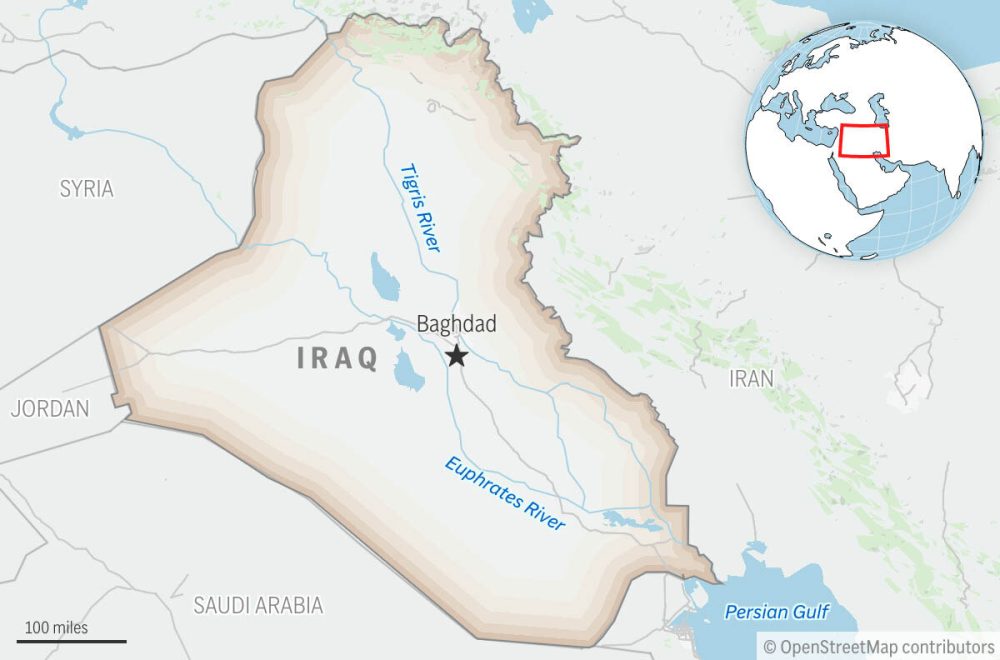

Four individuals in Iraq received six-year prison sentences Monday after a court determined they possessed materials advocating for the outlawed Baath Party once headed by former dictator Saddam Hussein.
According to the Karkh Criminal Court’s official statement, authorities discovered the prohibited content stored on the defendants’ mobile phones while they were in Kirkuk province during 2025 and 2026.
Following the 2003 American-led military intervention that ended Saddam’s dictatorial regime, Iraq established extensive de-Baathification measures designed to eliminate the party’s influence throughout government agencies.
These measures specifically focused on former party affiliates, especially those who occupied high-ranking roles during the prior administration, resulting in widespread terminations throughout government departments, armed forces, educational systems, and administrative services.
However, such criminal prosecutions have become uncommon in recent times. Several former government officials have been permitted to resume their careers provided they had no involvement in major criminal activities.
Nevertheless, ongoing investigations have resulted in certain political candidates being barred from recent electoral contests. Individuals subject to de-Baathification decisions cannot seek appointment to cabinet positions, top government roles, or senior security posts.
The continuing impact of de-Baathification policies creates ongoing political and social tensions throughout Iraq, especially within the nation’s Sunni minority community.
Hussein belonged to the Sunni sect, and Sunni Muslims held a disproportionate number of leadership roles during his reign. After his removal from power, Sunnis bore the brunt of institutional purges, creating bitterness and political alienation that sometimes contributed to the emergence of Sunni radical organizations.
The Accountability and Justice Commission continues to serve as Iraq’s designated agency for managing de-Baathification initiatives. Sunni parliamentary representatives across multiple legislative sessions have demanded the commission’s elimination, contending that its mission should be reassessed or terminated as part of comprehensive national unity measures.
Those who defend the commission argue it provides essential legal mechanisms to block any resurgence of Baathist power within government structures.