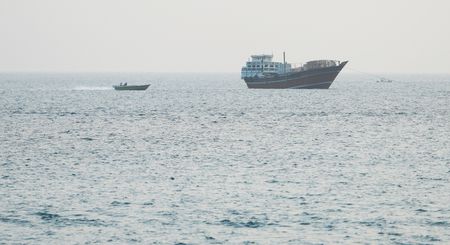

The Trump administration began a new maritime operation Monday aimed at escorting commercial vessels through the Strait of Hormuz, where hundreds of ships have remained trapped since hostilities with Iran commenced.
According to U.S. military officials, two merchant vessels flying American flags have “successfully transited” the strategic waterway. In a separate development, American military leaders rejected Iranian assertions that they had attacked a U.S. Navy ship in waters southeast of the strait.
Iranian officials delivered their most recent diplomatic proposal to U.S. mediators through Pakistan, according to Iran’s government-controlled IRNA news service on Friday. President Trump later stated he was “not satisfied” with the offer but declined to specify what aspects of the proposal were inadequate. The fragile ceasefire between Washington and Tehran has now persisted for three weeks.
Financial markets showed mixed reactions Monday, with stocks hovering near record levels while petroleum prices surged amid uncertainty over when oil tankers might resume normal passage through the strait and restore global crude oil distribution. Conflicting reports about a potential Iranian attack on an American naval vessel in the waterway added to market tensions.
The S&P 500 declined 0.1% following its latest record high. The Dow Jones Industrial Average dropped 216 points, or 0.4%, by 9:35 a.m. Eastern time, while the Nasdaq composite gained 0.1%.
Oil markets experienced more dramatic movement, with Brent crude prices jumping 2% to $110.37 per barrel and briefly exceeding $114 during morning trading. Iran’s blockade of the Strait of Hormuz during its conflict with the United States has trapped oil tankers in the Persian Gulf, preventing deliveries to global customers. This disruption has driven Brent prices up dramatically from approximately $70 per barrel before the conflict began.
Secretary of State Marco Rubio plans to visit Rome and Vatican City this week in an attempt to reduce growing friction between the Trump administration and Pope Leo regarding U.S. Middle East policies, particularly concerning Iran.
The State Department announced Monday that Rubio, a practicing Catholic who has made at least three previous visits to Rome and the Vatican since becoming Trump’s chief diplomat, will be in Italy Thursday and Friday.
“Secretary Rubio will meet with Holy See leadership to discuss the situation in the Middle East and mutual interests in the Western Hemisphere,” the department stated. “Meetings with Italian counterparts will be focused on shared security interests and strategic alignment.”
This diplomatic mission occurs as Trump has publicly criticized Pope Leo, America’s first pontiff, for his Middle Eastern positions and other matters, including social media posts comparing Trump to Jesus Christ.
The waterway’s closure has created economic pressure for European and Asian nations that rely on Persian Gulf energy supplies, driving prices higher well beyond the immediate region.
Trump has pledged to reduce gasoline costs as he approaches midterm elections this year.
Washington has cautioned shipping companies they risk facing sanctions for making payments to Iran for strait passage. Since April 13, the U.S. has maintained a naval blockade of Iranian ports, forcing 49 commercial vessels to turn away, according to U.S. Central Command’s Sunday report. This blockade has cut off oil revenues that Tehran requires to support its struggling economy.
American officials have indicated they hope the blockade will compel Iran to return to diplomatic discussions.
Military leaders confirmed Monday that two American-flagged commercial ships had completed safe passage through the Strait of Hormuz, with Navy guided-missile destroyers in the Persian Gulf working to restore normal shipping operations. They also disputed Iranian claims of striking an American naval vessel.
This announcement followed President Trump’s Sunday declaration of a new program to assist ships navigating the vital global energy corridor. Iran has maintained an effective closure of the strait since the U.S. and Israel initiated the conflict on February 28, creating worldwide economic instability.
The U.S.-led Joint Maritime Information Center has recommended ships use Omani waters when crossing the strait, establishing what it calls an “enhanced security area.” U.S. Central Command has not disclosed when Navy ships arrived or when the merchant vessels departed.
Questions remain about whether shipping companies and their insurance providers will accept the risks, given that Iran has attacked vessels in the waterway and pledged to continue such actions.