
Mohammad Abdullah Al Mamun had only spent a handful of days with his 6-year-old son during the child’s entire lifetime.
The Bangladeshi worker spent a decade and a half laboring in Saudi Arabia, regularly sending earnings back to his family living in one of Bangladesh’s most impoverished regions. This year marked the time he would finally come home, construct a bigger house with his accumulated savings, and bond with the son he hardly knew.
Instead, on March 8th, a missile attack devastated his worker housing facility. Al Mamun sustained critical burn injuries and ultimately perished. His death was part of a larger tragedy affecting over two dozen international workers killed throughout the Middle East following the February outbreak of hostilities between the United States, Israel, and Iran.
Millions of international laborers have constructed the modern, petroleum-driven economies across Gulf Arab nations — though many haven’t equally benefited from this wealth. Today they confront an increasingly difficult decision: Continue employment in the Middle East where salaries substantially exceed those back home, while hoping the fragile ceasefire holds; or go back to impoverished home countries where living costs have skyrocketed due to the ongoing conflict.
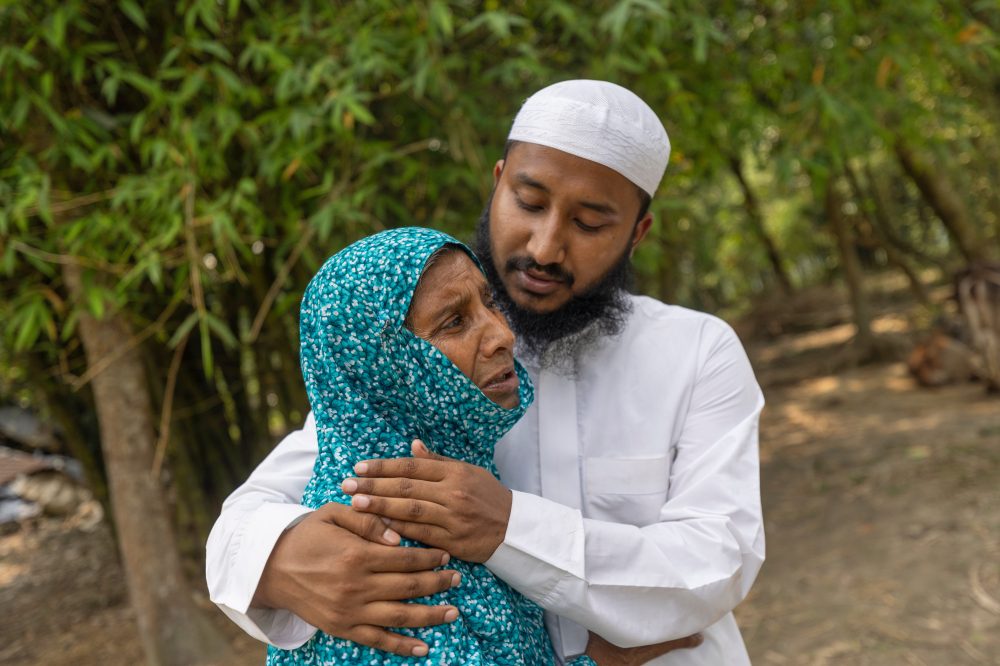
Al Mamun’s decision was tragically final. His body returned home in a casket this month.
“We don’t know what we will do next,” his widow, Sadia Islam Sarmin, stated.
International workers constitute the majority population across numerous Gulf Arab nations. Western nationals, Arabs, and Indians control business and financial sectors, while laborers from economically disadvantaged Asian and African countries endure extended shifts in extreme heat at petroleum installations and building projects — frequently lacking adequate safety measures.
According to the Coalition for Labour Justice for Migrants in the Gulf, an advocacy organization, most workers lacked shelter access during attacks and many became trapped by the fighting. The group reports missile and drone assaults killed no fewer than 24 international workers in Gulf states and four additional workers in Israel during Iran’s coordinated strikes with allied militant groups. This tally includes eight maritime workers killed at sea.
“It’s a very precarious situation for migrant workers,” explained Udaya Wagle, a labor and migration researcher at Northern Arizona University.
Although a ceasefire was declared in early April, peace talks have repeatedly broken down. Iran has essentially shut down the Strait of Hormuz, a crucial passage for worldwide oil and gas transport, declaring it will only reopen the waterway when hostilities cease and the United States ends its blockade.
The consequent surge in fuel, fertilizer, and commodity prices has particularly impacted Asian nations.
Money transfers from Gulf workers represent approximately 1% of India’s gross domestic product, between 3% to 5% of GDP in Bangladesh, Pakistan and Sri Lanka, and almost 10% in Nepal. These funds have become increasingly critical as family incomes face pressure and governments need foreign currency for energy purchases.
Gulf economies also confront difficult prospects, with exports blocked and essential energy infrastructure requiring repairs following missile damage. Fighting could restart, as Iran opposes U.S. President Donald Trump’s conditions.
Al Mamun’s relatives received devastating phone calls on March 9th informing them the 35-year-old had been injured. Video recorded by a fellow worker captured him sitting outdoors with severe burns and bleeding, pleading for assistance.
“He never imagined he would be hurt. That a missile would fall on him,” said his younger brother, Maruf Hasain.
Laborers like Al Mamun face the greatest risks since they perform the “most dirty, dangerous and difficult” jobs, according to Shariful Islam Hasan from the Bangladeshi development organization BRAC.
In Qatar, a 27-year-old Bangladeshi factory employee worked 12-hour shifts while missiles flew above. Debris from one attack landed close to his living area. When warning sirens activated, he explained, workers moved to a designated shelter.
He makes under $400 monthly and sends two-thirds home. “We have no choice but to keep working,” he said anonymously, fearing official retaliation.
Qatar implemented various reforms before hosting the 2022 World Cup, including partially eliminating a system binding workers to specific employers. However, advocates maintain that mistreatment remains common and workers have limited legal recourse.
Ahmed al-Aliyli, a Qatar taxi operator, hasn’t sent money to his Egyptian family for two months. His monthly income once reached $3,000 but has dropped to one-third that amount as the war disrupted travel. “We are the collateral damage of this war,” he stated.
Economic slowdowns in critical sectors like property development and construction will directly impact migrant workers, BRAC’s Hasan noted. Bangladeshi and Pakistani workers face particular vulnerability since they often work informally without permanent contracts.
Despite some countries’ reforms, employment permits frequently remain tied to individual employers, and workers can become effectively trapped, the labor coalition reported. The organization cautioned that some employers might exploit the conflict to withhold pay, refuse leave requests, or conduct arbitrary terminations.
When fighting began, Al Mamun’s mother, Shahida Khatun, begged him to return home.
He had been accumulating savings since November. During his final call home, he assured his younger siblings he would finance their education, construct a larger family house, and return permanently this spring.
Now his family struggles to recover his unpaid wages and rebuild their lives without him.
“The pain of losing a child. There are no words to describe the agony,” Khatun said.
For numerous workers, returning home would mean abandoning stable employment and significantly higher earnings.
Marlene Flores, a Filipino worker in Qatar, felt tremors each time missiles were intercepted. However, the tax-exempt salary and health coverage made staying feel safer — in some ways — than the Philippines, which has announced a “national energy emergency.”
“It’s not easy for me to say,” she acknowledged, “But I would really stay here.”
Israel also employs a substantial international workforce. Filipino caregiver Jeremiah Supan continued attending to his two elderly patients despite nearly daily missile warnings, occasionally venturing out for supplies despite the risks. He questions whether his family could survive if he returned to the Philippines.
“I know that in the blink of an eye, one can die,” he said. “But what life shall we return to?”