
NEW DELHI — Prime Minister Narendra Modi’s governing Hindu nationalist party appears on track to capture West Bengal state for the first time, marking a historic victory in a region long controlled by opposition forces.
Preliminary tallies from India’s Election Commission show the Bharatiya Janata Party leading in no fewer than 190 constituencies within West Bengal’s 294-seat state assembly. Complete vote counts are anticipated by Monday evening.
This represents a historic political shift for Modi’s party, which has spent years attempting to unseat the All India Trinamool Congress administration under Chief Minister Mamata Banerjee’s leadership. The BJP has never held power in West Bengal, a state with considerable political influence, where Banerjee — among Modi’s most vocal opponents — has maintained control since 2011.
Critics from opposition parties have strongly condemned the electoral process in West Bengal following the election commission’s decision to remove millions of registered voters from voting lists.
Three additional states participated in this round of voting.
India, home to over 1.4 billion citizens, consists of 28 states and eight federal territories. State elections occur on rotating schedules throughout the country, with several state contests taking place nearly every year.
The West Bengal results are anticipated to enhance Modi’s political standing and consolidate his authority during the middle portion of his third term, particularly after the 2024 national elections required his party to partner with regional allies to establish a governing coalition.
Modi is anticipated to seek an unprecedented fourth term when elections occur in 2029.
This defeat represents a substantial blow to India’s opposition movement, which has faced ongoing difficulties in creating a cohesive and effective resistance to the BJP’s national dominance.
Banerjee had positioned herself as a leading national opponent to Modi, especially through her efforts to unite regional parties in opposition to the BJP. Her loss will likely diminish her influence within an opposition coalition already weakened by regional conflicts and internal divisions.
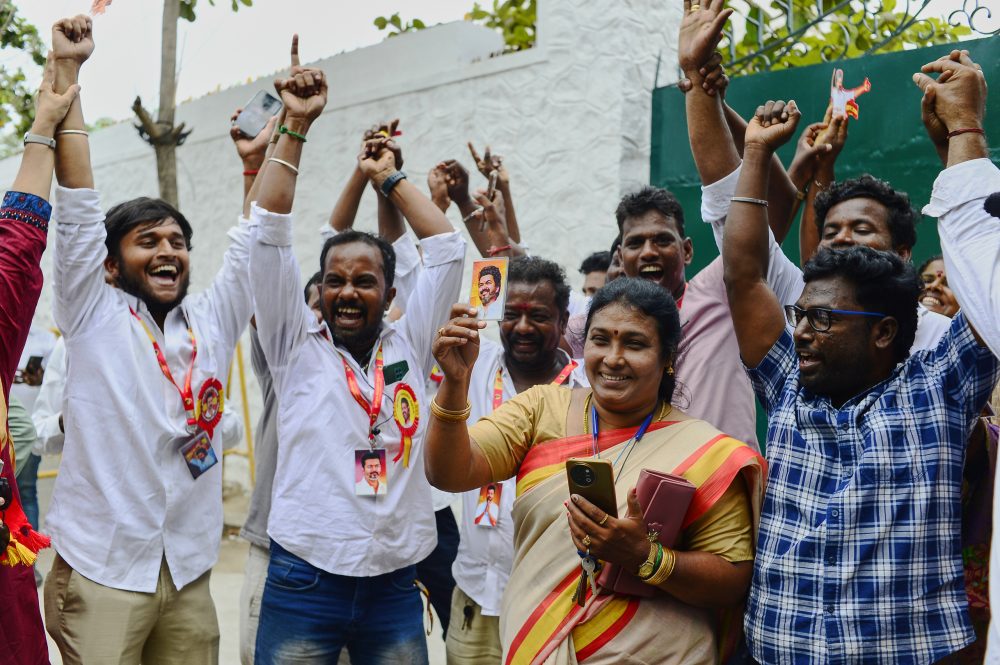
In Tamil Nadu, a southern state, popular film actor Joseph Vijay, whose Tamilaga Vettri Kazhagam party was established just two years ago, appears positioned to defeat the incumbent DMK administration. Tamil Nadu, among India’s most economically advanced states, has a tradition of electing entertainment figures to its highest office.
In Kerala, another southern state, the Indian National Congress-led opposition appeared ready to topple the governing communist administration, potentially ending leftist control in one of its final remaining power bases.
Modi’s party was also positioned to maintain control in Assam, a northeastern state, for a third straight term.