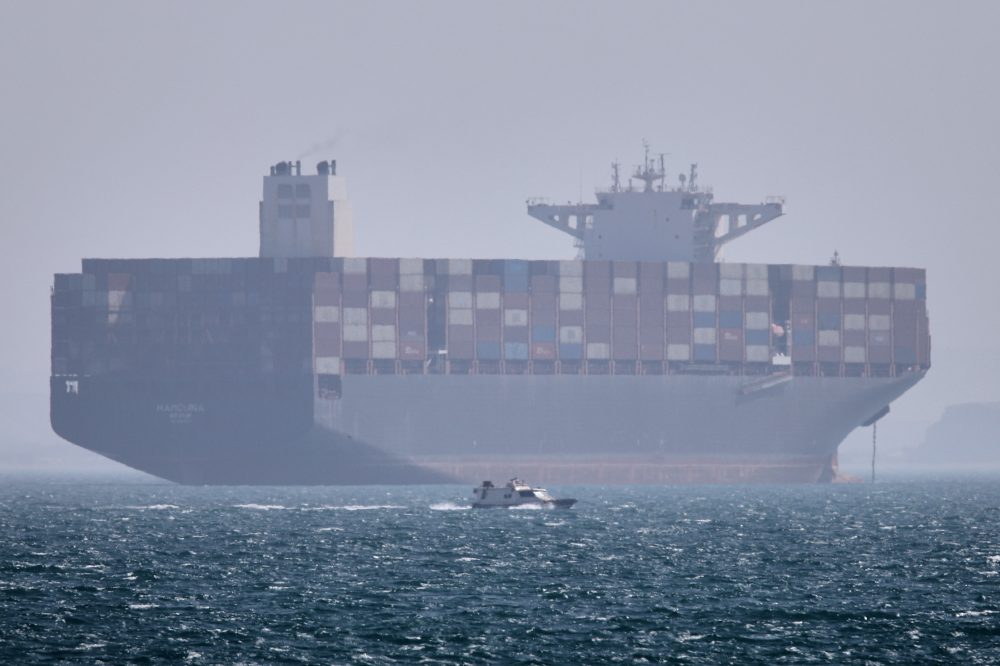

A fragile three-week ceasefire between the United States and Iran reached a dangerous breaking point Monday as American military forces launched an operation to escort trapped commercial vessels through the blocked Strait of Hormuz.
The crisis escalated when the United Arab Emirates reported coming under attack for the first time since the early April truce began, while British maritime officials confirmed two cargo ships were burning near UAE waters.
Tehran denounced the American-led naval escort mission as a breach of the delicate ceasefire agreement. Despite President Donald Trump’s Sunday announcement of ‘Project Freedom,’ only two US-flagged merchant vessels successfully passed through the waterway with military protection, according to American officials.
Shipping companies and financial markets are expressing growing concern over Washington’s limited operational details. Maritime industry leaders question which crews and cargo owners would risk potential Iranian attacks.
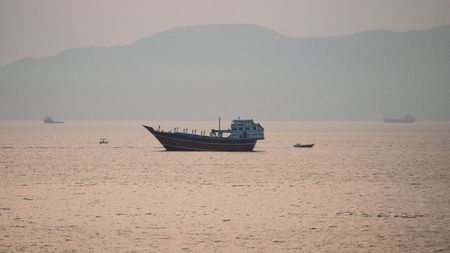
For more than two months since hostilities began, Iran’s control over this vital shipping lane has trapped hundreds of commercial vessels and tens of thousands of crew members in the region.
The maritime bottleneck has created a massive backup of essential global commodities including oil, natural gas, fertilizer and other critical supplies. This strategic chokehold has given Iran significant leverage while damaging international economies and potentially affecting the Republican administration’s prospects in upcoming midterm elections.
Monday saw oil markets climb as uncertainty persisted around both the strait’s status and the American military intervention, which Trump characterized as a humanitarian mission to assist nations that have remained ‘neutral and innocent’ during the conflict.
Although European nations and other allies have expressed anxiety about the strait situation and received Trump’s appeals for assistance, no other countries appeared to participate in Monday’s operations.
Pentagon officials revealed the mission would deploy guided-missile destroyers, over 100 aircraft and 15,000 military personnel, though specific deployment strategies were not disclosed.
Trump issued a stern warning that any interference with the escort operation ‘will, unfortunately, have to be dealt with forcefully.’
American military commanders reported destroying six small Iranian patrol boats that were attacking civilian ships. They also said Iranian forces fired missiles and deployed drones against vessels under US protection.
Iran has effectively sealed the waterway by launching attacks on various ships during the past two months, while demanding that non-US and non-Israeli vessels pay transit fees for passage.
Maritime safety experts continue worrying about Iranian naval mines scattered throughout the shipping channel as companies evaluate the new American protection program.
Iranian military leadership declared Monday that vessels must still coordinate transit plans with Tehran authorities, warning that ‘any foreign military force — especially the aggressive U.S. military — that intends to approach or enter the Strait of Hormuz will be targeted,’ according to state media reports.
Iran’s official IRNA news service dismissed Trump’s strait reopening strategy as part of his ‘delirium.’
Iranian media outlets claimed their forces attacked an American warship southeast of the strait, alleging it was ‘violating maritime security and navigation norms.’ US military officials, who have maintained a naval blockade of Iranian ports for weeks, rejected these claims.
The US-led Joint Maritime Information Center continues rating the threat level around the strait as critical, despite issuing earlier guidance about the new American escort program.
Jakob Larsen, chief safety and security officer for the Baltic and International Maritime Council, a major shipping industry organization, said no official operational guidelines or specifics have been provided to commercial operators.
‘Without consent from Iran to let commercial ships transit safely through the Strait of Hormuz, it is currently not clear whether the Iranian threat to ships can be degraded or suppressed,’ Larsen stated.
Larsen raised questions about the mission’s long-term viability versus its potential as a short-term operation, warning of a ‘risk of hostilities breaking out again’ if the effort proceeds.
The Joint Maritime Information Center has directed ships to use Omani territorial waters for strait crossings, noting that American forces have established an ‘enhanced security area.’ Officials cautioned that traveling near traditional shipping routes ‘should be considered extremely hazardous due to the presence of mines that have not been fully surveyed and mitigated.’
The center advised ship captains to maintain close coordination with Omani port authorities ‘due to anticipated high traffic volume.’