
WELLINGTON, New Zealand (AP) — Jewish community members in Australia testified Monday before a national commission about experiencing dramatically increased hatred and fear following a deadly attack at a Hanukkah gathering last December.
The December shooting at Bondi Beach claimed 15 lives when two attackers opened fire on the celebration. Authorities have charged father and son duo Sajid and Naveed Akram with the massacre, which officials say was motivated by Islamic State ideology. The pair used legally purchased firearms despite Australia’s strict gun regulations.
This tragic incident led to the establishment of a Royal Commission on Antisemitism and Social Cohesion, Australia’s most comprehensive form of investigation. The commission launched its public testimony phase in Sydney Monday, beginning two weeks of hearings focused on examining how widespread antisemitic sentiment has become throughout Australian society and institutions.
Additional hearings are scheduled throughout the year before commissioners release their final findings in December.
Commissioner Virginia Bell noted the connection between Middle Eastern conflicts and domestic hate crimes. “The sharp spike in antisemitism that we’ve witnessed in Australia has been mirrored in other Western countries and seems clearly linked to events in the Middle East,” Bell stated. “It’s important that people understand how quickly those events can prompt ugly displays of hostility toward Jewish Australians simply because they’re Jews.”
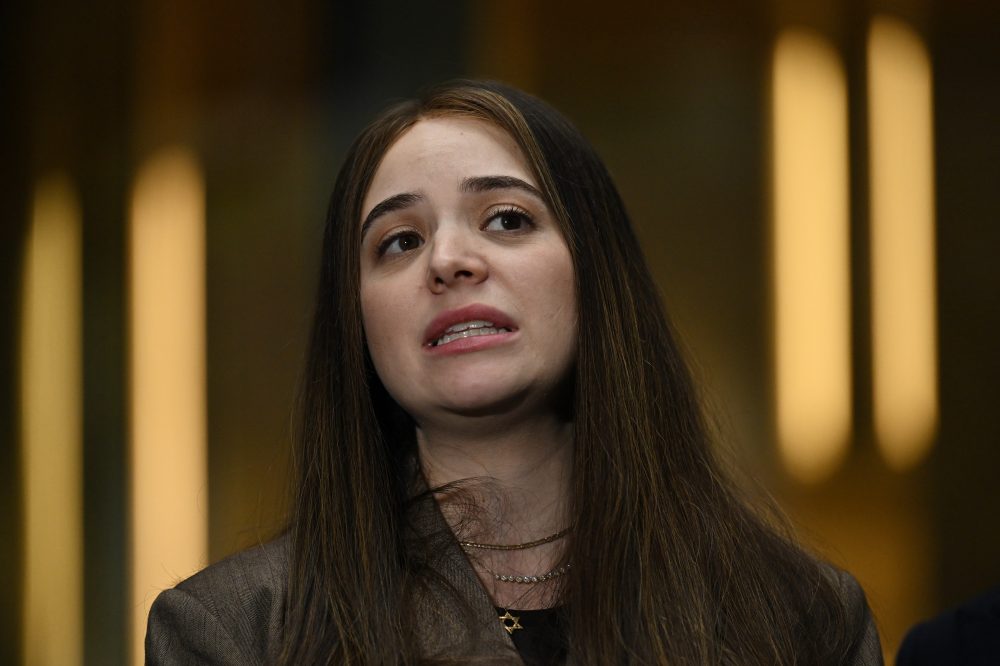
Monday’s testimony came exclusively from Jewish Australians describing their encounters with hatred, with several speaking anonymously due to safety concerns. Sheina Gutnick, whose father died in the Bondi attack, recounted being verbally attacked in a Sydney shopping center a year earlier when someone noticed her Star of David jewelry.
“I felt shocked, exposed and unsafe,” Gutnick testified. “There were many people around me but no one intervened.”
Gutnick’s father, 62-year-old Reuven Morrison, threw a brick at one of the gunmen during the beach attack before being fatally shot. She told commissioners she now avoids public family events and certain Sydney neighborhoods.
Testimony revealed that antisemitic incidents skyrocketed after the October 7, 2023 start of the Israel-Hamas war. The Executive Council of Australian Jewry, which monitors such crimes, recorded more than 2,000 incidents in the following year compared to their previous annual record of just under 500.
While similar increases occurred in Britain and other nations, Australia’s relatively small Jewish population found the surge particularly alarming since they hadn’t previously experienced such widespread serious threats, witnesses explained.
Toby Raphael, vice president of Sydney’s Newtown Synagogue, described the community’s transformation. “Now everyone is scared all the time,” said Raphael, whose synagogue was vandalized with swastikas during a 2025 wave of antisemitic crimes.
Raphael explained how he previously assured congregation members that security wasn’t necessary at their synagogue, but the escalation in hate-motivated attacks changed that approach. He now participates in a parent security team at his son’s Jewish school, which also employs armed professional guards.
“Why do kids have to go to school like that?” Raphael questioned. “This is the world that the Jews of Australia live in now and it needs to change.”
Even before the Bondi massacre, antisemitic incidents had gained national attention through attacks targeting Jewish educational institutions, businesses, and religious sites. In August, Australia’s government accused Iran of orchestrating at least two such crimes and severed diplomatic relations with Tehran.
Several Monday witnesses referenced these earlier incidents when explaining their considerations about relocating overseas or existing plans to leave Australia.
Testimony included accounts of verbal and physical assaults, as well as pro-Palestinian demonstrators gathering outside synagogues. Alex Ryvchin, a Jewish community leader whose home was targeted in a 2025 arson attack, warned that Australia was heading toward disaster.
“This was January, and by December there was a horrific massacre which has transformed us permanently,” Ryvchin told the hearing, referencing his earlier warning to reporters that someone would die.
The massacre deeply affected Australia, where serious gun violence has been uncommon since firearm restrictions were strengthened following a Tasmania mass shooting three decades ago. Federal and state officials are now evaluating additional reforms.
The Royal Commission’s April interim report, which assessed Australian law enforcement and security agencies’ capabilities to address antisemitic crimes, urged leaders to prioritize creating uniform national gun legislation and implementing a weapons buyback program.
Police fatally shot Sajid Akram at the crime scene. He held a valid shooting license and legally possessed the weapons used in the attack.
His son survived with injuries. Naveed Akram faces charges including committing a terrorist act, 15 murder counts, and 40 attempted murder counts. He has not yet entered any pleas.