
THE HAGUE, Netherlands — Two South American nations appeared before the world’s top court Monday as Guyana declared that nearly three-quarters of its national territory hangs in the balance during a century-old boundary conflict with Venezuela.
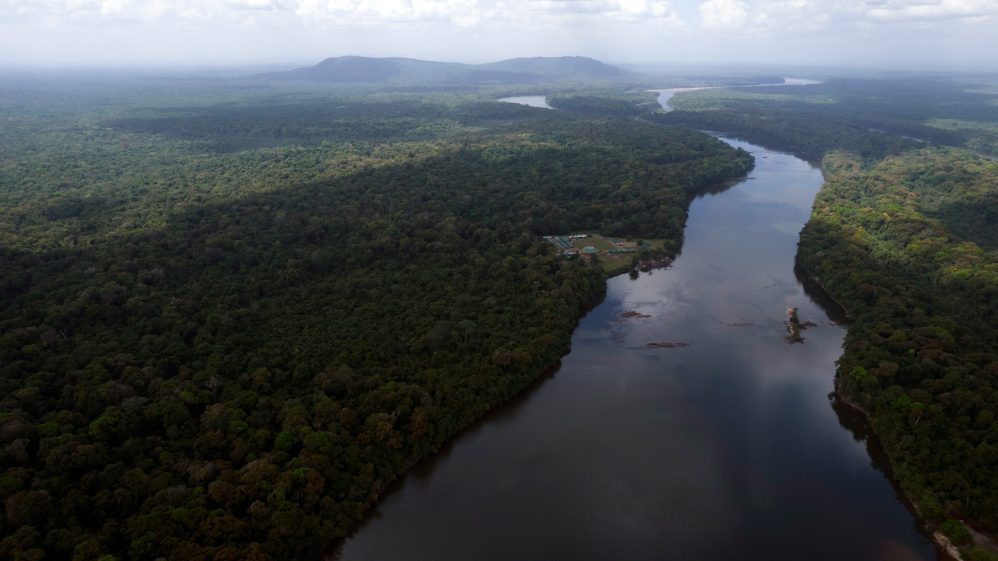
The week-long proceedings at the International Court of Justice focus on the contested Essequibo territory, a resource-laden jungle area abundant with gold, diamonds, timber, and other valuable materials, positioned near significant offshore petroleum reserves.
“This has been a blight on our existence as a sovereign state from the very beginning,” Guyana Foreign Minister Hugh Hilton Todd declared before justices in The Hague’s Great Hall of Justice.
The territorial boundaries were established through an 1899 arbitration involving representatives from Britain, Russia, and the United States, which largely favored Guyana by placing the border along the Essequibo River. American officials represented Venezuelan interests partly due to severed diplomatic ties between Venezuela and Britain at that time. Venezuelan officials maintain that the Americans and Europeans collaborated to unfairly deprive their nation of rightful territory.
Venezuela has claimed sovereignty over Essequibo dating back to Spanish colonial rule when the area fell within Venezuelan territorial limits. The nation maintains that a 1966 settlement agreement effectively invalidated the previous century’s arbitration ruling.
Following decades of unsuccessful mediation efforts, Guyana petitioned the ICJ in 2018 to validate the original 1899 boundary determination.
Pierre d’Argent, representing Guyana’s legal counsel, dismissed Venezuela’s position as “lengthy, pointlessly controversial and confusing” and informed the court that these arguments “are not new in any way and have already been rejected by the court.”
Both countries have appeared before the tribunal on several occasions. Venezuela previously contested the court’s authority, arguing the case couldn’t proceed without British participation, given the UK’s colonial control over Guyana during the original border ruling. The court determined in 2020 that it possessed proper jurisdiction, allowing this week’s proceedings to move forward.
The tribunal instructed Venezuela in 2025 to avoid conducting elections for officials who would allegedly govern the disputed territory.
During recent diplomatic visits to Grenada and Barbados, Venezuela’s acting President Delcy Rodríguez displayed a pin shaped like the Essequibo region.
Rodríguez was conducting her inaugural official international travel after Nicolás Maduro’s capture by U.S. forces in early January. The symbolic pin has become increasingly common among Venezuelan government representatives, state media personalities, legislators, and ruling party officials since Maduro’s removal during a dramatic nighttime operation in Caracas.
The proceedings resume Wednesday with Venezuela’s opening arguments.