
THE HAGUE, May 3 – The small South American nation of Guyana has petitioned the International Court of Justice to declare that Venezuela lacks any valid territorial claim over the resource-rich Esequibo region, an area that has sparked conflict between the neighboring countries for generations.
“Facing a larger and more powerful neighbour’s designs on our territory has not only threatened our peace and security, it has held back our development,” Guyana’s Foreign Minister Hugh Hilton Todd stated to the panel of judges as week-long proceedings began at the World Court.
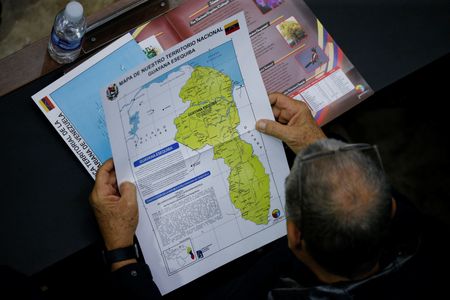
The contested area encompasses 160,000 square kilometers (62,000 square miles) of primarily rainforest territory surrounding the Esequibo river, plus adjacent ocean waters where enormous oil and natural gas deposits have been found.
According to Todd, Venezuela’s “unlawful” territorial assertion covers more than 70% of Guyana’s total land mass.
Guyana filed its case with the ICJ – the United Nations’ highest judicial body for international disputes – in 2018, seeking validation of boundaries established through an 1899 arbitration between Venezuela and British Guiana, the former colonial territory that awarded the region to Guyana.
Venezuelan citizens voted in a 2023 referendum to dismiss the ICJ’s authority over the border disagreement with Guyana and supported establishing a new Venezuelan state within the Esequibo area, which Venezuela created the following year.
Following the January capture of President Nicolas Maduro and his spouse by U.S. authorities, Venezuela is currently operating under interim leadership. Venezuelan representatives will present their arguments on Wednesday.
A final ruling remains months away. While ICJ decisions are legally binding and cannot be appealed, the court lacks enforcement mechanisms and must depend on the U.N. Security Council for implementation.