
Taiwan’s President Lai Ching-te has successfully completed a surprise diplomatic mission to the African nation of Eswatini, defying Chinese efforts to prevent the journey and drawing harsh criticism from Beijing officials.
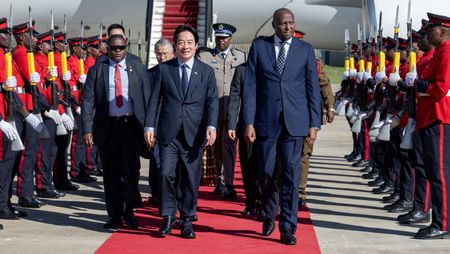
The Taiwanese leader arrived in Eswatini on Saturday to attend the 40th anniversary celebration of King Mswati III’s reign, using an unannounced travel strategy after China had previously interfered with his planned route.
During his meeting with the king, Lai emphasized Taiwan’s sovereignty and international standing. “The Republic of China, Taiwan, is a sovereign nation and a Taiwan that belongs to the world,” he stated, according to Taiwan’s presidential office. “The 23 million people of Taiwan have the right to engage with the world, and no country has the right — nor should any country attempt — to prevent Taiwan from contributing to the world.”
The visit came after China successfully pressured three Indian Ocean nations last month to deny overflight permissions for Lai’s aircraft, forcing the cancellation of his original travel plans to reach the small southern African kingdom.
Beijing, which considers Taiwan part of its territory and opposes any diplomatic recognition of the island, responded with particularly harsh language. China’s Taiwan Affairs Office accused Lai of having “skulked” his way to Eswatini and described his actions as resembling “a rat scurrying across the street,” predicting international ridicule for the Taiwanese president.
Taiwan’s Mainland Affairs Council fired back at the Chinese criticism, stating that Lai required no permission from Beijing for his travels and dismissing the harsh rhetoric as “fishwife’s gutter talk.”
The president traveled aboard an aircraft provided by Eswatini’s government, employing what diplomatic sources call an “arrive then announce” strategy commonly used in sensitive international visits to avoid potential interference.
A senior Taiwan security official, speaking anonymously due to the delicate nature of the situation, explained that this approach helps minimize “uncertain risks of potential interference from external forces.”
Eswatini, formerly known as Swaziland and home to approximately 1.3 million people, represents one of only twelve nations worldwide that maintain formal diplomatic relations with Taiwan rather than China.
The diplomatic tensions surrounding Lai’s original canceled travel plans had previously drawn criticism of China from the United States, along with expressions of concern from the European Union, Britain, France, and Germany.