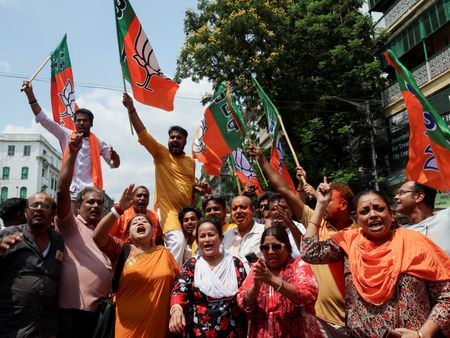

Indian Prime Minister Narendra Modi’s political party appeared headed for major victories in two important state elections on Monday, strengthening his political position while dealing significant blows to opposition groups.
Election trends from India’s Election Commission indicated that Modi’s Bharatiya Janata Party (BJP) was positioned to secure another term governing Assam in eastern India, marking their third consecutive victory there. The party also showed strong performance in West Bengal, both states sharing borders with Bangladesh where immigration concerns dominated campaign discussions.
The potential West Bengal victory would represent a historic breakthrough for the BJP, which has never controlled that state and held just three local legislative seats as recently as 2021.
Modi, along with Home Minister Amit Shah and other top BJP officials, conducted intensive campaigning throughout West Bengal in recent weeks. Their message centered on concerns about unauthorized immigration from Bangladesh and economic challenges under current Chief Minister Mamata Banerjee’s leadership.
Banerjee, who has governed the state since 2011, represents one of Modi’s most vocal critics and serves as a prominent figure in India’s opposition coalition.
Financial markets responded positively to the BJP’s strong showing in West Bengal, with 10-year government bond yields dropping 2 basis points to 6.9954%, according to bond traders.
In Tamil Nadu, a southern state known as a major center for electronics and automotive manufacturing, popular film actor Joseph Vijay appeared positioned to defeat the current DMK party leadership. Vijay, making his political debut with a party established just two years ago, benefits from an enthusiastic fan base in a state known for electing entertainment figures to high office.
Meanwhile, in Kerala, another southern state, a Congress party-led coalition looked set to overcome the incumbent Communist Party of India (Marxist) government.
The potential defeats of the DMK and Banerjee’s TMC party would significantly damage the Congress-led INDIA opposition alliance, which these groups helped anchor. This coalition challenged Modi in 2024’s general election and prevented him from achieving an outright parliamentary majority, forcing him to form a coalition government with regional partners.
These losses could substantially weaken organized opposition to Modi when he potentially seeks an unprecedented fourth term in 2029.
Complete election results were expected by Monday evening, though the outcomes are not anticipated to immediately affect federal government politics or policy decisions.