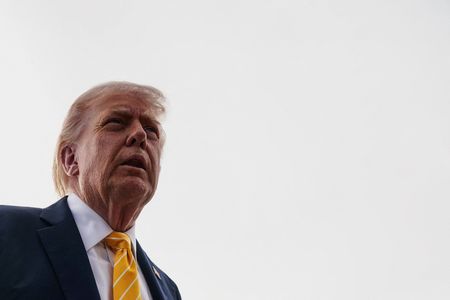

President Donald Trump announced Sunday that the United States will begin a massive rescue operation Monday morning to escort hundreds of trapped vessels out of the Strait of Hormuz, where Iran has maintained an effective blockade since late February.
The initiative, dubbed ‘Project Freedom,’ aims to assist vessels carrying approximately 20,000 seafarers who have been stranded in Persian Gulf waters since the Iran conflict erupted on February 28. Trump provided limited specifics about what he described as a humanitarian mission to help ships from countries he called “neutral and innocent.”
“We have told these Countries that we will guide their Ships safely out of these restricted Waterways, so that they can freely and ably get on with their business,” Trump wrote in a social media statement Sunday.
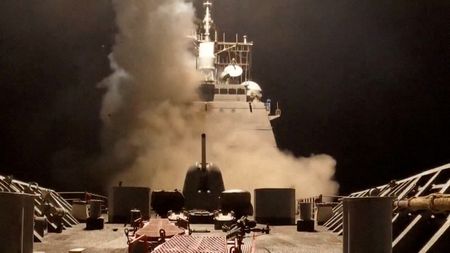
According to U.S. Central Command, the operation will deploy guided-missile destroyers, more than 100 aircraft, and 15,000 military personnel. However, Pentagon officials have not yet clarified the specific deployment strategy for these forces.
Iran swiftly condemned the announcement as a violation of the current ceasefire agreement. The blockade began after the U.S. and Israel initiated military action on February 28, causing significant disruption to global shipping markets.
Crew members aboard the stranded vessels, many operating oil tankers and cargo ships, have previously told The Associated Press about witnessing drone and missile explosions overhead while their supplies of fresh water, food, and other essentials dwindle. A significant portion of the trapped sailors come from India and other South and Southeast Asian nations.
Trump characterized the seafarers as being “victims of circumstance” and framed the rescue effort as a humanitarian action “on behalf of the United States, Middle Eastern Countries but, in particular, the Country of Iran.” However, he included a stern warning about potential consequences: “If, in any way, this Humanitarian process is interfered with, that interference will, unfortunately, have to be dealt with forcefully.”
The announcement came just hours after Iran indicated it was examining the U.S. response to Tehran’s most recent peace proposal, while emphasizing that nuclear discussions are not currently part of these negotiations. The existing three-week ceasefire appears to remain intact.
Recent Maritime Incidents Near Strategic Waterway
Sunday’s announcement followed fresh reports of vessel attacks near the crucial shipping lane. The British military’s United Kingdom Maritime Trade Operations center documented an assault on a cargo ship by several small boats, while a separate vessel sustained damage from unidentified projectiles.
These incidents marked the first reported attacks in the region since April 22, bringing the total number of such incidents to at least two dozen since the Iran conflict commenced. No casualties were reported in Sunday’s attacks.
The initial attack targeted an unidentified cargo vessel traveling northward near Sirik, Iran, located east of the strait. Iranian authorities have claimed control over the waterway and demanded that non-U.S. and non-Israeli ships pay transit fees, directly challenging internationally recognized navigation rights.
Iranian officials disputed the attack reports, with semiofficial news outlets Fars and Tabnak stating that vessels were simply stopped for routine document inspections as part of monitoring procedures.
The second incident involved a tanker struck around 11:40 p.m. Sunday near Fujairah in the United Arab Emirates. Iranian patrol boats, often equipped only with twin outboard motors, are known for being small, agile, and difficult to detect. Last month, Trump authorized U.S. forces to “shoot and kill” small Iranian vessels deploying mines in the strait.
British maritime monitors also reported Sunday that ships near Ras al-Khaimah, the UAE’s northernmost emirate close to the strait, received radio warnings to evacuate their anchorages. The source of these VHF communications remains unknown.
Diplomatic Efforts Continue
Tehran is currently reviewing Washington’s response to its latest peace proposal, according to Foreign Ministry spokesman Esmail Baghaei, as cited by Iran’s judiciary Mizan news agency.
“At this stage, we have no nuclear negotiations,” Baghaei stated. While Iran’s nuclear program and uranium enrichment have historically been central to U.S.-Iran tensions, Tehran prefers to address these issues at a later time.
Iran’s proposal seeks resolution of other matters within 30 days and focuses on ending the war rather than merely extending the ceasefire, according to state-linked Iranian media. Trump expressed skepticism Saturday about the proposal’s potential for success.
The 14-point Iranian proposal demands that the U.S. remove sanctions on Iran, terminate the naval blockade of Iranian ports, withdraw regional forces, and halt all hostile activities, including Israeli operations in Lebanon, according to semiofficial Nour News and Tasnim agencies with connections to Iran’s security apparatus.
Pakistani officials, speaking anonymously due to authorization restrictions, confirmed that Pakistan’s prime minister, foreign minister, and army chief continue facilitating direct communication between the U.S. and Iran. Pakistan previously hosted in-person negotiations last month and has served as an intermediary for message exchanges between both nations.