
The United States demanded Friday that Nicaragua immediately release Indigenous leader Brooklyn Rivera following the publication of hospital images showing him in critical condition.
Rivera, who leads the Miskito people and has faced decades of conflict with the ruling Sandinista government, has been held since September 29, 2023, during an extensive campaign targeting dissent. His relatives maintain his detention is politically motivated and assert authorities have not filed formal charges.
Several detainees have died while in Nicaraguan government custody in recent years as officials have jailed hundreds of media members, activists and political opponents.
Nicaraguan authorities announced in January they would free certain prisoners after facing pressure following the U.S. military action to apprehend Venezuela’s then-President Nicolás Maduro. However, the government has provided minimal transparency since making that statement.
“This repression, violence and inhumanity is abhorrent,” the Bureau of Western Hemisphere Affairs posted on social platform X Friday. “We reiterate our call for his and all political prisoners’ unconditional release NOW.”
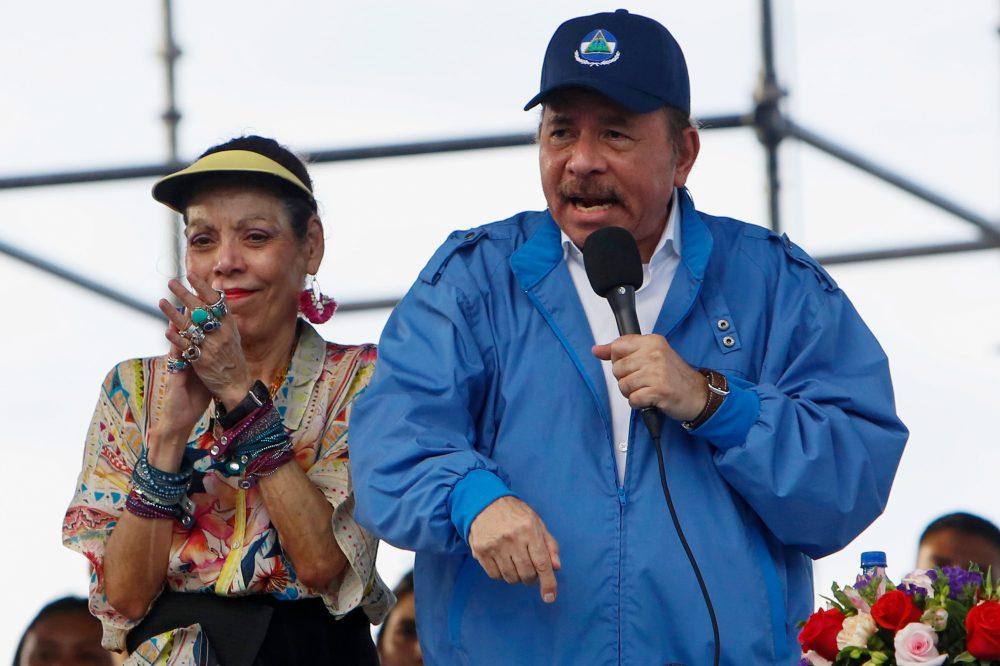
On Wednesday, the administration led by co-Presidents Daniel Ortega and his wife Rosario Murillo issued a health report about Rivera, describing his condition as “delicate” while connected to a mechanical ventilator with multiple organ failure. The released photographs depicted a severely weakened Rivera attached to numerous tubes in his hospital bed.
A coalition of Nicaraguan Indigenous organizations issued a Thursday statement condemning the government for Rivera’s arbitrary imprisonment and “distorting the narrative” by alleging he was already in poor health when taken into custody.
“We know that who is responsible for this very grave situation that he is in, for the violations of human rights, is the Sandinista Ortega-Murillo regime,” they said in the statement sent to The Associated Press.
Currently, at least 47 individuals remain imprisoned in Nicaragua for political reasons, according to the Mechanism for Recognition of Political Prisoners, an organization monitoring these cases. Hundreds have been detained following a 2018 uprising that triggered a violent government response killing hundreds.
What began as demonstrations against social security system changes grew into demands for Ortega’s resignation. Ortega has governed the nation for nearly twenty years after constitutional modifications permitted his continued reelection. The suppression escalated before 2021 presidential elections, during which all competitive candidates were jailed before Ortega claimed victory. The United States does not recognize Ortega’s presidency.
Over 200 political prisoners were freed and transported to the U.S. in 2023, describing solitary confinement and physical and psychological abuse. Many developed ongoing health issues from detention conditions and currently face uncertain immigration status under the Trump administration. An additional 135 political prisoners were released and sent to Guatemala in 2024.
The Miskito population has been a particularly prickly thorn in the side of the Ortega regime, according to Manuel Prado, vice president of the Miskitu American Organization.
Rivera was instrumental in opposing Ortega’s Sandinista government during the late 1970s and 1980s, joining the armed U.S.-backed Contra movement and helping establish the northern coastal area as an autonomous region.
The resource-rich Miskito territory, containing gold and silver deposits, is crucial for the Ortega-Murillo administration’s efforts to attract international investment, especially from China.
Prado demanded Rivera’s release and voiced concern about his current physical condition.
“We do feel like Ortega will allow him to die,” Prado said.