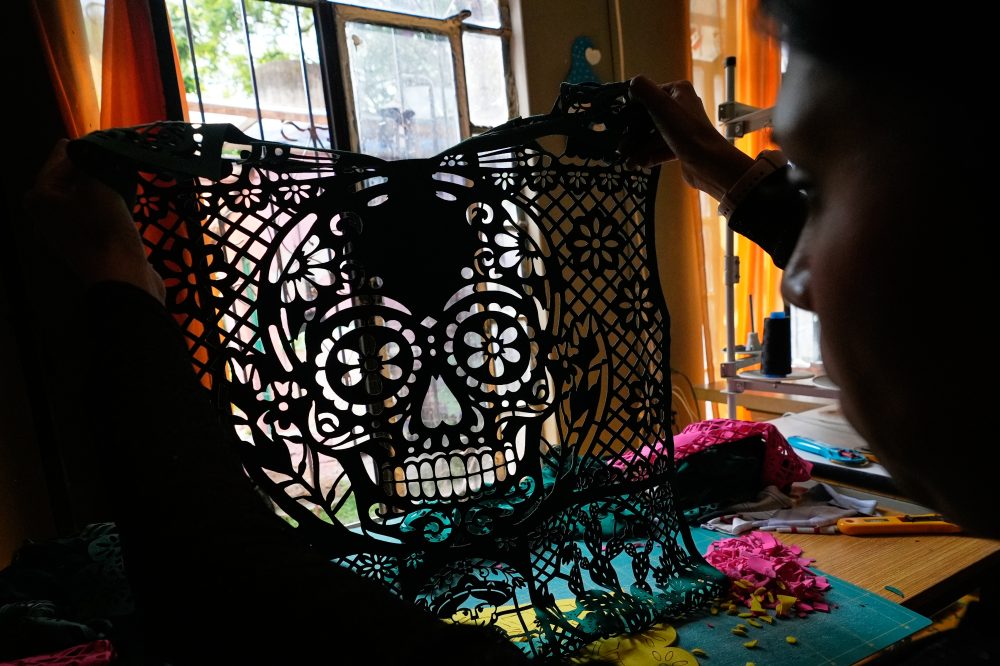

MEXICO CITY (AP) — Hugo Rosas intentionally incorporates Mexico’s most recognizable cultural elements into his soccer jersey creations for the World Cup. His designs merge football culture with Mexican heritage to display his nation’s traditions on an international stage.
Rosas calls his newest line “Calados del Alma” or “Cutouts of the Soul.” The collection takes cues from traditional Mexican spiritual practices and papel picado, the intricate paper decorations featured at community festivals and special occasions.
“We try to create concepts that resonate with us and convey traditions that make Mexicans feel proud,” said Rosas, who has run a workshop with his brother Andrés near Mexico City since 2022. “The country’s best is reflected in papel picado, colors and town celebrations.”
The brothers’ initial jersey design featured Quetzalcoatl, the winged serpent god honored by multiple pre-Hispanic cultures. That piece continues to be Andrés’ top choice among their creations.
“Quetzalcoatl represents a balance that sees the world as a system, not as something extractive that human beings can simply benefit from,” said Andrés, who oversees the brand’s marketing. “I connect with that pre-Hispanic worldview, which is why most of our products are deeply rooted in that vision.”
Hugo’s World Cup series expands upon a previous collection he named “Ofrenda Viva,” or “Live Offering.”
The design philosophy stems from Mexico’s Day of the Dead tradition — where families celebrate and remember deceased loved ones with joy rather than mourning.
“It’s a garment resembling papel picado so that a person can offer their actions, thoughts and passions as an homage to those who are already gone,” Rosas said.
The uniforms use polyester material, allowing the fabric to be carved like papel picado while remaining durable against damage. Rosas and his crew previously tested organic materials, but found they couldn’t support the weight and design needed after manufacturing.
Creating each uniform takes up to three weeks, with the cutting and stitching process requiring eight to 10 hours of labor.
Rosas begins by selecting which cultural symbols to feature. He then calculates the dimensions and form of each element to ensure the needlework matches his creative vision. After finalizing a pattern, the workshop’s seamstresses carefully carve and stitch every garment.
The Rosas brothers maintain a small-scale operation and take pride in this method. They prioritize the attention and effort given to each piece, preserving the handmade nature of their work.
Their Mexclart brand has produced approximately 30 uniforms since the World Cup items became available in April. Hugo Rosas anticipates sales will grow as the tournament’s start date draws closer.
His other lines include one dedicated to pre-Hispanic deities. His preferred design shows Mictlantecuhtli, the Aztec god of the underworld, typically shown as a skeleton figure.
“Putting on a garment like this is like wearing a modern armor through which we can carry that pride and passion for our roots and show it to the world,” Rosas said.
He occasionally consults historical texts about Mexico while creating his patterns. But his preferred source of creativity comes from visiting Indigenous settlements where traditional rituals and practices continue today.
“If it were up to me, I’d use gold or another material that could accurately represent our gods the way our ancestors did,” he said. “All the garments we create are meant to give Mexicans the chance to bring those deities into the present.”