
ATHENS, Greece — Soccer brought communities together on the streets of Greece’s capital as amateur teams prepared for their own version of World Cup competition.
Athletes competed and formed connections on neighborhood practice fields throughout Athens rather than in the massive venues hosting matches across Mexico, Canada and the United States.
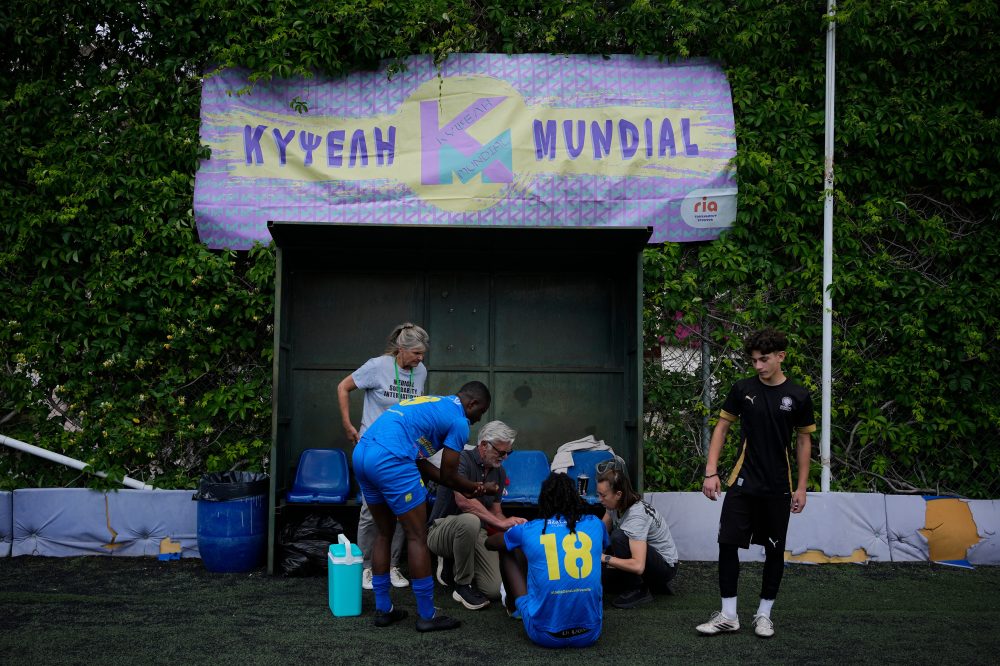
The local tournament featured no premium seating or elaborate facilities — instead, migrant and Greek athletes played on municipal fields while spectators gathered along chain-link barriers as music echoed through surrounding neighborhoods.
Though teams representing Albania, Afghanistan, Cameroon, Guinea, Mali, Nigeria and Sudan won’t appear in the official World Cup, amateur athletes connected to these nations showcased their skills in Athens.
Numerous migrant athletes have been preparing for Europe’s tougher migration and asylum policies set to begin in June. However, the competition for migrant and refugee communities offered a welcome break — a festival of soccer and cultural pride.
One playing location sat near Plato’s Academy, where ancient Athenians once discussed citizenship concepts, with the Acropolis visible beyond the field. In the crowded Kypseli neighborhood, fans displayed Congolese and Ivory Coast banners while volunteers conducted drumming workshops nearby.
Squads played to African pop songs while coaches called out directions and fans applauded from the edges of the field.
Amelie Nguedia of Cameroon moved rhythmically onto the pitch before game time as teammates followed her lead, sharing laughter.
“Coming to play here is a real pleasure,” she said. “We aren’t professionals, but we love participating.”
Nguedia mentioned she would cheer for Ivory Coast during the World Cup, since Cameroon didn’t make the tournament.
Ivorian Moussa Sangare established the Kypseli Mundial tournament three years earlier, explaining he hoped to use soccer to address fear and suspicion directed at migrants in Greece.
The Mediterranean country serves as a primary entry point for migrants entering the European Union without authorization and experienced the 2015 refugee emergency. Though unauthorized border entries to Greece decreased over the past ten years, anti-migration feelings have intensified as the government implements tighter border security and promises more deportations.
“People are often afraid of migrants, but we wanted to change this narrative,” he said. “Interacting with migrants and second-generation migrants and doing things together: People change their minds through experience.”
Sangare remained constantly active during the event — organizing schedules, greeting teams, recording social media content and tidying up following games.
“For us, this tournament is like a mini–World Cup in Greece,” he said.
The scheduling of the Athens event held special meaning.
The five-week World Cup begins June 11. One day afterward, updated EU migration and asylum regulations become active, featuring stronger border enforcement and quicker deportations. Greece also plans to relocate migrant holding centers overseas to African nations.
Even with this context, Athens maintained a celebratory mood.
Games remained competitive without becoming aggressive. Rough plays prompted reactions from spectators. Coaches delivered instructions from tight sideline areas. Supporters exchanged friendly comments with opposing fans across the barriers.
Soon after, they would share moments of humor.
For most participants, the competition provided relief from everyday responsibilities. Many spend extended hours working behind the scenes in restaurant kitchens, hotels, construction projects and food delivery services throughout Athens.
“I am very proud to be playing in this tournament for the first time,” said Amissi, a midfielder from Mali, after completing a match. He is employed at a facility that builds water heaters.
Following competition among 21 teams, Nigeria’s squad captured the men’s championship, while Greek community club Fostiras earned the women’s trophy.
Head referee Chara Vogiatzidaki noted the tournament’s importance reached beyond field outcomes.
“There are so many countries and different cultures, and I think the main goal is to show respect for all communities,” she said.
“There are some teams that are technically very advanced, and others that are less so. But the important thing is that all the teams have the mindset of enjoying themselves,” Vogiatzidaki said. “That’s really beautiful.”