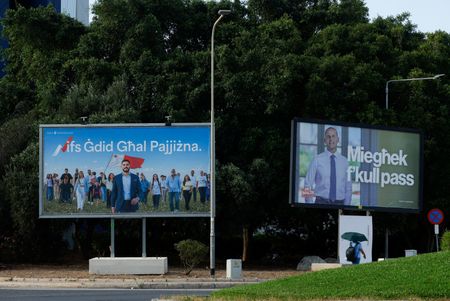

Parliamentary elections commenced Saturday in Malta, with polling data indicating the ruling Labour Party is positioned to secure an unprecedented fourth consecutive term in office.
Prime Minister Robert Abela initiated the early election four years into the current five-year term, referencing future challenges facing the Mediterranean nation due to international uncertainties.
The country’s economic performance ranks among the European Union’s strongest, with 4% growth recorded last year, minimal inflation, and virtually no unemployment. Energy and fuel costs have remained frozen for nearly a decade, resulting in Europe’s most affordable rates.
Nevertheless, officials worry that Middle Eastern conflicts could increase inflation in the EU’s smallest member nation, which depends heavily on imports, and could damage the tourism sector as aviation fuel costs climb.
Multiple polling surveys have repeatedly indicated his Labour Party is positioned to secure a substantial parliamentary majority, similar to victories achieved in 2013, 2017 and 2022.
Although six political organizations appear on the ballot, Labour and the opposition centrist Nationalist Party have been the sole parties to gain parliamentary representation since 1966, with minor parties receiving under 5% of votes.
Abela has focused his campaign on economic achievements, pledging competence and stability.
The Nationalist Party under new leader Alex Borg has argued that the robust economy has failed to improve living standards.
A significant increase in migrant workers during the past decade has also sparked concerns about rising housing costs, overcrowding and strain on infrastructure and healthcare systems.
Election outcomes are anticipated around midday Sunday.