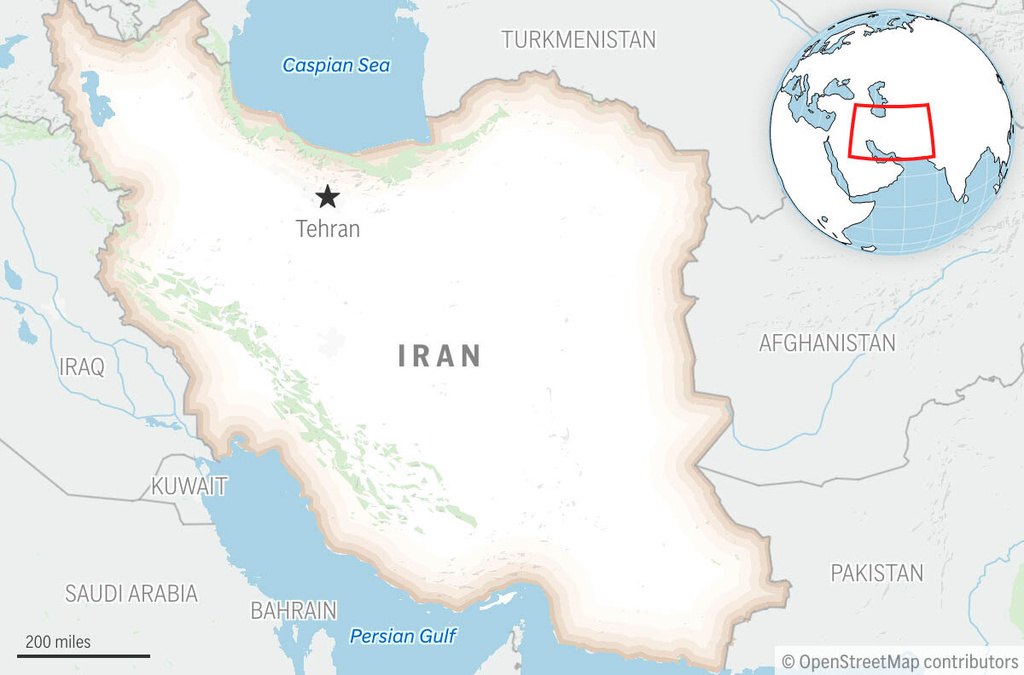

DUBAI, United Arab Emirates — The Middle East teetered on the brink of renewed warfare Monday as Israel and Iran exchanged military strikes for the first time since a ceasefire took effect two months ago, raising fears of a return to full-scale regional conflict.
The ongoing conflict, which began when the U.S. and Israel launched coordinated attacks against Iran on February 29, has disrupted global markets, sent energy costs soaring worldwide, and increased prices for essential goods including food. Despite a ceasefire agreement reached on April 8, diplomatic efforts to transform the temporary truce into a lasting peace settlement have failed to make progress.
Throughout the ceasefire period, Iran has continued controlling the Strait of Hormuz, a vital shipping route for global oil and natural gas supplies that has been the primary driver of worldwide fuel price increases. Meanwhile, Israel has maintained its military operations against Hezbollah, Iran’s Lebanese ally, advancing further into Lebanese territory. Yemen’s Houthi rebels, another Iranian proxy, launched attacks on Israel Monday and threatened to resume targeting Israeli-linked vessels in the Red Sea.
With peace negotiations stalled, renewed fighting between Israel and Iran, and Houthis re-entering the conflict, the danger of full war resumption appeared greater than at any time since the ceasefire began.
Following Monday’s military exchanges, U.S. President Donald Trump issued his first public statement on the escalation, posting online: “Israel and Iran must immediately stop ‘shooting.’”
Emergency Diplomatic Push Underway
Two regional officials confirmed that urgent diplomatic initiatives were launched Monday to preserve the fragile ceasefire between Iran and the United States.
Representatives from Egypt, Saudi Arabia, Turkey, Pakistan and Qatar have pressed the Trump administration to compel Israel to halt its attacks on Iran and Beirut. These same nations have also appealed to Iranian leadership to cease strikes against Israel, according to the officials, who requested anonymity as they lacked authorization to speak publicly.
One official involved in mediation between Iran and the U.S. revealed that Pakistan-led negotiators were incensed by Israel’s Sunday attack on Beirut’s southern districts, which occurred while Pakistan’s interior minister was in Tehran attempting to advance U.S.-Iranian diplomatic talks.
Military Exchanges Resume
Iran conducted multiple waves of attacks against Israel on Monday, while Israel responded with strikes targeting central and western Iranian territory, marking their first direct combat since the ceasefire implementation.
Iranian state media reported explosion sounds in Isfahan, Karaj, Tabriz and Tehran, though details were not immediately provided. Iranian authorities shut down airspace surrounding Tehran’s Imam Khomeini International Airport following the Israeli assault.
The semiofficial Fars and Mehr news outlets reported that Israeli forces struck a petrochemical facility in Mahshahr city within Khuzestan province, though damage assessments were not provided. Israeli military officials later acknowledged the petrochemical plant attack and indicated they also targeted mobile missile launching systems.
Israeli officials characterized their strikes as retaliation for Iranian missile attacks. Tehran had warned Sunday of retaliation following Israel’s unannounced strike on Beirut’s southern areas. After Israel’s counterattack, Iran launched additional missiles.
Iran’s paramilitary Revolutionary Guard announced it had struck two Israeli military installations, calling the operation “Operation Nasr” or “Victory.” The Guard stated it fired missiles after Israel attacked radar installations across three Iranian regions.
Air defense systems activated across central Israel as explosions echoed from attempts to intercept incoming Iranian projectiles. Warning sirens also activated throughout neighboring Jordan.
Iranian officials blamed the United States for the escalating violence.
“No one believes that the Israeli regime would take any action without coordination with the United States,” Iranian Foreign Ministry spokesman Esmail Baghaei told reporters in Tehran. “The United States bears responsibility for the Israeli regime’s aggression.”
Growing Strain Between Trump and Netanyahu
Trump and Israeli Prime Minister Benjamin Netanyahu initiated the war through closely coordinated military action, with Israeli officials celebrating unprecedented “shoulder to shoulder” collaboration throughout the 100-day conflict that reached that milestone Monday.
However, since the initial strikes, the two leaders have pursued divergent paths, with disagreements occasionally becoming public. Netanyahu appears to have directly defied Trump through Sunday’s Beirut strike and subsequent Iranian attacks, while Trump has expressed frustration with Israel, sometimes using harsh language or diminishing Netanyahu by telling the Financial Times that “I call all the shots.”
The White House did not respond to inquiries about Monday’s Israeli strikes or whether they were coordinated with U.S. officials.
The leadership divide appears rooted in each leader’s domestic political pressures. Netanyahu confronts elections this fall and faces intense public demands to respond to continued Hezbollah attacks on northern Israel. He also seeks to avoid appearing overly submissive to Trump.
The U.S. president, meanwhile, faces congressional elections in November and wants to conclude a war that has disrupted global economics and increased consumer costs.
Houthis Claim Israeli Attack
Yemen’s Iran-supported Houthi rebels announced an attack on Israel Monday and declared that Israeli-affiliated ships would again become targets in the Red Sea, endangering that waterway along with the Gulf of Aden and the narrow Bab el-Mandeb Strait that connects them. Brig. Gen. Yahya Saree made the announcement on the Houthis’ al-Masirah satellite television network.
This threat could further increase oil prices since Saudi Arabia utilizes its East-West Pipeline to transport oil through the Red Sea as an alternative to the Strait of Hormuz.
The Houthis issued similar warnings during the Israel-Hamas conflict in Gaza, killing at least nine sailors and destroying four vessels across more than 100 attacks, frequently targeting ships with minimal or no Israeli connections.
These attacks disrupted Red Sea shipping routes, through which approximately $1 trillion in goods traveled annually before the conflict began.