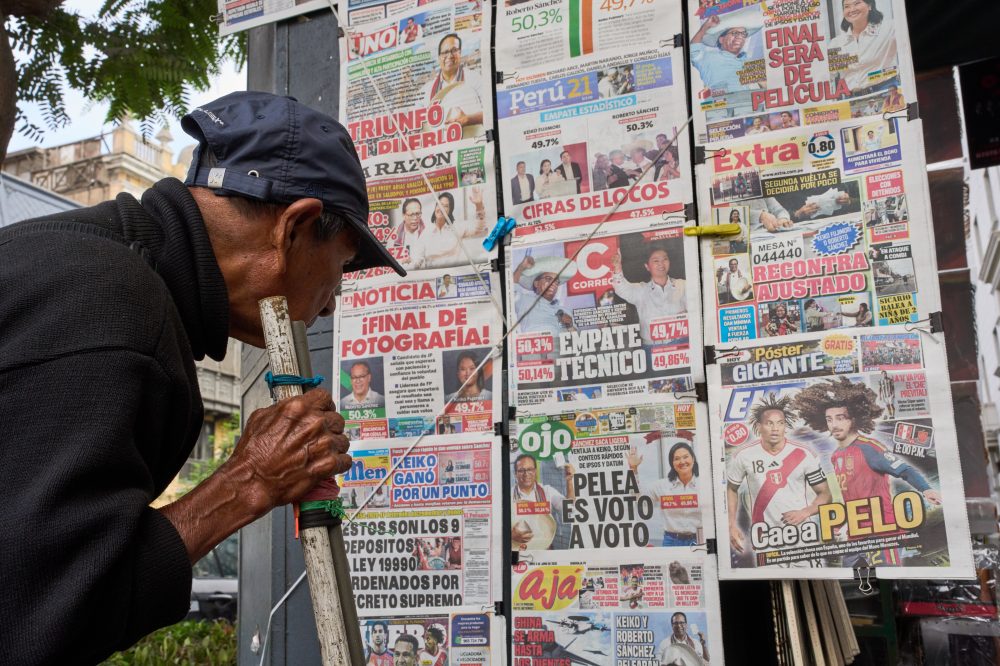

LIMA, Peru — Peru’s presidential election remains extremely tight as the vote difference between the two contenders has shrunk to fewer than 20,000 ballots with officials having tallied 96% of Sunday’s runoff election returns.
The victor will assume the presidency as the South American nation’s ninth leader within a 10-year span.
Current tallies reveal nationalist legislator Roberto Sánchez holding 50.055% of the vote, with conservative candidate Keiko Fujimori capturing 49.945%. Election officials have processed over 17.8 million ballots so far.
Both Fujimori, whose father served as a former president later disgraced, and Sánchez, who maintains ties to a jailed former president, emerged victorious from a field of 35 contenders during April’s initial voting round, though each secured less than 20% support. It took election officials over a month to certify their advancement to the runoff.
Roberto Burneo, the nation’s top election official, indicated final results from Sunday’s voting will be announced within 30 days. He urged citizens and political groups to “act with democratic responsibility” during the ongoing count.
The extended timeline stems from legal requirements mandating each individual ballot and summary sheet from polling locations be transported to over 100 counting facilities. Furthermore, ballots and tally documents must be shipped to Lima from 63 nations for processing.
Peruvian citizens between ages 18 and 70 face mandatory voting requirements. Those who fail to participate receive fines reaching $32.
Registration records show more than 27 million eligible voters. Approximately 1.2 million were anticipated to vote from overseas, primarily from the United States and Argentina.
Rising criminal activity, especially extortion schemes, dominated voter concerns. Analysts connect organized crime’s expanding influence to increased profits from unauthorized gold extraction operations in the Andes and Amazon regions.
The successful candidate will take the oath of office for a five-year term beginning July 28.
Both contenders faced popularity challenges, with many citizens connecting each to problematic former Peruvian leaders.
Fujimori carries associations with her deceased father Alberto Fujimori’s authoritarian and corrupt administration during the 1990s. She assumed first lady duties in 1994 following her parents’ marital split.
Sánchez maintains close connections to jailed ex-President Pedro Castillo, whom numerous citizens view as corrupt and disorganized. Castillo’s 16-month presidency featured more than 70 Cabinet personnel changes.