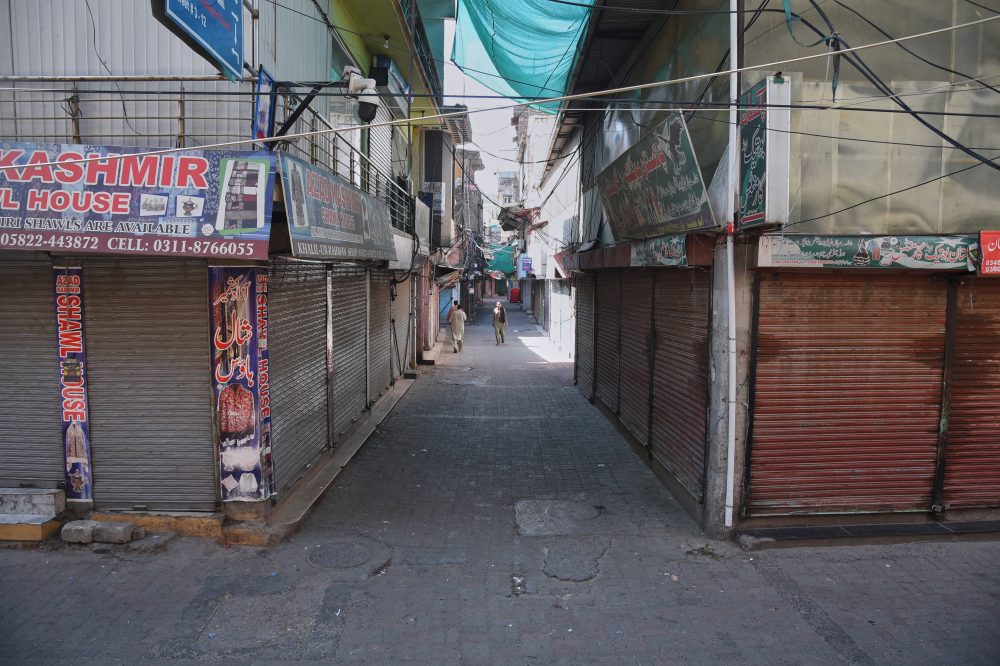

MUZAFFARABAD, Pakistan (AP) — Commerce came to a standstill and transportation ground to a halt throughout Pakistan-controlled Kashmir on Tuesday following a strike organized by a recently outlawed organization with a history of violent demonstrations.
The shutdown was initiated by the Joint Awami Action Committee in response to deadly confrontations on Sunday in Rawalakot between the organization’s followers and law enforcement that resulted in seven fatalities. The deadly violence began after Pakistan-administered Kashmir’s Supreme Court determined that 12 legislative positions designated for Kashmiri refugees residing in Pakistan have constitutional protection and cannot be eliminated without amending the constitution.
The JAAC, established in 2003, advocates for expanded political representation for Kashmir’s population and elimination of the refugee positions.
Local residents from the regional capital, Muzaffarabad, and surrounding communities reported to The Associated Press that commercial areas were mostly vacant and transportation hubs were abandoned on Tuesday. Nevertheless, it remained uncertain whether citizens were participating in the organized strike or staying away from public areas due to concerns about additional violence.
The organization had announced Tuesday’s “long march” from Rawalakot to Muzaffarabad and the strike prior to the recent bloodshed. Eyewitnesses reported that thousands of followers assembled in the eastern community of Mirpur to journey to Rawalakot, where JAAC leadership was anticipated to launch the march toward Muzaffarabad.
Officials have positioned extra law enforcement and security forces throughout the area and cut internet access in major urban centers to discourage participation in the march.
Law enforcement and regional authorities alleged that armed JAAC followers fired weapons at officers during Sunday’s violence, marking the region’s most lethal unrest in recent years. During comparable disturbances last year, multiple officers were kidnapped and subjected to torture while in captivity.
The territorial administration prohibited the JAAC last week, expressing concerns regarding public safety and security, and arrested numerous supporters.
Regional Prime Minister Faisal Mumtaz Rathore stated Monday he continued to welcome discussions with the organization’s representatives. He indicated the administration had agreed to most JAAC demands during previous year’s negotiations, with the exception of eliminating refugee positions and ending benefits provided to government officials and ministers, which must be handled by the Legislative Assembly due to constitutional limitations.
The refugee positions are maintained for individuals who relocated to Pakistan from Indian-controlled Kashmir decades earlier and are designed to represent communities displaced by the ongoing dispute over the Himalayan territory. The JAAC contends that these seats provide excessive power to people residing outside the region.
The Himalayan territory of Kashmir remains split between Pakistan and India, with both nations claiming complete control and having engaged in two military conflicts over the area since achieving independence from British control in 1947.
Political tensions have been escalating for weeks in advance of elections planned for next month.
The existing Legislative Assembly has finished its term, and political discussions have intensified regarding the future of refugee seats following the judicial decision.