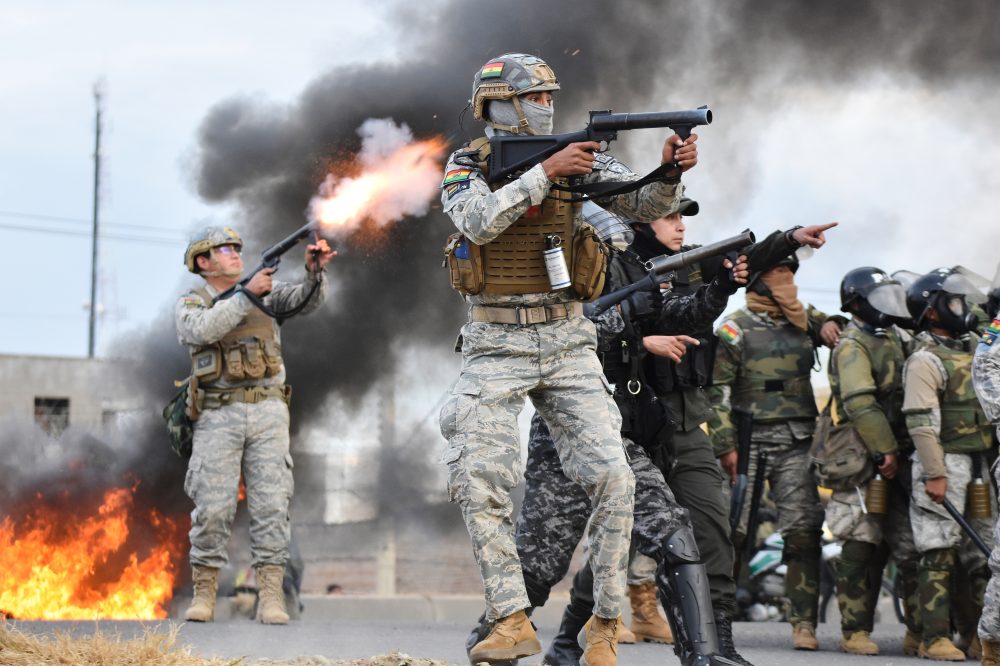

LA PAZ, Bolivia — Violence broke out between demonstrators and law enforcement in Bolivia on Monday after conservative President Rodrigo Paz enacted legislation that could facilitate a more aggressive government response to ongoing protests calling for his removal from office.
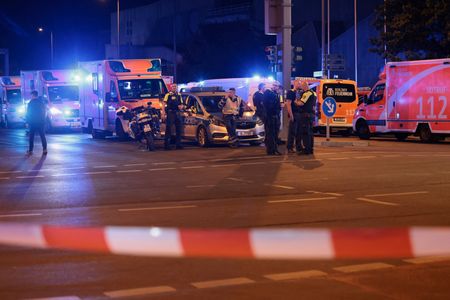
In the central city of Cochabamba, protesters threw explosives, rocks and wooden objects at officers, who retaliated with tear gas, resulting in numerous detentions as roadway blockades continue to bring the Andean country to a standstill.
The fresh violence occurred following Paz’s approval of a law that streamlines the process for implementing tough governmental measures against demonstrations that have disrupted Bolivia for five weeks, creating transportation chaos and shortages of essential goods including food, gasoline and medical items.
Labor unions, rural farming communities and mountain Indigenous populations — angered by Paz’s elimination of fuel subsidies and dissatisfied with his inability over seven months to address Bolivia’s ongoing economic challenges — have established 90 roadblocks on major highways across the country, cutting off major urban areas, particularly La Paz, the governmental center, and nearby El Alto. Struggling with increasing prices and minimal pay, many demonstrators claim Paz has abandoned them despite their electoral support.
An independent public ombudsman’s weekend report indicated that between May 1 and June 2, the civil unrest caused 10 fatalities, 37 wounded individuals and 365 detentions. Officials state that seven deaths resulted from inadequate medical care, though all cases remain under investigation.
While Paz has attempted negotiations with demonstrators and called for limited police force, protesters have mostly declined meetings with the president and maintain their demand for his complete removal just seven months into his term. His victory last year concluded almost two decades of continuous governance by Bolivia’s Movement Toward Socialism, or MAS, the organization established by former President Evo Morales.
Growing pressure exists for Paz to take stronger action against the disorder. Monday’s signed legislation simplifies the government’s capacity to declare an emergency status that would halt constitutional protections and authorize military intervention to restore stability and eliminate blockades. However, Paz must issue an additional decree for emergency status to take effect. Whether he will choose this path remains uncertain, given that violent military suppression of demonstrations has previously removed Bolivian leaders from power.
“This law is to protect the majority of the country from the narco-terrorism that is instigating the protests,” Paz said in a national address after signing the law. “I extend my hand to the social organizations that have legitimate demands and reiterate my willingness to engage in dialogue.”
Following his remarks, groups attacked a public transportation union facility in El Alto amid rising tensions over fuel scarcity, resulting in at least 28 detentions, according to police. Violence spread through Cochabamba, where protesting agricultural workers tried to block a bridge linking the area to the country’s western region. Officers arrested 23 individuals while using tear gas to scatter demonstrators hurling rocks and explosives.