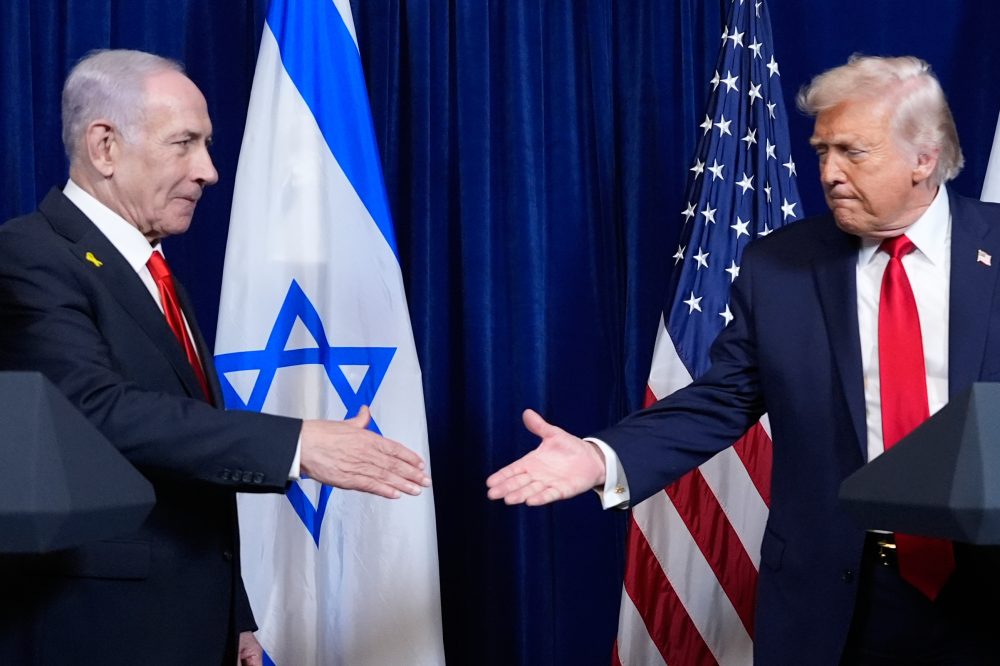

JERUSALEM (AP) — Recent military actions by Israel against Lebanon and Iran have revealed a growing rift between U.S. President Donald Trump and Israeli Prime Minister Benjamin Netanyahu, two leaders who began this conflict as unified partners but now pursue different objectives.
Trump had openly cautioned Israel against attacking Beirut during its conflict with Iran-supported Hezbollah forces. Despite this warning, Israel launched strikes on Sunday, prompting Iran to retaliate with ballistic missiles targeting Israel for the first time since April’s ceasefire. Israel subsequently attacked Iran, even as Trump was conducting sensitive diplomatic talks with Iranian officials.
While the military exchanges have calmed, the strategic disagreements between the two leaders appear set to continue.
Trump, whose political party confronts upcoming elections, aims to conclude an increasingly unpopular military campaign and reopen the Strait of Hormuz to reduce fuel costs. Iranian officials have indicated that achieving a complete ceasefire in Lebanon remains essential for any comprehensive agreement.
Netanyahu, who similarly faces electoral pressure this year, must demonstrate success in stopping Hezbollah’s offensive operations while showing he can defeat Iran and its regional partners. He also must balance his relationship with Israel’s key ally without appearing subordinate.
The Feb. 28 joint American-Israeli assault on Iran initially displayed strong alliance unity.
Netanyahu declared the mission would weaken the Islamic Republic’s armed forces, eliminate its nuclear and missile capabilities, and overthrow its leadership. Trump confirmed the death of Iran’s supreme leader during the initial bombardment and encouraged Iranian citizens to reclaim their nation.
However, divergent goals quickly emerged: Trump sought rapid victory similar to his success in Venezuela, while Netanyahu pursued complete defeat of Iran and its allies regardless of timeline.
As Iran endured sustained attacks while keeping the Strait of Hormuz blocked, frustration mounted in both countries for different reasons.
American gas prices and consumer costs skyrocketed, leading former Trump supporters to accuse him of abandoning campaign pledges and entangling America in another Middle Eastern conflict. He has defended against these criticisms as growing public anger threatens Republican chances in November’s congressional races.
Israeli citizens expressed anger over Netanyahu’s inability to achieve decisive wins in conflicts triggered by Hamas’ Oct. 7, 2023, assault during his leadership. More than two years later, Hamas maintains control over Gaza sections, Hezbollah continues rocket attacks, and Iran’s government and nuclear infrastructure survive despite significant casualties.
The disagreement centers on Lebanon, where Israeli-Hezbollah combat continues despite ceasefire declarations.
Iran insists Lebanon must be part of any broader regional peace agreement, a condition Trump appears willing to accept for diplomatic progress. Iran has warned of renewed attacks on Israel if Lebanese strikes continue.
Israel remains committed to separating the conflicts and pursuing its Lebanese operations, having seized substantial southern territory, until the Hezbollah threat ends completely.
Public tensions emerged last week when Trump confirmed a heated phone conversation with Netanyahu regarding Lebanon. He acknowledged using profanity and calling the Israeli leader “crazy,” expressing frustration that Israel’s Hezbollah campaign jeopardized Iranian negotiations.
Through multiple interviews, Trump clearly expressed displeasure with Israel’s Sunday Beirut attack, which occurred without advance notice and struck civilian housing, killing two people and injuring 20 according to Lebanese officials.
He subsequently called for Israeli restraint following Iran’s missile barrage that same day. “I call all the shots,” not Netanyahu, Trump declared to the Financial Times.
Israel bombed Iran within hours.
Trump initially advocated restraint to stabilize markets and preserve ongoing negotiations, according to someone familiar with U.S.-Israeli discussions who requested anonymity due to the sensitive nature of these conversations.
Israeli representatives argued that America would not accept attacks without immediate retaliation. The source noted both sides understood that failing to respond to Iranian strikes would create political difficulties for Netanyahu domestically.
Netanyahu has minimized any apparent disagreements.
Following recent strikes, he addressed reporters in Hebrew, stating “Israel has a full right to self-defense, and we are exercising it to the extent necessary.”
“I say this to you, just as I say this, with appreciation and respect, in my good conversations with my friend, President Trump,” he continued.
This marks another instance of Trump publicly disagreeing with Netanyahu regarding military operations.
In March, barely three weeks into the conflict, Trump criticized Netanyahu’s choice to target a crucial Iranian energy facility, which led Iran to strike Gulf region energy infrastructure.
“I told him, ‘Don’t do that,’” Trump recalled. “We get along great. It’s coordinated, but on occasion he’ll do something.”
Despite Trump’s public criticism, two sources familiar with the situation who lacked authorization for public comment revealed the U.S. received advance notification of Israel’s attack plans.
The lasting impact of this recent disagreement remains uncertain.
“It’s not so uncommon for the U.S.-Israel relationship to have these kinds of tensions. What’s so different right now is how publicly it’s playing out,” observed Michael Singh, managing director at the Washington Institute for Near East Policy.
He pointed out that Trump has engaged in similar public disputes with other world leaders, including close allies.
Eytan Gilboa, a specialist in U.S.-Israel relations at Israel’s Bar-Ilan and Reichman universities, expressed doubt that the disagreement seriously endangers the alliance. He noted Netanyahu’s caution in avoiding excessive confrontation.
“If there was a big threat, like if Israel were to continue the war in Iran and drag the U.S. into it, that would have been a different situation,” he explained. “But that is not happening.”
He acknowledged, however, that “basic disagreements between Netanyahu and Trump on Iran, Lebanon and Gaza” remain unresolved.