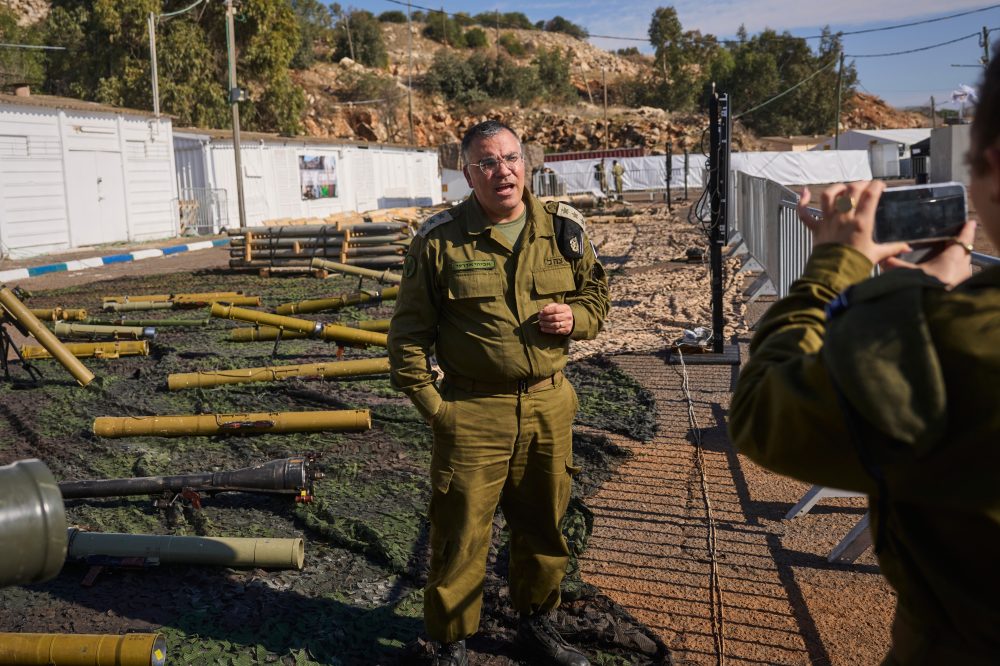

TEL AVIV, Israel (AP) — Across Gaza and Lebanon, hundreds of thousands of residents have spent over two years anxiously watching for the next social media update from Avichay Adraee.
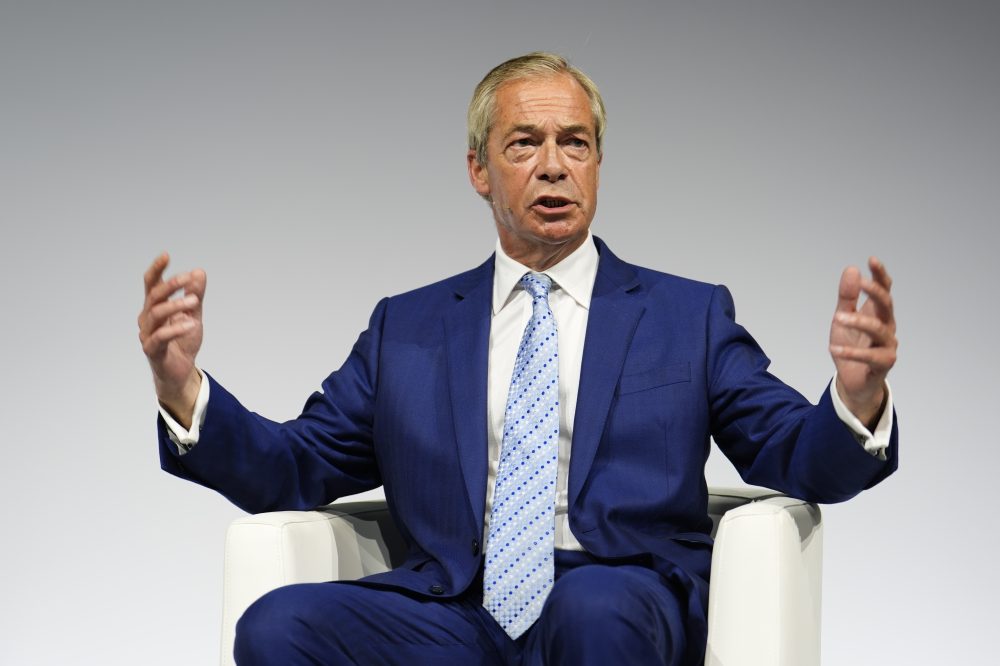
The colonel serves as Israel’s military spokesman for Arabic-speaking audiences and has become the energetic public face of the nation’s military campaigns, delivering advance notices before strikes and major operations. This role has transformed him into one of Israel’s most well-known figures throughout the Arab world, generating both intense anger and curious attention.
Through social media videos distributed to his 2.5 million followers on various platforms, the military officer appears in uniform, using animated gestures while delivering official announcements and taunting Israel’s adversaries, frequently incorporating humor or references to popular culture, all delivered in perfect Arabic.
During the conflicts that began after Hamas’ Oct. 7, 2023, assault, his online platforms have broadcast alerts for residents to evacuate — sometimes with very little advance warning — regions marked in red on maps showing Gaza and Lebanon. Millions have followed these instructions, with hundreds of thousands taking shelter in overcrowded temporary camps.
The retiring colonel expresses satisfaction with his contributions. When asked about being linked with death and forced relocation by many people, he responded that he has assisted Arabs in gaining better insight into Israel’s military actions.
“Because of these evacuation orders, many millions were saved,” he told The Associated Press. “There’s no other army in the world that acts this way.”
Israel’s military campaign in Gaza resulted in tens of thousands of Palestinian deaths and forced most of the approximately 2 million residents to relocate, often repeatedly, before a tentative ceasefire began in October. The recent conflict with the Iran-supported Hezbollah in Lebanon has caused roughly 3,500 deaths and displaced more than 1.2 million people.
Both military operations have faced accusations of war crimes and crimes against humanity, charges that Israel has firmly rejected, frequently through representatives like Adraee.
These ominous alerts have also transformed him into somewhat of a public figure. In Lebanon, a delivery worker who resembles him creates comedic videos and surprises unsuspecting citizens, demonstrating the anxiety that Adraee creates.
“Avichay Adraee is the face of evil, to me and to the people of Gaza,” said Ayman Ahmad, a resident of Khan Younis in southern Gaza who has been displaced twice during the war. Few people in Gaza had heard of Adraee before the war, he said, but now everyone closely monitors his social media accounts.
“Once we see a new post from him, we know that a disaster is about to happen,” he said.
The 43-year-old Adraee was raised in Haifa, a northern Israeli city where Jewish and Arab populations coexist.
His paternal family belongs to the Jewish community that had resided in the region for generations prior to Israel’s founding in 1948. His maternal relatives relocated to Israel from Iraq, joining hundreds of thousands of Jews from ancient Middle Eastern communities who moved to Israel to escape violence and persecution.
The colonel recalls enjoying Egyptian television dramas on Israeli broadcasts during his childhood and describes his introduction to Arabic studies as “love at first sight.” He acquired some Arabic knowledge at home before formally studying the language in school and during his service in military intelligence.
“My ability to speak and absorb Arabic is connected to my roots,” he said. “My grandmother and father were very proud when they saw me on TV speaking in Arabic.”
In 2005, Adraee became the military’s inaugural Arabic-speaking spokesperson, conducting interviews with television networks, including frequent appearances on the increasingly powerful Al Jazeera.
He identifies 2011 as a pivotal moment with the emergence of social media, which played a significant role during that year’s Arab Spring movements.
“People know me, we’ve been through so many wars,” he said. “But the revolution of social networks in 2011 allowed us to lean on the persona of Avichay.”
The colonel aims for his videos to become widely shared, utilizing social media’s informal atmosphere to communicate his messages.
The military’s assertion about discovering Hamas infrastructure beneath a luxury hotel in Gaza received little attention, but Adraee noted that his humorous video featuring a Hamas leader writing a Trip Advisor review for the tunnels gained widespread circulation. He has sent birthday wishes to performers and holiday messages to Arab social media personalities, even engaging in public conversations with Lebanese reporters who work for Hezbollah-affiliated media.
“We want people to be exposed to the really important and serious messages, the information we’re trying to convince them of, but if you want them to remember you, you have to be more creative,” he said, adding that social media allowed him to “talk directly to the people, above the heads of the government.”
Fawaz Gerges, a professor of Middle East studies at the London School of Economics who was born in Lebanon, said Adraee’s posts are “dreaded and feared because they really carry life and death implications for hundreds of thousands of people.”
However, “you have some people basically who are fascinated by his personality because he’s now almost an official influencer for Israel,” he said, adding that Israel’s military has spokespeople in several languages, but only Adraee is famous enough to be known by his first name.
The professor explained this represents part of a broader pattern where official spokespersons attempt to make their communications go viral.
The Hamas spokesman Abu Obeida gained recognition for delivering passionate speeches, sometimes combined with footage of attacks or Israeli hostages, before his death in an Israeli airstrike. Hamas and Hezbollah have produced videos showcasing their attacks, enhanced with music and visual effects.
Iranian government supporters have created AI-generated music videos featuring Lego characters ridiculing U.S. President Donald Trump. The White House has produced its own videos celebrating strikes on Iran, incorporating video game images and movie scenes.
While adversarial yet professional relationships between military spokespersons and reporters are common, Adraee has faced accusations of defending the deaths of certain journalists.
The Committee to Protect Journalists reports a “repeated pattern” in which Adraee “publicly labels Palestinian and Lebanese journalists as militants or terrorists — often without presenting verifiable evidence — before or after they are killed in Israeli strikes.”
Following a March strike that killed three journalists in Lebanon, Adraee’s account shared a photograph of one victim, Ali Shoeib, wearing military clothing. The image was subsequently identified as computer-generated.
The colonel acknowledged it was an error not to mark the photo as “illustrative,” but maintained that Shoeib was a recognized Hezbollah operative who gathered intelligence on Israeli positions while serving as a reporter for a Hezbollah-connected outlet. Adraee provided no proof of combat involvement. Israel maintains it does not target journalists.
According to the Committee to Protect Journalists, at least 207 journalists have died in Gaza and 16 in Lebanon since 2023.
Following two decades in his position, Adraee is stepping down and will be succeeded by Lt. Col. Ella Waweya, the military’s highest-ranking Muslim woman.
Last month, the colonel received one of the most unusual communications of his extended career.
A teenager from a Beirut suburb contacted him through Instagram, claiming her school was concealing weapons. Since Israel routinely targets buildings allegedly used by militants, the message caused alarm, strong denials from school administrators, and a Lebanese military inspection that found nothing.
It was subsequently discovered that the girl was pranking a friend and probably wanted to skip classes.
Adraee viewed the entire incident as a success.
“The fact that the (Israeli military) spokesperson is someone you can write to on Instagram, that’s the whole story,” he said.