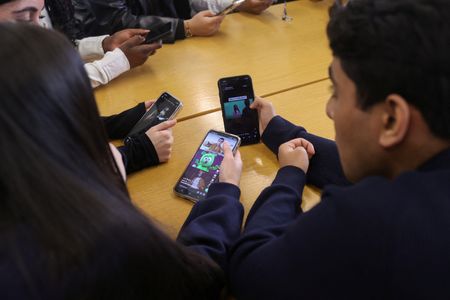

In December, Australia made history as the first nation worldwide to prohibit social media access for youth under 16, preventing them from using platforms such as TikTok, Alphabet’s YouTube, and Meta’s Instagram and Facebook.
Here’s an overview of actions countries and companies are taking to control social media access as worries grow about its effects on young people’s wellbeing and security.
AUSTRALIA
Groundbreaking legislation requires major social media companies to prevent access for minors under 16 starting December 10, 2025, representing some of the strictest rules targeting big tech companies globally.
Platforms that don’t comply risk fines up to A$49.5 million ($34.9 million).
BRITAIN
British Prime Minister Keir Starmer plans to announce restrictions on “harmful” online platforms for youth under 16 while allowing access to certain safer social media options, according to a Times report from June 8.
Starmer reportedly chose to move forward with these limitations after meeting with grieving parents and reviewing evidence from Australia.
CHINA
The nation’s cyberspace regulator has established a “minor mode” system requiring device-level limitations and app-specific guidelines to limit screen time based on age.
DENMARK
In November, Denmark announced plans to prohibit social media for youth under 15, though parents could grant access to specific platforms for children as young as 13.
FRANCE
The National Assembly approved legislation in January to prohibit children under 15 from using social media due to increasing concerns about cyberbullying and mental health dangers. The proposal must pass the Senate before a final lower house vote.
GERMANY
Youth between 13 and 16 may only access social media with parental permission. Child advocacy groups argue these protections are inadequate.
GREECE
The country is “very close” to declaring a social media prohibition for children under 15, a senior government source informed Reuters on February 3.
INDIA
The nation’s chief economic adviser advocated for age limits on social media platforms in January, calling them “predatory” in their user engagement tactics, just two days after tourist destination Goa announced it was considering restrictions similar to Australia’s.
ITALY
Youth under 14 must have parental approval to create social media accounts, while those above that age need no consent.
MALAYSIA
The country started preventing those under 16 from creating social media platform accounts, according to its communications regulator on June 1.
NORWAY
In 2024, the Norwegian government suggested increasing the consent age for social media terms from 13 to 15, though parents could still approve access for younger children.
Officials have also started developing legislation for an absolute minimum age of 15 for social media access.
POLAND
The ruling party is developing new legislation to ban social media for children under 15 and make platforms responsible for age verification, announced on February 27.
SLOVENIA
The country is creating legislation that would prevent children under 15 from using social media, Deputy Prime Minister Matej Arcon stated on February 6.
SPAIN
The nation will advance new regulations to make social networks and AI safer despite heavy tech industry lobbying, Digital Transformation Minister Oscar Lopez told Reuters in May.
Prime Minister Pedro Sanchez announced in February that Spain would prohibit social media access for minors under 16, requiring platforms to implement age verification systems.
SWEDEN
A government-appointed commission recommended on June 2 that the country should establish a minimum age of 15 for social media use.
A prohibition could be structured so platforms handle age verification, investigator Lisa Englund Krafft explained at a news conference with Social Affairs and Public Health Minister Jakob Forssmed.
UNITED STATES
Legislation designed to force social media companies to better protect children and teens passed a significant political milestone after Republican Senator Ted Cruz announced his support on May 12.
Cruz stated at a Washington event that he would support the Kids Online Safety Act, which would require social media companies to “exercise reasonable care” when designing features that could harm minors, according to the bill.
This legislation is distinct from the existing Children’s Online Privacy Protection Act, which stops companies from gathering personal information from children under 13 without parental permission. Multiple states have enacted laws requiring parental consent for minors’ social media access, but these have faced legal challenges on free speech grounds.
EU LEGISLATION
On May 12, European Commission President Ursula von der Leyen announced the European Union would pursue stronger protections for children from harmful social media features.
Von der Leyen said the Commission would address “addictive and harmful design practices” in its Digital Fairness Act, planned legislation set for proposal later this year, while an expert panel develops guidance on implementation.
In November, the European Parliament approved a resolution demanding an EU-wide prohibition on platform access for children under 16 without parental consent, and complete bans for those under 13.
TECH INDUSTRY
Social media platforms like TikTok, Facebook and Snapchat require users to be at least 13 to register.
Child protection advocates argue these measures are insufficient, and government data from several European nations reveals vast numbers of children under 13 maintain social media accounts.